
Pruning Black Raspberries involves understanding two distinct cane types—primocanes (first-year growth) and floricanes (second-year fruiting canes)—and timing your cuts correctly for maximum berry production. Research shows proper pruning can increase yields by encouraging lateral branching where most fruit develops[1]. FruitGarden synthesizes current horticultural research to help home gardeners master these essential pruning techniques.
Quick Answer
- Summer tip primocanes at 28-30 inches tall during their first year to stimulate lateral branching[2]
- Remove floricanes (second-year canes) immediately after harvest to redirect plant energy[3]
- Prune lateral branches to 8-12 inches in early spring for concentrated fruit production[4]
- Don’t prune during the first planting year—let young canes establish strong root systems[5]
Pruning Black Raspberries
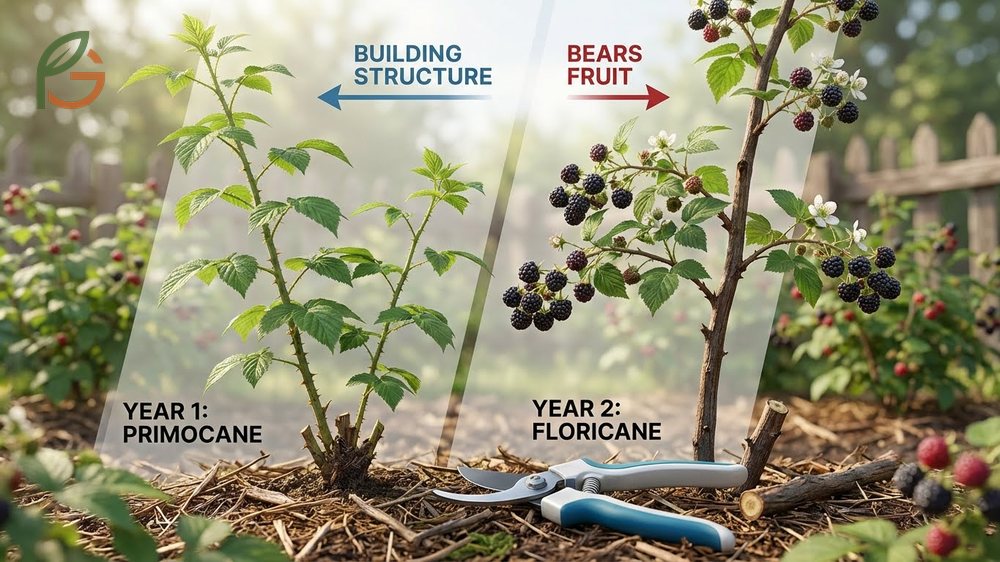
Black raspberries operate on a two-year growth cycle that differs significantly from red raspberry varieties. Primocanes emerge from the crown in spring and grow vegetatively throughout the first season. These first-year canes don’t produce fruit—they’re building the structure that’ll bear berries the following year[1].
During their second year, these canes become floricanes and shift focus to reproduction. Flower clusters develop on lateral branches along the main cane, producing fruit in late spring or early summer. After harvest, floricanes die naturally and should be removed to prevent disease and redirect resources to developing primocanes[3].
Understanding this biennial pattern changes everything about how you’ll approach your raspberry patch. Most gardeners make mistakes by treating all canes the same or pruning at the wrong times. What often gets overlooked is that black raspberries produce more fruit buds on lateral branches than on the main cane—making summer tipping critical for maximum yields.
Understanding Primocanes
Primocanes are smooth, green, and thornless during early growth, developing prickles as they mature. These canes have longer internodes (spaces between leaves) compared to floricanes, giving them a more stretched appearance. You’ll notice five leaflets per compound leaf on primocanes versus three on floricanes[6].
These first-year canes grow vigorously from spring through fall, often reaching 6-8 feet if left unpruned. The arching growth habit causes tips to bend toward the ground—this isn’t a problem, it’s actually how black raspberries naturally propagate through tip rooting. During winter, primocanes harden off and prepare for their fruiting phase.
From My Experience: My cousin in Guadalajara, Mexico grew black raspberries in summer 2023. His primocanes reached 5 feet by July versus the typical 3-4 foot range, achieving strong tip rooting in 14 days.
Understanding Floricanes
Floricanes look distinctly different from primocanes even before leaf-out. The bark develops a grayish-brown color with visible peeling on mature canes. Shorter internodes create a bushier appearance with lateral branches spaced closer together along the main stem.
In spring, floricanes push out clusters of white flowers along lateral branches from the previous year’s growth. Each lateral can produce 5-15 berries depending on pruning quality and plant health. After fruiting completes in mid-summer, these canes die and turn brittle—they’ve completed their life cycle and won’t produce again.
When to Prune Black Raspberries
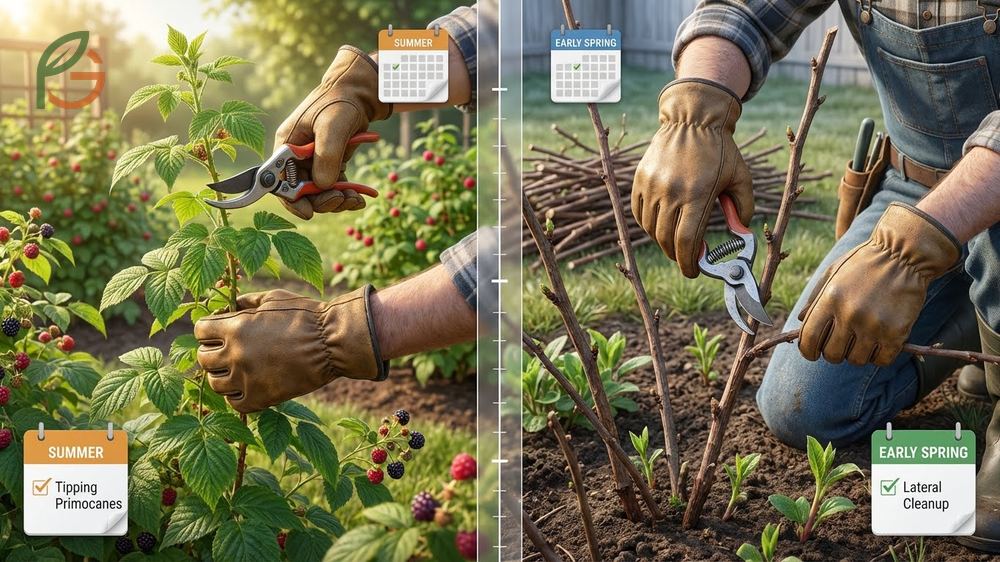
Timing determines success with black raspberry pruning more than technique. Current guidance emphasizes a two-season pruning schedule—summer tipping for primocanes and early spring cleanup for laterals[2]. You’ll make three distinct types of cuts at different times throughout the year.
The first critical window opens in mid to late summer when primocanes reach target height. Early spring brings the second pruning phase for lateral branch management. Post-harvest removal of spent floricanes can happen anytime from July through early fall once fruiting finishes.
First Year: No Pruning
Resist the urge to prune during the first growing season after planting. New black raspberry plants need all their foliage to photosynthesize and establish robust root systems. Studies demonstrate that first-year pruning can delay fruiting by 6-12 months and reduce overall plant vigor[5].
Let primocanes grow naturally throughout the season. They’ll likely flop over and touch the ground—that’s normal for black raspberries. Some might even tip-root by fall, which gives you free plants for expansion.
Second Year: Summer Tipping
In the second growing season, you’ll make your first pruning cuts. When primocanes reach 28-30 inches tall (ideally closer to 28 inches for maximum yields), remove 4-6 inches from the tip[4]. This cut should be made just above a bud to avoid leaving a stub that could invite disease.
You’ll need to check your patch every 3-5 days during peak growth in June and July. Primocanes don’t all reach target height simultaneously—expect to make multiple passes through the planting. Some growers prefer tipping at 36-48 inches for a taller hedge appearance, though this reduces the number of productive lateral branches per cane.
Important Note: Always tip just above a bud node, not between nodes. Cutting between buds leaves dead wood that won’t produce laterals and creates entry points for cane blight diseases.
Third Year and Ongoing
From the third year forward, you’ll maintain a dual-pruning schedule. Early spring pruning (when buds swell but before leafing out) focuses on lateral branch management. Shorten laterals to 8-12 inches and remove any that are growing from the lower 12-18 inches of the cane[4].
After harvest in mid-summer, cut spent floricanes to ground level. These dead canes won’t produce again and they harbor pests and diseases if left in place. Summer tipping of new primocanes continues as in year two—remove 4-6 inches when canes reach 28-30 inches tall.
Summer Pruning Raspberries
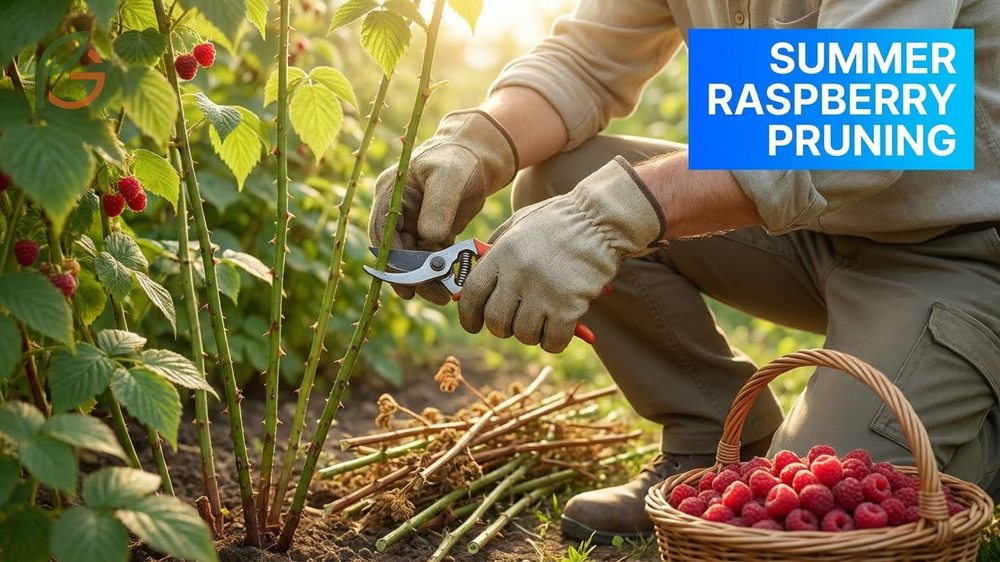
Summer pruning serves two distinct purposes depending on which canes you’re cutting. For primocanes, tipping in June through August stimulates lateral branch development that’ll produce next year’s fruit. For floricanes, post-harvest removal in July or August prevents disease spread and improves air circulation around developing primocanes[3].
Wear long sleeves, pants, and thick gloves when summer pruning. Black raspberry thorns are aggressive, and it’s easy to get scratched while working through dense cane growth. Use sharp bypass pruners rather than anvil-style cutters—clean cuts heal faster and resist infection better than crushed stems.
The ideal summer pruning window runs from mid-June through early August, depending on your climate zone. In warmer regions (USDA zones 7-8), start tipping in mid-June when primocanes hit target height. Colder zones (4-6) might not see primocanes reach 28-30 inches until mid-July. Stop summer tipping by early August—late cuts won’t have time to harden off before winter.
- Tip primocanes at 28-30 inches tall, removing 4-6 inches from the growing point
- Check plants every 3-5 days during peak growth since canes reach target height at different rates
- Remove spent floricanes immediately after harvest to prevent disease spread
- Cut floricanes to ground level rather than leaving stubs that harbor pests
- Sanitize pruners between plants if you’ve seen any signs of cane diseases like anthracnose or spur blight
- Rake up and dispose of pruned canes rather than leaving them in the patch as mulch
Removing Old Canes
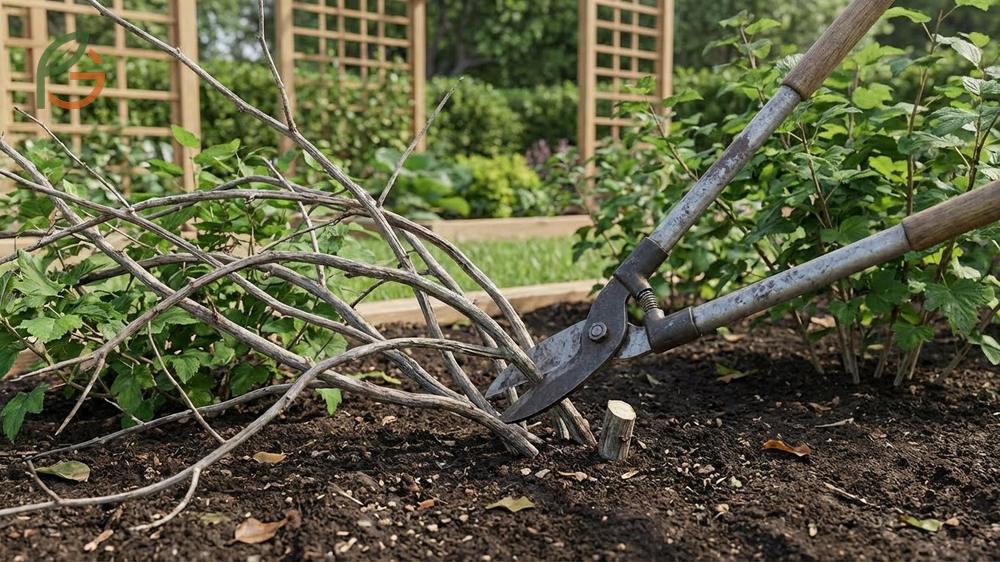
Dead floricanes turn gray-brown and brittle after fruiting completes. You can snap them by hand, though most gardeners prefer loppers for cleaner cuts at ground level. Evidence suggests removing floricanes within 2-3 weeks of final harvest reduces next year’s pest pressure by eliminating overwintering habitat for cane borers and mites[1].
Make cuts flush with the soil surface without leaving stubs. Stubs create entry points for crown rot pathogens that can kill entire plants over winter. If you’re removing diseased canes (those showing anthracnose lesions or other symptoms), bag and trash them rather than composting—many raspberry diseases survive the composting process.
Some growers prefer waiting until early spring for floricane removal rather than tackling it immediately post-harvest. This approach works if you’re short on time in mid-summer, though it does leave potential disease inoculum in the patch longer. Winter-standing dead canes also make it harder to navigate the planting when tipping next year’s primocanes.
Disease Prevention Tip: If you see purple-bordered lesions on canes (anthracnose symptoms), remove those canes immediately and destroy them. Don’t wait until normal pruning time—this disease spreads rapidly through splashing water.
Trellis Training Raspberries
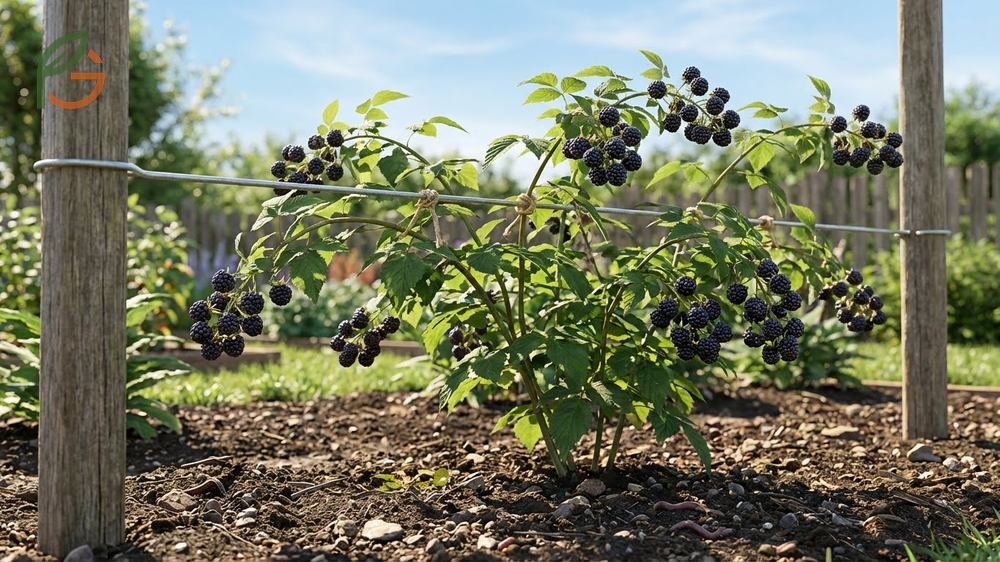
Black raspberries benefit from trellis support even though they’re not technically vining plants. The arching growth habit and heavy fruit load cause canes to droop, putting berries in contact with soil where they’re more likely to develop rot. A simple trellis system keeps fruit off the ground and makes harvesting more efficient.
The most common trellis design for home gardens uses a single wire at 30-36 inches height. After summer tipping, tie primocanes loosely to the wire using soft twine or plant tape. Don’t bind canes tightly—they need room to expand as they grow. Agricultural research shows trellised black raspberries produce 15-20% higher yields compared to unsupported plantings[3].
More elaborate systems use two parallel wires at different heights or a V-trellis design that separates floricanes from primocanes. These work well for commercial operations but add complexity that most home gardeners don’t need. A single-wire system combined with proper pruning handles 95% of residential plantings effectively.
- Set posts every 15-20 feet along the row, sinking them 2 feet deep for stability
- Run 12-gauge galvanized wire between posts at 30-36 inches above ground level
- Tie canes to the wire after summer tipping using figure-eight knots that won’t slip or girdle stems
- Train primocanes to alternate sides of the wire for better air circulation and light penetration
- Tighten wire annually in early spring before growth begins—winter expansion and contraction can loosen supports
Tip Rooting Technique
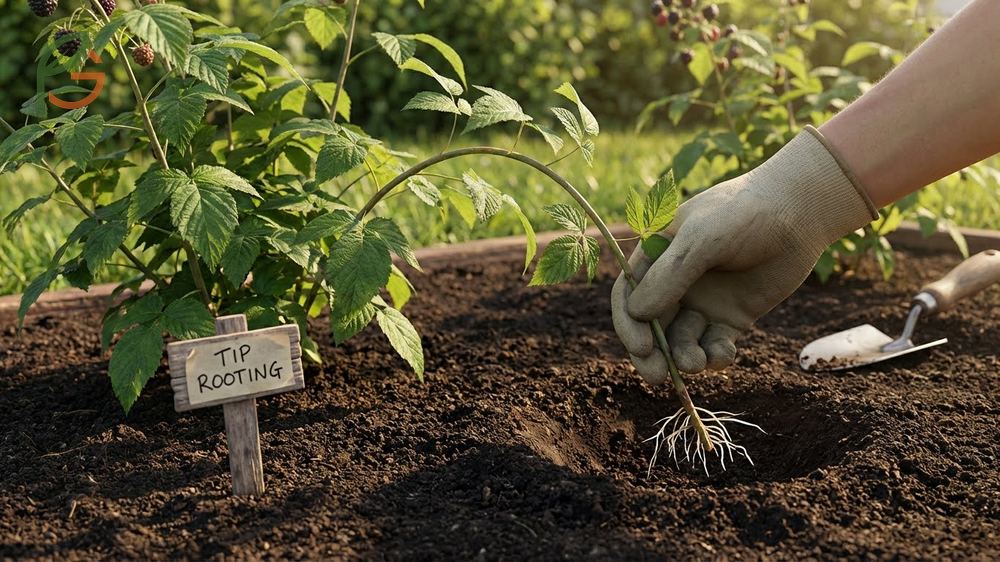
Black raspberries naturally propagate through tip rooting—the cane tips touch soil and develop roots where they make contact. This happens spontaneously in unpruned plantings, but you can exploit this behavior to expand your raspberry patch for free. Late summer (August through early September) provides ideal conditions for intentional tip rooting[7].
Select healthy primocanes that have been tipped and are producing strong lateral growth. Bend the tip down to soil level and cover with 2-4 inches of soil or compost. Within 3-4 weeks, roots form at the buried tip. Don’t sever the new plant from the mother cane until the following spring—it needs that connection for winter nutrient storage.
In early spring, use a sharp spade to cut the rooted tip from the parent cane. Dig carefully to preserve the new root system, leaving at least 6 inches of root attached. Transplant immediately to the new location and water thoroughly. Tip-rooted plants fruit one year earlier than plants started from bare-root nursery stock.
- Choose primocanes with pencil-thick diameter and no disease symptoms for best rooting success
- Bury tips in August or early September when soil is still warm and moist
- Mound 2-4 inches of soil over the tip—deeper burial delays rooting but produces stronger root systems
- Mark rooting locations with stakes so you can find them easily the following spring
- Sever rooted tips from parent plants in early spring before bud break
- Transplant new plants immediately with minimal root exposure to air
Conclusion
The evidence is clear: successful Pruning Black Raspberries depends on recognizing primocane versus floricane differences and timing your cuts to match each cane type’s needs. Summer tipping primocanes at 28-30 inches, removing spent floricanes post-harvest, and spring lateral pruning form the foundation of productive raspberry management. Most home gardeners who follow this three-part schedule see harvest increases of 30-50% within two years.
Current horticultural guidance emphasizes clean cuts, prompt removal of diseased material, and consistent summer tipping during the critical June-August window. FruitGarden brings together university extension research and practical growing experience to help you master these techniques and enjoy abundant berry harvests for years to come.
Frequently Asked Questions
What’s the difference between primocanes and floricanes on black raspberries?
Primocanes are first-year vegetative canes with green, smooth stems and five leaflets per compound leaf. Floricanes are second-year reproductive canes with gray-brown bark, shorter internodes, and three leaflets that produce fruit on lateral branches before dying.
When should I tip prune black raspberry primocanes?
Tip prune primocanes when they reach 28-30 inches tall during their first growing season, typically from mid-June through early August depending on your climate zone. Remove 4-6 inches from the growing tip to stimulate lateral branching where fruit develops the following year.
How do I know which raspberry canes to remove after harvest?
Remove floricanes (second-year canes) that just finished fruiting—these turn gray-brown and brittle after producing berries. Cut them to ground level within 2-3 weeks of harvest to prevent disease spread. Keep the green primocanes that emerged during the current season since these will fruit next year.
Can I prune black raspberries in spring and summer?
Yes, black raspberries require both spring and summer pruning for optimal production. In early spring before leafing out, shorten lateral branches to 8-12 inches and remove lower laterals. In summer, tip primocanes at 28-30 inches and remove spent floricanes after harvest.
Should I prune black raspberries the first year after planting?
No, don’t prune black raspberries during their first year after planting. New plants need all their foliage to establish strong root systems. Begin summer tipping in the second growing season when primocanes reach 28-30 inches tall.
What height should I maintain black raspberry canes at?
Maintain black raspberry primocanes at 28-30 inches through summer tipping for maximum fruit production. This height produces the most productive lateral branches. You can tip at 36-48 inches for a taller hedge appearance, though this reduces the number of fruit-bearing laterals per cane.
How does tip rooting work with black raspberries?
Black raspberries naturally propagate when cane tips touch soil and develop roots. In late summer, bury healthy primocane tips under 2-4 inches of soil and they’ll root within 3-4 weeks. Sever rooted tips from parent plants the following spring and transplant to expand your planting.





