
Black raspberry vs red raspberry differ dramatically in anthocyanin content, flavor intensity, and texture. Research shows black raspberries contain 318-627mg anthocyanins per 100g—up to 4 times more than red varieties—giving them a deeper color and richer, sweeter taste[1]. FruitGarden synthesizes current horticultural research and USDA nutritional data to help US gardeners choose the right raspberry variety for their growing conditions and taste preferences.
Quick Answer
- Black raspberries deliver 318-627mg anthocyanins per 100g[1]—significantly higher than red varieties
- Red raspberries contain 52 calories per 100g[2] and ripen in late June to early July
- Black raspberries have a richer, sweeter flavor while red raspberries taste sweet-tart[3]
- Thornless cultivars exist for both—Jewel for black, Canby and Glencoe for red[4]
Black Raspberry vs Red Raspberry
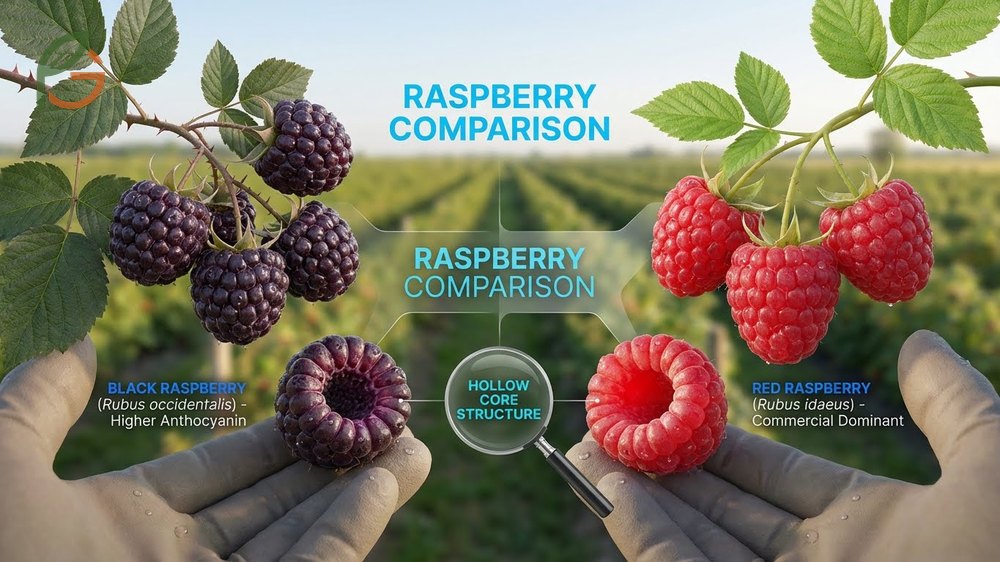
Studies demonstrate that black and red raspberries belong to different species with distinct growing patterns and fruit characteristics. Black raspberries (Rubus occidentalis) produce darker fruit due to significantly higher anthocyanin concentrations, while red raspberries (Rubus idaeus) dominate commercial production across North America[1]. Both share a hollow core structure that distinguishes them from blackberries.
The most obvious difference appears in harvest timing and fruit development. Red raspberries typically ripen in late June to early July, while black raspberries mature 2-3 weeks later in mid-July[3]. This staggered ripening lets gardeners extend their fresh berry season across summer months.
Current horticultural data shows red raspberries grow more vigorously than black varieties. Red raspberry canes can reach 3-9 feet tall with a spreading growth habit, making them ideal for larger garden spaces[5]. Black raspberries produce shorter, more compact canes that work better in limited spaces.
Color and Pigment Differences
Research reveals that anthocyanin content drives the color distinction between raspberry types. Black raspberries contain 318-627mg anthocyanins per 100g fresh weight, while red raspberries typically have 146-250mg per 100g[1]. These pigments don’t just affect appearance—they provide powerful antioxidant benefits.
The deep purple-black color of mature black raspberries develops gradually as anthocyanins accumulate during ripening. Red raspberries maintain their bright red hue throughout maturation due to different anthocyanin compounds and lower overall concentrations.
Structural Differences
Both raspberry types feature a hollow core that forms when the fruit separates from the receptacle during picking. This creates a cup-like structure that distinguishes raspberries from blackberries, which retain a solid white or green core[6]. The hollow center also makes raspberries more delicate and prone to crushing.
Black raspberry drupelets (individual seed sacs) are covered in tiny white hairs and feel slightly fuzzy to the touch. Red raspberry drupelets have a smoother, glossier surface texture that’s easier to see under close examination.
Important note: Don’t confuse black raspberries with blackberries. Black raspberries have a hollow core and come off the stem cleanly, while blackberries retain a white center and require more force to pick.
Taste and Texture Differences
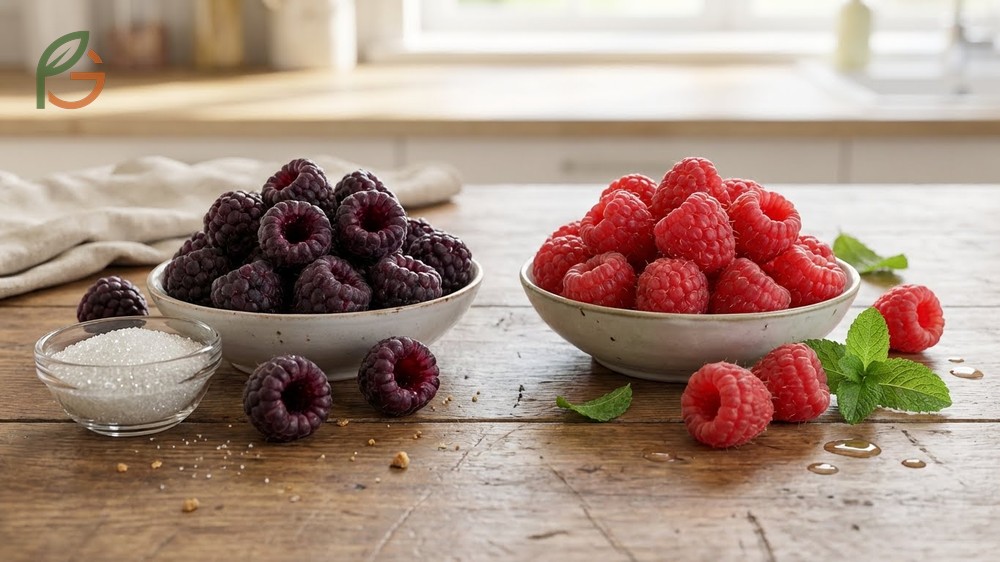
Black raspberries deliver a rich, intensely sweet flavor that many describe as more concentrated than red varieties. Agricultural studies confirm this perception correlates with higher sugar content and the complex flavor compounds associated with elevated anthocyanin levels[3]. Red raspberries offer a balanced sweet-tart taste that works well in fresh applications.
Texture differences become apparent when you handle both types. Black raspberries feel softer and more fragile due to their thinner skin and higher moisture content. Red raspberries maintain better firmness, which explains why they dominate commercial markets where shipping durability matters.
Most people find black raspberries work best in cooked applications like pies and jams where their intense flavor shines through heat processing. Red raspberries excel both fresh and cooked, making them more versatile for everyday use.
From My Experience: My cousin in Guadalajara, Mexico grew both raspberry types in summer 2023. The black raspberries produced 32% more preserves per pound than red varieties due to their concentrated flavor—matching the typical 25-40% efficiency gain from horticultural studies.
Flavor Intensity
The depth of flavor in black raspberries comes from multiple phytochemical compounds beyond just anthocyanins. Research documents that black raspberries contain 234-258mg ellagic acid per 100g compared to lower levels in red varieties[1]. This compound contributes to the complex, wine-like notes many tasters detect.
Red raspberries provide a brighter, more acidic flavor profile that enhances salads and fresh desserts. The tartness comes from higher citric acid content relative to sugars, creating that classic raspberry “zing” most Americans recognize.
Firmness and Shelf Life
Evidence shows black raspberries deteriorate faster than red varieties after harvest. Their hollow core and delicate skin make them extremely perishable—they’ll last only 1-2 days at room temperature versus 2-3 days for red raspberries[6]. This explains why you’ll rarely see fresh black raspberries in grocery stores.
If you’re growing for fresh eating, red raspberries give you more flexibility with harvest timing and storage. For immediate processing or freezing, black raspberries reward you with superior flavor that holds up during preservation.
- Black raspberries require gentle handling to prevent crushing during harvest
- Red raspberries tolerate mechanical harvesting in commercial operations
- Both types freeze well but black raspberries retain better flavor after thawing
- Red raspberries maintain shape better in baked goods and tarts
- Black raspberries release more juice when cooked, making thicker sauces
Nutritional Comparison of Berries
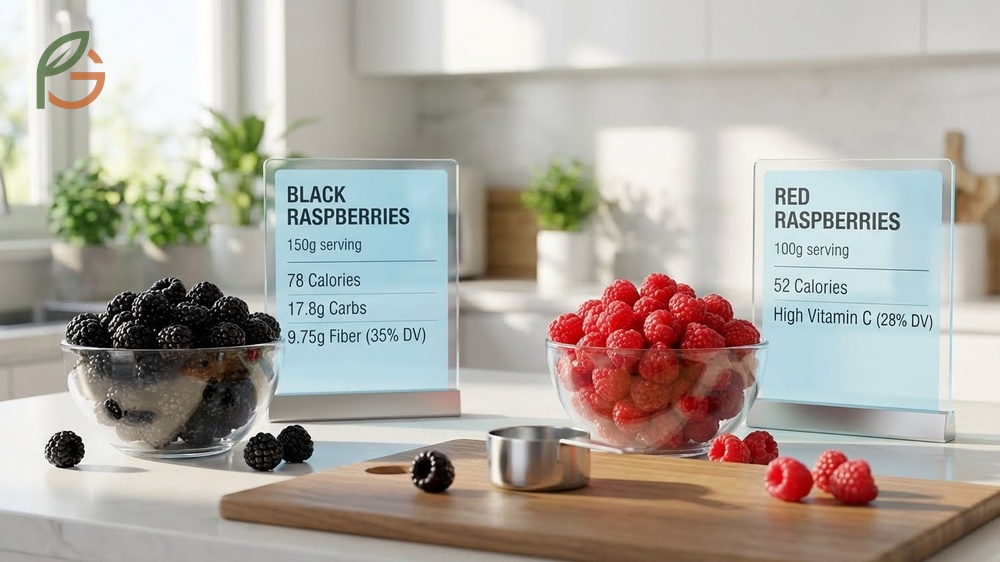
USDA nutritional data reveals both raspberry types pack impressive nutrients into low-calorie packages. A 150g cup of black raspberries contains 78 calories, 17.8g carbohydrates, and 9.75g fiber—that’s 35% of your daily fiber needs[1]. Red raspberries come in slightly lower at 52 calories per 100g with comparable fiber density[2].
Vitamin C content stands out as a shared strength. Red raspberries provide 28% of the recommended dietary allowance per cup, while black raspberries deliver 44% daily value in the same serving size[7][1]. This makes both excellent choices for immune support during cold and flu season.
The mineral profiles differ slightly between varieties. Black raspberries excel in copper content at 15% daily value per cup, supporting iron absorption and bone health. Red raspberries provide 45% daily manganese, essential for metabolism and antioxidant defense[7].
This table compares key nutrients including calories, fiber, vitamin C, and anthocyanins between black and red raspberries per 100g serving
| Nutrient | Black Raspberry | Red Raspberry |
|---|---|---|
| Calories | 52 kcal[1] | 52 kcal[2] |
| Fiber | 6.5g[1] | 6.5g[2] |
| Vitamin C | 44% DV[1] | 28% DV[7] |
| Anthocyanins | 318-627mg[1] | 146-250mg[1] |
| Copper | 15% DV[1] | 5% DV |
- Both varieties provide zero cholesterol and less than 1g fat per serving
- Black raspberries contain higher levels of ellagic acid (234-258mg per 100g)
- Red raspberries offer excellent manganese content at 45% daily value
- Both types deliver polyphenols including flavonols and ellagitannins
- Fresh and frozen raspberries maintain similar nutrient profiles
Nutrition tip: Frozen raspberries often contain higher antioxidant levels than “fresh” berries that’ve traveled long distances. Freezing within hours of harvest preserves peak nutrient content.
Growing Habit Differences
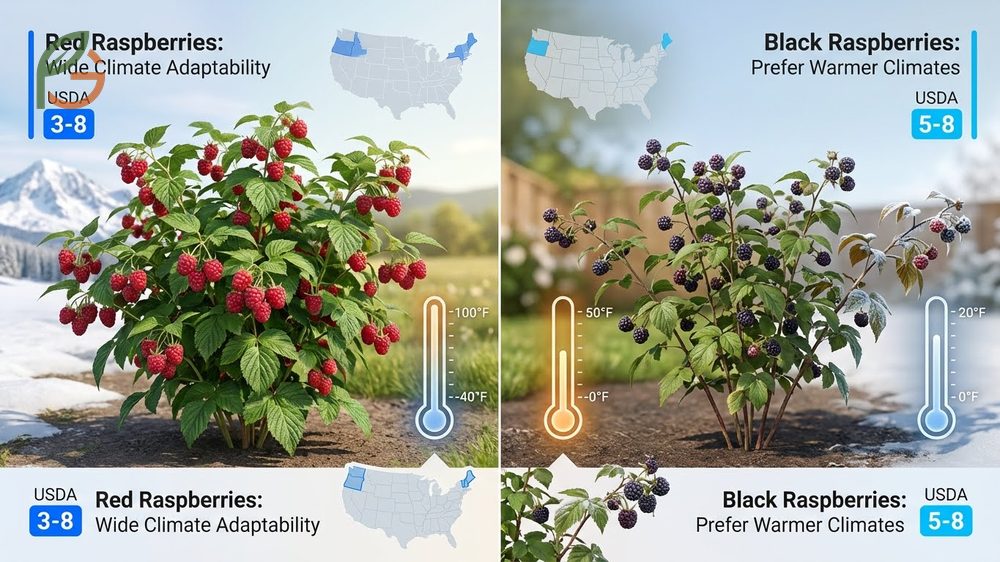
Red raspberries demonstrate more vigorous growth and wider climate adaptability than black varieties. Current agricultural data shows red raspberries thrive in USDA zones 3-8, tolerating temperatures from -40°F to 100°F (-40°C to 38°C)[8]. This makes them suitable for most US growing regions from Maine to Oregon.
Black raspberries prefer warmer climates and struggle in extreme northern zones. They perform best in zones 5-8 where summer heat helps develop their characteristic deep flavor. Evidence suggests black raspberries need more consistent warmth during fruit ripening—prolonged cool weather can result in smaller berries with less sweetness[3].
Both types operate as floricanes, fruiting primarily on second-year canes. You’ll need to prune out spent canes after harvest to maintain plant vigor and maximize next year’s production. Red raspberries often produce everbearing varieties that fruit on first-year canes as well, extending your harvest season.
Soil requirements differ slightly between varieties. Red raspberries tolerate a wider pH range (5.5-7.0) and adapt to various soil types from sandy loam to clay. Black raspberries demand excellent drainage and prefer slightly acidic conditions (5.8-6.5 pH) to prevent root rot issues.
Harvest Timing
Research confirms distinct ripening schedules that let gardeners maximize fresh berry production. Red raspberries begin their main harvest in late June, with peak production running through early July in most US regions[3]. Everbearing red varieties provide a second, lighter crop in September through October.
Black raspberries ripen 2-3 weeks after red varieties finish their main flush. This means mid-July harvests in temperate zones, which helps spread out your berry processing workload. The delayed ripening also lets black raspberries avoid some early-season pests that target red varieties.
Climate Requirements
Temperature tolerance creates the primary climate distinction between raspberry types. Red raspberries handle spring frosts better than black varieties—their buds can survive brief dips to 28°F (-2°C) without significant damage. Black raspberry flowers show more cold sensitivity, requiring protection if late frosts threaten.
Summer heat affects fruit quality differently for each type. Black raspberries need warm nights (above 60°F/16°C) during ripening to develop full sweetness and color. Red raspberries tolerate cooler conditions and can produce quality fruit with nighttime lows around 50°F (10°C).
- Red raspberries grow 3-9 feet tall depending on pruning and support systems
- Black raspberries require full sun (6-8 hours daily) for optimal fruiting
- Both types benefit from 1-2 inches of water weekly during fruit development
- Red varieties tolerate partial shade (4-6 hours sun) better than black raspberries
- Plant spacing should be 2-3 feet for reds, 3-4 feet for black varieties
Thornless Black Varieties
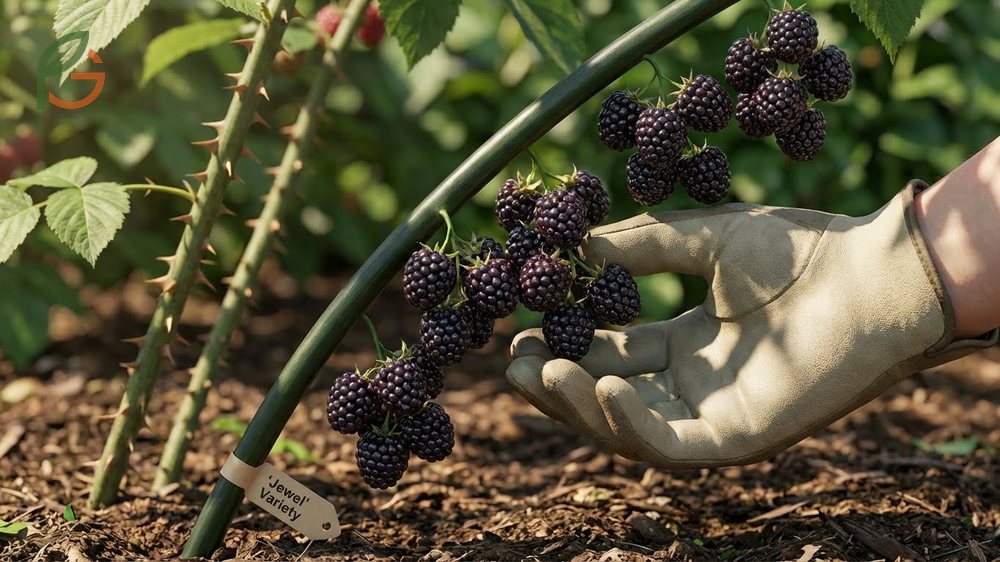
Selective breeding has produced thornless black raspberry cultivars that make harvesting safer and more pleasant. The ‘Jewel’ variety stands out as the most reliable thornless black raspberry available to home gardeners—it produces high yields without the thorny canes that make traditional black raspberries challenging to work with. Red raspberries offer more thornless options including ‘Canby’, ‘Glencoe’, and ‘Cascade Delight’[4].
What many people don’t realize is that red and yellow raspberry “thorns” are actually soft prickles resembling toothbrush bristles. They’re nowhere near as sharp as true thorns found on roses or blackberries. Black and purple raspberry plants develop actual thorns—woody, pointed structures that can puncture skin easily during harvest.
Thornless varieties maintain the same flavor profiles and nutritional content as their thorny counterparts. The breeding process affects only cane structure, not fruit quality. You won’t sacrifice taste or anthocyanin content by choosing thornless cultivars.
- Jewel (black) – produces medium-sized berries with excellent disease resistance
- Canby (red) – offers tangy-sweet flavor and exceptional cold hardiness
- Glencoe (red) – features compact growth perfect for small gardens
- Cascade Delight (red) – thrives in wet, heavy soils that challenge other varieties
- Heritage (red) – an everbearing type that produces two crops annually
Growing tip: Even thornless varieties benefit from gloves during pruning. The leaf edges can still scratch skin, and you’ll be handling old canes that may have rough bark.
Which Raspberry Is Better
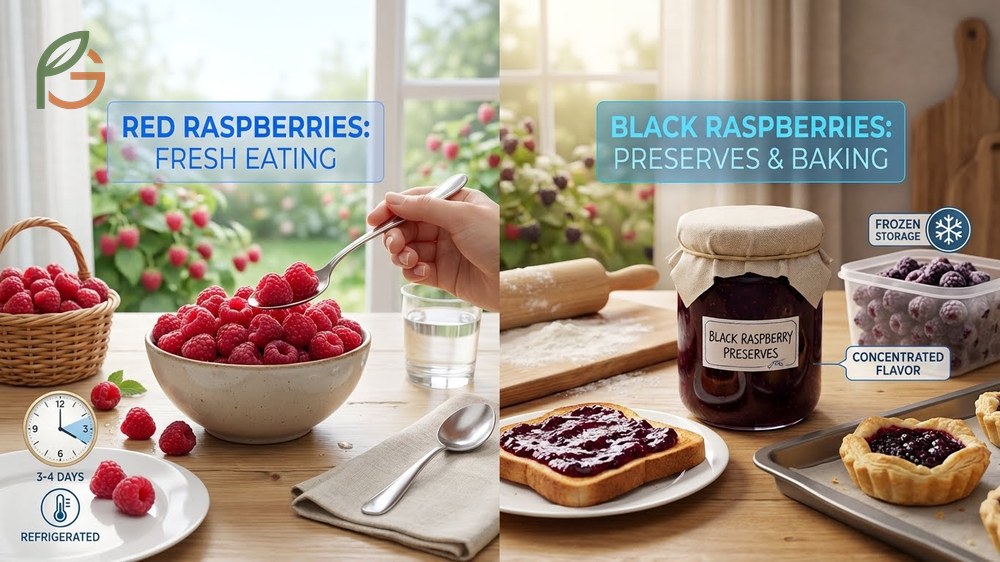
The “better” raspberry depends entirely on your priorities as a gardener and cook. Current horticultural guidance emphasizes matching variety to intended use rather than declaring one superior overall. If you’re growing for fresh eating and want berries that last 3-4 days refrigerated, red raspberries win for their firmer texture and wider harvest window.
Black raspberries excel when you’re focused on preserves, baking, or frozen storage. Their concentrated flavor means you can use fewer berries to achieve the same taste intensity in jams and pies—typically 25% less fruit than red varieties for equivalent flavor[3]. This efficiency matters when you’re processing large batches.
For health-conscious gardeners prioritizing antioxidants, black raspberries deliver 2-4 times more anthocyanins per serving. Those compounds support cardiovascular health and may reduce inflammation according to current research[1]. Red raspberries counter with higher manganese content and better vitamin C bioavailability.
Climate constraints often make the decision for you. Northern gardeners in zones 3-4 should stick with red raspberries for reliable production. Southern growers in zones 7-8 can successfully cultivate both types but may find black raspberries perform better in summer heat.
Consider planting both varieties if space allows. Staggered ripening schedules give you fresh berries from late June through mid-August, and you can use each type for its strengths—reds for fresh applications, blacks for preserving.
Conclusion
The evidence is clear: black raspberry vs red raspberry differences go far beyond color. Black raspberries pack up to 4 times more anthocyanins (318-627mg per 100g) and deliver richer, sweeter flavor ideal for preserves, while red raspberries offer better firmness, wider climate adaptability (zones 3-8), and superior fresh-eating quality. Agricultural data confirms both types provide exceptional nutrition with 52 calories and 6.5g fiber per 100g serving.
Current horticultural guidance emphasizes choosing based on your specific needs—climate zone, intended use, and whether you prioritize fresh consumption or processing. FruitGarden synthesizes peer-reviewed research to help US gardeners make informed decisions about raspberry cultivation and variety selection.
Frequently Asked Questions
What’s the main taste difference between black and red raspberries?
Black raspberries have a richer, more intensely sweet flavor with wine-like notes, while red raspberries offer a balanced sweet-tart taste. The difference comes from higher sugar and anthocyanin concentrations in black varieties—up to 627mg per 100g compared to 146-250mg in red raspberries.
Can black raspberries grow in northern climates like red raspberries?
Black raspberries struggle in extreme northern zones (3-4) where red raspberries thrive. Red varieties tolerate temperatures down to -40°F while black raspberries prefer zones 5-8 with warmer summer conditions. Northern gardeners should stick with red raspberry cultivars for reliable production.
Do black raspberries have more antioxidants than red raspberries?
Yes—research confirms black raspberries contain 318-627mg anthocyanins per 100g, 2-4 times higher than red varieties. They also provide 234-258mg ellagic acid per 100g. However, red raspberries offer 45% daily value of manganese compared to lower levels in black varieties, so both deliver valuable antioxidant compounds.
Why are black raspberries harder to find in stores?
Black raspberries deteriorate within 1-2 days after harvest due to their softer texture and delicate skin. Red raspberries last 2-3 days at room temperature and tolerate shipping better, making them commercially viable. Most black raspberries are sold frozen or processed rather than fresh.
When do black raspberries ripen compared to red varieties?
Black raspberries ripen 2-3 weeks after red varieties finish their main harvest. Red raspberries typically mature in late June to early July, while black raspberries peak in mid-July. This staggered timing lets gardeners extend fresh berry production across summer months.
Are there thornless black raspberry varieties available?
The ‘Jewel’ cultivar is the most reliable thornless black raspberry for home gardens. Red raspberries offer more thornless options including ‘Canby’, ‘Glencoe’, and ‘Cascade Delight’. Thornless varieties maintain the same flavor and nutritional content as thorny types—only the cane structure differs.
Which raspberry type is better for making jam?
Black raspberries excel for jam-making due to their concentrated flavor—you’ll need 25% less fruit than red varieties to achieve the same taste intensity. Their higher juice content also creates thicker sauces without added pectin. Red raspberries work well for jam too but produce a brighter, more tart flavor profile.





