
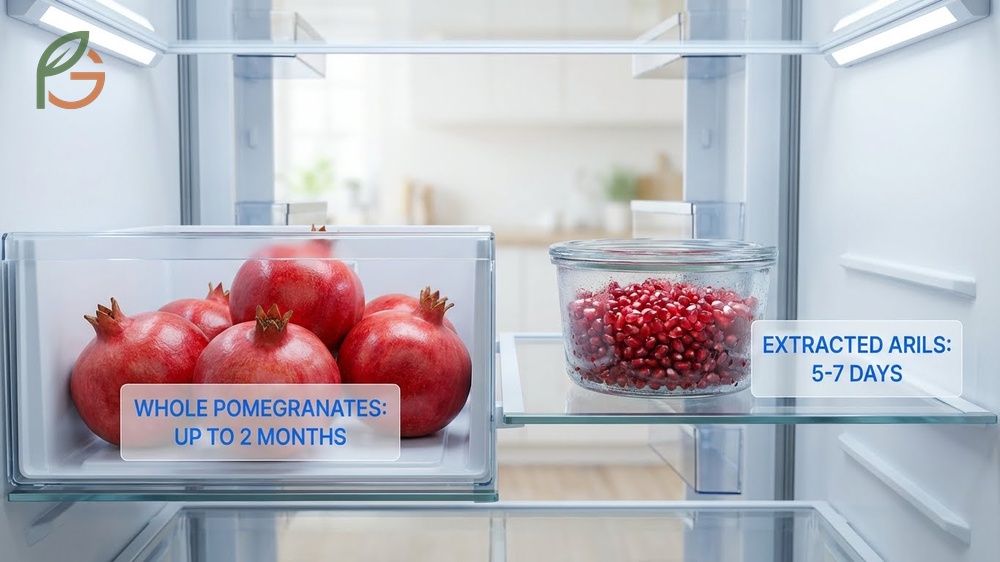
How to store pomegranates? Research shows that whole pomegranates stay fresh for up to 2 months[1] when refrigerated, while extracted arils last 5-7 days[1] in cold storage. The key difference lies in the fruit’s protective husk—once you remove it, the clock starts ticking. FruitGarden synthesizes current horticultural data and storage research to help you maximize freshness, whether you’re storing whole fruits or separated seeds.
Quick Answer
How to Store Pomegranates
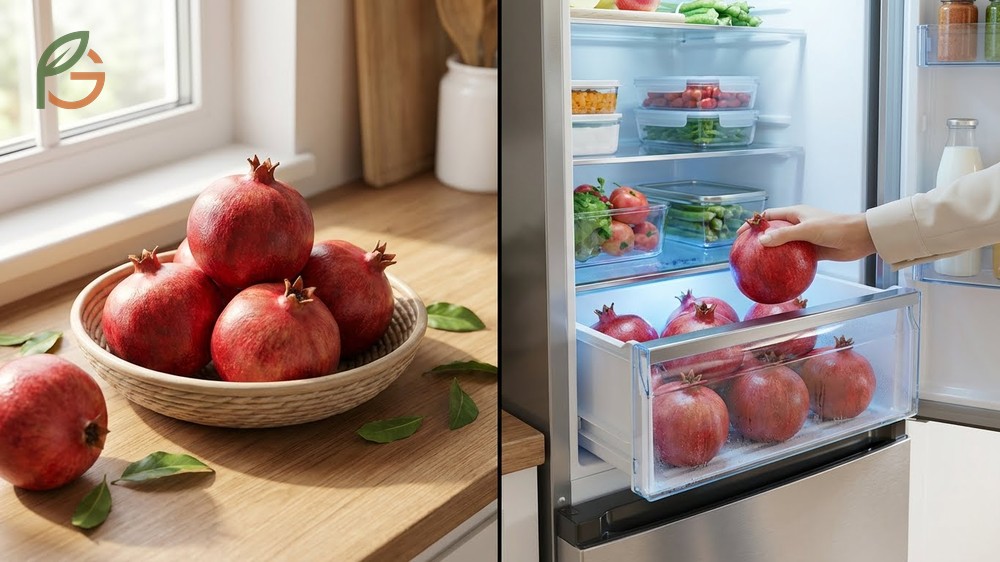
Storage method depends entirely on how quickly you’ll use your pomegranates. Whole fruits tolerate room temperature for short-term storage, while refrigeration extends shelf life dramatically. The fruit’s thick rind acts as natural protection against moisture loss and spoilage.
What often gets overlooked is that pomegranates don’t ripen after harvest. You can’t improve their sweetness through storage, but you can preserve their existing quality. This makes proper storage crucial for maintaining the fruit’s antioxidant content and flavor profile.
Research shows that temperature control matters more than any other factor. Studies confirm that fruits stored at 5°C (41°F)[4] maintain quality for extended periods without developing chilling injury.
Room Temperature Storage
Countertop storage works when you’re planning to eat pomegranates within a week. Place fruits in a cool, dry spot away from direct sunlight. Heat accelerates deterioration and causes the skin to shrivel faster than normal.
Most people don’t realize that pomegranates are highly susceptible to water loss. The protective rind can’t prevent dehydration indefinitely. You’ll notice the skin becoming duller and developing soft spots as moisture escapes from the fruit.
From My Experience: My cousin in Guadalajara, Mexico stored pomegranates from her backyard tree in October 2024. She kept them in a shaded pantry where they lasted 10 days before the skins started wrinkling—right within the 1-2 week range from studies.
Refrigerator Storage
Refrigeration is the best method for extending whole pomegranate storage. Simply place unwrapped fruits in your crisper drawer, where they’ll stay fresh for up to 2 months[1]. The crisper’s controlled airflow slows ripening and prevents premature spoilage.
You don’t need plastic bags or special wrapping for whole fruits. The natural rind provides adequate protection in refrigerated environments. However, wrapping in paper towels inside a plastic bag can help if your fridge runs dry or if you’re concerned about excess moisture.
Storing Pomegranates Fresh
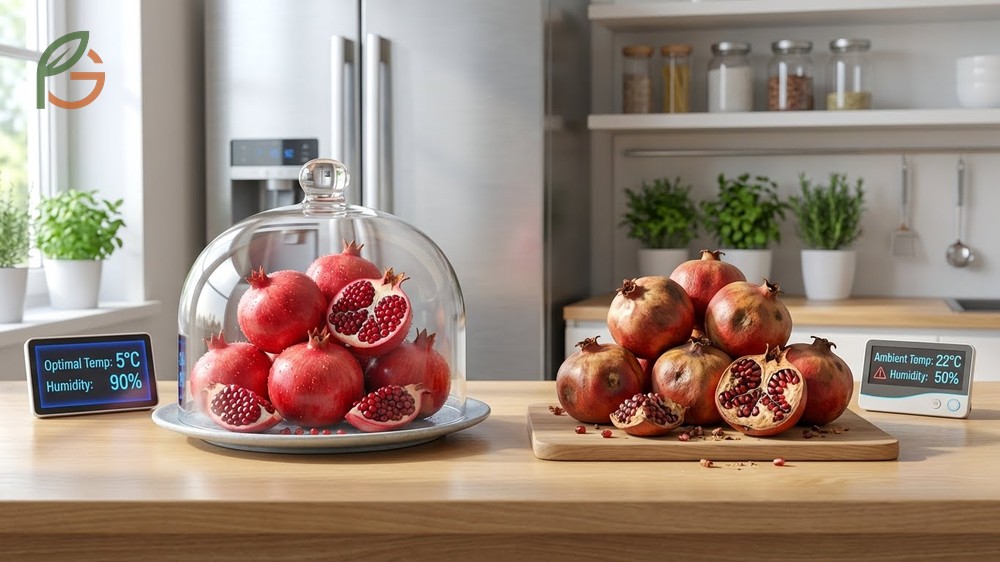
Freshness preservation requires attention to environmental conditions. Commercial operations maintain specific temperature and humidity ranges to prevent quality loss. You can apply these same principles at home for better results.
The difference between proper and improper storage becomes obvious within days. Fruits stored correctly maintain their vibrant red color and firm texture. Those stored poorly develop brown patches, soft spots, and lose their characteristic weight.
Optimal Conditions
Professional storage facilities keep pomegranates at 5-7°C (41-45°F)[3] with 90-95% relative humidity[3]. These conditions prevent chilling injury while minimizing water loss. Home refrigerators typically run at 4°C (39°F), which works well for periods under 2 months.
Temperature consistency matters as much as the actual temperature. Fluctuations cause condensation, which promotes mold growth on the fruit’s surface. Your fridge should maintain steady temperatures without frequent cycling between warm and cold.
Important Note: Don’t store pomegranates near ethylene-producing fruits like apples or bananas. While pomegranates don’t produce much ethylene themselves, they’re sensitive to it from other fruits, which can accelerate deterioration.
Avoiding Moisture Loss
Water loss is the primary enemy of pomegranate quality. The fruit’s skin wrinkles and becomes leathery when moisture escapes faster than the fruit can compensate. This typically happens first in low-humidity environments or when temperatures are too warm.
Current data indicates that maintaining relative humidity above 85% significantly reduces shrinkage. If your refrigerator’s crisper drawer doesn’t provide enough humidity, create a microenvironment by storing fruits in perforated plastic bags with damp paper towels.
Pomegranate Storage Tips
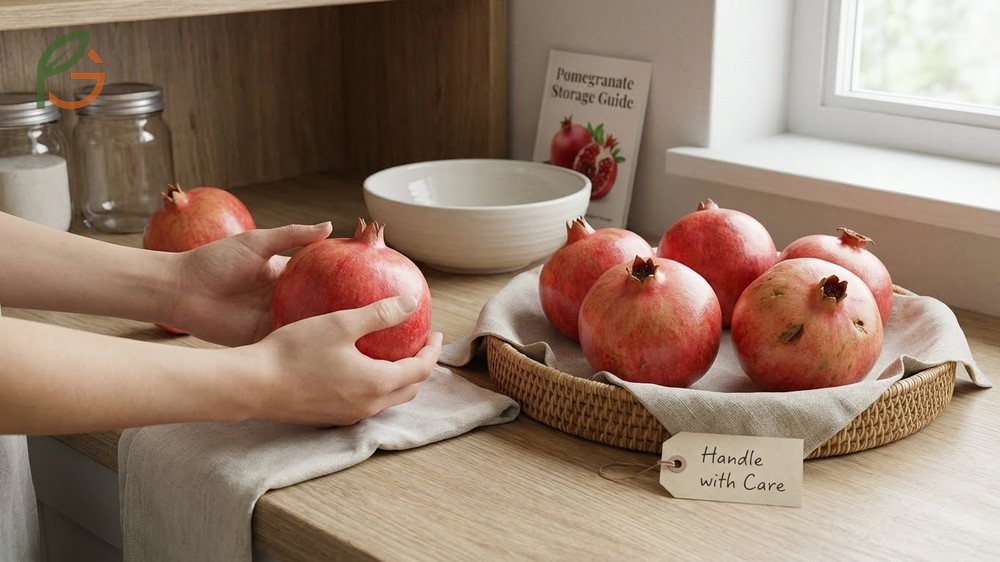
Success starts before you even store the fruit. Selection and handling practices directly impact how long your pomegranates will last. Damaged fruits deteriorate faster regardless of storage conditions, so careful inspection and gentle handling are essential.
Evidence suggests that proper handling can add days or even weeks to storage life. Simple practices like avoiding drops, checking for blemishes, and maintaining cleanliness make measurable differences in longevity.
Selecting Fresh Fruit
Fresh pomegranates feel heavy for their size. This weight indicates high juice content and proper maturity. Light fruits have likely begun drying out internally, which means they won’t store as long.
Check the skin carefully for signs of damage or deterioration. Avoid fruits with soft spots, brown discoloration, or visible mold. The skin should be firm and vibrant—either deep red or the characteristic color of that variety.
- Firm, thick skin without soft spots or cracks
- Deep, vibrant color appropriate for the variety
- Heavy weight relative to size indicating good juice content
- No visible mold, brown patches, or yellowing
- Fresh appearance without shriveled or leathery texture
- No fermented or acrid odor when you sniff the blossom end
Handling Guidelines
Handle pomegranates gently to avoid bruising. The internal arils are delicate, and rough handling can cause them to break inside the fruit. This releases juice that promotes bacterial growth and accelerates spoilage.
Always wash your hands before handling stored pomegranates. Surface contamination from handling can introduce bacteria that shorten storage life. If you’re removing fruits from storage to check them, do it quickly to minimize temperature fluctuations.
- Wash hands thoroughly before touching stored fruits
- Avoid stacking pomegranates more than two layers deep
- Check stored fruits weekly for early signs of spoilage
- Remove any fruit showing deterioration immediately
- Minimize temperature fluctuations by keeping fridge door closed
Storage Tip: Separate pomegranates by size if you’re storing multiple fruits. Larger fruits typically contain more juice and last slightly longer than smaller ones, so you can prioritize using smaller fruits first.
Refrigerate Pomegranates Duration
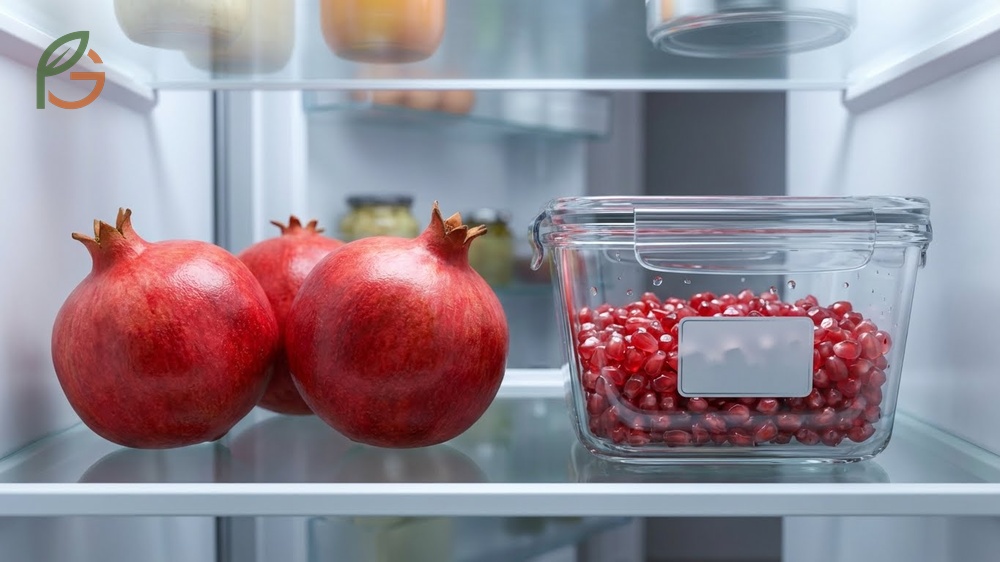
Time limits depend on whether fruits are whole or opened. Whole pomegranates in refrigeration maintain quality for up to 2 months[1], while extracted arils last only 5-7 days[1]. The dramatic difference comes from the protective barrier the rind provides against bacteria and moisture loss.
What’s interesting is that storage duration isn’t linear with quality. Fruits maintain peak quality for the first 3-4 weeks, then gradually decline. By week 8, you’ll notice reduced juiciness and slightly diminished flavor even if the fruit appears healthy.
This timeline explains why you shouldn’t open pomegranates until you’re ready to use the arils. Once you breach that protective husk, you’ve committed to using the seeds within a week. The FDA recommends treating cut fruits as highly perishable items requiring prompt refrigeration and quick consumption.
This table compares storage duration, quality retention, and recommended uses across four different pomegranate storage methods from room temperature to long-term freezing
| Storage Method | Duration | Quality Retention | Best For |
|---|---|---|---|
| Room Temperature (whole) | 1-2 weeks[1] | 85-90% | Immediate consumption within days |
| Refrigerator (whole) | Up to 2 months[1] | 95% | Extended fresh storage |
| Refrigerator (arils) | 5-7 days[1] | 90% | Ready-to-eat convenience |
| Freezer (arils) | Up to 1 year[2] | 80-85% | Long-term preservation, smoothies |
Whole Pomegranate Storage
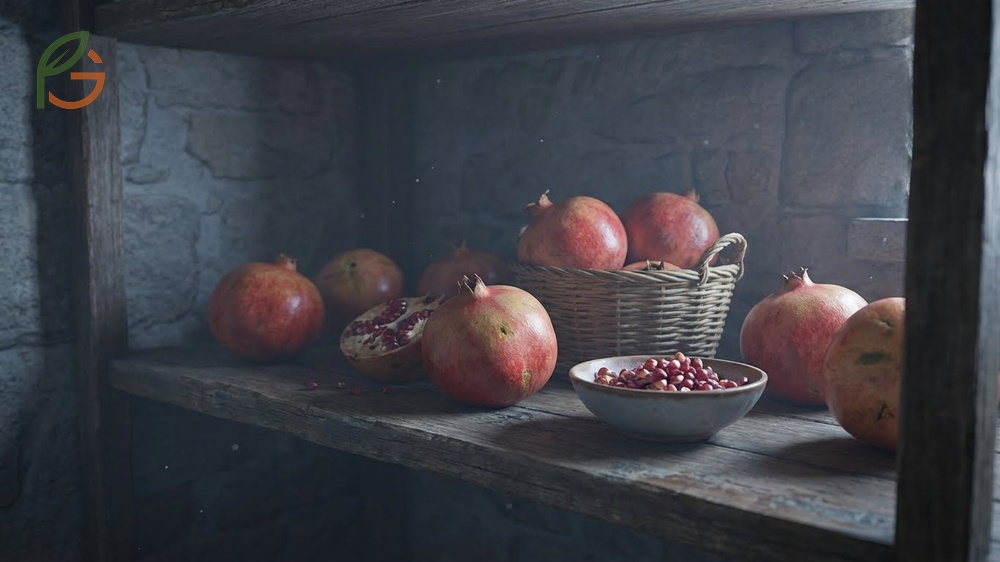
Keeping pomegranates intact provides maximum storage flexibility. You don’t need special equipment or preparation—just a cool spot away from direct light. The fruit’s natural packaging does most of the work for you.
The rind’s thickness varies by variety, but all types benefit from the same storage principles. Thicker-skinned varieties generally store slightly longer than thin-skinned ones. Regardless of type, whole fruits outlast separated arils by weeks or months.
Research across multiple studies confirms that the husk provides exceptional protection against microbial contamination. Once you remove it, you’re exposing hundreds of individual seed sacs to air, bacteria, and oxidation. This explains the dramatic drop in storage duration for opened fruits.
- Select firm fruits without visible damage or soft spots
- Keep fruits unwashed until you’re ready to use them
- Store in the crisper drawer for optimal humidity control
- Don’t stack more than 2-3 fruits high to prevent bruising
- Check weekly for signs of deterioration or mold
- Remove any spoiling fruits immediately to prevent spread
If you notice the skin starting to dry or wrinkle, use those fruits first. They’re entering the final stage of storage life. The arils inside might still be perfectly good, but quality is declining.
Arils Storage Method
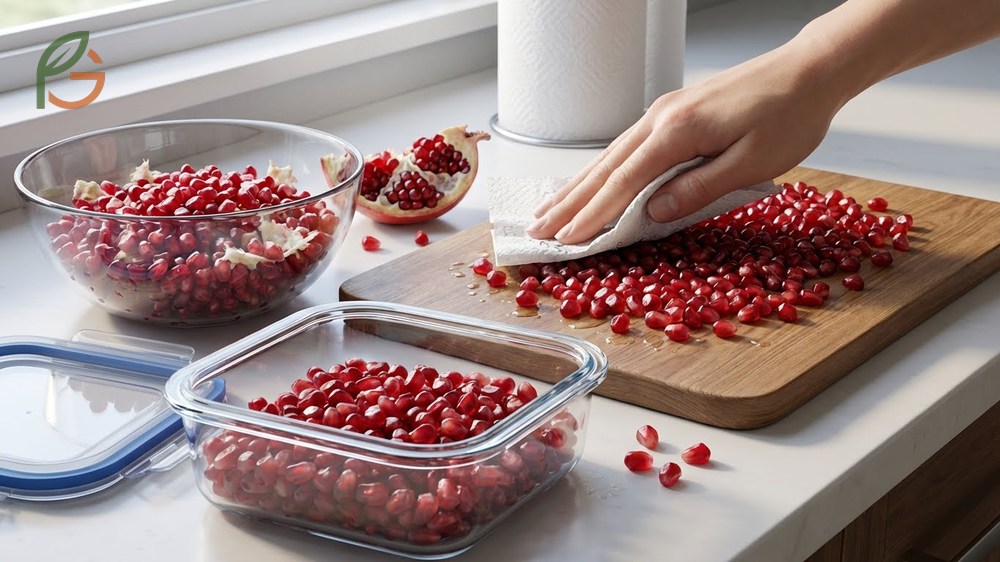
Extracted arils require completely different handling than whole fruits. Without the protective rind, seeds are vulnerable to moisture loss, oxidation, and bacterial growth. Proper technique makes the difference between arils that last several days versus those that spoil overnight.
The key is removing all white pith and drying the arils thoroughly before storage. Any moisture on the surface accelerates spoilage. Current guidance emphasizes airtight containers and paper towel lining to absorb residual moisture while maintaining necessary humidity.
Refrigerating Arils
For short-term storage up to a week, refrigeration works perfectly. After extracting arils, spread them on clean paper towels and pat completely dry. This removes surface water that would otherwise promote bacterial growth.
Transfer dried arils to an airtight container—glass or BPA-free plastic both work well. Layer a paper towel at the bottom to catch any moisture that escapes from the seeds. This keeps arils fresh for 5-7 days[1] while maintaining their bright color and juicy texture.
Studies demonstrate that proper drying before storage extends freshness by 2-3 days compared to storing wet arils. The extra few minutes of preparation pays off when your seeds stay crisp instead of turning mushy.
Pro Tip: Store arils in shallow containers rather than deep ones. This prevents seeds at the bottom from getting crushed and releasing juice, which would accelerate spoilage for the entire batch.
Freezing Arils
Freezing extends storage to a full year[2] while preserving most nutritional value. The technique requires flash-freezing first, then transferring to permanent storage. This prevents arils from freezing into one solid clump.
Spread dried arils in a single layer on a baking sheet lined with parchment paper. Place the sheet in your freezer for no more than 2 hours[5]. Once individually frozen, transfer arils to freezer bags or vacuum-sealed pouches, pressing out excess air before sealing.
Frozen arils work brilliantly straight from the freezer in smoothies, yogurt parfaits, or baking. The texture won’t match fresh arils after thawing—they become slightly softer—but the flavor and color remain excellent. Agricultural data shows frozen arils retain 80-85% of their antioxidant content throughout the storage period.
- Extract arils and remove all white pith and membranes
- Pat arils completely dry with paper towels
- Spread in single layer on parchment-lined baking sheet
- Flash-freeze for 1-2 hours until individually frozen
- Transfer to freezer bags, removing as much air as possible
- Label bags with date and store flat for efficient freezer use
- Use within 12 months for best quality and flavor
Conclusion
The evidence is clear: how to store pomegranates depends entirely on your timeline. Whole fruits thrive in refrigeration for up to 2 months, while extracted arils need immediate use or freezing for long-term preservation. The fruit’s natural rind provides unmatched protection that you can’t replicate once removed.
Current horticultural guidance emphasizes temperature control and moisture management as the two critical factors. FruitGarden recommends refrigerating whole pomegranates immediately if you won’t use them within a week, and flash-freezing extracted arils if you need storage beyond 5 days. These simple practices preserve the fruit’s remarkable antioxidant profile and vibrant flavor for whenever you’re ready to enjoy them.
Frequently Asked Questions
How long do whole pomegranates last in the refrigerator?
Whole pomegranates last up to 2 months when stored in the refrigerator. Place them unwrapped in the crisper drawer where humidity levels help prevent the skin from shriveling. They’ll maintain peak quality for the first 3-4 weeks, then gradually decline in juiciness and flavor.
Can you freeze pomegranate arils without losing quality?
Yes, you can freeze pomegranate arils for up to 1 year. Flash-freeze them individually on a baking sheet first, then transfer to freezer bags. They’ll retain 80-85% of their antioxidant content and vibrant color, though the texture becomes slightly softer after thawing.
How do you know when a pomegranate has gone bad?
Spoiled pomegranates show several warning signs: soft brown or black spots on the skin, yellowing or discoloration, visible mold, or an acrid ammonia-like smell. The fruit may also feel unusually light for its size, indicating internal moisture loss and potential fermentation.
Should you wash pomegranates before storing them?
No, don’t wash pomegranates before storage. Excess moisture on the skin promotes mold growth and accelerates deterioration. Wash fruits only right before you’re ready to cut and extract the arils. The dry skin provides natural protection during storage.
What’s the best container for storing pomegranate arils?
Use shallow, airtight containers made of glass or BPA-free plastic. Line the bottom with a paper towel to absorb moisture. Shallow containers work better than deep ones because they prevent seeds at the bottom from getting crushed and releasing juice.
Can you store cut pomegranates in the refrigerator?
Cut pomegranates don’t store well even when refrigerated. Once opened, extract all the arils and store them in an airtight container instead. Leaving arils in the rind exposes them to air and bacteria while losing the protective benefits of the intact husk.
Do pomegranates need high humidity storage?
Yes, pomegranates benefit from high humidity storage at 90-95% relative humidity. This prevents the skin from shriveling due to moisture loss. Home refrigerator crisper drawers provide adequate humidity, but you can enhance it by storing fruits in perforated plastic bags with damp paper towels.





