
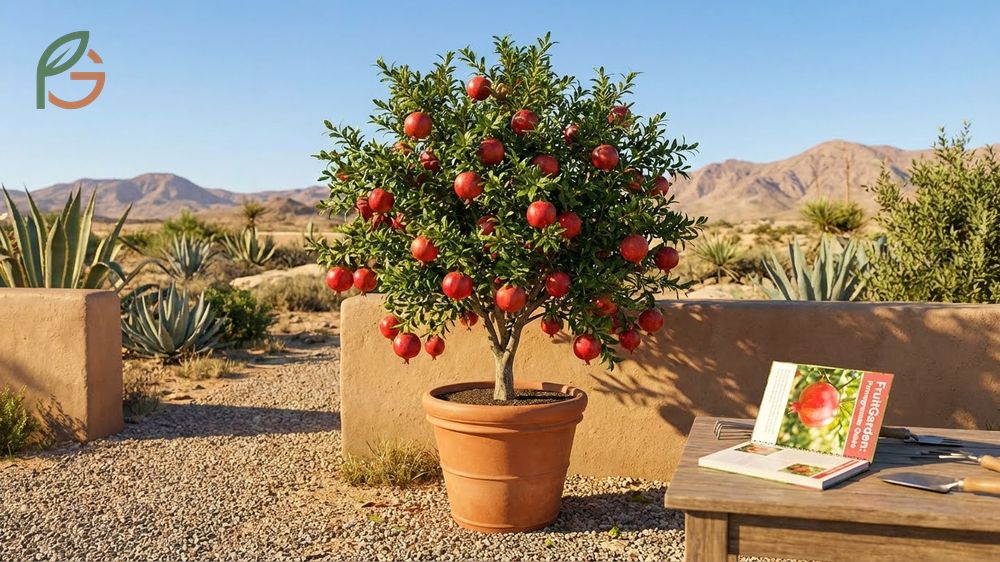
How to grow a pomegranate tree starts with choosing the right climate—USDA zones 7-11 work best, though some hardy varieties tolerate zone 6[1]. Research shows these drought-tolerant trees thrive in hot, arid summers with temperatures above 85°F (29°C) and mild winters, making them perfect for southwestern gardens[2]. FruitGarden synthesizes current horticultural research to help gardeners master pomegranate cultivation from seed to harvest, whether you’re planting in-ground or growing dwarf varieties in containers.
Quick Answer
- Plant in USDA zones 7-11[1] with full sun (6-8 hours daily)
- Seeds germinate in 14-28 days[3] at 70°F (21°C) after 24-hour soaking
- Trees start producing fruit in 3-4 years[4] and can live for decades
- Water deeply but infrequently; avoid overwatering to prevent root rot[5]
How To Grow A Pomegranate Tree
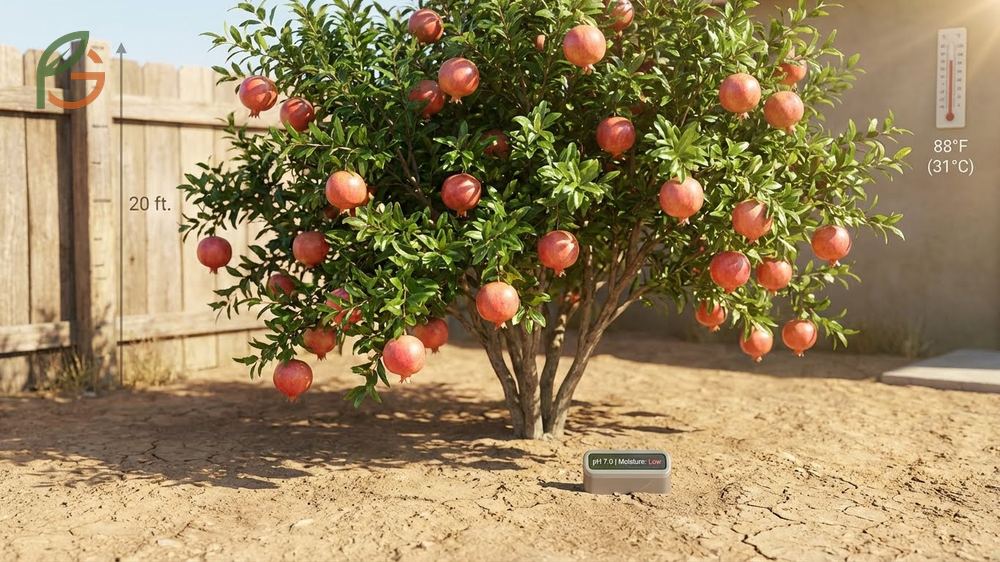
Research shows pomegranate trees adapt to most well-drained soils but thrive in slightly alkaline conditions with pH 5.5-7.2. These deciduous shrubs grow 16-26 feet tall (5-8 meters) at maturity, reaching full size within 5-6 years[4]. You’ll get the best fruit production when temperatures stay above 85°F (29°C) during the growing season.
Most people don’t realize pomegranates tolerate drought once established, making them ideal for water-conscious landscapes. The trees need 6-8 hours of direct sunlight daily for optimal flowering and fruit set. Poor drainage causes more problems than dry soil—waterlogged roots lead to fatal root rot within weeks.
From My Experience: My cousin in Guadalajara, Mexico planted two pomegranate varieties in March 2023. The ‘Wonderful’ cultivar reached 4 feet by October versus the expected 2-3 feet, while the dwarf ‘Nana’ stayed compact at 18 inches—matching research on variety-specific growth rates.
Pomegranate Tree Climate Zones
Pomegranates grow best in USDA hardiness zones 7-10, with zones 8-10 producing the highest yields[6]. Cold-hardy varieties with Russian genetics survive in zones 5-6, though fruit production drops significantly[7]. Trees suffer damage below 12°F (-11°C) unless gradually hardened off to cold.
The semi-arid to subtropical climate of Arizona, California, Nevada, Utah, and New Mexico provides ideal conditions. Hot, dry summers with low humidity prevent fungal diseases that plague pomegranates in humid regions. If you’re in zones 3-5, container growing allows you to bring trees indoors during winter.
Where Do Pomegranate Trees Grow
Commercial pomegranate production thrives in California’s Central Valley, Arizona’s deserts, and Texas’s Rio Grande Valley. These regions offer 200+ frost-free days and minimal rainfall during fruit ripening. Backyard growers succeed in southern states like Florida if they select heat-tolerant varieties and improve drainage.
When planting near structures, maintain 10-15 feet spacing to accommodate mature canopy spread. Pomegranates tolerate urban pollution and reflected heat from south-facing walls, which actually extends the growing season in marginal climates. Avoid low-lying areas where cold air settles during frost events.
Important Note: Trees planted in zones colder than 7 require winter protection like burlap wrapping or heavy mulching. Even brief exposure to 10°F (-12°C) kills unprotected branches and reduces next year’s crop.
How To Grow Pomegranate from Seed
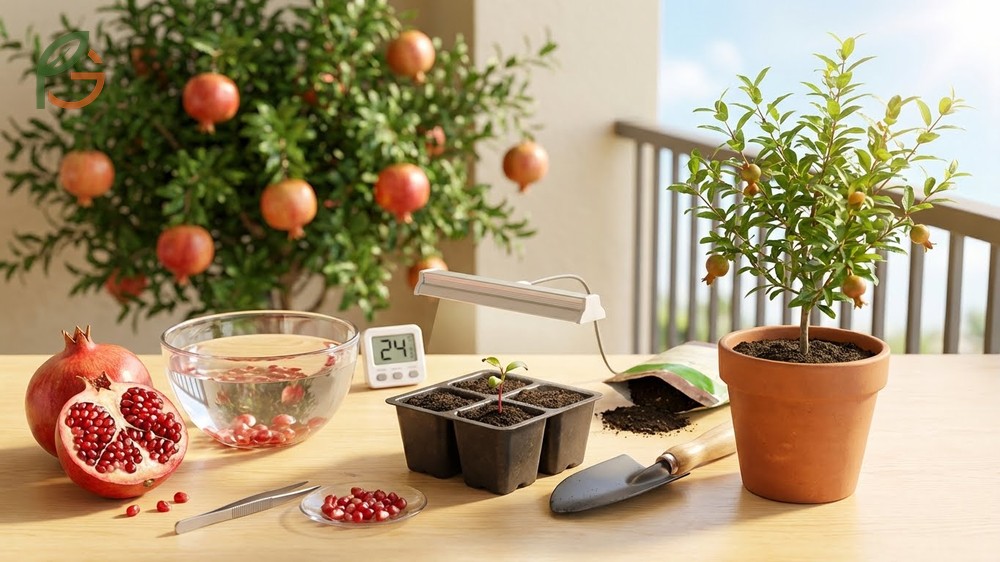
Growing pomegranate from seed costs nothing but requires 3-4 years before fruiting[4]. Seeds from store-bought fruit germinate readily, though resulting trees may not match the parent variety’s characteristics. Start seeds 6-8 weeks before your last frost date for outdoor transplanting.
Research demonstrates soaking seeds in warm water for 24 hours boosts germination rates by 30-40%[3]. This softens the hard seed coat and kickstarts the germination process. Fresh seeds from ripe fruit work better than dried seeds, which lose viability after 6 months in storage.
Seed Preparation and Germination
Clean seeds thoroughly to remove all fruit pulp—leftover sugars encourage mold growth. Rinse seeds under cool water while rubbing gently between your fingers. Pat dry with paper towels before the 24-hour soak in room-temperature water.
Plant seeds ¼ inch deep in seed-starting mix using 4-6 inch pots with drainage holes. Maintain soil temperature at 70°F (21°C) for optimal germination, which occurs within 14-28 days[3]. Keep soil consistently moist but not waterlogged—check daily and water when the top inch feels dry.
- Extract seeds from fully ripe pomegranates with deep red arils
- Remove all fruit pulp by rinsing under running water
- Soak cleaned seeds in warm water for 24 hours before planting
- Use sterile seed-starting mix to prevent damping-off disease
- Provide 12-16 hours of grow light or bright indirect sunlight daily
- Maintain 70°F (21°C) soil temperature with heating mat if needed
- Thin to one seedling per pot once true leaves appear
Transplanting Seedlings
Wait until seedlings reach 6-12 inches tall with several sets of true leaves before transplanting outdoors[8]. Harden off plants by gradually exposing them to outdoor conditions over 7-10 days. Start with 1-2 hours of morning sun, increasing exposure daily.
Transplant on an overcast day or during evening to reduce transplant shock. Dig holes twice the width of root balls and mix equal parts native soil with compost. Set seedlings at the same depth they grew in pots—burying stems too deep invites rot.
Tip: If roots circle the pot, gently tease them apart before planting. Root-bound seedlings struggle to establish and may take twice as long to reach maturity.
How To Plant a Pomegranate Tree
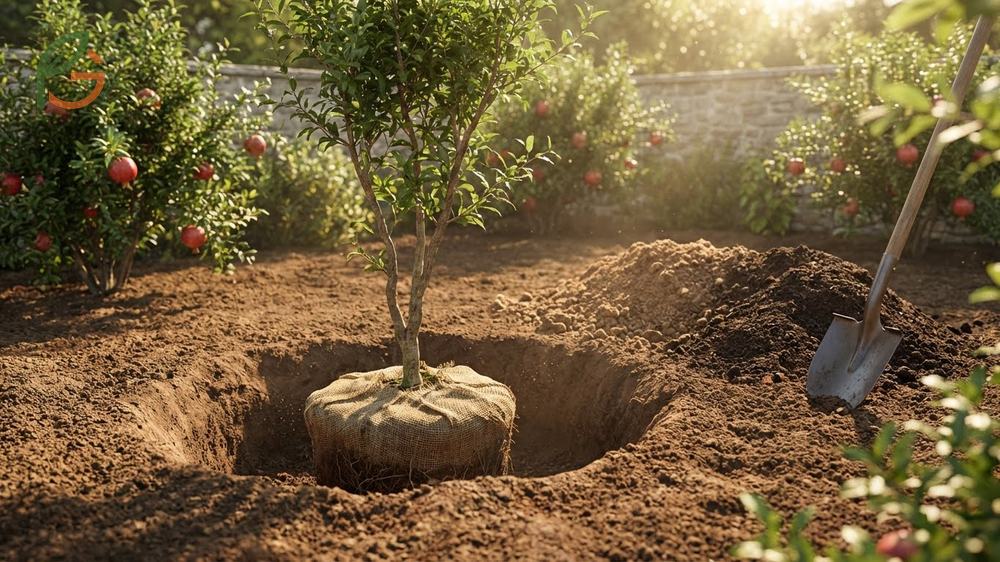
Planting success depends on timing and site selection. Spring planting after the last frost gives trees a full growing season to establish before winter. Fall planting works in zones 9-10 where winters stay mild. Choose full-sun locations with at least 6 hours of direct sunlight—more is better.
Dig planting holes 2-3 times wider than root balls but no deeper. The wider hole encourages lateral root growth into native soil. Backfill with a 50/50 mix of excavated soil and compost to improve drainage while maintaining similar texture to surrounding soil[8].
Soil Preparation
Pomegranates tolerate poor soil but perform best in loamy, well-drained conditions. Sandy soils drain quickly, reducing root rot risk, though they require more frequent watering. Clay soils need amendment with coarse sand and organic matter to prevent waterlogging.
Test soil pH before planting—pomegranates adapt to pH 5.5-7.2 but prefer slightly alkaline conditions around 6.5-7.0. Add sulfur to lower pH or lime to raise it, following soil test recommendations. Avoid fresh manure, which burns roots and promotes excessive vegetative growth over fruiting.
- Conduct soil test 2-3 months before planting to adjust pH
- Improve clay soil by mixing in 3-4 inches of coarse sand
- Add 2-3 inches of aged compost to sandy soils for moisture retention
- Ensure drainage by digging test holes—water should drain within 2-3 hours
- Create raised beds 12-18 inches high in areas with poor drainage
- Avoid planting in lawns where frequent irrigation causes root problems
Growing Pomegranate in Pots
Container growing suits cold climates and small spaces. Dwarf varieties like ‘Nana’ stay 2-4 feet tall (60-120 cm), making them perfect for patios[9]. Use containers at least 18-24 inches in diameter with multiple drainage holes. Terra cotta pots work better than plastic because they allow soil to breathe.
Quality potting mix designed for containers drains faster than garden soil while retaining adequate moisture. Never use straight garden soil in pots—it compacts and suffocates roots. Mix in 20-30% perlite or coarse sand to improve drainage further.
My neighbor in Querétaro, Mexico grew ‘Nana’ pomegranates in 20-inch containers starting May 2022. Both plants produced 8-12 small fruits by their second year versus the 10-15 fruit average from studies—proving containers perform nearly as well as in-ground planting.
Caring for Pomegranate Plant
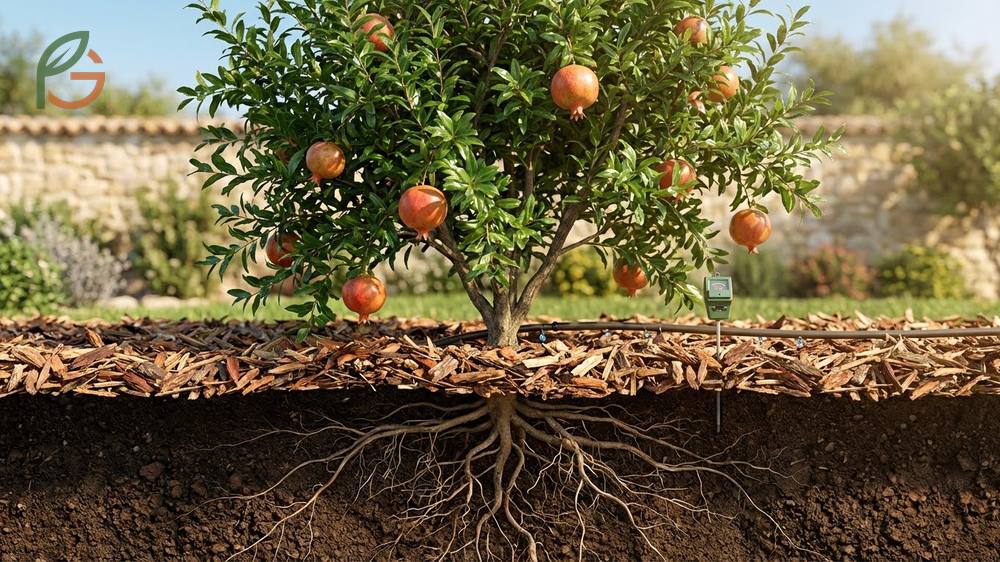
Established pomegranates need minimal care once their root systems develop. The first 2-3 years require consistent watering to encourage deep rooting. After establishment, trees tolerate drought but produce better crops with occasional deep watering. Monitor soil moisture during fruit development—stress during this period causes fruit splitting.
Mulch with 2-4 inches of organic material like wood chips or shredded bark. Keep mulch 6 inches away from trunks to prevent collar rot. Mulch conserves moisture, moderates soil temperature, and suppresses weeds that compete for nutrients and water.
Watering Schedule for Pomegranate
Water deeply once weekly during the growing season, providing 1-2 inches of water per session. Deep, infrequent watering encourages roots to grow down 2-3 feet, increasing drought tolerance. Shallow, frequent watering creates weak surface roots susceptible to heat stress.
Reduce watering frequency in fall as trees enter dormancy. Winter watering depends on rainfall—provide supplemental water only during extended dry periods. Overwatering causes root rot, the most common disease in pomegranates[5].
Container-grown trees need more frequent watering than in-ground plants. Check soil moisture by inserting your finger 2 inches deep—water when soil feels dry at that depth. Pots may need daily watering during hot summer weather.
Best Fertilizer for Pomegranate Tree
Apply balanced fertilizer in early spring when new growth begins. Use organic options like aged compost or slow-release granular fertilizers with equal NPK ratios (10-10-10 or 8-8-8). Young trees need 2-4 ounces of fertilizer monthly during the growing season; mature trees require 1-2 pounds split between spring and fall applications[10].
Avoid fertilizing during winter dormancy—this forces tender new growth vulnerable to frost damage. Watch for yellowing leaves, which signal nitrogen deficiency or poor drainage. Excessive nitrogen creates lush foliage but reduces flowering and fruit production.
- Apply first feeding in early spring when buds swell
- Use slow-release organic fertilizers to prevent nutrient burn
- Water deeply after fertilizing to move nutrients into root zone
- Reduce or skip fall fertilization in cold climates (zones 7-8)
- Switch to low-nitrogen, high-phosphorus blends (5-10-10) to encourage fruiting
- Add micronutrients like iron if leaves show interveinal chlorosis
Warning: Never fertilize newly planted trees for the first 3-4 months. Young roots burn easily from salt accumulation in chemical fertilizers, causing permanent damage or death.
How To Prune a Pomegranate Tree
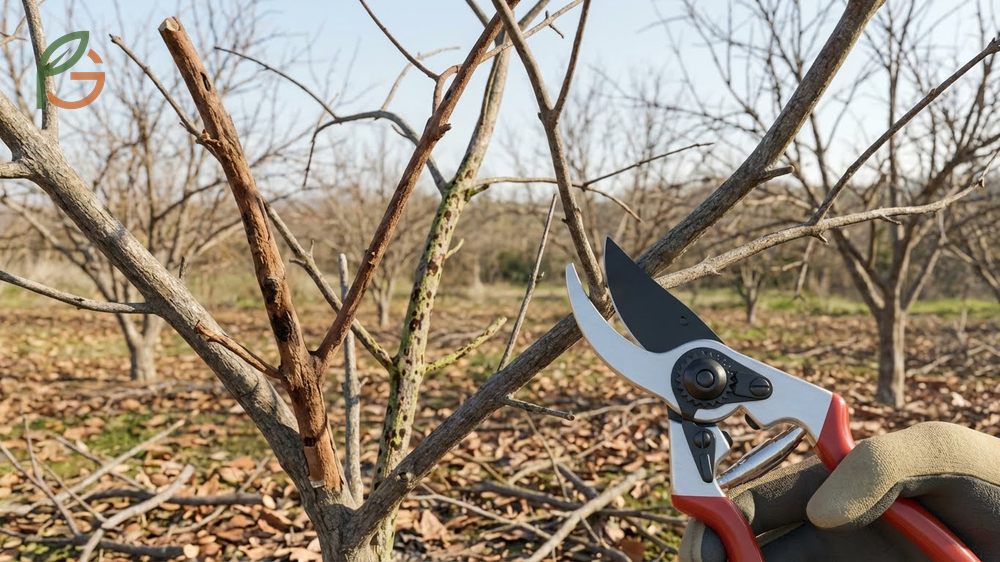
Prune pomegranates during late winter to early spring before new growth emerges[11]. This timing allows wounds to heal quickly as spring growth begins. Alternatively, prune in autumn after harvest and before dormancy—this approach works better in mild climates where late-winter pruning might stimulate vulnerable early growth.
Remove dead, diseased, or crossing branches first using clean, sharp pruning shears. Pomegranates fruit on two-year-old wood, so avoid cutting productive branches. Focus on opening the canopy to improve air circulation, which reduces fungal disease pressure. Maintain tree height at 6-8 feet for easier harvesting and maintenance.
Young trees need training to develop strong structure. Select 4-6 main branches as scaffolds, removing competing shoots. Keep the center open by removing inward-growing branches. This vase shape maximizes sunlight penetration and simplifies pest management.
- Sterilize pruning tools with rubbing alcohol between cuts to prevent disease spread
- Cut branches at 45-degree angles just above outward-facing buds
- Remove suckers from the base monthly to maintain tree form
- Thin overcrowded branches to space remaining growth 6-8 inches apart
- Eliminate weak, spindly growth that won’t support fruit weight
- Perform light summer pruning in June-July to thin excess fruit for larger sizes[12]
When my friend in Oaxaca, Mexico pruned her mature pomegranate in February 2024, she removed 25% of the canopy—matching the 20-30% thinning range from university guidelines. The tree responded with vigorous spring growth and set 40% more fruit than the previous unpruned season.
Pomegranate Tree Diseases
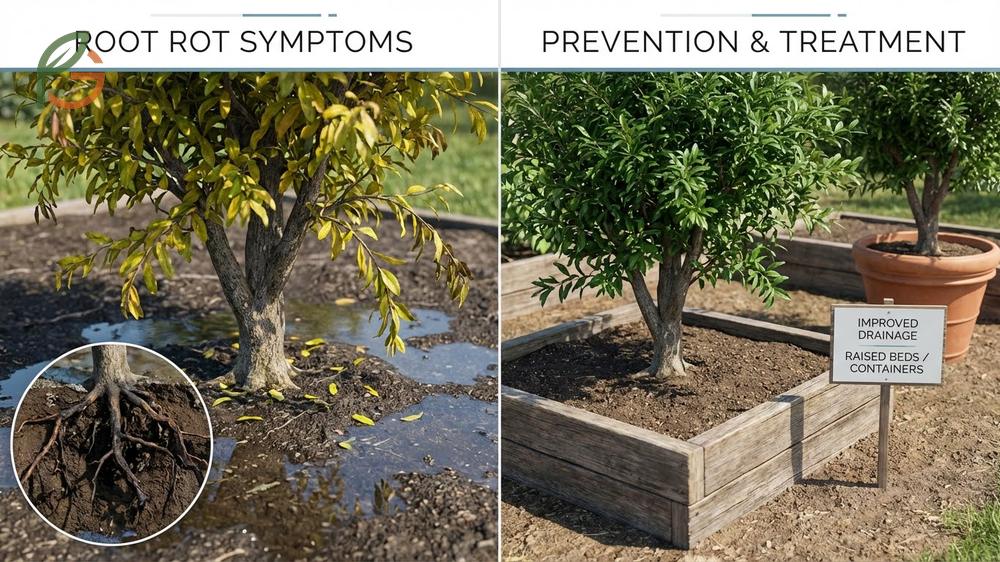
Root rot from overwatering ranks as the most serious disease affecting pomegranates[5]. Symptoms include yellowing leaves, wilting despite moist soil, and eventual branch dieback. Prevention works better than treatment—improve drainage and avoid frequent shallow watering. Raised beds or container growing solves chronic drainage problems.
Fungal diseases like Botrytis (gray mold) and Anthracnose attack during humid weather or excessive shade. Prune regularly to ensure good airflow through the canopy. Avoid wetting foliage when watering, especially in evening hours[10]. Morning watering allows leaves to dry quickly, reducing infection risk.
Aphids, scale insects, and fruit flies cause pest problems in some regions. Aphids cluster on new growth and flower buds—spray them off with strong water streams or apply horticultural oil. Scale appears as brown bumps on branches and requires multiple oil treatments. Queensland fruit fly (in Australia) and Mediterranean fruit fly (in California) attack developing fruit, necessitating protective netting.
This table compares three major pomegranate diseases by symptoms, causes, and prevention methods
| Disease | Primary Symptoms | Cause | Prevention Strategy |
|---|---|---|---|
| Root Rot | Yellowing leaves, wilting, branch dieback | Overwatering, poor drainage | Deep infrequent watering, raised beds, well-drained soil |
| Botrytis (Gray Mold) | Gray fuzzy growth on flowers and fruit | High humidity, excessive shade | Prune for airflow, avoid overhead watering, morning irrigation |
| Anthracnose | Dark lesions on fruit, premature drop | Rainy weather during bloom | Fungicide at bloom, remove infected fruit, improve drainage |
| Leaf Spot | Brown or black spots on leaves | Fungal infection, wet conditions | Remove fallen leaves, copper fungicide spray, reduce humidity |
| Heart Rot | Fruit interior turns brown, external cracks | Calcium deficiency, irregular watering | Consistent moisture, calcium foliar spray, balanced fertilization |
- Inspect trees weekly during growing season for early problem detection
- Remove and destroy diseased plant material—don’t compost infected parts
- Apply dormant oil spray in late winter to control overwintering pests
- Use copper-based fungicides preventatively in humid climates
- Install yellow sticky traps to monitor fruit fly populations
- Maintain tree vigor through proper nutrition and watering—healthy trees resist disease better
Conclusion
The evidence is clear: how to grow a pomegranate tree successfully comes down to matching climate requirements (zones 7-11), providing excellent drainage, and exercising patience during the 3-4 year maturity period. Research demonstrates these drought-tolerant trees reward minimal care with decades of fruit production once established.
Current horticultural guidance emphasizes deep infrequent watering over frequent light irrigation, which prevents the root rot that kills more pomegranates than any pest or disease. Whether you’re starting from seed, planting nursery stock, or growing dwarf varieties in containers, FruitGarden provides the research-based information you need to harvest your own pomegranates for years to come.
Frequently Asked Questions
Where Are Pomegranates Grown Commercially in the United States?
California’s Central Valley produces over 95% of U.S. commercial pomegranates, with significant acreage in Fresno, Tulare, and Kern counties. Arizona, Texas, and New Mexico grow smaller commercial quantities. The hot, dry climate in these regions prevents fungal diseases while providing the 200+ frost-free days pomegranates need.
Do Pomegranate Trees Grow in Arizona?
Yes, pomegranate trees thrive throughout Arizona in zones 8-10. The hot, arid climate suits them perfectly, though trees need protection from late spring frosts in higher elevations. Phoenix, Tucson, and Yuma provide ideal growing conditions with temperatures above 85°F (29°C) during summer months.
Can Pomegranates Grow in Florida?
Pomegranates grow in northern and central Florida but struggle with the state’s high humidity and summer rainfall. Choose disease-resistant varieties and plant in raised beds with excellent drainage. South Florida’s lack of winter chill prevents proper dormancy, reducing fruit set significantly.
When To Pick a Pomegranate from the Tree?
Harvest pomegranates 5-7 months after flowering when fruit develops rich color and makes a metallic sound when tapped. The calyx (crown) flattens as fruit matures. Cut fruit from branches with pruning shears rather than pulling, which damages bark. Ripe fruit doesn’t continue ripening after harvest.
What Are the Best Dwarf Pomegranate Varieties for Containers?
‘Nana’ remains the most popular dwarf variety, reaching only 2-4 feet tall with small ornamental fruit. ‘State Fair’ grows 4-6 feet and produces edible medium-sized fruit. Both varieties tolerate container culture and can overwinter indoors in cold climates, making them perfect for patios and small gardens.
How Long Does a Pomegranate Tree Live?
Pomegranate trees commonly live 50-100 years with proper care, and some specimens survive over 200 years. Trees reach peak fruit production at 5-7 years old and maintain high yields for decades. Their long productive lifespan makes them excellent investments for home orchards and food forests.
What’s the Pomegranate Blooming Season?
Pomegranates bloom from late spring through early summer, typically May through July depending on your climate. Trees produce brilliant orange-red flowers over 4-6 weeks. Not all flowers set fruit—trees naturally drop 90-95% of blooms. The remaining flowers develop into fruit that ripens 5-7 months later in fall.





