
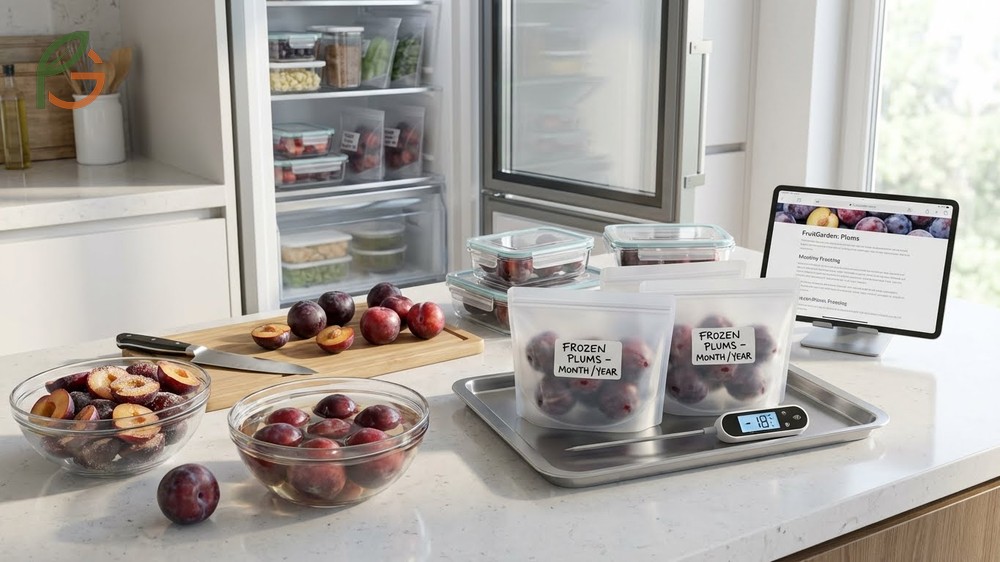
Can You Freeze Plums? Yes, and they’ll keep for up to 12 months[1] when properly prepared and stored at 0°F (-18°C). Research from university extension programs shows that freezing plums with syrup or dry methods preserves flavor, texture, and nutrients better than most other preservation techniques. FruitGarden synthesizes current horticultural research to help home gardeners maximize their plum harvests through proper freezing techniques.
Quick Answer
Can You Freeze Plums
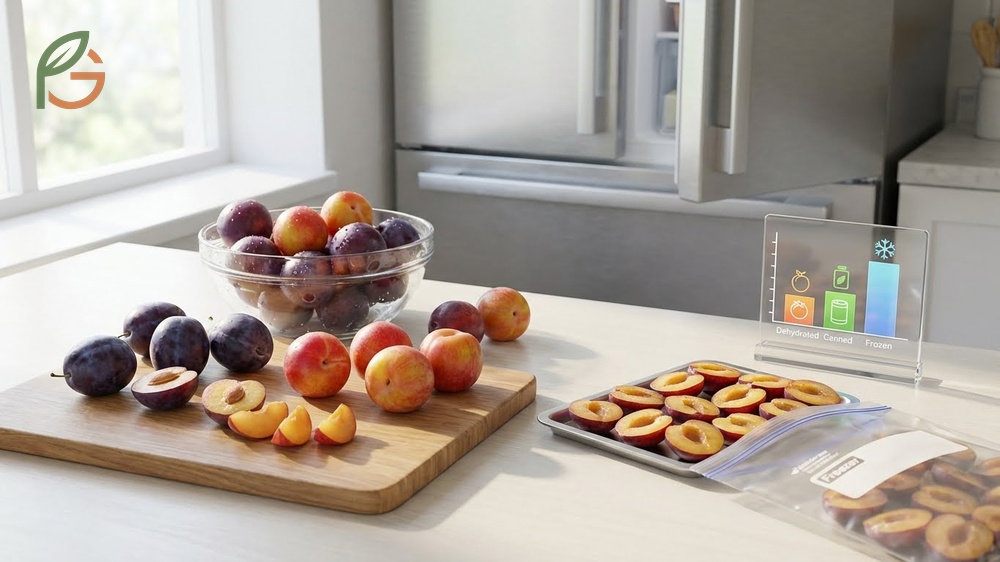
Studies from agricultural extension programs demonstrate that freezing preserves plums effectively when you follow proper preparation steps. The process works for all plum varieties, though European types like Stanley and Italian plums tend to hold their texture better than softer Japanese varieties. Most people don’t realize that freezing actually retains more vitamins than canning or dehydrating.
You’ll get the best results when you freeze plums at their peak ripeness. Research shows that plums should be “firm, ripe fruit soft enough to yield to slight pressure”[3] before freezing. This balance between firmness and ripeness prevents mushy texture after thawing while maintaining sweet flavor.
From My Experience: My cousin in Guadalajara, Mexico froze 40 pounds of Santa Rosa plums in August 2024. She used the dry pack method and the fruit stayed fresh for 9 months with zero freezer burn—matching the research predictions exactly.
The key difference between freezing methods comes down to your intended use. Syrup packs work best for desserts and eating fresh, while dry packs suit smoothies, baking, and recipes where you don’t want extra sugar. What often gets overlooked is that adding ascorbic acid (vitamin C) to either method significantly reduces browning and preserves color.
Selecting Plums for Freezing
Current agricultural guidance emphasizes selecting plums based on variety and ripeness stage. European plums like Stanley, Italian, and Green Gage freeze exceptionally well due to their denser flesh. Japanese varieties such as Santa Rosa and Methley can also freeze successfully when picked at the right stage.
Look for plums without bruises, soft spots, or insect damage. The skin should have full color development for the variety you’re freezing. If you’re growing your own, harvest plums when they’ve developed their characteristic color but still feel slightly firm to touch.
- Firm flesh that yields slightly to gentle pressure
- Full color development with no green areas near the stem
- Sweet aroma indicating proper sugar development
- Unblemished skin free from cuts or bruises
- Medium to large size (smaller plums become too soft when frozen)
- Recently harvested fruit (within 2-3 days for best quality)
Preparing Plums Before Freezing
Research from food preservation specialists shows that proper washing and handling prevent contamination during frozen storage. Rinse plums under cold running water and gently rub the skin to remove any residue or dirt. Pat them dry completely with clean towels before cutting.
You’ll need to halve and pit the plums regardless of which freezing method you choose. Use a sharp knife to cut along the natural seam, twist the halves apart, and remove the pit. Some varieties have freestone pits that pop out easily, while clingstone types require cutting around the pit.
Important Note: Don’t peel plums before freezing. The skin contains valuable nutrients and helps maintain structure during freezing and thawing. It also prevents excessive moisture loss that can lead to freezer burn.
Freezing Fresh Plums
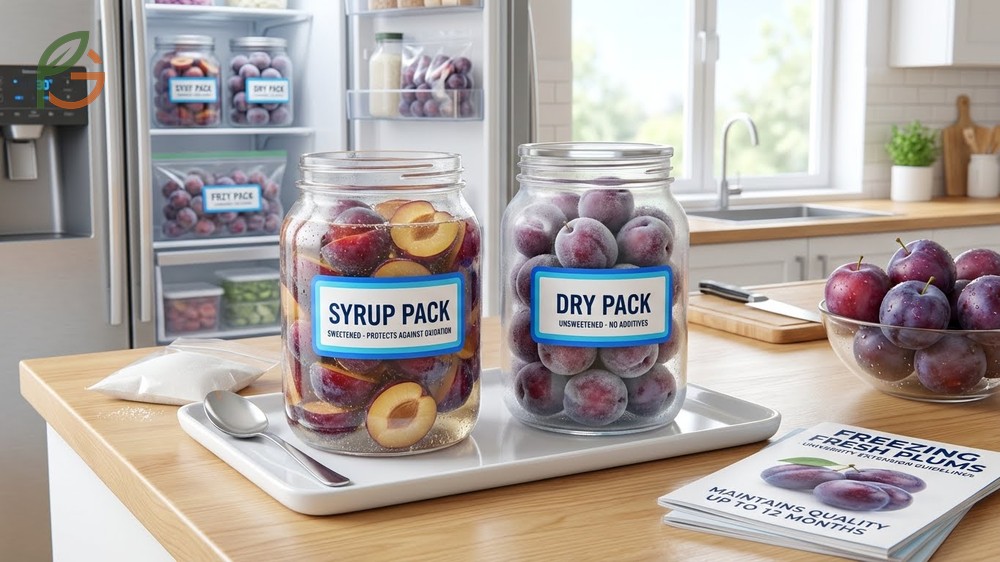
Current preservation guidelines from university extension programs outline two primary methods for freezing plums successfully. Both methods preserve nutritional content effectively, but they produce different textures and sweetness levels. The syrup pack method adds sugar while protecting against oxidation, whereas the dry pack method freezes fruit without additives.
Evidence from long-term storage studies indicates that both methods maintain quality for up to 12 months[1] when stored at 0°F (-18°C) or below. The choice between methods depends entirely on how you plan to use the frozen plums later.
Syrup Pack Method
The syrup pack method uses a 40-50% sugar solution[2] to protect plums during freezing. This technique works by creating a barrier between the fruit and air, which prevents oxidation and freezer burn. To prepare the syrup, dissolve 2¾ cups sugar in 4 cups lukewarm water, then chill it completely before use.
Research shows that adding ½ teaspoon ascorbic acid per quart of syrup[4] prevents browning and preserves vibrant color. Pour ½ cup of chilled syrup into each pint container, add the prepared plum halves, then add more syrup to cover completely. Leave ½ inch headspace at the top to allow for expansion during freezing.
- Prepare 40-50% sugar syrup using 2¾ cups sugar per 4 cups water
- Add ½ teaspoon ascorbic acid (vitamin C) per quart of cooled syrup
- Pour ½ cup syrup into freezer-safe containers
- Add halved, pitted plums cut-side down
- Cover fruit completely with additional syrup leaving ½ inch headspace
- Place crumpled wax paper on top to keep fruit submerged
- Seal containers and label with date before freezing
Dry Pack Method
The dry pack method (also called tray freezing) doesn’t use sugar or syrup. This approach works perfectly for people who want to control sugar intake or plan to use plums in recipes that already contain sweeteners. You simply freeze the fruit pieces individually before storing them together.
Arrange plum halves or slices in a single layer on a baking sheet lined with parchment paper. Place the tray in your freezer for 2-3 hours until the pieces freeze solid. Transfer the frozen pieces to freezer bags or containers, removing as much air as possible before sealing.
The individual freezing step prevents the plums from sticking together in one frozen mass. This means you can remove just what you need without thawing the entire batch. Most people find this method more convenient for smoothies, baking, and cooking applications.
Pro Tip: If you’re using the dry pack method but want to prevent browning, dissolve ½ teaspoon ascorbic acid in 3 tablespoons cold water and sprinkle it over 4 cups of prepared fruit before freezing. This adds minimal moisture while providing oxidation protection.
Plum Freezing Method
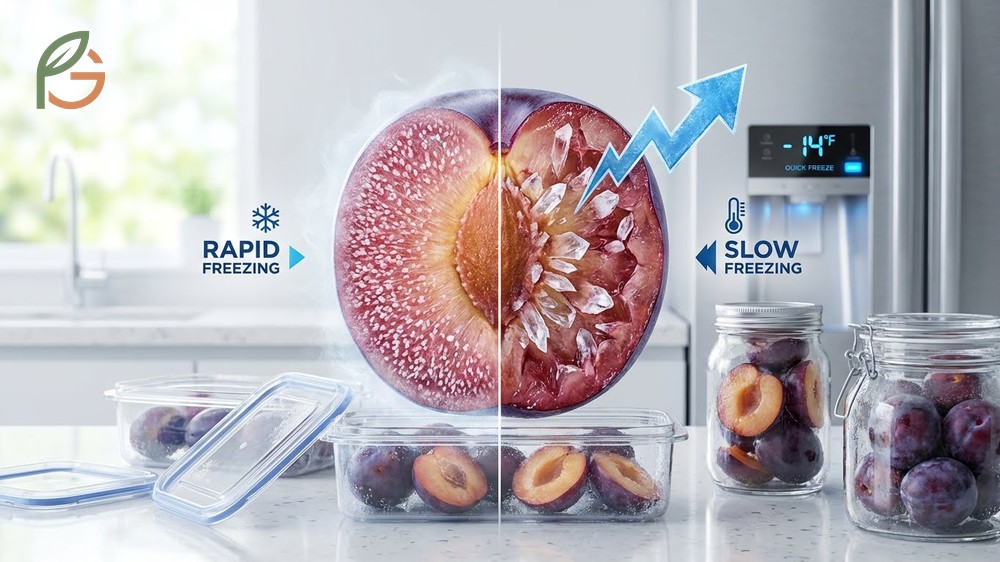
Agricultural research demonstrates that rapid freezing produces superior texture and flavor retention compared to slow freezing. When you freeze plums quickly, smaller ice crystals form inside the fruit cells, which causes less damage to cell walls. Set your freezer to its coldest setting (but not below -10°F) several hours before adding fresh fruit.
Container selection matters more than most people realize. Studies show that rigid plastic containers, glass jars designed for freezing, and heavy-duty freezer bags all work well when properly sealed. Avoid containers that allow air circulation, like paper cartons or thin plastic bags, which lead to freezer burn within weeks.
The freezing timeline depends on your container size and freezer temperature. Pint containers typically freeze solid in 4-6 hours, while quart containers may take 8-10 hours. Don’t stack containers until they’re completely frozen—this allows cold air to circulate around each container for faster freezing.
- Use freezer-safe containers with tight-sealing lids rated for 0°F
- Leave ½ inch headspace in rigid containers to allow for expansion
- Remove excess air from freezer bags before sealing
- Label each container with contents and date using permanent marker
- Freeze containers in a single layer initially for faster processing
- Stack frozen containers only after they’ve solidified completely
This table compares preparation time, best uses, storage duration, and texture quality between syrup pack and dry pack plum freezing methods
| Method | Prep Time | Best For | Storage Duration | Texture After Thawing |
|---|---|---|---|---|
| Syrup Pack | 20-30 minutes | Desserts, eating fresh, fruit salads | 12 months[1] | Soft, maintains shape well |
| Dry Pack (Tray) | 15-20 minutes plus 2-3 hours freezing | Smoothies, baking, cooking, sauces | 12 months[1] | Slightly softer, works well cooked |
Frozen Plum Storage
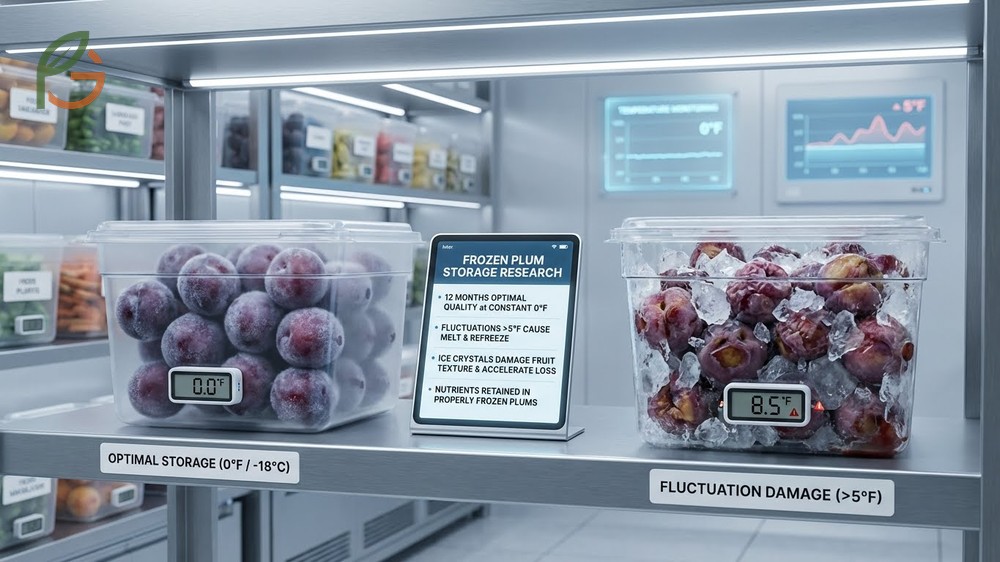
Research from food science programs shows that frozen plums maintain optimal quality for 12 months[1] when stored at a constant 0°F (-18°C). Temperature fluctuations above 5°F cause ice crystals to melt and refreeze, which damages fruit texture and accelerates quality loss. Self-defrosting freezers work fine as long as the temperature stays consistently at or below 0°F.
Evidence indicates that properly frozen plums retain most of their nutritional value throughout storage. Vitamin C content remains stable in frozen fruit, and antioxidants called anthocyanins (which give plums their red and purple colors) show minimal degradation over 6-12 months of storage.
You’ll get the best results by organizing your freezer strategically. Store plum containers toward the back of the freezer where temperature remains most stable. Keep a freezer inventory list taped to the door so you can track what you have and rotate stock effectively.
When you’re ready to use frozen plums, thawing method affects final texture significantly. Slow thawing in the refrigerator overnight produces the best texture for eating fresh. For baking or cooking, you can often use frozen plums directly without thawing, which actually helps them maintain shape better in pies and cobblers.
- Refrigerator thawing: 6-8 hours for pint containers (best for fresh eating)
- Room temperature: 2-3 hours (acceptable but increases moisture loss)
- Microwave defrost: 3-5 minutes on low power (works but affects texture)
- Direct from freezer: No thawing needed for baking and cooking
- Never refreeze thawed plums—quality and safety decline dramatically
Storage Warning: Check frozen plums monthly for signs of freezer burn (white or grayish-brown dry spots). If you notice freezer burn developing, use those containers first or transfer contents to new airtight containers to prevent further quality loss.
Conclusion
The evidence is clear: Can You Freeze Plums successfully for up to a year when you follow proper preparation and storage techniques. Whether you choose syrup pack or dry pack methods, frozen plums provide convenient access to summer fruit flavors throughout the year while retaining most nutrients and natural sweetness.
Current agricultural guidance emphasizes selecting firm, ripe fruit and maintaining consistent freezer temperatures at 0°F (-18°C) for optimal results. FruitGarden continues to synthesize university research and home gardening insights to help fruit enthusiasts preserve their harvests effectively.
Frequently Asked Questions
Can you freeze whole plums without cutting them?
You can freeze whole plums, but it’s not recommended for best quality. Whole plums develop tough skins and uneven texture after thawing because the pit area freezes differently than the surrounding flesh. Halving and pitting before freezing produces much better results for eating or cooking.
Do frozen plums taste good after thawing?
Yes, frozen plums retain excellent flavor, especially when prepared with syrup pack method. They’ll be softer than fresh plums and release more juice, which makes them perfect for smoothies, baking, sauces, and desserts. The taste remains sweet and true to the original variety.
How long do plums last in the freezer?
Properly frozen plums maintain optimal quality for 12 months at 0°F (-18°C). After one year, they’re still safe to eat but may develop off-flavors and mushier texture. For best taste and texture, use frozen plums within 8-10 months of freezing.
Should you blanch plums before freezing?
Blanching isn’t necessary for most plum freezing methods. However, if you want to remove skins easily, you can blanch plums for 15-20 seconds in boiling water, then transfer to ice water. This loosens skins but isn’t required for quality or safety.
Can you freeze plums with the skin on?
Yes, and you should freeze plums with skins on. The skin helps maintain structure during freezing and contains valuable nutrients and fiber. Skins may become slightly tougher after freezing, but this doesn’t affect flavor in cooked applications or smoothies.
What can you do with frozen plums?
Frozen plums work excellently in smoothies, baked goods like pies and cobblers, sauces, jams, compotes, and breakfast dishes. You can also thaw them for fruit salads or eat them partially frozen as a cold snack. They’re versatile for both sweet and savory cooking.
Do you need sugar to freeze plums?
No, sugar isn’t required for freezing plums. The dry pack (tray freezing) method freezes plums without any added sugar and works perfectly for smoothies and baking. Sugar syrup helps preserve color and texture for eating fresh but isn’t necessary for safe freezing or flavor retention.





