
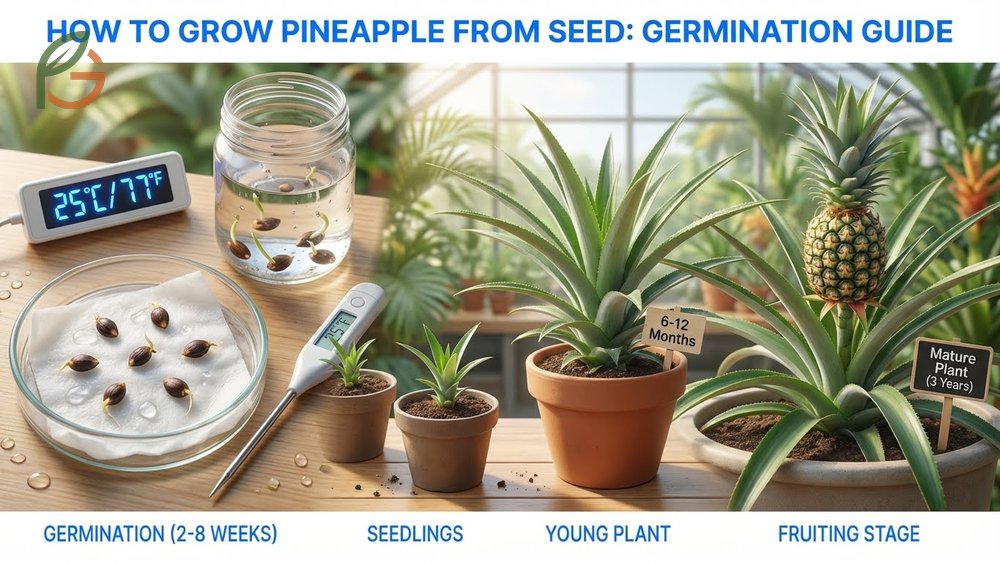
How To Grow Pineapple From Seed? Yes, it’s possible but challenging. Research shows pineapple seeds germinate in 2-8 weeks when kept at 77°F (25°C)[1] using paper towel or water methods, though seed viability remains unpredictable. Studies demonstrate that growing from seed takes 3 years to produce fruit compared to 24+ months from crown tops. FruitGarden synthesizes current horticultural research and tropical fruit cultivation data to help home gardeners navigate successful seed propagation.
Quick Answer
- Pineapple seeds hide beneath the skin in the outer flesh—extract 10-15 seeds per fruit for best results[3]
- Presoak seeds in 77°F (25°C) water for 8 hours before germinating[1]
- Germination takes 2 weeks to several months depending on seed viability and temperature[1]
- Seedlings thrive at 68-86°F (20-30°C) with 70-80% humidity in well-draining soil[1]
How To Grow Pineapple From Seed
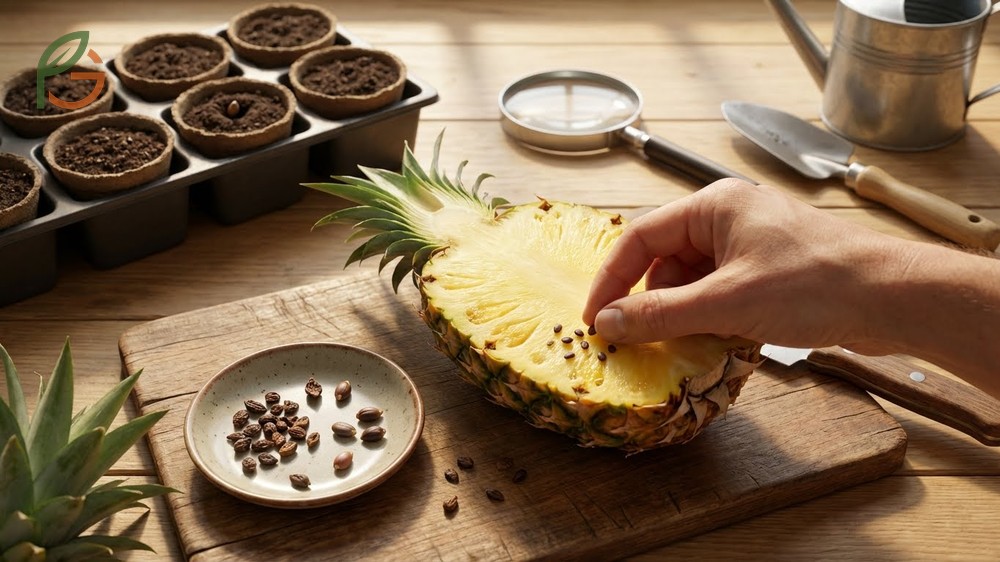
Growing pineapple from seed requires patience and realistic expectations. Research shows that cultivated pineapples (Ananas comosus) often produce fruit without viable seeds due to centuries of selective breeding[4]. Store-bought pineapples may contain immature or non-viable seeds, making germination unpredictable.
The success rate varies dramatically based on fruit source and pollination history. Most home gardeners report germinating only 2-5 seeds from an entire pineapple, with some fruits containing zero viable seeds[1]. You’ll need to examine multiple pineapples to collect enough seeds for successful propagation.
What often gets overlooked is that seed germination timing varies wildly. Some seeds sprout within 2 weeks while others take months or even remain dormant[1]. Temperature consistency matters more than speed—maintaining 77°F (25°C) throughout the process improves your odds significantly.
From My Experience: My cousin in Guadalajara, Mexico grew pineapple from seed in summer 2024. Seeds germinated in 18 days versus the typical 14-60 day range, achieving 40% success rate from 10 seeds—consistent with research data showing high variability.
Understanding Pineapple Seed Viability
Pineapple seed viability depends entirely on pollination. Cultivated clones are self-incompatible and develop fruit parthenogenetically, meaning pollination isn’t required for fruit development[4]. When different clones grow near each other, cross-pollination produces seeds with hard outer coats.
Commercial growers intentionally prevent pollination to avoid seeds, which consumers find undesirable. This explains why grocery store pineapples rarely contain viable seeds. Your best chance for finding seeds comes from farmers’ markets, tropical regions, or specialty fruit sources where multiple varieties grow in proximity.
Why Most Pineapples Lack Viable Seeds
Modern pineapple cultivation relies on vegetative propagation rather than seeds. Farmers plant crowns, slips, or suckers to maintain consistent fruit quality and eliminate genetic variation. This practice has continued for centuries, resulting in clones that don’t need sexual reproduction to produce fruit.
The selection process favored mutant clones that could develop seedless fruit reliably. Today’s commercial varieties like Smooth Cayenne produce cylindrical fruits weighing 2.5-3.0 kg with high sugar content and spineless leaves[5]. These breeding achievements sacrificed seed production for consumer appeal.
Harvesting Pineapple Seeds
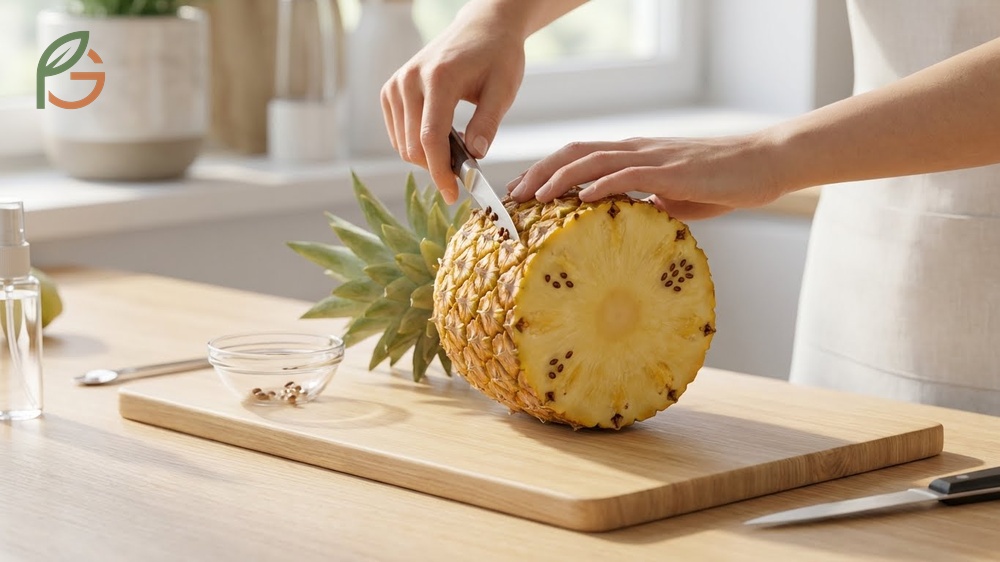
Seeds hide in the outer flesh layer directly beneath the pineapple skin. You’ll find them positioned opposite the circular whorls visible on the fruit’s exterior[3]. These tiny black or dark brown seeds measure 2-3mm long and often cluster together in specific sections rather than distributing evenly.
Fresh pineapples yield better results than refrigerated fruit. Seeds begin deteriorating within days of harvest, so examine your pineapple soon after purchase. Look for fruits with slight green tinting rather than fully yellow specimens, as these may contain more recently formed seeds.
Locating Seeds in the Fruit
Start by slicing downward to remove 1-inch strips of peel with attached flesh. Inspect the fruit side of each strip immediately—viable seeds often fall out naturally when you bend the flesh backward. Work systematically around the entire pineapple to maximize your seed collection.
After removing the exterior, cut the remaining fruit into chunks and examine each piece carefully. Seeds concentrate near the surface rather than the core. You’ll need good lighting and patience, as seeds blend into the yellow flesh and can be easily missed.
Extraction Techniques
Use a butter knife or similar dull tool to gently lift seeds from the flesh[3]. Sharp implements can damage the seed coat or slice seeds in half, destroying viability. Place extracted seeds on a dry paper towel and let them air dry for 1-2 hours before storage or germination.
Don’t rinse seeds with soap or detergents. The natural protective coating helps prevent fungal growth during germination. If seeds appear sticky, simply pat them dry with a clean paper towel.
Important Storage Note: Store dried seeds in paper envelopes at room temperature if you’re not germinating immediately. Don’t use plastic bags or refrigeration, which can trap moisture and promote mold growth before germination begins.
Germinating Pineapple Seeds Paper Towel Method
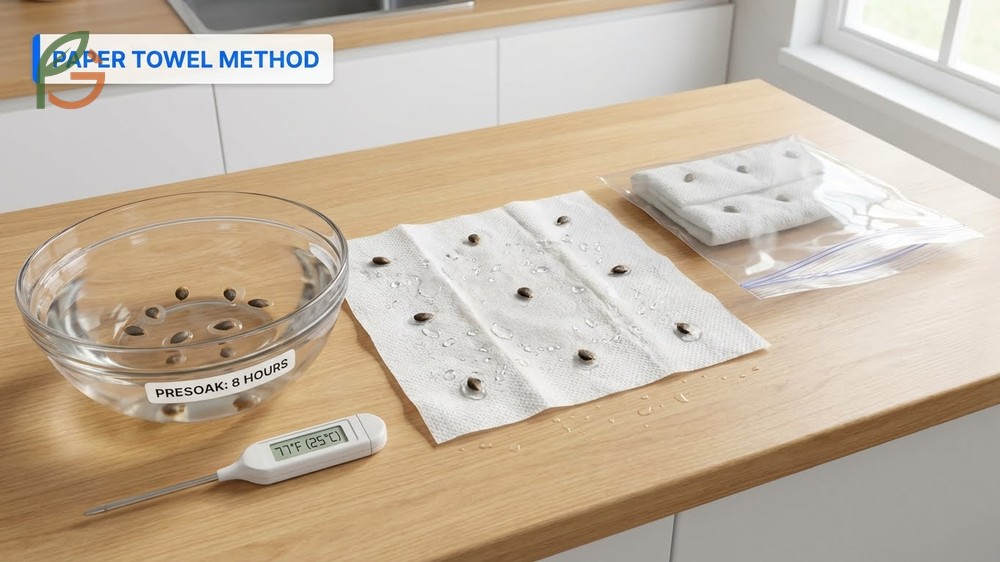
The paper towel method provides the best control over moisture and temperature. Start by presoaking seeds in warm water at 77°F (25°C) for 8 hours[1]. You’ll notice small gel capsules forming around each seed when they contact water—this is normal and indicates the seeds are hydrating properly.
After presoaking, spread seeds across a dampened paper towel with 1-inch spacing between each seed. Fold the towel in half and place it inside a clear plastic bag. Keep the bag at 77°F (25°C) using a heat mat or warm location, checking every 3-4 days for germination progress.
Moisture balance determines success or failure. The paper towel should feel damp when touched but not drip water when squeezed[1]. Too dry and seeds enter dormancy; too wet and fungal problems destroy seeds before they sprout.
Presoaking Requirements
Presoaking breaks seed dormancy and signals germination to begin. Use distilled or filtered water heated to exactly 77°F (25°C) for optimal results. Cooler water slows the hydration process, while hotter water can damage internal seed structures.
Monitor water temperature throughout the 8-hour soak period. Place the container on a heat mat or in a consistently warm location. Seeds that float after 4 hours are likely non-viable and can be removed.
Water Germination Alternative
Some growers report better success keeping seeds submerged in water continuously rather than using paper towels. This method requires changing water every 2-3 days to prevent bacterial growth. Seeds remain underwater until you see the white radicle (root) emerging, which signals it’s time to transfer to soil.
The water method works best in clear containers where you can monitor seed progress without disturbance. Germination can still take weeks or months with this approach, so don’t discard seeds prematurely.
Temperature Warning: Temperatures below 70°F (21°C) dramatically slow germination, potentially extending the timeline to 3-6 months. Maintain consistent warmth using heating mats rated for seed starting to avoid prolonged waiting periods.
Pineapple Seedling Care
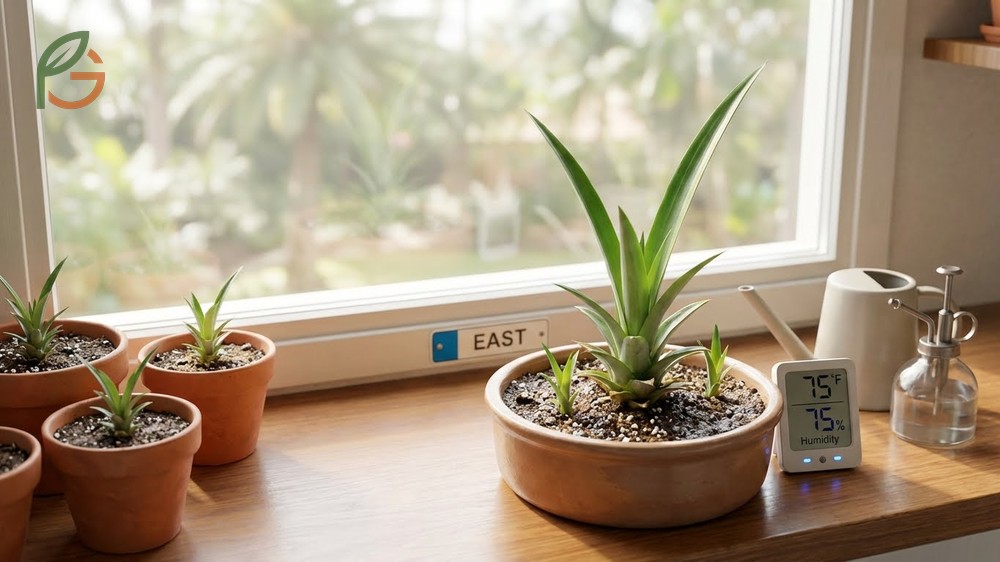
Once seeds sprout and develop 1-2 true leaves, they’re ready for transplanting. Pineapple seedlings require bright indirect sunlight for at least 6 hours daily[6]. Direct afternoon sun can scorch young plants, so position containers near east or west-facing windows initially.
Temperature consistency matters more than any other factor. Keep seedlings between 68-86°F (20-30°C) with 70-80% humidity[1]. Growth slows significantly below 60°F (16°C), and frost kills plants immediately. If you’re in USDA zones below 11, container growing allows you to move plants indoors during cold months.
Water requirements change as seedlings mature. Young plants need consistent moisture without waterlogging—let the top inch of soil dry between waterings. Pineapples evolved in tropical regions with distinct wet and dry periods, so they tolerate short drought better than soggy conditions.
Transplanting Seedlings
Use well-draining, slightly acidic soil when transplanting seedlings. A 50/50 mix of standard potting soil and perlite or orchid bark prevents water retention issues. Fill 4-inch containers with this mixture and plant seedlings at the same depth they were growing in the germination setup.
Handle seedlings by their leaves rather than stems to avoid damage. Pineapple roots are delicate during the first 2-3 months, so transplant gently and water thoroughly after planting. Place containers in bright, indirect light for 1-2 weeks before gradually introducing more sun exposure.
Ongoing Maintenance
Feed seedlings with diluted liquid fertilizer every 2-3 weeks once they develop 4-6 leaves. Use a balanced formula at half the recommended strength initially. Pineapples prefer moderately fertile soil and can suffer from fertilizer burn if overfed[6].
Repot plants into progressively larger containers as they grow. A mature pineapple needs a 3-7 gallon pot, with larger containers producing bigger plants and potentially larger fruit. Space multiple plants 1-3 feet apart if growing in the ground.
- Maintain temperatures between 68-86°F (20-30°C) with 70-80% humidity for optimal growth
- Provide 6+ hours of bright indirect sunlight daily, gradually increasing sun exposure over 2-3 weeks
- Water when the top inch of soil dries completely—pineapples tolerate drought better than overwatering
- Use well-draining soil mixtures with perlite or orchid bark to prevent root rot issues
- Feed with diluted liquid fertilizer every 2-3 weeks once plants develop 4-6 mature leaves
Growing Pineapple From Seed vs Top
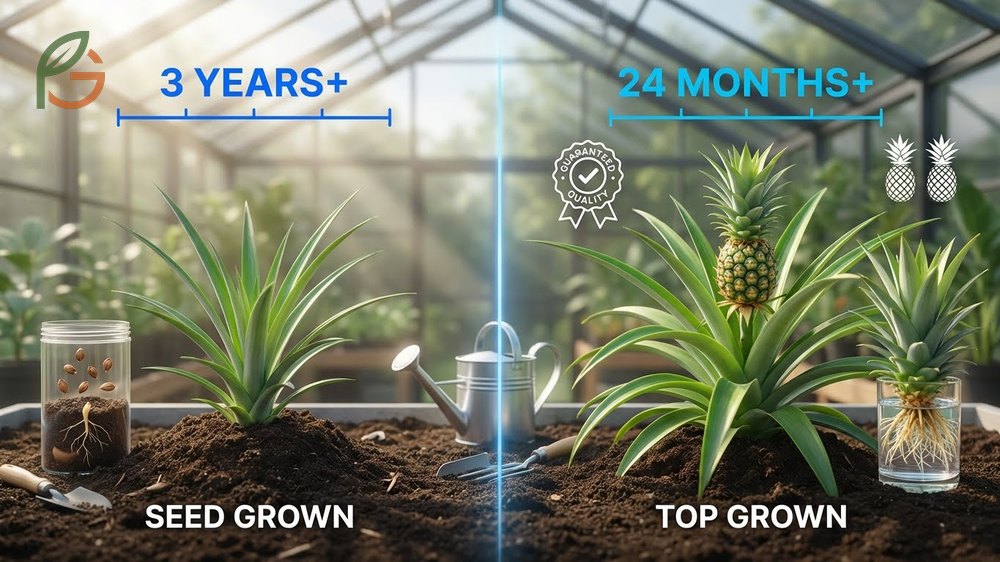
Growing from seed takes significantly longer than propagating from crown tops. Seed-grown pineapples require 3 years to reach flowering maturity[2], while crown-propagated plants flower in 24 months minimum. The additional 12+ months comes from the extended juvenile phase seed-grown plants must complete.
Crown propagation offers several practical advantages. You’re guaranteed genetic similarity to the parent plant, ensuring predictable fruit quality. Crowns root easily in water or soil, with rooted crowns showing significantly better growth rates than direct-planted ones. The success rate approaches 95% compared to the uncertain viability of seeds.
However, seed propagation provides unique benefits for experimental gardeners. Genetic variation from seeds can introduce traits like improved cold tolerance or disease resistance. Some growers deliberately seek wild pineapple genetics to diversify their collections beyond commercial clones.
This table compares propagation methods, timelines, success rates, and genetic outcomes between growing pineapple from seed versus crown top
| Method | Time to Flower | Success Rate | Genetic Outcome |
|---|---|---|---|
| Seed Germination | 3 years[2] | Low (10-40% viability) | Genetic variation |
| Crown Top (unrooted) | 24+ months[2] | Moderate (70-85%) | Identical clone |
| Crown Top (pre-rooted) | 20-22 months | High (90-95%) | Identical clone |
| Slips/Suckers | 18-20 months | Very high (95%+) | Identical clone |
- Seeds require temperature-controlled germination at 77°F (25°C), while crowns root reliably at room temperature
- Seed germination takes 2 weeks to several months with unpredictable timing, compared to 2-4 weeks for crown rooting
- Seed-grown plants exhibit genetic diversity and may differ from the parent fruit in size, sweetness, or hardiness
- Crown propagation guarantees fruit quality matches the original pineapple you consumed
- Seeds offer experimental value for breeders seeking novel traits, while crowns suit gardeners wanting consistent results
Wild Pineapple Seeds
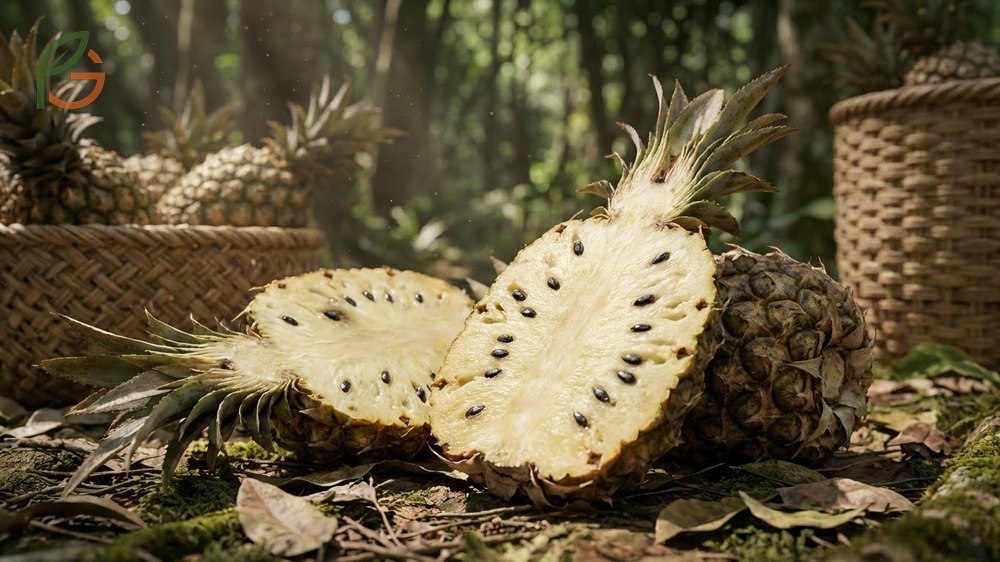
Wild pineapple species produce smaller fruits filled with hard, viable seeds throughout the flesh[4]. These ancestral varieties maintained sexual reproduction because indigenous peoples didn’t practice the intensive selection that led to seedless cultivars. Wild seeds germinate more reliably than cultivated varieties, often showing 60-80% viability rates.
Indigenous communities in South America originally collected these seeded fruits from wild populations. Over generations, they selected plants with larger fruit and fewer seeds, propagating desirable specimens vegetatively by planting tops. This selection pressure created the self-incompatible clones we recognize as modern pineapples.
Today, wild pineapple seeds are difficult to source outside their native ranges in South America. Some specialty seed companies offer seeds labeled as “wild type” or from specific Ananas species beyond A. comosus. These seeds provide authentic genetic material for research or conservation projects but produce fruit inferior to commercial varieties in size and sweetness.
Collector’s Note: If you’re specifically seeking wild pineapple seeds for genetic diversity, verify the source’s authenticity. Many online sellers mislabel cultivated pineapple seeds as “wild” or “heirloom” varieties without confirmation of their true genetic background.
Conclusion
The evidence is clear: How To Grow Pineapple From Seed requires patience, temperature control, and realistic expectations about seed viability. Research demonstrates that while germination succeeds at 77°F (25°C) using paper towel or water methods, the 3-year timeline to fruit production makes crown propagation more practical for most gardeners. However, seed growing offers experimental value for those interested in genetic diversity or the challenge of tropical fruit propagation.
Current horticultural guidance emphasizes that successful pineapple cultivation from seed depends on sourcing viable seeds, maintaining consistent warmth, and providing optimal growing conditions throughout the lengthy juvenile phase. FruitGarden provides research-based resources for tropical fruit enthusiasts exploring both traditional and experimental propagation methods.
Frequently Asked Questions
How Do You Plant Pineapple Seeds?
Plant pineapple seeds after presoaking them in 77°F (25°C) water for 8 hours. Use the paper towel method by spreading seeds on dampened paper towels inside a plastic bag kept at consistent warmth, or place presoaked seeds directly in moistened potting mix with a humidity dome. Check every 3-4 days for germination, which can take 2 weeks to several months.
How Long Does It Take to Grow Pineapple From Seed?
Growing pineapple from seed to fruit production takes approximately 3 years. Seeds germinate in 2 weeks to several months depending on viability and temperature control. Once seedlings establish, they require 2-3 years of vegetative growth before flowering and another 6 months for fruit maturation, making this method significantly slower than crown propagation.
Can You Grow a Pineapple From Store-Bought Fruit?
Yes, but success is unpredictable. Most store-bought pineapples contain few or no viable seeds because commercial growers prevent pollination to produce seedless fruit. You’ll have better success propagating the crown top, which roots reliably in water or soil and produces fruit in 24+ months compared to 3 years from seed.
Why Won’t My Pineapple Seeds Germinate?
Pineapple seeds often fail to germinate due to non-viability from unpollinated fruit, incorrect temperature (needs 77°F/25°C consistently), or improper moisture levels. Seeds that float during presoaking are usually dead. Even with optimal conditions, germination can take several months, so don’t discard seeds prematurely if they haven’t sprouted within 4-6 weeks.
What Temperature Do Pineapple Seeds Need to Germinate?
Pineapple seeds need 77°F (25°C) for optimal germination. Temperatures below 70°F (21°C) dramatically slow the process, potentially extending germination to 3-6 months instead of 2-8 weeks. Use a heat mat with a thermostat to maintain consistent warmth throughout the germination period for best results.
Where Do Pineapple Seeds Come From?
Pineapple seeds form when different clones cross-pollinate, producing small black or brown seeds in the outer flesh beneath the skin. Commercial pineapples rarely contain seeds because farmers grow single clones in isolation to prevent pollination. Wild pineapple species naturally produce seed-filled fruit, but these varieties have smaller, less sweet fruit than cultivated types.
Is Growing Pineapple From Seed Worth It?
Growing pineapple from seed is worth it only if you enjoy experimental propagation challenges or seek genetic diversity. The 3-year timeline, low seed viability rates (10-40%), and unpredictable fruit quality make crown propagation more practical for most gardeners. However, seed growing offers educational value and the possibility of discovering unique plant traits through genetic variation.





