
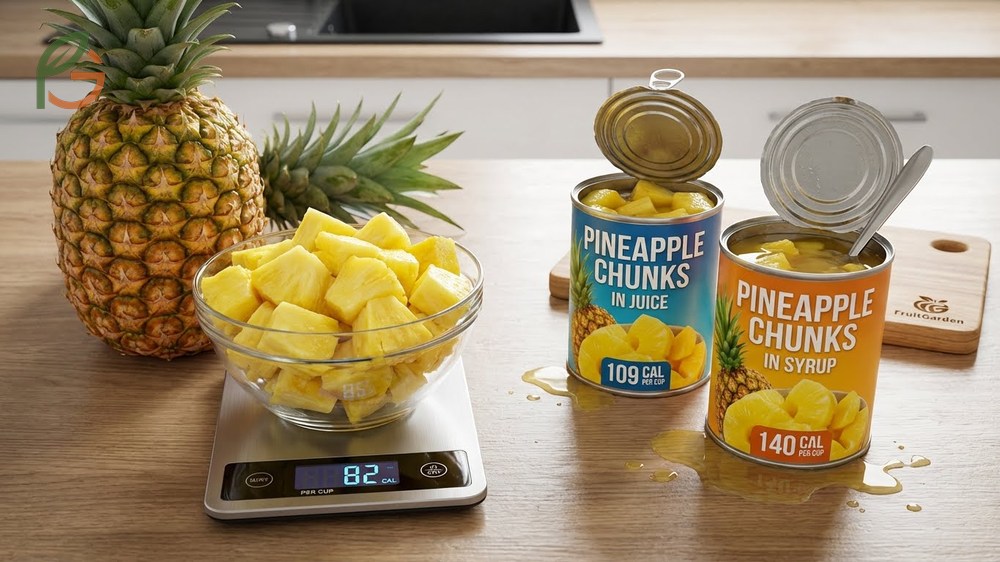
How many calories in pineapple? Fresh pineapple contains 82 calories per cup (165g), making it a low-calorie fruit choice[1]. Research shows that canned pineapple has significantly more—between 109 and 140 calories per cup depending on whether it’s packed in juice or syrup[2]. FruitGarden provides evidence-based nutrition data to help you make informed decisions about fruit consumption and garden planning.
Quick Answer
How Many Calories in Pineapple
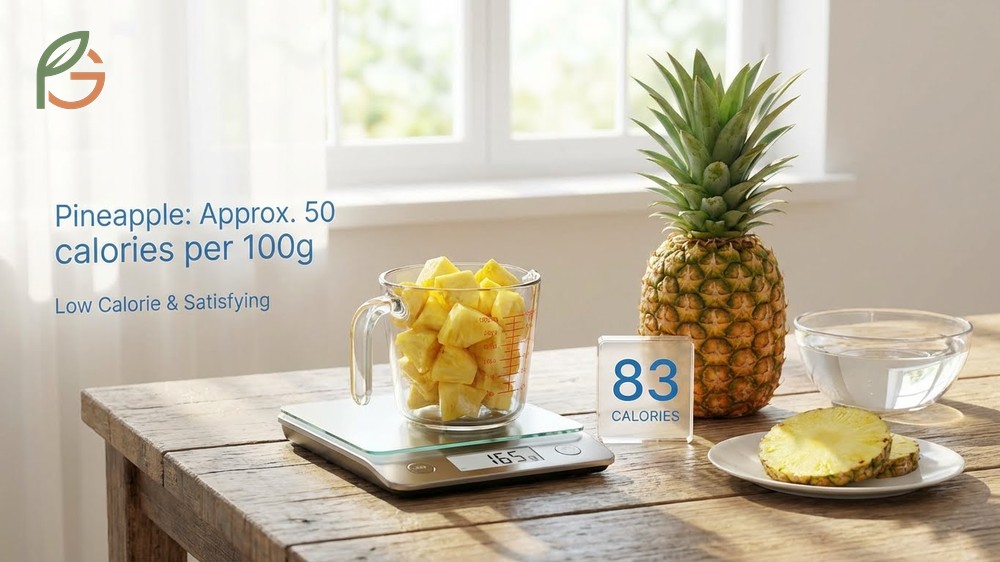
Fresh pineapple delivers approximately 50 calories per 100 grams[1]. This makes it one of the lower-calorie tropical fruits you can grow or buy. The calorie content varies slightly based on ripeness and variety.
Studies demonstrate that a typical serving—one cup of fresh chunks weighing 165 grams—contains exactly 82-83 calories[1]. Most people find this portion size satisfying without adding excessive calories to their daily intake. The fruit’s high water content (about 86%) contributes to its low caloric density.
What often gets overlooked is that pineapple provides substantial vitamin C—131% of your daily value in just one cup[1]. You’re also getting 2.3 grams of dietary fiber and 76% of your daily manganese needs with those 82 calories.
Fresh Pineapple Nutrition Breakdown
Current USDA data shows that one cup (165g) of fresh pineapple contains 21.6 grams of carbohydrates, with 16.3 grams coming from natural sugars[1]. The protein content is minimal at 0.9 grams, while fat accounts for only 0.2 grams. This macronutrient profile makes pineapple roughly 95% carbohydrates.
Evidence suggests the fruit’s micronutrient density compensates for its sugar content. You’ll get significant amounts of vitamin B6 (9% DV), thiamin (9% DV), and copper (9% DV)[1]. The bromelain enzyme present in fresh pineapple isn’t reflected in calorie counts but offers digestive benefits.
Calories Per 100 Grams
Agricultural data confirms that 100 grams of raw pineapple provides 48-50 calories[1]. This standardized measurement helps you calculate portions accurately when meal planning. If you’re tracking macros, 100g delivers approximately 13 grams of net carbs after subtracting fiber.
Research shows this calorie density positions pineapple below mangoes (60 cal/100g) but above watermelon (30 cal/100g). The 100-gram benchmark is particularly useful for gardeners estimating harvest yields and nutritional output from homegrown pineapples.
Calories in Pineapple Chunks
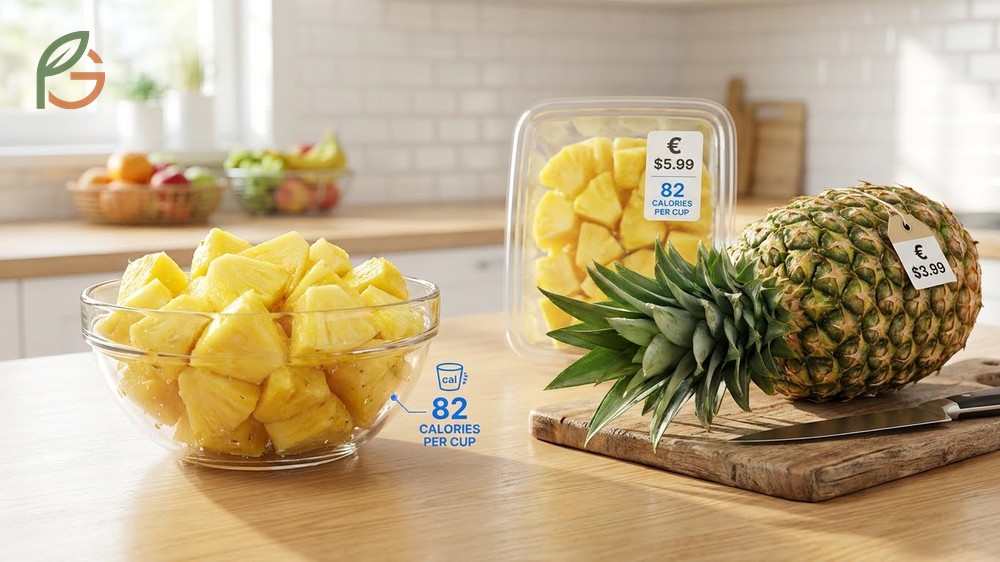
Pineapple chunks—the most common form for snacking and recipes—contain 82 calories per cup when fresh[1]. Pre-cut chunks from grocery stores match whole pineapple nutrition since they’re simply fresh fruit portioned into bite-sized pieces. The key difference lies in convenience versus cost.
If you’re buying packaged fresh chunks, you’re paying a premium—typically $1-2 more per pound compared to whole pineapples. However, the calorie content stays identical at roughly 0.5 calories per gram. Most people underestimate portion sizes with loose chunks, often consuming 1.5-2 cups without realizing they’ve eaten 120-160 calories.
One Cup Serving Size
Current nutritional guidance defines one cup of pineapple chunks as 165 grams or approximately 4-5 medium chunks[2]. This serving delivers those 82 calories along with 2.3g fiber and 180mg potassium. For perspective, that’s about one-sixth of a medium pineapple.
Studies demonstrate that pairing this serving with protein sources—like Greek yogurt or cottage cheese—improves satiety and slows sugar absorption. You’ll feel fuller longer compared to eating chunks alone, making the 82 calories more effective for appetite control.
Different Chunk Portions
Evidence indicates that portion awareness dramatically affects total calorie intake from pineapple chunks. A half-cup serving (82.5g) provides 41 calories, while two cups double your intake to 164 calories[1]. Most snack containers hold 1.5-2 cups, not the standard single-cup serving.
For meal prep and gardening enthusiasts, here’s what different portions look like nutritionally:
- 1/2 cup (82g): 41 calories, 11g carbs, 8g sugar
- 1 cup (165g): 82 calories, 22g carbs, 16g sugar
- 1.5 cups (248g): 123 calories, 32g carbs, 24g sugar
- 2 cups (330g): 164 calories, 43g carbs, 33g sugar
- 3 cups (495g): 246 calories, 65g carbs, 49g sugar
Important Note: When growing pineapples at home, fruit from well-maintained plants in optimal conditions (77-86°F / 25-30°C) tends to be sweeter and slightly higher in natural sugars, potentially adding 5-10 calories per cup compared to commercially grown varieties.
Calories in Canned Pineapple
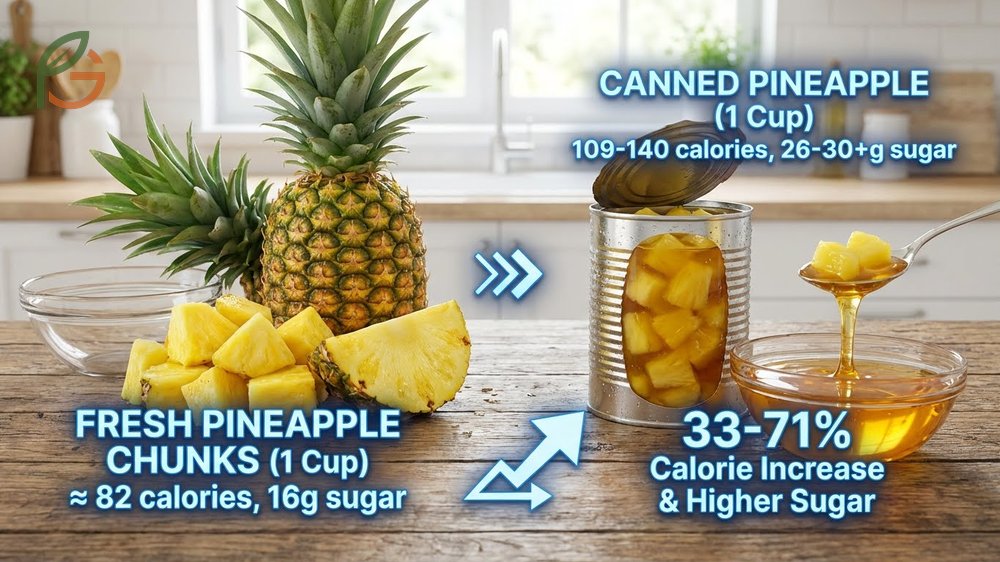
Canned pineapple contains significantly more calories than fresh—typically 109 calories per cup when packed in juice, and up to 140 calories when packed in syrup[2]. This represents a 33-71% calorie increase compared to fresh chunks. The canning process and added liquids account for this difference.
Research shows the sugar content jumps dramatically in canned versions. Fresh pineapple’s 16 grams of sugar per cup becomes 26-30 grams in juice-packed and even higher in syrup-packed varieties[2]. If you’re monitoring calorie intake, this distinction matters—you’re getting nearly double the sugar for only slightly more fruit.
Agricultural data indicates that heat processing during canning reduces bromelain enzyme activity and may decrease vitamin C content by 10-25%. You’re trading some nutritional benefits for longer shelf life and convenience when choosing canned over fresh.
Juice Packed vs Syrup Packed
Current nutritional standards show juice-packed canned pineapple contains 109 calories and 28 grams of carbohydrates per cup, while syrup-packed versions reach 140 calories and 34 grams of carbohydrates[2]. The syrup adds concentrated sugar without providing the fruit’s natural fiber or nutrients.
Evidence suggests that rinsing juice-packed pineapple under water for 30 seconds can remove 15-20% of added sugars, dropping calories closer to 90-95 per cup. This simple step makes canned pineapple more comparable to fresh in terms of caloric impact.
Sugar Content Comparison
Studies demonstrate that canned pineapple in juice contains 26-30 grams of sugar per cup, compared to fresh pineapple’s 16 grams[2]. That’s nearly double the natural sugar content. The added juice or syrup contributes simple sugars that spike blood glucose faster than the fruit’s inherent fructose.
For home gardeners and health-conscious consumers, this comparison highlights why growing your own pineapples offers nutritional advantages. You control ripeness and avoid processing that concentrates sugars artificially.
This table compares calories, carbohydrates, sugar, and fiber content across fresh pineapple, juice-packed canned, and syrup-packed canned varieties per one cup serving
| Type | Calories | Carbohydrates | Sugar | Fiber |
|---|---|---|---|---|
| Fresh chunks (165g) | 82[1] | 21.6g | 16.3g | 2.3g |
| Canned in juice | 109[2] | 28.2g | 25-30g | 2.4g |
| Canned in syrup | 140[2] | 34g | 30-32g | 2.4g |
Pineapple Slice Calories
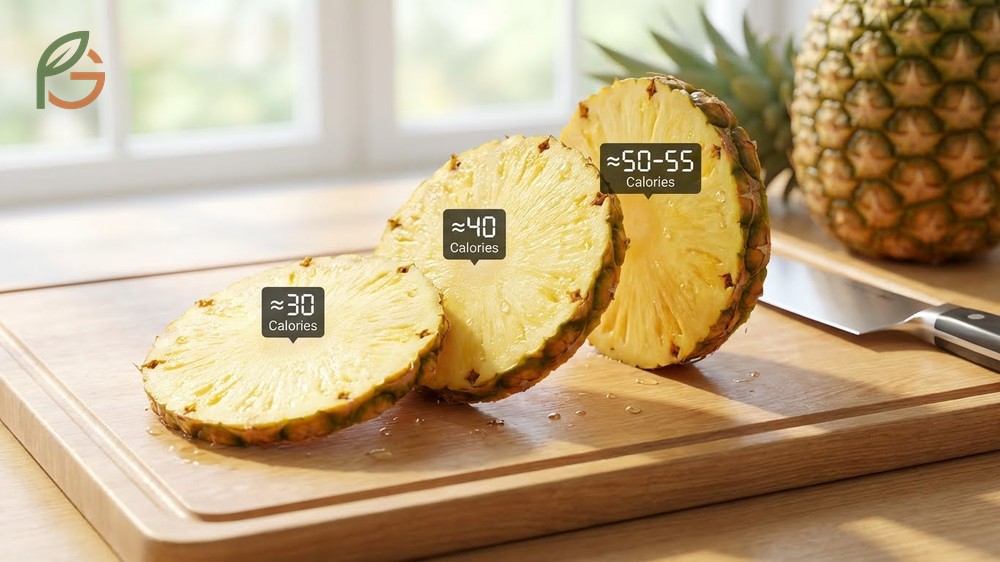
A single pineapple slice measuring 3.5 inches in diameter and 0.75 inches thick contains approximately 40 calories[3]. This standard slice weighs about 80-85 grams and delivers roughly 11 grams of carbohydrates. Most medium pineapples yield 8-12 slices of this size.
Research shows that slice thickness dramatically affects calorie count. A thinner half-inch slice contains closer to 30 calories, while a thick one-inch slice reaches 50-55 calories. When preparing pineapple rings for grilling or serving, consistent cutting ensures accurate calorie tracking.
For gardeners harvesting homegrown fruit, the average 3-pound pineapple produces approximately 10 slices totaling 400 calories of usable fruit after removing the core and skin. That’s roughly 30-35% waste by weight, so a whole pineapple contains about 450-500 total calories before processing.
- Thin slice (0.5 inch): 30 calories, 8g carbs
- Standard slice (0.75 inch): 40 calories, 11g carbs
- Thick slice (1 inch): 50-55 calories, 14g carbs
- Grilled slice (0.75 inch): 40-45 calories (minimal change from heat)
- Dried pineapple ring: 140-160 calories (concentrated sugars)
Tip for Home Growers: Pineapples grown in tropical climates with consistent 77-86°F (25-30°C) temperatures develop sweeter, denser fruit that may contain 5-8% more natural sugars per slice compared to commercially grown varieties harvested early for shipping.
Pineapple Glycemic Index
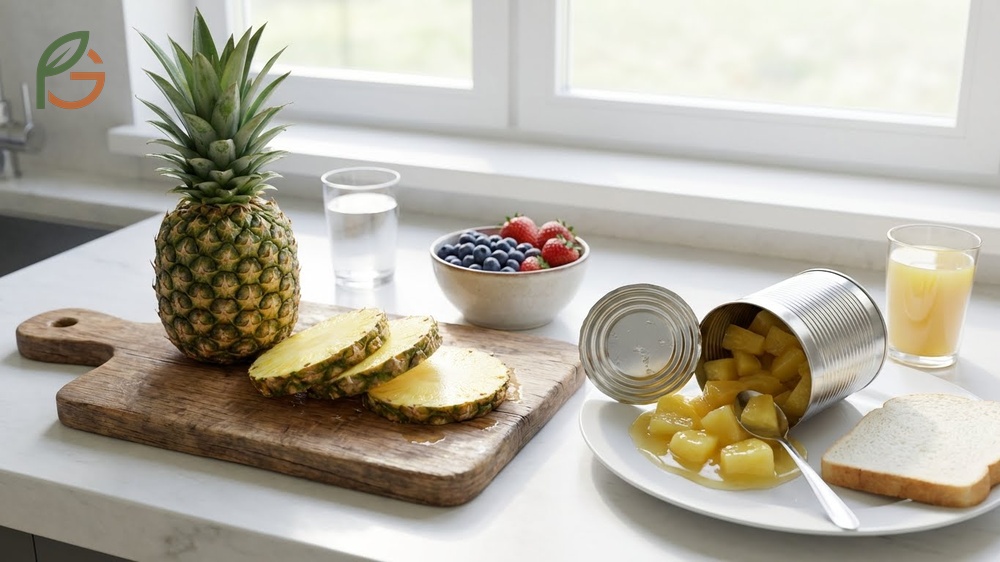
Fresh pineapple has a glycemic index (GI) of 59, placing it in the moderate GI category[4]. This means it raises blood sugar at a moderate rate—faster than berries (GI 25-40) but slower than white bread (GI 75). The glycemic load (GL) for one cup is even more favorable at 6-7, which falls into the low-moderate range[4].
Current data indicates that canned pineapple in syrup has a higher GI of 66-94 due to added sugars and processing[5]. This elevated GI causes faster blood sugar spikes, making fresh fruit the better choice for glucose management. The fiber in fresh pineapple—2.3 grams per cup—helps slow sugar absorption.
Evidence suggests that eating pineapple with protein or healthy fats lowers its effective glycemic impact. Pairing chunks with nuts, cheese, or yogurt can reduce the GL by 20-30%, keeping blood sugar more stable throughout the day.
What matters most for gardeners and health-conscious eaters is portion control. That one-cup serving with its GL of 6-7 is manageable for most people, but doubling to two cups pushes the GL to 12-14, entering the moderate-high category where blood sugar effects become more pronounced.
Dietary Fiber in Pineapple
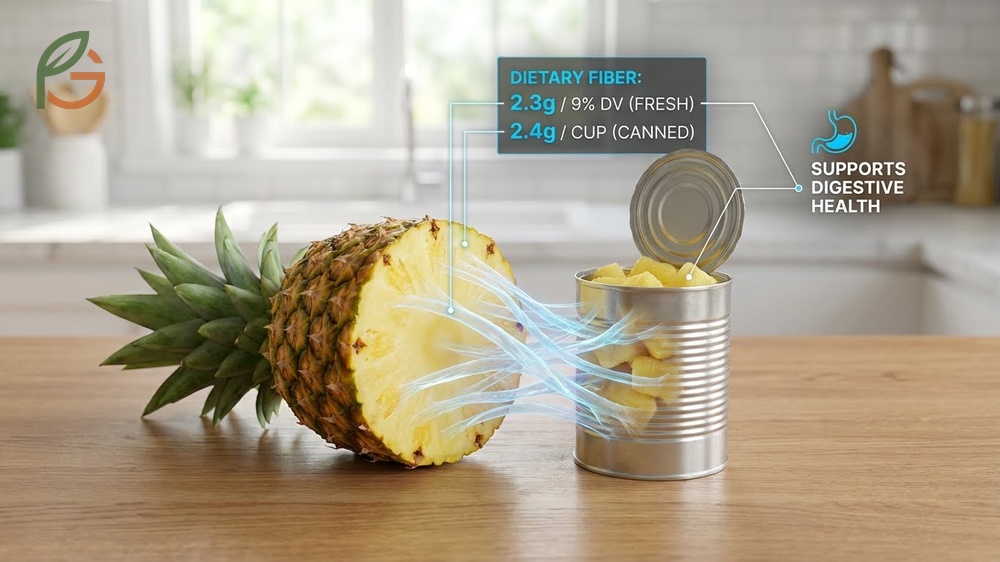
One cup of fresh pineapple provides 2.3 grams of dietary fiber, representing 9% of your daily value[1]. This fiber consists primarily of insoluble types that support digestive health and add bulk to your diet without contributing calories. The fiber content stays relatively consistent in canned versions at 2.4 grams per cup[2].
Research shows that pineapple’s fiber-to-calorie ratio is moderate compared to other fruits. You’re getting approximately 36 calories per gram of fiber, which positions pineapple between high-fiber options like raspberries (16 cal/g fiber) and lower-fiber choices like watermelon (60 cal/g fiber).
Agricultural studies demonstrate that the fruit’s fiber concentration increases slightly near the core. Including small amounts of the tender inner core when cutting chunks can boost fiber content to 2.5-2.8 grams per cup, improving the calorie-to-nutrient ratio.
- Supports regular bowel movements and digestive health
- Slows sugar absorption, moderating blood glucose response
- Increases satiety, helping you feel fuller on fewer calories
- Feeds beneficial gut bacteria for improved microbiome health
- Works synergistically with bromelain enzyme to aid protein digestion
- Contributes to heart health by supporting healthy cholesterol levels
Conclusion
The evidence is clear: how many calories in pineapple depends primarily on whether you’re eating fresh or canned varieties. Fresh pineapple chunks deliver 82 calories per cup with substantial vitamin C and fiber, making them an excellent low-calorie fruit choice for gardeners and health-conscious consumers[1]. Canned versions contain 33-71% more calories due to added juices and syrups.
Current nutritional guidance emphasizes portion awareness and choosing fresh over processed options when possible. FruitGarden supports sustainable home cultivation practices that give you control over ripeness and quality, ensuring you get maximum nutrition from every calorie your homegrown pineapples provide.
Medical Disclaimer
Important Medical Disclaimer: This content is for informational and educational purposes only. It is not intended as a substitute for professional medical advice, diagnosis, or treatment. Always consult a qualified healthcare professional or registered dietitian before making significant changes to your diet, especially if you have diabetes, blood sugar concerns, allergies, or other medical conditions. Individual nutritional needs vary based on age, activity level, health status, and other factors.
Frequently Asked Questions
How many calories in a cup of pineapple?
A cup of fresh pineapple chunks (165g) contains 82 calories, 21.6g carbohydrates, and 2.3g dietary fiber[1]. This standard serving also provides 131% of your daily vitamin C needs and 76% of daily manganese requirements, making it nutrient-dense for the calorie count.
Is pineapple high in calories compared to other fruits?
No, pineapple isn’t high in calories. At 50 calories per 100 grams, it falls in the moderate range—higher than watermelon (30 cal) and strawberries (32 cal), but lower than bananas (89 cal) and grapes (69 cal). Fresh pineapple’s water content keeps it relatively low-calorie despite its sweet taste.
How many calories in fresh pineapple vs canned?
Fresh pineapple has 82 calories per cup, while canned pineapple in juice contains 109 calories, and syrup-packed versions reach 140 calories per cup[2]. The canning process and added liquids increase both calories and sugar content by 33-71% compared to fresh fruit.
How many calories are in one slice of pineapple?
One standard pineapple slice (3.5 inches diameter, 0.75 inches thick) contains approximately 40 calories[3]. Thinner slices have about 30 calories, while thicker one-inch slices contain 50-55 calories. Slice thickness significantly affects total calorie content.
Does pineapple have too much sugar for weight loss?
Fresh pineapple contains 16 grams of natural sugar per cup, which is moderate for fruit. The 2.3 grams of fiber and high water content help control appetite, making it suitable for weight loss when eaten in appropriate portions. Studies show that pairing pineapple with protein improves satiety and reduces overall calorie intake.
What’s the glycemic index of pineapple?
Fresh pineapple has a glycemic index of 59 (moderate) and a glycemic load of 6-7 (low-moderate) per cup serving[4]. This means it raises blood sugar at a moderate rate. Canned pineapple in syrup has a higher GI of 66-94, causing faster blood sugar spikes.
How much pineapple should I eat per day?
One cup (165g) of fresh pineapple makes a healthy daily serving, providing 82 calories, essential nutrients, and beneficial enzymes without excess sugar. This portion aligns with dietary guidelines recommending 1.5-2 cups of fruit daily for adults. Eating more than two cups daily may contribute excessive natural sugars for some people.





