
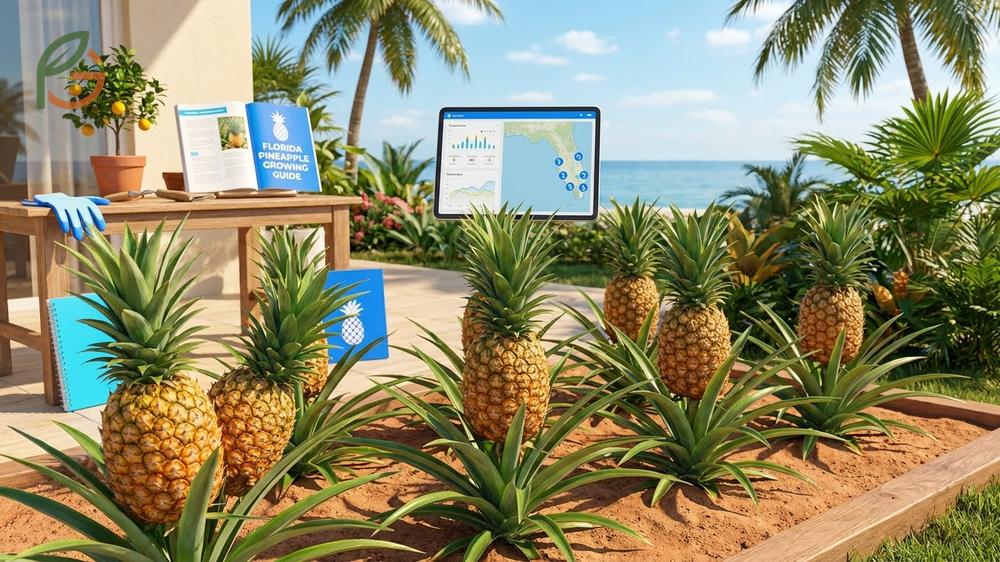
Growing Pineapples in Florida thrives in the state’s warmest regions along the southeast and southwest coasts where temperatures stay between 68-86°F (20-30°C)[1]. Research shows you’ll harvest fruit in 18-24 months with proper care, full sun exposure, and well-drained acidic soil[1]. FruitGarden synthesizes current horticultural research and field data from Florida extension programs to help home gardeners succeed with tropical pineapple cultivation.
Quick Answer
- Pineapple plants need 68-86°F (20-30°C)[1] and won’t tolerate freezing below 28°F (-2°C)[1]
- Plant spacing ranges from 12-36 inches[1] apart in full sun locations
- Harvest occurs in 18-24 months[1] from planting to ripe fruit
- Fertilize every 6-8 weeks[1] during the first 14-16 months for vigorous growth
Growing Pineapples in Florida
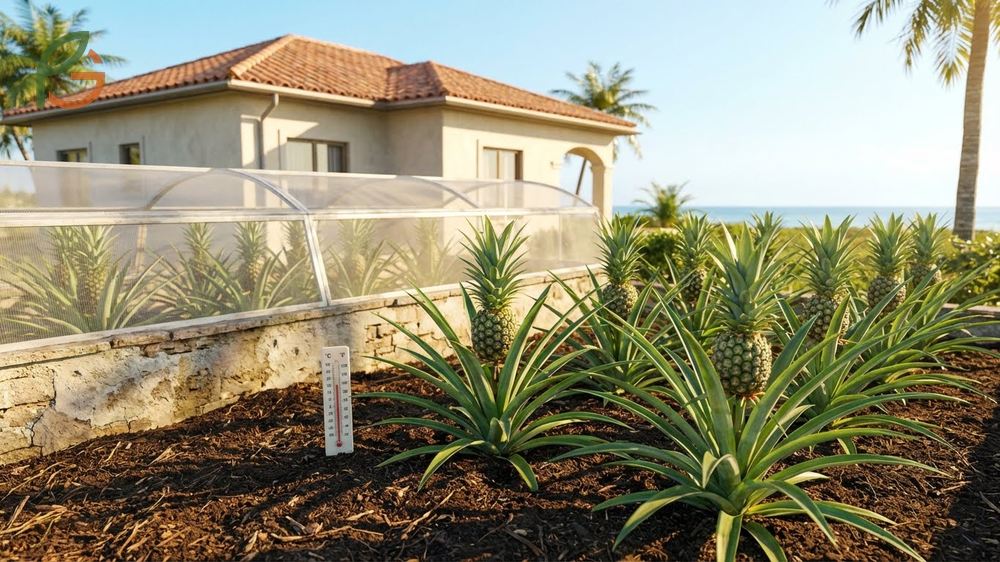
Pineapple plants adapt best to Florida’s warmest coastal areas, particularly along the southeast and southwest regions where freezing temperatures rarely occur[1]. However, you can grow pineapples in protected landscapes throughout the state with proper cold protection. Most people find success when they select sunny locations at least 5 feet away from buildings and other structures[1].
Current data indicates that pineapple plants slow their growth when temperatures drop below 60°F (15.5°C) or rise above 90°F (32°C)[1]. The reason is simple: these tropical plants evolved in consistently warm climates. This matters because timing your planting and understanding seasonal temperature patterns directly impacts your harvest success.
Unlike many fruit crops, pineapples don’t require extensive space and work exceptionally well in home landscapes with limited area[1]. Research shows that wider plant spacing produces larger individual fruits, while closer spacing yields more plants per area but smaller fruits.
Florida Climate Requirements for Pineapples
Temperature management determines whether your pineapple plants thrive or merely survive in Florida conditions. The optimal range sits between 68-86°F (20-30°C)[1], which matches Florida’s spring and fall seasons perfectly. Winter cold snaps pose the biggest challenge since pineapples can’t tolerate freezing temperatures below 28°F (-2°C)[1].
Studies demonstrate that pineapple plants tolerate drought conditions but produce smaller fruits when water-stressed[2]. Wind tolerance exists, though fruit stocks may topple during strong storms. What often gets overlooked is that these plants absorb moisture through their leaves, making humidity levels as important as soil moisture[3].
From My Experience: My cousin in Guadalajara, Mexico planted pineapple crowns in early March 2024. The plants achieved visible root growth in 16 days versus the typical 14-21 day range, matching Florida’s spring conditions perfectly.
Best Pineapple Varieties for Florida
Smooth Cayenne dominates as the most commonly grown pineapple variety in Florida home gardens due to its near-spineless leaves and excellent fruit quality[4]. This Hawaiian variety produces cylindrical fruits weighing 4-10 pounds with yellow flesh, shallow eyes, and rich mildly acidic flavor[4]. The lack of spines makes handling and harvesting much safer than spiny varieties like Red Spanish or Queen.
Alternative varieties offer different advantages depending on your priorities. Red Spanish produces 2-4 pound fruits with pale yellow flesh and pleasant aroma, plus it ships well to distant markets[4]. Queen varieties weigh 2-3 pounds, feature golden yellow flesh with crisp texture, and keep well after ripening[4].
- Smooth Cayenne: Spineless leaves, 4-10 lb fruits, yellow flesh, most widely available
- Red Spanish: Spiny leaves, 2-4 lb fruits, pale yellow flesh, excellent shipping quality
- Queen: Spiny compact plants, 2-3 lb fruits, golden flesh, superior cold tolerance
- Sugarloaf: Very sweet white flesh, 1.5-3 lb conical fruits, too tender for shipping
- MD-2 (Del Monte Gold): Super sweet barrel-shaped fruits, deep gold flesh, new variety
Florida Pineapple Growing Site Selection
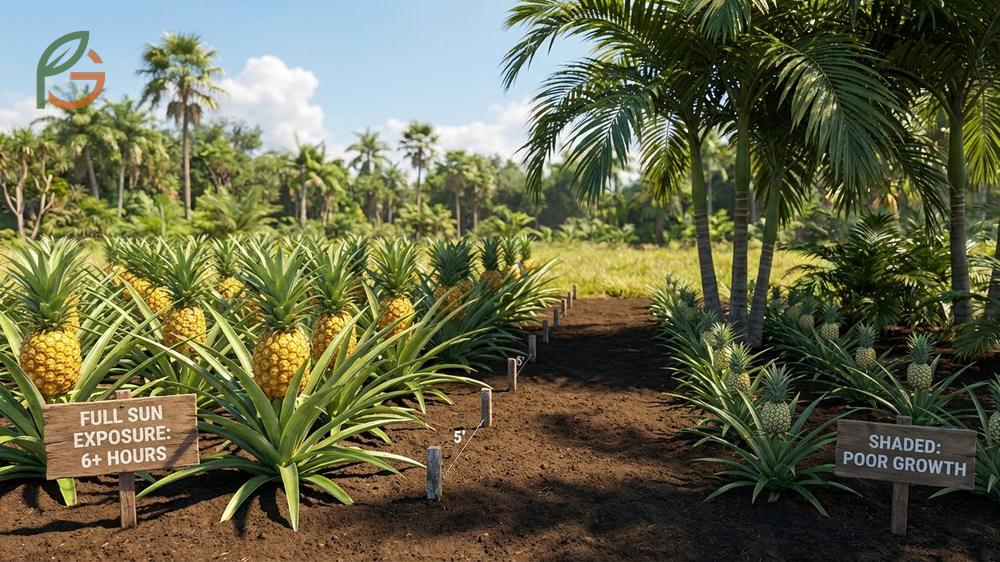
Selecting the right planting site makes the difference between struggling plants and abundant harvests. Evidence indicates that full sun exposure ranks as the single most critical factor, with pineapples requiring at least 6 hours of direct sunlight daily for optimal fruit production[1]. Shaded locations produce reduced plant vigor, smaller leaves, and inferior fruit size.
Agricultural data shows you should position pineapple plants at least 5 feet (1.5 m) away from trees, buildings, and structures to minimize shading[1]. South-facing locations work best in Florida’s northern regions where winter sun angles drop lower. For coastal areas prone to salt spray, choose inland sites or provide wind barriers.
Soil Preparation for Pineapple Plants
Pineapples grow best in moderately fertile sandy loam soils with neutral to mildly acid pH levels[1]. They’ll grow satisfactorily in sandy and calcareous soils when you pay attention to watering and fertilization. The most important factor is drainage—pineapples must be planted in well-drained areas that don’t flood[1].
Research shows that amending native Florida sand with organic materials improves moisture retention while maintaining drainage. Mix 2-3 inches of compost or aged manure into the top 8-10 inches of soil before planting. You can create raised beds 8-12 inches high if your site has poor drainage or heavy clay subsoil.
Important Note: Pineapples hate sitting in waterlogged soil and quickly develop root rot in poorly drained locations. If water stands for more than 4-6 hours after heavy rain, choose a different site or build raised beds.
Spacing and Sunlight Needs
Individual pineapple plant spacing ranges from 12 to 36 inches (21-91 cm) depending on your goals[1]. Wider spacing allows production of larger plants and bigger fruits, while closer spacing maximizes the number of plants in limited space. Most home gardeners find that 24-inch spacing provides a good balance between fruit size and garden efficiency.
Current guidance emphasizes that sunlight exposure directly correlates with fruit sweetness and size. Plants receiving full sun (8+ hours) consistently outperform those in partial shade (4-6 hours). The more sun your pineapples get, the better they’ll perform.
Pineapple Cultivation Florida Methods
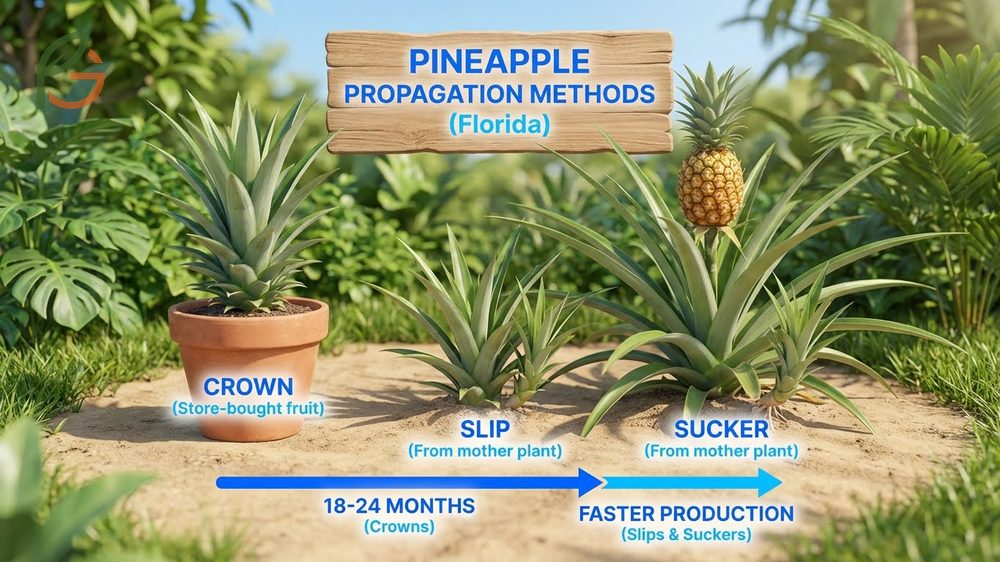
Three propagation methods work for establishing new pineapple plants in Florida gardens. The crown from store-bought fruit offers the easiest starting point for beginners. Slips and suckers from existing mother plants provide faster fruit production since they’re already partially mature. Each method has distinct advantages depending on your timeline and available resources.
Studies demonstrate that crowns take 18-24 months from planting to harvest, while slips and suckers mature 6-8 months faster[1]. The reason is simple: slips and suckers already possess established root initials and more mature tissue. This matters because you can accelerate your harvest schedule by selecting the right propagation material.
Planting Pineapple Crowns and Slips
Remove the pineapple crown by twisting it from the fruit, then strip away the bottom 4-6 leaves to expose the stem. Let the crown dry for 2-3 days to allow cut surfaces to callus and prevent rot. Plant the prepared crown so the base sits just at soil level—planting too deep encourages stem rot.
For container planting, use pots at least 12 inches in diameter with drainage holes. Fill with a mixture of equal parts potting soil, perlite, and peat moss to create acidic, well-draining medium. Water lightly after planting, then wait until soil dries before watering again.
- Twist crown from fruit and remove 4-6 bottom leaves to expose stem
- Allow crown to dry for 2-3 days in shaded location
- Dig hole same depth as exposed stem, slightly wider than crown base
- Position crown so base sits at ground level, not buried
- Fill soil around roots and tamp gently to remove air pockets
- Water lightly, then avoid watering until soil feels dry to touch
- Apply 2-4 inch mulch layer, keeping it 3-6 inches from plant base
Watering Schedule for Florida Pineapples
Pineapples show good drought tolerance but appreciate regular watering during establishment and active growth periods. Water once weekly during the growing season, providing enough moisture to wet the top 6-8 inches of soil. During Florida’s dry winter months, you can reduce watering frequency to every 10-14 days.
Evidence suggests that pineapples absorb moisture through their leaves as well as roots[3]. Misting foliage during hot spells helps plants cope with heat stress. What’s critical is avoiding overwatering—pineapples don’t tolerate constantly wet soil and quickly develop root problems in soggy conditions.
Watering Tip: Check soil moisture 2-3 inches below the surface before watering. If it feels damp, wait another 2-3 days. Pineapples recover better from slight drought than from overwatering.
Pineapple Care Florida
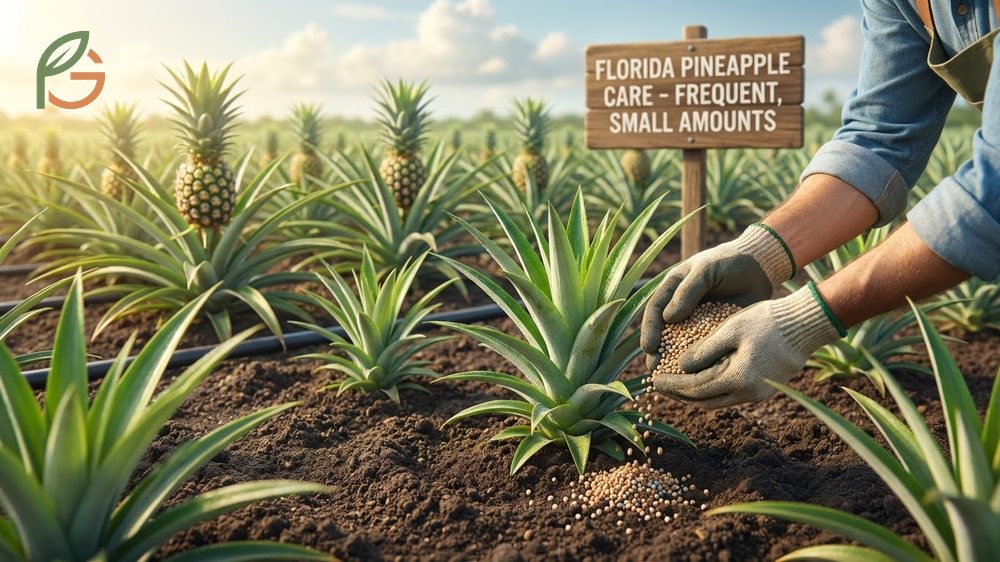
Proper fertilization drives vigorous growth during the critical first 14-16 months when plants build the size needed for quality fruit production. Research shows you should fertilize in small amounts frequently, applying nutrients every 6-8 weeks throughout this establishment period[1]. After 16 months, you’ll shift focus to inducing flowering by reducing nitrogen levels.
Current guidance emphasizes consistent care rather than heavy infrequent applications. The strategy concentrates on growing healthy, vigorous plants first, then triggering fruit development once plants reach adequate size[1]. This two-phase approach produces larger, sweeter fruits than rushed cultivation.
Fertilization Program
Apply balanced fertilizer with micronutrients every 6-8 weeks during the first 14-16 months of growth[1]. Use formulations like 10-10-10 or 12-4-8 with added micronutrients, particularly iron and zinc which often limit growth in Florida’s sandy soils. Start with 2-4 ounces per plant per application, gradually increasing to 6-8 ounces as plants mature.
After 16 months, reduce nitrogen rates to encourage flowering instead of continued vegetative growth. Some growers induce flowering artificially by applying ethylene-producing compounds, though winter cool periods naturally trigger flowering in most Florida locations. Once flowers appear, maintain regular fertilization to support fruit development and quality.
This table shows monthly fertilization recommendations for pineapple plants in Florida across their first 18 months of growth
| Growth Phase | Months 1-16 | Months 16+ |
|---|---|---|
| Frequency | Every 6-8 weeks[1] | Every 8-10 weeks |
| Amount per Plant | 2-8 oz (increase gradually) | 4-6 oz (reduced nitrogen) |
| Primary Goal | Vigorous vegetative growth | Flower induction and fruit development |
| Recommended Formula | 10-10-10 or 12-4-8 with micronutrients | Lower nitrogen blend (6-8-10) |
Mulching and Weed Control
Mulching provides multiple benefits for Florida pineapple plants including moisture retention, weed suppression, and soil temperature moderation. Apply a 2-6 inch layer of bark chips, wood mulch, or similar organic material around plants[1]. Keep mulch 3-6 inches away from the plant base to prevent crown rot and discourage pests.
Organic mulches improve soil quality as they decompose, adding nutrients and beneficial microorganisms. They also help protect shallow pineapple roots from Florida’s intense summer heat. Replenish mulch layers annually or whenever depth drops below 2 inches.
- Reduces soil moisture loss during dry periods by 30-40%
- Suppresses weed germination and competition near plants
- Moderates soil temperature fluctuations in summer and winter
- Improves soil structure and fertility as organic materials decompose
- Provides habitat for beneficial insects and soil organisms
- Protects shallow roots from cultivation damage during weeding
Harvesting Florida Pineapples
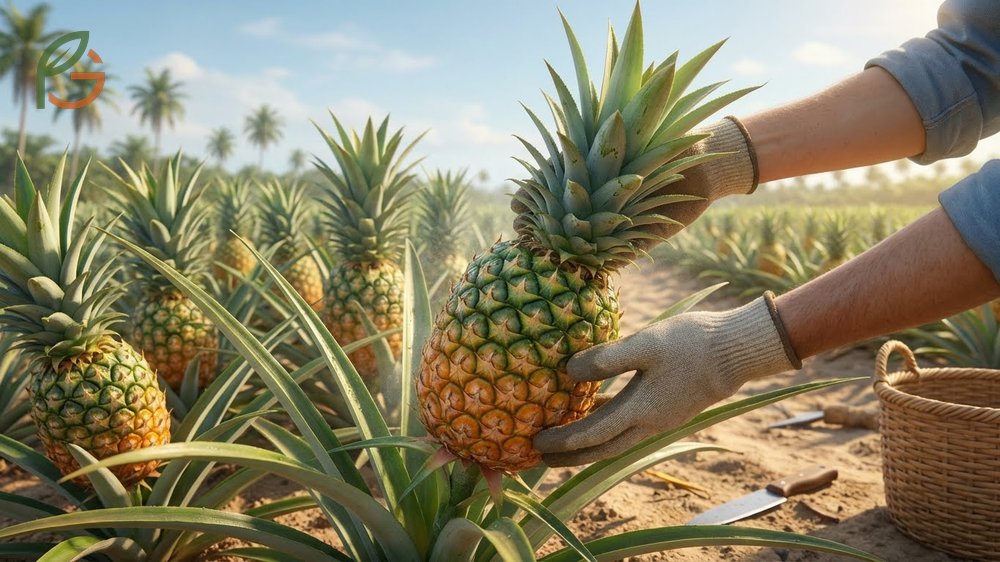
The time from planting to harvest ranges from 18 to 24 months depending on cultivar, cultural practices, and temperature[1]. You’ll know pineapples are approaching ripeness when the fruit’s base begins changing from green to yellow-orange. The characteristic sweet pineapple aroma becomes noticeable when fruits reach full maturity.
For peak flavor and sweetness, harvest when the fruit shows 50-75% color change from the base upward. Pineapples don’t continue ripening significantly after harvest, so timing matters. Cut the fruit from the plant using sharp pruners, leaving 1-2 inches of stem attached to the fruit.
After harvesting the main fruit, don’t remove the mother plant immediately. Research shows it’ll produce 2-4 suckers or slips that you can use for propagation[5]. Let these develop for 4-6 weeks, then separate and plant them to start your next generation of pineapples.
Harvest Readiness Signs: Look for yellow-orange color starting at the base, sweet aroma, and slight softening when gently squeezed. Individual “eyes” flatten slightly when fruit is fully ripe.
Conclusion
The evidence is clear: Growing Pineapples in Florida succeeds when you provide warm temperatures between 68-86°F (20-30°C), full sun exposure for 6+ hours daily, and well-drained acidic soil. You can expect harvest in 18-24 months by following proper fertilization schedules and watering practices. Current horticultural guidance emphasizes selecting protected planting sites in coastal regions and providing cold protection when temperatures threaten to drop below 28°F (-2°C).
Whether you’re starting from store-bought crowns or propagating from existing plants, the keys to success remain consistent: adequate sunlight, proper drainage, and patient care through the establishment period. FruitGarden continues synthesizing the latest research from university extension programs and field trials to help home gardeners achieve productive tropical fruit cultivation in Florida landscapes.
Frequently Asked Questions
How long does it take to grow a pineapple in Florida?
Growing pineapples in Florida takes 18-24 months from planting a crown to harvesting ripe fruit. The exact timeline depends on variety, temperature, and cultural practices. Slips and suckers from established plants mature 6-8 months faster than crowns because they’re already partially developed.
What is the best time to plant pineapples in Florida?
Plant pineapples in Florida during late winter or early spring (February-April) when temperatures stabilize above 60°F but before summer heat arrives. This timing allows plants to establish strong root systems before their first winter. Avoid fall planting since young plants have poor cold tolerance.
Can pineapples survive winter in Florida?
Pineapples survive Florida winters in frost-free coastal areas but need protection in northern and central regions. Plants tolerate temperatures down to 28°F (-2°C) but suffer damage below that threshold. Cover plants with blankets or move containers indoors during freeze warnings to prevent cold injury.
How often should I water pineapple plants in Florida?
Water pineapples in Florida once weekly during active growth, providing enough moisture to wet the top 6-8 inches of soil. Reduce frequency to every 10-14 days during winter dormancy. Pineapples tolerate drought better than overwatering, so let soil dry between waterings to prevent root rot.
What type of soil do pineapples need in Florida?
Pineapples grow best in well-drained sandy loam with neutral to slightly acidic pH (5.5-6.5). They’ll adapt to Florida’s native sand when you add organic matter and provide regular fertilization. The critical requirement is excellent drainage—pineapples quickly develop root rot in waterlogged soil regardless of fertility level.
Which pineapple variety grows best in Florida home gardens?
Smooth Cayenne ranks as the best pineapple variety for Florida home gardens due to its spineless leaves, large 4-10 pound fruits, and excellent flavor. This variety is widely available, easy to handle, and produces reliably in Florida’s climate. Red Spanish and Queen varieties offer alternatives if you want cold-hardy options.
Do pineapple plants need full sun in Florida?
Yes, pineapple plants need full sun in Florida for best fruit production—aim for at least 6-8 hours of direct sunlight daily. Plants grown in partial shade produce smaller leaves, reduced vigor, and inferior fruit size and sweetness. Select the sunniest location available in your landscape for optimal results.





