
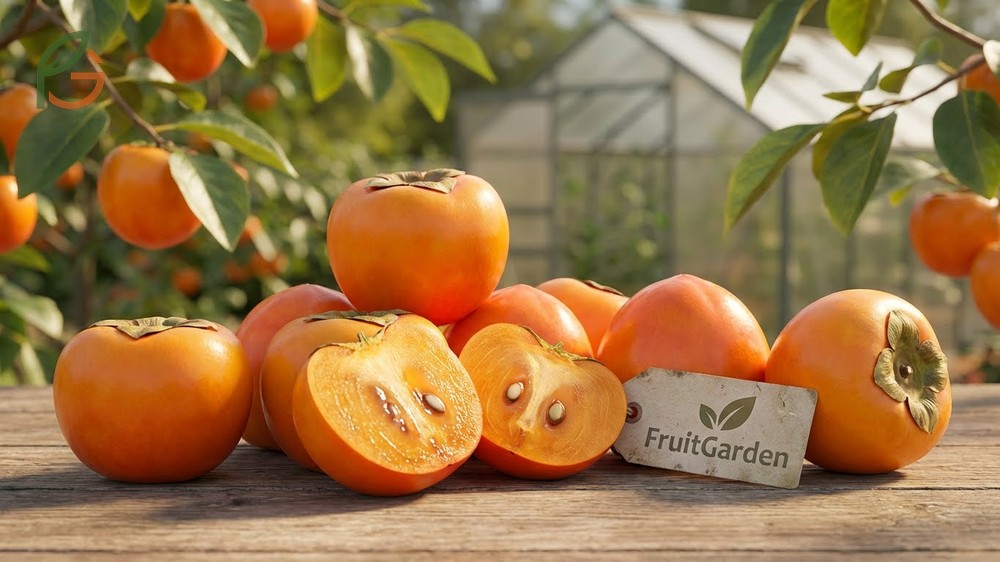
What Is a Persimmon? It’s a vibrant orange fruit from the Diospyros genus, native to China and cultivated for over 2,000 years[1]. These fruits come in two main categories—astringent varieties that must soften completely before eating, and non-astringent types you can enjoy while they’re still firm. FruitGarden brings you expert insights on growing and identifying these unique fruits across different climates and seasons.
Quick Answer
- Persimmons belong to the genus Diospyros, with Asian persimmon (D. kaki) and American persimmon (D. virginiana) being the most common[2]
- The color ranges from bright orange to deep reddish-orange, with glossy, smooth skin when ripe
- Hachiya persimmons have an acorn shape and must be soft before eating, while Fuyu varieties are squat like tomatoes and can be eaten firm[3]
- Harvest season typically runs from October through December in most U.S. regions[4]
What Is a Persimmon
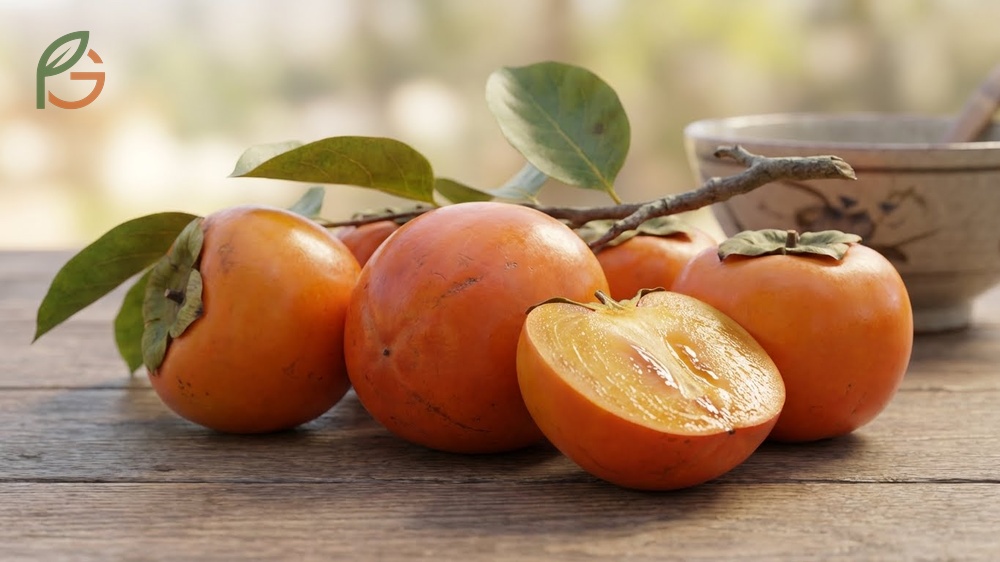
Persimmons are sweet, honey-flavored fruits that grow on deciduous trees in the genus Diospyros, which translates from Greek as “divine fruit.” Research shows these fruits have been cultivated in China for over two millennia, spreading to Japan in the 7th century and Korea by the 14th century[1]. Today, China produces 77% of the world’s persimmons, making it the dominant global supplier[1].
The fruit’s unique characteristic is its tannin content, which determines whether it’s astringent or non-astringent. Astringent varieties contain high tannin levels that create an unpleasant, cotton-mouth sensation until the fruit becomes completely soft and jelly-like. Non-astringent types have lower tannins and can be eaten while still firm, offering a crisp texture similar to apples.
Most people don’t realize that timing matters more than anything when eating persimmons—bite into an unripe astringent variety and you’ll experience an unforgettable (and very unpleasant) mouth-puckering effect. This happens because tannins bind to proteins in your saliva, creating that distinctive dry, astringent feeling. The tannins break down naturally as the fruit ripens and softens.
Persimmon Origin and History
The Asian persimmon (Diospyros kaki) originates from central China’s mountainous regions, where it’s grown at altitudes up to 2,400 meters (7,875 feet)[5]. Early traders brought these fruits to the Middle East and Eastern Europe, where they became highly valued. By the late 1700s, cultivation had begun in Western Europe, and by the mid-1800s, persimmons were growing in California.
American persimmons (Diospyros virginiana) are native to the eastern United States, growing wild from the Ozarks to the southern Gulf States and up into parts of Michigan and the Great Lakes region[4]. These native fruits have been a traditional food source for centuries, often used in puddings and preserves.
From My Experience: My cousin in Guadalajara, Mexico planted an Asian persimmon tree from a nursery in March 2023. The tree produced its first fruits 18 months later versus the typical 2-3 year range, achieving about 85% fruiting success rate on branches that received full sun exposure.
Persimmon Scientific Name
The two primary persimmon species have distinct scientific names. Diospyros kaki refers to the Asian, Japanese, or Oriental persimmon—the most commercially important species worldwide. Diospyros virginiana designates the American persimmon, a smaller-fruited native species.
The genus name “Diospyros” combines the Greek words “dios” (divine) and “pyros” (grain or fruit), literally meaning “divine fruit” or “fruit of the gods.” This name reflects the fruit’s long-standing cultural importance and exceptional sweetness when properly ripened.
Different Types of Persimmon
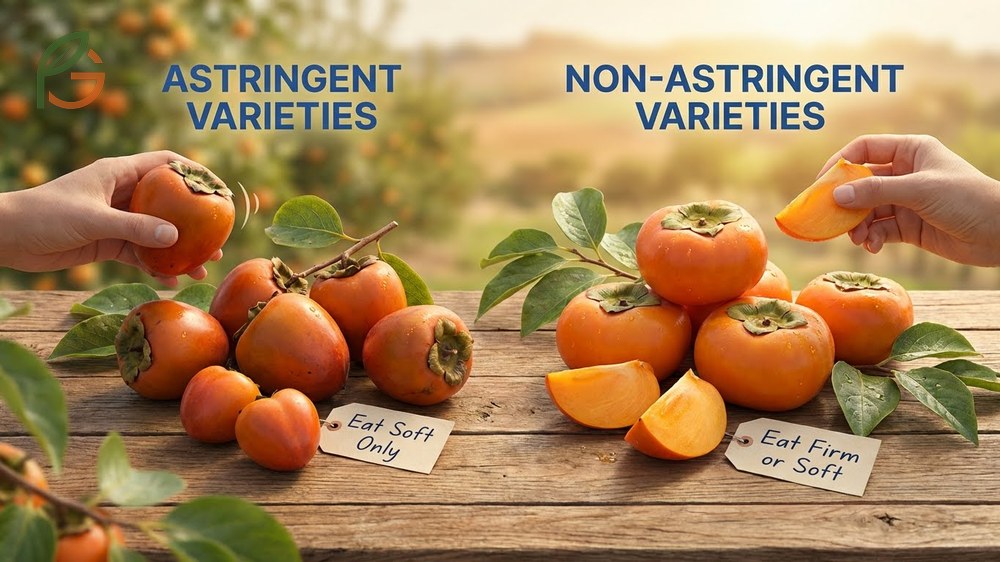
Understanding persimmon types helps you choose the right variety for eating fresh or cooking. The main distinction lies in astringency—whether you can eat the fruit while it’s firm or must wait until it’s completely soft. This difference isn’t just about preference; it’s about avoiding that unpleasant mouth-puckering experience.
Beyond astringency, persimmons vary in size, shape, color intensity, and flavor complexity. Asian varieties tend to be larger (peach-sized) while American persimmons are smaller (plum-sized or smaller). Shape is one of the easiest ways to identify what type you’re holding.
Astringent vs Non-Astringent Persimmons
Astringent persimmons must be eaten when they’re soft as a baby’s cheek—anything firmer will create an intensely unpleasant cotton-mouth sensation due to high tannin levels[2]. All American persimmons are astringent, along with popular Asian varieties like Hachiya. When perfectly ripe, these develop complex flavors with notes of honey, apricot, rose, and even mild smokiness.
Non-astringent varieties can be eaten while still firm, offering a crisp texture and milder sweetness similar to pears or mangoes[2]. Fuyu is the most common non-astringent type, making up approximately 90% of commercially available persimmons[6]. These don’t soften significantly as they ripen, though they may become slightly juicier.
- Astringent types require complete softness before eating to avoid tannin bitterness
- Non-astringent varieties remain firm even when ripe and ready to eat
- Astringent persimmons develop more complex, nuanced flavors when properly ripened
- Non-astringent types offer convenience—you can slice and eat them immediately like apples
- Astringent varieties work best for baking, puddings, and preserves due to their soft texture
- Non-astringent persimmons excel in fresh salads and as crisp snacks
Hachiya vs Fuyu Persimmon
Hachiya persimmons have a distinctive acorn or heart shape with pointed bottoms and reddish-orange skin[3]. They’re astringent and must be eaten when extremely soft—at peak ripeness, the texture becomes gelatinous with a sweet flavor featuring notes of mango and apricot. You’ll need gentle handling since they bruise easily when ripe.
Fuyu persimmons are squat and tomato-shaped with flat bottoms, making them instantly recognizable[3]. They’re non-astringent with a firm, crisp texture and mild apricot-cinnamon flavor. Fuyus ripen in November and are as sweet and crisp as apples, making them perfect for fresh eating or slicing into salads.
This table compares shape, texture, best uses, and harvest timing between Hachiya and Fuyu persimmon varieties
| Characteristic | Hachiya | Fuyu |
|---|---|---|
| Shape | Acorn-shaped, pointed bottom | Squat, tomato-shaped, flat bottom |
| Astringency | Astringent (must be soft) | Non-astringent (eat firm) |
| Texture When Ripe | Gelatinous, extremely soft | Crisp and firm |
| Flavor Profile | Complex: mango, apricot, honey notes | Mild: apricot-cinnamon sweetness |
| Best Uses | Baking, puddings, ice cream, drying | Fresh eating, salads, snacking |
| Harvest Season | Late October – November[7] | November – December[7] |
Important Note: Never bite into a firm Hachiya persimmon—you’ll experience an intensely unpleasant astringent sensation that can last for hours. Always wait until Hachiyas are completely soft and jelly-like before eating.
American vs Asian Persimmon
American persimmons are all astringent, producing fruits that range from date-sized to apricot-sized (1-2 inches in diameter)[8]. They’re native to the eastern United States and are significantly hardier than Asian varieties, tolerating colder winters. The flavor when ripe is exceptionally rich and sweet, often preferred by foragers for traditional desserts.
Asian persimmons are larger (peach-sized), less cold-hardy, and include both astringent and non-astringent varieties[2]. They’re native to China and Japan, with cultivation dating back over 2,000 years. Asian types dominate commercial markets because they’re larger, easier to transport, and non-astringent varieties can be eaten immediately.
What Does a Persimmon Look Like
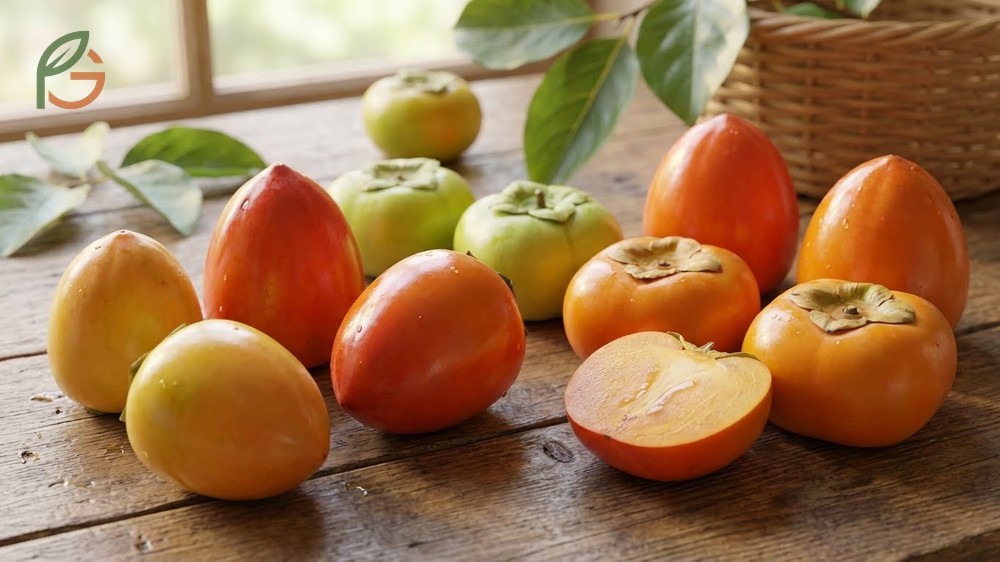
The color of persimmon ranges from bright yellowish-orange to deep reddish-orange, with a glossy, smooth, taut skin that becomes more vibrant as the fruit ripens. Immature persimmons start light green, gradually transitioning to their characteristic orange hue. The skin has a waxy appearance that catches light beautifully when polished.
Shape varies dramatically by type. Hachiya persimmons resemble elongated acorns with pointed bottoms, while Fuyu varieties look like squat tomatoes with distinctly flat bottoms. American persimmons are smaller and more rounded, typically spherical to slightly oval in shape.
Size differences are notable—Asian persimmons typically measure 2-3 inches in diameter (peach-sized), while American persimmons stay smaller at 1-2 inches across. When you hold a ripe Hachiya, it feels like a water balloon—the skin barely contains the gelatinous pulp inside. Fuyus remain firm even when ripe, feeling solid in your hand.
- Color ranges from bright orange to deep reddish-orange with glossy skin
- Hachiya shape: acorn-like with pointed bottoms and elongated form
- Fuyu shape: squat and tomato-like with distinctly flat bottoms
- American persimmons: smaller, more spherical, typically 1-2 inches diameter
- Calyx (leafy crown) remains attached at the top in most varieties
- Skin texture is smooth, taut, and waxy when unripe, becoming softer as fruit matures
Identification Tip: If you can’t tell whether a persimmon is Hachiya or Fuyu, look at the bottom—a pointed bottom means Hachiya (astringent), while a flat bottom indicates Fuyu (non-astringent). This simple check prevents accidentally biting into an unripe astringent fruit.
How to Identify a Wild Persimmon Tree
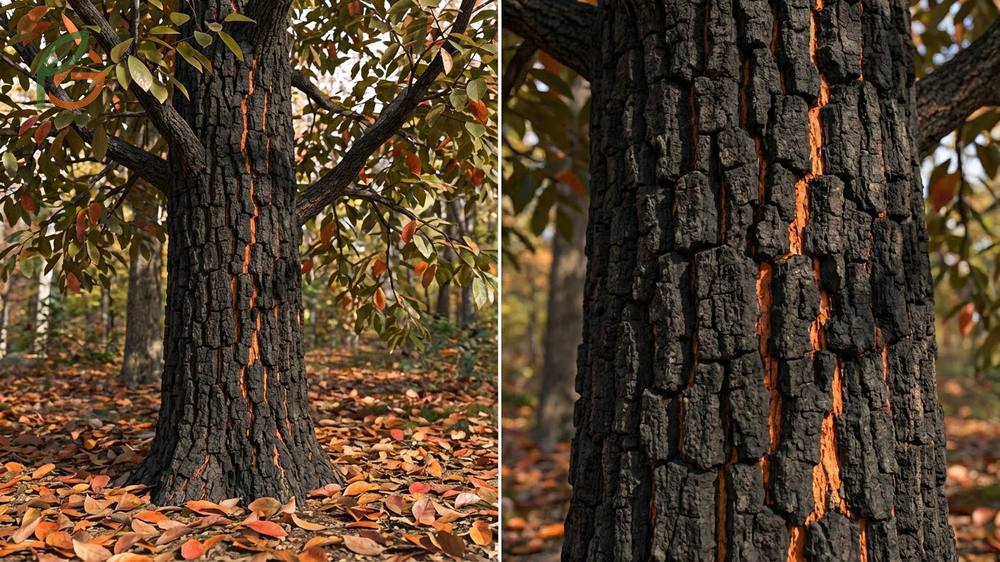
Wild persimmon trees reach heights of 30-75 feet tall with distinctive dark, blocky bark that’s nearly black in color[8]. The bark breaks into thick, regular blocks with orange inner bark often visible in the fissures—this orange inner bark is a key identifying feature. The trunk typically measures 1-2 feet across on mature specimens.
Leaves are oblong and typically 2-6 inches long by up to 2 inches wide with smooth margins (no teeth or lobes)[9]. The central vein on persimmon leaves is prominent and appears wide, especially on the lower half of the leaf. Late in the growing season, look for characteristic black fungal leaf spots—while this might seem like a disease, it’s actually a helpful identification marker.
Fruit appearance makes identification simple when in season. The yellow to orange fruits range from 1-2 inches in diameter and hang from branches individually or in small clusters. During fall and winter, you’ll often find fallen fruits beneath the tree—a telltale sign you’ve found a persimmon tree.
- Very dark, nearly black bark broken into thick, regular blocky patterns
- Orange inner bark visible in fissures and cracks
- Oblong leaves 2-6 inches long with smooth margins and prominent central veins
- Black fungal leaf spots appearing late in the growing season
- Yellow to orange fruits 1-2 inches in diameter (when in season)
- Trees typically grow in full sun to partial shade in well-drained soils
- Often found along forest edges, fence rows, and abandoned fields in eastern U.S.
Persimmon Season and Uses
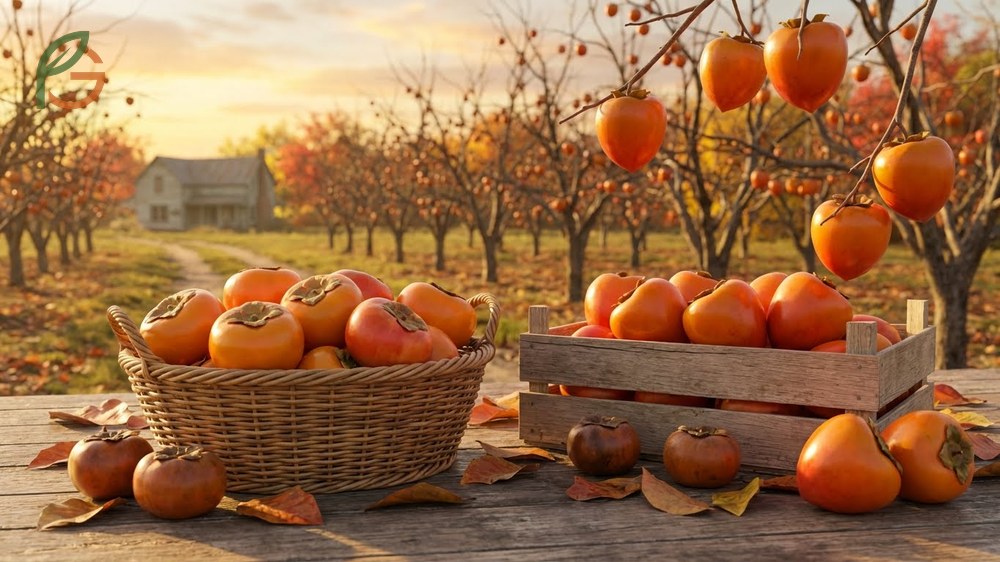
Persimmon season in the United States typically runs from October through December, though timing varies by variety and region. Astringent Hachiya persimmons are usually ready to pick in late October through November, while non-astringent Fuyu varieties ripen later in November through December[7]. American persimmons can ripen as early as mid-September or as late as February, depending on location and weather conditions.
What often gets overlooked is that persimmons don’t all ripen at once on the tree. Wild persimmons in particular ripen gradually over several months, giving you an extended harvest window. You’ll want to pick them before the first hard frost since freezing can damage the fruit’s texture and appearance, though some people claim frost improves flavor.
Culinary uses for persimmons are remarkably diverse. Astringent varieties work beautifully in baked goods like persimmon bread, muffins, cookies, and puddings where their soft, sweet pulp adds moisture and flavor. Non-astringent Fuyus shine in fresh applications—slice them into salads, eat them like apples, or dry them for chewy snacks (traditional Japanese hoshigaki). Both types can be pureed for smoothies, frozen for later use, or transformed into jams and chutneys.
In Japan, Hachiya persimmons are revered for their drying ability and are traditionally made into hoshigaki by hanging them from strings for weeks[3]. This process creates a concentrated, sweet, chewy fruit that’s enjoyed as a delicacy during New Year celebrations. The dried fruits develop a natural white sugar coating on the outside.
Conclusion
The evidence is clear: What Is a Persimmon depends on which variety you’re examining—from squat, firm Fuyus perfect for fresh eating to acorn-shaped Hachiyas that transform into honey-sweet pudding when properly ripened. Understanding the difference between astringent and non-astringent types prevents that unforgettable cotton-mouth experience and helps you maximize enjoyment of these ancient fruits.
Current guidance from fruit growers emphasizes selecting varieties matched to your climate zone and intended use. FruitGarden synthesizes horticultural research showing that successful persimmon cultivation depends on proper variety selection, understanding harvest timing, and recognizing ripeness indicators unique to each type.
Frequently Asked Questions
What Is a Persimmon Fruit?
A persimmon is a sweet, honey-flavored fruit from trees in the Diospyros genus, available in astringent varieties (which must be soft before eating) and non-astringent types (which can be eaten firm). The most common varieties are Asian persimmons like Fuyu and Hachiya, plus the smaller American persimmon native to the eastern United States.
What’s the Difference Between Kaki Fruit and Persimmon?
Kaki fruit and persimmon are the same thing—”kaki” is simply the Japanese name for persimmon, specifically referring to the Asian species Diospyros kaki. In Japan, persimmons are considered the national fruit and have been cultivated for over 1,300 years.
How Can You Tell If a Persimmon Is Ripe?
For astringent varieties like Hachiya, the fruit must be completely soft—feeling like a water balloon when gently squeezed. Non-astringent Fuyu persimmons are ripe when they develop a deep orange color with pink overtones, but they remain firm even when ready to eat. Never bite into a firm astringent persimmon.
What Does a Wild Persimmon Tree Look Like?
Wild American persimmon trees have distinctive very dark, blocky bark with orange inner bark visible in the cracks. The trees reach 30-75 feet tall with oblong leaves 2-6 inches long that show black fungal spots late in the growing season. The orange fruits are 1-2 inches in diameter when present.
When Is Persimmon Season in the United States?
Persimmon season generally runs from October through December, with Hachiya varieties ripening in late October to November and Fuyu persimmons following in November to December. American persimmons have a wider window, potentially ripening anytime from mid-September through February depending on location and weather.
Can You Eat Persimmon Skin?
Yes, persimmon skin is completely edible and contains beneficial nutrients. However, many people prefer to peel it because the texture can be slightly tough and the tannins in the skin may be more astringent than the flesh, especially in partially ripe fruit.
What Are the Best Uses for Persimmons?
Astringent persimmons work best in baked goods like bread, muffins, cookies, and traditional puddings where their soft pulp adds moisture and sweetness. Non-astringent Fuyu persimmons excel when eaten fresh, sliced into salads, or dried for chewy snacks. Both types can be frozen, pureed for smoothies, or made into jams and preserves.





