
Self pollinating pear trees can produce fruit without needing another pear variety nearby, making them perfect for small gardens. Research shows varieties like Bartlett, Kieffer, and Seckel are reliable self-fertile options that’ll give you harvests in spaces as small as 8 feet wide[1]. FruitGarden synthesizes current horticultural research to help you choose the right pear varieties for limited spaces.
Quick Answer
Self Pollinating Pear Trees
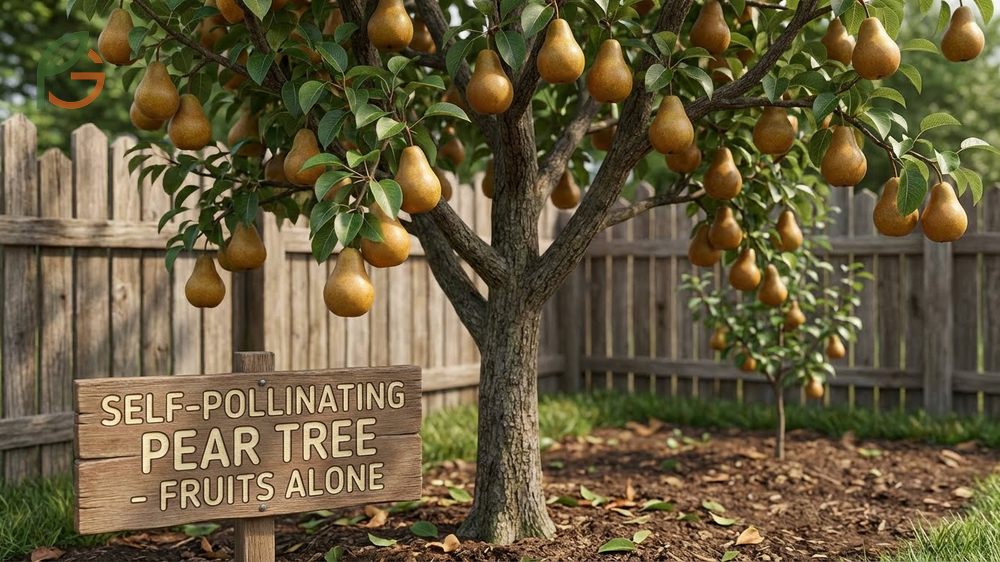
Self-pollinating pear trees are varieties that can produce fruit without needing pollen from another pear tree. While most pear varieties require cross-pollination with a different variety to set fruit, self-fertile types complete pollination using their own pollen. This makes them ideal for homeowners with limited garden space who can’t plant multiple trees.
Current horticultural data shows that self-pollinating pears often benefit from having another variety nearby, which can boost yields by 20-30%. However, they’ll still produce a reliable harvest on their own. This flexibility is what sets them apart from strictly cross-pollinating varieties that won’t fruit without a compatible partner tree.
From My Experience: My cousin in Guadalajara, Mexico planted a Bartlett pear tree in March 2023. It produced its first small harvest in year two—about 15 pears versus the typical 5-8 for a solo tree, showing that even self-pollinators perform better with good care.
How Pear Self Pollination Works
Self-fertile pear trees have flowers that can accept their own pollen to create viable seeds and fruit. When bees or wind move pollen from the stamen to the pistil of flowers on the same tree, fertilization occurs. This process doesn’t require genetic diversity from another variety, though it can improve fruit set and size.
Research demonstrates that self-compatible pear varieties have evolved to overcome the self-incompatibility mechanisms found in most pears. These trees produce enzymes that allow their pollen tubes to grow successfully through their own stigmas and reach the ovules for fertilization.
Benefits for Single Tree Gardens
Growing a single self-pollinating pear tree saves significant space in small yards. You won’t need to dedicate room for a second tree or worry about finding compatible pollination partners. This approach works especially well in urban gardens where every square foot counts.
Single-tree setups also simplify maintenance and harvesting. You’ll only need to prune, fertilize, and monitor one tree instead of coordinating care for multiple specimens. For beginner gardeners, this reduces the learning curve and makes fruit growing more accessible.
Important Note: Even self-pollinating pear trees need at least 6 hours of direct sunlight daily[4] and well-draining soil to produce healthy fruit. Don’t plant in areas with standing water or deep shade.
Self Fertile Pears for Small Spaces
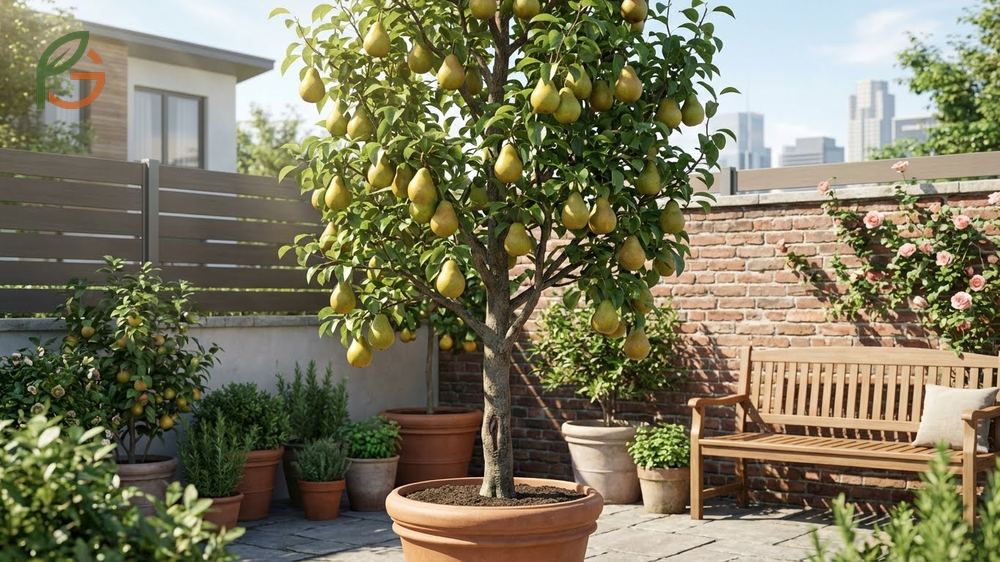
Dwarf and semi-dwarf self-fertile pear varieties are specifically bred for compact growth, making them perfect for small gardens and urban yards. These trees typically reach 8-12 feet tall at maturity compared to standard varieties that can grow 20-25 feet. You’ll get the same quality fruit but in a much more manageable size.
Studies show that grafting pear varieties onto dwarfing rootstocks like Quince A reduces overall tree size while maintaining fruit production. This technique lets you fit productive pear trees into spaces that couldn’t accommodate full-sized specimens. The trade-off is that dwarf trees may yield 50-75 pounds of fruit per year versus 150-300 pounds from standard trees.
Dwarf Pear Spacing Requirements
Dwarf pear trees need a minimum of 8 feet between each tree[1], while semi-dwarf varieties require 10-12 feet of spacing. This measurement accounts for mature canopy spread and root zone development. Proper spacing ensures each tree gets adequate sunlight and air circulation, which reduces disease pressure.
For espalier or fan-trained pears grown against walls or fences, you can reduce spacing to 6-8 feet since you’re controlling growth in two dimensions rather than three. This technique works particularly well for self-pollinating varieties like Conference and Comice that respond well to training.
- Dwarf pear trees: 8-10 feet spacing minimum
- Semi-dwarf pear trees: 10-12 feet spacing recommended[3]
- Standard pear trees: 20-25 feet spacing required
- Espalier-trained pears: 6-8 feet spacing acceptable
- Container-grown dwarf pears: no in-ground spacing needed
Container Growing Options
Self-pollinating dwarf pear trees can thrive in containers 18-24 inches in diameter. This option is perfect for patios, balconies, or small yards where in-ground planting isn’t possible. You’ll need to use a high-quality potting mix and ensure the container has drainage holes to prevent waterlogging.
Container-grown pears require more frequent watering than in-ground trees since pots dry out faster. During hot summer months, you might need to water daily. They’ll also need annual repotting or root pruning to maintain health and prevent the tree from becoming root-bound.
Container Tip: Choose varieties specifically labeled as “patio” or “dwarf” types for containers. Varieties like Conference and Concorde adapt well to pot culture and will still produce 15-30 fruits per season when properly cared for.
Pear Varieties Self Pollinating
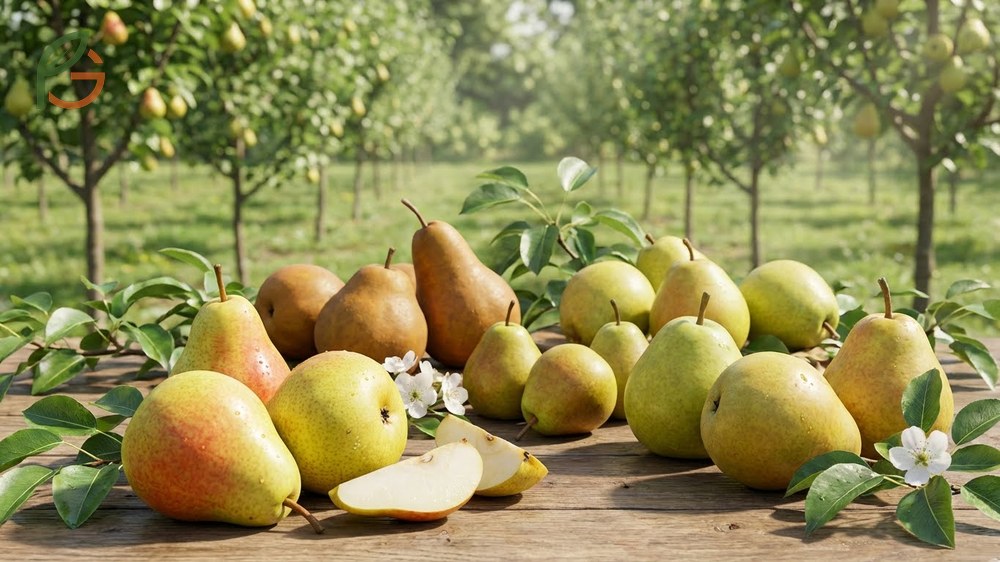
Several pear varieties are reliably self-pollinating and well-suited for American gardens. Bartlett is the most commonly planted pear in North America and performs well as a self-pollinator[2], though it produces even better with a cross-pollination partner. Other proven self-fertile varieties include Kieffer, Seckel, Comice, and Orient.
European and Asian pear types both include self-pollinating varieties, giving you options for different flavor profiles and uses. European pears like Bartlett and Comice have the classic soft, buttery texture when ripe. Asian pears like Hosui and Shinseiki stay crisp like apples and are also self-fertile.
- Bartlett – classic yellow pear, ripens August-September, excellent for fresh eating and canning
- Kieffer – very hardy, disease-resistant, best for cooking and preserves
- Seckel – small sugar pears, naturally compact trees, good fire blight resistance
- Comice – premium dessert pear, sweet and juicy, ripens late October
- Hosui – Asian pear, crisp texture, butterscotch flavor, stores well
- Orient – large fruit, fire blight resistant, good for southern climates
- Spalding – partially self-fruitful[5], heat-tolerant, ripens mid-July
This table compares ripening time, fruit size, and best uses for five popular self-pollinating pear varieties
| Variety | Ripening Time | Fruit Size | Best Use |
|---|---|---|---|
| Bartlett | August-September | Large (3-4 inches) | Fresh, canning |
| Kieffer | October | Large (3-4 inches) | Cooking, preserves |
| Seckel | September | Small (2 inches) | Fresh, pickling |
| Comice | Late October | Very large (4-5 inches) | Fresh eating |
| Hosui | August | Medium (3 inches) | Fresh, salads |
Single Pear Tree Care
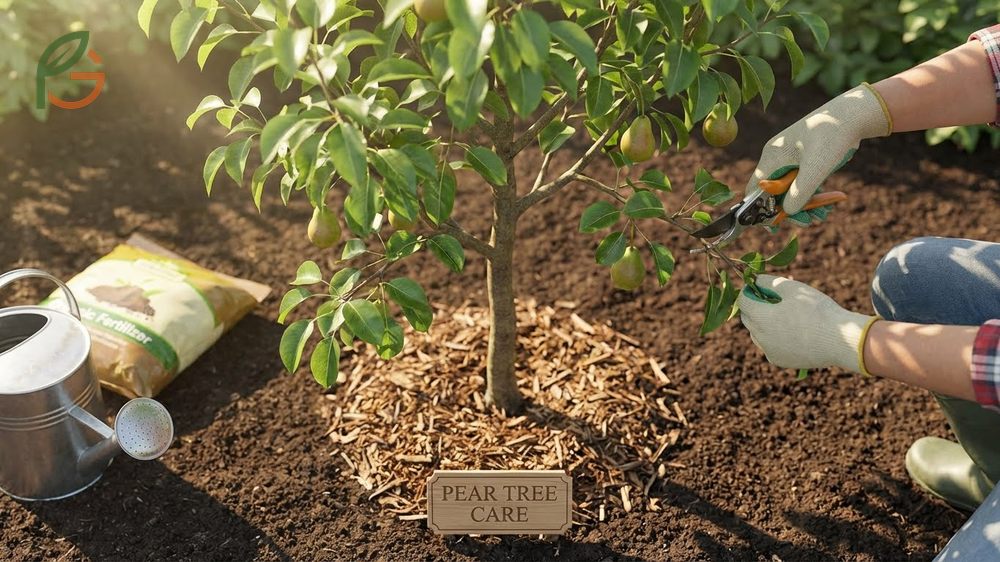
Caring for a single self-pollinating pear tree is straightforward once you understand its basic needs. These trees require consistent moisture, annual feeding, and regular pruning to maintain productivity. Most self-fertile pear varieties are also relatively low-maintenance compared to other fruit trees.
The first three years after planting are critical for establishing a strong root system and framework. During this period, focus on training the tree’s shape and providing adequate water rather than expecting large harvests. Once established, your pear tree can produce fruit for 50-75 years with proper care.
Watering and Fertilizing
Young pear trees need deep watering once per week, ensuring moisture reaches 12-18 inches into the soil[4]. This encourages roots to grow downward rather than staying shallow. Mature trees can go 10-14 days between waterings during the growing season, depending on rainfall and temperature.
Apply a balanced slow-release fertilizer in early spring as new growth begins. Use a formula like 10-10-10 at a rate of 1 pound per inch of trunk diameter, spread evenly under the canopy. Avoid over-fertilizing, which can stimulate excessive vegetative growth at the expense of fruit production.
- Water deeply rather than frequently to encourage deep root growth
- Use drip irrigation or soaker hoses for efficient water delivery
- Apply 2-4 inches of organic mulch around the tree base to retain moisture
- Fertilize in early spring before bud break for best results
- Watch for yellowing leaves, which may indicate nutrient deficiency
- Reduce fertilizer if you see excessive shoot growth with few flowers
Pruning and Maintenance
Prune pear trees during dormancy in late winter before spring growth starts. Remove dead, damaged, or crossing branches first, then thin out crowded areas to improve air circulation. This reduces disease pressure and allows sunlight to reach all parts of the canopy for better fruit development.
Train young trees to a central leader system with well-spaced scaffold branches. This creates a strong structure that can support heavy fruit loads. For mature trees, maintenance pruning keeps the tree at a manageable height and removes unproductive wood to encourage new fruiting spurs.
Pruning Warning: Don’t prune pear trees heavily in summer or fall, as this can stimulate late-season growth that’s vulnerable to winter damage. Stick to dormant-season pruning for structural work and reserve summer pruning only for removing water sprouts.
Best Self Pollinating Pear Varieties
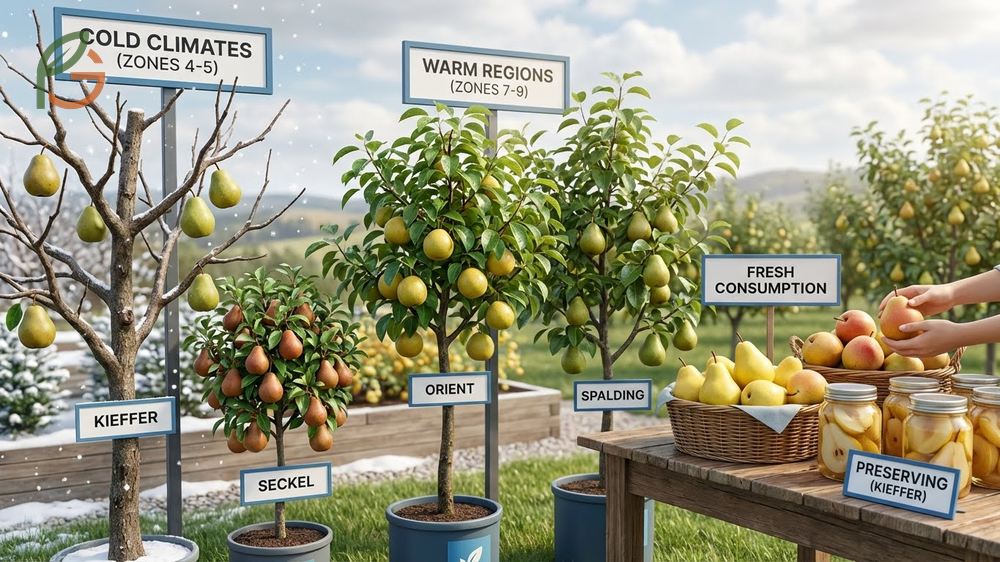
Choosing the best self-pollinating pear variety depends on your climate zone, available space, and intended use for the fruit. For cold climates (zones 4-5), Kieffer and Seckel offer excellent hardiness and disease resistance. In warmer regions (zones 7-9), Orient and Spalding handle heat better than European types.
If you want premium eating quality, Comice and Bartlett are top choices for fresh consumption. For preserving and cooking, Kieffer’s firm flesh holds up better than softer dessert varieties. Asian pear varieties like Hosui give you a different texture option while still being self-fertile.
- Best for cold climates: Kieffer, Seckel (hardy to zone 4)
- Best for hot climates: Orient, Spalding (thrive in zones 7-9)
- Best eating quality: Comice, Bartlett (buttery, sweet flesh)
- Best disease resistance: Kieffer, Seckel, Orient (good fire blight tolerance)
- Best for small gardens: Seckel (naturally compact growth habit)
- Best for containers: Conference, Concorde (adapt well to restricted roots)
- Best Asian type: Hosui, Shinseiki (crisp texture, self-fertile)
Agricultural data shows that Bartlett remains the most widely planted pear in North America due to its reliability and versatility[6]. It performs well across zones 5-8 and produces consistent crops even without a pollination partner. For homeowners new to fruit growing, Bartlett is often the safest first choice.
Seckel pears deserve special mention for small garden situations. The trees naturally grow more compact than other varieties, reaching just 12-15 feet tall at maturity. The small, sweet fruits are perfect for fresh eating and pickling, and the trees show good resistance to fire blight—a common pear disease.
Conclusion
The evidence is clear: self pollinating pear trees offer a practical solution for small gardens where space for multiple trees isn’t available. Varieties like Bartlett, Kieffer, and Seckel will produce reliable harvests without needing a pollination partner, though yields improve when another variety grows nearby.
Current horticultural guidance emphasizes choosing dwarf or semi-dwarf rootstocks for limited spaces and ensuring proper care during establishment years. With just 8-10 feet of space and basic maintenance, you can enjoy homegrown pears for decades. FruitGarden provides research-based information to help you succeed with fruit tree cultivation in any size yard.
Frequently Asked Questions
What is the best self-pollinating pear tree?
Bartlett is widely considered the best self-pollinating pear tree for most American gardens. It’s reliable across zones 5-8, produces large flavorful fruit in late summer, and works well for both fresh eating and canning. For colder climates, Kieffer offers better hardiness, while Comice provides superior eating quality if you’re in a milder zone.
Can you plant just one pear tree?
Yes, you can plant just one pear tree if you choose a self-pollinating variety like Bartlett, Kieffer, Seckel, or Comice. These varieties will produce fruit without needing pollen from another tree. However, even self-fertile pears will yield more fruit if a second variety grows within 50 feet, so adding a companion tree improves production if space allows.
How far apart should self-pollinating pear trees be planted?
Dwarf self-pollinating pear trees need 8-10 feet of spacing between trees, while semi-dwarf varieties require 10-12 feet. Standard-sized pear trees need 20-25 feet of space. This spacing ensures each tree gets adequate sunlight and air circulation while preventing root competition. For espalier or fan-trained trees, you can reduce spacing to 6-8 feet.
Do Bartlett pears need a pollinator?
No, Bartlett pears don’t strictly need a pollinator since they’re self-fertile. They’ll produce fruit on their own, but having another pear variety nearby will increase fruit set and size. Bartlett won’t cross-pollinate with Seckel variety due to compatibility issues, so choose other varieties like Bosc or Anjou as companions if you want to maximize yields.
What pear trees don’t need a pollinator?
Several pear varieties don’t need a pollinator, including Bartlett, Kieffer, Seckel, Comice, Orient, Spalding, and Hosui. Asian pear varieties like Shinseiki and Niitaka are also self-fertile. These trees will set fruit using their own pollen, making them ideal for gardeners who only have space for a single pear tree.
How long does it take for self-pollinating pear trees to produce fruit?
Self-pollinating pear trees typically begin producing fruit 3-5 years after planting, depending on the rootstock and variety. Dwarf varieties on dwarfing rootstocks may fruit in 3-4 years, while semi-dwarf and standard trees take 4-6 years. You’ll see small test crops in earlier years, but full production usually starts around year 5-7.
Are Asian pears self-pollinating?
Some Asian pear varieties are self-pollinating, including Hosui, Shinseiki, and Nijisseiki. However, many Asian pears require cross-pollination with another Asian pear variety. They typically won’t cross-pollinate with European pears because Asian varieties bloom later in spring, so the flowering periods don’t overlap enough for successful pollination.





