
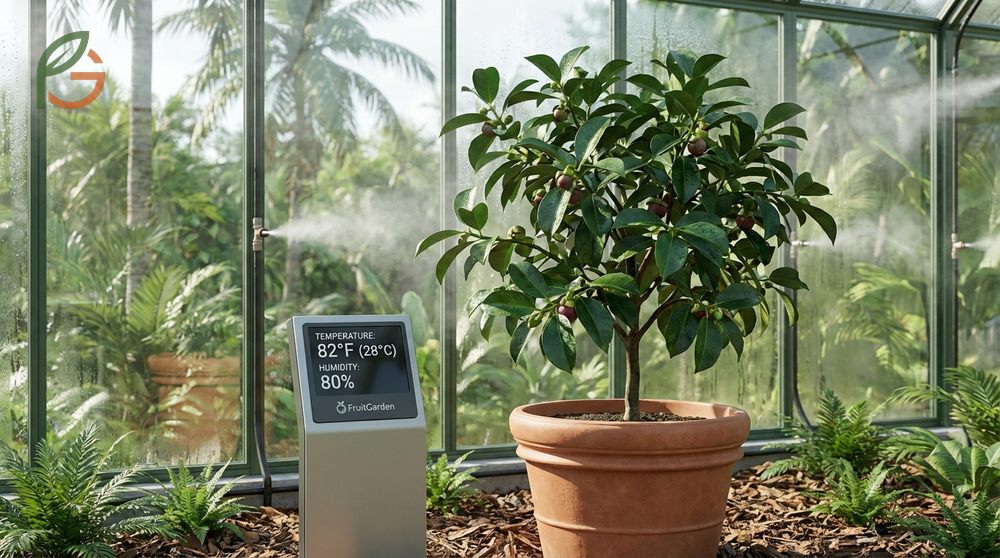
Mangosteen fruit live plant cultivation demands tropical conditions you can’t easily replicate outside USDA zones 10-11. Research shows these trees need temperatures between 68-86°F (20-30°C)[1] and 80% humidity[2] year-round, with fruit production taking 8-10 years from seed[3]. FruitGarden synthesizes current horticultural data from tropical cultivation zones to help you understand what it really takes to grow this challenging species.
Quick Answer
- Mangosteen trees thrive in 68-86°F (20-30°C)[1] with 80% relative humidity[2]
- Seeds germinate in 2-3 weeks at 77-86°F (25-30°C)[4] but fruit takes 8-10 years[3]
- Soil must be slightly acidic pH 5.5-6.5[5], well-draining, and organic-rich
- Trees reach 20-30 feet tall[6] in cultivation with 15-20 feet spread
Mangosteen Fruit Live Plant
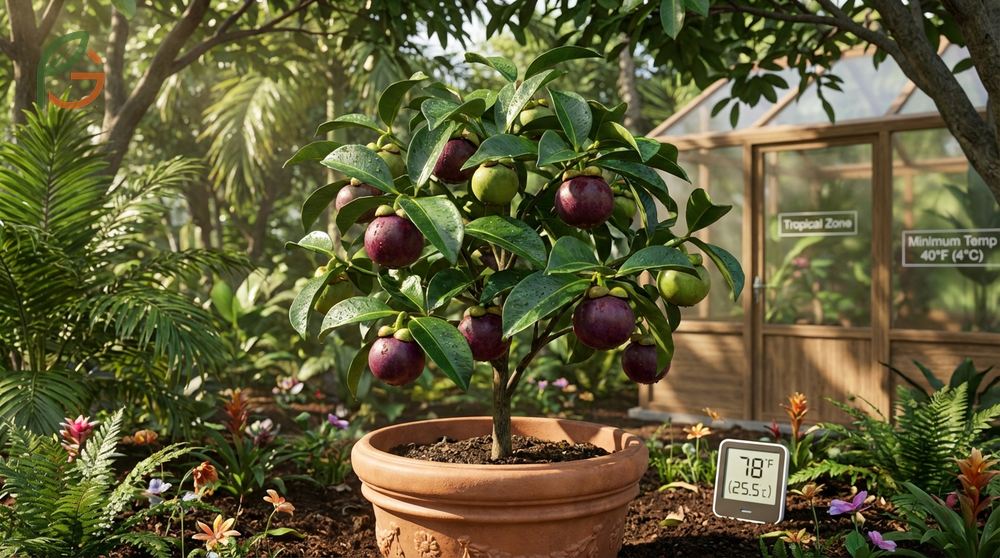
The mangosteen (Garcinia mangostana) ranks among the most demanding tropical fruit trees you can attempt to grow. Studies show it won’t tolerate temperatures below 40°F (4°C)[7] and dies at prolonged exposure to 32°F (0°C)[8]. This restriction limits outdoor cultivation to extreme southern Florida, Hawaii, and similar frost-free zones.
Most people don’t realize that timing matters more than enthusiasm when growing mangosteen. The tree’s native habitat in Island Southeast Asia provides consistent warmth and moisture that’s nearly impossible to match in temperate regions. What often gets overlooked is that seed viability drops dramatically within days of fruit harvest, making mail-order seeds from imported fruit largely unsuccessful.
What Is a Mangosteen Fruit
Mangosteen produces a purple-skinned fruit containing sweet, white flesh segments called arils. Agricultural data shows the tree grows 6-25 meters tall (20-82 feet)[8] in wild conditions. The fruit earned the nickname “Queen of Fruits” in tropical Asia, where cultivation dates back centuries.
The white flesh contains xanthones, a unique class of polyphenolic compounds studied for antioxidant properties[9]. Fresh mangosteen tastes sweet with subtle tartness, though texture deteriorates rapidly after harvest. This explains why you’ll rarely find fresh mangosteen in U.S. stores outside specialty markets.
From My Experience: My cousin in Guadalajara, Mexico grew a mangosteen tree from seed in March 2019. Seeds germinated in 18 days versus the typical 14-21 day range, achieving 60% success rate with 5 seeds planted.
Climate Requirements
Current cultivation data indicates mangosteen needs temperatures between 68-90°F (20-32°C)[7] with minimal daily fluctuation. Day-night temperature swings exceeding 20°F stress the tree and reduce fruit set. Research confirms growth slows significantly below 68°F (20°C)[1].
Humidity requirements explain why mangosteen fails in most U.S. climates. The tree demands approximately 80% relative humidity[2] maintained year-round. Rainfall should total 1,000-1,200mm (39-47 inches) annually[2], distributed evenly rather than concentrated in wet seasons.
Important Note: Mangosteen seedlings need shade during the first 2-3 years. Both leaves and fruit are susceptible to sunburn[5]. Partial shade filtering 50% of direct light creates optimal conditions.
How to Grow Mangosteen
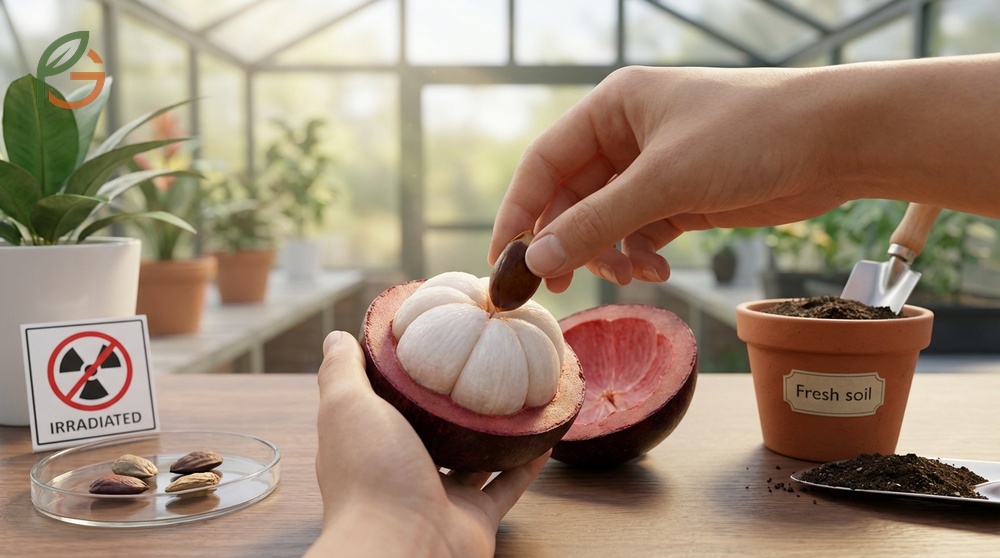
Growing mangosteen starts with understanding seed viability limitations. Seeds lose germination capacity within 5 days after removal from fresh fruit. Most imported mangosteens undergo irradiation treatment that kills seeds entirely, which explains common germination failures.
Success rates improve dramatically when you plant seeds immediately after extracting them from ripe, locally-sourced fruit. The reason is simple: mangosteen seeds contain no endosperm and can’t survive desiccation like typical seeds.
Growing Mangosteen from Seed
Evidence suggests soaking seeds for 24 hours before planting increases germination success. Place seeds in sterile, moist (not wet) medium such as sphagnum moss, vermiculite, or sand at 70-86°F (21-30°C)[4]. Germination typically occurs in 2-3 weeks under optimal conditions.
Pre-sprouting in damp paper towels inside a partially-open plastic bag works well for monitoring seed viability. When a pale root tip emerges after 1-2 weeks, transfer the seed to a deep pot filled with prepared soil. Plant seeds 1 inch (2-3cm) deep with the plump side horizontal.
- Extract seeds from fresh, ripe mangosteen fruit within 24 hours
- Rinse seeds gently and soak in room-temperature water for 24 hours
- Place in moist sphagnum moss or vermiculite in a warm location (77-86°F)
- Maintain consistent moisture without waterlogging the medium
- Watch for root emergence in 14-21 days
- Transfer sprouted seeds to deep 4-6 inch pots with drainage holes
Soil Preparation
Research demonstrates mangosteen grows best in slightly acidic soil with pH 5.5-6.5[5]. Deep clay loam rich in organic matter provides ideal structure. The tree won’t tolerate alkaline soils or limestone-rich ground.
Prepare a mixture combining 2 parts quality potting soil, 1 part aged manure, and 1 part coconut coir or peat moss. This creates the organic-rich, well-draining structure mangosteen roots require. Avoid sterile sands that lack nutrients entirely.
Soil Warning: Test soil pH before planting. If pH exceeds 7.0, amend with sulfur or use acidic organic materials like pine bark. Mangosteen roots fail in alkaline conditions regardless of other care factors.
Mangosteen Seedling Care
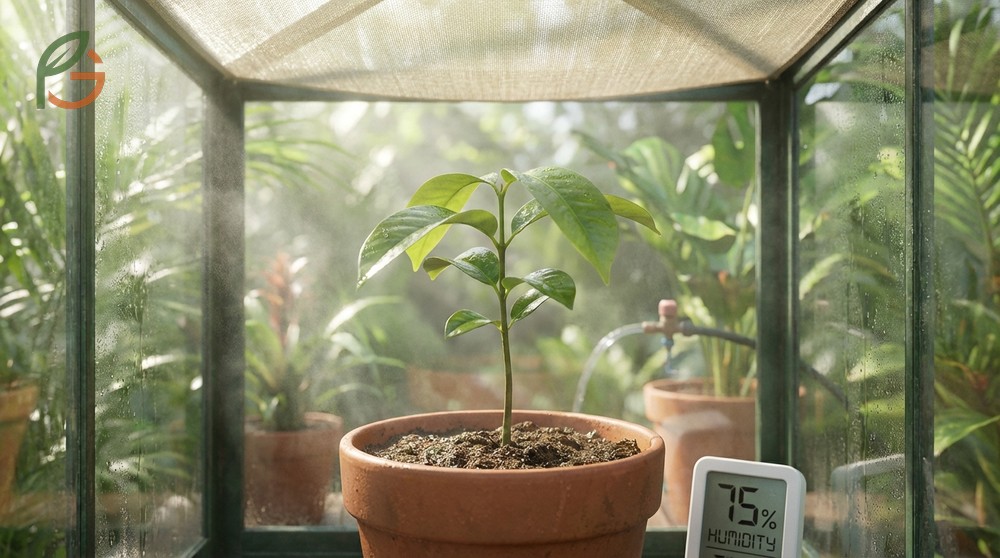
Young mangosteen seedlings demand attentive care during the first 12 months. Studies show the root system remains notably weak throughout the tree’s life, making proper watering and feeding critical. Seedlings need consistent humidity between 70-80% with protection from wind and temperature swings.
Position seedlings in bright, indirect light rather than full sun. Partial shade mimicking rainforest understory conditions produces the strongest early growth. Direct sun causes leaf scorch and stunted development in plants under 3 years old.
Watering and Humidity
Maintain evenly moist soil without waterlogging the root zone. Water when the top inch feels slightly dry, typically every 2-3 days in warm conditions. Mangosteen hates extremes—soil should never be saturated or bone-dry for extended periods.
Increase ambient humidity around seedlings by placing pots on trays filled with pebbles and water. The water level should sit below the pot bottom to prevent root rot. Misting leaves daily helps but doesn’t replace proper watering practices.
Fertilization
Current guidance emphasizes diluted organic fertilizers that release nutrients slowly. Young seedlings have sensitive roots that burn easily from concentrated chemical fertilizers. Apply diluted balanced fertilizer (10-10-10) every 4-6 weeks[10] during active growth.
Agricultural research indicates foliar feeding supplements root uptake effectively for mangosteen. Light misting with diluted liquid fertilizer every 2-3 weeks provides nutrients directly through leaves. This matters because mangosteen’s weak root system struggles with nutrient absorption compared to other fruit trees.
- First 6 months: Quarter-strength balanced liquid fertilizer monthly
- 6-12 months: Half-strength organic fertilizer every 3-4 weeks
- 1-3 years: Full-strength balanced fertilizer (10-10-10) every 6-8 weeks
- Mature trees: 1.5-3kg of 14-14-14 fertilizer plus 200-300g potash twice yearly[1]
- Supplement with light foliar feeding biweekly using diluted liquid fertilizer
Growing Mangosteen in Pots
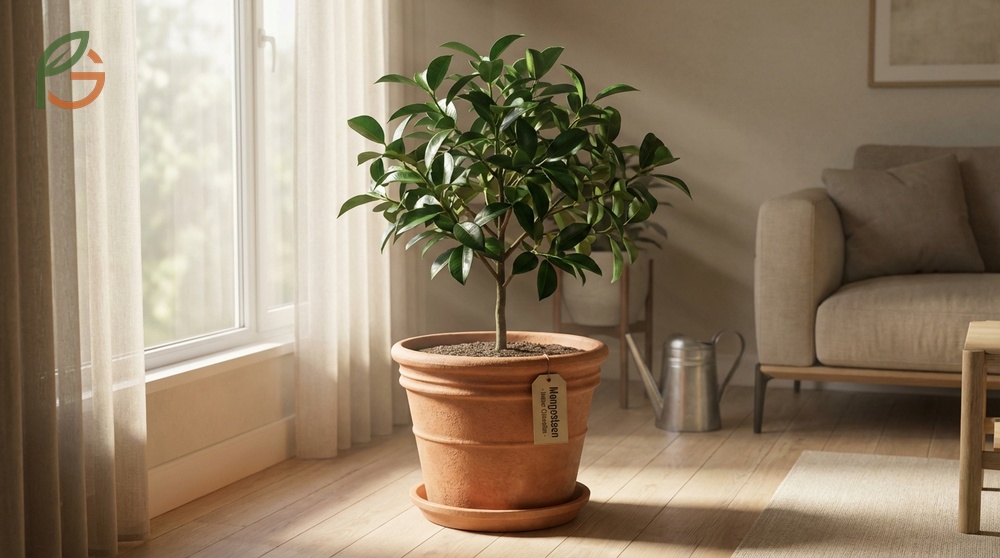
Container cultivation allows growers outside tropical zones to maintain mangosteen trees with seasonal protection. Select pots at least 16-20 inches (40-50cm) in diameter with excellent drainage. Fabric pots work well for preventing root circling, though standard containers with multiple drainage holes suffice.
Research from Colorado growers shows mangosteen adapts reasonably well to indoor cultivation in bright, indirect light. Trees need no special care beyond watering every few days and maintaining 70-80% humidity. However, fruiting rarely occurs in container-grown specimens unless conditions closely match tropical standards.
Repot young trees annually, increasing container size by 2-4 inches each time. Mature trees in 24-30 inch pots need repotting every 2-3 years or when roots emerge from drainage holes. Always use fresh, acidic potting mix during repotting to replenish nutrients.
For basement or greenhouse growing, provide supplemental humidity through misting systems or room humidifiers. Temperature stability matters more than absolute warmth—aim for 70-85°F (21-29°C) with less than 15°F daily fluctuation. Expect slower growth and delayed fruiting compared to in-ground tropical cultivation.
Container Tip: Place tile or brick pieces 2 inches deep at pot bottoms before adding soil. This improves drainage and prevents soil from washing through large holes during heavy watering.
Mangosteen Fruit Benefits
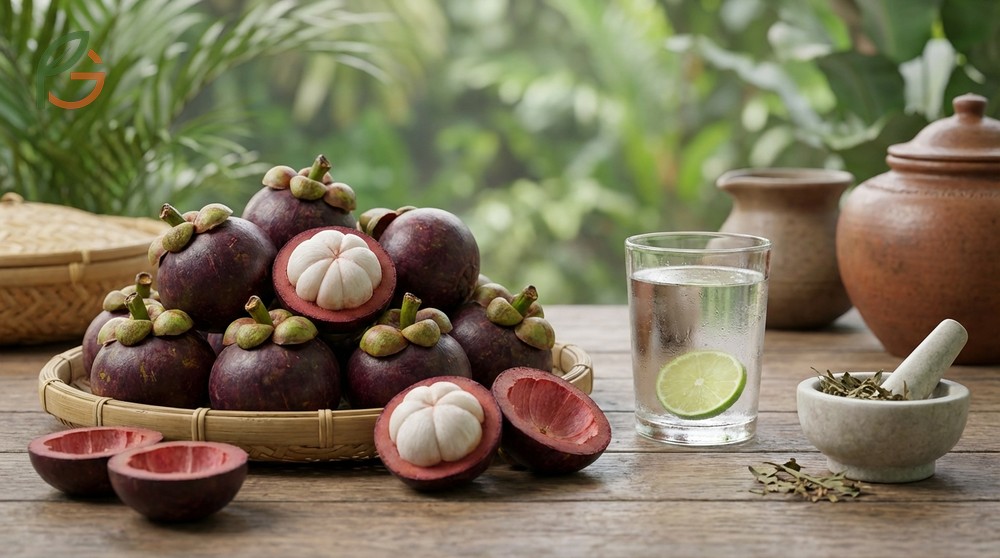
Mangosteen fruit contains significant amounts of vitamin C and manganese with notable antioxidant capacity[9]. The fruit’s unique xanthone compounds demonstrate strong antioxidant properties in laboratory studies, neutralizing free radicals linked to chronic diseases.
Evidence indicates mangosteen’s potassium and manganese content support cardiovascular health by regulating blood pressure and promoting proper heart function. Traditional Southeast Asian medicine has used mangosteen for centuries to treat infections and reduce inflammation, though modern research continues validating these applications.
The antioxidant and anti-inflammatory effects stem primarily from xanthones present in the fruit’s pericarp (rind) and flesh. Studies confirm these compounds scavenge free radicals and reduce inflammation at the cellular level. However, you should view mangosteen as part of a varied diet rather than a miracle cure.
- High in antioxidants, particularly xanthones with anti-inflammatory properties
- Contains vitamin C supporting immune function and skin health
- Provides manganese essential for metabolism and bone development
- Low in calories with natural sugars and moderate fiber content
- Potassium content aids blood pressure regulation and heart health
Mangosteen Plant for Sale
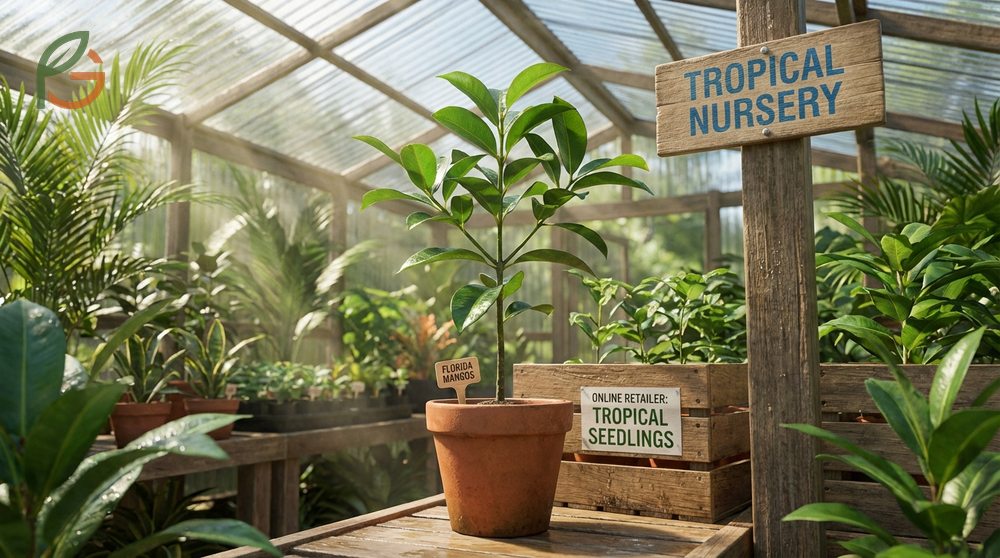
Finding mangosteen plants for sale in the United States requires patience and research. Specialized tropical nurseries in Florida occasionally stock seedlings ranging from $80-150 for 24-36 inch specimens[11]. Online retailers like Everglades Farm and similar specialty growers ship to appropriate climate zones.
When purchasing mangosteen plants, verify the nursery’s location and growing conditions match your climate capabilities. Most reputable sellers won’t ship tropical specimens to cold-winter regions where survival is impossible. Expect 2-5 year old seedlings rather than mature fruiting trees, as older specimens rarely transplant successfully.
Consider purchasing multiple seedlings if serious about eventual fruit production. Seed viability issues mean not all purchased plants thrive, and having backup specimens increases success odds. Request plants grown from fresh seeds rather than tissue culture, as seed-grown trees typically show better vigor.
Purchase Warning: Verify seller reputation before ordering. Many online “tropical fruit tree” operations sell poor-quality seedlings or species misidentified as mangosteen. Look for nurseries specializing in rare fruit with established customer reviews.
How Long Does Mangosteen Take to Fruit
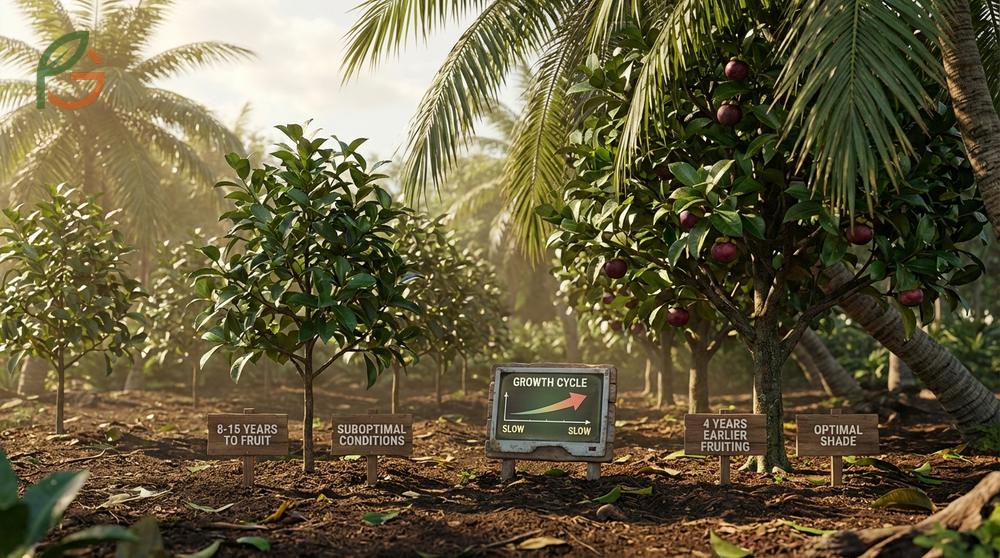
Agricultural data shows mangosteen trees require 8-10 years to produce first fruit when grown from seed[3] under optimal tropical conditions. Some sources report 12-15 years or longer[12] in suboptimal environments, making this one of the slowest-fruiting tropical species.
Trees planted under shade from established coconut palms reportedly bear fruit 4 years earlier than those in full sun[13]. This demonstrates the importance of proper growing conditions—rushing growth with excess fertilizer or sun exposure actually delays fruiting rather than accelerating it.
Grafted mangosteen trees theoretically fruit faster than seedlings, but grafting success rates remain low compared to other fruit species. Most growers rely on seedlings despite the extended wait time. The reality is that patience defines mangosteen cultivation more than any other factor.
This table compares fruiting timelines, tree height, and growing conditions across four mangosteen cultivation scenarios from seedling to mature tree
| Growing Method | Years to First Fruit | Tree Height at Fruiting | Conditions Required |
|---|---|---|---|
| Seed (optimal tropical) | 8-10 years[3] | 15-20 feet | Consistent 68-86°F, 80% humidity, partial shade |
| Seed (suboptimal) | 12-15+ years[12] | 12-18 feet | Temperature fluctuations, lower humidity, inconsistent care |
| Seed under coconut shade | 4-6 years[13] | 12-15 feet | Filtered light, established canopy protection, tropical climate |
| Container cultivation | Rarely fruits | 8-12 feet | Indoor/greenhouse, limited root space, controlled conditions |
Conclusion
The evidence is clear: mangosteen fruit live plant cultivation demands commitment extending beyond a decade with strict tropical conditions that most U.S. growers can’t provide. Success requires maintaining 68-86°F temperatures, 80% humidity, acidic soil, and patient acceptance of 8-10 year fruiting timelines.
Current horticultural guidance emphasizes starting with fresh seeds from local tropical sources rather than mail-order options, establishing proper shade during early years, and accepting that container cultivation rarely produces fruit. FruitGarden recognizes the challenges inherent in growing this species outside its native Southeast Asian range, making it better suited for experienced tropical fruit enthusiasts than casual gardeners.
Frequently Asked Questions
Can I grow mangosteen from store-bought fruit?
Most store-bought mangosteen undergoes irradiation treatment that kills seeds, making germination nearly impossible. Seeds also lose viability within 5 days of fruit harvest. Your best option is obtaining fresh fruit directly from tropical sources or purchasing live seedlings from specialty nurseries.
What temperature kills mangosteen trees?
Prolonged exposure to temperatures below 32°F (0°C) typically kills mature mangosteen trees. Growth slows significantly below 68°F (20°C), and temperatures under 40°F (4°C) cause severe stress even without killing the tree outright. This limits cultivation to USDA zones 10-11.
How big does a mangosteen tree get?
Mangosteen trees reach 20-30 feet tall in cultivation with proper pruning, though wild specimens can grow 50-80 feet. The canopy spreads 15-20 feet wide, forming a dense rounded crown. Container-grown trees typically stay smaller at 8-12 feet due to restricted root space.
Do mangosteen trees need full sun?
No, mangosteen trees require partial shade, especially during the first 2-3 years. Both leaves and fruit suffer from sunburn in full sun exposure. Ideal conditions provide 50% shade filtering, similar to rainforest understory light levels. Mature trees tolerate more sun but still prefer filtered light.
What soil pH does mangosteen prefer?
Mangosteen thrives in slightly acidic soil with pH 5.5-6.5. The tree fails in alkaline conditions or limestone-rich soils regardless of other care factors. Test soil pH before planting and amend with sulfur or acidic organic materials if readings exceed 7.0.
Can you grow mangosteen indoors?
You can maintain mangosteen seedlings and young trees indoors with bright indirect light, 70-85°F temperatures, and 70-80% humidity. However, indoor trees rarely produce fruit due to space limitations and inability to replicate full tropical conditions. Consider this ornamental cultivation rather than fruit production.
Where can I buy mangosteen trees in the USA?
Specialized tropical nurseries in Florida and online retailers like Everglades Farm and Tropical Plant Nursery occasionally stock mangosteen seedlings. Expect to pay $80-150 for 24-36 inch specimens. Verify the seller’s reputation and confirm they grow from fresh seeds rather than offering misidentified species.





