
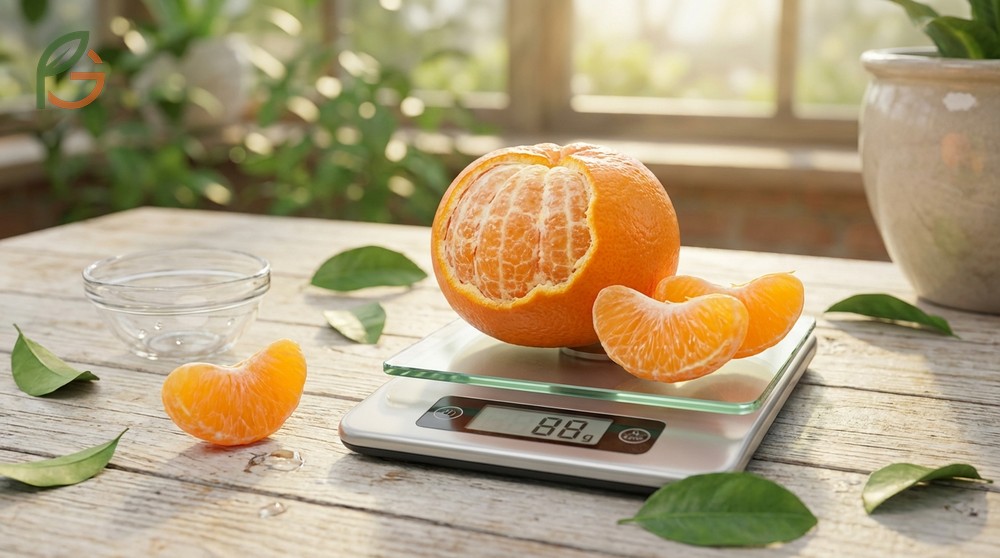
Calories in a mandarin orange total just 47 per medium fruit (88g), making them one of the most satisfying low-calorie snacks available[1]. Research shows that you’ll get 12 grams of carbohydrates and 2 grams of fiber while consuming only 0.3 grams of fat[2]. FruitGarden provides evidence-based nutrition guidance for home growers and fruit enthusiasts across the United States.
Quick Answer
- One medium mandarin contains 47 calories[1], making it perfect for weight-conscious snacking
- You’ll get 2 grams of fiber[2] and 26% of your daily vitamin C[3] per fruit
- The glycemic index sits at 40[4], which means stable blood sugar response
- Two whole mandarins deliver fewer than 100 calories with high volume and natural hydration
Calories in a Mandarin Orange
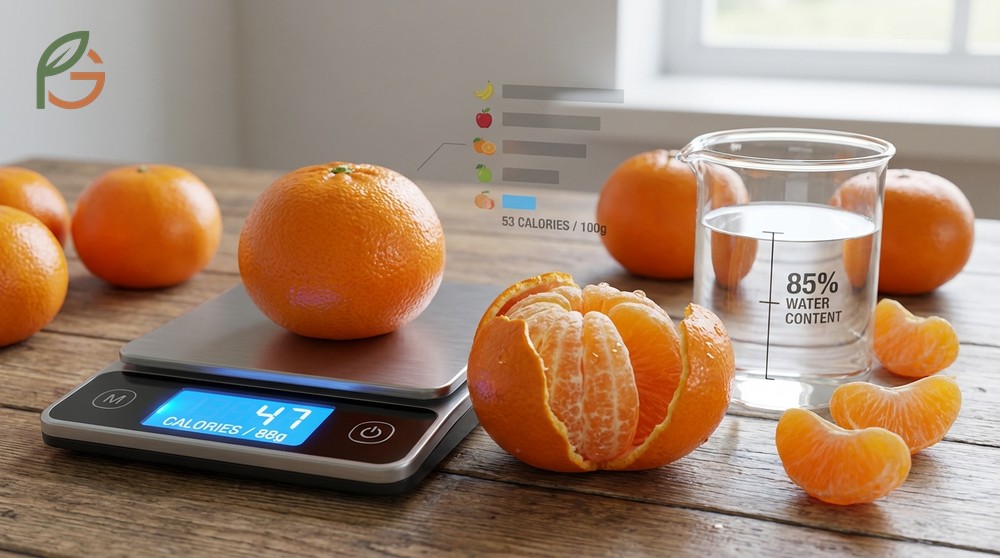
A standard medium-sized mandarin orange weighing approximately 88 grams contains 47 calories[1]. This low energy density comes from the fruit’s high water content, which makes up about 85% of its weight. The natural sugars provide quick energy without causing dramatic blood sugar spikes.
When measured per 100 grams, mandarins contain 53 calories[5]. This measurement helps when you’re comparing different citrus fruits or tracking precise portions. The calorie content remains consistent across most mandarin varieties, including clementines and satsumas.
Most Americans don’t realize that timing your mandarin consumption can affect satiety. Studies demonstrate that eating mandarins as a mid-morning or afternoon snack provides 2-3 hours of sustained fullness due to the fiber content. The fruit’s natural packaging makes portion control automatic—you can’t accidentally overeat when nature has pre-portioned your snack.
Size Matters for Calorie Count
Mandarin size directly affects total calories consumed. Small mandarins (74g) contain around 40 calories, while large ones (109g) can reach 60 calories[4]. The variation comes from water weight and sugar concentration as fruits mature.
If you’re growing mandarins at home, fruit size depends on irrigation practices and harvest timing. Early-season fruits tend to be smaller with concentrated flavor, while late-season picks grow larger with higher water content. Both offer the same nutritional benefits per gram.
- Small mandarins (74g) deliver 40 calories—ideal for children’s snacks
- Medium mandarins (88g) provide 47 calories—the standard serving size
- Large mandarins (109g) contain 60 calories—still under 10% of a 2,000-calorie diet
- Extra-large mandarins (120g+) can reach 70 calories but offer proportionally more fiber
- Petite clementines (74g) match small mandarins at 35-40 calories per fruit
Fresh Versus Canned Mandarins
Canned mandarin oranges packed in light syrup contain 64 calories per half-cup serving[6]. The added sugars increase calorie content by approximately 35% compared to fresh fruit. Canned mandarins also lose some vitamin C during processing and storage.
Fresh mandarins give you better nutritional value. They contain no added sugars, preserve full vitamin C content, and provide more fiber due to intact membranes. The act of peeling fresh fruit also slows consumption, which helps with portion awareness and digestion.
Important Note: If you’re choosing canned mandarins, look for varieties packed in 100% fruit juice instead of syrup. This cuts added sugar by 60-70% while maintaining the fruit’s natural sweetness.
Mandarin Nutrition Facts
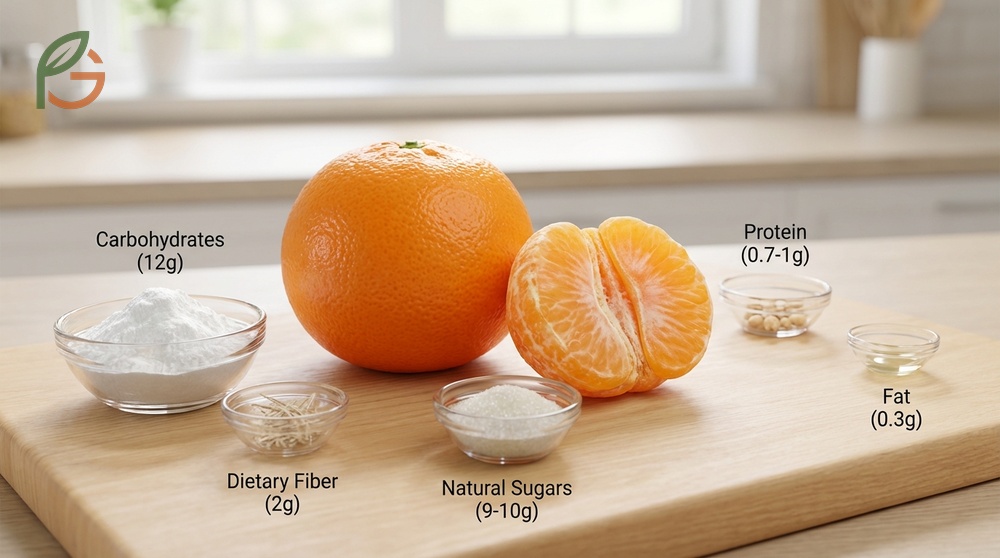
Beyond calories, mandarins pack impressive nutrition into a small package. Current data indicates that one medium fruit delivers 12 grams of carbohydrates, with 2 grams coming from dietary fiber[2]. The remaining 9-10 grams consist of natural sugars including fructose, glucose, and sucrose.
The protein content sits at 0.7-1 gram per fruit, while fat content registers at just 0.3 grams[1]. This makes mandarins virtually fat-free. The negligible fat content means the fruit won’t interfere with low-fat diets, though it also means you’ll absorb less of the fat-soluble vitamin A present in the fruit.
Agricultural data shows that mandarins grown in Mediterranean climates tend to have slightly higher sugar content than those from subtropical regions. The difference rarely exceeds 1-2 grams per fruit, but it can affect taste perception significantly.
This table compares calorie content, carbohydrate levels, and fiber amounts across three mandarin sizes from small to large
| Size | Weight | Calories | Carbs | Fiber |
|---|---|---|---|---|
| Small | 74g | 40[4] | 10g | 1.7g |
| Medium | 88g | 47[1] | 12g | 2g |
| Large | 109g | 60[4] | 15g | 2.5g |
Vitamin and Mineral Profile
One medium mandarin provides 26% of your daily vitamin C requirement[3]. This powerful antioxidant supports immune function, collagen production, and iron absorption. Women need 75mg daily while men require 95mg, so one mandarin delivers approximately 23mg of vitamin C.
The fruit also contains vitamin A (34 mcg per 100g), potassium (166mg per 100g), and magnesium (12mg per 100g)[5]. These minerals support blood pressure regulation and muscle function. The calcium content reaches 37mg per 100g, which contributes about 4% of daily needs.
- Vitamin C: 26% DV—boosts immunity and enhances iron absorption from plant foods
- Vitamin A: 4% DV—supports night vision and skin cell renewal
- Potassium: 5% DV—helps maintain healthy blood pressure levels
- Folate: 4% DV—essential for DNA synthesis and red blood cell formation
- Thiamin (B1): 5% DV—converts carbohydrates into usable energy
Antioxidant Compounds
Research shows that mandarins contain unique flavonoids including beta-cryptoxanthin and nobiletin[4]. Beta-cryptoxanthin gives mandarins their orange color and supports lung and eye health. Studies link higher intake to reduced risk of certain lung conditions in former smokers.
The white pith and membranes contain hesperidin, another flavonoid with anti-inflammatory properties. Don’t peel away all the white material—it’s where many beneficial compounds concentrate. Evidence suggests that regularly consuming citrus fruits with intact membranes correlates with better cardiovascular health markers.
Gardening Tip: Mandarins harvested at peak ripeness (when fully colored but still firm) contain 15-20% more antioxidant compounds than underripe or overripe fruits. For home growers, this means waiting until the fruit easily separates from the branch with a gentle twist.
One Mandarin Calories

When you eat one mandarin, you’re consuming 47 calories that break down into immediate and sustained energy[1]. The simple sugars (glucose and fructose) provide quick energy within 15-30 minutes. The fiber content slows digestion, which extends energy release over 2-3 hours.
This calorie count makes mandarins ideal for pre-workout snacks. Athletes often consume 1-2 mandarins 30-45 minutes before exercise. The natural sugars fuel activity while the potassium helps prevent muscle cramping.
For weight management, one mandarin represents less than 3% of a 2,000-calorie daily diet. You can eat 3-4 mandarins throughout the day and still consume fewer than 200 calories total. The high water content (about 85%) adds volume without adding significant energy.
- Breakfast addition: Pair with Greek yogurt for balanced 150-calorie meal
- Mid-morning snack: Satisfy sweet cravings without disrupting blood sugar
- Pre-workout fuel: Eat 30 minutes before exercise for quick energy
- Afternoon pick-me-up: Replace candy or chips with natural sweetness
- Evening dessert: End dinner with 47 guilt-free calories instead of higher-calorie options
- Kids’ lunchbox: Provide convenient, mess-free nutrition that doesn’t require refrigeration
What often gets overlooked is that mandarin size varies by variety. Clementines typically weigh 70-80g, while honey mandarins can reach 100-110g. Always check the actual weight if you’re tracking calories precisely for medical or athletic purposes.
Portion Control Tip: If you’re growing mandarins at home, smaller fruits aren’t inferior—they’re naturally portion-controlled. Trees that produce 70-90g fruits help family members avoid overeating while still getting full nutritional benefits.
Mandarin Orange Macros
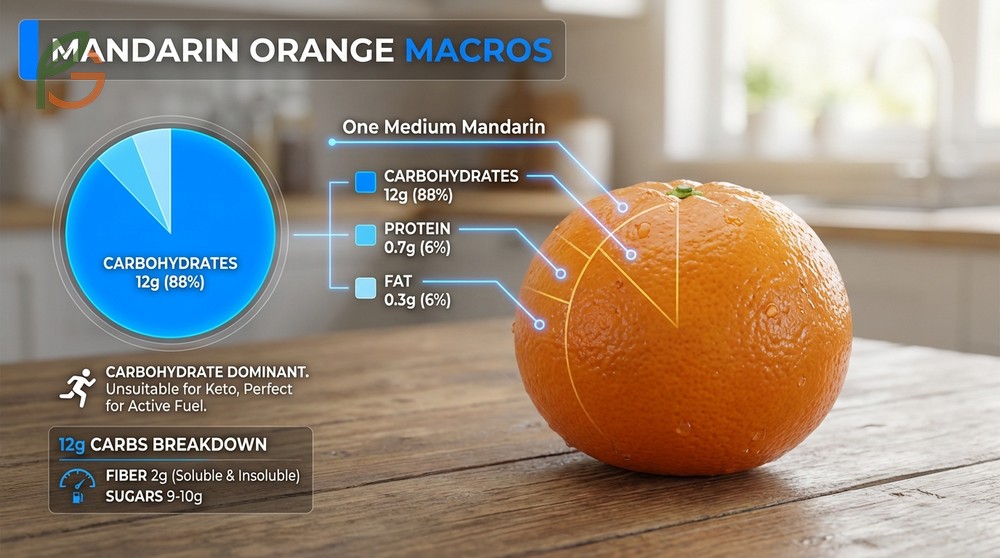
The macronutrient breakdown for one medium mandarin shows 12g carbohydrates, 0.7g protein, and 0.3g fat[2]. This translates to approximately 88% of calories from carbs, 6% from protein, and 6% from fat. The carbohydrate-dominant profile makes mandarins unsuitable for ketogenic diets but perfect for active individuals needing quick fuel.
Of the 12 grams of carbs, about 2 grams come from fiber while 9-10 grams are sugars[1]. The fiber includes both soluble and insoluble types. Soluble fiber helps moderate blood sugar response and supports healthy cholesterol levels, while insoluble fiber aids digestive transit.
The minimal protein content means mandarins won’t contribute significantly to daily protein goals. However, the tiny amount of fat helps your body absorb the vitamin A and other fat-soluble compounds present in the fruit. For optimal nutrition, pair mandarins with a protein source like nuts or cheese.
| Snack | Calories | Carbs | Protein | Fat |
|---|---|---|---|---|
| 1 Mandarin | 47[1] | 12g | 0.7g | 0.3g |
| 1 Medium Apple | 95 | 25g | 0.5g | 0.3g |
| 1 oz Potato Chips | 152 | 15g | 2g | 10g |
- Low-fat diets: At 0.3g fat, mandarins fit perfectly without adjustments
- Moderate-carb plans: 12g carbs allow 3-4 fruits daily on 150g carb budgets
- High-fiber goals: Two mandarins provide 4g fiber (14% of 28g daily target)
- Diabetic meal planning: Low glycemic load (4-5) prevents blood sugar spikes
- Athletic fueling: Quick-digesting carbs support pre-workout or recovery needs
For those tracking net carbs, subtract the 2g fiber from total carbs to get 10g net carbs per mandarin. This matters for moderate low-carb diets (50-100g daily) where every gram counts. The net carb calculation helps you fit more volume of food into your daily allowance.
Low Calorie Fruit
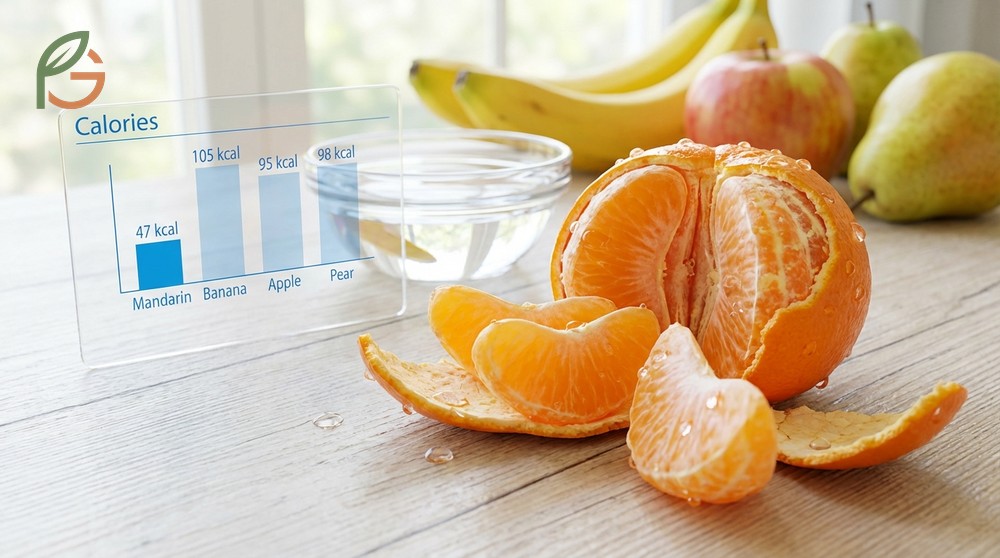
Among popular fruits, mandarins rank in the lowest 25% for calorie density. At 47 calories per medium fruit, they deliver fewer calories than bananas (105), apples (95), or pears (98)[7]. Only berries, watermelon, and grapefruit offer comparable or lower calorie counts with similar serving sizes.
The high water content explains this low calorie density. When you bite into a mandarin, about 85% of what you’re consuming is water. This creates volume that fills your stomach and triggers satiety signals without adding significant calories. Evidence indicates that high-water fruits help people feel fuller faster and stay satisfied longer.
For weight loss, substituting mandarins for higher-calorie snacks creates automatic calorie deficits. If you replace one daily 150-calorie candy bar with a mandarin, you’ll cut 103 calories per day—enough to lose about 11 pounds over a year without other changes.
- Strawberries: 32 calories per cup (whole berries)—lowest calorie option
- Watermelon: 46 calories per cup (diced)—nearly identical to mandarins
- Grapefruit: 52 calories per half fruit—slightly higher but more tart
- Mandarin orange: 47 calories per fruit—best for portable snacking
- Peaches: 58 calories per medium fruit—sweeter but still low-calorie
- Cantaloupe: 60 calories per cup (diced)—higher water content
Current guidance emphasizes eating whole fruits instead of drinking juice. Two mandarins contain 94 calories and 4g fiber, while 8 ounces of commercial orange juice delivers 110 calories with zero fiber. The fiber in whole fruit slows sugar absorption and enhances feelings of fullness that juice can’t match.
Weight Loss Strategy: Research shows that people who eat whole fruits before meals consume 15-20% fewer calories during the meal. Try eating one mandarin 15 minutes before lunch or dinner to naturally reduce portion sizes without feeling deprived.
For home gardeners, growing your own mandarins ensures you have a constant supply of low-calorie snacks. A mature mandarin tree can produce 100-200 pounds of fruit annually—enough to support daily consumption for an entire family. The convenience of walking outside to pick a fresh snack often beats driving to buy processed alternatives.
Conclusion
The evidence is clear: calories in a mandarin orange total just 47 per medium fruit, delivering exceptional nutrition-to-calorie ratio that few snacks can match. You’ll get 26% of daily vitamin C, 2 grams of fiber, and natural hydration for fewer calories than most processed snacks. The low glycemic index of 40 ensures stable blood sugar, making mandarins suitable for most dietary approaches from weight loss to athletic fueling.
Current guidance emphasizes choosing whole fruits over juice and pairing them with protein sources for balanced snacking. Whether you’re growing mandarins in your backyard or buying them fresh at markets, you’re selecting one of nature’s most efficient nutrient packages—maximum nutrition with minimal calories.
Medical Disclaimer
Important Medical Disclaimer: This content is for informational and educational purposes only. It’s not intended as a substitute for professional medical advice, diagnosis, or treatment. Always consult a qualified healthcare professional or registered dietitian before making any changes to your diet, especially if you have diabetes, kidney disease, citrus allergies, or other medical conditions. Individual nutritional needs vary based on age, activity level, health status, and medications.
Frequently Asked Questions
How many calories are in a small mandarin orange?
A small mandarin orange weighing about 74 grams contains approximately 40 calories. The exact count varies slightly based on the fruit’s water content and sugar concentration at harvest. Small mandarins work well for children’s portions or when you want a lighter snack between meals.
Are mandarin oranges good for weight loss?
Yes, mandarins support weight loss through their low calorie density (47 calories per fruit) and high fiber content (2g per fruit). Research shows that the fiber helps you feel full longer, while the high water content adds volume without calories. Eating mandarins before meals can reduce overall calorie intake by 15-20% naturally.
What’s the difference between mandarin orange calories and regular orange calories?
A medium mandarin contains 47 calories while a medium navel orange has about 62 calories. Regular oranges are typically larger (131g versus 88g for mandarins), which accounts for the 15-calorie difference. Both provide similar nutrition per gram, but mandarins offer better portion control due to their smaller size.
Do canned mandarin oranges have more calories than fresh?
Yes, canned mandarin oranges in light syrup contain about 64 calories per half-cup serving compared to 47 calories in a fresh medium mandarin. The added sugars increase the calorie content by approximately 35%. Choose canned mandarins packed in 100% fruit juice instead of syrup to reduce this difference by 60-70%.
How many mandarins can I eat per day on a diet?
Most people can safely eat 2-4 mandarins daily on a weight loss diet without exceeding calorie goals. Four mandarins total about 188 calories—less than 10% of a 2,000-calorie diet. Current guidance suggests spacing fruit consumption throughout the day for stable blood sugar rather than eating multiple servings at once.
Are clementines and mandarins the same calorie count?
Clementines (a type of mandarin) contain 35-40 calories per fruit because they’re typically smaller (70-74g) than standard mandarins. The per-gram calorie density remains similar at 0.53 calories per gram. Both varieties provide equivalent nutrition when compared by weight rather than by whole fruit count.
Does the calorie count change as mandarins ripen?
Calorie content stays relatively stable as mandarins ripen, varying by only 2-3 calories per fruit. However, the sugar-to-acid ratio changes dramatically—riper fruits taste sweeter without actually containing significantly more sugar. The perceived sweetness comes from reduced acidity rather than increased calorie content.





