
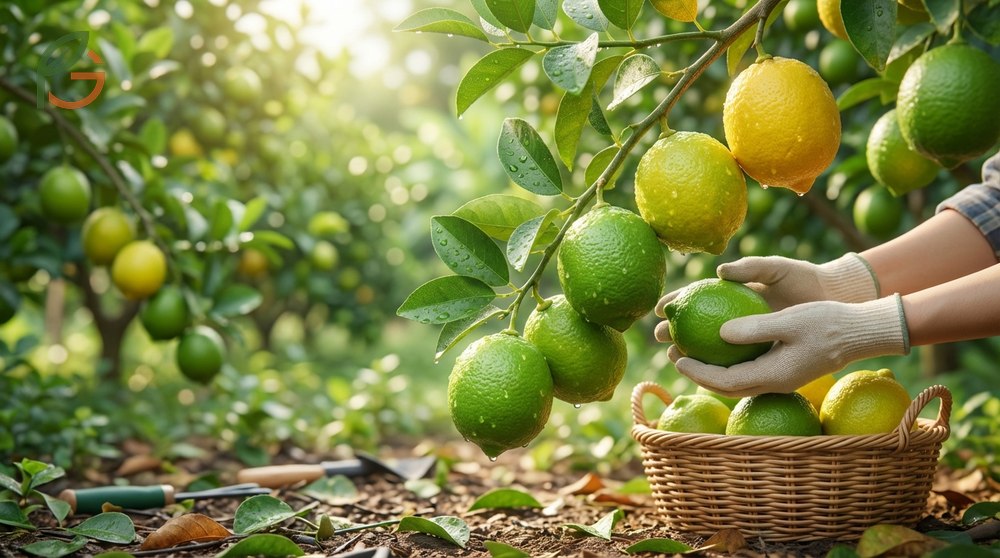
When to harvest limes depends entirely on your flavor preference and intended use. Research shows that limes harvested green deliver maximum acidity and tartness, while those left to ripen yellow develop a sweeter, mellower taste with reduced juice content.[1] Most people don’t realize that limes are actually yellow when fully ripe, but commercial growers pick them green to meet market demand for that signature tangy punch. FruitGarden synthesizes current horticultural research to help you time your harvest perfectly for the flavor profile you’re after.
Quick Answer
- Green limes are harvested 3-4 months after flowering for peak acidity and juice content[1]
- Key limes turn yellow when ripe after 8-9 months from flowering[2]
- Harvest green when fruit feels slightly soft and heavy for its size with bright green color
- Yellow limes offer sweeter flavor but won’t ripen further once picked[3]
When to Harvest Limes
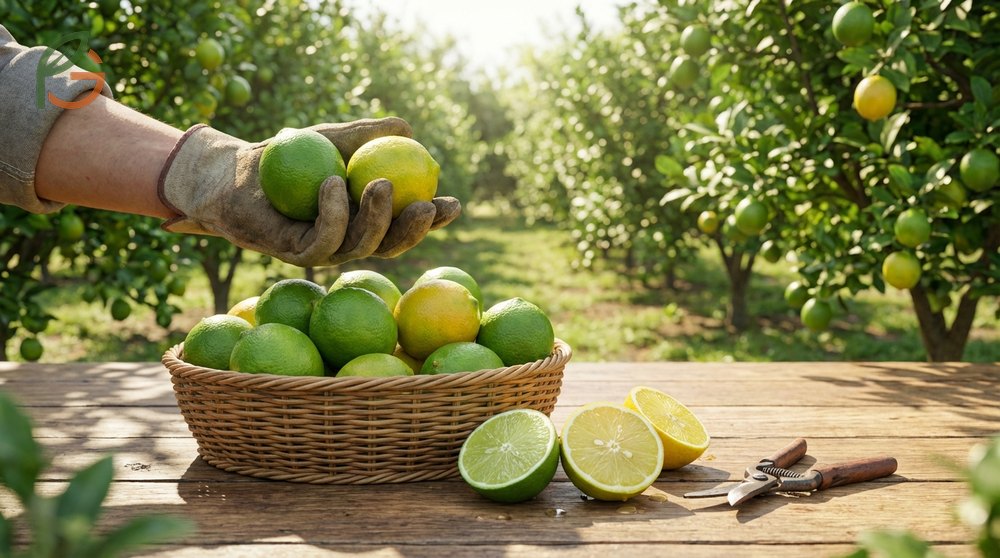
Limes don’t ripen further after picking, which makes harvest timing crucial.[3] Unlike bananas or avocados, they’re non-climacteric fruits that stop developing sugars and acids once separated from the tree. This means you’ll need to decide your preferred flavor profile before cutting them down.
Studies demonstrate that the decision between green and yellow harvest comes down to acidity versus sweetness. Green limes contain higher citric acid levels and more juice volume, while yellow limes trade some of that tartness for a mellower, slightly sweeter taste. The color change signals a chemical shift in the fruit’s composition.
Commercial growers typically harvest limes green because they ship better and meet consumer expectations for that characteristic sour punch. But if you’re growing your own, you’ve got the luxury of experimenting with different harvest times to find what works best for your cooking style.
From My Experience: My aunt in Guadalajara, Mexico grows Persian limes in her backyard. She harvests half her crop at the bright green stage in February and lets the other half ripen to pale yellow by April—the green ones are perfect for ceviche, while the yellow ones work better in sweet agua fresca.
Green Limes: Peak Tartness
Green limes deliver maximum acidity and juice content, making them ideal for cocktails, marinades, and dishes where you want that sharp citrus kick. Research shows they’re harvested when the fruit reaches full size but before any color change occurs.[1] The skin should be bright green, slightly glossy, and the fruit should feel heavy in your hand.
Most varieties reach this stage 3-4 months after flowering, though timing varies by climate and variety.[1] When you gently squeeze a harvest-ready green lime, it should give slightly under pressure rather than feeling rock-hard.
- Bright green color with glossy sheen on the peel
- Firm but yields slightly when gently squeezed
- Heavy for its size, indicating high juice content
- Fresh, zesty lime aroma when you scratch the peel
- Full-size diameter for the variety (typically 2-3 inches for Persian limes)
Yellow Limes: Sweeter Flavor
Yellow limes represent the fully mature stage where acidity decreases and sugars develop slightly, creating a less aggressive flavor. Current agricultural data shows that limes naturally turn yellow if left on the tree long enough, though they’ll still retain some tartness unlike sweet oranges.[3]
The transition from green to yellow doesn’t happen overnight. You’ll first notice a lightening of the green color to a pale yellow-green, then gradual yellowing over several weeks. The juice content typically remains good, though some varieties may have slightly less juice than their green counterparts.
- Mellower, less acidic taste suitable for delicate dishes
- Sweeter juice that works well in beverages and desserts
- Softer texture that’s easier to juice by hand
- Reduced bitterness in the peel for zesting applications
- Still maintains distinctive lime flavor despite color change
Important Note: Don’t wait too long after yellowing occurs. If the fruit develops a wrinkled appearance or feels mushy, it’s overripe and past its prime for harvest. At this stage, the fruit will likely fall from the tree on its own.
Lime Harvest Timing
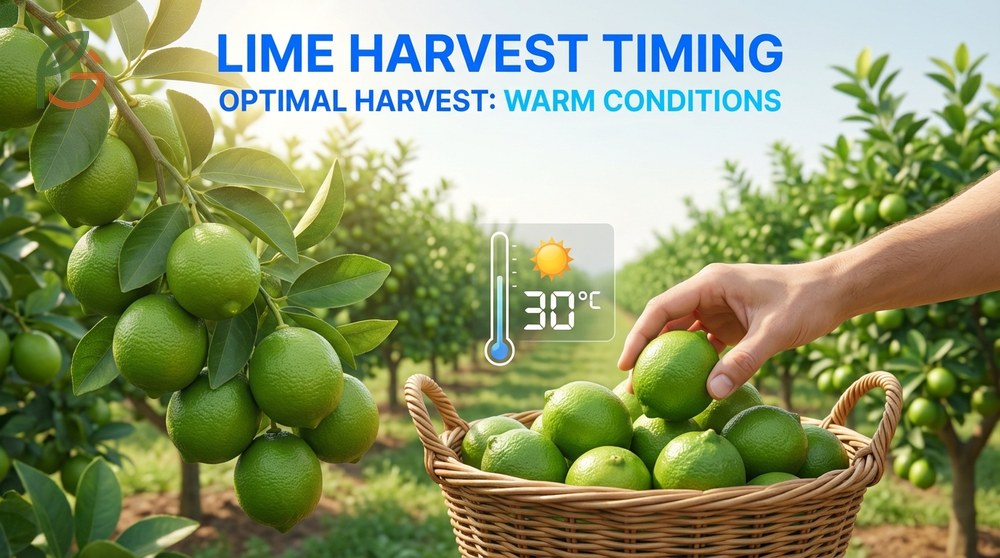
Harvest windows vary significantly by lime variety and your local climate. In USDA zones 9-10, many lime varieties produce fruit year-round, though there’s typically a main harvest season.[1] Understanding your specific variety’s timeline helps you plan for optimal flavor.
Temperature plays a crucial role in fruit development. Limes thrive in warm conditions but can suffer damage from cold snaps. If you’re in a borderline climate zone, it’s best to harvest all remaining fruit before the first freeze, even if they haven’t reached your ideal ripeness stage.
Persian (Tahitian) Limes
Persian limes are the large, seedless variety you’ll find in most grocery stores. They’re the most cold-tolerant lime variety and the easiest for home growers in temperate regions. The main harvest season typically runs from late fall through early spring, with peak production January through March in most growing regions.[4]
These limes reach harvest size of 2-3 inches in diameter and should be picked when they’ve transitioned from dark green to a lighter, brighter green. They’ll maintain quality on the tree for several weeks, giving you flexibility in harvest timing. In California, the prime picking window runs October through April.[3]
This table compares harvest timing, fruit characteristics, and flavor profiles for Persian and Key lime varieties
| Variety | Time to Harvest | Size | Green Harvest | Yellow Harvest |
|---|---|---|---|---|
| Persian (Tahitian) | 3-4 months[1] | 2-3 inches | Bright green, tart, high juice | Pale yellow, mellower, slightly less juice |
| Key (Mexican) | 8-9 months[2] | 1-2 inches | Dark green, intensely tart, aromatic | Light yellow, sweeter, floral notes |
Key (Mexican) Limes
Key limes are smaller, more aromatic, and pack an intense flavor punch compared to Persian limes. They take significantly longer to mature, requiring 8-9 months from flowering to harvest.[2] The main harvest season runs from June through September in the Northern Hemisphere, particularly in Florida where they’re most famously grown.
These limes are typically harvested when they reach a pale yellow-green hue rather than bright green. When fully ripe, they turn light yellow and develop a slightly softer, more leathery texture. My cousin in Veracruz, Mexico grows Key limes and harvests them at the pale green stage for his restaurant’s ceviche, but saves a few yellow ones each season for pie-making—the ripe ones create a smoother, less sharp filling.
- Smaller fruit size (1-2 inches diameter) than Persian limes
- Stronger, more aromatic scent when ripe
- Thinner, softer skin that’s easier to puncture
- More seeds than Persian varieties (typically 6-12 per fruit)
- Peak season from late spring through early fall in warm climates
Ripe Lime Indicators
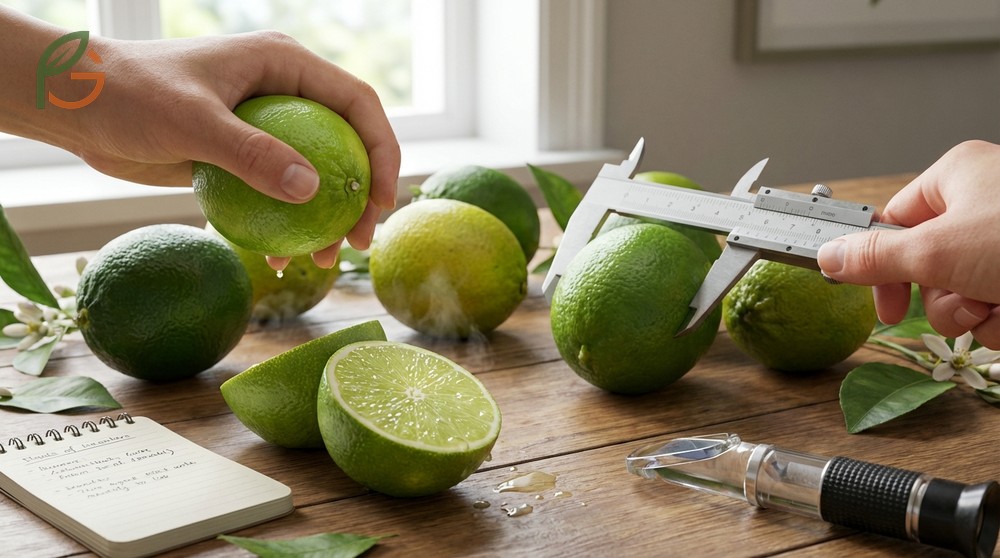
Determining ripeness requires checking multiple indicators rather than relying on a single sign. Color alone won’t tell the full story, especially since some lime varieties can look similar at different maturity stages. The best approach combines visual, tactile, and aromatic cues to judge harvest readiness.
Professional growers use a combination of physical and chemical parameters to assess optimal harvest timing. Research from agricultural studies shows that juice content, acidity levels, and sugar-to-acid ratios all factor into maturity determination.[5] For home growers, you can rely on simpler physical indicators that strongly correlate with internal quality.
Physical Signs
The most reliable physical indicator is weight. A lime ready for harvest feels noticeably heavy for its size, signaling high juice content inside. When you compare two similar-sized limes, the heavier one will almost always be juicier and more mature. This works whether you’re harvesting green or yellow.
Skin texture provides another important clue. Harvest-ready limes have smooth, slightly glossy skin with a faint sheen. As they approach peak ripeness, the surface oil glands become more prominent, creating a subtle bumpy texture. If the skin looks dull, wrinkled, or has soft spots, you’ve waited too long.
- Heavy weight relative to size indicates high juice volume
- Slight softness when gently squeezed (not rock-hard)
- Smooth, glossy skin without wrinkles or dry patches
- Appropriate color for harvest stage (bright green or pale yellow)
- Full diameter size for the variety (check variety specifications)
- Fresh citrus aroma when you scratch the peel surface
Pro Tip: Don’t worry if your limes aren’t all uniform in color. Variations in sun exposure create lighter or darker patches on individual fruits. This doesn’t affect juice content or flavor—it’s purely cosmetic.
Testing for Ripeness
The most accurate way to determine if your limes are ready is to pick one and cut it open. If the flesh is juicy and the flavor meets your expectations, the rest of the fruit at similar development stages are ready to harvest.[1] This sacrificial test saves you from harvesting an entire crop too early or too late.
Smell provides a quick field test without picking. Cup your hand around a lime still on the tree and take a sniff. Ripe limes release a fresh, zesty citrus aroma that’s easy to detect. If you can’t smell anything distinctive, the fruit probably needs more time on the tree. This works best in the morning before temperatures rise and volatilize the aromatic oils.
For Persian limes harvested green, look for a color shift from dark forest green to a brighter, lighter green shade. The fruit should have reached full size and feel firm but not hard. When you twist it gently on the stem, it should detach easily without requiring forceful pulling. If it won’t come off with a gentle twist, give it another week.
Harvesting Lime Trees
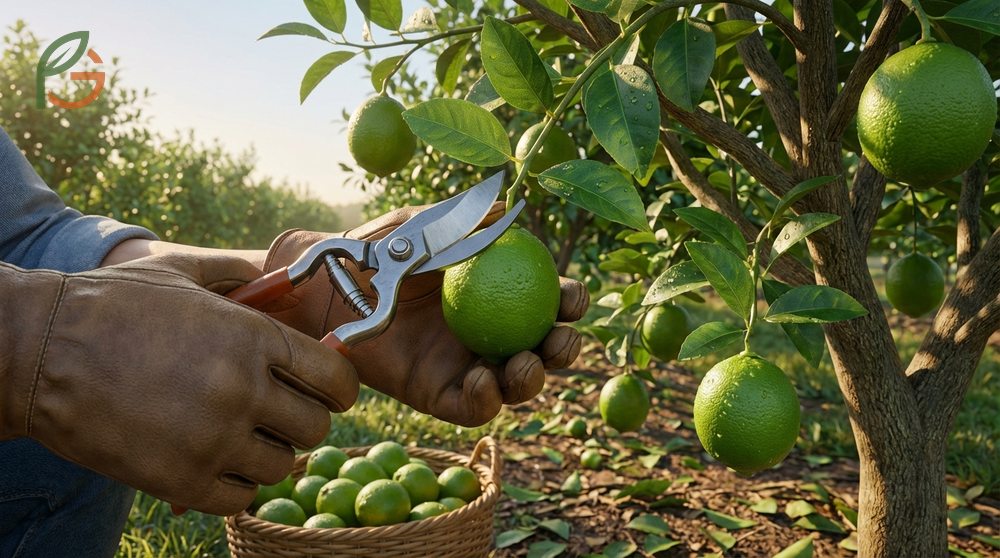
Proper harvest technique protects both your fruit quality and tree health for future crops. Use sharp pruning shears or scissors rather than pulling fruit by hand, which can damage branches and leave the tree vulnerable to disease. Cut the stem about 1/4 inch above the fruit to ensure clean separation.
Harvest in the morning after dew has dried but before afternoon heat builds up. This timing ensures the fruit is fully hydrated from overnight moisture uptake while avoiding the stress of midday sun exposure. The cooler morning temperatures also help preserve fruit quality immediately after picking.
Work your way around the tree systematically, checking all sides including interior branches. Fruit hidden in the canopy often gets overlooked but can be perfectly ripe. Handle limes gently during harvest to avoid bruising—damaged skin creates entry points for mold and dramatically shortens storage life.
- Use clean, sharp pruning shears or scissors for clean cuts
- Twist fruit gently to test readiness before cutting
- Leave a short stem stub (1/4 inch) attached to the fruit
- Harvest during cool morning hours for best fruit quality
- Place harvested limes in shallow containers to prevent crushing
- Check all sides of the tree including interior canopy branches
- Sanitize cutting tools between trees to prevent disease spread
Store harvested green limes at room temperature if using within a week, or refrigerate for up to 3-4 weeks. Don’t wash them until you’re ready to use them—excess moisture promotes mold growth. Yellow limes have a shorter shelf life and should be used within 1-2 weeks even when refrigerated.
If you’re harvesting a large crop, consider processing excess juice immediately. Lime juice freezes excellently in ice cube trays—once frozen, pop the cubes into freezer bags for convenient portion control. Each cube typically equals about 2 tablespoons of juice. This method preserves that fresh-picked flavor far better than attempting to store whole fruit long-term.
Conclusion
The evidence is clear: when to harvest limes comes down to your flavor preference and intended use rather than a one-size-fits-all timeline. Green limes offer maximum tartness and juice content for classic citrus applications, while yellow limes provide a mellower, slightly sweeter option that many home growers overlook.
Current horticultural guidance emphasizes that successful lime harvesting requires understanding your specific variety, monitoring multiple ripeness indicators, and using proper harvest technique to protect both fruit quality and tree health. Whether you’re growing Persian limes in California or Key limes in Florida, FruitGarden provides the research-backed information you need to time your harvest perfectly and enjoy the fruits of your labor at peak flavor.
Frequently Asked Questions
Do limes get sweeter as they ripen on the tree?
Limes develop slightly more sweetness as they turn yellow, but they’ll never be sweet like oranges. The main change is reduced acidity rather than increased sugar content. Yellow limes taste mellower and less sharp than green ones, though they retain distinctive lime tartness.
Can you pick limes when they’re still hard?
Rock-hard limes aren’t ready for harvest yet. Wait until they yield slightly when you gently squeeze them, which indicates the interior has developed adequate juice content. Limes picked too early will be dry and extremely bitter rather than pleasantly tart.
Will limes ripen if picked green?
No, limes won’t ripen further after picking since they’re non-climacteric fruits. They may turn yellow during storage, but this is aging rather than ripening. The acidity, juice content, and flavor won’t improve post-harvest, so pick them at your desired ripeness stage.
How long can you leave ripe limes on the tree?
Green limes at harvest ripeness can stay on the tree for several weeks without significant quality loss. Once they start turning yellow, harvest within 2-3 weeks before they become overripe and fall. Check regularly for wrinkled skin, which signals they’re past prime picking time.
What’s the difference between Persian and Key lime harvest timing?
Persian limes mature faster, reaching harvest stage in 3-4 months after flowering, while Key limes take 8-9 months. Persian limes are typically harvested bright green, whereas Key limes are often picked at a pale yellow-green stage or even fully yellow for sweeter applications.
Should limes be soft or firm when picked?
Harvest-ready limes should be firm but yield slightly when gently squeezed. They shouldn’t be rock-hard (too immature) or mushy-soft (overripe). The ideal texture feels similar to a ripe plum—some resistance with a bit of give that indicates juicy flesh inside.
Why are my limes turning yellow on the tree?
Yellow coloring is the natural ripening process for limes left on the tree long enough. It’s not a sign of disease or problems. Commercial growers pick limes green for market preferences, but yellow limes are perfectly edible with a sweeter, less acidic flavor than their green counterparts.





