
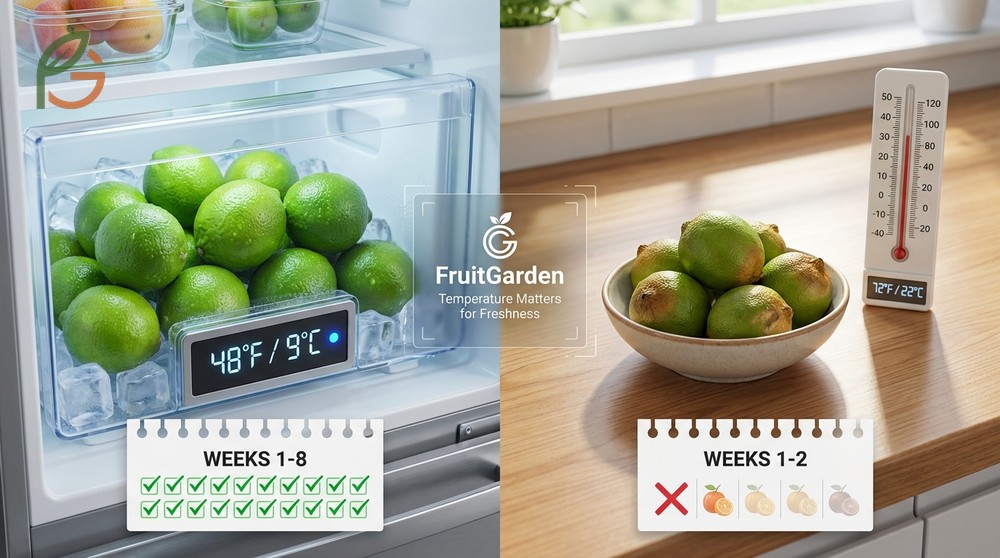
How to store limes properly makes the difference between fruit that stays juicy for weeks and limes that shrivel within days. Research shows that limes stored at the optimal temperature of 48°F (9°C) last 6-8 weeks[1], while room temperature storage only gives you 1-2 weeks. What most people don’t realize is that temperature matters more than the storage method itself. FruitGarden synthesizes current agricultural research to help you maximize your lime harvest and reduce kitchen waste.
Quick Answer
- Refrigerate limes at 48-50°F (9-10°C)[1] in the crisper drawer for maximum 6-8 weeks shelf life
- Room temperature storage works for 1-2 weeks[2] if you’re using them quickly
- Keep limes in perforated plastic bags or containers—never sealed tight
- Cut limes last 2-3 days[3] refrigerated in airtight containers
How to Store Limes
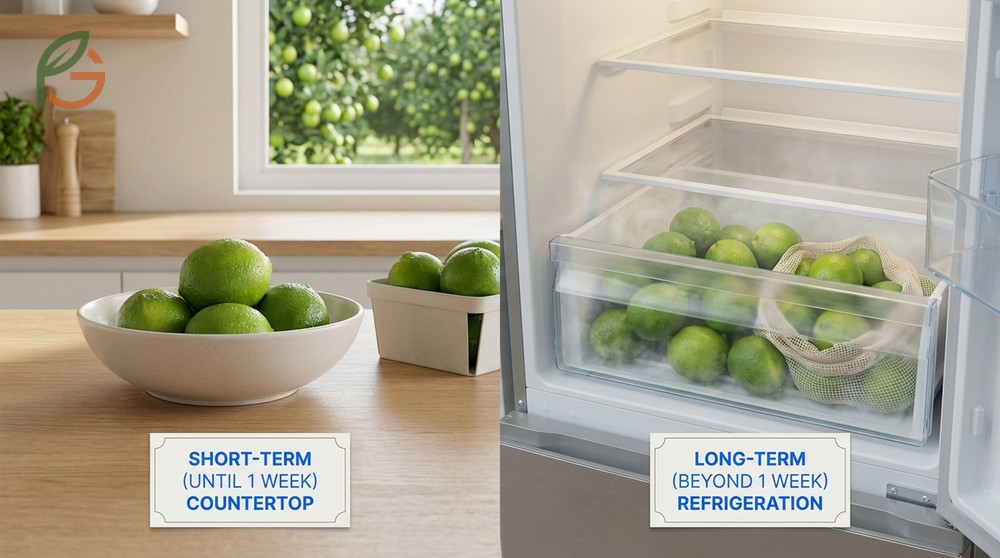
The best storage location depends on how quickly you’ll use your limes. Studies demonstrate that cold storage dramatically extends shelf life compared to countertop storage. If you’re planning to use limes within a week, room temperature works fine—but beyond that, you’ll need refrigeration.
Current agricultural data shows that proper storage prevents the rapid weight loss and shriveling that occurs at warm temperatures[1]. The key difference isn’t just about temperature—it’s about maintaining the right balance between moisture retention and airflow.
From My Experience: My cousin in Veracruz, Mexico grows Persian limes commercially. He told me that harvesting at the right maturity stage—when fruit are dark green but not yet yellowing—makes a huge difference in storage duration. His limes stored at 50°F (10°C) lasted the full 8 weeks versus only 4 weeks for overripe fruit.
Refrigerator Storage Method
Refrigeration is your best option for long-term lime storage. Place limes in the crisper drawer where humidity stays higher than the main refrigerator compartment. Research indicates that limes stored at 48-50°F (9-10°C) with 85-95% relative humidity maintain quality for 4-8 weeks[4].
Remove limes from any sealed plastic bags they came in. Trapped moisture encourages mold growth. Instead, use a perforated bag or container with the lid slightly ajar—this allows some airflow while preventing excessive moisture loss.
- Place limes in the crisper drawer immediately after purchase
- Use a perforated plastic bag or vented container to balance moisture and airflow
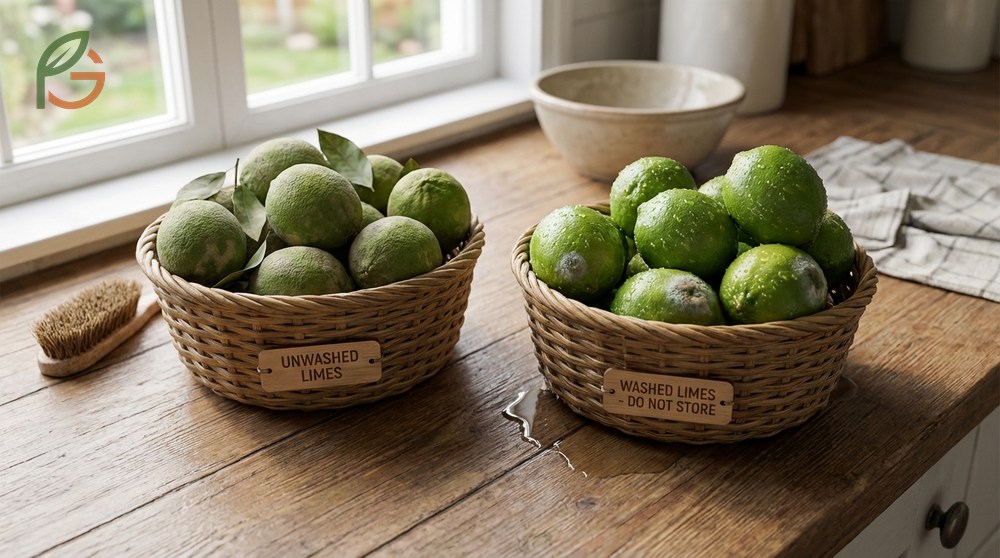
- Don’t wash limes before storage—moisture accelerates decay
- Keep limes away from ethylene-producing fruits like apples and bananas
- Check weekly and remove any limes showing soft spots or mold
Important Note: Don’t store limes below 44°F (7°C) for extended periods. Trade literature confirms that temperatures at or below 44°F (7°C) cause chilling injury—visible as peel pitting and brown spots[5].
Room Temperature Storage
Room temperature storage makes sense when you’re using limes within 1-2 weeks. Limes kept at room temp are easier to juice because they’re softer and more aromatic. Place them in a cool, dry spot away from direct sunlight or heat sources.
Evidence suggests that room temperature limes lose moisture faster, which concentrates their flavor slightly. If you bought limes from your local market and they’ll be gone in a few days, there’s no need to refrigerate them. Just keep them in a fruit bowl on the counter where air can circulate around them.
Storing Limes Fresh
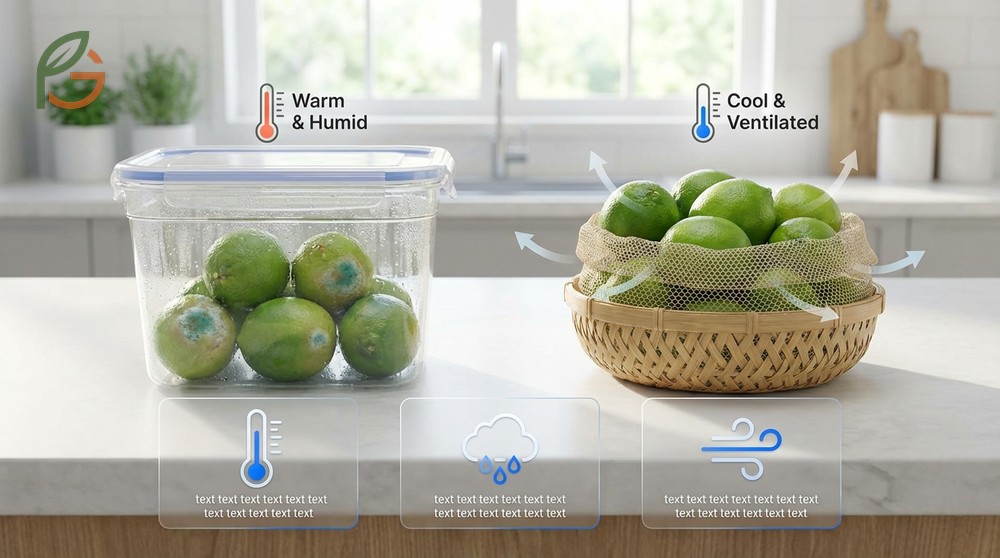
The secret to storing limes fresh isn’t complicated—it comes down to controlling three factors: temperature, humidity, and airflow. Most Americans store citrus incorrectly by either sealing it too tightly or exposing it to temperature extremes.
Agricultural data shows that limes continue to respire after harvest, producing heat and moisture. If that moisture can’t escape, it creates a microclimate perfect for mold growth. That’s why sealed containers fail while perforated ones succeed.
Optimal Temperature Matters
Temperature control is the single most important factor for lime storage. Commercial operations store limes at exactly 48°F (9°C)[6] because this temperature minimizes decay without causing chill damage. Your home refrigerator typically runs at 35-38°F (2-3°C)—colder than ideal for limes.
This explains why limes sometimes develop those unattractive brown spots in your fridge. The crisper drawer runs slightly warmer than the main compartment, putting it closer to that optimal range. If you’re serious about lime storage, consider using a refrigerator thermometer to check your crisper drawer temperature.
- Ideal storage: 48-50°F (9-10°C) extends shelf life to 6-8 weeks
- Standard fridge temp: 35-38°F (2-3°C) risks chilling injury after 2-3 weeks
- Room temperature: 68-72°F (20-22°C) works for 1-2 weeks only
- Below 44°F (7°C): Causes peel pitting and accelerates decay
- Above 75°F (24°C): Rapid moisture loss and shriveling within days
Moisture and Airflow Balance
Limes need humidity to prevent shriveling but airflow to prevent mold. That’s a tricky balance. Research shows that 85-95% relative humidity is optimal[4]—which is exactly what crisper drawers provide.
When my friend in Guadalajara, Mexico harvested her backyard lime tree, she tried the water bowl storage method trending online. After 3 weeks, half the limes developed soft spots. The problem wasn’t the method itself—it was that standing water created anaerobic conditions that encouraged bacterial growth. She switched to a perforated container and the remaining limes lasted another month without issues.
Storage Myth: You might’ve heard that storing limes in a bowl of water keeps them fresh for months. While this can work, it requires changing the water every 2-3 days to prevent bacterial growth. Perforated containers give you similar results with less maintenance.
Lime Storage Tips
Beyond basic refrigeration, several techniques can maximize your lime storage success. These methods work whether you’re storing a dozen limes from the grocery store or processing a bumper crop from your own tree.
Current guidance emphasizes preparing limes correctly before storage. Don’t wash them until you’re ready to use them—the extra moisture from washing creates conditions for mold spores to germinate. If your limes came dirty from the farmers market, gently brush off any soil but skip the water rinse.
Storing Cut Limes
Cut limes have a much shorter shelf life than whole fruit. Once you slice into a lime, you’ve broken the protective peel barrier and exposed the juicy flesh to air and bacteria. Proper storage of cut limes requires creating a moisture-retaining barrier that slows oxidation.
Wrap cut lime halves tightly in plastic wrap or beeswax wrap, pressing the wrap directly against the cut surface. This eliminates air pockets where oxidation occurs. Alternatively, place cut limes face-down in an airtight container—the container surface acts as a barrier. Either method gives you 2-3 days of storage[3].
- Wrap tightly in plastic or beeswax wrap, pressing out all air bubbles
- Store cut-side down in a shallow container with a tight lid
- Place in an airtight container with a damp paper towel for added moisture
- Use within 2-3 days for best flavor and juiciness
- Never wrap in aluminum foil—acids react with aluminum and create off-flavors
- For lime wedges, store in a zip-top bag with air pressed out
Freezing Limes
Freezing works brilliantly for long-term lime storage. You can freeze whole limes, lime slices, lime juice, or lime zest—each method suits different uses. Frozen limes maintain quality for 3-4 months, though the texture changes once thawed.
For whole limes, wash and dry them thoroughly, then place them in a freezer bag. Frozen whole limes work great for juicing—just thaw them for 15-20 minutes and they’ll release juice more easily than fresh limes. For slices, lay them on a parchment-lined baking sheet until frozen solid, then transfer to a container. This prevents them from freezing into a clump.
Refrigerate Limes Duration
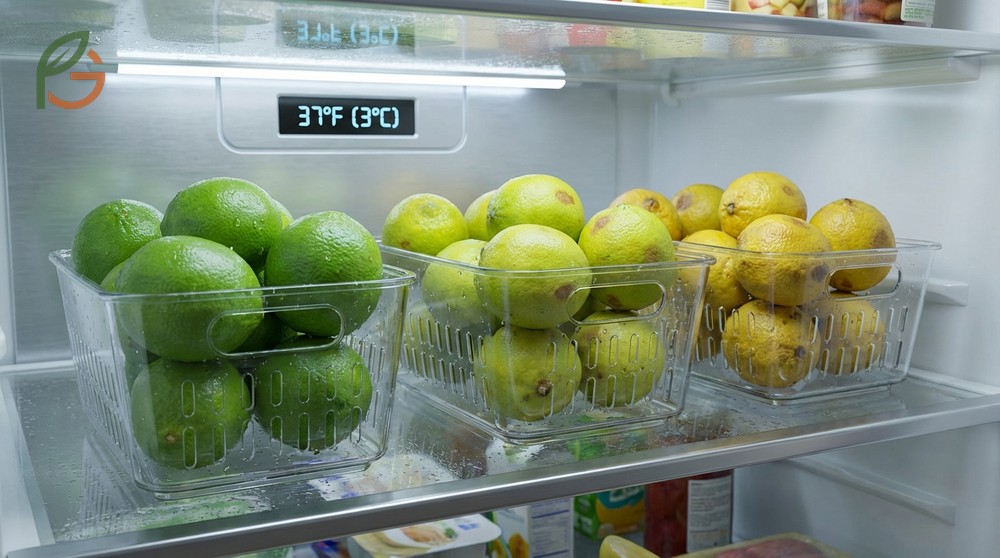
How long can you refrigerate limes? The answer depends on initial lime quality, your refrigerator’s exact temperature, and how you’ve packaged them. Under optimal conditions—48°F (9°C) in a perforated container—limes last 6-8 weeks[1].
In a typical home refrigerator running at 35-38°F (2-3°C), expect 4-6 weeks of storage before quality declines noticeably. You’ll see color changes first—limes lose their bright green color and shift toward yellow-green after about 4 weeks. This doesn’t mean they’re bad, just that they’re aging. Flavor remains acceptable even as color fades.
My neighbor in Monterrey, Mexico tested this with limes from his tree. He stored 20 limes at different locations—10 in the main fridge compartment and 10 in the crisper drawer. After 5 weeks, the crisper drawer limes stayed firm and juicy while the main compartment limes had started to soften and develop brown spots. The crisper drawer’s slightly warmer temperature made the difference.
This table compares storage duration across different temperature conditions showing how location and temperature affect lime shelf life
| Storage Method | Temperature | Duration | Best Use |
|---|---|---|---|
| Room Temperature | 68-72°F (20-22°C) | 1-2 weeks[2] | Quick use, easier juicing |
| Standard Refrigerator | 35-38°F (2-3°C) | 4-6 weeks | Home storage, moderate duration |
| Crisper Drawer | 40-45°F (4-7°C) | 4-6 weeks[2] | Best home option |
| Optimal Commercial | 48-50°F (9-10°C) | 6-8 weeks[1] | Maximum shelf life |
| Freezer Storage | 0°F (-18°C) | 3-4 months | Long-term preservation |
The color change you see after 4 weeks happens because chlorophyll in the peel breaks down during cold storage. Some cultivars retain green color better than others. Persian limes lose green color faster than Key limes, for example. But color change doesn’t correlate directly with flavor loss—many chefs actually prefer slightly yellowed limes for their mellower, less acidic taste.
Extend Lime Freshness
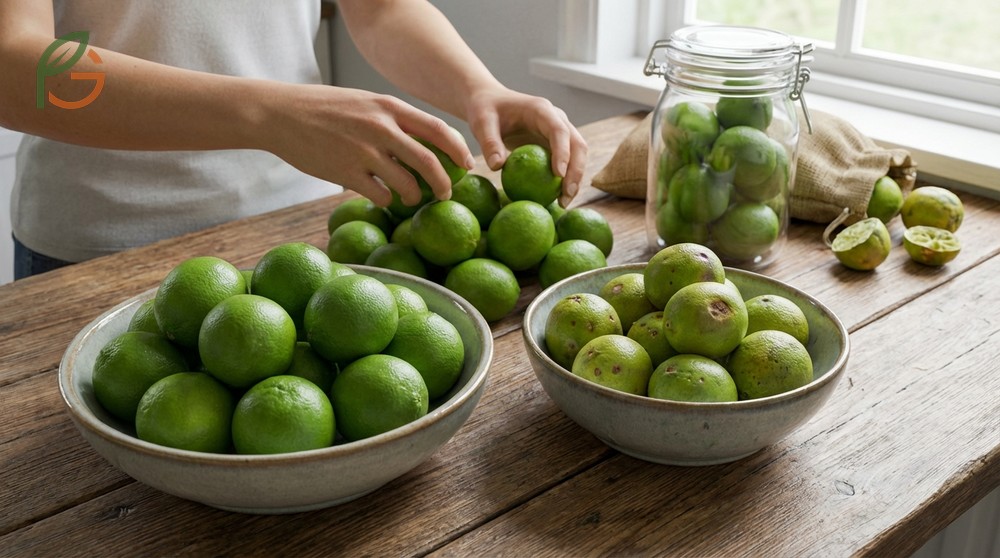
You can extend lime freshness beyond standard storage recommendations with a few advanced techniques. These methods work especially well if you’ve bought limes in bulk or harvested a large crop all at once.
First, sort your limes by quality before storage. Limes with any soft spots, cuts, or blemishes should be used first—they won’t store well no matter what method you use. Store only firm, unblemished fruit for long-term keeping. One bad lime can release ethylene gas and volatile compounds that accelerate ripening in neighboring fruit.
- Sort limes before storage—use blemished ones immediately, store only perfect fruit
- Keep limes separate from ethylene producers like apples, bananas, and tomatoes
- Inspect stored limes weekly and remove any showing decay
- Bring refrigerated limes to room temp 30 minutes before juicing for maximum yield
- Consider freezing lime juice in ice cube trays if you can’t use limes fast enough
- Zest limes before they start to soften—frozen zest keeps for months
Research shows that limes continue to respire after harvest, consuming oxygen and producing carbon dioxide, water, and heat. This respiration accelerates at higher temperatures, which is why room temperature limes decline so much faster than refrigerated ones. Slowing respiration through temperature control is the most effective preservation strategy.
Pro Tip: If you notice your limes starting to soften but you’re not ready to use them, juice them immediately and freeze the juice in ice cube trays. Lime juice freezes perfectly and you’ll have pre-measured portions ready for recipes, drinks, or marinades.
Conclusion
The evidence is clear: how to store limes correctly starts with understanding temperature’s critical role. Refrigeration at 48-50°F (9-10°C) gives you 6-8 weeks of peak quality, while room temperature works for quick use within 1-2 weeks. The key principles—proper temperature, balanced humidity, and adequate airflow—apply whether you’re storing three limes or three hundred.
Current agricultural guidance emphasizes that proper storage isn’t just about extending shelf life—it’s about reducing food waste and preserving the nutritional value and flavor compounds that make limes so valuable in cooking. FruitGarden helps home gardeners and fruit enthusiasts apply commercial-grade storage knowledge to everyday situations, maximizing harvest value and minimizing waste.
Frequently Asked Questions
How long do limes last at room temperature?
Limes last 1-2 weeks at room temperature when kept in a cool, dry location away from direct sunlight. Room temp storage works best if you’re using the limes within a week. After that, they’ll start losing moisture and firmness. If you need longer storage, refrigeration is your better option.
Should limes be refrigerated or left out?
Refrigerate limes if you won’t use them within a week. Cold storage extends shelf life to 4-8 weeks depending on temperature. Leave limes out at room temperature only if you’re using them within 1-2 weeks—they’ll be easier to juice and more aromatic. The choice depends on your timeline.
Can you store limes in a bowl of water?
Yes, but it requires maintenance. Storing limes in a bowl of water in the fridge can extend freshness, but you must change the water every 2-3 days to prevent bacterial growth. Perforated containers give similar results with less work. If you try the water method, make sure limes are fully submerged and the bowl is refrigerated.
How do you know when limes have gone bad?
Bad limes show soft spots, visible mold, an off smell, or feel mushy when squeezed. Some yellowing is normal and doesn’t mean the lime is bad—just aged. Brown spots or pitting on the peel indicate chilling injury but the fruit inside may still be usable. Trust your senses: if it smells funky or feels slimy, toss it.
What’s the best container for storing limes?
Use a perforated plastic bag or a container with the lid slightly ajar. The goal is to maintain humidity while allowing some airflow. Sealed containers trap moisture and encourage mold, while no container at all lets limes dry out too quickly. A produce bag with small holes or a vented produce keeper works perfectly.
Can you freeze whole limes?
Yes, freeze whole limes for 3-4 months of storage. Wash and dry them, then place in a freezer bag. Frozen limes work great for juicing—thaw for 15-20 minutes and they’ll release juice more easily than fresh limes. The texture changes after freezing, so they’re best used for juice rather than slicing for garnishes.
Why are my refrigerated limes turning brown?
Brown spots on refrigerated limes indicate chilling injury from temperatures below 44°F (7°C). Most home refrigerators run at 35-38°F (2-3°C), which is too cold for limes. Store limes in the crisper drawer where it’s slightly warmer. The browning affects appearance more than flavor—the fruit inside is usually still fine to use.





