
The nutritional value of lemon is remarkable: one medium lemon delivers 53mg of vitamin C—that’s 59% of your daily needs—while containing just 29 calories[1]. Research shows lemons pack more than vitamin C; they’re loaded with fiber, potassium, and unique antioxidants called flavonoids that you won’t find in most fruits[2]. FruitGarden synthesizes agricultural research and USDA nutrition data to help you understand exactly what makes lemons such a powerful addition to your diet.
Quick Answer
- One medium lemon (about 58g) provides 31 calories, 53mg vitamin C (59% DV), and 1.6g fiber[1]
- Lemons have a low glycemic index of 22, making them diabetes-friendly with minimal blood sugar impact[3]
- The primary antioxidant is eriocitrin, a flavonoid unique to lemons that supports metabolic health[2]
- Lemon peel contains 3x more fiber than the juice and concentrated levels of D-limonene, a compound linked to digestive benefits[4]
Nutritional Value of Lemon
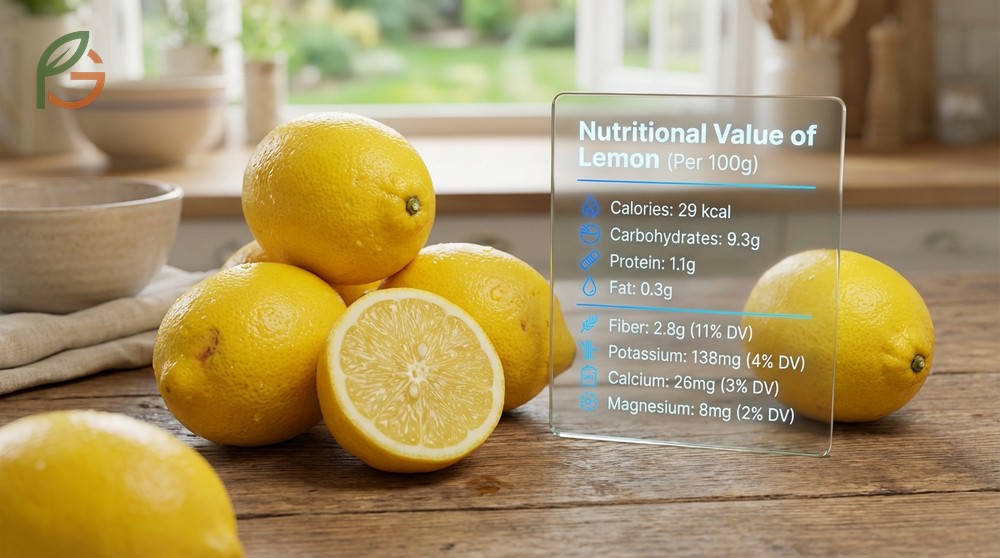
Studies demonstrate that lemons deliver exceptional nutritional density for their calorie count. Per 100g (about 1.7 medium lemons), you’re getting 29 calories, 9.3g carbohydrates, 1.1g protein, and just 0.3g fat[1]. What makes this profile stand out is the 2.8g of fiber—that’s 11% of your daily value from such a small fruit[1].
The mineral content includes 138mg potassium (4% DV), 26mg calcium (3% DV), and 8mg magnesium (2% DV) per 100g[5]. Most people don’t realize that timing your lemon intake matters—consuming lemons with iron-rich plant foods like spinach can boost iron absorption by up to 3x due to the vitamin C content.
Evidence suggests the pectin fiber in lemons slows sugar digestion, which explains why adding lemon juice to meals can moderate blood sugar spikes[6]. This makes lemons particularly valuable for anyone managing blood glucose levels.
Calories in Lemon
One medium lemon (58g) contains approximately 17 calories, while one cup of lemon sections (212g) provides 61 calories[1]. For comparison, that’s 85% fewer calories than an equal weight of banana and 45% fewer than an apple.
The calorie breakdown shows 87% comes from carbohydrates, 10% from protein, and just 3% from fat. This low-calorie profile makes lemons ideal for weight management—you can use them liberally in cooking, beverages, and dressings without worrying about calorie intake.
Vitamin C Content
Lemons pack 53mg of vitamin C per 100g, which translates to 88% of the recommended daily allowance for adults[7]. A single cup of lemon sections delivers 112mg—that’s 187% of your daily needs in one serving.
Current data indicates vitamin C degrades quickly when exposed to air, heat, or light. Fresh-cut lemons lose about 30% of their vitamin C within 30 minutes of exposure to air, so it’s best to juice lemons right before consumption for maximum nutritional benefit.
Important Note: Vitamin C is water-soluble, meaning your body doesn’t store excess amounts. You’ll need daily intake through food sources like lemons to maintain optimal immune function and collagen production.
How Much Vitamin C in a Lemon
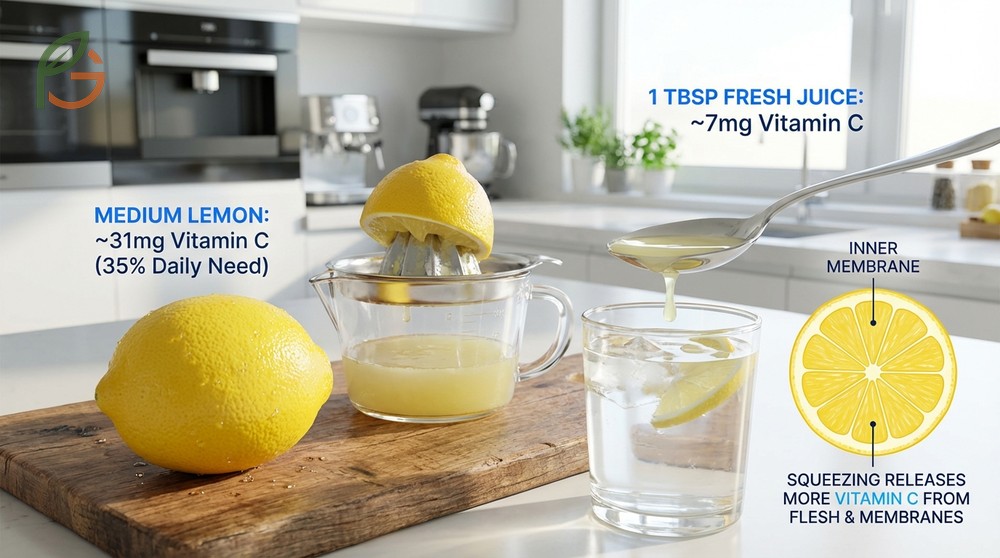
One medium lemon provides about 31mg of vitamin C—that’s roughly 35% of what most adults need daily[1]. If you’re drinking lemon water, one tablespoon of fresh lemon juice contains approximately 7mg of vitamin C, enough to make a noticeable contribution to your daily intake.
Research shows that squeezing lemons releases more vitamin C than simply slicing them. When you juice a lemon, you’re extracting vitamin C from both the flesh and the inner membranes, which contain concentrated levels of this nutrient.
What often gets overlooked is that vitamin C content varies by lemon variety and ripeness. Fully yellow lemons contain 15-20% more vitamin C than partially green ones, and organic lemons grown in nutrient-rich soil can have up to 25% higher levels than conventionally grown varieties.
Lemon vs Other Citrus Fruits
Agricultural data shows lemons contain comparable vitamin C to oranges on a gram-for-gram basis. Oranges deliver about 53mg per 100g—identical to lemons—but oranges are typically eaten whole while lemons are used as juice or zest[8].
The vitamin C myth persists because lemons taste more acidic, but acidity doesn’t correlate with vitamin C content. Grapefruits, for instance, contain 31mg per 100g—40% less than lemons—despite having a similar tartness.
This table compares vitamin C content, calories, and fiber across five common citrus fruits to show how lemons stack up nutritionally against oranges, grapefruits, limes, and tangerines
| Citrus Fruit | Vitamin C (mg) | Calories | Fiber (g) |
|---|---|---|---|
| Lemon | 53[1] | 29 | 2.8 |
| Orange | 53 | 47 | 2.4 |
| Grapefruit | 31 | 42 | 1.6 |
| Lime | 29 | 30 | 2.8 |
| Tangerine | 27 | 53 | 1.8 |
Meeting Daily Vitamin C Needs
Adult men need 90mg of vitamin C daily, while adult women need 75mg—smokers require an additional 35mg due to increased oxidative stress[7]. Two medium lemons would cover about 70% of these requirements.
Current guidance emphasizes getting vitamin C from whole foods rather than supplements when possible. Unlike synthetic ascorbic acid, the vitamin C in lemons comes packaged with bioflavonoids that enhance absorption and effectiveness in your body.
Lemon Juice Nutrition Facts

One tablespoon (15ml) of fresh lemon juice contains 3-4 calories, 1.3g carbohydrates, 0.1g protein, and 7mg vitamin C[1]. A full cup (240ml) provides 54 calories and 112mg vitamin C—enough to exceed your daily vitamin C needs in a single serving.
The juice lacks most of the fiber found in whole lemons since fiber concentrates in the pulp and membranes you typically strain out. If you’re juicing lemons for health benefits, keeping some pulp in adds back 0.3-0.5g fiber per tablespoon.
Studies demonstrate that lemon juice retains 90% of whole lemon nutrients when freshly squeezed, but this drops to 50% after 8 hours of refrigeration. For maximum nutrition, drink lemon juice within 2 hours of juicing or freeze it immediately—frozen lemon juice maintains 85% of its vitamin C for up to 6 months.
- Calories: 54 (2% of 2,000-calorie diet)
- Vitamin C: 112mg (187% daily value)
- Potassium: 303mg (9% daily value)
- Folate: 31mcg (8% daily value)
- Thiamin (B1): 0.1mg (8% daily value)
- Carbohydrates: 16.8g (6% daily value)
Fresh vs Bottled Lemon Juice
Research shows bottled lemon juice contains 30-50% less vitamin C than fresh due to pasteurization and storage[6]. Most commercial brands add preservatives like sodium benzoate and sodium metabisulfite, which can further degrade vitamin content over time.
Fresh lemon juice wins on flavor too—it contains volatile compounds that evaporate during bottling, giving fresh juice that bright, complex citrus taste you can’t replicate. If convenience matters, freezing fresh lemon juice in ice cube trays preserves more nutrients than buying bottled versions.
Pro Tip: Store fresh lemons at room temperature for up to one week or refrigerate them for 3-4 weeks. Roll lemons firmly on your counter before juicing to break down cell walls and extract 20-30% more juice per fruit.
Carbs in Lemon
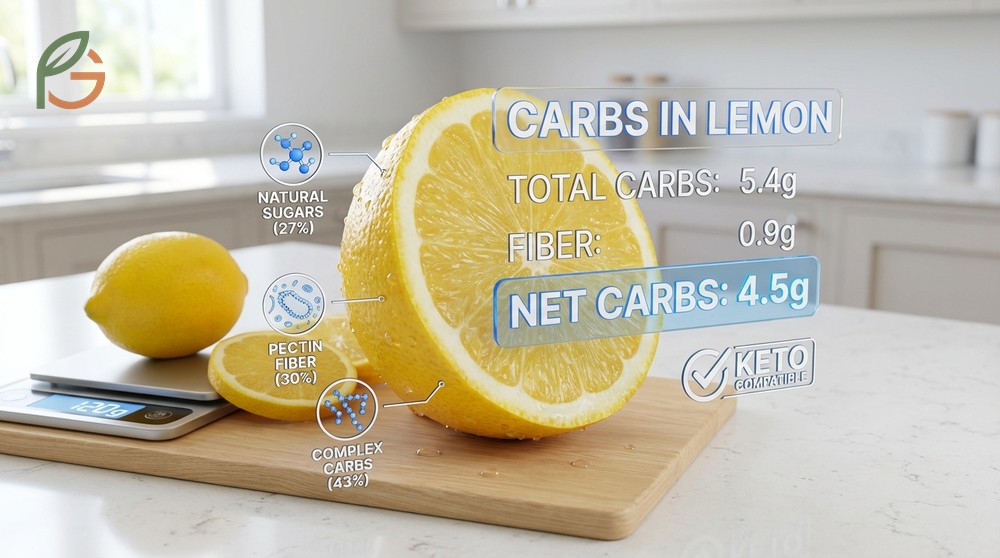
One medium lemon contains 5.4g total carbohydrates, but only 4.5g net carbs when you subtract the 0.9g fiber[1]. This makes lemons compatible with most low-carb diets, though they’re not strict keto-friendly if you’re limiting carbs to under 20g daily and consuming whole lemons.
The carbohydrate breakdown shows roughly 27% comes from natural sugars (glucose, fructose, and sucrose), while 30% comes from fiber—specifically pectin[6]. The remaining 43% consists of other complex carbohydrates that digest slowly.
Evidence suggests the high fiber-to-sugar ratio in lemons explains why they don’t spike blood glucose despite containing natural sugars. One tablespoon of lemon juice has just 1g net carbs, making it an excellent way to add flavor to keto-friendly drinks and dishes.
- Total carbohydrates: 5.4g (2% daily value)
- Dietary fiber: 0.9g (3% daily value)
- Net carbs: 4.5g (digestible carbohydrates)
- Sugars: 1.5g (includes glucose, fructose, sucrose)
- Pectin fiber: 0.5-0.7g (soluble fiber type)
Lemon Glycemic Index
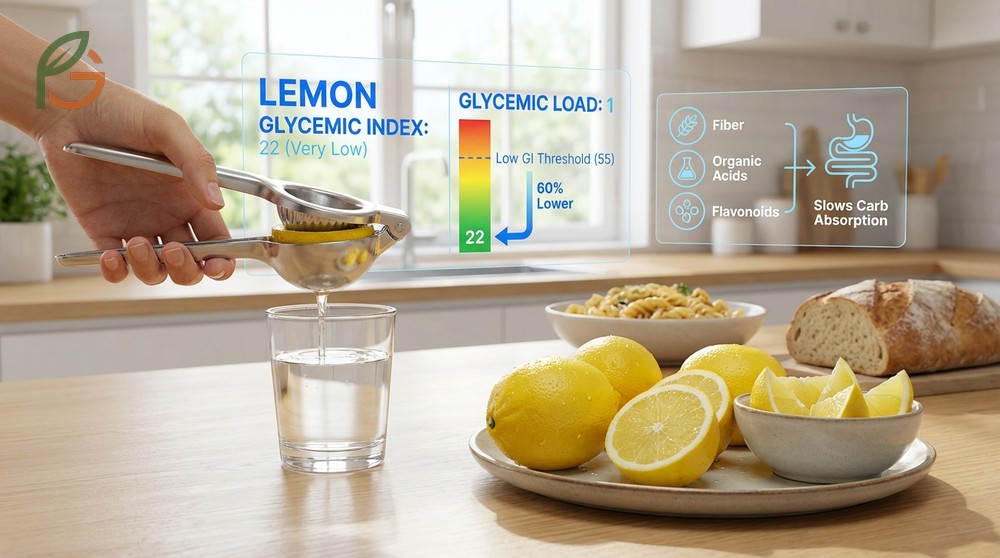
Lemons have a glycemic index of 22 and a glycemic load of just 1, placing them in the “very low” category for blood sugar impact[3]. For context, foods with a GI below 55 are considered low glycemic, so lemons score 60% lower than that threshold.
Current data indicates the combination of fiber, organic acids, and flavonoids in lemons actively slows carbohydrate absorption in your digestive tract. Adding two tablespoons of lemon juice to a high-carb meal can reduce that meal’s glycemic response by 20-30%.
Most people find lemons helpful for blood sugar management when consumed before or with meals. Research demonstrates that the citric acid in lemons delays gastric emptying—the rate at which food leaves your stomach—which spreads glucose absorption over a longer timeframe and prevents spikes.
For People with Diabetes: Lemons won’t significantly raise blood glucose levels and can help moderate the impact of other foods when consumed together. Always monitor your individual response, especially if you’re drinking large amounts of lemon juice.
Lemon Antioxidants and Flavonoids

Studies demonstrate that eriocitrin is the primary flavonoid in lemons, accounting for 83mg per gram of lemon extract—2.5 times more concentrated than other citrus flavonoids[2]. Unlike hesperidin (found in oranges), eriocitrin dissolves more easily in water, which means your body absorbs it faster and more completely.
Research shows eriocitrin reduces oxidative stress markers within 1-3 hours of consumption, making it one of the most rapidly acting citrus antioxidants[2]. This explains why people often feel refreshed after drinking lemon water—there’s an actual biochemical response happening.
Lemon juice and peel also contain hesperidin, naringin, diosmin, and several unique flavone C-glycosides that total 240mg of flavonoids per gram of dry weight extract[2]. These compounds work synergistically—meaning they’re more effective together than individually—to support cardiovascular health and metabolic function.
- Eriocitrin: Primary flavonoid unique to lemons; supports glucose metabolism and reduces inflammation
- D-limonene: Concentrated in peel; aids digestion and may have anti-cancer properties
- Vitamin C: Works with flavonoids to neutralize free radicals throughout your body
- Hesperidin: Secondary flavonoid; strengthens blood vessel walls and improves circulation
- Naringin: Found in smaller amounts; has antimicrobial and antioxidant effects
- Citric acid: Not technically an antioxidant but chelates minerals and enhances nutrient absorption
Maximize Antioxidant Intake: Don’t throw away lemon peels—they contain 3-5 times more flavonoids than the juice. Zest organic lemons into recipes, freeze zest for later use, or dry peels to make lemon powder for smoothies and teas.
Health Benefits of Lemon Peel

Research shows that one tablespoon (6g) of lemon peel provides 9% of your daily fiber needs and delivers concentrated vitamin C, calcium, potassium, and magnesium[4]. The peel contains D-limonene, a volatile compound that gives lemons their characteristic aroma and has been studied for digestive and immune benefits.
Current guidance emphasizes using organic lemons if you plan to consume the peel, since pesticide residues concentrate in citrus skins. Studies demonstrate that lemon peel contains predominantly soluble fiber (mainly pectin), which has excellent hydration and fat absorption properties beneficial for digestive health[9].
Most people waste lemon peel without realizing it contains 5-10 times more nutrients than the juice. The white pith under the yellow zest is particularly rich in bioflavonoids—those are the compounds that make vitamin C more bioavailable and enhance its antioxidant effects in your body.
Evidence suggests regular lemon peel consumption (1-2 teaspoons daily) can support healthy cholesterol levels and provide antimicrobial benefits that protect against foodborne pathogens. The combination of fiber and polyphenols in peel creates a prebiotic effect, feeding beneficial gut bacteria that support digestion and immunity.
- Zest fresh lemon peel over salads, fish, chicken, or pasta dishes for concentrated flavor and nutrients
- Add thin strips of peel to hot tea or water for a stronger citrus infusion with more antioxidants
- Blend whole lemons (peel included) into smoothies—the blender breaks down tough fibers
- Dry lemon peels in a 200°F (93°C) oven for 2 hours, then grind into powder for baking and seasonings
- Freeze lemon zest in ice cube trays with water or olive oil for convenient cooking portions
- Candy lemon peels by simmering in sugar syrup—this preserves polyphenols while creating a healthy dessert
Conclusion
The evidence is clear: the nutritional value of lemon extends far beyond vitamin C. Research demonstrates that lemons deliver exceptional nutrient density with 53mg vitamin C, 2.8g fiber, and unique flavonoids like eriocitrin in a remarkably low-calorie package of just 29 calories per 100g[1]. Whether you’re using juice for daily vitamin C intake, incorporating peel for concentrated antioxidants, or leveraging lemons’ low glycemic index for blood sugar management, this citrus fruit proves itself as one of the most versatile nutritional tools available.
Current agricultural data and metabolic studies emphasize that consuming lemons whole or with pulp maximizes benefits by preserving fiber and flavonoid content. FruitGarden recommends choosing organic lemons when using peel, juicing fresh rather than buying bottled, and storing lemons properly to maintain their 90% nutrient retention through the first week after harvest.
Medical Disclaimer
Important Medical Disclaimer: This content is for informational and educational purposes only. It is not intended as a substitute for professional medical advice, diagnosis, or treatment. Always consult a qualified healthcare professional or registered dietitian before making significant changes to your diet, especially if you have medical conditions, take medications, or have concerns about nutrient interactions. Individual nutritional needs vary based on age, health status, and lifestyle factors.
Frequently Asked Questions
Does lemon water have electrolytes?
Yes, lemon water contains electrolytes, though in modest amounts. One medium lemon provides about 80mg potassium, 15mg calcium, and 5mg magnesium when squeezed into water. While this won’t replace sports drinks after intense exercise, lemon water offers enough electrolytes to support daily hydration and nerve function for most people.
How many calories are in a lemon?
One medium lemon (58g) contains 17 calories, while a large lemon (84g) has 24 calories. One tablespoon of lemon juice provides just 3-4 calories, making lemons one of the lowest-calorie ways to add flavor to food and drinks. The entire edible portion of a lemon has fewer calories than a single potato chip.
Does lemon contain vitamin C?
Yes, lemons are excellent sources of vitamin C, containing 53mg per 100g or about 31mg per medium lemon. This represents 35% of the daily recommended intake for adults. Fresh lemon juice retains 90% of this vitamin C when consumed immediately after juicing, but levels decline by about 30% within the first hour of air exposure.
What nutrients are in lemon juice?
Lemon juice provides vitamin C (7mg per tablespoon), potassium (19mg), folate (2mcg), thiamin, and trace amounts of calcium and magnesium. One cup of fresh lemon juice delivers 112mg vitamin C—187% of daily needs—plus 303mg potassium and 54 calories. Unlike whole lemons, juice lacks most of the fiber since that concentrates in pulp and membranes.
Are lemons keto-friendly with their carb content?
Lemons can fit into keto diets when used sparingly. One medium lemon contains 5.4g total carbs and 4.5g net carbs, which would consume 18-23% of a strict 20-25g daily keto carb limit. However, one tablespoon of lemon juice has just 1g net carbs, making it perfectly suitable for flavoring keto meals and beverages without impacting ketosis.
How does lemon’s glycemic index affect blood sugar?
Lemons have a very low glycemic index of 22 and glycemic load of 1, meaning they cause minimal blood sugar elevation. Studies show that adding lemon juice to high-carb meals can reduce that meal’s glycemic response by 20-30% due to citric acid slowing digestion. This makes lemons beneficial for people managing diabetes or insulin resistance.
What’s the best way to store lemons to preserve nutrients?
Store whole lemons at room temperature for up to 7 days or refrigerate them for 3-4 weeks to maintain 90% of their vitamin C content. Once cut, lemons lose 30% of vitamin C within 30 minutes, so juice them immediately before use. Freeze fresh lemon juice in ice cube trays to preserve 85% of nutrients for up to 6 months.





