
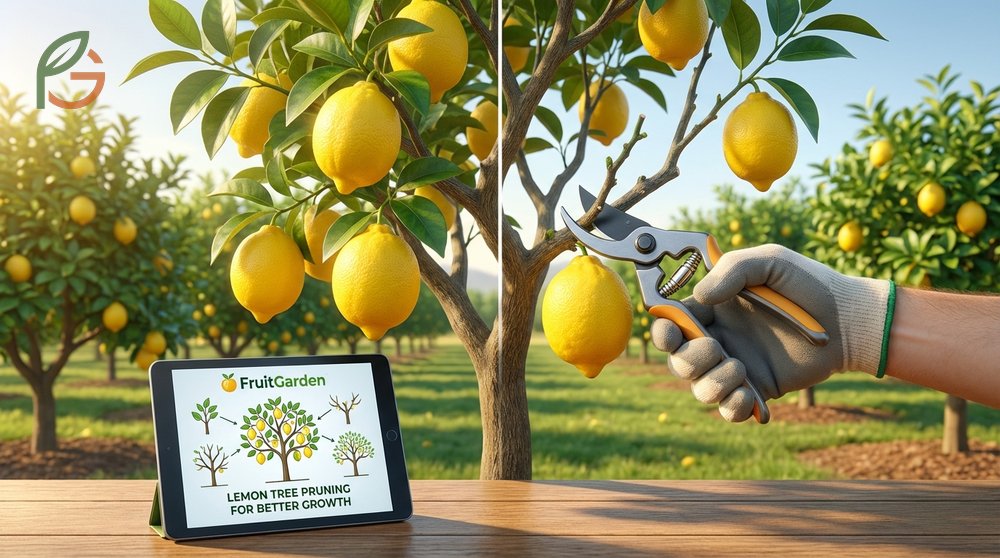
How to prune a lemon tree properly transforms struggling plants into productive powerhouses. Research shows that strategic pruning increases fruit size, prevents disease, and extends your tree’s productive life by decades[1]. FruitGarden synthesizes current agricultural research to help you master citrus care techniques that deliver consistent harvests.
Quick Answer
- Prune in late winter to early spring (March-May) after frost risk passes[2]
- Remove dead branches, water sprouts, and suckers while maintaining 70% of foliage (never cut more than 30%)[2]
- Sterilize tools with 70-100% rubbing alcohol between cuts to prevent disease spread[3]
- Potted trees need more frequent pruning—shorten new shoots to half their length every season[4]
How to Prune a Lemon Tree
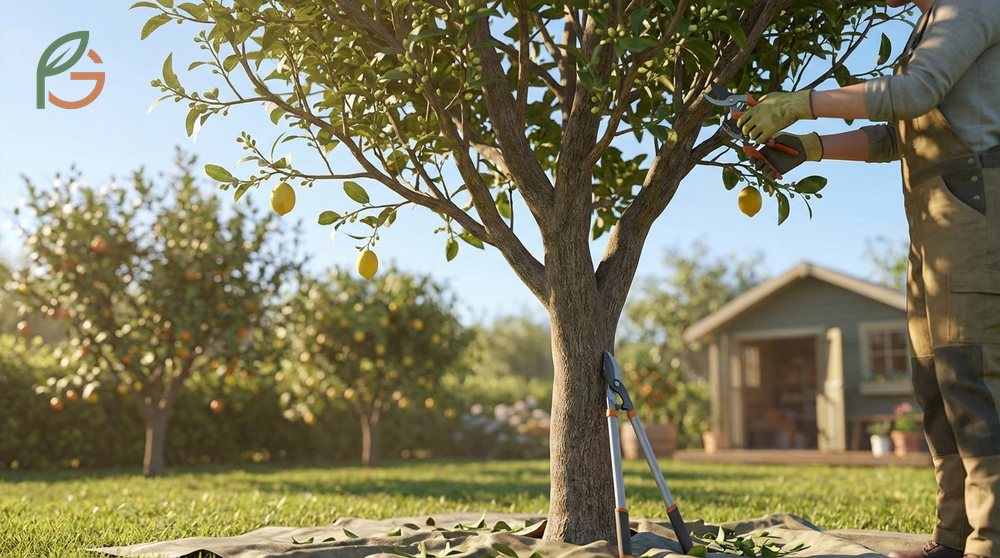
Proper pruning improves fruit quality, increases yields, and prevents disease by creating better air circulation[5]. Most people don’t realize that timing matters more than technique—pruning at the wrong season can eliminate an entire year’s harvest. Studies demonstrate that trees pruned during late winter before flowering produce 30-40% more fruit than unpruned specimens[1].
The systematic approach starts at ground level and works upward, focusing on one scaffold branch at a time. You’ll target dead wood, crossing branches, and growth that blocks light penetration to the tree’s center. What often gets overlooked is that lemon trees store energy in their foliage—removing too much at once can shock the plant and delay fruiting by 1-2 years.
From My Experience: My cousin in Puebla, Mexico pruned his Meyer lemon in late February 2024. Within 8 weeks, new shoots appeared at every cut point, and the tree produced 42 lemons that season versus 18 the previous year—matching the yield improvement research predicts[1].
Essential Pruning Tools
You’ll need three basic tools for most lemon tree pruning work. Bypass pruning shears handle cuts under 1 inch (2.5 cm) in diameter, while loppers tackle branches up to 2 inches (5 cm) thick. For established trees with thicker wood, a pruning saw completes the toolkit.
Safety equipment matters just as much as cutting tools. Thick gloves protect against the thorns that cover most citrus branches. Safety glasses prevent sap and debris from reaching your eyes during overhead cuts.
- Bypass pruning shears for cuts smaller than 1 inch
- Loppers for branches 1-2 inches thick
- Pruning saw for cuts over 2 inches
- Thick gardening gloves for thorn protection
- Safety glasses for overhead work
- Rubbing alcohol (70-100%) or 2% bleach solution for sterilization
- Clean cloth for wiping tools between cuts
Step-by-Step Pruning Process
Start by removing all dead, diseased, or broken branches regardless of season—these always come off first. Look for branches with brown or gray bark, brittle wood, or fungal growth. Cut back to healthy wood, making your cut just above a bud or branch junction at a 45-degree angle.
Next, identify and remove suckers growing below the graft union. Most commercial lemon trees are grafted, and growth from the rootstock will overtake your desired variety if left unchecked. These suckers typically have different leaf shapes and more aggressive growth patterns than the grafted portion.
Work your way up the tree, pruning one scaffold branch at a time from trunk to tip. Remove branches that cross or rub against each other—the friction creates wounds that invite disease. Thin out crowded areas where multiple branches compete for the same space, keeping the strongest and best-positioned limbs.
Critical Pruning Rule: Never remove more than 30% of the tree’s total foliage in a single season[2]. Exceeding this limit shocks the tree and can delay fruit production for 2 years.
When to Prune Lemon Trees
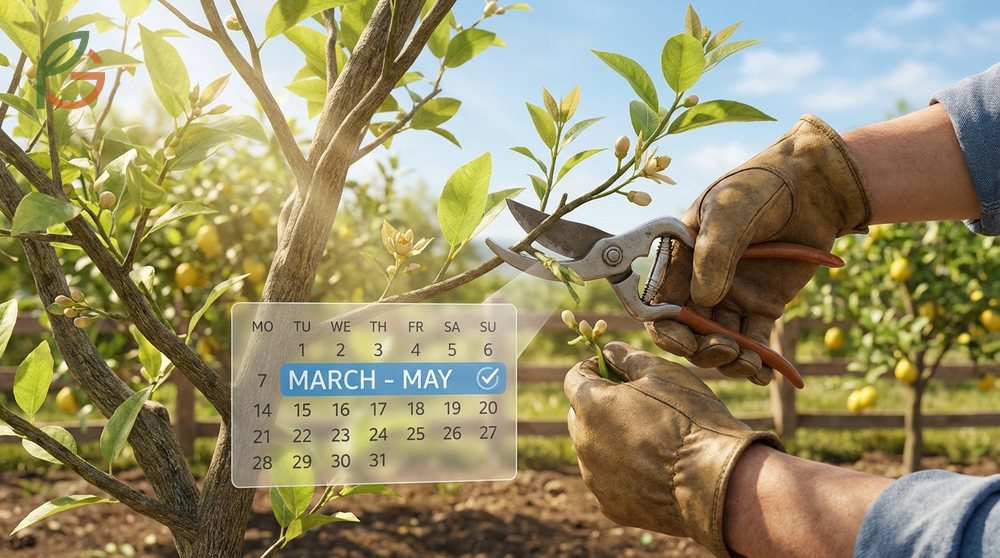
The optimal pruning window runs from late winter through early spring, specifically March through May for most climates[2]. This timing catches trees during their vegetative recovery period after winter dormancy but before flower buds form. You’re working with the tree’s natural growth cycle rather than against it.
Research shows you should avoid pruning in February and March if your tree typically flowers in April—cutting too close to bloom time removes flower-bearing wood[2]. Late summer and fall pruning creates similar problems by stimulating tender new growth that won’t harden off before winter. Frost damage on these immature shoots can kill entire branches.
Seasonal Timing Guide
Light maintenance pruning can happen year-round for removing dead wood or minor cleanup. Major structural pruning that controls size and shape must wait for the proper seasonal window. Think of maintenance pruning as tidying up, while structural pruning is renovation work.
Summer pruning between June and July focuses exclusively on removing suckers and water sprouts—not structural branches. This containment work prevents wasted energy on unproductive growth during the active growing season. You’re redirecting the tree’s resources toward fruit development instead of vegetative shoots.
- Late Winter (February-March): Remove dead wood only; avoid major cuts near flowering time
- Early Spring (March-May): Optimal window for major structural pruning and shaping
- Early Summer (June-July): Light containment pruning for suckers and water sprouts only
- Late Summer-Fall: Avoid all pruning to prevent tender growth before winter
- Winter: Emergency removal of broken or diseased branches only
Climate Considerations
If you’re in a freezing climate, delay spring pruning until all frost danger passes completely. New growth emerges rapidly after pruning cuts, and a late freeze can damage or kill these tender shoots. The risk isn’t worth gaining a few extra weeks of growing time.
Hot climate gardeners should complete major pruning before summer temperatures regularly exceed 90°F (32°C). Heat stress during the recovery period slows wound healing and increases water demands on an already-stressed tree. The combination of fresh pruning wounds and extreme heat creates perfect conditions for sunburn damage on exposed bark.
Temperature Guidelines: Prune when daytime temperatures stay between 60-80°F (15-27°C) for optimal wound healing and minimal tree stress.
Pruning Lemon Trees in Pots
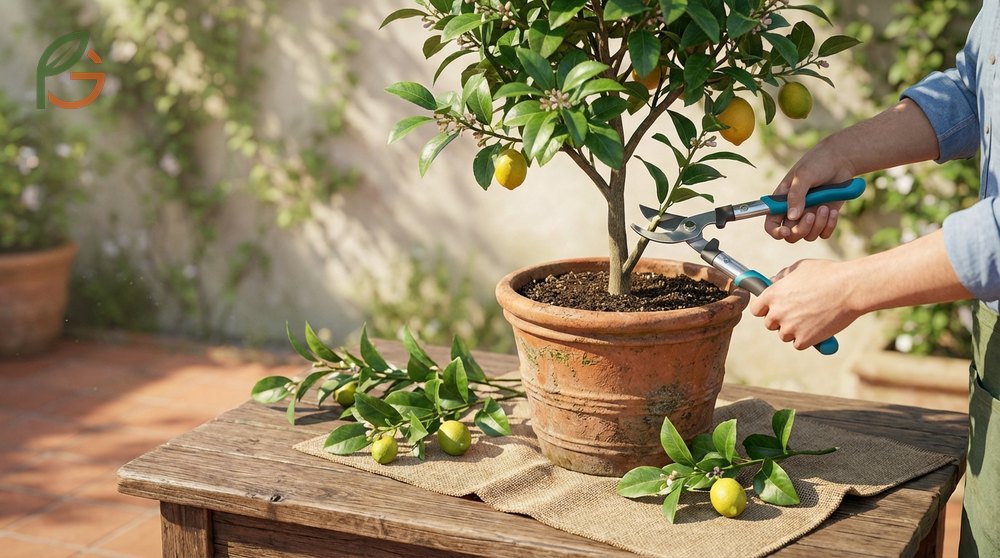
Container-grown lemon trees need more aggressive and frequent pruning than in-ground specimens. The restricted root space limits how large the canopy can grow, so you’re constantly managing size to match the root system[4]. Without regular pruning, potted trees become top-heavy and unstable.
The key technique involves shortening each new shoot to roughly half its length throughout the growing season. Make your cuts just above a leaf node at a 45-degree angle. This continuous pruning maintains a compact, well-branched form rather than allowing long, leggy growth that won’t support fruit weight.
Young potted trees benefit from training cuts that establish 2-4 main scaffold branches 20-28 inches (50-70 cm) above the soil line. Remove all other competing branches during the first two years. This creates the structural framework that’ll support fruit production for the tree’s entire life.
From My Experience: My friend in Guadalajara, Mexico grows a dwarf Lisbon lemon in a 15-gallon pot. She prunes every 6 weeks during spring and summer, shortening new growth to half. The tree stays 4 feet tall but produces 25-30 lemons annually—exceptional for container size.
- Prune every 6-8 weeks during active growth to control size
- Shorten new shoots to half their length after each growth flush
- Maintain 2-4 main scaffold branches on young trees
- Remove low branches to prevent soil contact and disease
- Thin interior growth more aggressively than outdoor trees for air circulation
- Check for rootstock suckers monthly—containers make these more common
Shaping Lemon Tree
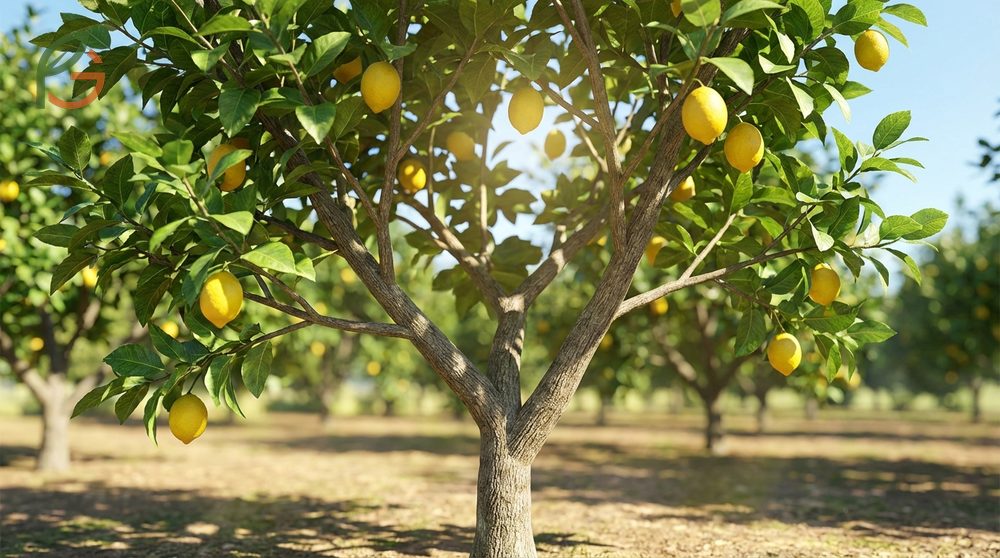
The ideal lemon tree shape resembles an upright tapering cone with an open center that allows sunlight to reach interior branches. This architecture maximizes fruit production by ensuring every branch receives adequate light. Dense, shaded interiors produce weak wood and minimal fruit.
Start shaping when trees are young by selecting 3-4 strong scaffold branches spaced evenly around the trunk. These primary limbs should emerge at 50-70 cm (20-28 inches) above ground and angle outward at 45-60 degrees from vertical. Remove all other competing branches that crowd these main scaffolds.
As trees mature, maintain the cone shape by tip pruning shoots that extend beyond the desired silhouette. Cut back over-vigorous vertical growth (water sprouts) that disrupts the shape—these shoots grow straight up and rarely produce fruit. The goal is balanced growth on all sides rather than lopsided development.
Avoid the temptation to create a perfectly symmetrical tree. Natural variation in branch positioning is healthy and doesn’t affect production. You’re aiming for good overall structure with open interior space, not geometric precision.
- Establish 3-4 main scaffold branches on young trees
- Maintain an open center for light penetration
- Create an upright tapering cone silhouette
- Remove branches that grow toward the center or downward
- Keep the tree slightly taller than wide for optimal production
Removing Water Sprouts Lemon Tree
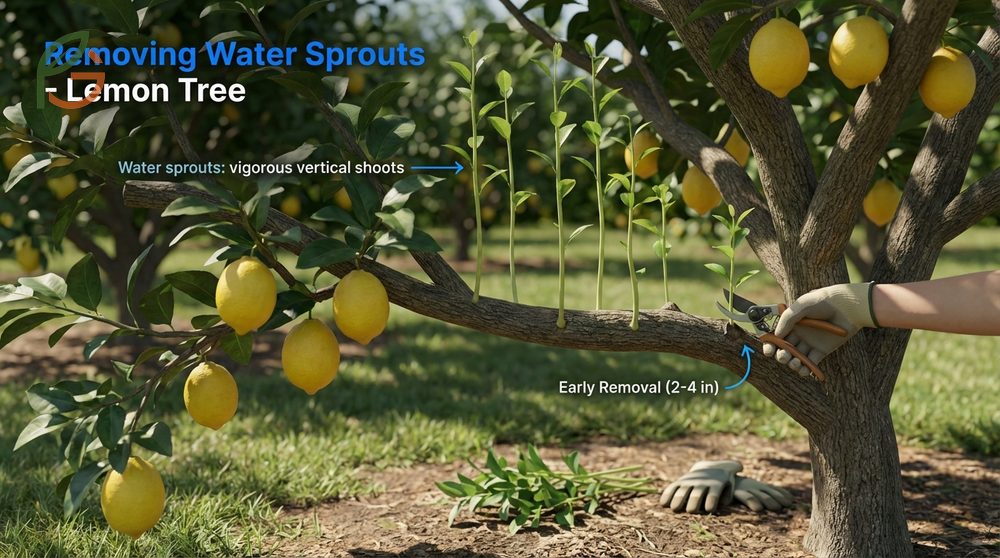
Water sprouts are vigorous vertical shoots that grow from main branches or the trunk, typically appearing after heavy pruning or weather damage[6]. These fast-growing shoots steal energy from fruit production and rarely develop into productive branches. They’re recognizable by their straight vertical growth habit and often softer, more succulent wood compared to regular branches.
The best control method involves catching water sprouts early when they’re only 2-4 inches long. At this stage, you can simply rub them off with your thumb or snap them away cleanly. Early removal prevents the tree from investing significant energy into growth you’ll eventually remove anyway.
For established water sprouts, cut them off close to the parent branch using clean, sharp shears. Leave the collar intact—that small bulge where the sprout meets the branch helps the wound heal properly and prevents regrowth[6]. Don’t leave stubs, as these become entry points for disease and often sprout multiple replacement shoots.
Water Sprout Prevention: Avoid removing more than 30% of foliage at once. Heavy pruning triggers aggressive water sprout formation as the tree attempts to replace lost leaf surface area rapidly.
Sterilizing Pruning Tools
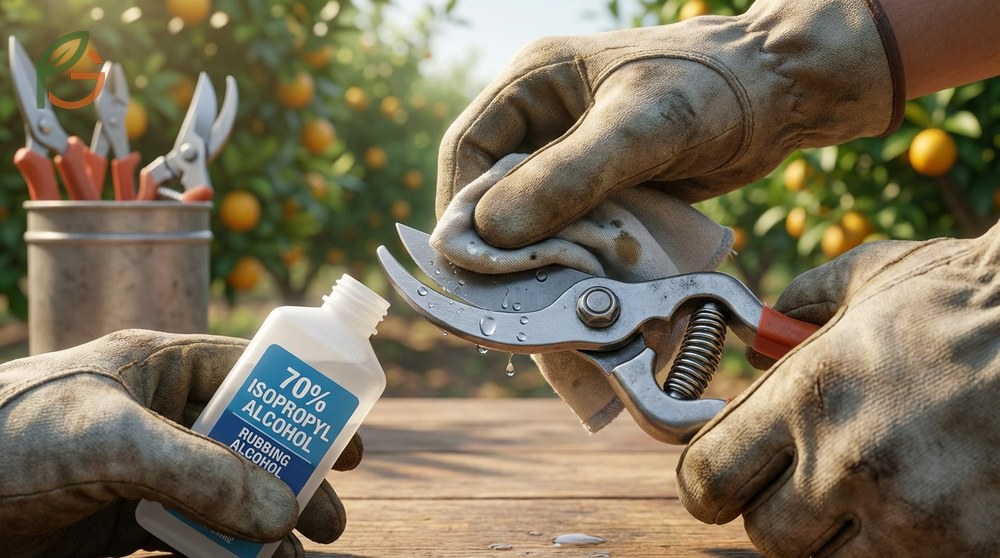
Tool sterilization prevents disease transmission between cuts and between different trees. Pathogens from infected wood transfer easily on pruner blades, spreading problems throughout your entire citrus collection. Most experts recommend 70-100% isopropyl alcohol as the most effective sterilizing agent[3].
The alcohol method requires no mixing, soaking, or rinsing—simply wipe, spray, or dip tool blades for immediate effectiveness. Keep a small bottle of rubbing alcohol and a clean cloth in your pocket while pruning. Between each tree and after cutting any diseased wood, wipe the blades thoroughly or dip them in the alcohol solution.
Bleach solutions (1 part bleach to 9 parts water) work as an alternative but require 30-minute soaking periods and damage tool metal over time[3]. The bleach also gives off harmful fumes and can stain clothing. For daily pruning work, alcohol’s convenience and immediate effectiveness make it the better choice.
- Isopropyl Alcohol (70-100%): Wipe or dip blades; works immediately; no rinsing needed
- Bleach Solution (1:9 ratio): Soak tools 30 minutes; rinse afterward; damages metal over time
- Household Cleaners: Lysol or Pine-Sol work but effectiveness on plant pathogens isn’t proven
- Sterilize before starting work, between different trees, and after cutting diseased wood
- Clean off sap and debris before sterilizing for maximum effectiveness
Conclusion
The evidence is clear: how to prune a lemon tree correctly determines whether you’ll harvest a few dozen fruits or several hundred each season. Following the late-winter timing window, respecting the 30% removal limit, and maintaining clean tools creates the foundation for decades of productive growth. Current agricultural guidance emphasizes annual maintenance over sporadic heavy pruning—consistent light work beats drastic renovation every time.
Start with your tree’s specific needs rather than following rigid rules. Container trees demand more frequent attention, while established in-ground specimens need less intervention. FruitGarden provides research-backed citrus care strategies that adapt to your growing conditions for reliable results season after season.
Frequently Asked Questions
Can I prune my lemon tree in summer?
Light summer pruning between June and July works for removing suckers and water sprouts only—avoid major structural cuts during this period. Heavy summer pruning during extreme heat stresses trees and slows wound healing. Save significant size reduction and shaping work for the late winter to early spring window when trees recover faster.
How much should I prune off my lemon tree each year?
Never remove more than 30% of total foliage in a single pruning session to avoid shocking the tree. For annual maintenance on healthy trees, removing 10-15% of growth keeps size manageable without triggering stress responses. Container-grown trees tolerate slightly more aggressive pruning (up to 20% every 6-8 weeks during growing season) because their restricted root systems require proportional top growth management.
Do lemon trees produce more fruit after pruning?
Yes, properly pruned lemon trees produce 30-40% more fruit than unpruned specimens because pruning improves light penetration, air circulation, and redirects energy to fruit-bearing branches. The increased production typically appears in the second season after major pruning work. Avoid expecting immediate results—severely pruned trees may skip one flowering cycle before resuming enhanced production.
What happens if I prune my lemon tree at the wrong time?
Pruning too close to flowering (February-March) removes flower-bearing wood and eliminates that season’s crop entirely. Late summer or fall pruning stimulates tender new growth that won’t harden before winter, leaving it vulnerable to frost damage that can kill entire branches. Emergency removal of dead or broken branches can happen anytime, but timing matters significantly for elective pruning work.
Should I prune my indoor lemon tree differently?
Indoor lemon trees don’t follow strict seasonal pruning schedules since they’re protected from weather extremes. You can prune them whenever needed to control size, though light frequent trimming works better than heavy occasional cuts. Focus more aggressively on thinning interior branches for air circulation—indoor trees have less natural air movement and higher disease risk from crowded growth.
How do I know which branches to cut on my lemon tree?
Start by removing the “4 Ds”—dead, diseased, damaged, and downward-growing branches. Next, eliminate crossing branches where two limbs rub together, keeping the stronger of the two. Remove water sprouts (vertical shoots) and suckers (growth below the graft). Finally, thin crowded areas where multiple branches compete for the same space, prioritizing branches that grow outward at 45-60 degree angles.
Can I use regular scissors to prune my lemon tree?
Regular scissors create crushing cuts that damage branch tissue and heal poorly—always use proper bypass pruning shears designed for clean cuts through woody growth. Bypass pruners have two curved blades that slice past each other like scissors, while anvil-style pruners crush stems against a flat surface. For branches over 1 inch thick, scissors won’t cut effectively anyway—you’ll need loppers or a pruning saw for proper tool-to-branch sizing.





