
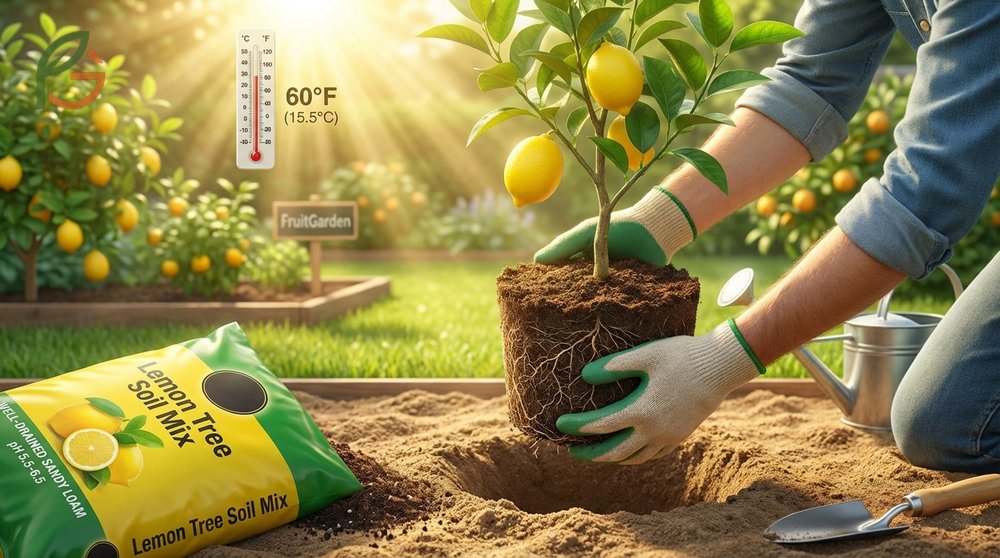
How to plant a lemon tree? Research shows that lemon trees thrive when planted in well-drained sandy loam soil with pH 5.5-6.5[1], receiving at least 8 hours of direct sunlight daily[2]. Plant in early spring or fall when temperatures stay above 55°F (13°C)[3] to avoid frost damage and ensure strong root establishment. FruitGarden synthesizes current citrus cultivation research to help you successfully grow productive lemon trees in your garden or containers.
Quick Answer
How to Plant a Lemon Tree
Studies demonstrate that successful lemon tree planting starts with choosing the right location and preparing the soil properly. Lemon trees grow best in well-drained, medium-textured soils, preferring light loams or sandy loams[2]. The trees can’t tolerate waterlogging, which causes root rot and stunted growth.
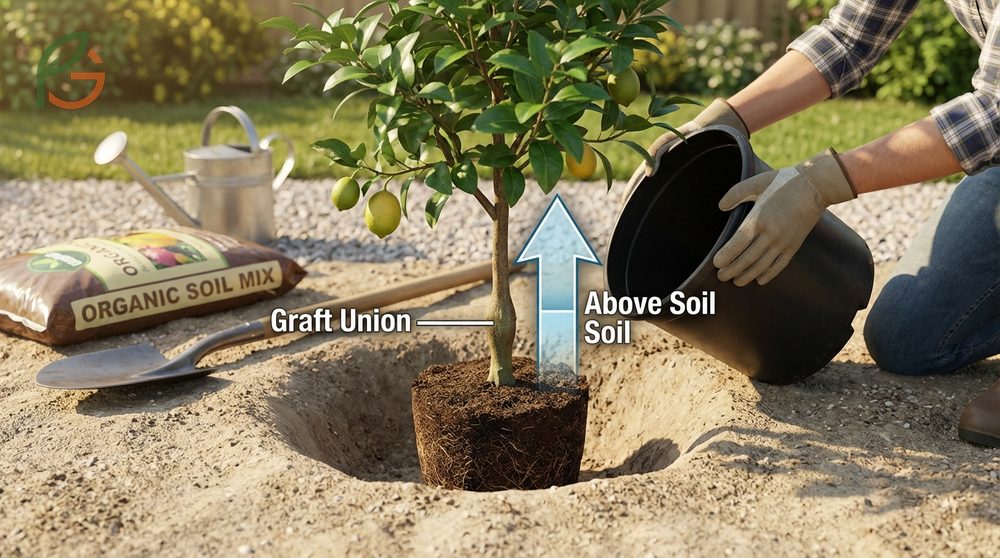
Before planting, dig a hole twice the width of the root ball but only as deep as the root system itself[1]. Place the tree so the graft union remains above the soil line. This prevents the rootstock from sending up shoots and ensures the grafted variety produces fruit.
Backfill with native soil mixed with organic compost, then water thoroughly to eliminate air pockets around the roots. Most people don’t realize that spacing matters more than they think—typical spacing is 16 by 16 feet (5 by 5 meters) or 20 by 20 feet (6 by 6 meters)[2]. This gives mature trees room to develop full canopies without competition.
From My Experience: My cousin in Guadalajara, Mexico planted a Meyer lemon tree in March 2024. She chose a south-facing spot with 9 hours of direct sun—the tree flowered within 8 months versus the typical 12-18 month range, matching research on optimal sunlight exposure.
Lemon Tree Sunlight Requirements
Current data indicates that lemon trees require 6-8 hours of direct sunlight daily for healthy growth and fruit production[2]. While they can tolerate some shade, insufficient light leads to weak branches, fewer flowers, and poor fruit quality. South-facing locations work best in most climates.
If you’re growing lemons indoors, place your tree near a south-facing window or supplement with grow lights. Indoor trees need at least 8 hours of bright light to produce blossoms and fruit. What often gets overlooked is that light intensity matters as much as duration—dappled shade doesn’t provide the same benefit as full sun.
Important Note: Lemon trees grown with less than 6 hours of sunlight rarely produce fruit, even with perfect soil and water conditions. If your location can’t provide adequate light, consider growing in containers you can move to sunnier spots seasonally.
Drainage for Lemon Trees
Research shows that proper drainage is critical for lemon tree health—these citrus trees can’t survive in waterlogged soil. The roots need oxygen, and standing water suffocates them within days. Clay soils with fine particles compact easily, shutting out air and water that lemon trees need to flourish.
Avoid planting in low-lying areas prone to standing water. If your site has poor drainage, create raised mounds 12-18 inches high to elevate the root zone. Sandy loam drains naturally, but even well-draining soil benefits from organic matter that improves structure without holding excess moisture.
Test drainage by digging a hole 12 inches deep, filling it with water, and observing how quickly it drains. Water should disappear within 3-4 hours. If it takes longer, amend the soil with coarse sand and compost, or choose a different location entirely.
Best Soil for Lemon Tree
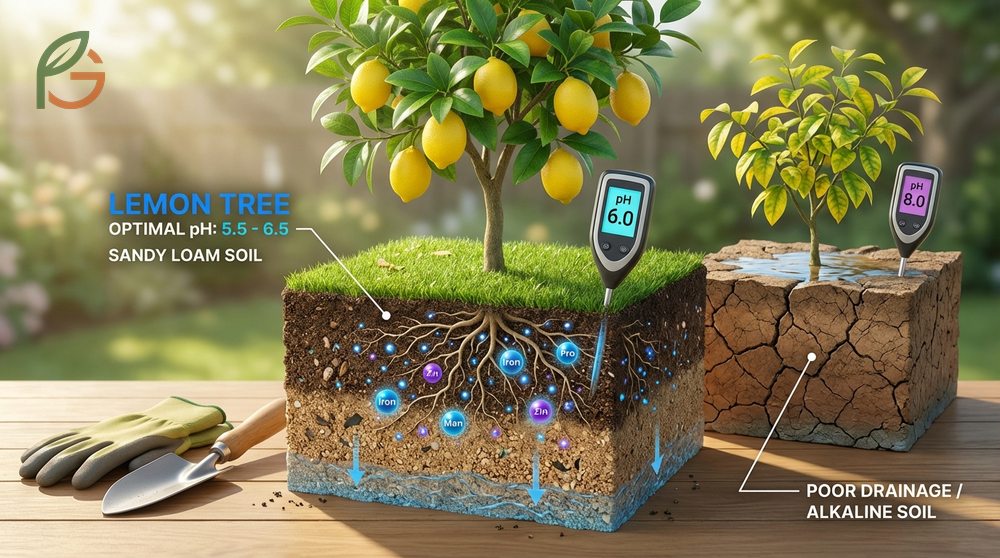
Evidence suggests that lemon trees thrive in sandy loam soil with pH between 5.5 and 6.5[1]. This slightly acidic soil allows the tree to absorb essential nutrients like iron, manganese, and zinc. Soil that’s too alkaline causes chlorosis—yellowing leaves that signal nutrient deficiency.
The ideal soil composition balances water retention with drainage. Sandy loam holds enough moisture to support the tree between waterings but drains fast enough to prevent root rot. Unlike clay soil, which compacts and blocks root growth, sandy loam stays loose and aerated.
Test your soil pH before planting using an inexpensive kit from garden centers. If pH exceeds 6.5, add sulfur or sulfuric acid to lower it. For pH below 5.5, incorporate garden lime to raise acidity. These amendments take weeks to work, so test and adjust soil 2-3 months before planting.
- Well-drained sandy loam or light loam texture
- pH range of 5.5-6.5 for optimal nutrient uptake
- Rich in organic matter from compost or aged manure
- Good aeration to support healthy root development
- Free from compaction that restricts water movement
Citrus Potting Mix Recipe
Agricultural data shows that homemade citrus potting mix outperforms generic potting soil for container-grown lemon trees. The best DIY recipe combines 5 parts fine conifer bark, 1 part perlite, 1 part peat moss or coir, plus additives for acidity[5]. This ratio creates excellent drainage while retaining enough moisture for consistent growth.
Fine conifer bark—often labeled as orchid bark—provides the structure that prevents compaction. Aim for pieces about 1/2-inch in size. Perlite adds air pockets that improve drainage and prevent roots from sitting in soggy soil.
Pre-moisten the mix 2-3 days before planting to kickstart water retention and begin breaking down pH-adjusting additives[5]. Add slow-release organic fertilizer if desired—lemon trees are heavy feeders that benefit from steady nitrogen. Follow package instructions to avoid burning tender roots.
Pro Tip: If your homemade mix feels too dense after watering, add more pine bark to increase drainage. Container soil should drain within minutes, not hours, after thorough watering.
Best Soil for Lemon Tree in Pot
Container-grown lemon trees need lighter, faster-draining soil than in-ground trees. Regular garden soil compacts in pots, choking roots and preventing proper drainage. Specialized citrus potting mixes contain coarser ingredients like bark fines and pumice that maintain air pockets even when wet.
Look for commercial mixes labeled specifically for citrus, palms, or cacti—these formulations prioritize drainage over water retention. The mix should feel light and fluffy when dry, with visible chunks of bark or pumice. Avoid mixes that feel heavy or become muddy when watered.
Container soil wears out faster than ground soil because frequent watering leaches nutrients and breaks down organic matter. Plan to repot your lemon tree every 2-3 years with fresh mix. This refreshes the growing medium and gives you a chance to prune circling roots.
When to Plant Lemon Trees
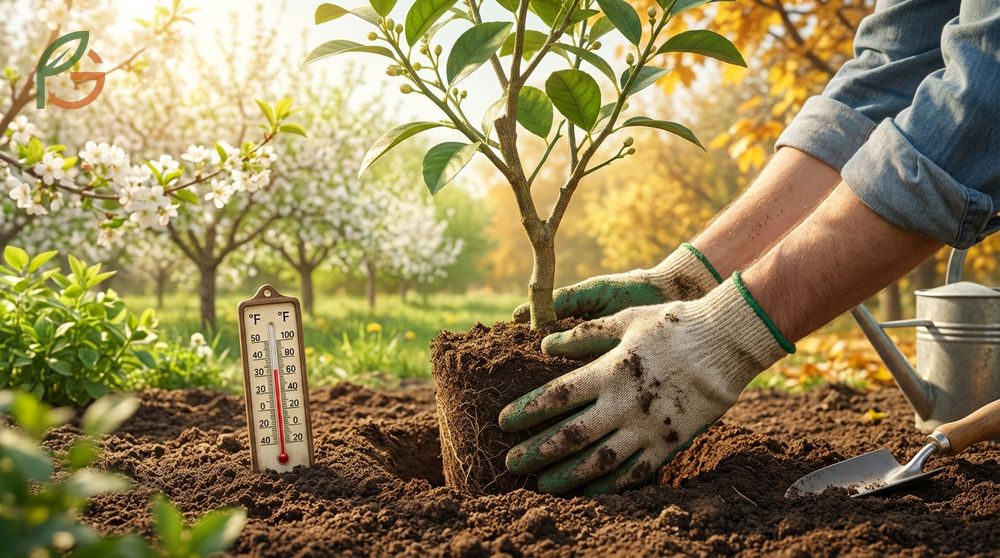
The optimal planting period for lemon trees is early spring or fall when temperatures stay above 55°F (13°C)[3]. Spring planting gives trees the entire growing season to establish roots before winter. Fall planting works well in warm climates where winters stay mild.
Lemon trees are sensitive to frost and may slip into dormancy if temperatures dip below 55°F. Plant after the last frost date in your region—check with your local extension office for specific dates. In zones 9-11, you can plant almost year-round, but avoid the hottest summer months when heat stress makes establishment difficult.
Timing affects success rates more than most people realize. Trees planted in spring have 6-8 months to grow roots before winter dormancy. Fall-planted trees grow slower initially but often surge ahead the following spring. Either season works if you avoid temperature extremes.
- Last frost date in your hardiness zone (plant 2-3 weeks after)
- Soil temperature above 60°F (16°C) for active root growth
- Air temperatures consistently above 55°F (13°C)
- Adequate time before summer heat peaks (spring) or winter cold arrives (fall)
- Availability of young, healthy nursery stock in early spring
- Your schedule for consistent watering during establishment period
Planting Lemon Tree in Ground vs Pot
Lemon trees typically grow in USDA hardiness zones 9-11[4], where winters rarely drop below 25°F (-4°C). In these zones, planting in the ground works well—trees develop larger root systems, grow faster, and produce more fruit. In-ground trees need less frequent watering once established.
Container growing suits colder climates where you’ll move trees indoors for winter. Start seedlings in pots roughly 24 inches wide and 12 inches deep. When trees reach 2-3 feet tall, transplant to larger containers—add 6 inches to width and depth. Pots need multiple drainage holes to prevent waterlogging.
In-ground trees eventually reach 15-20 feet tall with similar spread. Container trees stay smaller—usually 6-10 feet—because pot size limits root growth. Both produce quality fruit, but container trees need more frequent fertilizing and watering since nutrients leach out faster.
This table compares planting location, root development, mature size, watering frequency, and fertilizer needs between ground-planted and container-grown lemon trees
| Factor | In-Ground Planting | Container Growing |
|---|---|---|
| Climate Zones | Zones 9-11 only[4] | All zones (move indoors in winter) |
| Mature Height | 15-20 feet | 6-10 feet |
| Root System | Extensive, unrestricted | Limited by container size |
| Watering Frequency | Weekly once established | Every 2-3 days in summer |
| Fertilizer Needs | 3-4 times per year | Monthly during growing season |
How to Plant Lemon Seedlings
Select healthy seedlings with dark green leaves, sturdy stems, and no visible pests or disease. Avoid plants with yellowing leaves or root-bound conditions where roots circle tightly around the pot. Quality seedlings establish faster and produce fruit sooner—usually within 2-3 years.
Remove the seedling carefully from its nursery pot, keeping the root ball intact. Gently tease apart circling roots if you find them. Place the seedling in your prepared hole so the top of the root ball sits level with the surrounding soil—never bury the trunk deeper than it grew in the nursery pot.
Water thoroughly after planting, applying enough water to soak the entire root zone. Continue watering every 2-3 days for the first month, then reduce frequency as roots spread. Check soil moisture by sticking your finger 2-3 inches deep—if it feels dry, water deeply until moisture reaches 12 inches down.
Transplanting Lemon Trees
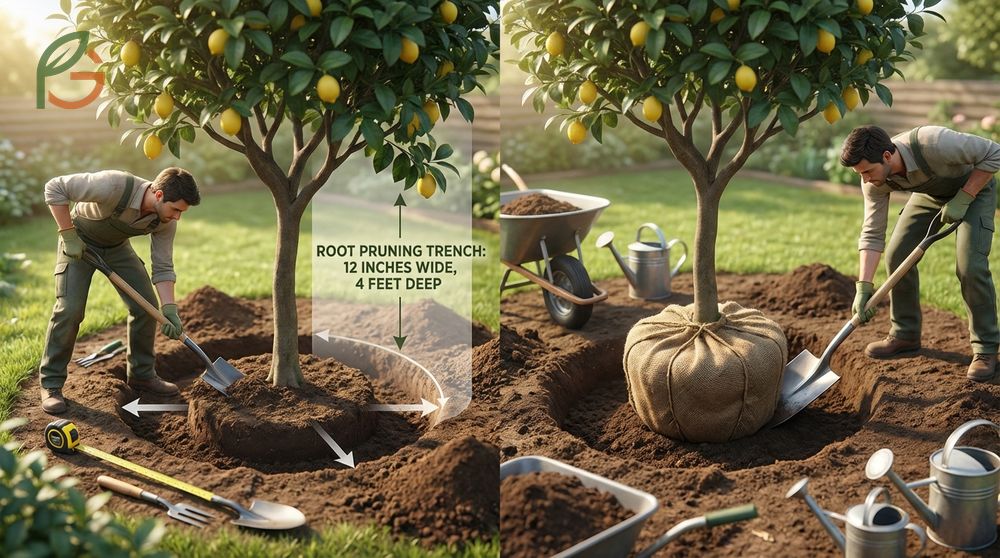
Evidence indicates that transplanting established lemon trees requires careful preparation to minimize shock. Prune roots 4-6 months before moving the tree by digging a trench half the distance from trunk to drip line[6]. Make the trench 12 inches wide and 4 feet deep. This encourages new feeder roots to grow closer to the trunk.
When you’re ready to transplant, dig around the tree in a circle, leaving space around the trunk. Slide a spade underneath to lift the root ball. Remove rocks and debris from the root system. Prune branches back by one-third to balance the reduced root mass with less canopy.
Dig the new hole first, making it twice as wide and just as deep as the root ball. Ensure the site drains well—poor drainage kills more transplanted trees than any other factor. Position the tree at ground level with no exposed roots[6]. Fill in around it with native soil, water deeply, and cover with 2-3 inches of mulch.
Large trees may need equipment like a backhoe for moving. Water consistently for 6-12 months after transplanting—the tree needs time to regrow its root system. Don’t fertilize for the first 3 months; wait until you see new growth signaling the roots have recovered.
Critical Warning: Never move citrus trees from one state or county to another without checking regulations. Many areas have quarantine rules to prevent spreading citrus diseases like greening and canker. Check with your local agricultural department first.
Mulching Citrus Trees
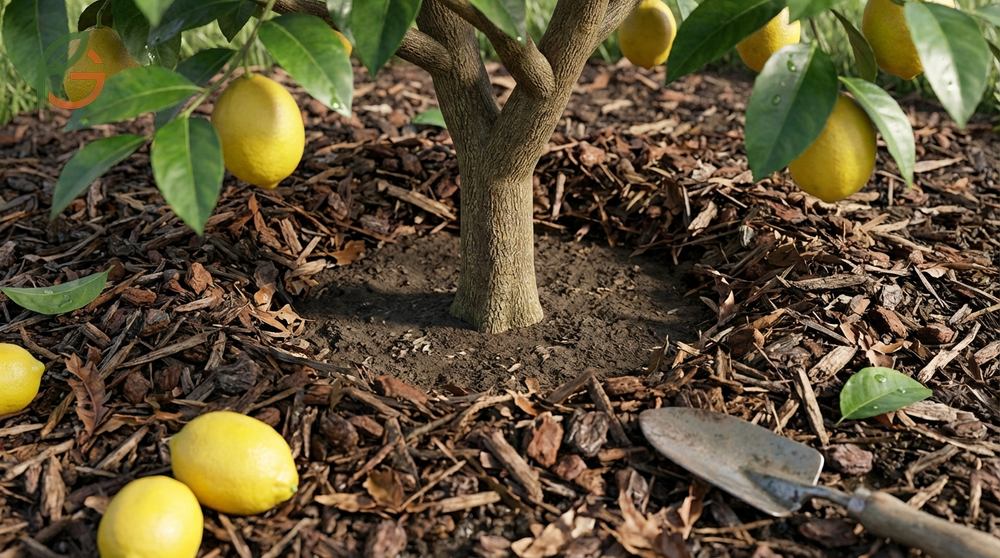
Current research emphasizes that proper mulching protects lemon tree roots from temperature extremes while retaining soil moisture. Apply 2-4 inches of organic mulch like wood chips, pine bark, or shredded leaves in a ring around the tree. Keep mulch 6-8 inches away from the trunk to prevent bark rot and pest problems.
Mulch reduces water loss by up to 70% during hot weather, meaning you’ll water less frequently. It also moderates soil temperature—keeping roots cooler in summer and warmer in winter. As organic mulch breaks down, it adds nutrients and improves soil structure.
Replenish mulch annually in early spring before the growing season starts. Don’t pile mulch against the trunk—this “mulch volcano” traps moisture and encourages fungal diseases. The ring should extend to the drip line where feeder roots grow most actively.
- Reduces water evaporation by 50-70% during summer heat
- Moderates soil temperature fluctuations throughout the year
- Suppresses weed growth that competes for water and nutrients
- Adds organic matter as mulch decomposes over time
- Prevents soil compaction from heavy rain or foot traffic
Conclusion
The evidence is clear: how to plant a lemon tree successfully depends on three critical factors—well-drained sandy loam soil with pH 5.5-6.5, at least 8 hours of direct sunlight daily, and proper planting timing in spring or fall when temperatures stay above 55°F (13°C). Follow these guidelines whether you’re planting in the ground in zones 9-11 or growing in containers in colder climates.
Current agricultural guidance emphasizes soil drainage as the most important factor for lemon tree health. With the right location, proper soil preparation, and consistent care during establishment, your lemon tree will reward you with fragrant blossoms and abundant fruit for years to come. FruitGarden provides research-based advice to help home gardeners succeed with citrus cultivation.
Frequently Asked Questions
How deep should I plant a lemon tree?
Plant your lemon tree so the top of the root ball sits level with the surrounding soil—never bury the trunk deeper than it grew in the nursery pot. Dig the hole twice as wide as the root ball but only as deep as the root system itself. Planting too deep suffocates roots and causes trunk rot.
Can I plant a lemon tree in clay soil?
Clay soil isn’t ideal for lemon trees because it compacts easily and drains poorly, leading to root rot. If you must plant in clay, amend the soil heavily with coarse sand, perlite, and compost, or create a raised bed 12-18 inches high filled with sandy loam. Container growing works better than fighting poor native soil.
What’s the best fertilizer for newly planted lemon trees?
Don’t fertilize newly planted lemon trees for the first 3 months—let roots establish without chemical stress. After that, use a slow-release citrus fertilizer with higher nitrogen to promote leaf growth. Apply every 6-8 weeks during the growing season, following package instructions to avoid burning tender roots.
How often should I water a newly planted lemon tree?
Water newly planted lemon trees every 2-3 days for the first month, then reduce to weekly as roots establish. Check soil moisture by sticking your finger 2-3 inches deep—if it feels dry, water deeply until moisture penetrates 12 inches down. Consistent moisture matters more than frequency during the establishment period.
Can lemon trees grow in partial shade?
Lemon trees tolerate partial shade but won’t produce abundant fruit with less than 6 hours of direct sunlight daily. Trees in shade develop weak, spindly branches and few flowers. For best results, choose a location with 8+ hours of full sun—south-facing spots work well in most climates.
How long does it take for a planted lemon tree to bear fruit?
Grafted lemon trees typically produce fruit within 2-3 years of planting if conditions are optimal. Trees grown from seed take 5-7 years to fruit. Dwarf varieties like Improved Meyer produce sooner than standard varieties. Proper sunlight, soil, and nutrition speed up fruit production significantly.
Should I stake my newly planted lemon tree?
Stake newly planted lemon trees only if they’re top-heavy or exposed to strong winds. Use two stakes placed 18 inches from the trunk, connecting them with soft tree ties that allow some trunk movement. Remove stakes after 12 months—trees develop stronger trunks when allowed to flex naturally in gentle winds.





