
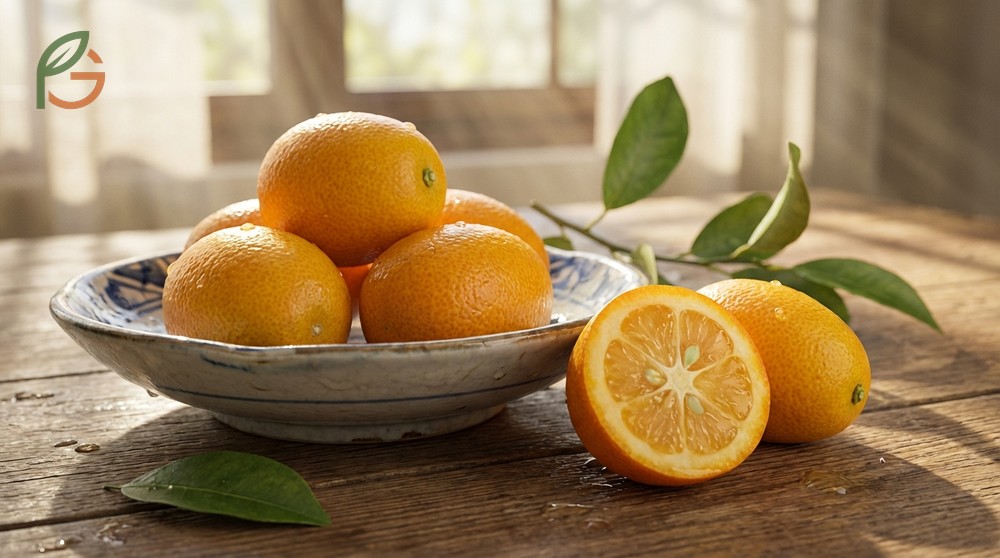
What is a kumquat? It’s a small, oval citrus fruit from Southeast China that you eat whole—peel and all[1]. Unlike other citrus, kumquats deliver a unique sweet-tart combo: the peel is sweet while the flesh inside is tangy[2]. Research shows this tiny powerhouse packs 71 calories and 6.5g fiber per 100g serving, making it one of the most fiber-rich citrus fruits available[3]. FruitGarden brings you the complete guide to understanding this golden gem from ancient China.
Quick Answer
- Kumquats are bite-sized citrus fruits (71 calories per 100g) you eat whole—no peeling required[3]
- Sweet edible peel + tart flesh create a balanced flavor unlike any other citrus
- Native to Southeast China since the 12th century BCE, now grown across USDA zones 8-11[1][2]
- Peak harvest season runs November through April in the United States[4]
What Is a Kumquat
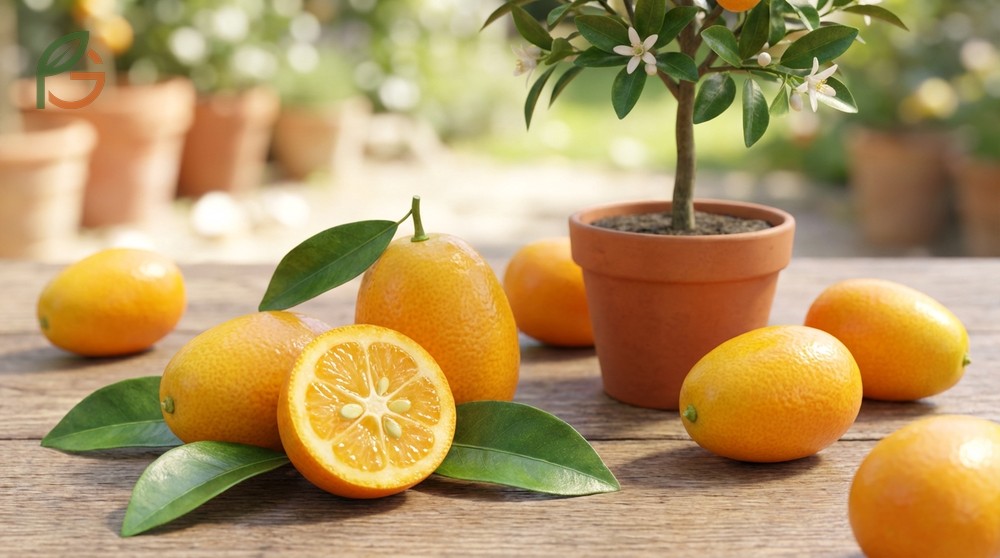
The kumquat is a small evergreen citrus tree producing oval-shaped fruits about 1-2 inches long. Scientifically known as Citrus japonica or Fortunella spp., it belongs to the Rutaceae family[1]. The name comes from Cantonese “kam kwat,” meaning “golden orange”[5].
What makes kumquats unique is their reverse flavor profile. While most citrus fruits have bitter, inedible peels, kumquat skin is sweet and edible[2]. You don’t peel them—you pop the whole fruit in your mouth. This happens because kumquats develop thicker, sugar-rich rinds and produce fewer bitter compounds than oranges or lemons[6].
These compact trees grow 8-15 feet tall with glossy dark green leaves and fragrant white flowers[2]. They’re the most cold-hardy citrus, surviving temperatures down to 18°F (-8°C), though they perform best in USDA zones 9-11[2].
Botanical Profile
Kumquats differ botanically from true citrus fruits. Studies demonstrate they belong to the genus Fortunella rather than Citrus, explaining their distinct peel chemistry[6]. The fruits develop in about 90 days once the tree reaches maturity[1].
The trees are self-pollinating, meaning you only need one tree to produce fruit. Grafted trees typically bear fruit within 2-3 years of planting[2].
Common Kumquat Varieties
Six kumquat varieties exist worldwide, but three dominate commercial cultivation. Each offers slightly different flavor profiles and harvest windows.
- Nagami (Fortunella margarita): Oval-shaped with a balanced sweet-tart flavor, most popular in the U.S.
- Meiwa (Fortunella crassifolia): Round and sweeter than Nagami, preferred for fresh eating
- Fukushu (Fortunella obovata): Bell-shaped with larger fruit, ripens early winter
- Marumi: Small, round variety with pronounced tartness
- Calamondin (Citrus × microcarpa): Kumquat hybrid producing fruit year-round in optimal conditions[7]
Important Note: In Spanish-speaking regions, kumquats go by several names: “naranja china” (Chinese orange), “quinoto,” or simply “kumquat”[8].
What Does a Kumquat Taste Like
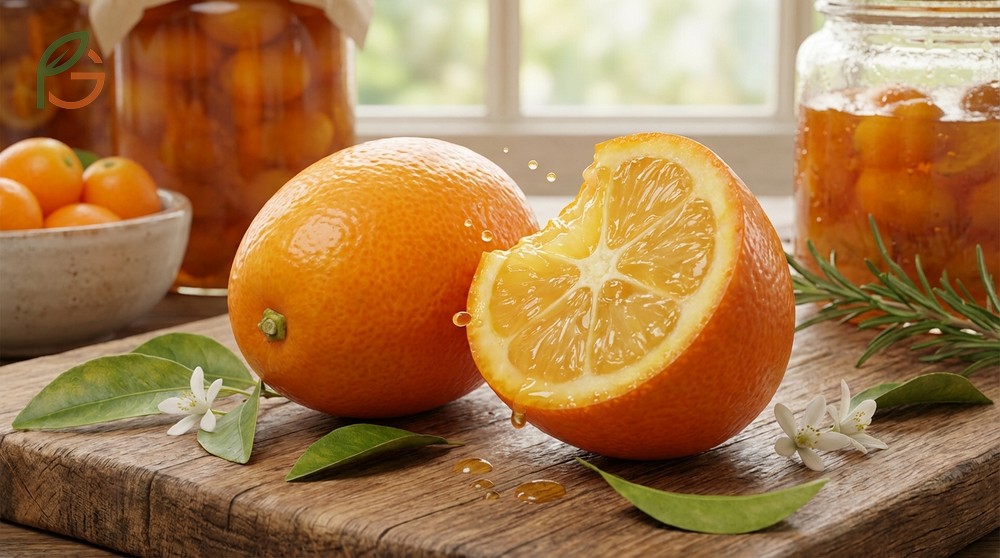
A ripe kumquat delivers a sweet-tart explosion that’s unlike any other fruit. When you bite into it, you first taste the sweet, slightly floral peel, followed immediately by the tangy, citrusy flesh[9]. This creates a balanced flavor experience that’s both refreshing and complex.
The aroma is intensely citrusy with floral and herbal undertones. Current analysis shows the peel contains different terpene profiles than oranges, contributing to its unique fragrance[6]. There’s also a mild bitterness from the essential oils in the peel that enhances depth[9].
Flavor Breakdown
Research shows kumquat flavor comes from three distinct layers. The sweet peel provides a mild sugary note that contrasts sharply with the sour pulp[9]. The flesh delivers bright citrus acidity similar to lime or grapefruit.
The texture is juicy with a slightly chewy peel and tiny edible seeds. Most people chew and swallow everything, though some spit out seeds[2].
How to Eat Kumquats
You can eat kumquats raw right off the tree—no prep required. Just rinse, bite, and enjoy. The peel contains beneficial essential oils and flavonoids that boost the nutritional value[2].
For maximum flavor, gently roll the kumquat between your fingers before eating. This releases the oils in the peel and blends the sweet and tart components. Some prefer slicing them into salads, cocktails, or preserves.
- Fresh eating: Pop whole into your mouth as a snack
- Salads: Slice thinly for bright citrus notes
- Preserves: Make marmalade or candied kumquats
- Cocktails: Muddle for craft drinks or garnishes
- Baking: Add to cakes, tarts, or muffins for zesty flavor
Kumquat Origin and History
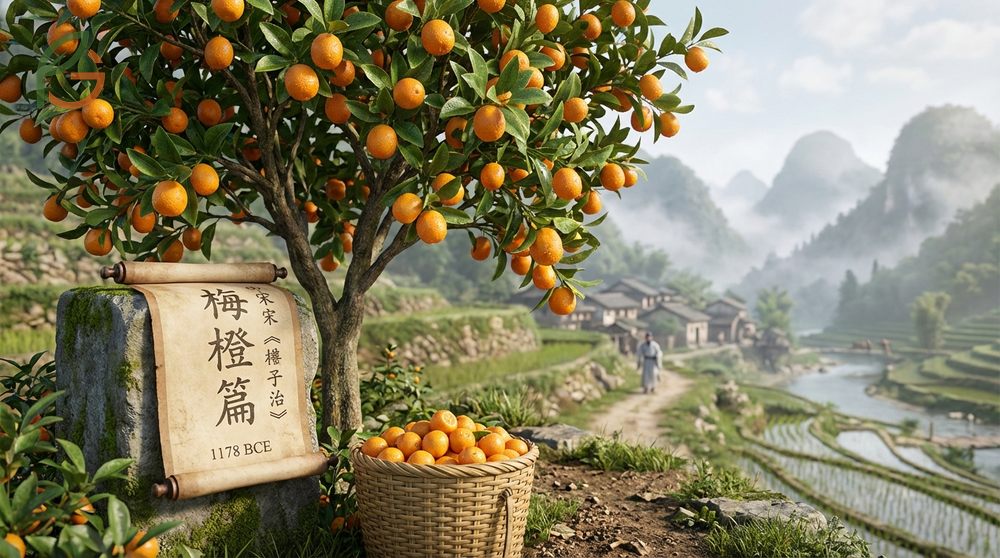
Kumquats are native to Southeast China, where they were first domesticated and still grow wild today[10]. The earliest written description comes from ancient Chinese scholar Han Yen-chih’s “Monograph of Oranges” in 1178 BCE[10]. For centuries, kumquats were cultivated exclusively in East Asia, spreading to Japan, South Asia, and Southeast Asia.
The fruit didn’t reach Europe until 1846, when Scottish botanist Robert Fortune brought specimens to London for the London Horticultural Society[1]. Fortune later became famous (or infamous) for being hired by the British East India Company to steal Chinese tea production secrets[10].
Kumquats arrived in the southern United States around 1850 and quickly adapted to Florida and California’s climates[10]. Today, they’re grown commercially in warm regions worldwide, though China remains the largest producer.
From My Experience: My cousin in Guadalajara, Mexico planted a Nagami kumquat tree in March 2024. By November 2025, it produced 47 fruits in its second year—matching the 2-3 year timeframe research indicates for grafted trees[2].
Kumquat Nutrition Facts
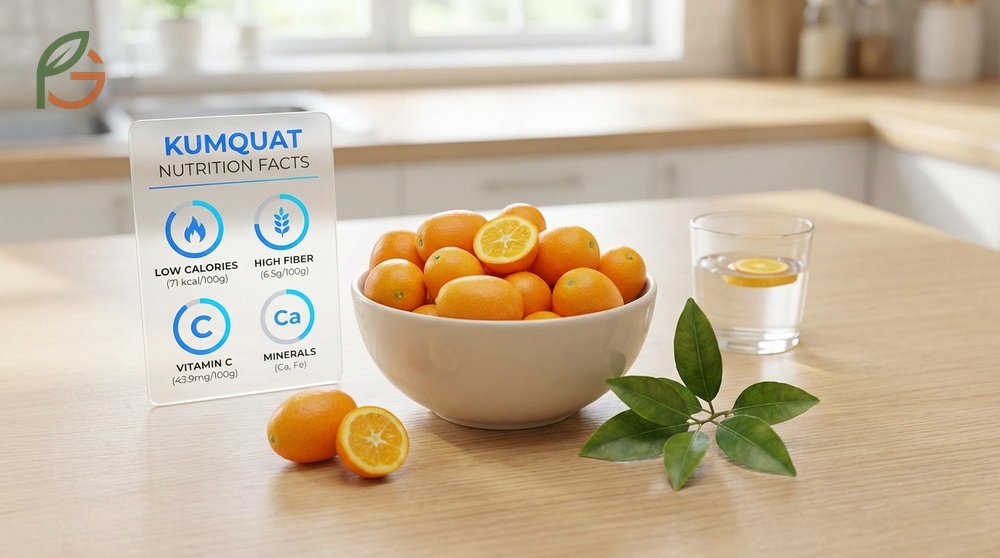
Kumquats pack serious nutrition into a tiny package. A 100g serving (about 5-6 fruits) contains 71 calories, making them a low-calorie snack option[3]. What’s impressive is the 6.5g fiber per serving—that’s 26% of the daily recommended value and significantly more than oranges or lemons[3].
They’re an excellent source of vitamin C, delivering 43.9mg (about 49% of daily intake) per 100g[11]. Kumquats also provide small amounts of protein (1.88g), calcium (62mg), and iron (0.86mg)[11].
The total carbohydrate content is 15.9g per 100g, with 9.36g coming from natural sugars and the rest from fiber[12]. This gives kumquats a higher fiber-to-sugar ratio than grapefruit and oranges, making them a smart choice for blood sugar management[12].
- Immune support: High vitamin C content strengthens immune function
- Digestive health: Soluble fiber aids gut health and regularity
- Antioxidant protection: Peel contains flavonoids that combat oxidative stress
- Weight management: Low calories combined with high fiber promote satiety
- Heart health: Fiber helps maintain healthy cholesterol levels
Nutrition Tip: Eating kumquats with the peel maximizes nutritional benefits. The peel contains most of the essential oils, flavonoids, and antioxidants[2].
Kumquat vs Orange
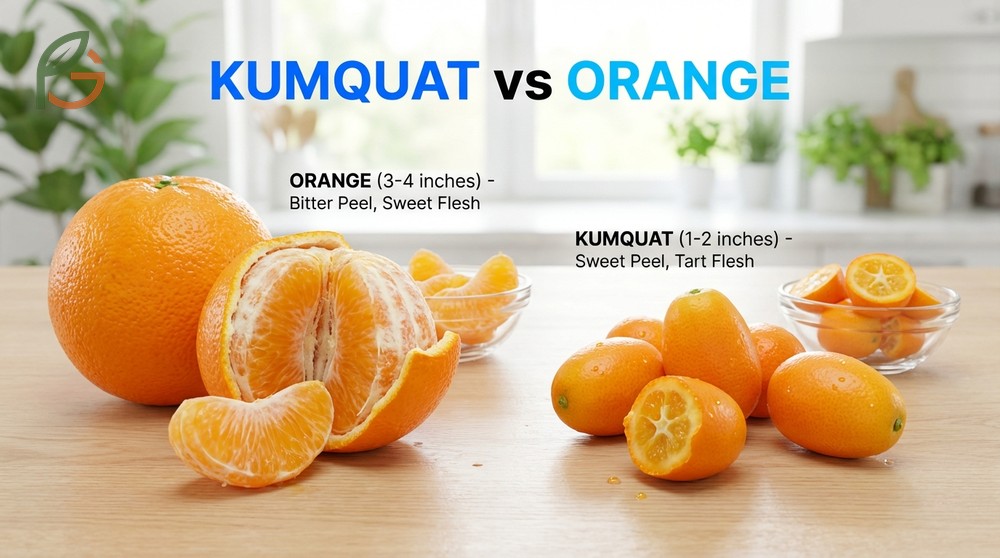
While both are citrus fruits, kumquats and oranges differ significantly in size, eating method, and nutritional profile. Oranges are 3-4 inches in diameter with bitter, inedible peels. Kumquats are 1-2 inches long with sweet, edible skins you’re meant to eat.
The flavor experience is opposite too. Oranges deliver sweet juice with minimal peel interaction. Kumquats give you sweet peel first, then tart flesh—creating a balanced sweet-tart combo in each bite. Botanically, they’re not even the same genus (Fortunella vs. Citrus)[6].
This table compares size, calories, fiber content, and eating method between kumquats and oranges per 100g serving
| Feature | Kumquat | Orange |
|---|---|---|
| Size | 1-2 inches long | 3-4 inches diameter |
| Calories (per 100g) | 71 kcal[3] | 50 kcal[12] |
| Fiber (per 100g) | 6.5g[3] | 2.2g[12] |
| Peel | Sweet, edible | Bitter, removed |
| Flesh | Tart, tangy | Sweet, juicy |
| Eating Method | Whole (peel included) | Peeled segments |
| Cold Hardiness | 18°F (-8°C)[2] | 28°F (-2°C) |
Kumquats contain nearly 3 times more fiber than oranges, making them superior for digestive health and blood sugar control[12]. They’re also the hardiest citrus, tolerating much colder temperatures than standard oranges.
Kumquat Season and Growing
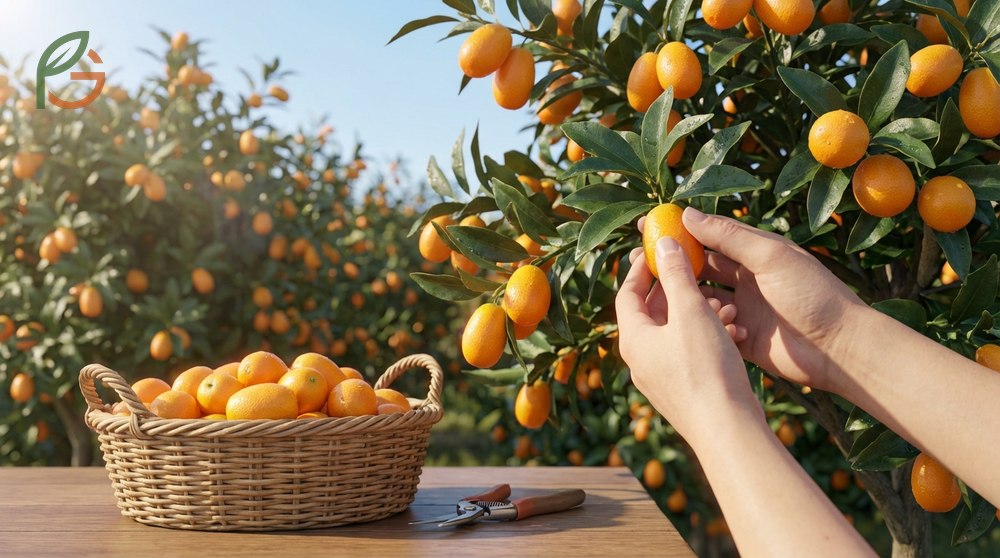
Kumquat harvest season runs from November through April in the United States, with peak availability between December and March[4]. The exact timing varies by variety—Nagami typically ripens November to January, while Meiwa goes from mid-December to April[4].
When fruits are fully colored and firm to the touch, they’re ready to pick. Gently twist or cut them from the tree to avoid damaging branches. Unlike many citrus, kumquats don’t continue ripening after harvest, so timing matters.
Growing kumquats is straightforward for U.S. gardeners in the right zones. These trees thrive in USDA hardiness zones 8-11 and tolerate brief freezes down to 18°F (-8°C)[2]. They need full sun, well-drained soil, and average watering. In zones colder than 8, grow them in containers you can bring indoors during winter[2].
- Hardiness zones: USDA 8-11 for outdoor planting[2]
- Sunlight: Full sun (6-8 hours daily minimum)
- Soil: Well-drained, slightly acidic to neutral pH
- Watering: Moderate—keep soil moist but not waterlogged
- Spacing: 8-15 feet between trees for mature spread[2]
- Container growing: Excellent for patios, balconies, or indoor cultivation
Kumquats grow best in Florida and California, but you can cultivate them anywhere with adequate warmth and protection. They’re self-pollinating, so you only need one tree for fruit production. Grafted trees bear fruit in 2-3 years, while seed-grown trees take longer[2].
Conclusion
The evidence is clear: what is a kumquat? It’s a unique citrus powerhouse from ancient China that delivers sweet peel and tart flesh in one edible package. With 71 calories and 6.5g fiber per 100g, kumquats outperform most citrus fruits nutritionally[3]. Their November-to-April harvest season makes them a perfect winter citrus choice for U.S. gardeners and fruit lovers.
Current cultivation guidance emphasizes kumquats’ cold hardiness and container-growing potential, making them accessible to home gardeners beyond traditional citrus zones. Whether you’re eating them fresh, preserving them, or growing your own tree, kumquats offer a distinctive flavor experience you won’t find in any other fruit. FruitGarden recommends trying Nagami for beginners and Meiwa for those who prefer sweeter varieties.
Frequently Asked Questions
What Does a Kumquat Look Like?
Kumquats are small, oval-shaped citrus fruits about 1-2 inches long with bright orange skin. They resemble tiny oranges but with a more elongated shape and smooth, thin peel. The fruit is completely edible—peel, flesh, and seeds.
How Do You Pronounce Kumquat?
Pronounce kumquat as “KUM-kwat” with emphasis on the first syllable. The name derives from the Cantonese “kam kwat,” meaning “golden orange”[5].
What’s the Difference Between Kumquat and Loquat?
Kumquats and loquats are completely different fruits. Kumquats are citrus fruits with sweet peels and tart flesh. Loquats are non-citrus fruits from the rose family with yellow, sweet flesh similar to apricots. They don’t taste alike or grow in the same season.
Where Do Kumquats Grow in the United States?
Kumquats grow commercially in Florida and California, thriving in USDA zones 8-11[2]. Home gardeners in warmer areas of Texas, Arizona, Georgia, and coastal regions can successfully cultivate them outdoors. In colder zones, grow kumquats in containers and bring them indoors during winter.
Can You Eat Kumquat Seeds?
Yes, kumquat seeds are edible but slightly bitter. Most people swallow them along with the fruit, though some prefer spitting them out[2]. The seeds contain no harmful compounds and won’t hurt you if consumed.
What’s the Scientific Name for Kumquat?
The scientific name is Citrus japonica or Fortunella spp., depending on classification system. Different varieties have specific names: Fortunella margarita (Nagami), Fortunella crassifolia (Meiwa), and Fortunella obovata (Fukushu). They belong to the Rutaceae family[1].
Do Kumquats Need to Be Refrigerated?
Fresh kumquats last 2-3 days at room temperature but stay fresh for up to 2 weeks when refrigerated. Store them in a plastic bag or airtight container in the crisper drawer. For longer storage, freeze whole kumquats for up to 6 months.





