
Are kumquats good for you? Yes, these tiny citrus fruits pack impressive nutritional benefits. Research shows that kumquats deliver 44mg of vitamin C and 6.5g of fiber per 100g serving, supporting immune function and digestive health[1][2]. Studies demonstrate that consuming a small number of kumquats daily can enhance natural killer cell activity and combat stress-related immune decline[3]. FruitGarden synthesizes current nutritional research and agricultural data to help you make informed decisions about incorporating this nutrient-dense fruit into your diet.
Quick Answer
Are Kumquats Good for You
Kumquats stand out among citrus fruits for their unique nutritional profile and impressive health benefits. These olive-sized fruits deliver concentrated nutrients in a low-calorie package that’s entirely edible, including the sweet peel.
Current nutritional data indicates that kumquats offer more fiber per serving than most citrus fruits while maintaining a low glycemic load of approximately 4[2]. This combination makes them suitable for blood sugar management. Most people find that eating 5-6 kumquats provides substantial vitamin C without the calorie load of larger fruits.
Evidence suggests that the bioactive compounds in kumquats—including beta-cryptoxanthin and limonene—work synergistically to enhance immune function beyond what vitamin C alone provides[3]. What often gets overlooked is that eating the peel doubles your fiber intake compared to eating the flesh alone.
Vitamin C in Kumquats
Kumquats pack a serious vitamin C punch relative to their tiny size. A 100g serving delivers 43.9-44mg of vitamin C, meeting nearly half your daily requirement[1].
This antioxidant vitamin plays multiple roles in your body. It strengthens immune defenses, promotes collagen synthesis for healthy skin and joints, and protects cells from oxidative damage. Unlike many citrus fruits where you discard the peel, kumquats let you consume the entire fruit, maximizing nutrient absorption.
Kumquat Fiber Content
The fiber content in kumquats is exceptional for a citrus fruit. Each 100g serving provides 6.5g of dietary fiber, covering 26% of your daily needs[2]. That’s 2.7 times more fiber than oranges.
This high fiber content supports digestive health, promotes feelings of fullness, and helps regulate blood sugar levels. The peel contributes significantly to this fiber count, which is why eating kumquats whole maximizes their nutritional benefits.
Kumquat Calories Count
Kumquats are remarkably low in calories for their nutritional density. A 100g serving contains just 71 calories[1], making them an ideal snack for weight management.
The calorie breakdown shows that kumquats are 81% water, 16% carbohydrates, 2% protein, and 1% fat[1]. With only 9.4g of net carbs per 100g, they fit comfortably into moderate-carb eating plans while providing sustained energy through their fiber content.
Important Note: Dried or candied kumquats may contain added sugars or sulfites that significantly increase calorie content. Always check labels if you’re watching your sugar intake.
Nutritional Value of a Kumquat
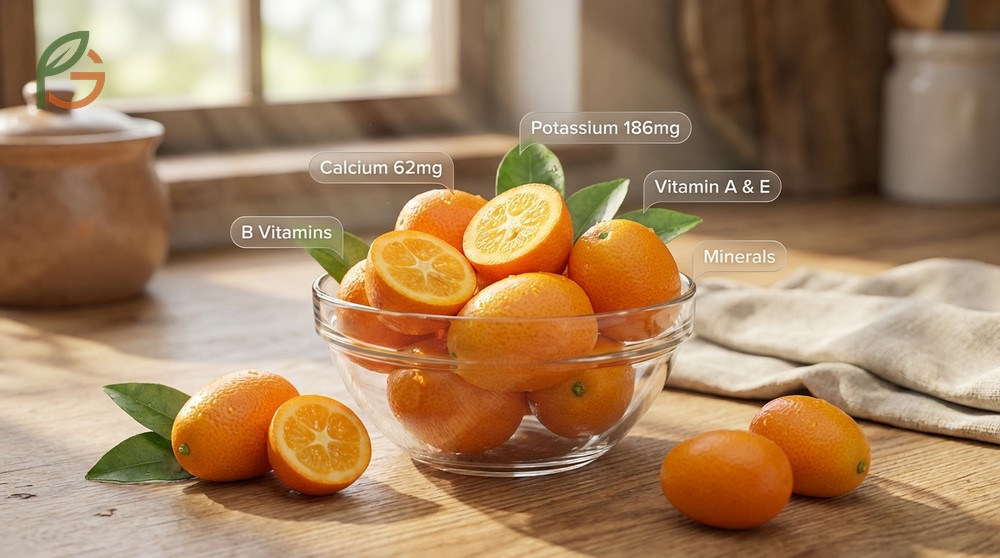
Beyond vitamin C and fiber, kumquats deliver a range of micronutrients that support overall health. These small fruits contain notable amounts of calcium (62mg), potassium (186mg), and various B vitamins[2].
The mineral content supports bone health, muscle function, and electrolyte balance. Kumquats also provide small amounts of vitamin A, vitamin E, and minerals like iron, copper, and manganese. This diverse nutrient profile makes kumquats more than just a vitamin C source—they’re a comprehensive nutritional package.
Phytonutrients set kumquats apart from other fruits. They’re rich in flavonoids, polyphenols, and carotenoids that act as powerful antioxidants[3]. Beta-cryptoxanthin, one of the primary carotenoids, has been specifically linked to immune enhancement and NK cell activation.
This table compares key nutrients in kumquats per 100g serving against daily value percentages and notable comparisons to common fruits
| Nutrient | Amount | % Daily Value | Comparison |
|---|---|---|---|
| Calories | 71 kcal[1] | 4% | 1.5× more than orange |
| Carbohydrates | 15.9g[2] | 5% | Net carbs: 9.4g |
| Fiber | 6.5g[2] | 26% | 2.7× more than orange |
| Vitamin C | 44mg[1] | 49% | Comparable to lemon |
| Calcium | 62mg[2] | 6% | Higher than most citrus |
| Potassium | 186mg[2] | 5% | 1.3× more than cucumber |
- Edible peel: Unlike most citrus, you eat the entire fruit, maximizing nutrient intake and minimizing waste
- Low glycemic load: Despite containing natural sugars, the high fiber content slows absorption for stable blood sugar
- No cholesterol or saturated fat: Makes them heart-friendly and suitable for cardiovascular health
- Rich in water content: 81% water supports hydration while providing nutrients
- Diverse micronutrients: Provides iron, copper, manganese, and B vitamins in addition to primary nutrients
Health Benefits of Kumquats
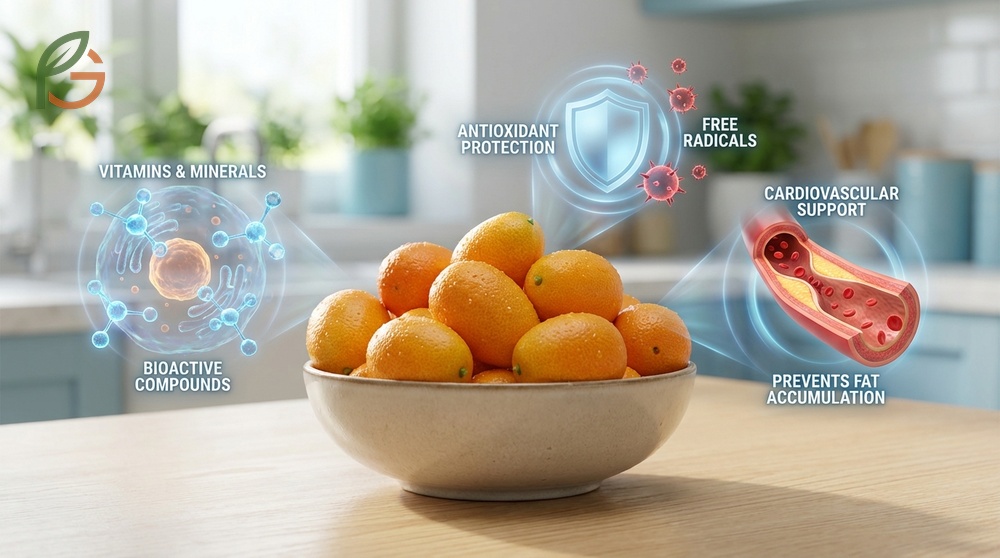
Research demonstrates that kumquats offer health benefits extending far beyond basic nutrition. Their unique combination of vitamins, minerals, and bioactive compounds supports multiple body systems simultaneously.
The antioxidant capacity of kumquats helps neutralize free radicals that contribute to chronic diseases and aging. Studies show that regular kumquat consumption may reduce cardiovascular disease risk by preventing fat accumulation in arteries and supporting healthy blood pressure levels.
What makes kumquats particularly valuable is their synergistic effect—the compounds work together more effectively than isolated nutrients. For instance, the combination of vitamin C, flavonoids, and fiber provides comprehensive support for metabolic health that single nutrients can’t match.
Kumquat Immune Benefits
Kumquats excel at supporting immune function through multiple pathways. The high vitamin C content provides foundational immune support, but recent research reveals deeper mechanisms at work.
A study published in the Journal of Clinical Biochemistry and Nutrition found that consuming a small number of kumquats daily significantly enhances natural killer (NK) cell activity[3]. NK cells play a critical role in eliminating cancer cells and virally infected cells. The research identified beta-cryptoxanthin and limonene as active components responsible for this immune-boosting effect.
The antimicrobial and anti-inflammatory properties of kumquats further strengthen immune defenses. Traditional medicine has long used kumquats to treat colds, coughs, and respiratory inflammation—applications now supported by scientific evidence.
Research Finding: Kumquat consumption can suppress stress-induced elevation of plasma corticosterone levels and reverse the decline in immune cell activity caused by restraint stress[3]. This suggests kumquats may help combat stress-related immune suppression.
Antioxidants in Kumquats
Kumquats contain a powerful array of antioxidant compounds that protect cells from oxidative damage. The primary antioxidants include vitamin C, vitamin E, flavonoids, polyphenols, and carotenoids like beta-cryptoxanthin.
These antioxidants work through different mechanisms to neutralize various types of free radicals. Vitamin C primarily protects water-soluble components of cells, while vitamin E guards fat-soluble structures like cell membranes. Flavonoids and polyphenols provide additional protection against oxidative stress and inflammation.
The anti-cancer properties of kumquats stem largely from their antioxidant content. Research indicates that kumquat flavonoids, particularly apigenin, may reduce cancer risk by preventing free radical formation and inhibiting tumor cell growth. The potent antioxidant activity also contributes to liver protection and antimicrobial effects.
- Vitamin C (44mg per 100g): Neutralizes free radicals, regenerates other antioxidants, supports collagen synthesis
- Beta-cryptoxanthin: Carotenoid that enhances NK cell activity and provides anti-inflammatory benefits
- Flavonoids: Plant compounds with anti-cancer, anti-inflammatory, and cardiovascular protective properties
- Polyphenols: Reduce oxidative stress, improve blood vessel function, support metabolic health
- Limonene: Aromatic compound with anti-stress, immune-boosting, and potential anti-cancer effects
- Vitamin E (0.15mg per 100g): Protects cell membranes from lipid peroxidation and free radical damage
Kumquat Benefits for Skin

Kumquats offer remarkable benefits for skin health, both through dietary consumption and topical application. The high vitamin C content stimulates collagen production, improving skin elasticity and reducing the appearance of fine lines and wrinkles[4].
Research shows that vitamin C in kumquats helps fade dark spots, hyperpigmentation, and acne scars by inhibiting melanin production. This skin-brightening effect promotes a more even skin tone and adds luminosity to the complexion. The antioxidants protect skin from environmental damage that accelerates aging.
Kumquat extract has gained popularity in skincare products due to its anti-inflammatory properties. It can soothe irritated skin, reduce redness from conditions like acne or rosacea, and support faster healing of minor wounds and bacterial infections[4].
The vitamins A and E in kumquats contribute additional skin benefits. Vitamin A promotes cell turnover and maintains skin texture, while vitamin E enhances hydration and barrier function. Together with minerals like potassium and calcium, these nutrients support overall skin health and resilience.
- Collagen boost: Vitamin C increases collagen synthesis, improving firmness and reducing wrinkles
- Brightening effect: Inhibits melanin production to fade dark spots and even skin tone
- Anti-aging protection: Antioxidants combat free radicals that cause premature aging signs
- Anti-inflammatory action: Soothes inflamed skin and reduces redness from various conditions
- Enhanced hydration: Vitamin E and natural compounds improve moisture retention and barrier function
- Wound healing: Antiseptic and purifying qualities support faster recovery from minor skin damage
Skincare Tip: Kumquat extract appears in cleansers, toners, serums, moisturizers, and masks. Its versatility allows easy integration into existing skincare routines for maximum skin benefits.
Kumquat Essential Oil Benefits

Kumquat essential oil, extracted from the fruit’s peel, offers concentrated aromatic and therapeutic benefits. This oil contains the active compounds limonene and other volatile substances that provide antiseptic, anti-inflammatory, and calming properties.
In aromatherapy, kumquat essential oil is valued for its ability to relieve nervous tension and promote relaxation. The uplifting citrus scent can improve mood, reduce stress, and support better sleep quality. Some practitioners use it to ease muscle and joint pain when diluted and applied topically.
For skincare applications, kumquat essential oil’s astringent and antiseptic qualities make it effective for detoxifying skin, tightening pores, and treating bacterial infections. The oil supports collagen production and helps plump, smooth, and brighten the complexion when properly diluted in carrier oils or skincare formulations.
The versatility of kumquat essential oil extends to perfumery, where its unique, intense scent adds exotic citrus notes to fragrance compositions. The oil captures the fruit’s distinctive aroma profile—tart yet sweet—making it a sought-after ingredient for both functional and aesthetic purposes.
- Aromatherapy: Reduces stress, promotes relaxation, and may improve sleep quality through calming effects
- Mood enhancement: Uplifting citrus scent provides mental clarity and emotional well-being
- Skincare treatment: Astringent properties tighten pores, reduce oiliness, and detoxify skin
- Anti-aging application: Stimulates collagen production to reduce fine lines and dark circles
- Antimicrobial action: Fights bacterial infections and supports wound healing when properly diluted
- Pain relief: May help soothe muscle and joint discomfort through topical application
- Fragrance ingredient: Adds distinctive citrus notes to perfumes and scented products
Safety Note: Essential oils are highly concentrated and should always be diluted in carrier oils before skin application. Perform a patch test first, and consult qualified aromatherapy or healthcare professionals before use, especially if you’re pregnant, nursing, or have sensitive skin.
Conclusion
The evidence is clear: kumquats are exceptionally good for you, delivering impressive nutritional benefits in a low-calorie package. With 49% of your daily vitamin C, 26% of daily fiber, and powerful immune-boosting compounds in just 100g, these tiny fruits punch well above their weight class. Research confirms their ability to enhance NK cell activity, support skin health through collagen production, and provide potent antioxidant protection against chronic diseases.
Current nutritional guidance emphasizes incorporating diverse, nutrient-dense fruits like kumquats into your diet. Whether you’re eating them fresh for immune support, using the extract in skincare, or enjoying the essential oil for aromatherapy, kumquats offer versatile benefits backed by science. FruitGarden continues to track emerging research on this remarkable citrus fruit to bring you the latest evidence-based insights.
Medical Disclaimer
Important Medical Disclaimer: This content is for informational and educational purposes only. It’s not intended as a substitute for professional medical advice, diagnosis, or treatment. Always consult a qualified healthcare professional before making any changes to your diet, supplement routine, or health practices, especially if you have allergies, medical conditions, or take medications. Individual responses to foods vary, and what works for most people may not be suitable for everyone.
Frequently Asked Questions
How Many Kumquats Should I Eat per Day?
Most people can safely eat 5-10 kumquats daily (100-200g), providing substantial vitamin C and fiber without excessive calories. This serving size delivers nearly all your daily vitamin C needs while keeping sugar intake moderate at 9-18g. Start with smaller amounts if you’re new to kumquats to assess your digestive tolerance to the high fiber content.
Can You Eat Kumquat Skin?
Yes, you absolutely can—and should—eat kumquat skin. The peel is sweet and edible, contrasting nicely with the tart flesh. Eating the whole fruit maximizes your fiber intake and provides additional antioxidants concentrated in the peel. Just wash the fruit thoroughly before consuming to remove any surface residue.
Are Kumquats Good for Weight Loss?
Kumquats can support weight loss efforts due to their low calorie count (71 calories per 100g) and high fiber content (6.5g per 100g). The fiber promotes satiety, helping you feel full longer and reducing overall calorie intake. Their low glycemic load also helps stabilize blood sugar, preventing energy crashes that lead to cravings.
Do Kumquats Have More Vitamin C Than Oranges?
Kumquats contain comparable vitamin C to oranges—both provide roughly 40-50mg per 100g. However, kumquats offer significantly more fiber (6.5g versus 2.4g in oranges) and fewer calories, making them more nutrient-dense overall. The key advantage is eating the entire fruit, including the vitamin-rich peel.
What Are the Best Ways to Eat Kumquats?
Eat kumquats fresh and whole for maximum nutrition, rolling them gently between your fingers first to release the peel’s sweet oils. You can also slice them into salads, add them to smoothies, make marmalade, candy them for desserts, or use them in savory dishes with poultry or fish. Some people prefer removing the seeds before eating, though they’re edible.
Can Diabetics Eat Kumquats?
Kumquats can be suitable for people with diabetes when consumed in moderation. Their low glycemic load (approximately 4 per 100g) and high fiber content help slow sugar absorption, preventing blood sugar spikes. However, portion control matters—stick to 5-6 fruits per serving and monitor your individual blood glucose response. Always consult your healthcare provider about incorporating new foods into a diabetic diet.
Do Kumquats Have Any Side Effects?
Kumquats are generally safe for most people, but some may experience digestive discomfort from the high fiber content if eaten in large quantities too quickly. People with citrus allergies should avoid kumquats. Those with severe acid reflux may find the citric acid irritating. Dried or candied kumquats may contain sulfites that trigger reactions in sensitive individuals, so check labels carefully.





