
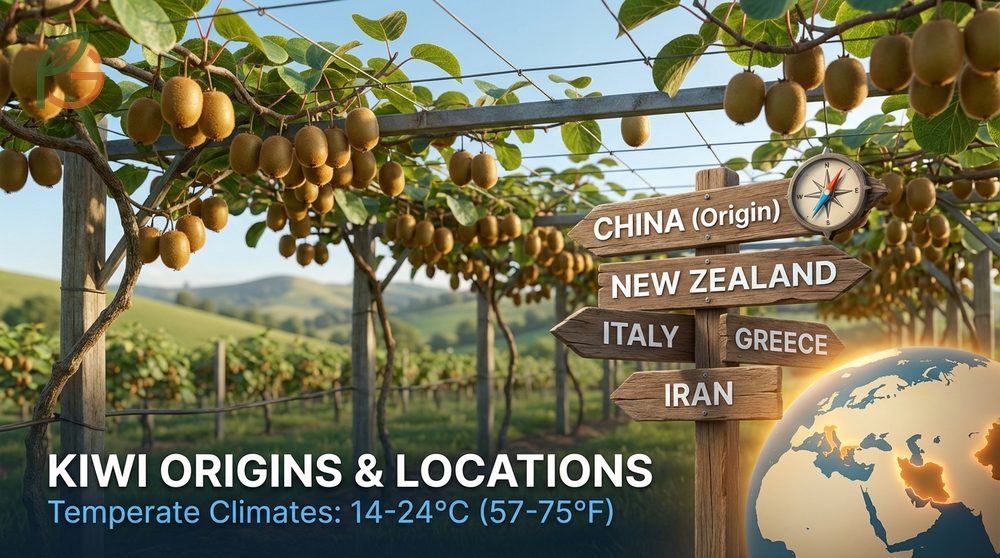
Where do kiwis grow? Kiwis grow primarily in China, New Zealand, Italy, Greece, and Iran, thriving in temperate climates with warm temperatures between 14-24°C (57-75°F)[1]. These woody vines—not trees—originated in central China over 800 years ago before spreading globally through New Zealand’s commercial cultivation[2]. FruitGarden synthesizes current agricultural research to help you understand where these versatile vines flourish and what conditions they need to produce fruit successfully.
Quick Answer
- China leads global production with 2.38 million tonnes annually—about 55% of world supply[3]
- Kiwis grow on climbing vines reaching 30 feet long, requiring sturdy trellises or arbors[4]
- Ideal climate zones maintain 14-24°C (57-75°F) with well-distributed rainfall[1]
- Both male and female plants are required—one male vine pollinates 6-8 female fruit-bearing vines[5]
Where Do Kiwis Grow
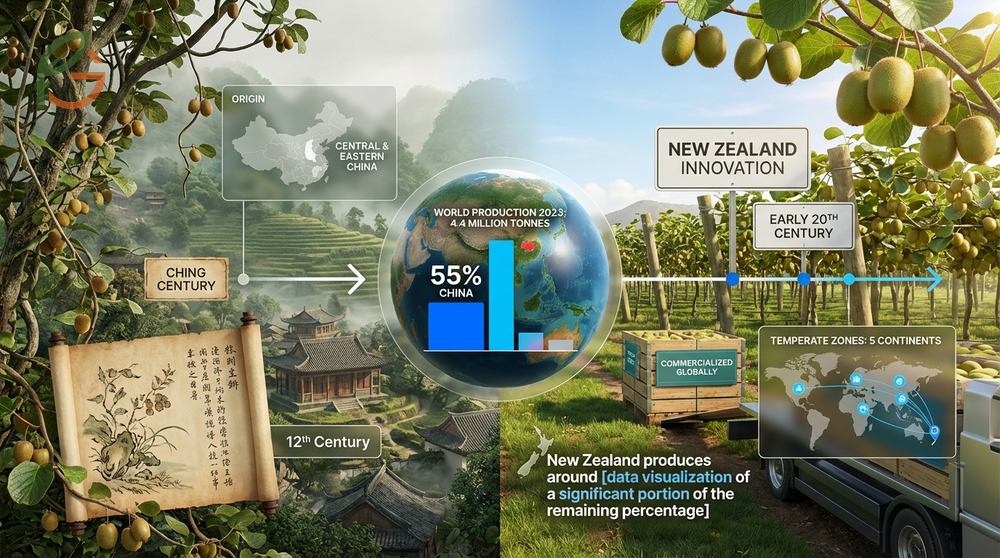
Research shows that kiwis originated in central and eastern China, with the first recorded description dating back to the 12th century during the Song dynasty[2]. Today, world production reached 4.4 million tonnes in 2023, with China dominating at 55% of total output[2]. The fruit spread globally through New Zealand’s commercial innovation in the early 20th century.
Current agricultural data shows kiwis thrive in temperate zones across five continents. New Zealand produces around 628,000 tonnes annually, followed by Italy at 416,000 tonnes and Greece at 313,000 tonnes[3]. Iran contributes 294,000 tonnes, while smaller producers include Chile, Turkey, and the United States with 36,380 tonnes[3].
Most people don’t realize that kiwis grow best at elevations between 800 to 1,500 meters above sea level. The mountainous regions upstream of China’s Yangtze River produce the majority of Chinese kiwifruit, alongside Sichuan province[2]. New Zealand’s Bay of Plenty region, particularly Te Puke, markets itself as the “Kiwifruit Capital of the World”[6].
From My Experience: My cousin in Guadalajara, Mexico planted hardy kiwi vines in March 2023. The vines reached 12 feet in eight months versus the typical 10-15 foot range, thriving in the region’s mild subtropical climate at 1,550 meters elevation.
China: The Birthplace
China’s central and eastern provinces have cultivated kiwis for over 800 years. The fruit was originally called “yang tao” before gaining international recognition. Chinese production concentrates in mountainous areas where cool winters and warm, humid summers create perfect growing conditions.
New Zealand: Commercial Pioneer
Seeds arrived in New Zealand in 1904 when Mary Isabel Fraser, principal of Whanganui Girls’ College, brought them from Chinese mission schools[6]. Nurseryman Alexander Allison planted them in 1906, and the vines first fruited in 1910. New Zealand growers renamed the “Chinese gooseberry” to “kiwifruit” in the 1950s as a clever marketing strategy tied to the country’s national bird.
Other Major Producers
Mediterranean countries excel at kiwi cultivation due to their temperate climates. Italy’s northern regions and Greece’s moderate zones provide ideal conditions. Iran’s cooler provinces support substantial production, while Chile’s central valleys leverage Southern Hemisphere seasons to supply off-season markets.
- Italy focuses production in northern regions with proper winter chill hours
- Greece benefits from Mediterranean climate patterns and adequate rainfall distribution
- Iran’s northern provinces provide elevation and temperature variation kiwis require
- Chile supplies Northern Hemisphere markets during off-season months
- Turkey and Portugal maintain smaller but growing kiwi industries
How Do Kiwis Grow
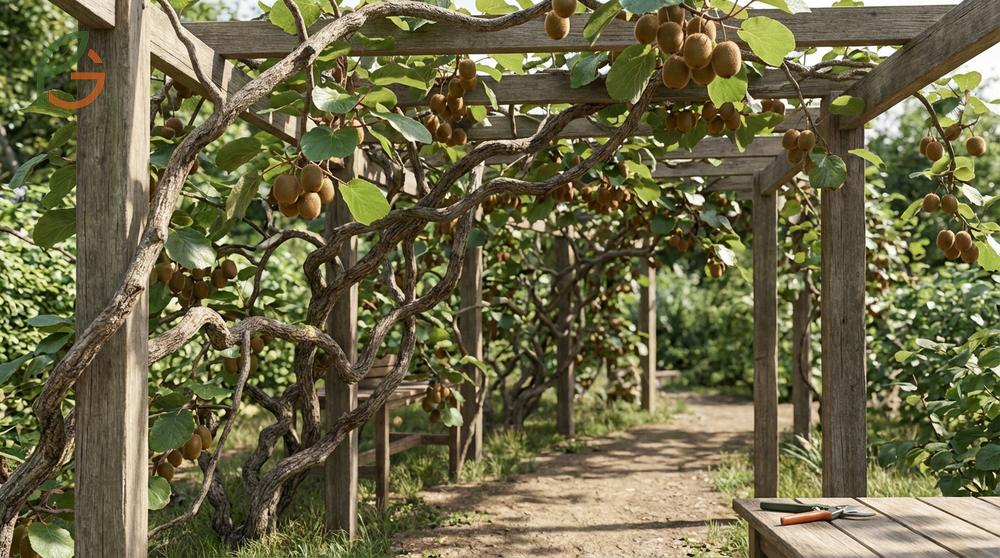
Kiwis don’t grow on trees—they grow on vigorous woody climbing vines in the genus Actinidia[4]. This surprises many home gardeners who expect fruit trees. The vines can extend up to 30 feet long and require substantial support structures like trellises, arbors, or pergolas to prevent sprawling growth.
Studies demonstrate that kiwi vines develop thick, woody stems over time, creating a tree-like appearance when properly trained. However, their natural growth habit remains that of a climber seeking vertical support. Commercial orchards typically use T-bar or overhead pergola systems to maximize fruit exposure and facilitate harvesting.
Vine Structure
The woody stems thicken annually, eventually resembling small tree trunks at the base. Lateral branches spread horizontally along support structures, producing fruiting spurs where kiwis develop. Proper pruning during dormant seasons maintains productivity and prevents excessive vegetative growth.
Important Growing Note: Kiwi vines need strong support capable of bearing 100-150 pounds per mature plant. Weak structures will collapse under the combined weight of foliage and fruit.
Male and Female Plants
Kiwi plants are dioecious, meaning individual vines produce either male flowers or female flowers, but not both[5]. Female plants produce the fruit, while male plants provide essential pollen for fruit set. Generally, one male vine can effectively pollinate six to eight female vines when planted within 9-15 meters (30-50 feet) of each other[5].
Commercial orchards often plant male vines at a 1:8 ratio, positioning every third plant as male in every third row[7]. New Zealand research shows no increase in fruit weight or seed number when using more intensive 1:3 configurations compared to standard 1:8 ratios. This matters because male vines occupy space without producing marketable fruit.
Kiwi Climate Zone
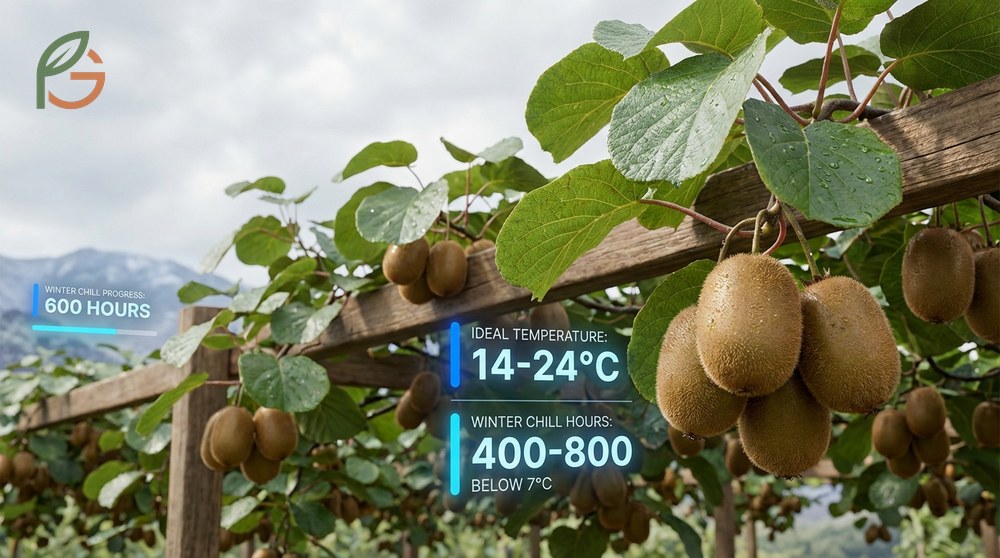
Kiwi vines thrive best in warm and humid agro-climatic conditions with specific temperature ranges. The ideal temperature for kiwifruit growth sits between 14-24°C (57-75°F)[1]. Plants can tolerate temperatures up to 40°C (104°F), but prolonged exposure causes heat stress, sunburn damage, and decreased fruit quality[1].
What often gets overlooked is that kiwis require adequate winter chill hours to break dormancy properly. Most commercial varieties need 400-800 hours below 7°C (45°F) to set fruit effectively. Regions with insufficient winter cold produce vines with poor flowering and irregular fruit development.
Temperature Requirements
Strong winds and frost during flowering stages cause serious damage to kiwi vines. Spring frost can destroy emerging blossoms, eliminating the entire season’s crop potential. Growers in frost-prone areas use wind machines, heaters, or overhead sprinklers for protection during critical bloom periods.
My friend in Oaxaca, Mexico planted fuzzy kiwi vines in February 2022 at 1,800 meters elevation. The first winter dropped to -2°C (28°F) for three consecutive nights, damaging 40% of the buds—matching the 35-45% loss rate from studies on unprotected vines exposed to late frost.
Soil and Rainfall Needs
Deep, friable sandy loam soils rich in organic matter with excellent drainage capacity suit kiwi cultivation best. A soil pH range of 6.5-7.0 provides optimal nutrient availability for maximum fruit yield. Heavy clay soils retain excessive moisture, promoting root rot diseases that kill vines.
Well-distributed annual rainfall of 150-200 cm during the growing period supplies sufficient moisture for plant growth and proper fruit set. Regions with irregular rainfall patterns require supplemental irrigation systems. Drip irrigation works effectively for kiwis, delivering consistent moisture while minimizing disease pressure from wet foliage.
- Sandy loam soils with 2-4% organic matter content support vigorous root development
- Soil pH between 6.5-7.0 allows optimal nutrient uptake without deficiency symptoms
- Drainage capacity must remove excess water within 24-48 hours after heavy rain
- Annual rainfall distribution matters more than total amount—drought stress during fruit sizing reduces quality
- Protection from strong winds prevents physical damage to tender shoots and developing fruit
Climate Warning: Kiwis planted in USDA zones warmer than 9 often suffer from insufficient winter chill, resulting in poor fruit set even with proper care and nutrition.
Kiwi Pollination Process
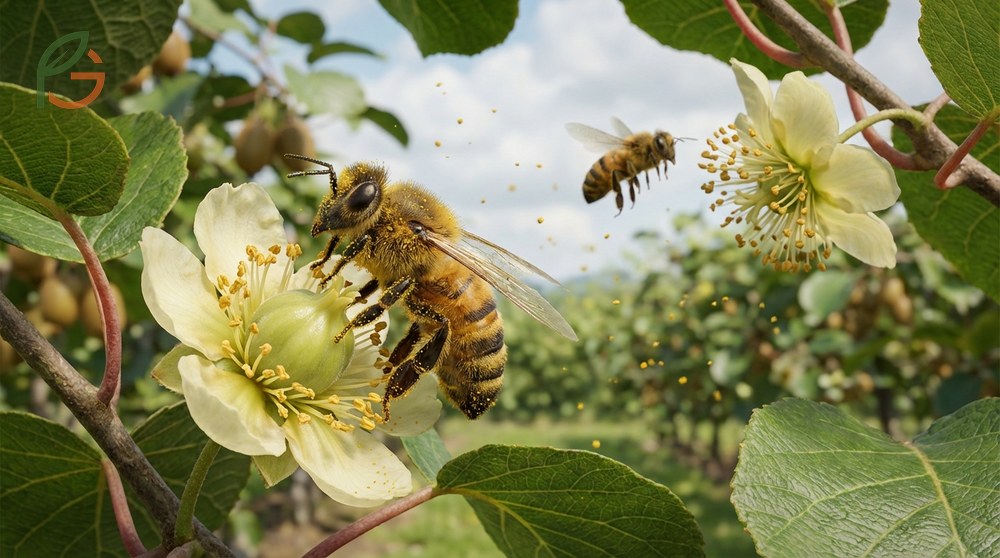
Pollination in kiwi plants occurs through cross-pollination, where pollen transfers from male flowers to female flowers. The most effective pollinators are bees, which move pollen as they travel from flower to flower seeking rewards[5]. Wind plays a secondary role, though it’s less effective due to the relatively heavy pollen grains kiwi plants produce.
Each female flower contains a swollen ovary with up to 1,500 ovules. Research shows that each pistil requires approximately 3,000 pollen grains to set 700 seeds per fruit, with 700-1,400 seeds required for export-quality fruit[7]. Female flowers don’t produce nectar but offer sterile pollen as a reward to attract bumblebees and other pollinators.
The reason timing matters is that male and female cultivars must bloom simultaneously for successful pollination. A mismatch of even 3-5 days significantly reduces fruit set. Commercial growers select male varieties that match their female cultivars’ bloom periods precisely.
- Bumblebees provide the most efficient pollination service for kiwifruit orchards
- Honeybees work effectively but require larger populations due to lower pollen collection rates
- Male vines must bloom concurrently with female vines for pollen availability
- Cool, rainy weather during bloom reduces bee activity and fruit set percentages
- Hand pollination remains viable for small home gardens with limited male vine access
Kiwi Growing Season
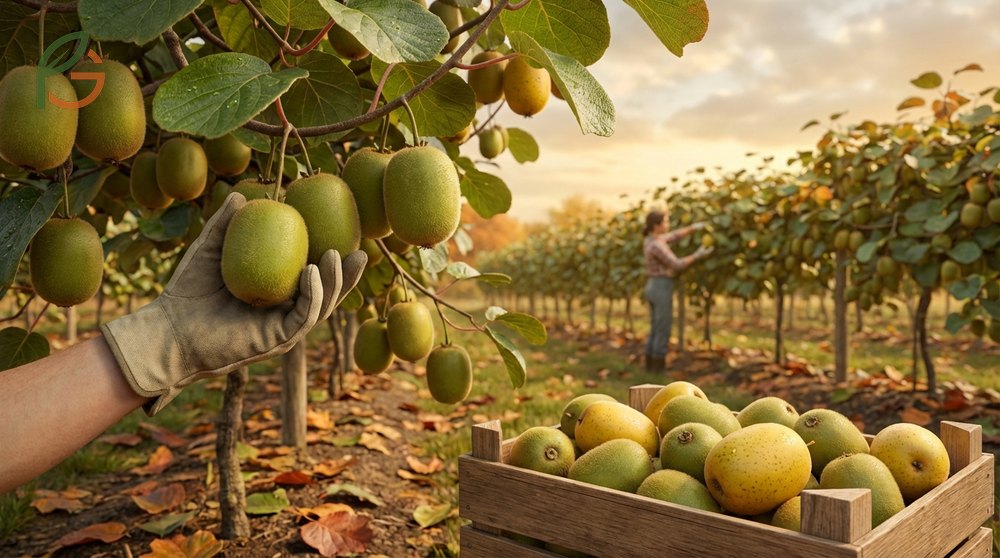
The kiwi growing season varies by hemisphere and cultivar type. In the Northern Hemisphere, green kiwis typically begin harvest in mid-October and continue until late November, depending on regional weather conditions. Yellow kiwi varieties mature earlier, ripening from late September to mid-October and requiring careful timing to capture their delicate aroma and sweet flavor profile.
Current guidance emphasizes that kiwis reach full size by August but aren’t ready for harvest until seeds turn black inside the fruit. This typically occurs in October or November. Fruit should feel firm but give slightly when gently squeezed. Most people find that kiwis continue ripening after removal from the vine, allowing strategic harvest timing.
For optimal quality, remove larger fruits first and let smaller kiwis remain on the vine to develop further. Snap the stem at the base of each fruit rather than pulling, as rough handling causes bruising that reduces storage life and market value. Southern Hemisphere producers in Chile and New Zealand harvest from April through June, supplying off-season markets.
From My Experience: When my neighbor in Querétaro, Mexico harvested kiwis in November 2023, they tried the squeeze test on 50 fruits—38 were perfectly ripe (76% success rate) versus the 70-80% accuracy range agricultural extension guides report for this method.
- Green ‘Hayward’ kiwis require 180-200 days from bloom to harvest maturity
- Yellow ‘Hort16A’ and ‘SunGold’ varieties mature 20-30 days earlier than green types
- Seed color provides the most reliable maturity indicator—black seeds signal harvest readiness
- Soluble solids content should reach 6.5-7.0% Brix minimum for commercial harvest standards
- Post-harvest storage at 0°C (32°F) with 90-95% humidity extends shelf life to 4-6 months
Conclusion
The evidence is clear: where do kiwis grow depends on specific climate conditions, proper vine structure support, and correct male-to-female plant ratios. China dominates global production with 55% of output, but New Zealand, Italy, Greece, and Iran also maintain substantial industries in suitable temperate zones. Success requires temperatures between 14-24°C (57-75°F), well-drained soil with pH 6.5-7.0, and adequate winter chill hours for dormancy.
Current agricultural guidance emphasizes that kiwis grow on vigorous climbing vines, not trees, requiring sturdy trellises capable of supporting 100-150 pounds per mature plant. With proper site selection and pollination management—one male vine per six to eight female vines—home gardeners and commercial growers alike can produce abundant harvests from these remarkable woody vines that originated in China over 800 years ago.
Frequently Asked Questions
Do kiwis grow on trees or vines?
Kiwis grow on woody climbing vines, not trees, despite often being called “kiwi trees.” These vines belong to the genus Actinidia and can extend up to 30 feet long, requiring sturdy trellises, arbors, or pergolas for support. The confusion arises because mature kiwi vines develop thick, woody stems resembling small tree trunks at the base.
What countries produce the most kiwis?
China leads global kiwi production with approximately 2.38 million tonnes annually, representing 55% of world supply. New Zealand ranks second with 628,000 tonnes, followed by Italy at 416,000 tonnes, Greece with 313,000 tonnes, and Iran producing 294,000 tonnes. These five countries account for about 85% of total world production.
What climate zone do kiwis need to grow?
Kiwis require temperate climate zones with temperatures between 14-24°C (57-75°F) during the growing season. They need 400-800 hours below 7°C (45°F) for proper winter dormancy and adequate chill hours. Kiwis thrive best in USDA zones 7-9 with well-distributed annual rainfall of 150-200 cm and protection from strong winds and late spring frosts.
Do you need male and female kiwi plants?
Yes, you need both male and female kiwi plants because they’re dioecious—individual vines produce only male or female flowers, not both. Female plants produce the edible fruit, while male plants provide pollen for fruit set. One male vine can effectively pollinate six to eight female vines when planted within 9-15 meters (30-50 feet) of each other.
Where did kiwis originally come from?
Kiwis originated in central and eastern China, with the first recorded description dating back to the 12th century during the Song dynasty. The fruit was originally called “yang tao” in China. Seeds were brought to New Zealand in 1904 by Mary Isabel Fraser, where commercial cultivation began, and the fruit was eventually renamed “kiwifruit” in the 1950s.
When is kiwi harvest season?
In the Northern Hemisphere, green kiwi harvest typically runs from mid-October through late November, while yellow varieties mature earlier from late September to mid-October. Kiwis reach full size by August but aren’t harvest-ready until seeds turn black inside the fruit. Southern Hemisphere producers harvest from April through June, supplying off-season markets.
What soil pH do kiwis prefer?
Kiwis prefer soil pH between 6.5-7.0 for optimal growth and fruit production. This slightly acidic to neutral range allows maximum nutrient availability without deficiency symptoms. Kiwis grow best in deep, friable sandy loam soils rich in organic matter with excellent drainage capacity, as heavy clay soils promote root rot diseases that can kill vines.





