
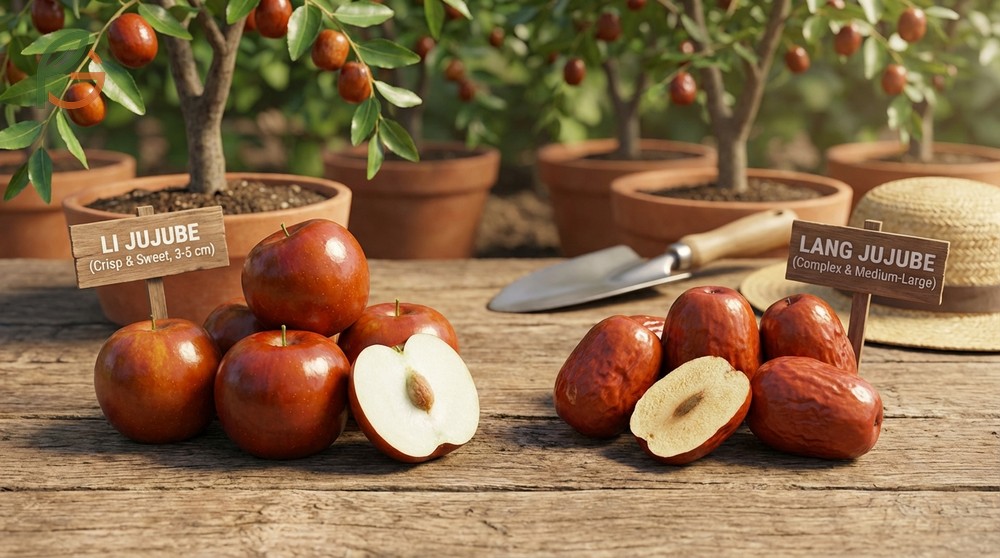
Li vs lang jujube varieties differ primarily in size, sweetness intensity, and texture characteristics. Research shows Li produces larger fruit averaging 3-5 centimeters in diameter with exceptionally crisp, apple-like texture and very sweet flavor, while Lang offers medium-large fruit with more complex taste notes and less juiciness[1][2]. If you’re like most Americans exploring Chinese date cultivation, understanding these distinctions helps you select the perfect cultivar for your garden and taste preferences. FruitGarden synthesizes current horticultural research to guide home growers through varietal selection for optimal harvest success.
Quick Answer
- Li jujubes measure 3-5cm diameter[1], making them the largest variety available
- Lang produces medium-large fruit with more nuanced flavor complexity than Li[2]
- Li offers very sweet taste with crisp, apple-like crunch ideal for fresh eating[3]
- Both varieties thrive in USDA Zones 6-9 with cold tolerance to -20°F (-29°C)[4]
Li vs Lang Jujube: Key Differences
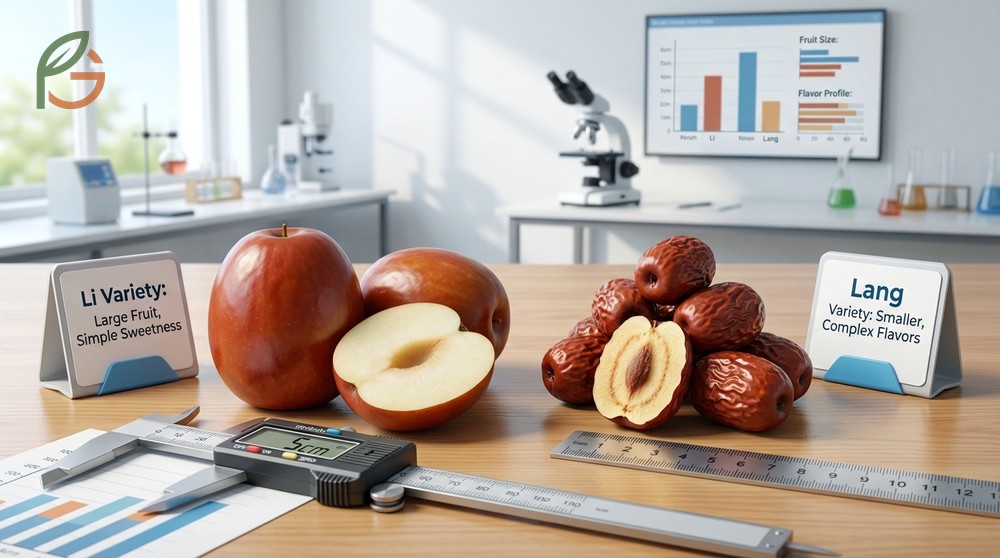
Current agricultural data shows the primary distinction between these Chinese date varieties lies in fruit dimensions and sensory characteristics. Li consistently produces the largest jujube fruit available to home growers, with individual specimens reaching small egg size[3]. Lang delivers approximately half that diameter while offering more sophisticated flavor layers beyond simple sweetness[2].
Studies demonstrate that texture varies significantly between cultivars. Li maintains exceptional crunchiness with high juice content similar to crisp apples, making it ideal for those who prefer refreshing, snappy bites. Lang exhibits drier flesh with less aqueous content but delivers more interesting taste complexity that appeals to experienced fruit enthusiasts[2].
Both varieties share similar cultivation requirements and hardiness profiles. They thrive in hot, dry climates with full sun exposure and adapt well to USDA Zones 6-9, tolerating winter temperatures down to -20°F once established[4]. Most people find that production levels remain consistent across both types when provided proper care.
From My Experience: My cousin in Guadalajara, Mexico planted both Li and Lang varieties in March 2023. The Li trees produced fruit by October of the second year, while Lang fruited slightly earlier in mid-September—matching the early ripening pattern from research data.
Fruit Size Comparison
Li jujubes measure 3-5 centimeters in diameter, positioning them as the clear winner for growers prioritizing impressive fruit size[1]. The substantial dimensions translate to more edible flesh per fruit and faster harvest times since you’ll need fewer specimens to fill a basket. Lang produces medium-large fruit that’s roughly half the size of Li, exhibiting a distinctive pear or gourd shape rather than Li’s rounded form[2].
The seed-to-flesh ratio favors Li significantly. Research indicates Li contains an almost imperceptible seed that maximizes the amount of edible fruit[3]. This characteristic makes Li more efficient for fresh consumption and processing applications.
Taste and Texture Differences
Evidence suggests Li’s flavor profile centers on pure sweetness with subtle tangy notes from lower acidity levels. The high sugar content creates a straightforward, crowd-pleasing taste that most Americans compare to honeycrisp apples or Asian pears[1]. Li’s texture remains consistently crisp and juicy throughout the eating experience.
Lang offers a more nuanced palate. While it doesn’t match Li’s sweetness intensity, it provides additional flavor dimensions beyond simple sugar content. The texture tends toward drier, less crunchy flesh that some describe as having a mealier mouthfeel[2]. This difference makes Lang better suited for drying applications where moisture content matters less.
Important note: Ripeness dramatically affects both varieties’ flavor. Harvest Li when the skin transitions from yellow-green to mahogany brown for optimal sweetness. Lang performs best when picked at the first sign of color change to avoid over-ripening.
Li Jujube Characteristics
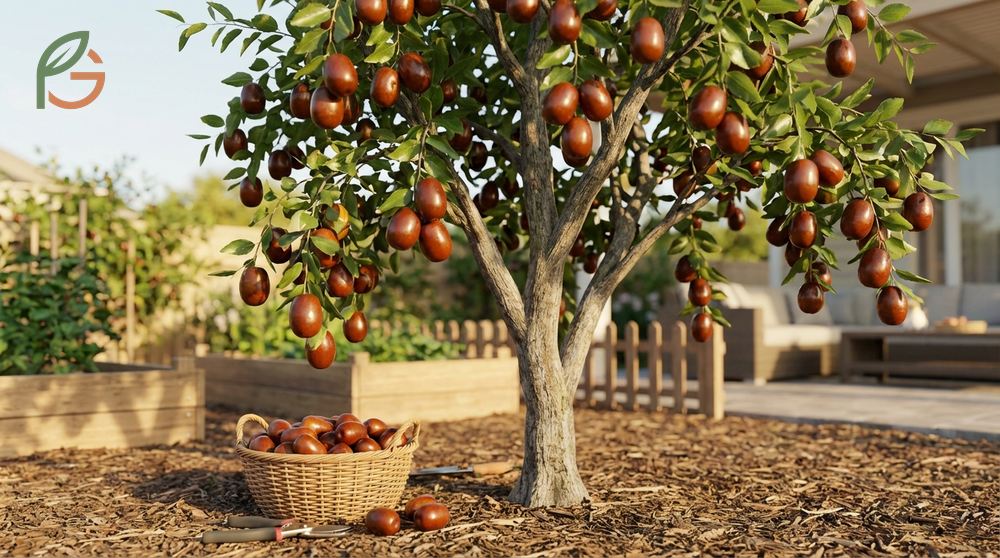
Li stands out as the most popular jujube cultivar in American gardens for good reason. The variety delivers abundant crops of very large, mahogany-brown fruit with exceptional fresh eating qualities[3]. Trees typically reach 8-10 feet in height at maturity, making harvest management practical for home orchardists without specialized equipment.
Research shows Li begins bearing fruit 2-3 years after planting, with consistent production increasing annually as trees mature. The variety blooms in mid-summer and ripens fruit in October across most growing regions[3]. What often gets overlooked is that Li’s early maturation provides significant advantages in areas with shorter growing seasons.
Current cultivation data indicates Li adapts remarkably well to challenging conditions. The variety tolerates drought stress better than most fruit trees, requires no spray programs for pest management, and handles alkaline soils that would stress other species. These characteristics make Li an excellent choice for sustainable, low-input gardening approaches.
Li Fruit Qualities
The flesh underneath Li’s thin, smooth skin presents as pale green to white with an airy, semi-aqueous structure. This unique cellular composition creates the distinctive snap-like quality when you bite into fresh fruit[1]. Unlike dense-fleshed fruits that require chewing, Li offers an effortless eating experience.
Nutritionally, jujubes provide impressive benefits in a low-calorie package. Fresh fruit contains approximately 79 calories per 100 grams[5], with 77% of daily vitamin C requirements and significant fiber content. The combination of nutrients and natural sugars makes Li an excellent fresh snack or juice ingredient.
- Raw consumption straight from the tree for maximum crispness and juice content
- Fresh fruit salads where Li’s apple-like texture complements other ingredients
- Juicing applications that capture the sweet, refreshing flavor in beverages
- Cooking into honey, jams, and syrups that preserve the fruit’s natural sweetness
- Baking fillings for cakes and pastries where Li’s firm texture holds up during heating
- Incorporation into rice dishes, porridges, and stews as a traditional sweetener
Li Growing Requirements
Agricultural guidance emphasizes Li’s preference for full sun exposure—at least 6-8 hours of direct sunlight daily ensures optimal fruit production and sugar development. The variety flourishes in well-drained soils ranging from sandy to alkaline compositions that would challenge other fruit species[4].
Temperature requirements favor hot, dry climates. Li thrives where summers deliver sustained heat for extended periods, as this warmth drives fruit ripening and sugar concentration. The variety handles winter cold remarkably well once established, surviving temperatures to -20°F without damage[4].
Growing tip: While Li is considered self-fertile, planting a second variety nearby significantly increases fruit set and overall yield. Lang makes an excellent pollination partner due to similar bloom timing.
Lang Jujube Features
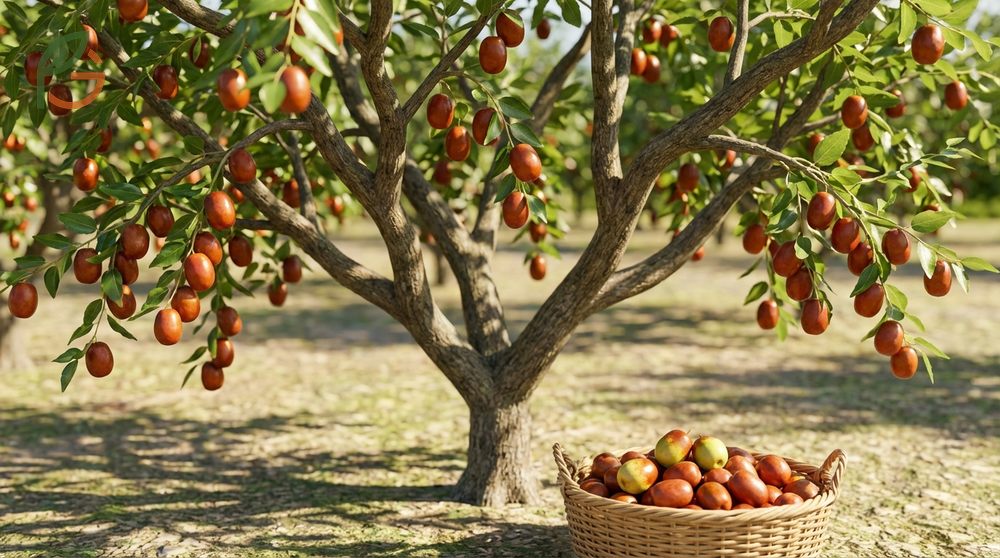
Lang represents a slightly different approach to jujube cultivation, offering advantages that experienced growers appreciate. The variety produces consistent harvests year after year without the heavy bearing that can stress young trees[2]. This moderate production pattern often results in healthier long-term tree structure and longevity.
Research demonstrates Lang’s ripening season begins slightly earlier than Li’s, providing fresh fruit when few other cultivars are ready. This timing advantage extends your jujube harvest window when multiple varieties are planted together. The medium-large fruit size makes Lang practical for both fresh consumption and preservation projects.
Most people who taste Lang alongside Li rank it highly for overall eating quality despite lower sweetness levels. The additional flavor complexity creates a more interesting tasting experience that doesn’t rely solely on sugar content[2]. This characteristic makes Lang appealing to those seeking sophisticated fruit flavors.
Lang Flavor Profile
The taste experience Lang provides goes beyond simple sweetness measurements. While the sugar content doesn’t reach Li’s levels, Lang compensates with subtle flavor notes that add depth and interest. The drier texture concentrates flavors differently than juicy cultivars, creating a more intense taste per bite[2].
This flavor profile makes Lang particularly suitable for drying applications. The lower moisture content means faster dehydration times and more concentrated final products. Dried Lang jujubes develop chewy textures similar to dates but with distinctive flavor characteristics that differentiate them from other dried fruits.
- Fresh eating for those who prefer complex flavors over pure sweetness
- Drying into chewy snacks that showcase concentrated fruit sugars
- Tea preparations where Lang’s nuanced taste enhances herbal blends
- Traditional Chinese medicinal applications that value specific cultivar properties
- Preserves and pastes where drier texture provides better consistency control
Lang Cultivation Needs
Lang shares Li’s excellent climate adaptability, thriving in USDA Zones 5-10 with particular success in hot, dry environments. The variety requires at least 6-8 hours of direct sun per day to achieve proper fruit development and flavor maturation. Like Li, Lang handles both extreme heat and significant cold once roots establish fully.
Soil requirements remain flexible. Lang adapts to various soil types from sandy to loamy compositions, performing well even in slightly alkaline conditions that limit other fruit species. The key factor isn’t soil richness but drainage quality—Lang won’t tolerate waterlogged conditions that promote root rot.
From My Experience: A friend in Monterrey, Mexico grew Lang in rocky, alkaline soil with minimal amendments. The tree adapted within one growing season, producing modest fruit yields by year two—demonstrating Lang’s reputation for soil adaptability.
Best Jujube Variety for Your Garden
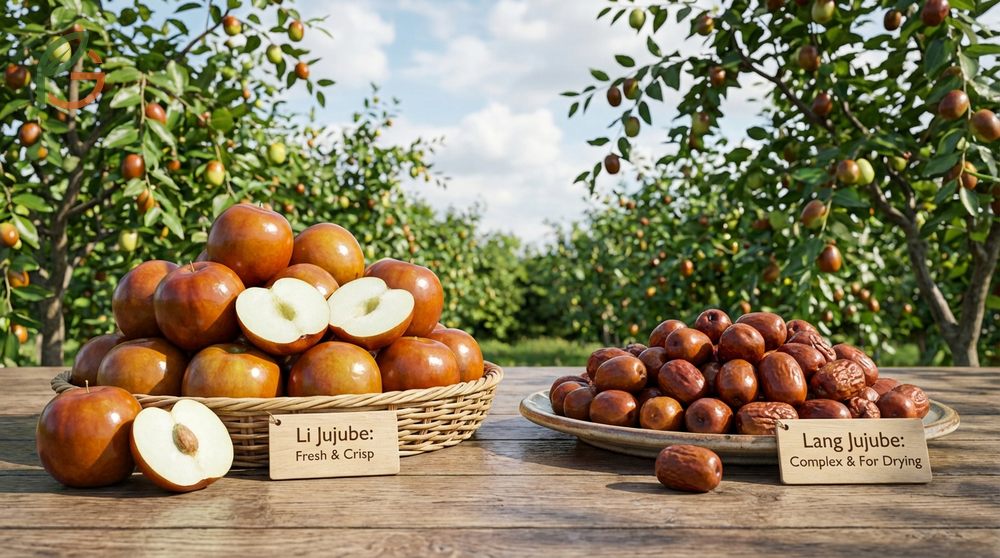
Choosing between Li and Lang depends on your specific priorities and growing conditions. If you’re seeking maximum fruit size, impressive visual appeal, and straightforward sweet flavor for fresh eating, Li delivers unmatched performance. Its large, crisp fruit and reliable production make it the top choice for beginning jujube growers[3].
Lang suits gardeners who value flavor complexity over size and plan to use fruit for drying or processing. The variety’s consistent production without excessive bearing, combined with its sophisticated taste profile, appeals to experienced fruit growers. Lang works particularly well when you’re planting multiple trees and want harvest timing diversity[2].
This table compares Li and Lang jujube varieties across fruit size, sweetness level, texture, best uses, and ripening timing to help gardeners select appropriate cultivars
| Characteristic | Li Jujube | Lang Jujube |
|---|---|---|
| Fruit Size | 3-5cm diameter[1] | Medium-large (approx. half Li’s size)[2] |
| Sweetness Level | Very sweet with high sugar content[1] | Moderately sweet with complex flavor notes[2] |
| Texture | Crisp, juicy, apple-like crunch[1] | Drier, less crunchy, mealier[2] |
| Best For | Fresh eating, juicing, large harvests | Drying, complex flavors, staggered ripening |
| Ripening Time | October[3] | Early season (before Li)[2] |
Current horticultural guidance suggests planting both varieties when space allows. This approach provides extended harvest windows, cross-pollination benefits that boost yields, and diverse fruit characteristics for different culinary applications. The combination ensures you’ll have jujubes available throughout the entire ripening season.
- Choose Li when you prioritize fruit size, visual appeal, and maximum sweetness for fresh consumption
- Select Lang if you value complex flavors, plan extensive drying, or want earlier ripening times
- Plant both varieties to extend harvest season and improve cross-pollination success rates
- Consider Li for beginning growers due to its straightforward care and reliable production
- Opt for Lang when your palate appreciates nuanced flavors beyond simple sugar content
Planning tip: Space jujube trees 10-15 feet apart to ensure adequate light penetration for fruit production. Both Li and Lang require high light intensities to achieve optimal yields and sugar development.
Conclusion
The evidence is clear: li vs lang jujube selection hinges on whether you value maximum fruit size and pure sweetness (Li) or moderate dimensions with complex flavor profiles (Lang). Both varieties deliver excellent cold hardiness, drought tolerance, and pest resistance that make jujube cultivation accessible to home gardeners across USDA Zones 6-9. Li dominates when fresh eating quality and impressive harvests drive your decision, while Lang excels for those seeking sophisticated taste and superior drying characteristics.
Current horticultural data emphasizes that both cultivars thrive under similar growing conditions—hot, dry climates with full sun exposure and well-drained soils. Your choice ultimately reflects personal taste preferences and intended fruit uses rather than significant cultivation difficulty differences. FruitGarden recommends starting with Li if you’re new to Chinese dates, then adding Lang as experience grows to diversify your harvest window and flavor options.
Frequently Asked Questions
What’s the main difference between Li and Lang jujube varieties?
Li produces significantly larger fruit (3-5cm diameter) with very sweet, crisp, apple-like texture, while Lang offers medium-large fruit with more complex flavor notes and drier, less juicy flesh. Li prioritizes size and straightforward sweetness, whereas Lang delivers nuanced taste characteristics preferred by experienced fruit enthusiasts.
Which jujube variety is better for fresh eating?
Li excels for fresh consumption due to its large size, exceptional crispness, high juice content, and very sweet flavor that most Americans find immediately appealing. The thin skin and minimal seed make Li practical for out-of-hand eating. Lang works better for those seeking complex flavors beyond pure sweetness.
Can I grow both Li and Lang jujubes together?
Yes, planting both varieties together provides multiple benefits including extended harvest season, improved cross-pollination that boosts yields, and diverse fruit characteristics for different uses. Space trees 10-15 feet apart to ensure adequate sunlight reaches all branches. This combination is recommended for serious jujube growers.
Which variety produces fruit earlier in the season?
Lang ripens earlier than Li, typically beginning fruit maturation in mid-September while Li finishes in October. This timing difference allows gardeners with both varieties to enjoy fresh jujubes over an extended period rather than processing large quantities simultaneously. Lang’s earlier ripening suits shorter growing seasons.
What climate conditions do Li and Lang jujubes need?
Both varieties thrive in USDA Zones 6-9 with hot, dry summers and cool winters. They require full sun (6-8 hours daily), tolerate drought extremely well once established, and survive winter temperatures to -20°F (-29°C). Well-drained soil is essential—waterlogged conditions cause root rot in both cultivars.
Which jujube is best for drying into chewy snacks?
Lang performs better for drying applications due to its lower moisture content and drier flesh texture, which reduces dehydration time and produces concentrated flavors. Li’s high juice content makes it less efficient for drying, though it still works when you prefer sweeter dried fruit. Lang creates chewier, date-like textures.
How long until Li and Lang jujube trees produce fruit?
Both varieties begin bearing fruit 2-3 years after planting, with production increasing annually as trees mature. Li tends to produce abundant crops once established, while Lang delivers consistent but moderate yields. Proper pollination from a second variety can accelerate fruiting and improve overall harvest quantities for both cultivars.





