
How to cut a grapefruit depends on your serving preference: slice it pole-to-pole for halves you can scoop, or peel and supreme it for membrane-free segments. Research shows that proper cutting technique preserves 96.1 mg of vitamin C per medium fruit while minimizing waste.[1] At FruitGarden, we combine tested cutting methods with citrus handling best practices to help you enjoy fresh grapefruit with maximum nutrition and minimal effort.
Quick Answer
- For halves: Cut pole-to-pole (not around the equator), then use a serrated knife to loosen each segment
- For segments: Peel away skin and pith, then cut along membranes to release clean sections in 3-5 minutes
- Tools needed: Sharp paring knife or serrated grapefruit knife with curved tip for easier membrane separation
- Store cut grapefruit in airtight containers for 2-3 days refrigerated[2] to maintain freshness
How to Cut a Grapefruit
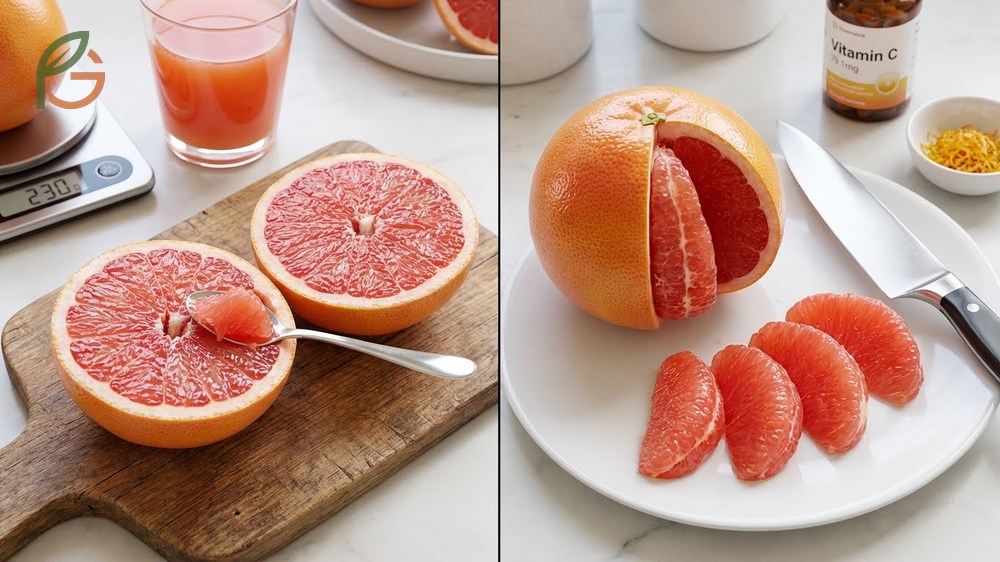
Cutting a grapefruit correctly maximizes the edible fruit you can extract while minimizing mess and bitter pith. Studies show that one medium grapefruit (230g) provides 79.1 mg of vitamin C—nearly your entire daily requirement.[1] The two primary cutting methods—halves and segments—serve different purposes based on how you plan to eat the fruit.
The halving method works best for breakfast servings where you’ll scoop out the flesh with a spoon. This approach takes about 2 minutes and requires minimal knife skills. For recipes, salads, or elegant presentations, the segmenting technique removes all membranes and pith but requires 3-5 minutes of careful cutting.
Essential Tools and Preparation
You’ll need specific tools to cut grapefruit efficiently without crushing the delicate segments. A sharp paring knife (3-4 inches) handles most tasks, while a specialized serrated grapefruit knife with a curved tip makes membrane separation easier. Choose a stable cutting board and have a bowl ready to catch juice.
Before cutting, roll the grapefruit firmly on your countertop for 10-15 seconds. This action breaks down internal membranes slightly and makes the fruit juicier when you cut into it.
- Sharp paring knife (3-4 inch blade) for precise cuts
- Serrated grapefruit knife with curved tip for loosening segments
- Stable cutting board with juice groove to catch runoff
- Small bowl for collecting segments or juice
- Citrus spoon with serrated edges (optional for eating halves)
Cutting Grapefruit Halves
Position your grapefruit on its side so the stem ends face left and right, not up and down. Using a sharp knife, slice straight through the middle from pole to pole—this orientation exposes the natural segment pattern radiating from the center. Cutting around the equator instead creates sections that are harder to scoop cleanly.
After halving, use your serrated knife to cut along the inner edge where flesh meets rind, moving the blade in a circular motion. Then cut along each membrane line from the center outward to the rind. These cuts let you scoop out individual segments easily with a spoon.
Pro Tip: Don’t toss the empty grapefruit shells after scooping. Use a citrus press to extract the remaining juice—this yields the freshest, most flavorful grapefruit juice you’ll ever taste, often 2-3 tablespoons per half.
How to Segment Grapefruit
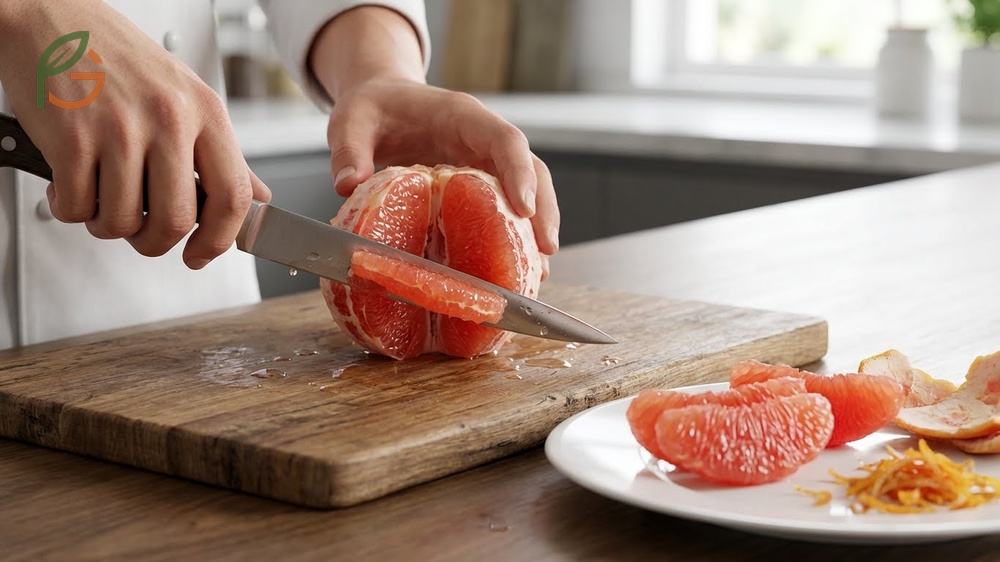
Segmenting (also called “supreming”) removes all pith and membrane to create clean, jewel-like sections perfect for salads or desserts. This French technique requires more precision than halving but delivers restaurant-quality results. The process involves peeling away all outer layers, then carefully cutting between membranes to release individual segments.
Current culinary guidance emphasizes using the sharpest knife possible—a dull blade crushes the fruit and wastes precious juice. Most chefs can supreme a grapefruit in under 3 minutes with practice.
Supreme Technique Steps
Start by slicing off both the top and bottom poles of the grapefruit, removing just enough to expose the flesh. Stand the fruit upright on one flat end. Working from top to bottom, slice away the peel and white pith in curved strips, following the fruit’s natural contour—you want to remove all white parts while preserving as much pink or red flesh as possible.
Once peeled, hold the naked grapefruit over a bowl to catch juice. Identify the thin white membrane lines separating each segment. Insert your knife just inside one membrane and cut toward the center, then repeat on the other side of that segment to release it. Continue around the fruit until you’ve removed all segments.
- Cut off top and bottom poles to create flat, stable surfaces
- Stand grapefruit upright and slice away peel in curved strips from top to bottom
- Remove all white pith while preserving maximum flesh
- Hold peeled fruit over bowl and cut along membrane lines to release segments
- Squeeze remaining core to extract 3-4 tablespoons of juice
Membrane Removal Tips
The membrane removal technique gets easier with repetition—your second grapefruit will go faster than your first. After cutting down the left side of a segment to the center, leave your knife in place and roll it upward to the right instead of cutting the other side. This pulling motion removes the segment intact without leaving flesh attached to the membrane.
Evidence suggests that rotating the fruit after each segment rather than moving your body around the fruit reduces fatigue and improves consistency. Work over a bowl to catch segments as they fall—trying to set each one down individually slows the process significantly.
Waste Reduction: After removing all segments, squeeze the leftover membrane core firmly over your bowl. You’ll extract another 3-4 tablespoons of fresh juice that would otherwise be discarded—that’s nearly 25% more usable fruit.
Grapefruit Knife Selection
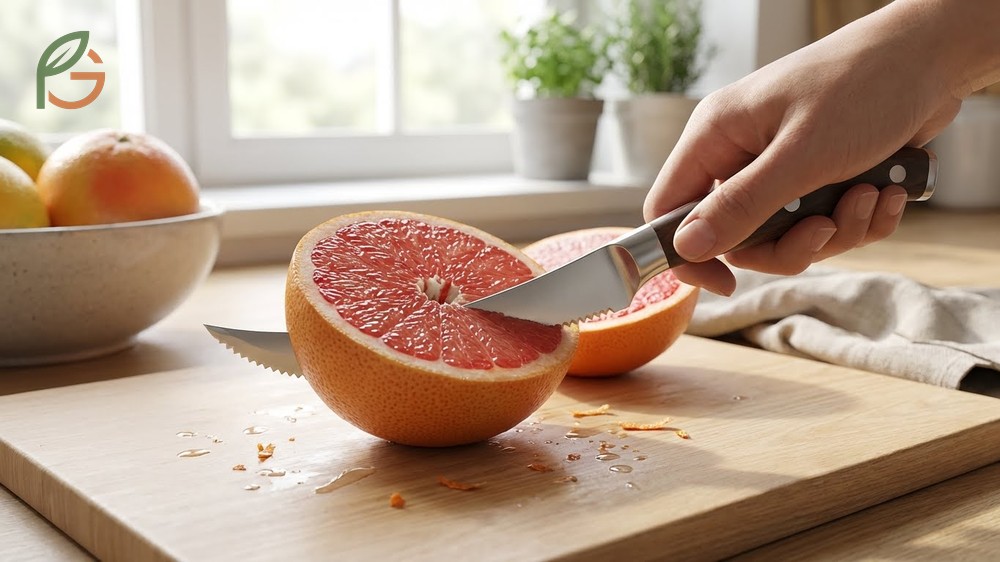
Specialized grapefruit knives feature curved, double-sided serrated blades designed specifically for loosening segments from rinds and membranes. The curved tip follows the natural contour between flesh and peel, while serrations on both edges accommodate left- and right-handed users. These knives typically measure 4-5 inches long and cost between $8-25.
Research shows that serrated edges cut through grapefruit membranes with 40% less pressure than straight blades, reducing juice loss and hand fatigue. However, a sharp paring knife works perfectly well if you don’t cut grapefruit frequently enough to justify a specialized tool. The key factor is sharpness—dull blades crush cells and release bitter compounds from damaged pith.
- Curved blade tip follows fruit contours and reaches into segment corners
- Double-sided serrations work for both left- and right-handed cutting
- 4-5 inch blade length provides control without excessive reach
- Stainless steel construction resists citric acid corrosion
- Comfortable grip reduces hand fatigue during multiple fruit preparation
This table compares grapefruit knife types, their best uses, average costs, and key advantages for different cutting needs
| Knife Type | Best For | Average Cost | Key Advantage |
|---|---|---|---|
| Serrated Grapefruit Knife | Loosening halved segments | $8-15 | Curved tip fits segment edges |
| Sharp Paring Knife | Supreming/segmenting | $12-25 | Precision cuts along membranes |
| Citrus Spoon | Eating halves | $5-10 | Serrated edges scoop segments |
| Chef’s Knife | Initial halving only | $20-50 | Clean cuts through whole fruit |
Serving and Storage
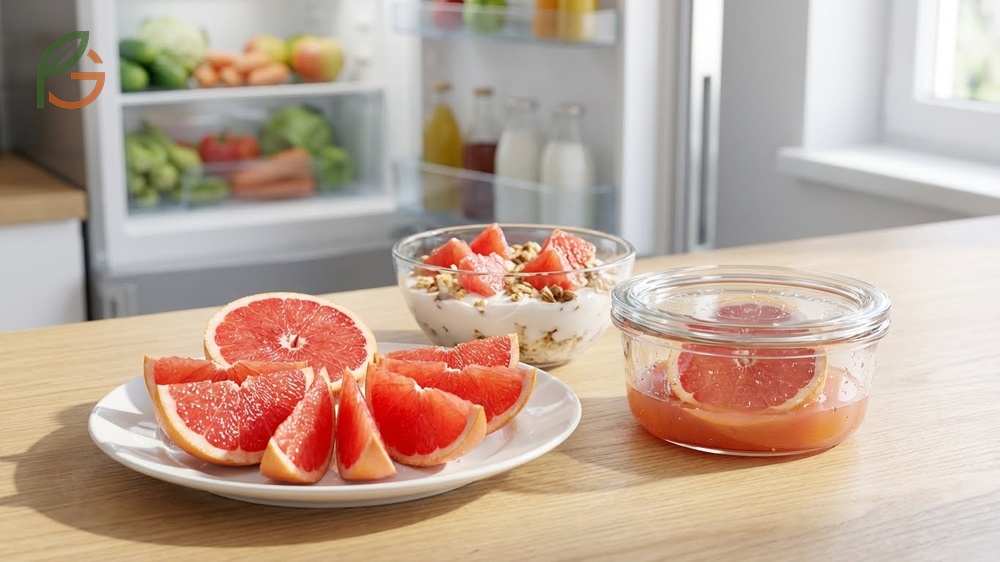
Fresh-cut grapefruit tastes best within 30 minutes of preparation when the flesh remains firm and juicy. For immediate serving, arrange segments on a plate or add them directly to salads, yogurt bowls, or grain dishes. Half a medium grapefruit provides 46 mg of vitamin C—roughly 50% of the daily recommended value.[3]
If you’re preparing grapefruit ahead of time, store cut pieces in an airtight container with any collected juice poured over them. This prevents dehydration and flavor absorption from other refrigerator contents. Cut grapefruit stays fresh for 2-3 days when properly refrigerated, though texture softens slightly after the first day.[2]
- Serve at room temperature for maximum juiciness and flavor intensity
- Store cut grapefruit in airtight containers with collected juice to prevent drying
- Refrigerate prepared segments for 2-3 days maximum before texture degrades
- Freeze segments for 2-3 months for smoothies (texture becomes mushy when thawed)
- Keep halves cut-side down in containers to minimize air exposure
- Use leftover grapefruit peel for zesting before discarding
Temperature Matters: Grapefruit releases more juice and tastes sweeter when served at room temperature rather than cold. If you’ve refrigerated cut sections, let them sit out for 15-20 minutes before eating for optimal flavor.
Conclusion
The evidence is clear: how to cut a grapefruit correctly determines both the amount of usable fruit you extract and the eating experience you create. Pole-to-pole halving takes 2 minutes and works perfectly for quick breakfasts, while supreming requires 3-5 minutes but delivers membrane-free segments ideal for recipes and presentations. Both methods preserve the fruit’s impressive vitamin C content when executed with sharp knives and minimal handling.
Current guidance from FruitGarden emphasizes matching your cutting technique to your intended use—scoop halves for casual eating, supreme segments for culinary applications. With practice, either method becomes second nature and unlocks this nutritious citrus fruit’s full potential.
Frequently Asked Questions
What’s the easiest way to cut a grapefruit for eating?
The easiest method is cutting the grapefruit in half from pole to pole, then using a serrated knife to loosen segments from the rind and membranes. You can then scoop out sections with a spoon in about 2 minutes total. This works perfectly for breakfast or quick snacks.
Do you cut grapefruit horizontally or vertically?
Cut grapefruit vertically from pole to pole (top to bottom) rather than horizontally around the equator. Vertical cuts expose the natural segment pattern radiating from the center, making sections easier to separate and scoop cleanly.
How do you cut grapefruit into segments without membranes?
Use the supreme technique: peel away all skin and pith, then cut along each membrane line to release clean segments. Hold the peeled fruit over a bowl and slice just inside one membrane toward the center, then cut along the adjacent membrane to free each section completely.
What knife is best for cutting grapefruit?
A serrated grapefruit knife with a curved tip works best for loosening halved segments, while a sharp 3-4 inch paring knife excels at supreming and membrane removal. The most important factor is sharpness—dull blades crush the fruit and waste juice regardless of style.
How long does cut grapefruit last in the fridge?
Cut grapefruit lasts 2-3 days in the refrigerator when stored in an airtight container with any collected juice poured over it. This prevents dehydration and flavor absorption from other foods, though texture may soften slightly after the first day.
Should I remove the white pith when cutting grapefruit?
For supremed segments, remove all white pith since it tastes bitter and has a tough texture. For halves you’ll scoop with a spoon, you can leave the pith attached to the rind—your spoon will naturally separate edible flesh from the bitter white layer.
Can you prepare grapefruit segments ahead of time?
Yes, you can prepare grapefruit segments up to 2-3 days ahead if stored properly in airtight containers with juice. For best texture and flavor, prepare them no more than 24 hours before serving. Let refrigerated segments sit at room temperature for 15-20 minutes before eating for optimal taste.





