
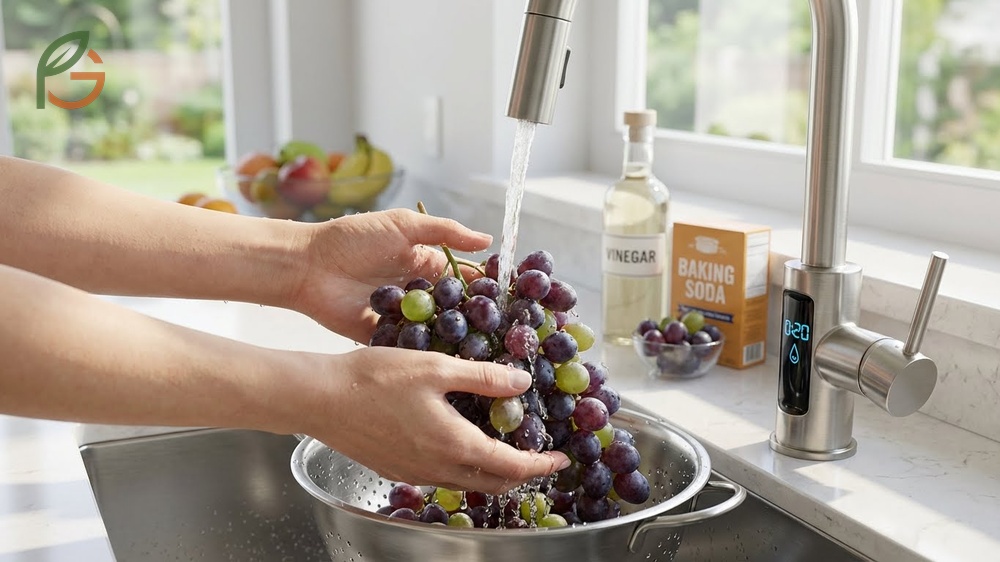
How to wash grapes properly involves rinsing under cold running water for at least 20 seconds while gently rubbing them to remove dirt, bacteria, and pesticide residues.[1] Research shows that this simple method reduces surface bacteria by up to 98% and removes most dirt and chemical residues without requiring soap or commercial washes.[2] FruitGarden synthesizes current food safety research and USDA guidelines to help you clean grapes effectively using methods that work.
Quick Answer
- Rinse grapes under cold running water for 20+ seconds while gently rubbing them[1]
- Soak in 1:3 vinegar-water solution for 10-15 minutes to remove up to 98% of surface bacteria[3]
- Use 1 teaspoon baking soda per 2 cups water for 15 minutes to break down pesticide residues[3]
- Store unwashed grapes in the fridge for 7-14 days; wash only before eating[4]
How to Wash Grapes
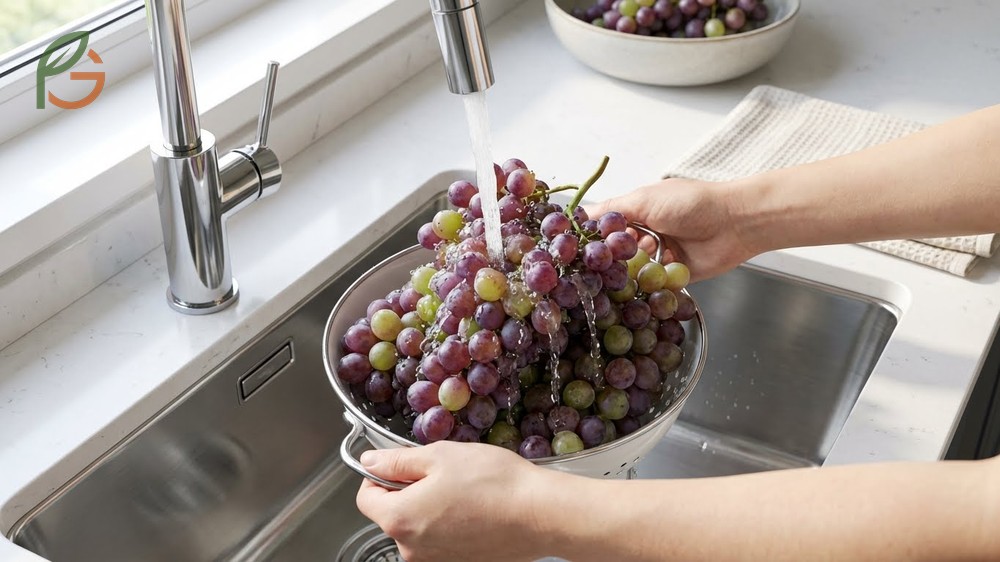
The FDA and USDA recommend washing all produce under cold running water, including grapes, regardless of whether you buy organic or conventional varieties.[1] This method doesn’t require soap, detergent, or commercial produce washes. Studies demonstrate that plain water effectively removes most surface contaminants when you use proper technique.
Grapes need special attention because they’re eaten with the skin on and grow in tight clusters where dirt and bacteria hide. What many people don’t realize is that a quick rinse under the faucet isn’t enough. You need at least 20 seconds of contact time with running water while actively rubbing the grapes to dislodge residues.[4]
Basic Water Rinse Method
Start by washing your hands with soap and warm water for at least 20 seconds before handling grapes.[5] This prevents transferring bacteria from your hands to the fruit. Place grapes in a clean colander rather than washing them directly in the sink, since sink drains often harbor microorganisms.
Hold the colander under cold running water and gently rub the grapes with your fingers for 20-30 seconds. The physical friction combined with water flow removes dirt particles and surface bacteria more effectively than soaking alone.[2] Shake the colander occasionally to ensure water reaches all surfaces of the grape clusters.
- Wash your hands thoroughly with soap and water before handling grapes
- Place grapes in a clean colander to avoid sink contamination
- Rinse under cold running water for at least 20 seconds
- Gently rub grapes with your fingers to remove surface residues
- Shake the colander to ensure all grapes get rinsed
- Pat dry with clean paper towels or a salad spinner
Important Note: Never use soap, detergent, bleach, or commercial produce washes on grapes. These products aren’t approved for food use and can leave harmful residues that are worse than the dirt you’re trying to remove.[1]
Why Washing Matters
Grapes can carry harmful bacteria like E. coli, Salmonella, and Listeria that cause foodborne illness.[5] These microorganisms come from soil, water, wildlife, and human handling during harvest and transport. Since grapes aren’t cooked before eating, washing is your only defense against these pathogens.
Pesticide residues are another concern, though current research shows that levels on grapes are typically at or below safe limits set by the EPA.[2] Washing can’t eliminate all pesticides—some penetrate the skin—but it reduces surface residues by 50-80% depending on the method you use. Even organic grapes benefit from washing since they can still have dirt, bacteria, and approved organic pesticides.
How to Clean Grapes with Vinegar
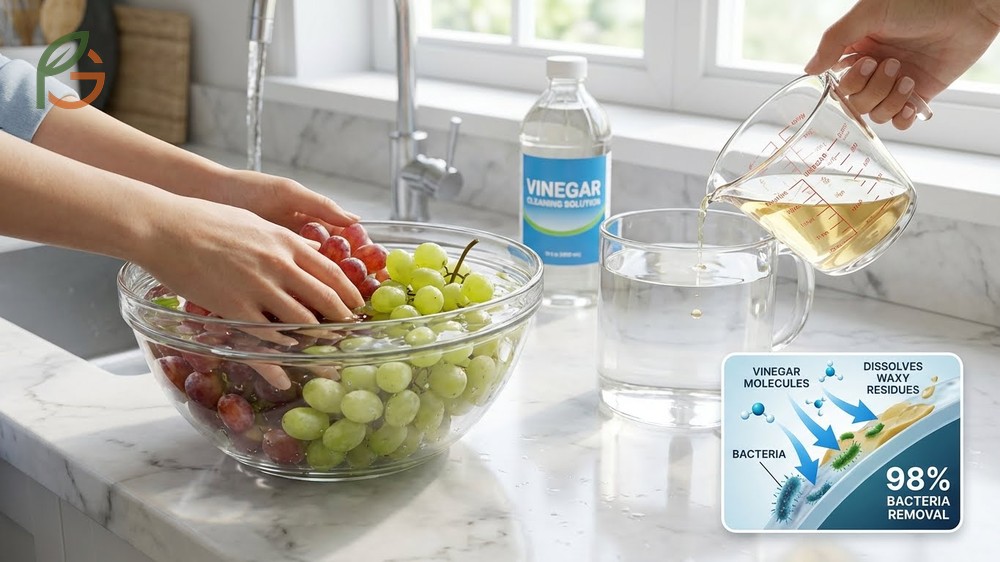
Vinegar washing offers extra cleaning power beyond plain water. The acetic acid in vinegar acts as a natural disinfectant that breaks down surface residues and kills bacteria.[3] Studies show vinegar solutions can remove up to 98% of surface bacteria, including common pathogens like E. coli and Salmonella.
This method works particularly well for grapes with visible dirt or if you’re concerned about bacterial contamination. The acid dissolves sticky residues and wax coatings more effectively than water alone. However, you’ll need to rinse thoroughly afterward to avoid a vinegar taste on your grapes.
Vinegar Solution Recipe
Mix one part distilled white vinegar with three parts cold water in a clean bowl large enough to hold your grapes.[3] For example, use 1 cup vinegar with 3 cups water. Submerge the grapes completely and gently agitate them with your fingers to dislodge debris.
Let the grapes soak for 10-15 minutes, but don’t exceed this time or the vinegar flavor might transfer to the fruit.[4] After soaking, drain the grapes in a colander and rinse thoroughly under cold running water for at least 30 seconds. This final rinse removes both the vinegar and loosened contaminants.
- Combine 1 part white vinegar with 3 parts cold water in a clean bowl
- Submerge grapes completely in the solution
- Gently swirl and agitate grapes with your fingers
- Soak for 10-15 minutes (not longer to avoid flavor transfer)
- Drain grapes in a colander
- Rinse thoroughly under cold running water for 30 seconds
- Pat dry with paper towels or use a salad spinner
How Vinegar Works
Acetic acid disrupts bacterial cell membranes, causing them to break down and die. This makes vinegar effective against both gram-positive and gram-negative bacteria found on produce surfaces. The acid also helps dissolve mineral deposits, wax coatings, and sticky pesticide residues that plain water can’t remove as easily.
While vinegar is powerful, it’s not 100% effective at removing all contaminants. Some pesticides penetrate beneath the grape skin where no washing method can reach them.[2] The vinegar method works best as part of a broader food safety approach that includes buying from trusted sources and storing grapes properly.
How to Wash Grapes with Baking Soda
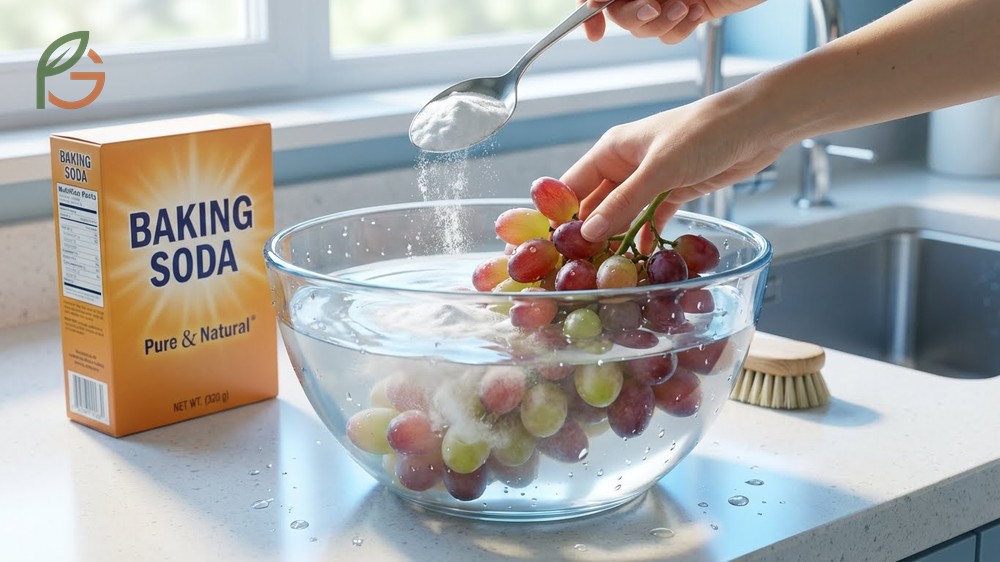
Baking soda washing excels at breaking down pesticide residues thanks to its alkaline properties. Research shows that baking soda solutions are particularly effective at degrading organophosphate and pyrethroid pesticides commonly used on grapes.[3] This method is recommended if pesticide removal is your primary concern.
The alkaline environment created by baking soda causes chemical bonds in pesticides to break down more rapidly than in neutral water. This doesn’t remove all residues—nothing does—but it significantly reduces surface pesticide levels compared to water rinsing alone. You’ll get the best results by combining soaking with a thorough rinse.
Baking Soda Method
Dissolve 1 teaspoon of baking soda in 2 cups of cold water, stirring until completely dissolved.[3] Scale this ratio up based on how many grapes you’re washing. Pour the solution into a clean bowl and add your grapes.
Submerge the grapes and let them soak for 12-15 minutes. Gently stir them every few minutes to ensure all surfaces contact the baking soda solution. After soaking, drain in a colander and rinse under cold running water for at least 30 seconds to remove the baking soda residue and loosened pesticides.
Pro Tip: Don’t soak grapes longer than 15 minutes in baking soda solution. Extended soaking can make grapes mushy and affect their texture and flavor. The 12-15 minute window provides optimal pesticide breakdown without compromising grape quality.
Pesticide Removal Effectiveness
Current data indicates that baking soda washing removes 50-80% of surface pesticide residues depending on the specific compound.[2] This reduction is significant but not complete. Some pesticides penetrate the grape skin during growth and can’t be removed by any washing method.
Even with these limitations, washing remains worthwhile. Studies demonstrate that people who regularly wash produce have lower pesticide metabolites in their bodies compared to those who don’t wash.[6] The health benefits of eating grapes far outweigh the minimal risks from residual pesticides, especially when you wash them properly.
- Breaks down organophosphate and pyrethroid pesticides effectively
- Creates alkaline environment that degrades chemical bonds
- Removes 50-80% of surface pesticide residues
- Safe, non-toxic, and inexpensive compared to commercial washes
- Works well combined with vinegar for enhanced cleaning power
Removing Wax from Grapes
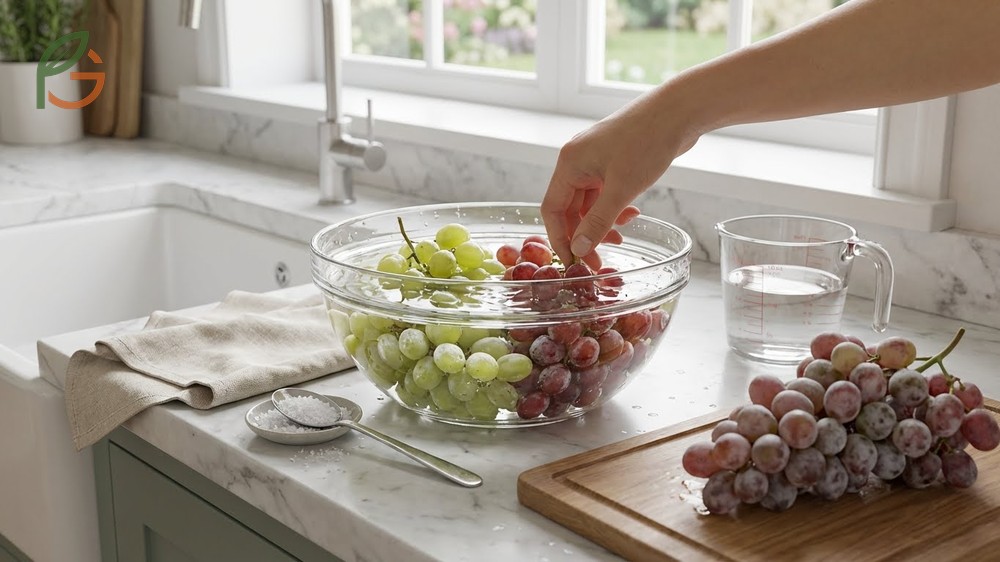
Grapes sometimes have a natural waxy coating called bloom that protects them from moisture loss and microbial infection. This whitish film is completely safe to eat and actually indicates freshness. However, some grapes also receive additional food-grade wax coatings during processing to extend shelf life and improve appearance.
If you want to remove wax coatings, salt water soaking works effectively. Mix 1 tablespoon of kosher salt per 2 cups of water and soak grapes for 10-15 minutes.[7] The salt crystals help break down wax while the water dissolves it. After soaking, rinse thoroughly under running water while rubbing the grapes to remove dissolved wax.
Baking soda solutions also work well for wax removal since the alkaline environment breaks down both wax and pesticide residues simultaneously. Use the same ratio as described earlier—1 teaspoon baking soda per 2 cups water—and soak for 15 minutes. This dual-purpose approach makes baking soda an efficient choice when you’re concerned about both wax and pesticides.
This table compares four grape washing methods across effectiveness for bacteria removal, pesticide removal, wax removal, required time, and best use cases
| Method | Bacteria Removal | Pesticide Removal | Wax Removal | Time Required | Best For |
|---|---|---|---|---|---|
| Plain Water | 60-80%[2] | 30-50%[2] | Low | 20-30 seconds | Daily quick cleaning |
| Vinegar Solution (1:3) | 95-98%[3] | 50-70% | Moderate | 10-15 minutes | Bacteria concerns |
| Baking Soda Solution | 70-85% | 50-80%[2] | High | 12-15 minutes | Pesticide removal |
| Salt Water | 65-75% | 35-55% | Very High | 10-15 minutes | Wax removal |
Most people find that plain water rinsing handles everyday cleaning needs effectively. Save the vinegar, baking soda, or salt methods for times when you want extra assurance—such as washing grapes for young children, pregnant women, or people with compromised immune systems.
How to Store Washed Grapes
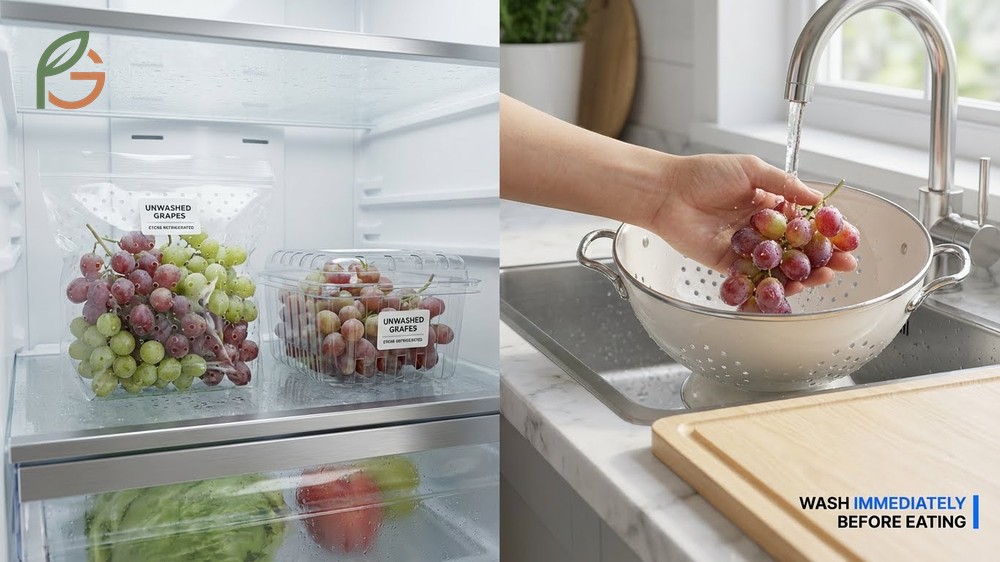
Store grapes unwashed in the refrigerator for maximum freshness. Moisture from washing accelerates mold growth and spoilage, reducing shelf life from 7-14 days down to just 3-5 days.[4] The best practice is washing grapes immediately before eating rather than washing your entire batch at once.
Keep unwashed grapes in their original perforated bag or transfer them to a ventilated container. These small holes allow air circulation that prevents excess moisture buildup while maintaining the right humidity level. Place the container in your refrigerator’s crisper drawer, which is designed to keep produce at optimal temperature and humidity.
If you’ve already washed more grapes than you can eat, proper storage can minimize spoilage. Dry them thoroughly with clean paper towels or a salad spinner to remove as much moisture as possible. Line a storage container with paper towels to absorb residual moisture, then add the grapes and leave the lid slightly ajar for airflow. Store in the crisper drawer and consume within 3-5 days.
- Store unwashed grapes in the refrigerator for maximum shelf life of 7-14 days
- Keep grapes in original perforated bags or ventilated containers for air circulation
- Place in crisper drawer at optimal temperature and humidity
- Wash grapes only immediately before eating to prevent premature spoilage
- If you’ve washed grapes, dry thoroughly and use paper towels to absorb moisture
- Consume washed grapes within 3-5 days maximum
- Turn packages regularly to ensure even air circulation for all grapes
Storage Warning: Remove any moldy, soft, or damaged grapes immediately when you notice them. Mold spreads quickly in grape clusters, and one bad grape can contaminate the entire bunch within 24-48 hours. Regular inspection prevents widespread spoilage.
Conclusion
The evidence is clear: how to wash grapes properly makes a real difference in food safety and pesticide exposure. Plain water rinsing for 20+ seconds removes most contaminants for everyday needs, while vinegar solutions excel at killing bacteria and baking soda works best for breaking down pesticide residues. Each method has its place depending on your specific concerns.
Current guidance emphasizes washing all grapes—organic and conventional—under running water before eating. Store them unwashed for longer shelf life, and choose the washing method that matches your priorities. FruitGarden provides research-based information to help you make informed decisions about cleaning and enjoying grapes safely.
Frequently Asked Questions
Should I wash grapes before storing them in the refrigerator?
No, store grapes unwashed in the refrigerator for maximum freshness. Washing adds moisture that accelerates mold growth and reduces shelf life from 7-14 days down to just 3-5 days.[4] Wash grapes only immediately before eating to preserve their quality and extend refrigerator life.
Can I use dish soap to wash grapes?
No, never use dish soap, detergent, bleach, or commercial produce washes on grapes. The FDA explicitly advises against this because these products aren’t approved for food use and can leave harmful residues that are absorbed by the fruit.[1] Plain water, vinegar, or baking soda solutions are safe and effective alternatives.
How long should I soak grapes in vinegar water?
Soak grapes in a 1:3 vinegar-water solution for 10-15 minutes maximum. This duration provides optimal bacteria removal—up to 98% of surface pathogens—without transferring vinegar flavor to the grapes.[3] Always rinse thoroughly under cold running water for at least 30 seconds after soaking to remove the vinegar and loosened contaminants.
Do I need to wash organic grapes?
Yes, wash organic grapes the same way you wash conventional grapes. Organic produce can still carry dirt, bacteria, and approved organic pesticides that need removal.[4] Research shows that washing reduces exposure to germs regardless of how the grapes were grown, making it an essential food safety step for all produce.
What’s the white coating on grapes?
The white coating on grapes is called bloom, a natural waxy substance produced by the grape itself to prevent moisture loss and protect against bacteria. This coating is completely safe to eat and indicates freshness. Some grapes also receive additional food-grade wax during processing, which is also safe but can be removed using salt water or baking soda soaking if preferred.
Does washing grapes remove all pesticides?
No, washing removes 50-80% of surface pesticide residues but can’t eliminate pesticides that have penetrated the grape skin.[2] Baking soda solutions work best for pesticide removal, but no method is 100% effective. The good news is that pesticide levels on grapes are typically at or below safe limits even before washing, and the health benefits of eating grapes far outweigh minimal pesticide risks.
How do I dry grapes after washing?
Pat grapes dry with clean paper towels or use a salad spinner to remove excess water quickly. Thorough drying is important because moisture promotes mold growth and reduces storage life. If you’re eating grapes immediately, a quick pat-dry is sufficient. For grapes you need to store, spin them in a salad spinner and then spread on paper towels for 10-15 minutes to ensure complete drying before refrigerating.





