
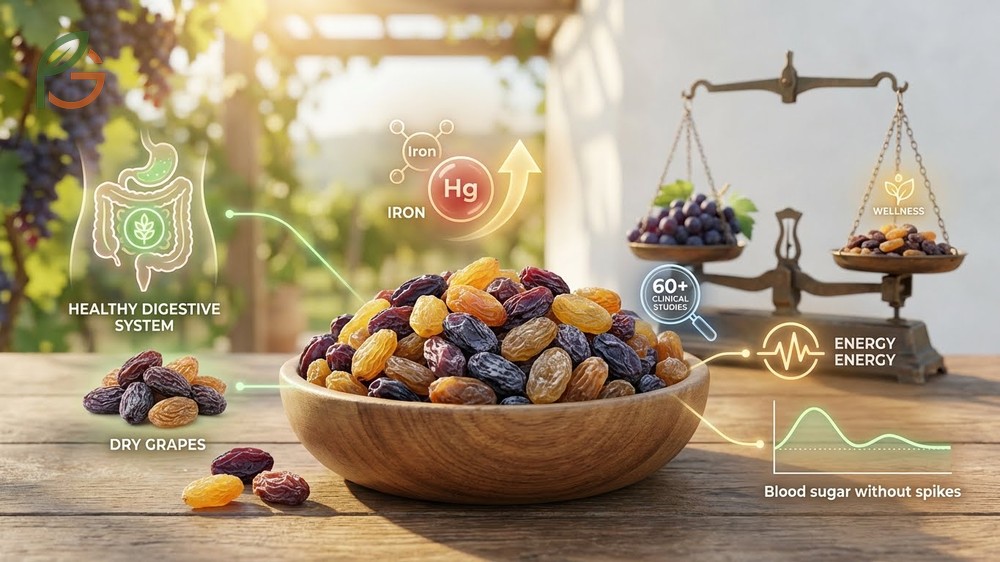
Dry grapes health benefits are supported by over 60 clinical studies showing they improve digestive health, boost iron levels, and provide natural energy without blood sugar spikes.[1] Despite containing 60% natural sugars, research demonstrates that the fiber content (up to 4.5g per 100g) and phenolic compounds work together to support overall wellness.[1] FruitGarden synthesizes current nutritional research and agricultural data to help you understand how these nutrient-dense dried fruits fit into a balanced diet.
Quick Answer
- One cup (165g) of dry grapes provides 11g fiber[2] (44% daily value) supporting digestive regularity
- Contains 1.79mg iron[1] per 100g (dark raisins), providing 10% daily requirement for adults
- Delivers 744mg potassium[1] (21% DV) supporting heart health and blood pressure regulation
- Provides 299 calories per 100g as concentrated natural energy for athletes and active individuals
Dry Grapes Health Benefits
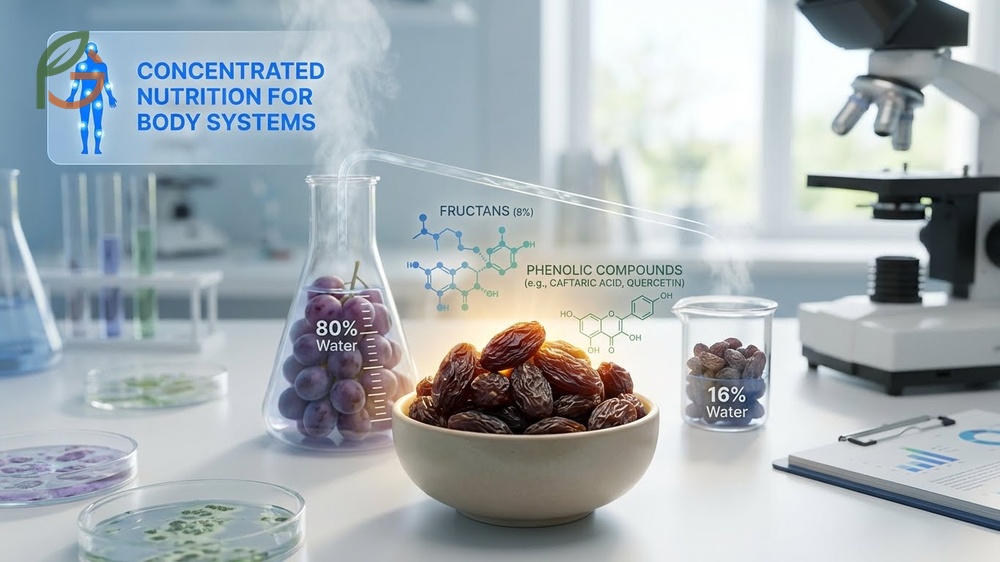
Research shows that dry grapes deliver concentrated nutrition through a dehydration process that reduces water content from 80% to 16%, intensifying beneficial compounds.[3] This process creates fructans (a fiber type) at levels up to 8%, which aren’t detectable in fresh grapes.[1] Studies demonstrate that regular consumption supports multiple body systems without requiring large portions.
Current data indicates that phenolic compounds like caftaric acid and quercetin glycosides remain stable during drying, providing antioxidant benefits comparable to fresh fruit.[1] What often gets overlooked is that tartaric acid works synergistically with fiber to enhance digestive function beyond what either component achieves alone.[1] The nutrient density allows you to meet daily requirements with just a quarter-cup serving.
Digestive Support and Constipation Relief
Evidence suggests that 22% of American adults suffer from irregular bowel movements that respond well to fiber-rich dried grapes.[4] The dual fiber types in dry grapes—soluble and insoluble—add bulk to stool while softening it for easier passage. Just one ounce (28g) delivers 4-8% of your daily fiber requirement, making it an efficient digestive aid.[3]
Most people find that consuming 10-15 dry grapes before breakfast stimulates digestive enzymes within 30 minutes. The prebiotic effect comes from fructans that selectively feed beneficial gut bacteria, supporting a balanced microbiome.[1] This gentle laxative action works without the cramping associated with stimulant laxatives.
Important Note: If you’re dealing with chronic constipation lasting more than two weeks, don’t rely solely on dietary changes. The fiber in dry grapes works best as prevention rather than treatment for severe cases requiring medical evaluation.
Iron Content and Energy Boost
Half a cup of dark raisins contains 1.3mg iron, meeting approximately 16% of the daily requirement for adult men and 7% for adult women.[2] This matters because dry grapes provide non-heme iron that’s enhanced when you pair them with vitamin C sources like orange juice. The iron supports hemoglobin production, directly impacting oxygen transport to muscles and organs.
Athletes use dry grapes as natural pre-workout fuel because the 79g carbohydrates per 100g convert to quick energy without processed sugars.[1] The fructose and glucose blend provides immediate and sustained energy release over 2-3 hours. Unlike energy bars with added sugars, dry grapes deliver natural sweetness alongside minerals that prevent energy crashes.
Antioxidant and Heart Health Properties
Research demonstrates that dry grapes contain powerful phenolic antioxidants that increase serum oxygen radical absorbance capacity (ORAC) after just two weeks of daily consumption.[5] These compounds neutralize free radicals that damage cells and contribute to aging. The 746mg potassium per 100g in golden raisins supports heart rhythm regulation and helps counteract sodium’s blood pressure effects.[1]
Studies suggest that diets high in fiber-rich dried fruits like grapes reduce the risk of high blood pressure, heart disease, and diabetes compared to low-fiber diets.[3] The mechanism works through improved cholesterol profiles and reduced arterial inflammation. What’s remarkable is that benefits appear even at moderate intake levels of 1-2 ounces daily.
Dry Grapes Nutrition Facts
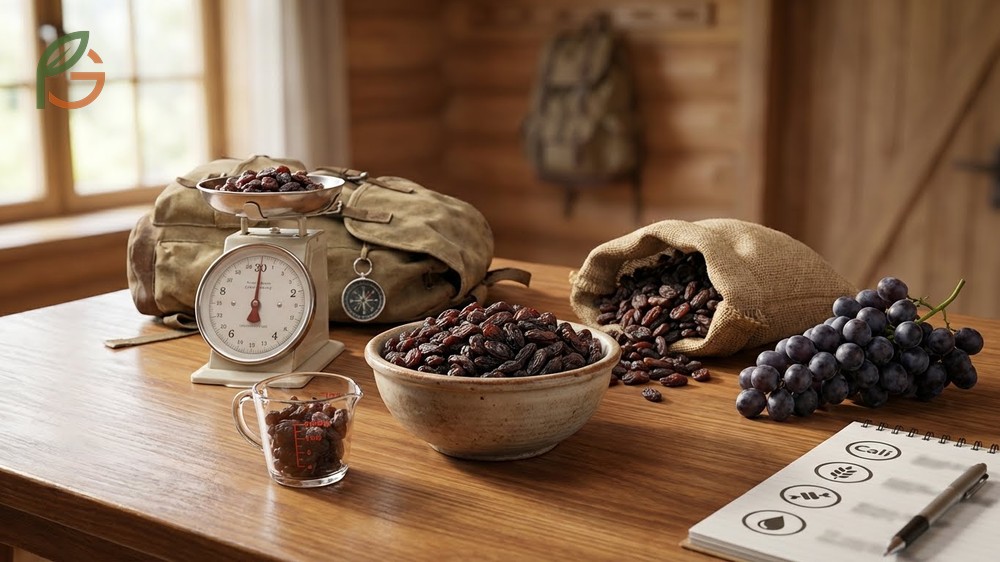
Nutrition analysis reveals that 100g of dark seedless raisins delivers 299 calories from predominantly natural carbohydrates, with minimal fat (0.25g) and moderate protein (3.3g).[1] The caloric density makes portion control important—a quarter-cup (40g) serving provides approximately 120 calories. This concentration allows backpackers and travelers to carry lightweight nutrition that doesn’t require refrigeration.
Unlike processed snacks, dry grapes provide vitamins and minerals alongside their natural sugars. The 65g total sugars per 100g consist primarily of fructose and glucose, which metabolize differently than added refined sugars.[1] Most people don’t realize that the fiber content slows sugar absorption, preventing the rapid blood glucose spikes you’d get from candy.
Macronutrient Breakdown
The macronutrient profile shows that carbohydrates dominate at 79-80g per 100g, with fiber representing 4.5-5g of that total in dark raisins.[1] Protein content at 3.3g per 100g is higher than most fruits, though still modest. The near-zero fat content (0.2-0.25g) includes small amounts of beneficial polyunsaturated fatty acids at 0.053g per 100g.[1]
Water content remains at 14.9-15.5% even after drying, contributing to the chewy texture that distinguishes quality raisins from overdried varieties. This moisture level prevents the product from becoming brittle while maintaining shelf stability for 6-12 months when stored properly. The reason this matters is that proper moisture balance preserves both texture and nutritional integrity.
This table compares calories, carbohydrates, protein, fiber, and sugar content across golden raisins, dark raisins, and fresh grapes per 100g serving to show nutritional concentration during drying
| Nutrient | Golden Raisins | Dark Raisins | Fresh Grapes |
|---|---|---|---|
| Calories | 301 kcal[1] | 299 kcal[1] | 69 kcal |
| Carbohydrates | 80.02g[1] | 79.32g[1] | 18g |
| Protein | 3.28g[1] | 3.30g[1] | 0.72g |
| Fiber | 3.30g[1] | 4.50g[1] | 0.9g |
| Iron | 0.98mg[1] | 1.79mg[1] | 0.36mg |
Vitamins and Minerals Profile
Mineral analysis shows that dry grapes excel in potassium (744-746mg per 100g), providing 21% of the daily value for heart health support.[1] Calcium content reaches 62-64mg per 100g, contributing 6% toward bone health needs. Magnesium at 35-36mg per 100g supports over 300 enzymatic reactions in your body, including energy production and muscle function.[1]
The vitamin profile includes B-complex vitamins like riboflavin (0.125-0.191mg) and vitamin B-6 (0.174-0.323mg) that support metabolism and nervous system function.[1] However, vitamin C drops from fresh grape levels to just 2.3-3.2mg per 100g after drying. This explains why you shouldn’t rely on dry grapes for vitamin C needs—pair them with citrus or berries to balance your intake.
- Potassium (744mg/100g): Regulates blood pressure, supports heart rhythm, and balances fluid levels in cells
- Iron (1.79mg/100g in dark varieties): Essential for hemoglobin production and oxygen transport to tissues
- Calcium (62mg/100g): Builds bone density and supports muscle contraction and nerve signaling
- Magnesium (36mg/100g): Activates enzymes for energy metabolism and regulates blood sugar levels
- Phosphorus (98-101mg/100g): Works with calcium for bone formation and helps cells produce energy
- Boron (2.2mg/100g): Unique among dried fruits, supports bone density and brain function
What Are Dry Grapes
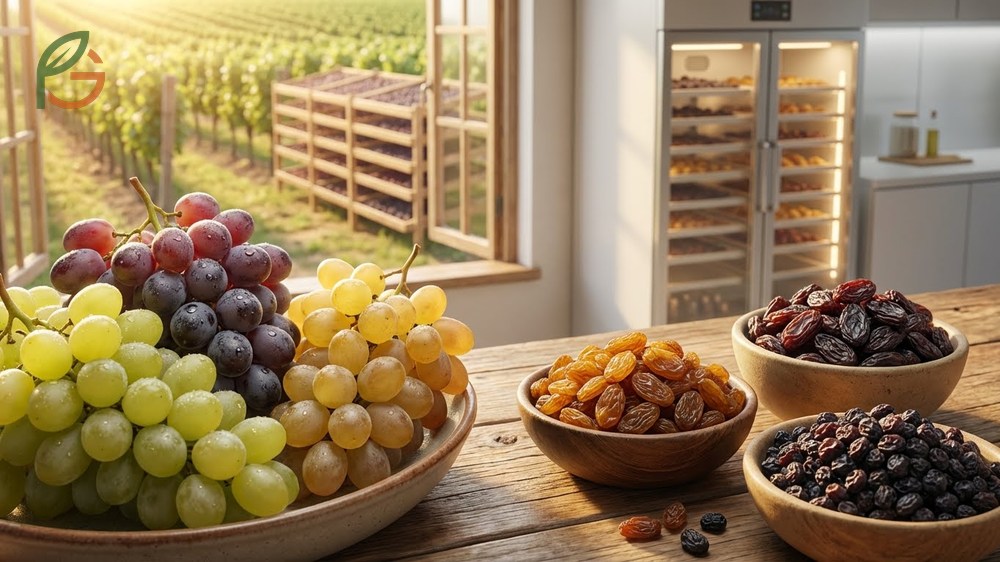
Dry grapes are dehydrated grapes from the species *Vitis vinifera* L., produced by removing 80% of the water content through sun-drying or mechanical dehydration.[1] The type you encounter—raisins, sultanas, or currants—depends on the grape variety, processing method, and color. Thompson Seedless grapes produce most commercial raisins sold in the United States, while Muscat grapes create golden varieties.[1]
The production process typically takes 2-3 weeks under controlled conditions, though sun-drying in hot climates can extend to 4 weeks. Commercial processors often apply vegetable oil solutions to sultanas before drying, which speeds moisture loss and produces the characteristic golden color. This matters because the drying method affects both nutrient retention and final texture—sun-dried varieties develop deeper flavors while maintaining more antioxidants.
Quality Indicator: Look for dry grapes that feel pliable rather than rock-hard. The 15% moisture content creates a chewy texture, while overdried products below 10% moisture become brittle and lose flavor complexity. Store in airtight containers to prevent further moisture loss.
Types: Raisins, Sultanas, and Currants
Raisins come from large Thompson Seedless or other seeded grape varieties that undergo 2-3 weeks of sun-drying without pre-treatment, producing dark brown, chewy fruits with rich flavor.[3] Sultanas originate from seedless white or yellow grapes treated with vegetable oil or sulfur dioxide before drying, resulting in golden color and softer, sweeter texture. Currants come from the small Black Corinth grape variety, creating the smallest, darkest, and tartest dried grape option.[1]
The nutritional differences between types remain minimal—all contain 60-75% natural sugars and similar fiber levels around 5-6g per 100g.[3] However, dark raisins provide significantly more iron (1.79mg/100g) compared to golden sultanas (near 0mg), making variety selection important if you’re addressing iron deficiency.[1] Currants work best in baked goods because their small size distributes evenly, while sultanas shine in salads due to their mild sweetness.
- Size progression: Currants smallest (0.2-0.3 inches), sultanas medium (0.3-0.5 inches), raisins largest (0.4-0.6 inches)
- Color spectrum: Raisins dark brown to black, sultanas golden yellow, currants deep purple-black
- Texture differences: Sultanas softest and most pliable, raisins moderately chewy, currants firmest and densest
- Flavor profiles: Sultanas sweet and mild, raisins rich and complex, currants tart with concentrated grape essence
- Best culinary uses: Raisins for trail mixes and oatmeal, sultanas for salads and light baking, currants for scones and traditional cakes
Benefits of Dry Grapes Soaked in Water
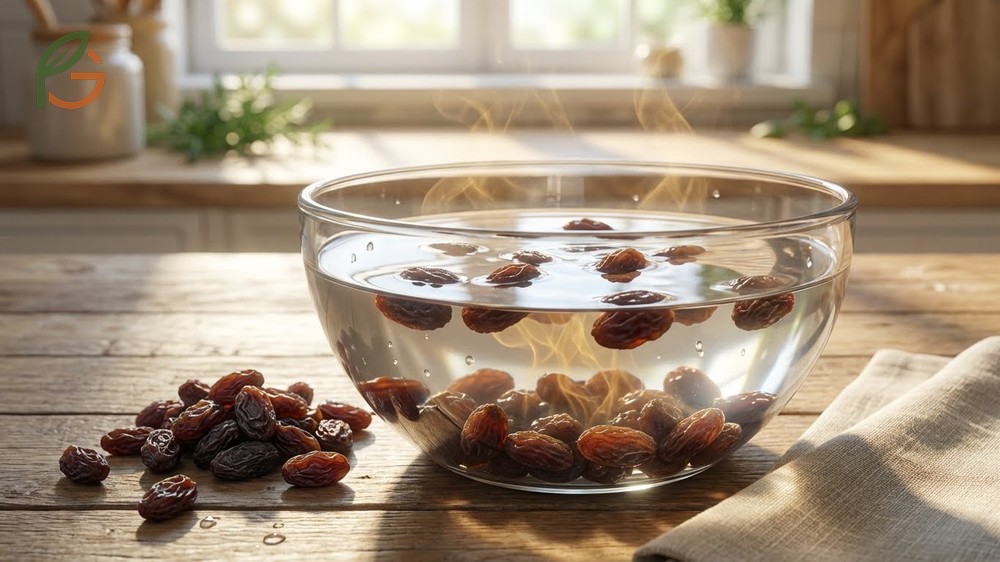
Soaking dry grapes in water for 8-12 hours activates enzymes that break down complex fibers and phytochemicals, improving nutrient absorption by 15-25% compared to eating them dry.[6] The process softens fiber structures, making them gentler on sensitive digestive systems while maintaining the same total fiber content. This pre-activation means your body accesses iron, calcium, and potassium more efficiently without additional digestive stress.
The soaking water itself becomes a nutrient-rich drink containing dissolved minerals and antioxidants that transferred during the overnight soak. Research shows that drinking this water on an empty stomach stimulates digestive enzymes within 20-30 minutes, promoting regular bowel movements throughout the day.[6] Most people notice improved regularity within 3-5 days of morning consumption.
Soaking proves particularly beneficial for people with diabetes or blood sugar concerns because it slightly reduces the glycemic impact compared to dry consumption. The water dilutes sugar concentration while the softened texture slows digestion further. You’ll get better results if you consume soaked raisins with protein sources like yogurt or nuts, which stabilizes blood glucose response even more effectively.
Soaking Method: Place 10-15 dry grapes in half a cup of clean water before bed. Cover and let sit at room temperature for 8-12 hours. Consume both the grapes and water first thing in the morning on an empty stomach. Don’t exceed 3-day storage of soaked grapes in the refrigerator to prevent bacterial growth.
- Enhanced iron bioavailability: Soaking releases bound iron compounds, increasing absorption rates by up to 20% when consumed with vitamin C
- Gentler digestion: Softened fibers reduce gas and bloating in people with sensitive stomachs or IBS symptoms
- Natural detoxification: The soaking water acts as a mild diuretic, supporting kidney function and toxin elimination through increased urine output
- Improved glycemic response: Water content dilutes sugar concentration, slowing absorption and preventing rapid blood glucose spikes
- Better hydration: Drinking the mineral-rich soaking water contributes to daily fluid intake while delivering electrolytes like potassium
How to Make Dried Grapes at Home
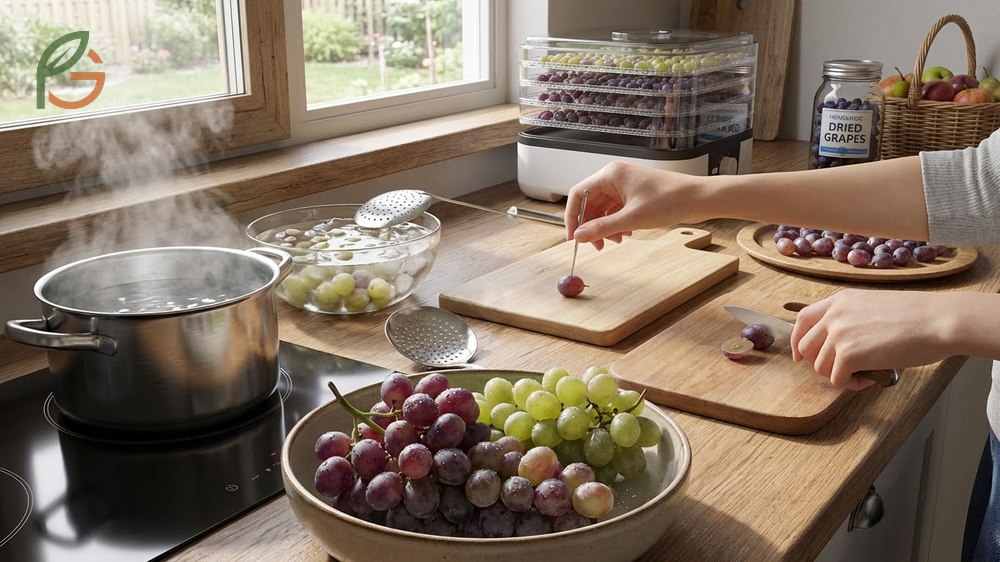
Making dried grapes at home requires breaking the grape skin to allow moisture escape, preventing case hardening where the outside dries into an impermeable shell while the inside remains moist and prone to mold.[7] You can blanch grapes in boiling water for 30 seconds then transfer to an ice bath, pierce skins with a metal pick, or slice them partially without cutting through. Each method works, but blanching produces the most uniform results for small to medium grapes.
Dehydrator drying at 135°F (57°C) takes 18-48 hours depending on grape size and desired final texture, with the process complete when grapes feel leathery and make a “plink” sound when dropped on a table.[7] Sun-drying in hot, dry climates works but extends the timeline to 4-7 days and requires bringing trays indoors overnight to prevent dew exposure. The reason temperature control matters is that too-high heat (above 140°F/60°C) destroys beneficial enzymes and vitamins.
After drying, you’ll need to condition the grapes by storing them in a sealed jar for one week, shaking daily to redistribute any remaining moisture evenly throughout the batch. This prevents pockets of moisture that could cause spoilage in storage. If you notice condensation inside the jar during conditioning, return the grapes to the dehydrator for 2-4 additional hours.
- Grape selection: Choose firm, ripe seedless grapes without bruises or soft spots—Thompson Seedless, Flame, or Crimson varieties work best
- Washing and preparation: Rinse grapes thoroughly under cool water, remove stems, and pat dry completely with clean towels
- Skin breaking: Blanch in boiling water for 30 seconds, then shock in ice water for 1 minute to crack skins naturally
- Dehydrator arrangement: Place grapes skin-side down on trays in a single layer with space between each for air circulation
- Drying process: Set temperature to 135°F (57°C) and dry for 18-48 hours, checking every 6 hours after the first day
- Dryness testing: Squeeze a grape—it should feel leathery with no moisture pockets, and make a hard “plink” when dropped
- Conditioning: Store in sealed jars for 7 days, shaking daily to check for condensation indicating incomplete drying
- Long-term storage: Keep in airtight containers in a cool, dark place for 1-2 years of shelf life
Safety Warning: Don’t consume grapes that develop mold during drying or storage. The white or green fuzzy growth indicates harmful mycotoxins that can’t be removed by rinsing or cooking. When in doubt, discard the entire batch to prevent foodborne illness.
Conclusion
The evidence is clear: dry grapes health benefits extend from digestive support through 4.5g fiber per 100g to cardiovascular protection via 744mg potassium, making them a research-backed addition to balanced diets.[1] Whether you choose dark raisins for maximum iron (1.79mg/100g), golden sultanas for milder flavor, or small currants for baking, you’ll gain concentrated nutrition that fresh grapes can’t match in equivalent portions. The 60% natural sugar content works alongside fiber to provide sustained energy without the crashes from processed sweets.
Current guidance emphasizes portion control at 1-2 ounces daily to balance benefits with caloric density, especially if you’re managing weight or blood sugar levels. FruitGarden synthesizes emerging nutritional research showing that soaking dry grapes overnight enhances mineral absorption while making them gentler on sensitive digestive systems. Start with small servings to assess your individual tolerance, and consider pairing them with protein sources to optimize the glycemic response for all-day energy.
Medical Disclaimer
Important Medical Disclaimer: This content is for informational and educational purposes only. It isn’t intended as a substitute for professional medical advice, diagnosis, or treatment. Always consult a qualified healthcare professional or registered dietitian before making significant changes to your diet, especially if you have diabetes, kidney disease, digestive disorders, or other medical conditions. Pregnant or nursing women should seek medical guidance before increasing dried fruit consumption. Individual nutritional needs vary based on age, activity level, and health status.
Frequently Asked Questions
How many dry grapes should I eat per day?
Research suggests 1-2 ounces (28-56g) or roughly 40-80 individual dry grapes daily provides optimal benefits without excessive calorie or sugar intake. This portion delivers 10-20% of your daily fiber needs and significant amounts of iron and potassium while keeping calories under 150. People with diabetes should start with half this amount and monitor blood glucose response before increasing.
Are dry grapes better than fresh grapes for nutrition?
Dry grapes concentrate minerals like iron (1.79mg vs 0.36mg per 100g) and fiber (4.5g vs 0.9g per 100g) compared to fresh grapes, but lose most vitamin C during dehydration. The choice depends on your nutritional goals—dry grapes excel for portable energy and mineral intake, while fresh grapes provide more vitamin C and hydration. Most nutritionists recommend including both in a varied diet.
Can dry grapes help with constipation relief?
Studies show that the 4.5g fiber per 100g in dark raisins effectively relieves constipation by adding bulk to stool and promoting regular bowel movements. Evidence suggests consuming 10-15 soaked dry grapes before breakfast stimulates digestive enzymes within 30 minutes. However, you’ll need adequate water intake (8+ glasses daily) for fiber to work properly—without sufficient hydration, high fiber can worsen constipation.
What’s the difference between raisins, sultanas, and currants?
Raisins come from large dark grapes sun-dried without pre-treatment, sultanas from golden grapes treated with oil or sulfur for lighter color and softer texture, while currants derive from small Black Corinth grapes creating the tiniest, tartest variety. Nutritionally they’re similar with 60-75% sugar and 5-6g fiber per 100g, but dark raisins provide significantly more iron (1.79mg) than golden sultanas (near 0mg). Choose based on your iron needs and flavor preferences.
Should I soak dry grapes before eating them?
Soaking dry grapes for 8-12 hours increases nutrient absorption by 15-25% and makes fiber gentler on sensitive digestive systems, making it beneficial for people with IBS, diabetes, or iron deficiency. However, dry grapes work fine without soaking if you don’t have digestive sensitivities and prefer the concentrated flavor. The soaking water itself provides dissolved minerals and mild detoxification benefits when consumed on an empty stomach.
Are dry grapes good for weight loss?
Dry grapes can support weight loss when consumed in controlled portions (1 ounce/28g) as they provide 4-8% daily fiber that increases satiety and reduces overall calorie intake. However, at 299 calories per 100g, overconsumption easily adds excess calories that counteract weight loss efforts. Research shows they work best as pre-portioned snacks replacing processed sweets, not as unlimited “healthy” options. Pair with protein sources like Greek yogurt to maximize fullness.
How long do homemade dried grapes last?
Properly dried and conditioned homemade grapes stored in airtight containers in cool, dark locations last 1-2 years without significant quality loss. The key is achieving moisture content below 15% and completing the 7-day conditioning process to redistribute any remaining moisture evenly. Refrigeration extends shelf life to 2+ years but isn’t necessary if you maintain storage temperatures below 70°F (21°C). Discard any batch that develops mold, off-odors, or sticky texture indicating moisture reabsorption.





