
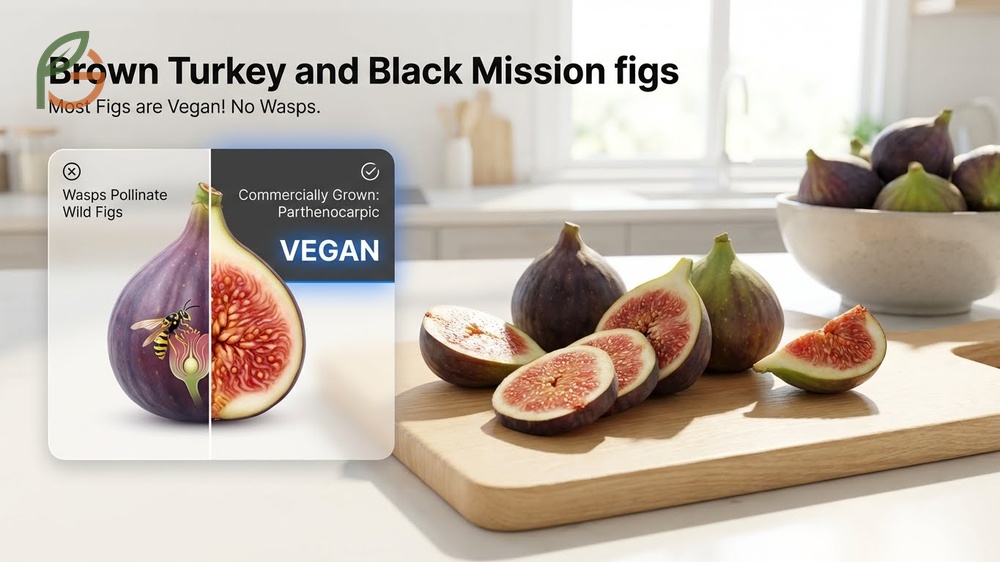
Are figs vegan? Yes, most commercially grown figs are vegan. Research shows that common varieties like Brown Turkey and Black Mission are parthenocarpic, meaning they produce fruit without pollination or wasp involvement[1]. While some wild fig species rely on wasp pollination through an ancient mutualistic relationship, the figs you’ll find at grocery stores don’t contain wasps. FruitGarden synthesizes current horticultural research to help you understand which fruits align with plant-based eating.
Quick Answer
- Common figs don’t require wasp pollination—they’re parthenocarpic and develop fruit naturally[2]
- Brown Turkey, Black Mission, Kadota, and Celeste varieties are 100% vegan-friendly[3]
- Wild figs with wasp pollination produce an enzyme called ficin that breaks down wasp bodies completely[4]
- The fig-wasp relationship is natural mutualism, not exploitation—both species benefit equally[5]
Are Figs Vegan
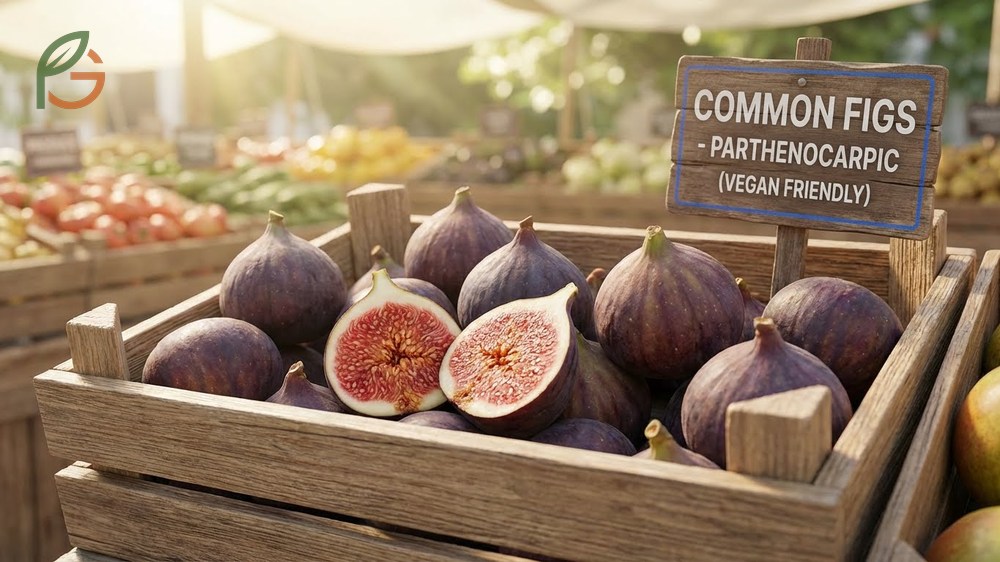
The answer depends entirely on the fig type you’re eating. Most commercial figs sold in US supermarkets are common figs that don’t involve wasps at all[2]. These varieties develop fruit through parthenocarpy, a process where fruit matures without fertilization or pollination.
Common figs account for the vast majority of figs grown in home gardens and commercial orchards across the United States. They produce two crops annually in warm climates, with both developing parthenocarpically[2]. This means zero wasp involvement from flower to harvest.
Wild figs and Smyrna-type figs tell a different story. These varieties require pollination from specialized fig wasps to develop seeds and mature fruit. The wasp-fig relationship represents obligate mutualism that evolved over 90 million years[6], with neither species able to reproduce without the other.
Common Figs: No Wasp Required
Common figs dominate the US market because they’re perfectly suited to cultivation without the complexity of maintaining fig wasp populations. These varieties close their ostiole (the small opening at the fig’s base), preventing wasp entry entirely.
Research shows this closure protects developing fruit from insects and rainwater, reducing rot and pest damage. The parthenocarpic process triggers fruit development through hormonal signals rather than pollination.
- Brown Turkey: The most popular variety in southeastern US, producing medium-sized purplish-brown fruit with reliable two-crop yields
- Black Mission: Commercially significant with thick skin, dark purple exterior, and enhanced flavor when grown in California conditions[7]
- Kadota (Dottato): Light green skin with amber flesh, prized for canning and fresh eating without any pollination needs
- Celeste: Small, sweet figs with exceptional cold hardiness, ideal for zones 7-9
- Chicago Hardy: Survives temperatures down to -10°F (-23°C), making it viable in northern climates
Important Note: Even when fig wasps are present in California orchards, they enhance flavor in Black Mission figs but aren’t required for fruit development[3]. The trees still produce crops without pollination.
Wild Figs and Wasp Pollination
Wild fig species represent the ancestral pollination system. Over 750 fig species worldwide maintain relationships with specific wasp species[5]. Each fig species typically partners with one to three wasp species in obligate mutualism.
Smyrna-type figs like Calimyrna require active pollination through a process called caprification. Growers place baskets of caprifigs (male figs hosting wasps) near Smyrna trees to ensure pollination success. Without this intervention, Smyrna figs drop from trees before maturing.
The crunchy texture inside figs comes from seeds, not wasp remains as commonly believed. When wasps do enter figs, the ficin enzyme completely breaks down their bodies into component nutrients that the fig absorbs[4].
Fig Wasp Pollination
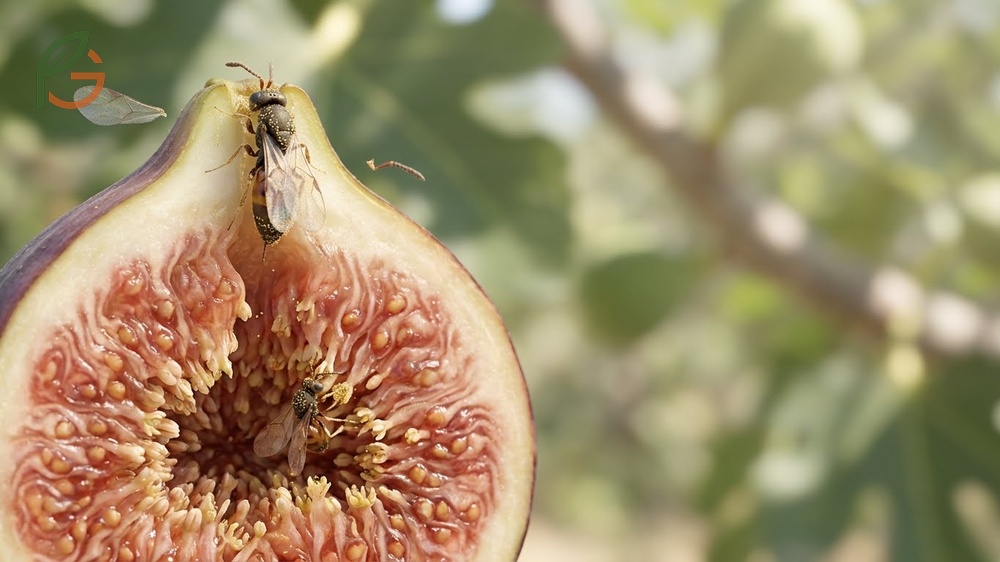
Fig pollination represents one of nature’s most intricate relationships. Female fig wasps crawl through the tiny ostiole opening of receptive figs, often losing their wings and antennae in the process. This journey is one-way—the wasp will never leave the fig alive.
The wasp lays eggs inside the fig’s flowers while simultaneously depositing pollen collected from her birth fig. This dual action fertilizes fig flowers and provides nursery space for wasp offspring. The entire cycle completes in approximately four weeks from pollination to emergence of the next wasp generation.
Current data indicates this mutualistic relationship originated roughly 90 million years ago[6] during the Cretaceous period. Both lineages have co-evolved with remarkable specificity, though recent research shows more flexibility than previously thought, with some pollinator species switching between host fig species.
The Pollination Cycle
The cycle begins when a mated female wasp detects chemical signals from a receptive fig. She squeezes through the ostiole, which is so narrow it tears off her wings. Inside the fig, she finds hundreds of tiny flowers arranged along the inner wall.
She lays eggs in some flowers while pollinating others. Male wasp larvae develop in specialized gall flowers, while female larvae develop alongside viable fig seeds in seed flowers. After three to four weeks, male wasps emerge first, locate female pupae, and mate with them before the females have even hatched.
- Entry phase: Female wasp squeezes through ostiole, losing wings and antenna segments in the process
- Pollination and oviposition: Wasp deposits pollen on female flowers while laying eggs in gall flowers
- Development period: Wasp larvae and fig seeds develop simultaneously over 3-4 weeks inside the closed fig
- Male emergence: Wingless male wasps hatch first, locate female pupae, and mate through flower walls
- Exit tunnel creation: Male wasps chew escape tunnels through the fig wall before dying
- Female dispersal: Newly emerged female wasps collect pollen and exit through male-made tunnels, living only 1-2 days[8]
Ficin Enzyme Breakdown
Ficin is a protease enzyme found in fig tree latex, the milky substance in stems, leaves, and unripe fruit. When a wasp dies inside the fig, ficin breaks down proteins in the wasp’s exoskeleton and soft tissues. This enzymatic digestion converts the wasp’s body into amino acids and nutrients the fig absorbs.
The process mirrors how your stomach enzymes break down dietary proteins. Ficin works particularly well on collagen and keratin, the structural proteins in insect exoskeletons. Within days of the wasp’s death, no recognizable wasp structures remain—the fig has completely recycled the nutrients.
Interestingly, ficin has commercial applications beyond fig biology. Cheesemakers use it as a vegetarian alternative to animal-derived rennet for clotting milk[9]. It’s also used in meat tenderizers and as a digestive aid supplement.
Key Point: By the time a wasp-pollinated fig ripens, the ficin enzyme has completely broken down any wasp remains into molecular components indistinguishable from the fig’s own tissues.
Figs Vegan Debate
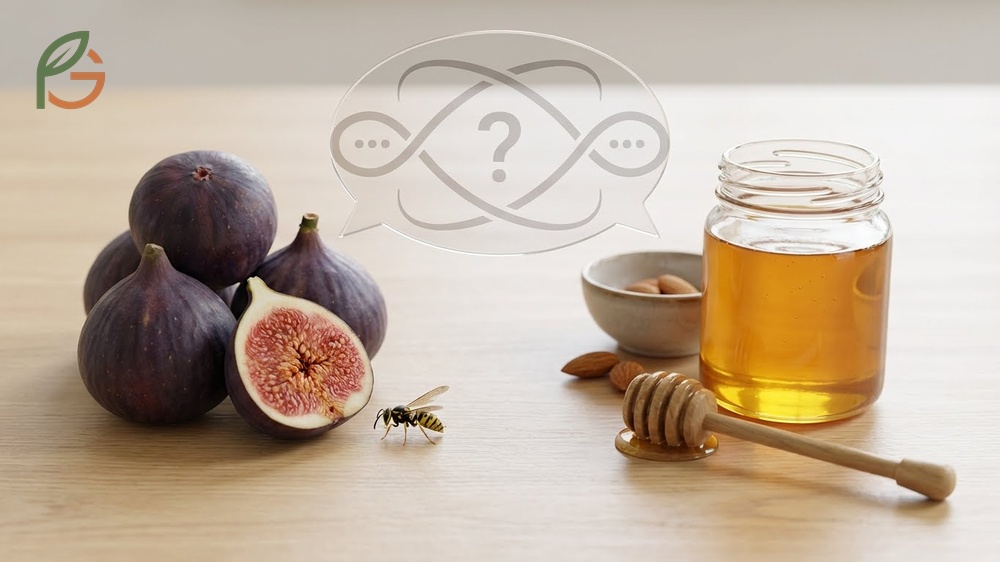
The vegan community remains divided on whether figs qualify as vegan, particularly varieties that rely on wasp pollination. This debate centers on whether the fig-wasp relationship constitutes animal exploitation or simply represents natural ecological processes.
The disagreement mirrors debates about honey consumption, with similar arguments about intentionality, exploitation, and the boundaries of veganism. Unlike honey production, which involves managed hives and honey extraction, fig pollination occurs entirely through wild ecological relationships in most cases.
Most vegans focus on whether human intervention forces animals into service or causes unnecessary death. The answer differs dramatically between wild fig-wasp mutualisms and potential commercial scenarios where wasps might be deliberately introduced.
The Yes Perspective
Vegans who consider figs acceptable argue that the fig-wasp relationship represents natural mutualism rather than exploitation. The wasp isn’t farmed, confined, or forced into the fig—she enters voluntarily to complete her natural reproductive cycle. Both species evolved this interdependence over millions of years without human intervention.
This perspective emphasizes that the wasp benefits equally from the relationship. She gains a protected environment for her offspring and ensures the continuation of her species. The fig provides exactly what the wasp needs, while the wasp provides pollination services the fig requires.
- No exploitation exists: The wasp completes her natural life cycle by choice, not through human manipulation or confinement
- Mutual benefit: Both species require each other for reproduction—neither exploits the other
- Natural process: The relationship predates human agriculture by millions of years
- Complete decomposition: The ficin enzyme breaks down wasp remains entirely, so you’re not consuming animal tissue
- Harm reduction principle: Veganism aims to minimize exploitation where practical; avoiding figs doesn’t reduce animal suffering
The No Perspective
Vegans who avoid wasp-pollinated figs point out that the definition of veganism excludes all animal products and byproducts. Since the wasp dies as a direct result of the fig’s development, eating that fig means consuming something that required an animal’s death.
This stricter interpretation focuses on the fact that every Smyrna-type fig contains at least one dead wasp, even if enzymatically broken down. The naturalness of the process doesn’t change the outcome—an animal died to produce food for humans.
Some also argue that commercial fig cultivation in regions with introduced fig wasps constitutes exploitation. When growers deliberately place caprifigs to encourage pollination, they’re managing wasp populations for human benefit, similar to beekeeping.
Consider This: The vast majority of store-bought figs in the US are common varieties that don’t involve wasps at all. If you’re uncertain about fig ethics, stick with Brown Turkey or Black Mission varieties.
Vegan Friendly Figs
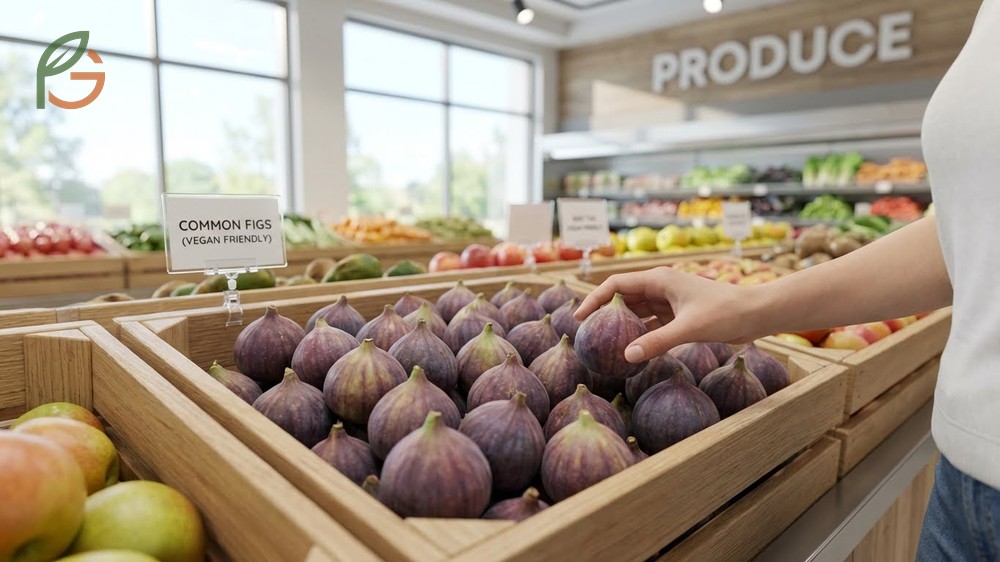
Identifying vegan-friendly figs is straightforward—look for common fig varieties. These cultivars dominate commercial production specifically because they don’t require pollination infrastructure. Supermarkets stock almost exclusively parthenocarpic varieties.
When buying fresh figs, ask about the variety. If the produce department doesn’t know, assume they’re common figs since that’s what commercial growers cultivate. Smyrna figs are specialty items rarely found in standard grocery stores due to their pollination requirements.
Dried figs follow the same pattern. Brands like Calimyrna mention the variety name because it’s a premium product. Most generic dried figs come from common varieties grown without wasp pollination.
| Variety | Pollination Method | Vegan Status | Availability |
|---|---|---|---|
| Brown Turkey | Parthenocarpic | 100% Vegan | Widely available |
| Black Mission | Parthenocarpic | 100% Vegan | Common in stores |
| Kadota | Parthenocarpic | 100% Vegan | Common in stores |
| Celeste | Parthenocarpic | 100% Vegan | Garden/farm stands |
| Calimyrna | Wasp pollination | Debated | Specialty stores |
- Check variety labels: Common figs will often specify Brown Turkey, Mission, or Kadota on packaging
- Shop domestic: US-grown figs are overwhelmingly common varieties due to climate and cultivation practices
- Avoid Calimyrna specifically: This is the one variety consistently labeled that requires wasp pollination
- Ask at farmers markets: Small growers can tell you exactly which varieties they cultivate
- Grow your own: Common fig trees thrive in zones 7-10 and produce abundant crops without any pollination concerns
Ethical Vegan Figs
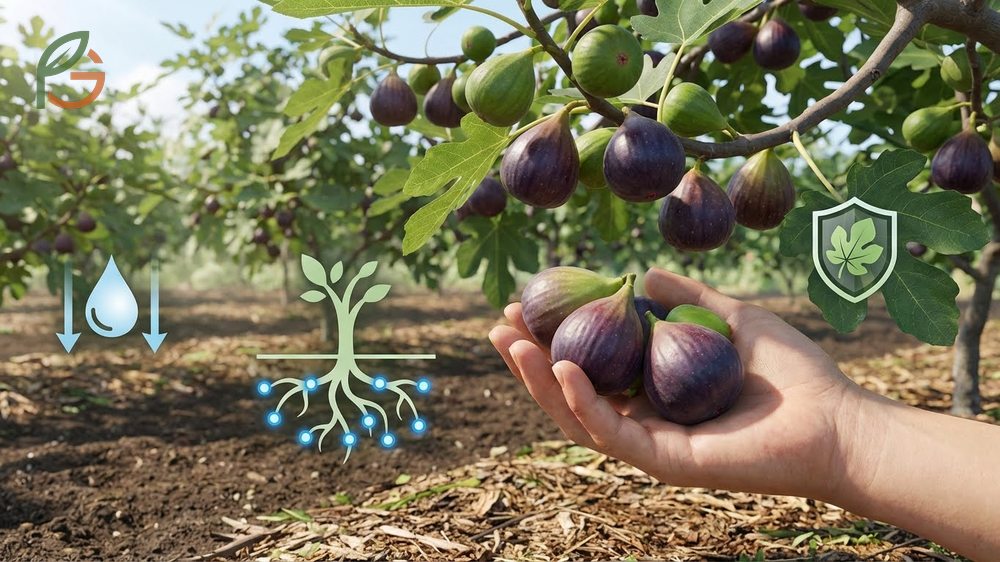
Ethical considerations extend beyond the wasp question. Sustainable fig cultivation practices matter for environmentally conscious consumers. Common figs offer advantages here too—they require less water than many fruit crops and tolerate poor soil conditions.
Fig trees fix nitrogen through root associations with beneficial bacteria, reducing fertilizer needs. They’re also remarkably pest-resistant compared to stone fruits or pome fruits, requiring minimal pesticide applications. This makes them excellent choices for organic cultivation.
Climate considerations favor fig cultivation in Mediterranean climates, but common varieties adapt to diverse conditions. Growing figs locally in appropriate zones reduces transportation emissions compared to imported tropical fruits. The trees also provide substantial ecosystem services, offering habitat and food for birds and beneficial insects.
- Water efficiency: Established fig trees need only occasional deep watering, thriving in drought conditions once mature
- Organic compatibility: Common figs resist most pests and diseases without chemical interventions
- Long productive life: Fig trees produce for 50-100 years, offering sustainable yields across generations
- Wildlife support: Ripe figs provide food for songbirds, while trees offer nesting sites and shade
- Carbon sequestration: Mature fig trees store significant carbon in wood and soil through extensive root systems
Sustainability Tip: If you’re planting figs in zones 7-9, position trees on south-facing walls for microclimate protection. This extends the growing season and increases crop reliability in marginal climates.
The ethical case for common figs strengthens when considering the complete growing system. These trees produce abundant food with minimal inputs, make efficient use of space through vertical growth, and contribute positively to local ecosystems. Unlike monoculture commercial operations, home fig cultivation integrates seamlessly into diverse gardens.
For vegans prioritizing both animal welfare and environmental sustainability, common figs check all boxes. They’re entirely plant-based, require no animal inputs, support biodiversity, and grow with remarkably low resource demands.
Conclusion
The evidence is clear: most figs you’ll encounter are vegan-friendly. Common varieties like Brown Turkey and Black Mission develop fruit through parthenocarpy without any wasp involvement. These dominate US markets specifically because they don’t require complex pollination management.
Current horticultural guidance emphasizes growing common figs for reliable production and minimal maintenance. Are figs vegan? For the overwhelming majority of commercially available figs, the answer is yes. If you want absolute certainty, ask for variety names or grow your own common fig tree—they’re among the easiest fruit trees to cultivate in appropriate climates. FruitGarden recommends common fig varieties for gardeners seeking productive, sustainable, and ethically straightforward fruit production.
Frequently Asked Questions
Do all figs contain dead wasps?
No, most commercially grown figs are common varieties that develop fruit without pollination, so they never contain wasps. Only Smyrna-type figs like Calimyrna require wasp pollination, and these are specialty items rarely found in regular supermarkets.
What fig varieties are definitely vegan?
Brown Turkey, Black Mission, Kadota, Celeste, and Chicago Hardy are all common figs that develop parthenocarpically without pollination. These varieties account for the vast majority of figs sold in US stores and grown in home gardens.
How can I tell if figs at the store are vegan?
Check for variety labels indicating common figs like Brown Turkey or Mission. If unlabeled, assume they’re common varieties since that’s what commercial growers cultivate. Avoid Calimyrna figs if you want to be certain—that’s the one variety typically labeled that requires wasp pollination.
What happens to the wasp inside pollinated figs?
The fig produces an enzyme called ficin that completely breaks down the wasp’s body into component amino acids and nutrients. By the time the fig ripens, no recognizable wasp structures remain—the tissues have been enzymatically digested and absorbed by the fig.
Is the fig-wasp relationship considered exploitation?
Most vegans view it as natural mutualism rather than exploitation since the wasp voluntarily completes her natural reproductive cycle inside the fig. Both species evolved this interdependence over 90 million years, and both benefit equally from the relationship without human intervention.
Can I grow vegan figs in my backyard?
Yes, common fig varieties like Brown Turkey and Celeste grow easily in zones 7-10 without requiring pollination. These trees produce two crops annually through parthenocarpy, need minimal care once established, and offer abundant fruit production without any wasp involvement.
Are dried figs vegan?
Most dried figs come from common varieties and are vegan. Generic store-brand dried figs typically use Brown Turkey or Mission varieties that don’t require wasp pollination. Calimyrna dried figs specifically mention the variety name since it’s a premium product that does involve wasp pollination.





