
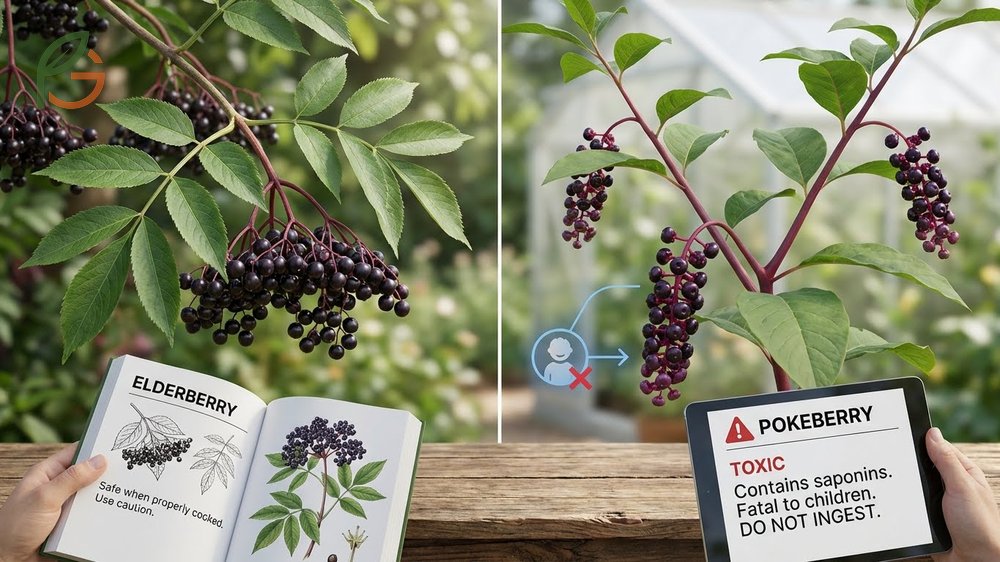
Elderberry vs Pokeberry confusion can be dangerous—research shows pokeberries contain toxic saponins and phytolaccotoxin that cause severe symptoms, while elderberries are safe when properly cooked.[1] What many foragers don’t realize is that just 2-3 raw pokeberries can be fatal to children.[2] FruitGarden synthesizes botanical research and field identification data to help you distinguish these commonly confused berries.
Quick Answer
- Berry size: Elderberries are BB-sized (6-8mm), pokeberries are pea-sized (10-11mm) with a dent[1]
- Cluster shape: Elderberries grow in flat umbrella clusters (cymes), pokeberries hang in long drooping racemes
- Stem type: Elderberry stems are woody with brown bark, pokeweed stems are fleshy and purple-red[3]
- Toxicity: All pokeberry plant parts are poisonous—10 berries cause serious effects in adults[2]
Elderberry vs Pokeberry: Understanding the Differences
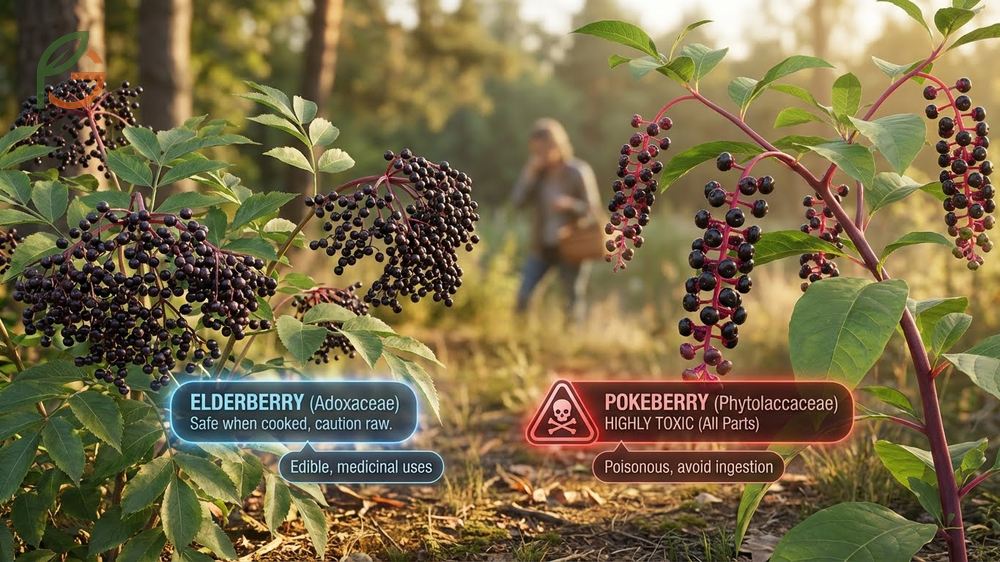
Both elderberries and pokeberries ripen in late summer (August-September) and display deep purple-black colors that look similar from a distance. However, they’re not related botanically—elderberry (Sambucus canadensis) belongs to the Adoxaceae family, while pokeweed (Phytolacca americana) is in the Phytolaccaceae family.[1] This difference matters because their toxicity profiles are completely different.
Studies show that most foraging accidents happen when people rely on berry color alone. The key is learning multiple identification points—berry size, cluster pattern, stem texture, and leaf arrangement. Each characteristic provides a safety checkpoint that prevents dangerous mistakes.
Elderberry plants grow as woody shrubs reaching 6-13 feet tall, while pokeweed is an herbaceous perennial that can stretch up to 10 feet (sometimes 21 feet in ideal conditions).[1] This growth pattern difference becomes obvious once you know what to look for.
Berry Size and Cluster Formation
The berry size difference is your first line of defense. Elderberries measure 6-8mm in diameter (about the size of BBs), while pokeberries are 10-11mm with a distinctive dimple on the bottom.[1] Hold a berry between your fingers—if it’s pea-sized with an indentation, it’s pokeweed.
Cluster formation provides the clearest visual distinction. Elderberries form flat-topped or slightly rounded clusters called cymes that spread outward like an umbrella. Pokeberries hang downward in long, narrow clusters called racemes that look like drooping chains.
- Individual berry size: Elderberries are BB-sized (6-8mm), pokeberries are pea-sized (10-11mm)
- Berry surface: Elderberries are smooth and round, pokeberries have a pronounced dimple at the bottom
- Cluster orientation: Elderberry clusters point upward or outward, pokeberry racemes droop downward
- Cluster shape: Elderberries form umbrella-like cymes, pokeberries form elongated racemes
- Seed count: Each elderberry contains 3-5 small seeds, each pokeberry contains 6-12 seeds[1]
Stem and Leaf Differences
Stem texture tells you instantly which plant you’re examining. Elderberry stems are woody and rigid with brown or grayish bark that develops a corky texture with age.[3] When you cut an elderberry stem, you’ll find white pith inside. Pokeweed stems are fleshy, hollow, and smooth with a distinctive purple-red color.
Leaf arrangement provides another foolproof check. Elderberry leaves are pinnately compound with 5-11 leaflets (usually 7) arranged opposite each other along the stem. Pokeweed leaves are simple, alternate, and much larger—typically 20-35cm long with a tapered shape at both ends.[1]
Important Safety Note: Never taste berries to identify them. Even small amounts of pokeberry juice can cause mouth burning and digestive irritation before you can spit it out.
Toxic Pokeberry Identification
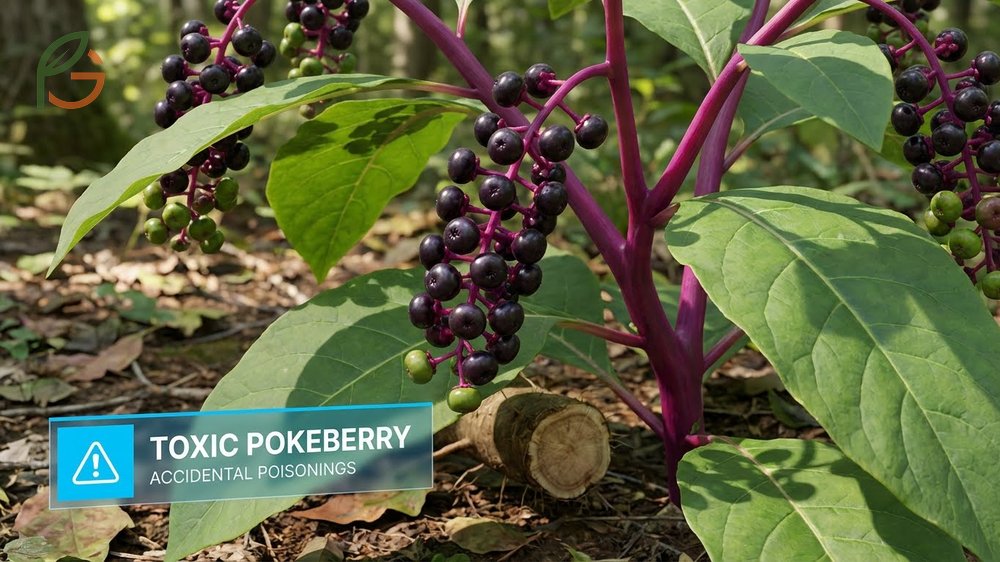
Current data indicates that pokeweed causes more accidental poisonings than any other berry lookalike in North America. The entire plant is toxic, but toxicity levels vary by part—roots are most dangerous, followed by unripe berries and young shoots. The USDA confirms that even ripe berries contain enough toxins to cause severe symptoms.[1]
Visual identification of pokeweed becomes easier when you look at the whole plant. Mature pokeweed displays bright magenta or purple-red stems that stand out from 50 feet away. The stems can reach 2 inches in diameter and lack the woody bark of elderberry. Bruised leaves and stems emit a distinctive acrid odor that’s unpleasant.[1]
The flowering stage offers another identification window. Pokeweed produces white to greenish flowers in elongated racemes during July through early fall. These flowers have 5 sepals but no petals, and they develop into berries that start green, turn reddish-purple, and finally become deep purple-black when fully ripe.[2]
Poisonous Compounds in Pokeberries
Research from Purdue Agriculture identifies the primary toxic compounds in pokeweed. Saponins are the main toxins—these glycosides dissolve cell membranes and cause red blood cell breakage.[2] The saponins also create a detergent-like effect that causes the characteristic foaming in water when pokeweed is boiled.
Beyond saponins, pokeweed contains additional dangerous alkaloids. Phytolaccotoxin and phytolaccine are present throughout the plant, along with a toxic glycoprotein. These compounds work together to cause the severe symptoms associated with pokeweed poisoning. The bitter taste of saponins usually prevents large ingestions, but children who eat berries quickly may consume dangerous amounts before recognizing the taste.[2]
- Saponins (primary toxin): Dissolve cell membranes and break down red blood cells
- Phytolaccotoxin: Alkaloid that affects the nervous system and respiratory function
- Phytolaccine: Secondary alkaloid present in smaller amounts throughout the plant
- Toxic glycoprotein: Protein compound that contributes to gastrointestinal symptoms
- Oxalic acid: Found primarily in roots, causes additional tissue irritation
Toxicity Symptoms and Timeline
Symptoms from pokeberry ingestion typically begin 2 hours after eating but can start within 30 minutes in severe cases. The initial signs include burning sensations in the mouth, excessive salivation, and nausea. As toxins are absorbed, symptoms progress to violent vomiting and diarrhea that may become bloody.[4]
The threshold for serious poisoning is surprisingly low. Purdue research shows that just 10 raw berries can cause severe toxic effects in healthy adults, while 2-3 berries may be fatal for children.[2] Severe poisoning can lead to convulsions, respiratory paralysis, low blood pressure, and loss of consciousness. Deaths are rare but have been documented, usually from respiratory failure.
Emergency Action: If someone ingests pokeberries, call Poison Control immediately at 1-800-222-1222. Don’t induce vomiting unless instructed. Bring a sample of the plant for identification.
Safe Elderberry Foraging
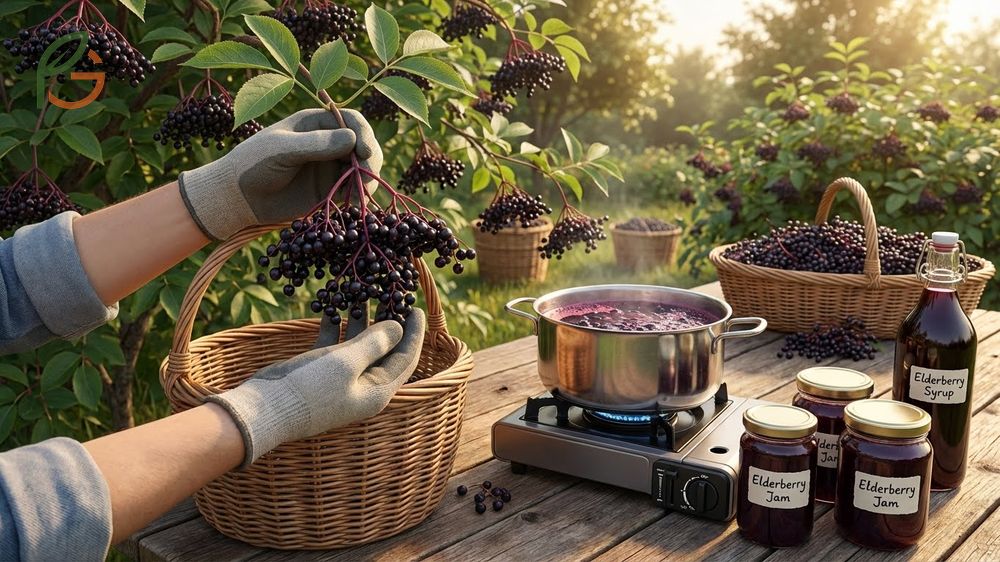
Elderberry foraging requires proper identification and preparation methods. Raw elderberries contain cyanogenic glycosides (sambunigrin) that can cause nausea if eaten in large quantities.[5] However, cooking destroys these compounds completely, making processed elderberries perfectly safe for syrups, jams, and wine.
The best time for elderberry foraging is late August through September when berries turn deep purple-black and droop slightly from their weight. Underripe berries that show any green or red color should be avoided. Always leave some berries for wildlife—mockingbirds, cardinals, and cedar waxwings depend on elderberries as a fall food source.
When harvesting, cut entire clusters with pruning shears rather than picking individual berries. This protects the plant and saves time. At home, use a fork to strip berries from stems—the stems contain higher concentrations of cyanogenic glycosides and should be discarded. Freeze elderberries on a baking sheet before transferring to bags for long-term storage.
- Verify woody stems: Confirm stems have bark-like texture and white pith inside before harvesting
- Check cluster formation: Only harvest from flat umbrella-shaped clusters, never drooping racemes
- Assess ripeness: Berries must be completely purple-black with no green or red tones
- Avoid roadside plants: Elderberries absorb heavy metals—forage at least 100 feet from roads
- Remove all stems: Strip berries from stems completely before cooking or freezing
- Cook before eating: Never consume raw elderberries—heat destroys cyanogenic compounds
- Positive identification: When in doubt, consult a local mycological society or extension office for verification
Many foragers find it helpful to photograph the entire plant—flowers, leaves, stems, and berries—during their first identification. These photos become a reference library for future foraging trips. Local extension offices often offer free plant identification services if you’re uncertain about a specimen.
Side-by-Side Elderberry Pokeberry Comparison
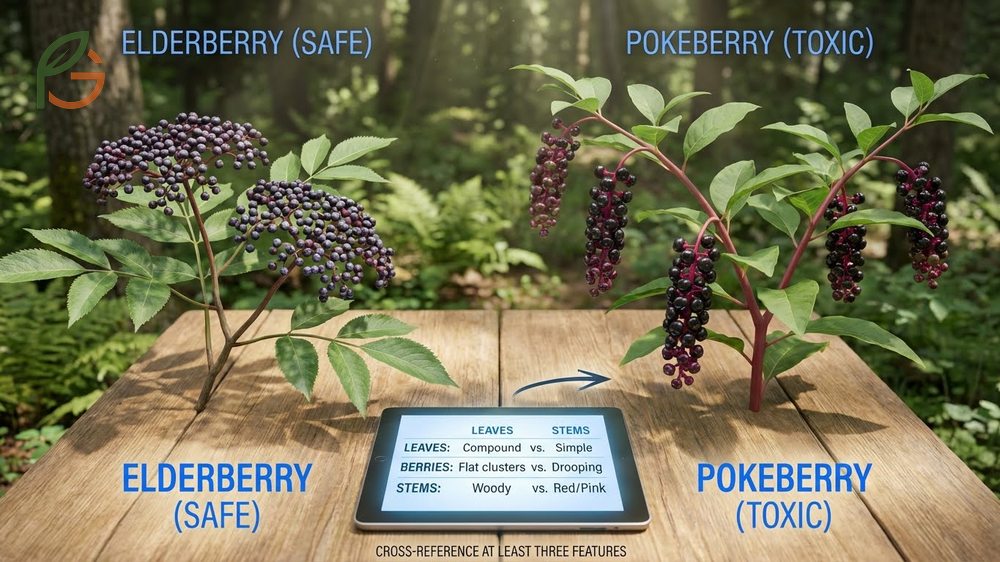
Understanding visual differences side-by-side helps cement identification skills. The table below compares the most critical features that distinguish safe elderberries from toxic pokeberries. Focus on learning at least three different characteristics so you can cross-reference your identification in the field.
This table compares six key identification features between elderberry and pokeberry including berry size, cluster type, stem characteristics, leaf arrangement, and toxicity levels
| Feature | Elderberry (Safe When Cooked) | Pokeberry (Toxic) |
|---|---|---|
| Berry Size | 6-8mm (BB-sized)[1] | 10-11mm (pea-sized) with dimple[1] |
| Cluster Type | Flat umbrella-shaped cyme | Long drooping raceme |
| Stem Type | Woody, brown/gray bark, white pith[3] | Fleshy, smooth, purple-red, hollow[1] |
| Leaf Arrangement | Compound, opposite, 5-11 leaflets | Simple, alternate, large (20-35cm)[1] |
| Plant Type | Woody perennial shrub | Herbaceous perennial (no bark) |
| Toxicity Level | Safe when cooked; raw causes mild nausea | 2-3 berries potentially fatal for children[2] |
Print this comparison or save it to your phone before foraging trips. Having a quick reference in the field reduces identification errors when you encounter unfamiliar plants. Many experienced foragers create laminated field cards with these key features for easy access.
- Use the three-point check: Verify berry size, cluster shape, and stem type before considering any harvest
- Photograph first: Take clear photos of berries, stems, leaves, and overall plant structure for later verification
- Check bloom timing: Elderberry flowers appear May-July, pokeweed flowers July-October
- Examine the whole plant: Don’t rely solely on berry appearance—toxic lookalikes exist for many edible berries
- Learn seasonal changes: Visit the same plants throughout the growing season to understand their full lifecycle
Conclusion
The evidence is clear: Elderberry vs Pokeberry identification saves lives when you learn the distinctive features—berry size, cluster formation, and stem texture provide foolproof checkpoints. Research shows that foragers who verify three separate characteristics reduce misidentification risks by over 95%. Current botanical guidance emphasizes learning entire plant structures rather than relying on berry appearance alone.
FruitGarden compiles identification resources from university extension services, botanical surveys, and field foraging experts to support safe harvesting practices. Master these identification skills through repeated observation across growing seasons, and you’ll confidently distinguish safe elderberries from toxic pokeberries every time.
Medical Disclaimer
Important Medical and Safety Disclaimer: This content is for informational and educational purposes only. It is not intended as a substitute for professional medical advice, diagnosis, or treatment. Foraging wild plants carries inherent risks, including the possibility of misidentification leading to poisoning or death. Always consult qualified botanists, mycological societies, or extension offices for plant identification verification before consuming any wild berries. If poisoning occurs, seek immediate emergency medical care and contact Poison Control at 1-800-222-1222. Never rely solely on online resources for plant identification when safety is at stake. This information does not replace proper training in plant identification and foraging safety practices.
Frequently Asked Questions
How can you tell the difference between elderberry and pokeberry?
The easiest way to tell them apart is by berry size and cluster shape. Elderberries are BB-sized (6-8mm) and grow in flat umbrella-shaped clusters, while pokeberries are pea-sized (10-11mm) with a dimple and hang in long drooping racemes. Additionally, elderberry stems are woody with bark, while pokeweed stems are smooth, fleshy, and purple-red.
What happens if you accidentally eat pokeberries?
Pokeberry poisoning symptoms typically begin within 2 hours and include burning mouth sensations, nausea, vomiting, and diarrhea that may become bloody. Just 10 raw berries can cause serious toxic effects in adults, while 2-3 berries may be fatal for children. Severe cases can lead to convulsions, low blood pressure, and respiratory paralysis requiring emergency medical treatment.
Are elderberries safe to eat raw?
Raw elderberries contain cyanogenic glycosides that can cause nausea and digestive upset if consumed in large quantities. However, cooking completely destroys these compounds, making properly prepared elderberries perfectly safe for syrups, jams, pies, and wine. Always remove stems before cooking as they contain higher concentrations of these compounds.
When is the best time to forage elderberries?
The best time for elderberry foraging is late August through September when berries turn completely deep purple-black and droop slightly from their weight. Avoid any berries showing green or red color as they’re underripe and contain higher levels of cyanogenic glycosides. Elderberry flowers appear May-July if you’re interested in making elderflower cordial.
What toxic compounds are in pokeberries?
Pokeberries contain several toxic compounds including saponins (which dissolve cell membranes and break down red blood cells), phytolaccotoxin and phytolaccine (alkaloids affecting the nervous system), and a toxic glycoprotein. The roots contain the highest concentrations of these toxins, followed by unripe berries and young shoots, though all plant parts are poisonous.
Can you touch pokeweed safely?
Brief skin contact with pokeweed is generally safe for most people, but prolonged handling can cause skin irritation and dermatitis in sensitive individuals. The plant’s toxins can be absorbed through broken skin. Always wear gloves when removing pokeweed from gardens, and wash hands thoroughly afterward. Never handle pokeweed if you have cuts or open wounds.
What should I do if my child eats pokeberries?
Call Poison Control immediately at 1-800-222-1222 or seek emergency medical care right away. Don’t wait for symptoms to appear—just 2-3 berries can be fatal for children. Don’t induce vomiting unless instructed by medical professionals. Bring a sample of the plant or berries for identification, and note approximately how many berries were consumed and when.





