
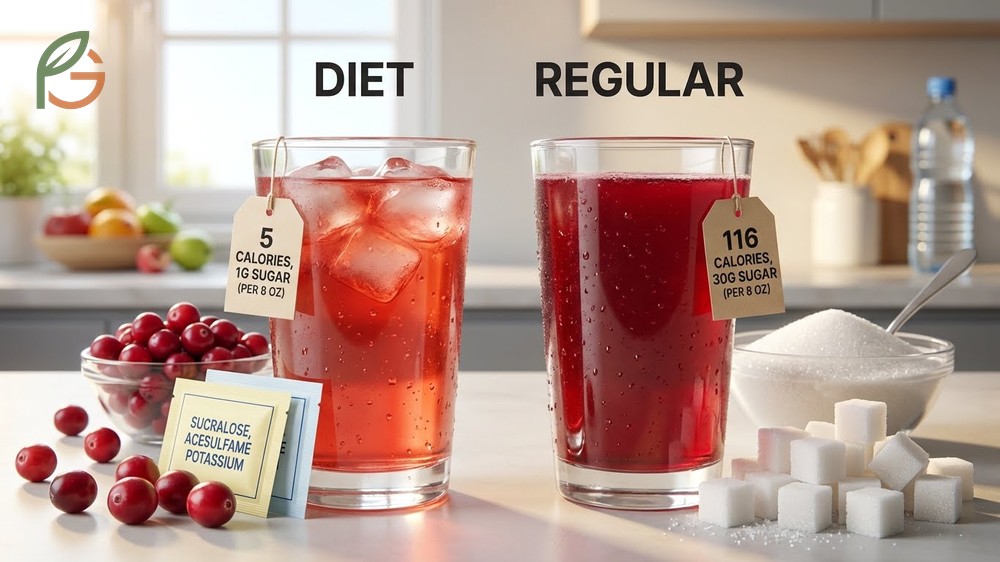
Is diet cranberry juice healthy? Yes, it’s a low-calorie beverage option. Research shows that diet cranberry juice contains only 5 calories, 1 gram of sugar, and 2 grams of carbs per 8-ounce serving compared to regular cranberry juice’s 116 calories and 30 grams of sugar.[1][2] What often gets overlooked is that diet versions use artificial sweeteners like sucralose and acesulfame potassium to maintain sweetness without the calories. FruitGarden synthesizes current nutrition research and beverage data to help you make informed choices about fruit juices and their health impacts.
Quick Answer
Is Diet Cranberry Juice Healthy
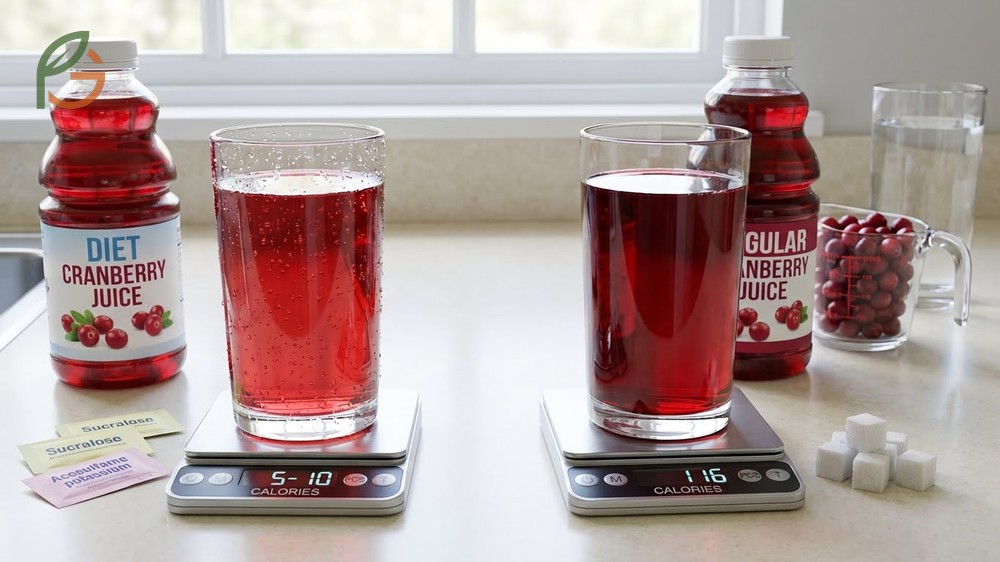
Diet cranberry juice offers significant calorie savings while maintaining vitamin C benefits. An 8-ounce serving delivers only 5-10 calories compared to regular unsweetened cranberry juice’s 116 calories.[1][2] This makes it a practical choice for people monitoring calorie intake.
The beverage contains filtered water, cranberry juice concentrate, natural flavors, and pectin. It’s sweetened with sucralose and acesulfame potassium instead of sugar. These artificial sweeteners provide sweetness without adding calories or carbohydrates.
Current evidence shows diet cranberry juice retains the cranberry’s potential urinary tract health benefits. Studies demonstrate cranberry products reduce recurrent UTI risk by 26% in women with a history of infections.[4] The active compounds that prevent bacteria from adhering to bladder walls remain present in both diet and regular versions.
Nutritional Breakdown
Each 8-ounce serving of diet cranberry juice provides specific nutrients. The beverage contains 60mg of vitamin C, which represents 67% of the daily value.[3] This high vitamin C content supports immune function and acts as an antioxidant.
The mineral content includes 35mg sodium, 10mg calcium, and 10mg potassium per serving. Total carbohydrate content stays at 2-3 grams with only 1 gram coming from sugar. The beverage contains no fat, protein, or dietary fiber.
Important Note: Diet cranberry juice doesn’t provide the fiber found in whole cranberries. Fresh cranberries contain 3.6g of dietary fiber per 100 grams, which aids digestion and promotes satiety.
Artificial Sweeteners Explained
Diet cranberry juice uses two FDA-approved artificial sweeteners. Sucralose is 600 times sweeter than sugar, while acesulfame potassium is 200 times sweeter.[5] Both sweeteners pass through the body without being metabolized for energy.
The FDA has established acceptable daily intake levels for these sweeteners. Acesulfame potassium’s limit is 15 mg per kilogram of body weight, while sucralose’s limit is 5 mg per kilogram.[6] For a 150-pound adult, this translates to over 1,000mg of acesulfame potassium or 340mg of sucralose daily.
Recent research has examined potential health effects of artificial sweeteners. Some studies on mice found that acesulfame potassium caused changes in gut bacteria and weight gain patterns. However, most research confirms these sweeteners are safe for human consumption within FDA guidelines.
How Much Sugar Is in Cranberry Juice
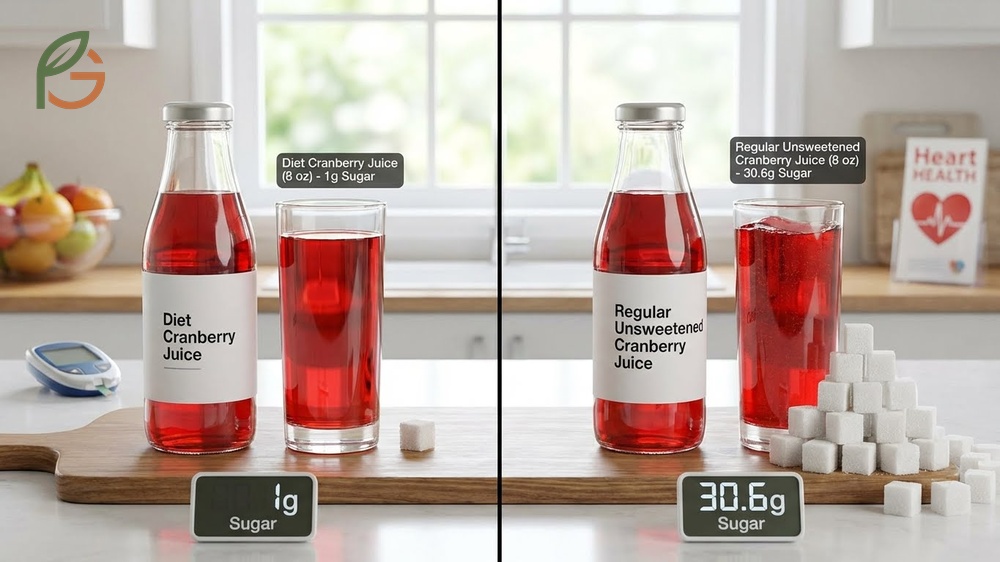
Sugar content varies dramatically between cranberry juice types. Diet cranberry juice contains just 1 gram of sugar per 8-ounce serving.[1] Regular unsweetened cranberry juice packs 30.6 grams of natural sugar in the same serving size.[2]
This 30-fold difference matters for people managing blood sugar or reducing sugar intake. The American Heart Association recommends limiting added sugars to 25 grams daily for women and 36 grams for men. One glass of regular cranberry juice nearly meets or exceeds these recommendations.
Even cranberry juice cocktails typically sold in stores contain 27-31 grams of sugar per serving. Most of this comes from added sugars rather than the naturally occurring sugars in cranberries. Whole cranberries contain only 4.3 grams of sugar per 100 grams.
Diet vs Regular Comparison
This table compares nutritional values between diet and regular unsweetened cranberry juice per 8-ounce serving across five key metrics
| Nutrient | Diet Cranberry Juice | Regular Unsweetened | Difference |
|---|---|---|---|
| Calories | 5 cal[1] | 116 cal[2] | 96% reduction |
| Sugar | 1g[1] | 30.6g[2] | 97% reduction |
| Carbs | 2g[1] | 30.9g[2] | 93% reduction |
| Vitamin C | 60mg (67% DV)[3] | Similar levels | Comparable |
| Fiber | 0g | 0.25g[2] | Minimal in both |
Impact on Blood Sugar
Regular cranberry juice has a glycemic index of 59, which falls into the medium category. This means it causes a moderate rise in blood sugar levels after consumption. The high natural sugar content triggers insulin response and affects glucose levels within 15-30 minutes.
Diet cranberry juice produces minimal blood sugar impact due to its low carbohydrate content. The 2 grams of total carbs and artificial sweeteners don’t significantly raise blood glucose. This makes it suitable for people with diabetes or those following low-carb eating patterns.
Blood Sugar Management: People with diabetes should still monitor their individual response. Some individuals may experience changes in blood sugar from any beverage, even diet versions. Always check with your healthcare provider about incorporating diet juices into your meal plan.
How Many Carbs in Cranberry Juice
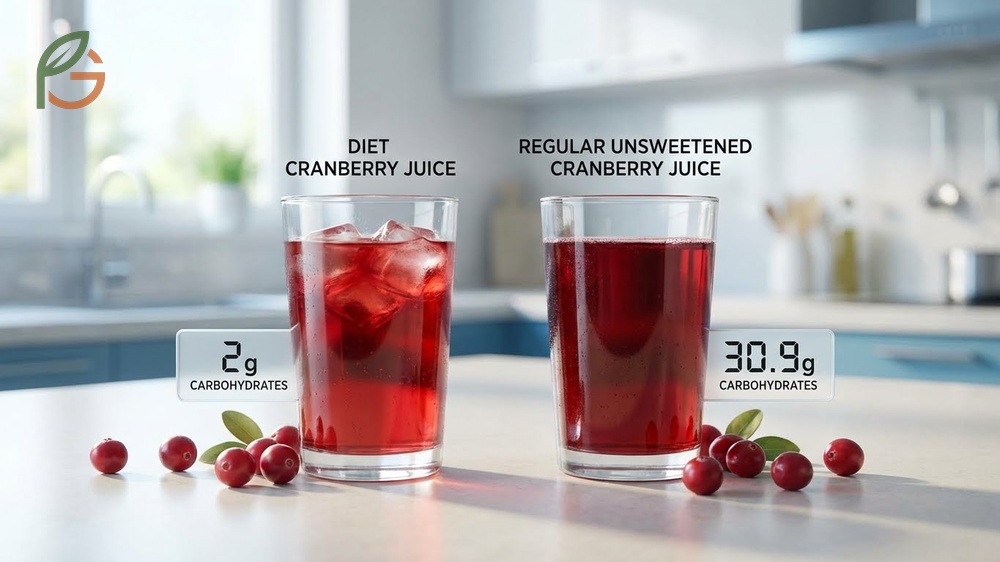
Carbohydrate content determines whether cranberry juice fits specific diets. Diet cranberry juice contains only 2 grams of total carbohydrates per 8-ounce serving.[1] With less than 1 gram from sugar and no fiber, the net carbs remain at 2 grams.
Regular unsweetened cranberry juice delivers 30.9 grams of carbohydrates per serving. Almost all of these carbs come from naturally occurring sugars with only 0.25 grams from fiber.[2] The net carbs total approximately 30.6 grams.
For context, dried cranberries contain significantly more concentrated carbohydrates. A quarter-cup serving of dried cranberries packs 33 grams of carbs with 29 grams from sugar. The dehydration process removes water while concentrating the natural sugars.
Low-carb and ketogenic diets typically restrict daily carbs to 20-50 grams. Diet cranberry juice fits easily into these plans at 2 grams per serving. Regular cranberry juice would consume most of the daily carb allowance in a single glass.
- Diet cranberry juice: 2g carbs per 8 oz serving
- Regular unsweetened cranberry juice: 30.9g carbs per 8 oz
- Cranberry juice cocktail: 28-32g carbs per 8 oz
- Dried cranberries: 33g carbs per 1/4 cup (40g)
- Fresh cranberries: 12g carbs per 100g (about 1 cup)
How Many Calories in Cranberry Juice
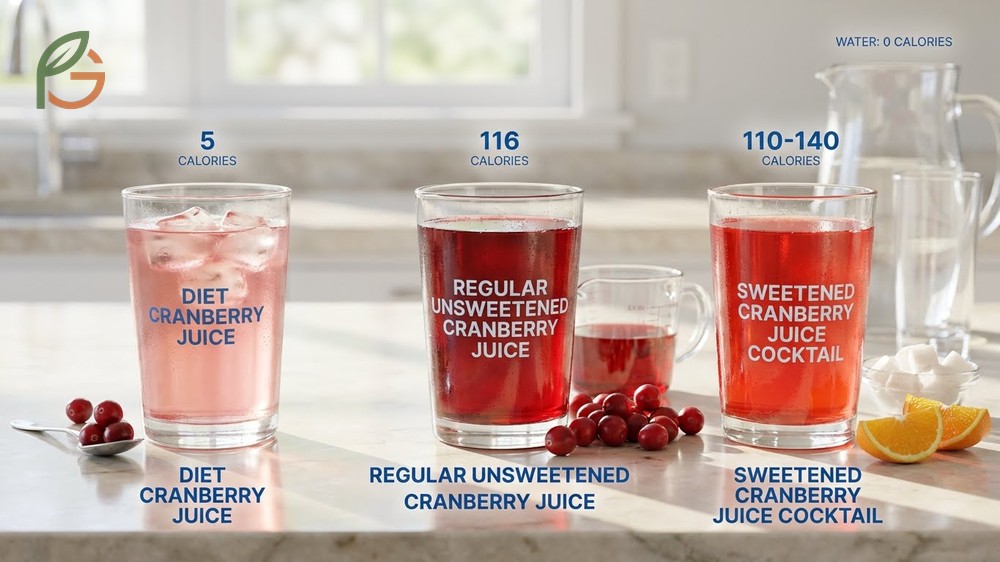
Calorie counts differ drastically between cranberry juice varieties. Diet cranberry juice provides just 5 calories per 8-ounce serving, making it one of the lowest-calorie fruit juice options available.[1] This compares favorably to water’s zero calories while adding flavor and vitamins.
Regular unsweetened cranberry juice contains 116 calories per 8-ounce serving. Sweetened cranberry juice cocktails range from 110-140 calories depending on added sugar content. Fresh cranberries deliver only 46 calories per 100 grams (about 1 cup) but are too tart for most people to eat raw.
Dried cranberries concentrate calories through moisture removal. A quarter-cup serving contains approximately 123 calories. Many brands add sugar during processing, which increases calorie density compared to fresh berries.
For weight management goals, these differences matter. Drinking three 8-ounce glasses of regular cranberry juice adds 348 calories daily. Switching to diet version saves 333 calories while maintaining vitamin C intake. Over a week, this totals 2,331 calories saved—nearly a pound of body weight.
- Diet cranberry juice: 5 calories per 8 oz glass
- Regular unsweetened juice: 116 calories per 8 oz
- Cranberry juice cocktail: 110-140 calories per 8 oz
- Fresh cranberries: 46 calories per 100g (1 cup)
- Dried cranberries: 123 calories per 1/4 cup
- Single fresh cranberry: Less than 1 calorie per berry
Health Benefits and Considerations
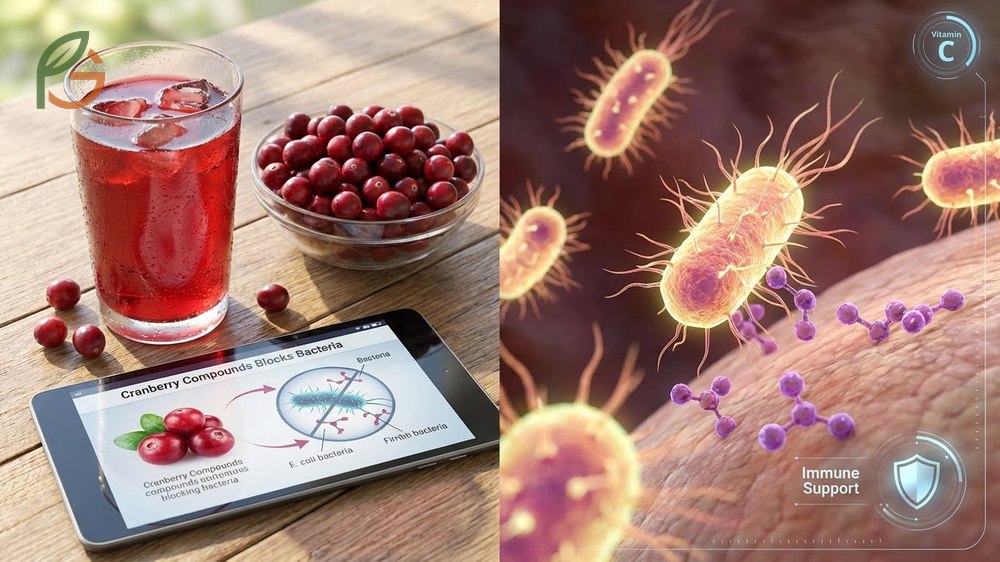
Cranberry products deliver proven urinary tract health benefits. Research from Cochrane reviews shows cranberry consumption reduces recurrent UTI risk by 26% in women and 54% in children.[4] The compounds prevent E. coli bacteria from adhering to bladder walls, reducing infection frequency.
The high vitamin C content supports immune function and acts as an antioxidant. Each serving of diet cranberry juice provides 67% of daily vitamin C needs.[3] This water-soluble vitamin helps produce collagen, absorb iron, and maintain healthy skin.
Studies suggest cranberry polyphenols may support cardiovascular health. These antioxidant compounds help reduce inflammation and may improve cholesterol levels. However, most research has focused on whole cranberries or unsweetened juice rather than diet versions.
Artificial sweetener safety remains a consideration for some consumers. While FDA research confirms sucralose and acesulfame potassium are safe within established limits, recent studies have examined potential effects on gut bacteria.[6] Some animal studies showed changes in gut microbiome composition, though human effects require more research.
- Reduces recurrent UTI risk in women and children through bacterial adhesion prevention
- Provides 67% of daily vitamin C needs per serving for immune support
- Contains cranberry polyphenols that may support heart health
- Offers low-calorie hydration alternative to water or sugary beverages
- Uses FDA-approved artificial sweeteners within established safety limits
- May affect gut bacteria composition according to emerging research
- Lacks the dietary fiber found in whole cranberries (3.6g per 100g)
Medication Interactions: Recent research indicates artificial sweeteners may interfere with certain medications by affecting drug absorption pathways. If you take prescription medications regularly, discuss diet beverage consumption with your pharmacist or doctor.
Conclusion
The evidence is clear: diet cranberry juice provides a low-calorie alternative to regular cranberry juice while maintaining vitamin C benefits and potential urinary tract health support. With only 5 calories, 1 gram of sugar, and 2 grams of carbs per serving, it fits well into calorie-restricted, low-carb, and diabetic meal plans. The trade-off involves consuming FDA-approved artificial sweeteners, which current research considers safe within recommended limits.
Current guidance emphasizes individual health goals when choosing beverages. For people prioritizing calorie reduction or blood sugar management, diet cranberry juice offers practical benefits. Those preferring to avoid artificial sweeteners might choose unsweetened versions in smaller portions or whole cranberries for added fiber. FruitGarden helps you navigate these nutrition decisions with evidence-based fruit and beverage information.
Medical Disclaimer
Important Medical Disclaimer: This content is for informational and educational purposes only. It is not intended as a substitute for professional medical advice, diagnosis, or treatment. Always consult a qualified healthcare professional before making any changes to your diet, medication, or health routine, especially if you have diabetes, kidney conditions, take prescription medications, or have other medical conditions. Individual nutritional needs vary based on age, activity level, and health status.
Frequently Asked Questions
Is Diet Cranberry Juice Good for Weight Loss?
Yes, diet cranberry juice supports weight loss efforts by providing only 5 calories per 8-ounce serving compared to regular juice’s 116 calories. This 111-calorie savings per glass adds up significantly when consumed regularly. The beverage offers a flavorful alternative to water without adding substantial calories to your daily intake. However, it doesn’t provide fiber or protein, which are important for satiety and long-term weight management success.
Can Diabetics Drink Diet Cranberry Juice?
Diet cranberry juice is generally suitable for people with diabetes due to its minimal carbohydrate content of 2 grams per serving. Unlike regular cranberry juice with 30.9 grams of carbs and a glycemic index of 59, the diet version produces negligible blood sugar impact. Research shows the artificial sweeteners used—sucralose and acesulfame potassium—don’t raise blood glucose levels. However, individuals should monitor their personal response and consult their healthcare provider before adding any new beverages to their diabetes management plan.
Does Diet Cranberry Juice Help Prevent UTIs?
Yes, diet cranberry juice retains the UTI-prevention compounds found in regular cranberry products. Cochrane systematic reviews demonstrate that cranberry consumption reduces recurrent UTI risk by 26% in women and 54% in children. The active compounds that prevent E. coli bacteria from adhering to bladder walls remain present regardless of sweetener type. For UTI prevention, consistency matters more than choosing between diet or regular versions—most studies used daily consumption over several months.
What Artificial Sweeteners Are in Diet Cranberry Juice?
Diet cranberry juice contains two FDA-approved artificial sweeteners: sucralose and acesulfame potassium. Sucralose is 600 times sweeter than sugar, while acesulfame potassium is 200 times sweeter. Both sweeteners provide sweetness without calories or carbohydrates. The FDA has established acceptable daily intake levels of 5 mg per kilogram of body weight for sucralose and 15 mg per kilogram for acesulfame potassium, which far exceed amounts found in typical beverage consumption.
Is Diet Cranberry Juice Keto-Friendly?
Yes, diet cranberry juice fits ketogenic diets with only 2 grams of carbohydrates per 8-ounce serving. Most keto plans limit daily carbs to 20-50 grams, making this beverage compatible when consumed in moderation. The artificial sweeteners don’t impact ketosis since they’re not metabolized for energy. In contrast, regular cranberry juice with 30.9 grams of carbs per serving would consume most of a day’s carb allowance in one glass.
How Does Diet Cranberry Juice Compare to Ocean Spray Regular?
Ocean Spray diet cranberry juice contains 96% fewer calories than regular unsweetened cranberry juice—5 calories versus 116 per 8-ounce serving. The diet version has 1 gram of sugar compared to 30.6 grams in regular juice, representing a 97% reduction. Both versions provide similar vitamin C levels at approximately 67% of daily needs. The main difference lies in sweetening methods: diet uses artificial sweeteners while regular juice contains natural cranberry sugars.
Why Am I Craving Cranberry Juice?
Cranberry juice cravings may indicate several physiological needs. Your body might be signaling vitamin C deficiency, as cranberry juice provides 67% of daily requirements per serving. Cravings can also emerge during urinary tract infections when your body instinctively seeks foods with antibacterial properties. Dehydration sometimes manifests as cravings for flavorful beverages. Tartness preferences also play a role—some people naturally prefer sour or acidic flavors. If cravings persist or accompany other symptoms like frequent urination or pelvic discomfort, consult a healthcare provider.





