
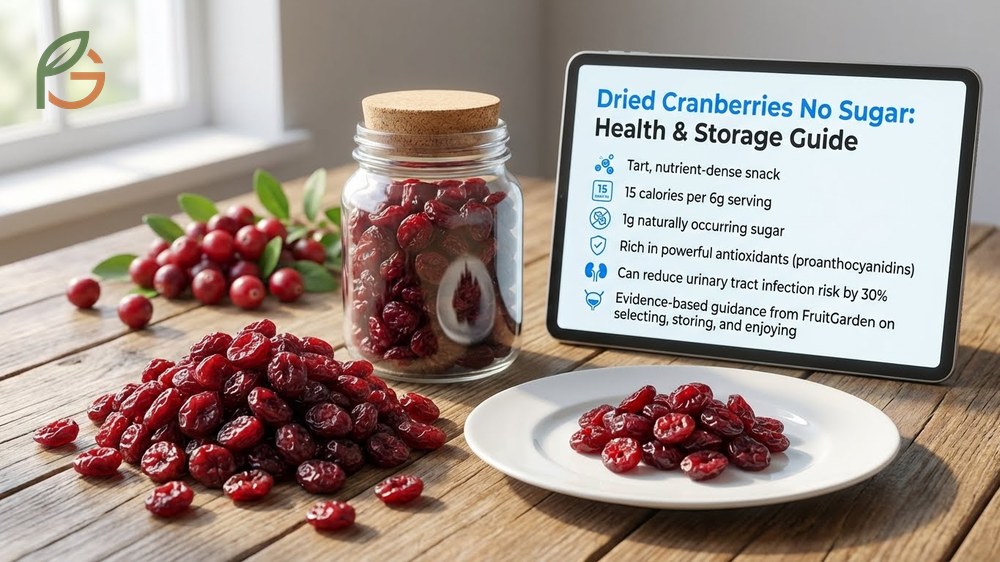
Dried cranberries no sugar provide a tart, nutrient-dense snack with just 15 calories per 6g serving and 1g of naturally occurring sugar[1]. Research shows these unsweetened cranberries retain powerful antioxidants called proanthocyanidins that can reduce urinary tract infection risk by 30%. FruitGarden brings you evidence-based guidance on selecting, storing, and enjoying these ruby-red gems without added sweeteners.
Quick Answer
- Unsweetened dried cranberries contain 15 calories[1] and 1g fiber per 6g serving
- They can reduce UTI recurrence by 30%[2] in susceptible populations
- Store them in airtight containers for 6-12 months at room temperature or up to 2 years refrigerated[3]
- Make your own at home by dehydrating at 150°F (65°C) for 12-16 hours
Dried Cranberries No Sugar
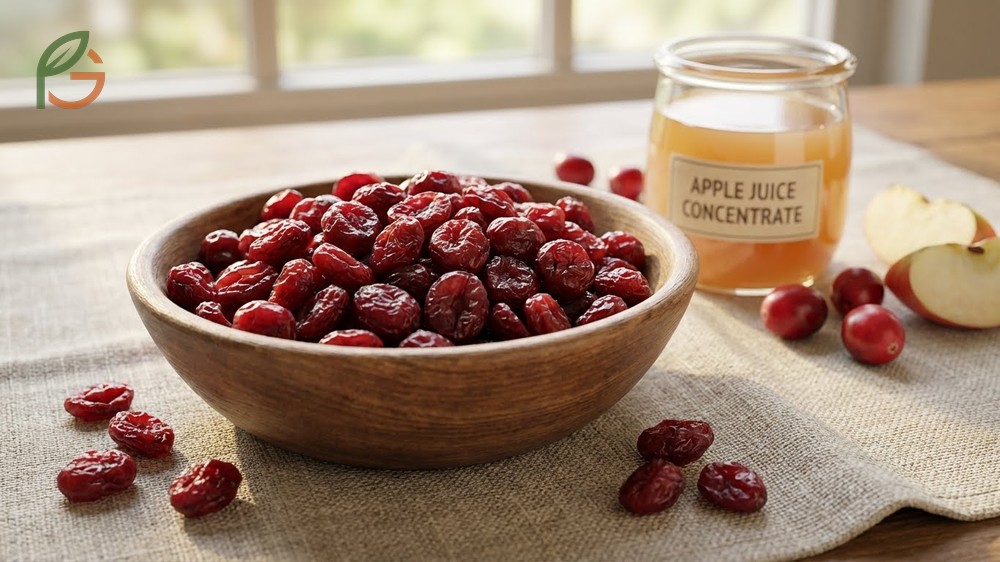
Unsweetened dried cranberries are fresh cranberries with water removed and no sweeteners added. Unlike conventional dried cranberries that contain 24-29g of added sugar per quarter cup[1], these versions keep their natural tartness intact. They’re typically infused with apple juice concentrate or left completely unsweetened, making them a better choice for people watching their sugar intake.
The main difference you’ll notice is the taste—they’re quite tart compared to sweetened versions. This natural tartness comes from cranberries’ extremely low natural sugar content (only 4g per cup when fresh). When you remove the water through dehydration, you’re left with concentrated nutrients and that signature tangy flavor without the sugar crash.
Nutritional Profile
Studies show unsweetened dried cranberries pack impressive nutrition into a small serving. A 6g serving contains 15 calories, 4g total carbohydrates (including 1g natural sugar and 1g dietary fiber), and provides 12% of your daily vitamin C needs[1]. That’s about 83% fewer calories than sweetened versions.
Fresh cranberries contain about 50 calories per cup with 4g natural sugars, while sweetened dried cranberries jump to 120-123 calories per quarter cup with 24-29g sugars. The unsweetened versions give you the antioxidant benefits without the blood sugar spike.
This table compares calories, sugar content, fiber, and vitamin C across fresh cranberries, unsweetened dried cranberries, and sweetened dried cranberries per quarter cup serving
| Type | Calories (per ¼ cup) | Total Sugars | Fiber | Vitamin C |
|---|---|---|---|---|
| Fresh Cranberries | 12 | 1g natural | 1g | High |
| Unsweetened Dried | 15[1] | 1g natural | 1g | 12% DV |
| Sweetened Dried | 123[1] | 29g (26g added) | 2g | 0% DV |
Health Benefits
Research demonstrates that cranberries are one of the few fruits high in A-type proanthocyanidins (PACs), with concentrations around 1,047-1,175 µg per gram[5]. These unique compounds prevent E. coli bacteria from adhering to urinary tract walls, which is why cranberries work for UTI prevention. The drying process actually concentrates these beneficial compounds.
A comprehensive meta-analysis of 23 trials with 3,979 participants found that cranberry products reduce UTI incidence in susceptible populations by 30% (risk ratio 0.70)[2]. The Cochrane review confirmed these findings across 50 studies with 8,857 people[6], showing benefits for women with recurrent UTIs and children.
Important Note: You’d need to consume 72g of sweetened dried cranberries to get the same proanthocyanidin dose as just 2.8g of unsweetened versions—that’s 234 calories versus only 9 calories[1]. This makes unsweetened versions far more efficient for health benefits.
- Prevent urinary tract infections through bacterial anti-adhesion properties
- Provide concentrated antioxidants that combat oxidative stress and inflammation
- Support digestive health with dietary fiber that slows sugar absorption
- Deliver vitamin C for immune function (12% daily value per serving)
- Contain negligible fat and sodium, fitting into heart-healthy eating patterns
No Sugar Added Dried Cranberries
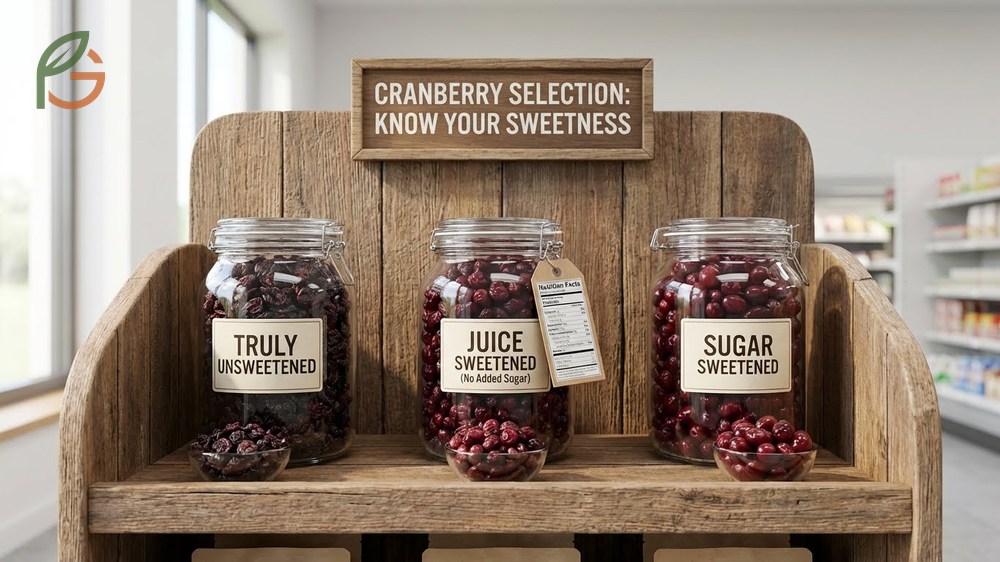
The label “no sugar added” doesn’t always mean completely unsweetened. Current data indicates many products use apple juice concentrate, grape juice concentrate, or other fruit juices as natural sweeteners. While these don’t count as “added sugar” on nutrition labels, they still contribute calories and fructose to your diet.
You’ll find three main categories on store shelves: truly unsweetened (extremely tart), juice-sweetened (moderately tart), and sugar-sweetened (sweet like candy). The truly unsweetened versions are hardest to find but offer the most health benefits without extra calories.
Reading Labels
Evidence suggests the ingredient list tells you more than the front label. Look for cranberries as the only ingredient, or cranberries plus sunflower oil (used to prevent clumping). If you see “apple juice concentrate” or “pear juice concentrate,” you’re getting natural sugars that’ll raise the calorie count to 90-130 per quarter cup instead of 15-60.
Check the sugar line on nutrition facts—unsweetened versions show 1-4g per serving (all naturally occurring), while juice-sweetened versions range from 8-15g. Most people find juice-sweetened versions more palatable if you’re transitioning from regular dried cranberries.
Best Brands
Trader Joe’s sells organic dried cranberries labeled “high in fiber, no sugar added” that contain 21g dietary fiber per quarter cup. Honestly Cranberry offers truly unsweetened dried cranberries with only cranberries and sunflower oil in the ingredients. These specialized brands cost more ($8-12 per pound) compared to sweetened versions ($5-7 per pound) but deliver better nutrition per calorie.
- Ingredient list showing only “cranberries” or “cranberries, sunflower oil”
- Nutrition label with 1-4g sugars per serving (not 20-29g)
- Organic certification if you want to avoid pesticide residues
- Sulfite-free processing (sulfites preserve color but can trigger allergies)
- Opaque, resealable packaging that protects from light and moisture
What Are Dried Cranberries Good For
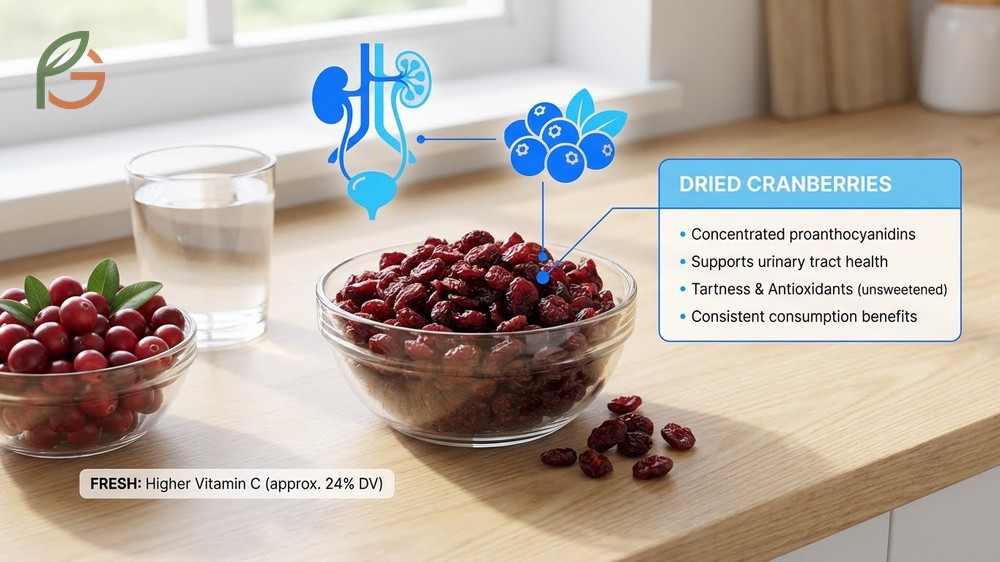
Research shows unsweetened dried cranberries work best as a concentrated source of proanthocyanidins for urinary tract health, especially for women with recurrent UTIs. Studies demonstrate that consistent consumption—not just during active infections—provides the protective benefits. They’re also valuable for adding tartness and antioxidants to meals without the sugar load of sweetened versions.
Fresh cranberries offer higher vitamin C (about 24% daily value per cup) but only last 3-4 weeks refrigerated. Dried versions sacrifice some vitamin C during processing but gain shelf stability and convenience. You can toss them in salads, oatmeal, trail mix, or baked goods without the hassle of sorting and washing fresh berries.
Unlike raisins (which contain 120 calories and 29g sugar per quarter cup), unsweetened dried cranberries provide similar portability with dramatically fewer calories and more targeted health benefits. Raisins offer more potassium and iron, but cranberries win for UTI prevention and antioxidant diversity.
Usage Tip: Rehydrate unsweetened dried cranberries in warm water or orange juice for 15-20 minutes before adding to recipes. This softens their texture and reduces the intense tartness while maintaining nutritional benefits.
- Daily UTI prevention: 1-2 tablespoons (6-12g) provides therapeutic proanthocyanidin doses
- Salad toppers: adds tart contrast to spinach, goat cheese, and walnut combinations
- Trail mix component: balances salty nuts and seeds with natural fruit tartness
- Oatmeal or yogurt mix-in: boosts fiber and antioxidants in breakfast bowls
- Homemade energy bars: binds ingredients while adding chewy texture and nutrients
- Baking substitute: use in place of chocolate chips or sweetened dried fruit
Do Dried Cranberries Go Bad
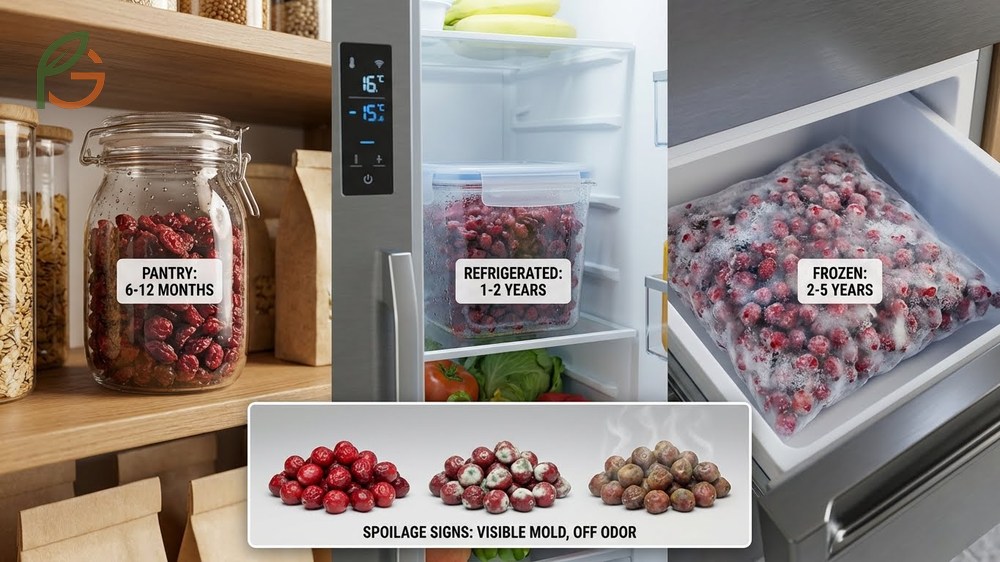
Yes, dried cranberries eventually spoil, though they last much longer than fresh cranberries. Current guidance shows properly stored dried cranberries remain safe and tasty for 6-12 months in your pantry, 1-2 years refrigerated, or 2-5 years frozen[3]. The key factors affecting shelf life are moisture exposure, temperature fluctuations, and light exposure.
You’ll know they’ve gone bad when you see visible mold (white, green, or black spots), detect off odors (musty or fermented smell), or notice extreme hardening beyond normal chewiness. Moisture makes them spoil faster—if condensation forms inside your storage container, the cranberries will likely develop mold within 2-3 weeks.
Storage Methods
The best storage method depends on how quickly you’ll use them. For daily use within 6 months, an airtight container in a cool, dark pantry works fine. If you bought in bulk or want maximum freshness, refrigeration extends shelf life to 2 years without affecting texture[3].
For long-term storage, freezing is your best bet. Flash-freeze them on a baking sheet for 1-2 hours (prevents clumping), then transfer to freezer bags or containers. This method keeps them fresh for 2-5 years and they thaw quickly at room temperature in just 10-15 minutes.
| Storage Location | Shelf Life | Best Container |
|---|---|---|
| Pantry (cool, dark) | 6-12 months[3] | Glass jar or opaque plastic |
| Refrigerator | 1-2 years[3] | Sealed plastic bag or jar |
| Freezer | 2-5 years[3] | Freezer-safe bag or container |
- Visible mold growth (fuzzy white, green, or black spots anywhere on berries)
- Off-putting odors (musty, fermented, or sour smell when you open container)
- Extreme hardness (rock-hard texture that doesn’t soften when chewed)
- Discoloration (fading from deep red to pale pink or brown)
- Clumping or stickiness (indicates moisture infiltration and potential bacterial growth)
How Do You Make Dried Cranberries
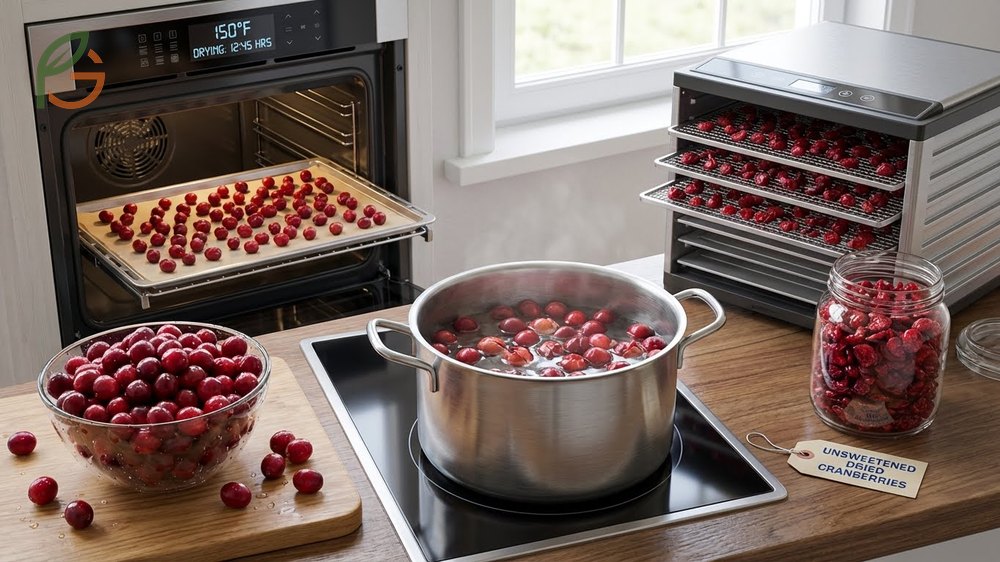
Making truly unsweetened dried cranberries at home requires just fresh cranberries, water, and 12-16 hours of drying time. Current methods show you can use either an oven (set to lowest temperature, ideally 150°F/65°C)[4] or a food dehydrator. The result is intensely tart cranberries without any sweeteners—perfect for controlling your sugar intake.
You’ll need to burst the cranberry skins first so moisture escapes during drying. Most recipes suggest blanching in boiling water for 30 seconds or roasting at 450°F (232°C) for 15 minutes[4] to pop the skins. Skip the sugar coating entirely if you want genuinely unsweetened results—just toss with 1 tablespoon of oil to prevent sticking.
Here’s the step-by-step process for making sugar-free dried cranberries: Start with 12 ounces (340g) fresh cranberries. Rinse them thoroughly and remove any stems or damaged berries. Bring a large pot of water to a rolling boil.
Blanch the cranberries by dropping them into boiling water for exactly 30 seconds—you’ll hear them start to pop. Drain immediately and spread on paper towels to dry completely (about 5 minutes). Toss the blanched cranberries with 1 tablespoon avocado or olive oil to coat evenly.
Spread in a single layer on parchment-lined baking sheets or dehydrator trays, ensuring berries don’t touch. Set your oven to 150°F (65°C) or your dehydrator to the same temperature. Dry for 12-16 hours, checking every 3-4 hours and rotating trays for even drying[4].
They’re done when leathery and chewy but not rock-hard. Let them cool completely (about 30 minutes) before storing in airtight containers. Homemade versions stay fresh for 6-12 months in the pantry or up to 2 years refrigerated.
- 12 ounces fresh cranberries (seasonal availability October through December)
- Large pot for blanching water (at least 4-quart capacity)
- Baking sheets with parchment paper or dehydrator trays
- 1 tablespoon neutral oil (avocado, olive, or coconut oil)
- Oven thermometer to verify low temperature accuracy (many ovens run hot)
Pro Tip: If you don’t have an oven that goes below 170°F (77°C), prop the door open slightly with a wooden spoon to lower the temperature. Check with an oven thermometer to maintain 150°F (65°C) for optimal drying without cooking.
Conclusion
The evidence is clear: dried cranberries no sugar offer concentrated antioxidants, proven UTI prevention benefits, and dramatically fewer calories than sweetened versions—all without sacrificing convenience or shelf life. With proper storage techniques, you can keep these nutritional powerhouses fresh for up to 2 years, making them a practical choice for year-round health support.
Whether you’re buying organic brands like Trader Joe’s or making your own at home, choosing unsweetened versions means you’re getting 83% fewer calories while preserving the proanthocyanidins that make cranberries uniquely beneficial. FruitGarden encourages you to experiment with these tart gems in salads, trail mixes, and breakfast bowls—your taste buds might need a few days to adjust, but your body will thank you.
Medical Disclaimer
Important Medical Disclaimer: This content is for informational and educational purposes only. It’s not intended as a substitute for professional medical advice, diagnosis, or treatment. Always consult a qualified healthcare professional before making any changes to your diet, medication, or health routine, especially if you have diabetes, urinary tract conditions, or other medical concerns. Cranberry products may interact with blood-thinning medications like warfarin—discuss supplementation with your doctor if you take prescription medications.
Frequently Asked Questions
Can You Freeze Dried Cranberries?
Yes, freezing extends dried cranberries’ shelf life to 2-5 years. Flash-freeze them on a baking sheet for 1-2 hours first to prevent clumping, then transfer to freezer-safe bags or containers. They thaw quickly at room temperature in 10-15 minutes and maintain their texture and flavor perfectly.
What Are Dried Cranberries Without Added Sugar Called?
They’re labeled as “unsweetened dried cranberries,” “no sugar added dried cranberries,” or “sugar-free dried cranberries.” Some brands like Honestly Cranberry use the term “unsweetened” to differentiate from juice-sweetened versions. Check ingredient lists—truly unsweetened versions contain only cranberries and possibly sunflower oil.
How Do I Make Dried Cranberries Without Sugar?
Blanch fresh cranberries in boiling water for 30 seconds to burst skins, drain thoroughly, toss with 1 tablespoon oil, then dehydrate at 150°F (65°C) for 12-16 hours. Skip all sweeteners for genuinely sugar-free results. The end product will be intensely tart but packed with nutrients.
Are Organic Unsweetened Dried Cranberries Worth the Extra Cost?
Organic versions cost $3-5 more per pound but avoid pesticide residues and typically use cleaner processing methods. If you consume dried cranberries daily for health benefits, the investment makes sense. For occasional use, conventional unsweetened versions still provide the same proanthocyanidins and antioxidants.
How to Rehydrate Dried Cranberries?
Place dried cranberries in a bowl and cover with warm water, orange juice, or apple juice. Let them soak for 15-20 minutes until plump, then drain. This softens their texture and reduces tartness while maintaining nutritional value. Use rehydrated cranberries in salads, baked goods, or as fresh berry substitutes.
Do Sugar-Free Dried Cranberries Help Prevent UTIs?
Research shows unsweetened dried cranberries provide the same proanthocyanidin compounds (1,047-1,175 µg per gram) that prevent bacterial adhesion in urinary tracts. Studies confirm 30% reduction in UTI recurrence with consistent cranberry consumption. You’d need only 2.8g of unsweetened versus 72g of sweetened versions for the same therapeutic dose.
What to Do With Dried Cranberries That Are Too Tart?
Mix them with naturally sweet dried fruits like dates or figs in trail mix, pair with creamy foods like Greek yogurt or goat cheese that balance the tartness, or rehydrate in apple juice instead of water to add subtle sweetness. You can also chop them finely and blend into smoothies where other ingredients mask the intense flavor.





