
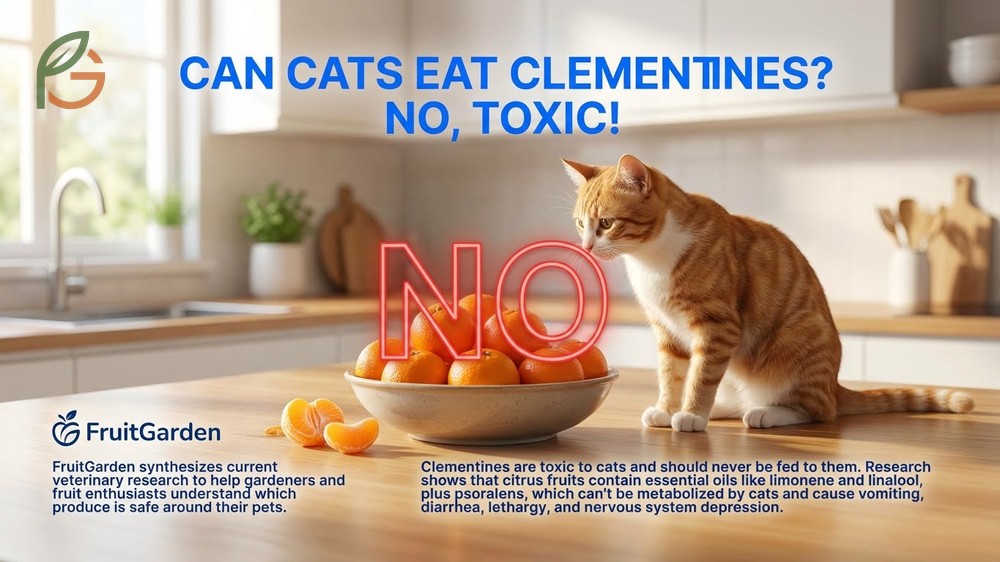
Can cats eat clementines? No, clementines are toxic to cats and should never be fed to them. Research shows that citrus fruits contain essential oils like limonene and linalool, plus psoralens, which can’t be metabolized by cats and cause vomiting, diarrhea, lethargy, and nervous system depression[1][2]. FruitGarden synthesizes current veterinary research to help gardeners and fruit enthusiasts understand which produce is safe around their pets.
Quick Answer
- Clementines contain toxic essential oils (limonene and linalool) and psoralens that poison cats[1]
- The peel and plant parts have the highest concentration of toxins, but even the flesh poses risks[2]
- Symptoms include vomiting, diarrhea, drooling, depression, tremors, and skin irritation[1]
- Contact your vet immediately if your cat ingests any citrus fruit—call ASPCA Poison Control at (888) 426-4435[3]
Can Cats Eat Clementines
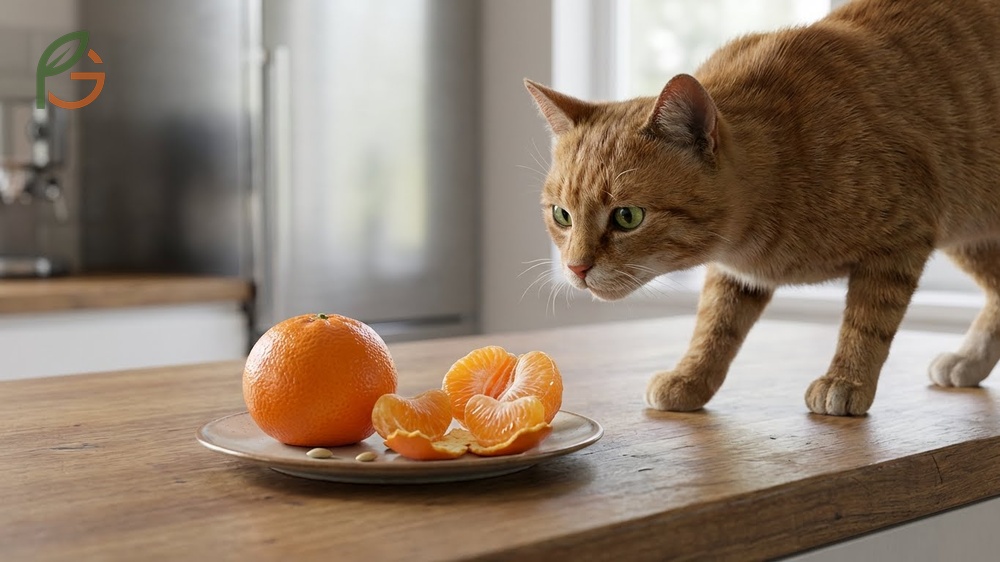
Clementines and all citrus fruits are classified as toxic to cats by the ASPCA[1]. The Rutaceae family, which includes oranges, lemons, grapefruits, and clementines, contains compounds that damage a cat’s digestive system and nervous system. Veterinary studies demonstrate that even small amounts of citrus flesh can trigger adverse reactions, while the peel, seeds, and plant materials pose the greatest danger[2].
Cats are obligate carnivores with metabolic systems designed exclusively for processing animal proteins and fats. Their livers lack specific enzymes needed to break down plant-based compounds like limonene, linalool, and psoralens found in citrus fruits. This metabolic limitation means these substances accumulate in a cat’s body and trigger toxic reactions that humans don’t experience.
Current veterinary guidance emphasizes zero tolerance for citrus exposure in cats. Unlike some foods that are safe in tiny quantities, clementines offer no nutritional benefit to cats and carry only risks. The high acidity and natural sugars in clementines can upset feline digestive systems even without the toxic essential oils.
Toxic Compounds in Clementines
The primary toxic agents in clementines are essential oils concentrated in the peel and zest. Limonene and linalool are aromatic compounds that give citrus fruits their characteristic scent[4]. When cats ingest or absorb these oils through their skin, the compounds interfere with cell membrane function and neurotransmitter activity.
Psoralens are photosensitizing chemicals that make cats’ skin hypersensitive to ultraviolet light[2]. Cats exposed to clementine juice or peel who then go into sunlight can develop burns, redness, and blistering. This photosensitivity reaction can occur hours after citrus contact and persist for several days.
Citric acid, while less toxic than essential oils, irritates the mucous membranes lining a cat’s mouth, esophagus, and stomach. The pH level of clementines ranges from 3.0 to 4.0, which is significantly more acidic than the neutral pH cats’ digestive systems are adapted to handle. This acidity explains why cats instinctively avoid citrus smells.
Why Cats Cannot Process Citrus
Research shows that cats lack glucuronyl transferase enzymes in their liver, which are essential for metabolizing many plant compounds[4]. This enzyme deficiency means citrus essential oils remain in a cat’s bloodstream longer than in other animals. The prolonged circulation time increases tissue damage and toxin accumulation in organs like the liver and kidneys.
The blood-brain barrier in cats is more permeable to lipophilic (fat-soluble) compounds like limonene than in humans or dogs. Studies demonstrate that essential oils from citrus can cross into feline brain tissue and disrupt normal neurological function. This explains symptoms like tremors, disorientation, and depression seen in citrus-poisoned cats.
Important Note: Citrus essential oil poisoning can occur through ingestion, skin contact, or even inhalation of concentrated oils. Keep all citrus products, including cleaning solutions and air fresheners containing citrus oils, away from cats[3].
Citrus Toxic Cats
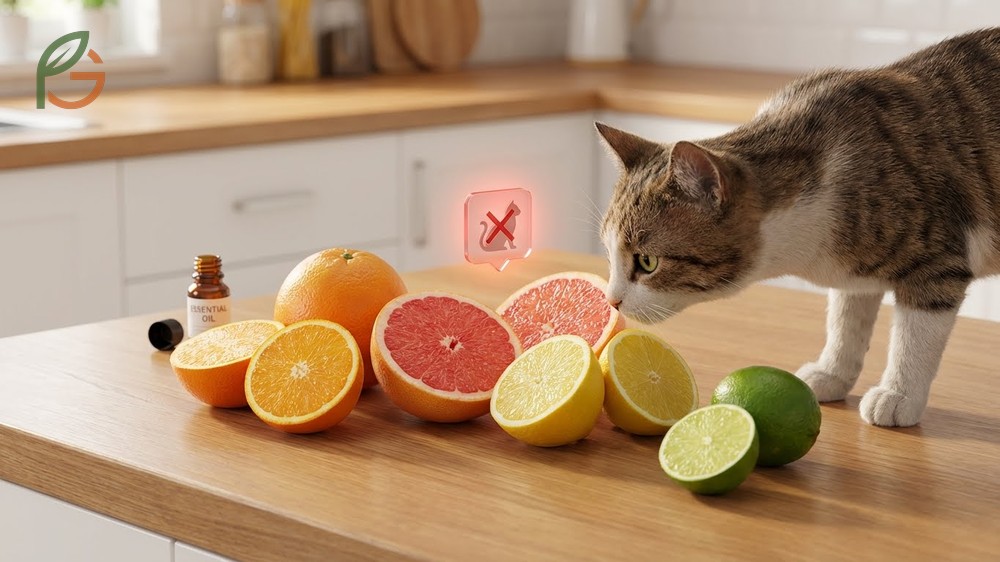
All citrus fruits in the Rutaceae family are toxic to cats, including oranges, lemons, limes, grapefruits, tangerines, and clementines[5]. The toxicity applies to every part of the citrus plant—fruit flesh, peel, seeds, leaves, stems, and roots. Even the flowers and essential oils extracted from citrus plants can poison cats.
Veterinary toxicology data shows the concentration of toxic compounds varies by citrus type. Grapefruit and lemon peels contain the highest levels of essential oils, while sweeter varieties like clementines and tangerines have slightly lower but still dangerous concentrations. The juice alone can cause problems because it contains dissolved essential oils and psoralens.
Commercial products made with citrus pose additional risks. Orange juice, lemonade, citrus-flavored treats, and foods containing citrus extracts are all dangerous for cats. Xylitol, an artificial sweetener toxic to cats, is often added to citrus products and creates a compound poisoning risk.
Symptoms of Citrus Poisoning
Clinical signs of citrus poisoning in cats typically appear within 30 minutes to 2 hours after exposure[1]. Initial gastrointestinal symptoms include excessive drooling, vomiting, and diarrhea. Cats may show behavioral changes like lethargy, hiding, or reluctance to move.
Neurological symptoms develop as essential oils cross the blood-brain barrier. Affected cats display weakness, ataxia (uncoordinated movement), tremors, or muscle twitching. Severe cases can progress to seizures, though this is rare with fruit ingestion alone—it’s more common with concentrated essential oil exposure.
- Excessive salivation and drooling from mouth irritation
- Vomiting and diarrhea, sometimes with blood in severe cases
- Depression, lethargy, and decreased activity levels
- Photosensitivity with skin redness, especially on ears and nose
- Tremors, weakness, or uncoordinated walking
- Dilated pupils and sensitivity to light
- Abdominal pain indicated by hunched posture or vocalization
Emergency Warning: If your cat shows tremors, seizures, difficulty breathing, or collapse after citrus exposure, seek emergency veterinary care immediately. These symptoms indicate severe poisoning requiring intensive treatment[3].
Severity Levels
The severity of citrus poisoning depends on the amount ingested, the part of the fruit consumed, and the cat’s size and health status[2]. A small cat licking a few drops of clementine juice might experience only mild drooling and stomach upset. A cat that chews on clementine peel or eats several segments faces moderate to severe poisoning risk.
Mild cases typically resolve within 24 hours with supportive care like fluids and monitoring. Moderate poisoning requires veterinary intervention including induced vomiting, activated charcoal to absorb toxins, and IV fluids. Severe cases involving neurological symptoms need hospitalization with anti-seizure medications and intensive monitoring for liver or kidney damage.
This table compares exposure levels, symptoms, treatment requirements, and recovery times for mild, moderate, and severe citrus poisoning in cats
| Severity | Exposure Level | Primary Symptoms | Treatment Needed | Recovery Time |
|---|---|---|---|---|
| Mild | Licked juice or touched peel | Drooling, minor vomiting | Home monitoring, fluids | 12-24 hours |
| Moderate | Ate 1-2 fruit segments | Vomiting, diarrhea, lethargy | Veterinary care, IV fluids | 24-48 hours |
| Severe | Ate peel or multiple segments | Tremors, seizures, collapse | Emergency hospitalization | 3-7 days or longer |
| Critical | Essential oil ingestion | Respiratory distress, coma | Intensive ICU care | 1-2 weeks if survives |
Safe Fruits Cats
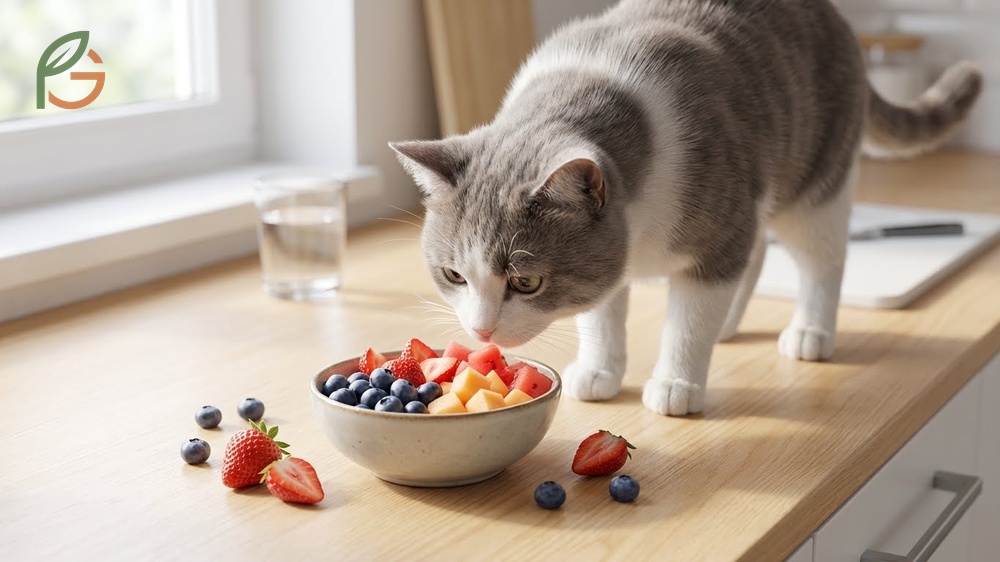
While cats don’t require fruit in their diet, certain fruits can be offered as occasional treats in small quantities[6]. Veterinary nutritionists emphasize that fruits should never exceed 2% of a cat’s daily caloric intake. Safe fruits include blueberries, strawberries, cantaloupe, and seedless watermelon—all washed thoroughly and cut into small pieces to prevent choking.
Blueberries are one of the safest fruit options because they’re low in sugar and high in antioxidants. Strawberries provide vitamin C and fiber, though their high sugar content means they should be limited to one or two small pieces per week. Cantaloupe and watermelon offer hydration benefits for cats who don’t drink enough water, but seeds must be removed as they pose choking hazards.
Current guidance from veterinary associations recommends introducing any new food gradually, starting with a piece smaller than a pea. Watch for signs of digestive upset like vomiting, diarrhea, or decreased appetite for 24 hours after offering fruit. Cats with diabetes, kidney disease, or obesity should not be given fruit due to sugar content.
- Blueberries (2-3 berries maximum, rich in antioxidants)
- Strawberries (1-2 small pieces, high vitamin C content)
- Cantaloupe (small cubes, remove seeds and rind)
- Watermelon (seedless, small amounts for hydration)
- Banana (tiny piece only, very high in sugar)
- Apples (small piece without seeds, core, or skin)
Veterinary research shows cats lack taste receptors for sweetness, so they don’t crave or enjoy fruit the way humans do. The appeal of fruit to cats is usually texture-based rather than flavor-based. Most cats will ignore fruit entirely, which aligns with their carnivorous nature.
Clementine Cat Safety
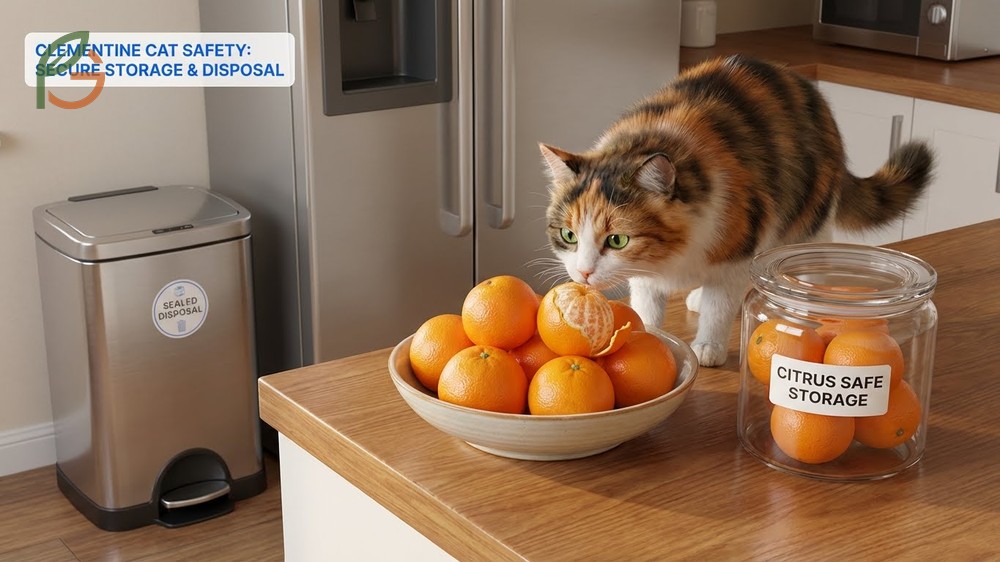
Preventing accidental clementine exposure requires strategic storage and disposal practices in households with cats. Store all citrus fruits in closed containers inside refrigerators or cupboards that cats can’t access. Never leave clementines or other citrus in fruit bowls on counters or tables where curious cats might investigate.
Dispose of clementine peels immediately in sealed trash bins that cats can’t open. Studies show cats are attracted to the strong scent of citrus peels and may chew on them out of curiosity despite the bitter taste[2]. Compost bins containing citrus should be secured outdoors away from pet access.
Citrus-based cleaning products, air fresheners, and essential oil diffusers pose significant risks to cats. Research demonstrates that airborne citrus oil particles can irritate feline respiratory systems and accumulate on fur, which cats then ingest during grooming. Switch to pet-safe cleaning alternatives that don’t contain citrus extracts, d-limonene, or linalool.
- Store clementines in sealed containers in refrigerators or closed cupboards
- Dispose of peels immediately in secure, cat-proof trash bins
- Wash hands thoroughly after handling citrus before touching cats
- Avoid citrus-based cleaners, air fresheners, and essential oil diffusers
- Check ingredient labels on cat products—some contain citrus extracts
- Keep citrus plants (lemon trees, kumquat bushes) inaccessible to indoor-outdoor cats
If your cat does ingest clementine, contact your veterinarian or the ASPCA Animal Poison Control Center at (888) 426-4435 immediately[3]. Don’t induce vomiting unless specifically instructed by a veterinarian, as this can cause additional harm depending on the amount ingested and time elapsed. Provide your vet with details about the quantity eaten, which part of the fruit, and when exposure occurred.
Dangerous Foods Cats
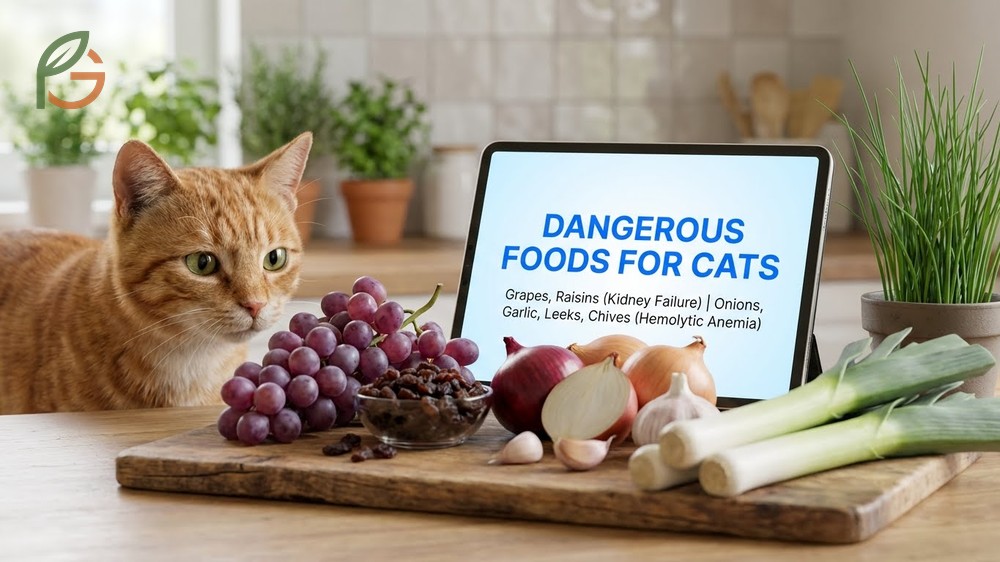
Beyond citrus fruits, numerous common foods pose serious health risks to cats[6]. Grapes and raisins can cause acute kidney failure in cats, with symptoms appearing within 24 hours of ingestion. The toxic compound in grapes remains unidentified, but even small amounts have caused fatal kidney damage in documented cases.
Onions, garlic, leeks, and chives contain thiosulfates that destroy feline red blood cells and cause hemolytic anemia. Current veterinary data indicates that garlic is five times more toxic than onions to cats. Even small amounts consumed regularly can lead to life-threatening anemia, with symptoms like pale gums, lethargy, and rapid breathing appearing several days after ingestion.
Chocolate contains theobromine and caffeine, both methylxanthines that cats can’t metabolize efficiently. Dark chocolate and baking chocolate have the highest concentrations and pose the greatest danger. Symptoms of chocolate poisoning include hyperactivity, tremors, increased heart rate, seizures, and in severe cases, death.
- All citrus fruits (oranges, lemons, limes, grapefruits, clementines)
- Grapes and raisins (cause kidney failure)
- Onions, garlic, leeks, chives (cause anemia)
- Chocolate (contains toxic theobromine)
- Avocados (contain persin toxic to cats)
- Xylitol sweetener (causes liver failure and hypoglycemia)
- Raw dough (expands in stomach, produces alcohol)
- Alcohol (extremely toxic, can cause coma or death)
- Macadamia nuts (cause weakness and hyperthermia)
Evidence suggests that cats’ inability to taste sweetness evolved as an adaptation to their carnivorous diet, reducing interest in fruits and plants. This biological safeguard isn’t foolproof—cats remain curious about textures and scents, leading to accidental ingestion of toxic foods. Pet owners must maintain constant vigilance about food accessibility.
Conclusion
The evidence is clear: cats cannot safely eat clementines or any citrus fruits due to toxic essential oils and psoralens that their bodies can’t process. Veterinary research consistently shows that citrus exposure causes gastrointestinal distress, nervous system depression, and photosensitivity in cats, with symptoms ranging from mild drooling to severe seizures. Prevention through proper storage and awareness remains the most effective protection strategy.
Current veterinary guidance emphasizes zero-tolerance policies for citrus around cats, including fruits, plants, essential oils, and citrus-based household products. FruitGarden synthesizes agricultural and veterinary research to help fruit enthusiasts create safe environments for both their gardens and their pets. When in doubt about any food’s safety for cats, consult your veterinarian before offering it—prevention always outweighs treatment.
Medical Disclaimer
Important Medical Disclaimer: This content is for informational and educational purposes only. It is not intended as a substitute for professional veterinary advice, diagnosis, or treatment. Always consult a qualified veterinarian before making any changes to your cat’s diet or if you suspect your cat has ingested toxic substances. In case of emergency, contact your veterinarian immediately or call the ASPCA Animal Poison Control Center at (888) 426-4435.
Frequently Asked Questions
What happens if my cat licks a clementine?
If your cat licks a clementine, monitor for symptoms like excessive drooling, vomiting, or lethargy for the next 24 hours. A small lick typically causes mild irritation rather than serious poisoning, but contact your veterinarian if symptoms develop. Wash your cat’s face with plain water to remove any citrus residue that could irritate their skin or be ingested during grooming.
Are clementine peels more toxic than the fruit?
Yes, clementine peels contain significantly higher concentrations of toxic essential oils like limonene and linalool compared to the fruit flesh. Research shows the peel can be 10-20 times more toxic than the fruit segments. Always dispose of citrus peels immediately in secure trash bins to prevent cats from chewing on them.
Can I use citrus as a cat repellent?
While cats naturally dislike citrus smells, using citrus as a repellent is not recommended because it poses poisoning risks. Cats exposed to citrus oils can develop respiratory irritation and skin reactions. Use pet-safe commercial deterrents or alternatives like motion-activated sprinklers instead of citrus-based repellents.
How long does citrus poisoning last in cats?
Mild citrus poisoning typically resolves within 12-24 hours with supportive care. Moderate cases may require 24-48 hours of veterinary treatment including IV fluids. Severe poisoning involving neurological symptoms can take 3-7 days or longer to resolve and may require hospitalization with intensive monitoring.
What fruits are safe alternatives to citrus for cats?
Safe fruit alternatives include blueberries, strawberries, and small pieces of seedless watermelon or cantaloupe. Veterinarians recommend limiting fruit to no more than 2% of a cat’s daily caloric intake. Remember that cats are obligate carnivores and don’t require fruit in their diet—these should only be occasional treats.
Will one clementine segment kill my cat?
One clementine segment is unlikely to be fatal but can cause significant illness including vomiting, diarrhea, and lethargy. The severity depends on your cat’s size, health status, and individual sensitivity to citrus compounds. Contact your veterinarian immediately if your cat ingests any citrus—don’t wait to see if symptoms develop.
Are citrus essential oils safe to diffuse around cats?
No, diffusing citrus essential oils is dangerous for cats because they inhale the airborne particles and ingest oils deposited on their fur during grooming. Veterinary toxicologists warn that essential oil diffusers can cause respiratory distress, liver damage, and neurological symptoms in cats. Always use pet-safe alternatives in homes with feline companions.





