
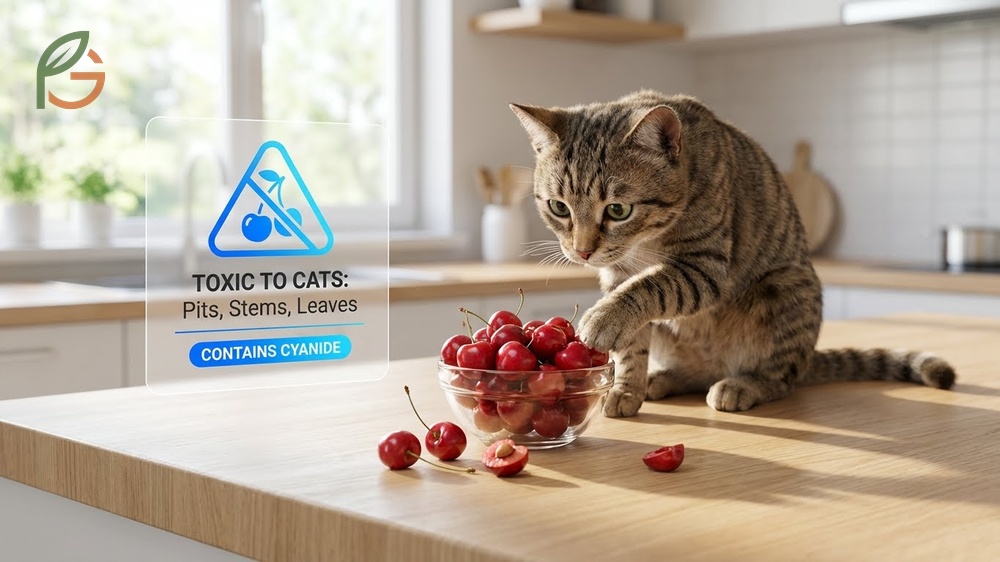
Can cats eat cherries? No, cherries are toxic to cats and shouldn’t be fed to them. Research shows that cherry pits, stems, and leaves contain cyanogenic glycosides that convert to cyanide in a cat’s digestive tract, which can cause severe poisoning or death[1]. While the flesh itself doesn’t contain cyanide, veterinarians strongly advise against offering cherries due to the significant risk if your cat chews a pit or stem[2]. FruitGarden provides evidence-based guidance to help pet owners make informed decisions about safe foods for their feline companions.
Quick Answer
- Cherry pits, stems, and leaves contain cyanide compounds that are lethal to cats[1]
- Symptoms appear within 15-20 minutes to 2 hours and include dilated pupils, difficulty breathing, and bright red gums[3]
- Immediate veterinary treatment with sodium nitrite and sodium thiosulfate antidote is essential[4]
- Safe fruit alternatives include blueberries, watermelon, and bananas in small amounts[5]
Can Cats Eat Cherries
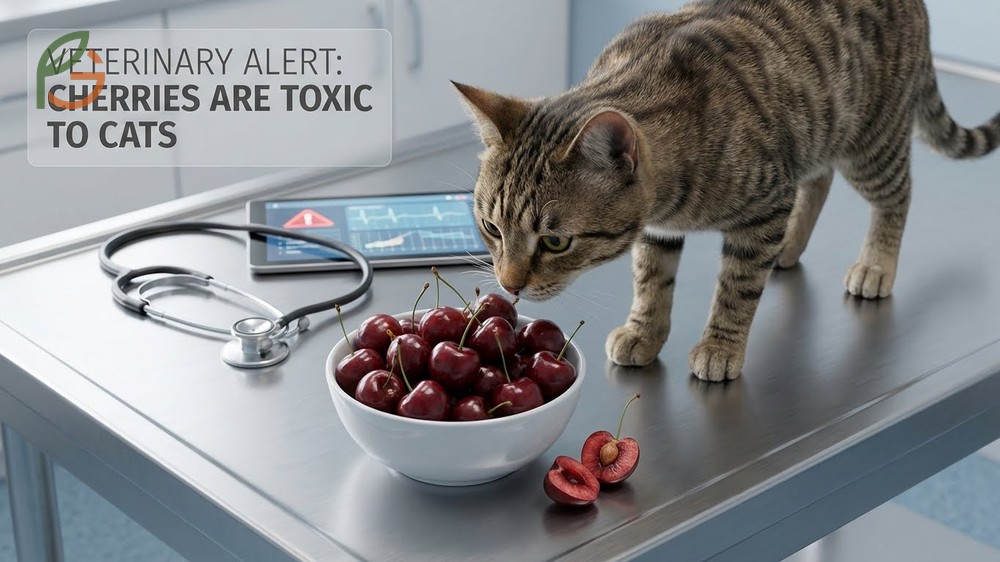
Veterinary experts classify cherries as toxic to cats due to the presence of cyanogenic glycosides in multiple parts of the fruit[1]. These compounds break down into hydrogen cyanide when chewed or digested, interfering with cellular oxygen uptake. Even though the fleshy part of ripe cherries contains minimal cyanide, the risk of accidental pit consumption makes cherries unsuitable for cats.
Studies show that cyanide poisoning in small animals progresses rapidly, with clinical signs appearing within 15-20 minutes to a few hours after ingestion[3]. The severity depends on how much toxic material your cat consumed and whether the pits were chewed. Survival after symptom onset rarely exceeds two hours without immediate veterinary intervention.
Pet poison control centers report that cherry-related calls increase during summer months when fresh cherries are most available[6]. Many incidents occur when cats knock over fruit bowls or investigate discarded cherry pits in trash bins. Prevention through proper food storage is essential for households with curious felines.
Why Cherries Are Toxic to Cats
The toxic mechanism involves cyanogenic glycosides converting to hydrogen cyanide during digestion. This poison binds to enzymes in cells, preventing them from using oxygen effectively. Tissues with high oxygen demands—like the brain, heart, and lungs—suffer damage first.
Research demonstrates that even small amounts of cyanide can be lethal to cats due to their smaller body size compared to humans[2]. A single chewed cherry pit can release enough cyanide to cause serious symptoms in an average-sized cat. The concentration is highest in wilted leaves and cracked pits.
Important Safety Note: Never induce vomiting at home if your cat ate cherries unless specifically instructed by a veterinarian. Cherry pits can cause additional damage if brought back up through the esophagus.
Which Cherry Parts Are Most Dangerous
Cherry pits contain the highest concentration of cyanogenic compounds, followed by stems, leaves, and flowers[1]. The flesh has negligible amounts when fully ripe. However, unripe cherries may have slightly elevated levels throughout the fruit.
Veterinary toxicology reports indicate that the pit must be chewed or broken for maximum cyanide release[6]. A whole pit swallowed intact poses less immediate poisoning risk but can cause intestinal blockage. Both scenarios require emergency veterinary assessment.
- Cherry pits (seeds) – highest cyanide concentration
- Wilted or dried cherry leaves – compounds become more concentrated
- Fresh cherry stems – moderate cyanogenic glycoside levels
- Cherry blossoms and flowers – similar to stem concentrations
- Ripe cherry flesh – minimal to no cyanide present
Symptoms of Cyanide Poisoning in Cats

Clinical signs of cyanide poisoning typically manifest within 15-20 minutes of ingestion, though onset can take up to two hours depending on the amount consumed[3]. Early recognition is critical because the progression from first symptoms to life-threatening complications happens rapidly. Cat owners should familiarize themselves with warning signs before emergencies occur.
Veterinary emergency data shows that survival rates improve dramatically when treatment begins before severe symptoms develop[4]. Don’t wait for multiple symptoms to appear. Contact poison control or your veterinarian immediately if you suspect cherry ingestion, even if your cat appears normal.
Early Warning Signs
Initial symptoms often include excessive drooling, dilated pupils, and restlessness or excitement[6]. Your cat may also show increased respiratory rate as their body attempts to compensate for reduced oxygen utilization. These signs can be subtle and easily overlooked.
Bright red or cherry-colored gums represent a distinctive early indicator of cyanide poisoning[3]. This occurs because cells can’t extract oxygen from blood, leaving it highly oxygenated. The color may progress to blue (cyanotic) as poisoning advances.
Severe Symptoms Requiring Immediate Care
Advanced cyanide poisoning causes difficulty breathing (dyspnea), muscle spasms, and loss of coordination[2]. Affected cats may stagger or collapse. Vomiting and diarrhea are also common at this stage.
Without treatment, cats progress to seizures, shock, and death within minutes to hours[3]. Coma typically precedes death. Emergency veterinary care is absolutely essential—home remedies won’t reverse cyanide poisoning.
Emergency Contact Numbers: ASPCA Animal Poison Control: (888) 426-4435 | Pet Poison Helpline: (855) 764-7661. Save these numbers in your phone before emergencies happen.
- Dilated pupils – often one of the first visible signs
- Excessive drooling or hypersalivation
- Bright red gums that may later turn blue
- Rapid or labored breathing (tachypnea)
- Vomiting and diarrhea
- Muscle tremors or fasciculation
- Weakness, lethargy, or inability to stand
- Seizures or convulsions
- Collapse or loss of consciousness
- Shock and potentially death without treatment
What to Do If Your Cat Ate a Cherry
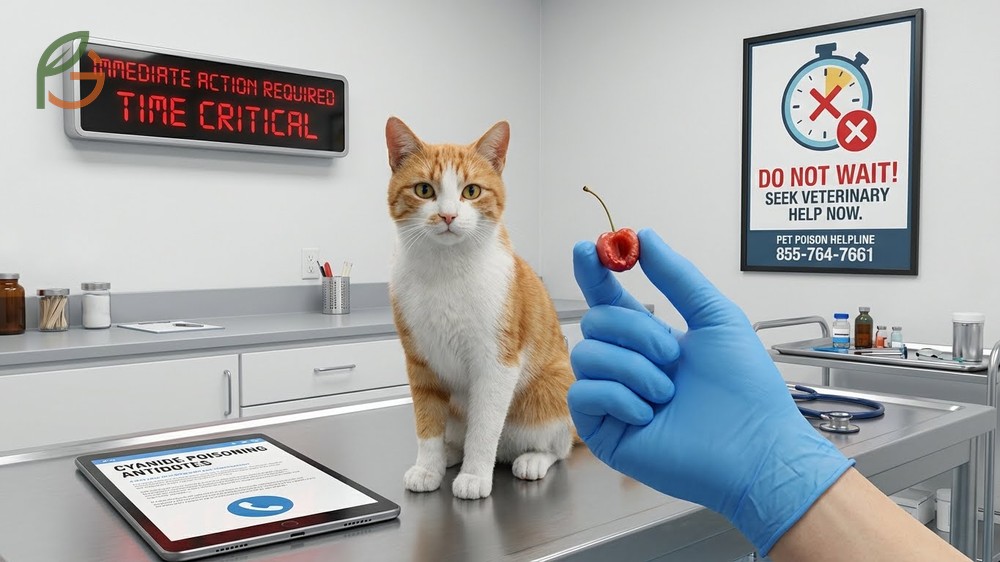
Time is the most critical factor in treating cherry ingestion cases. Pet poison experts emphasize that owners should seek help immediately rather than waiting to see if symptoms develop[6]. By the time clinical signs become visible, the poisoning has already progressed significantly. Early intervention dramatically improves outcomes.
Don’t attempt home treatments or wait overnight to see your regular veterinarian. Cyanide poisoning requires specialized antidotes and supportive care that only emergency veterinary facilities can provide[4]. Many general practices can’t administer the necessary medications.
Immediate Steps to Take
First, remove any remaining cherries from your cat’s reach and try to determine how many they consumed. Check if any pits appear chewed or broken, as this increases poisoning risk. Note the time of ingestion to help veterinarians plan treatment.
Call ASPCA Animal Poison Control at (888) 426-4435 or Pet Poison Helpline at (855) 764-7661 immediately for professional guidance. These services operate 24/7 and can advise whether your cat needs emergency care based on the specific circumstances. A consultation fee typically applies but provides critical expertise.
Transport your cat to an emergency veterinary clinic right away if advised by poison control or if any symptoms appear. Bring the cherry packaging or samples if possible. Don’t try to induce vomiting or give activated charcoal without explicit veterinary instruction.
Veterinary Treatment Options
Veterinarians treat cyanide poisoning with sodium nitrite and sodium thiosulfate, which work as antidotes by converting cyanide to less toxic compounds[4]. Oxygen therapy supports respiratory function while the antidote takes effect. IV fluids help stabilize blood pressure and flush toxins.
If your cat swallowed an intact pit, X-rays or ultrasound may be necessary to check for intestinal blockage[6]. Surgical removal becomes necessary if the pit can’t pass naturally. This represents a separate emergency beyond poisoning concerns.
- Assess how many cherries or pits your cat consumed
- Check if pits were chewed (higher poisoning risk) or swallowed whole (blockage risk)
- Note the exact time of ingestion
- Call poison control hotline immediately for professional guidance
- Don’t induce vomiting without veterinary instruction
- Transport your cat to emergency veterinary care if advised
- Bring cherry samples or packaging to help identify the variety
- Prepare to provide your cat’s weight and any existing health conditions
Safe Fruits for Cats
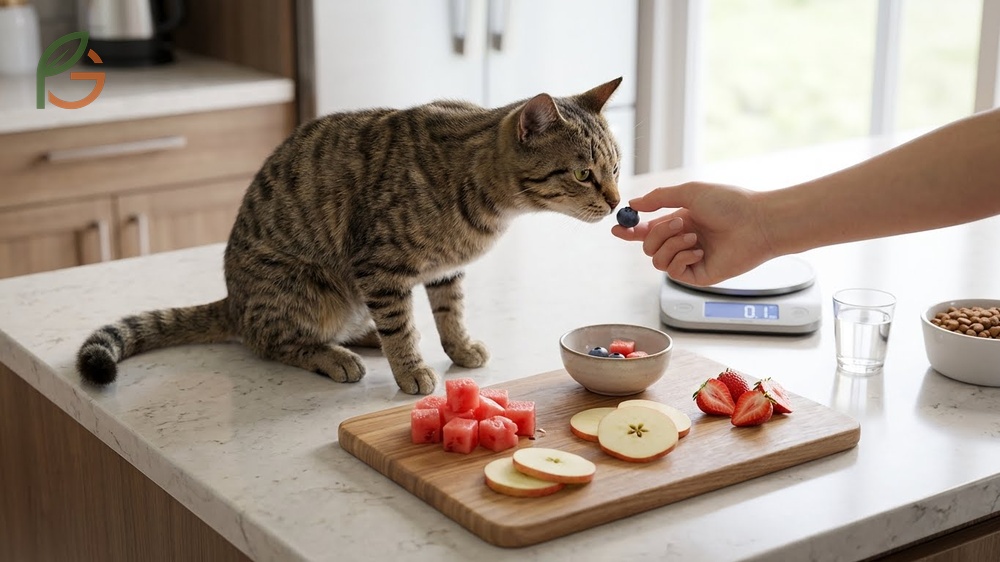
While cats don’t need fruit in their diet, certain options are non-toxic and can be offered occasionally as treats in tiny amounts[5]. Veterinary nutritionists emphasize that fruits should never exceed 10% of your cat’s daily caloric intake. Most cats show little interest in fruit anyway due to their obligate carnivore biology.
Current veterinary guidance recommends removing all seeds, pits, stems, and rinds before offering any fruit to cats. Seeds from apples, pears, and stone fruits contain cyanide compounds similar to cherries[7]. Even “safe” fruits pose choking hazards if not properly prepared.
This table compares five cat-safe fruits showing their primary benefits, safe serving sizes, and important preparation notes
| Fruit | Benefits | Safe Amount | Preparation Notes |
|---|---|---|---|
| Blueberries | High in antioxidants and fiber[5] | 2-3 berries | Wash thoroughly; serve whole or mashed |
| Watermelon | 92% water, aids hydration[5] | 1-2 small cubes | Remove all seeds and rind completely |
| Bananas | Potassium and fiber source | 1-2 thin slices | High in sugar; offer rarely |
| Strawberries | Vitamin C and antioxidants | 1-2 small pieces | Remove leaves and stem; cut into tiny pieces |
| Apples | Fiber and vitamins A and C | 1-2 thin slices | Must remove all seeds, core, and peel[7] |
Several common fruits are toxic to cats and must be avoided entirely. Grapes and raisins can cause kidney failure[7]. Citrus fruits contain compounds that cause gastrointestinal upset and photosensitivity. Avocados contain persin, which damages heart and lung tissue in cats.
- Cherries – cyanide in pits, stems, and leaves
- Grapes and raisins – cause kidney failure
- Citrus fruits (oranges, lemons, limes, grapefruit) – toxic oils and compounds
- Avocados – contain persin toxin
- Apricots – cyanide in pits similar to cherries
- Peaches and plums – cyanide-containing pits
Understanding Cat Nutrition Requirements

Cats are obligate carnivores, meaning their bodies are biologically designed to derive nutrition exclusively from animal-based sources. Unlike omnivores, cats lack the enzymes needed to efficiently digest plant materials or synthesize certain essential nutrients from plant precursors. Their digestive systems are optimized for processing protein and fat rather than carbohydrates.
Research on feline nutrition shows that cats require specific amino acids like taurine, which occurs naturally only in animal tissues. They also can’t convert plant-based beta-carotene to usable vitamin A or synthesize arachidonic acid from plant oils. This metabolic limitation makes meat consumption essential for cat health, not just preferred.
The optimal feline diet consists of high animal-based protein (45-50% of calories), moderate fat (40-45%), and minimal carbohydrates (under 10%). Fruits and vegetables provide no essential nutrients that cats can’t obtain more efficiently from prey-model foods. While small amounts of safe fruits won’t harm cats, they offer no meaningful nutritional benefit to these strict carnivores.
- Taurine – essential amino acid found only in animal tissues
- Arachidonic acid – omega-6 fatty acid from animal fats
- Preformed vitamin A – cats can’t convert plant carotenoids
- Vitamin D – requires animal sources in cats
- Niacin (B3) – cats have high requirements met by meat
- Vitamin B12 – only available in bioavailable form from animal products
- Arginine – essential amino acid critical for ammonia metabolism
Conclusion
The evidence is clear: can cats eat cherries has a definitive answer of no, due to the serious risk of cyanide poisoning from pits, stems, and leaves. Even though the flesh itself contains minimal toxins, veterinary experts agree the danger of accidental pit exposure makes cherries completely unsuitable for feline consumption. If your cat ingests any part of a cherry plant, immediate contact with poison control and emergency veterinary care is essential for survival.
Current veterinary guidance emphasizes that cats thrive on meat-based diets and don’t require fruit supplements. For cat owners who want to share safe treats, options like small amounts of blueberries or watermelon pose no toxicity risk when properly prepared. Always consult your veterinarian before introducing new foods to ensure they align with your cat’s specific health needs.
Medical Disclaimer
Important Medical Disclaimer: This content is for informational and educational purposes only. It’s not intended as a substitute for professional veterinary advice, diagnosis, or treatment. Always consult a qualified veterinarian before making any changes to your cat’s diet or if you suspect your pet has ingested a toxic substance. Cyanide poisoning is a life-threatening emergency requiring immediate professional intervention.
Frequently Asked Questions
Are Cherries Bad for Cats?
Yes, cherries are bad for cats because the pits, stems, and leaves contain cyanogenic glycosides that convert to deadly cyanide during digestion. Even a single chewed pit can release enough cyanide to cause severe poisoning in cats due to their small body size. Veterinarians classify cherries as toxic and advise never feeding them to feline companions.
Can Cats Have Cherries Without the Pit?
While cherry flesh alone contains minimal cyanide, veterinarians don’t recommend feeding it to cats. The risk isn’t worth it since cats gain no nutritional benefit from cherries and there’s always a chance of accidental pit or stem exposure. Safer fruit alternatives like blueberries exist if you want to offer your cat an occasional treat.
What Happens If a Cat Eats a Cherry Pit?
If a cat eats and chews a cherry pit, cyanide poisoning can develop within 15-20 minutes to two hours, causing dilated pupils, difficulty breathing, bright red gums, and potentially death without treatment. Even swallowing a whole pit creates intestinal blockage risk requiring surgery. Contact poison control at (888) 426-4435 immediately if your cat ingests a cherry pit.
What Are the Symptoms of Cyanide Poisoning in Cats?
Symptoms of cyanide poisoning include dilated pupils, excessive drooling, bright red gums, rapid breathing, vomiting, muscle spasms, weakness, and seizures. Without immediate veterinary treatment with sodium nitrite and sodium thiosulfate antidotes, cats typically don’t survive more than two hours after symptoms begin. This is why early intervention is absolutely critical.
What Fruits Are Safe for Cats to Eat?
Safe fruits for cats include blueberries, watermelon (seedless, no rind), bananas, strawberries, and apples with all seeds removed. These should only be offered in tiny amounts as occasional treats since cats are obligate carnivores who don’t need fruit. Always remove seeds, pits, stems, and rinds, and limit fruit to less than 10% of daily calories.
Are Cherries Toxic to Cats in All Forms?
Yes, all forms of cherries pose risks to cats. Fresh cherry pits, stems, and leaves contain the highest cyanide concentrations, but dried cherries may still have stem fragments, and maraschino cherries contain harmful additives and excessive sugar. Wild cherry trees are also dangerous—cats can chew fallen leaves or stems. Keep all cherry products away from cats.
How Long After Eating Cherries Will a Cat Show Symptoms?
Symptoms typically appear within 15-20 minutes to two hours after a cat ingests cherries, depending on how much toxic material was consumed and whether pits were chewed. However, don’t wait for symptoms to develop before seeking help—by the time clinical signs are visible, the poisoning has already progressed significantly. Contact your veterinarian or poison control immediately after suspected ingestion.





