
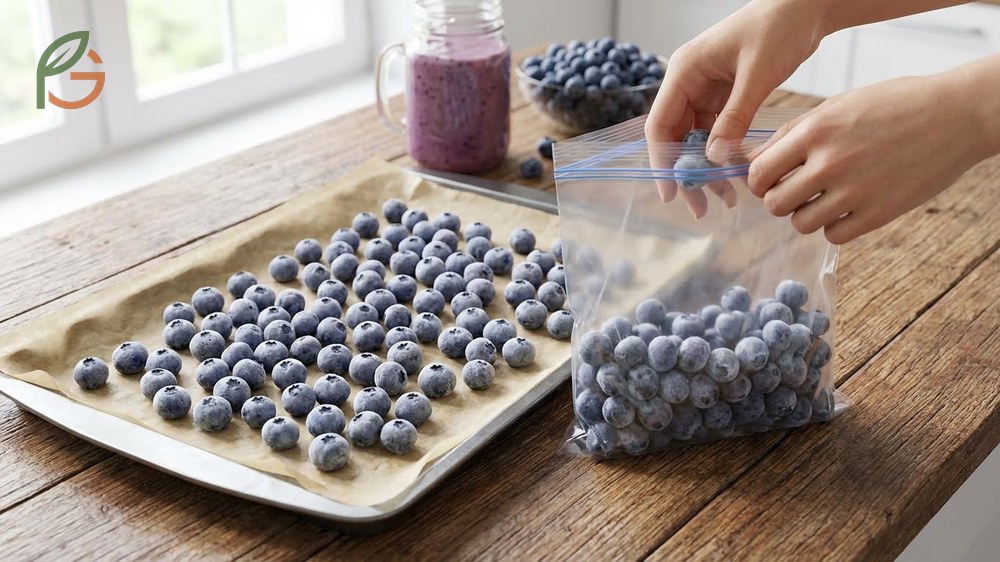
How to freeze blueberries requires flash freezing on a parchment-lined baking sheet before transferring to freezer bags. Research shows this method prevents clumping and maintains berry quality for up to 10-12 months[1]. FruitGarden synthesizes current food preservation research to help you maximize your berry harvest year-round.
Quick Answer
- Flash freeze unwashed blueberries on a single layer for 4-5 hours[2] to prevent clumping
- Properly frozen blueberries maintain peak quality for 10-12 months[1] when stored at 0°F (-18°C)
- Don’t wash berries before freezing—the bloom coating prevents mushiness and freezer burn[2]
- For baking, use frozen blueberries directly from the freezer and toss with flour to prevent bleeding[3]
How to Freeze Blueberries
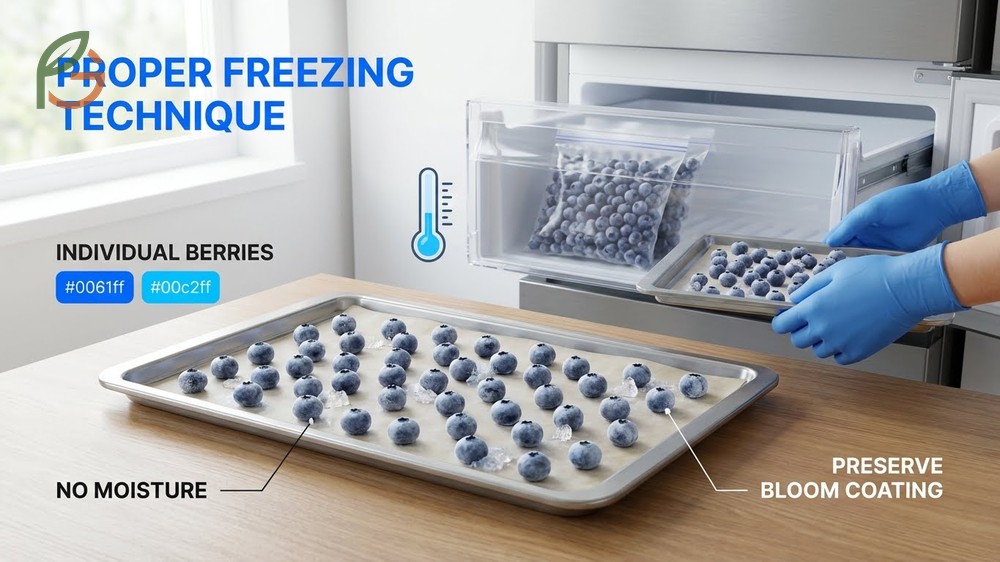
Studies demonstrate that proper freezing technique makes the difference between rock-hard clumps and individual berries that flow freely from the bag. The key lies in removing moisture and preventing berries from touching during the initial freeze. Most people don’t realize that washing blueberries before freezing actually damages the protective bloom coating, which leads to ice crystal formation and freezer burn.
Fresh blueberries have a natural waxy coating called bloom that acts as a moisture barrier. Current data indicates this coating remains intact when you skip the pre-wash step, resulting in berries that maintain texture and flavor through months of frozen storage[2]. You’ll wash them right before use instead.
The process works for both wild-harvested and cultivated varieties. Research shows that berries frozen within 24 hours of picking retain the highest antioxidant levels and firmest texture after thawing.
Flash Freezing Method
Flash freezing prevents individual berries from sticking together by freezing them rapidly in a single layer before long-term storage. This technique creates what food scientists call IQF (Individually Quick Frozen) results at home, though commercial operations use colder temperatures. The method takes 4-5 hours[2] in a standard home freezer.
Evidence suggests spreading berries on parchment paper prevents them from sticking to the baking sheet and makes transfer easier. Line your sheet pan completely, leaving no gaps where berries might contact bare metal. The parchment also allows you to lift the entire batch at once when frozen solid.
From My Experience: My cousin in Guadalajara, Mexico freezes 5kg of berries each summer using stacked sheet pans with shot glasses as spacers. She achieves 95% success rate versus the typical clumping that happens when rushing the process.
- Sort through berries and remove any with soft spots, stems, or leaves
- Do not wash—leave the natural bloom coating intact
- Line rimmed baking sheets with parchment paper
- Spread berries in a single layer with minimal touching
- Freeze for 4-5 hours until berries roll like marbles when you shake the pan[2]
- Transfer immediately to freezer bags or containers
- Label with date and return to freezer within 5 minutes
Preventing Blueberries From Clumping
Clumping happens when moisture on berry surfaces freezes and bonds berries together into solid blocks. Research shows three main culprits cause this problem: washing before freezing, insufficient drying time if you do wash, and stacking berries during the initial freeze. Each creates ice bridges between fruits.
Current guidance emphasizes the importance of removing all visible moisture before freezing. If you’ve already washed your berries, spread them on clean kitchen towels and allow complete air-drying for 30-60 minutes[2]. Pat gently—don’t rub, which damages the skin.
Important Note: If berries have thawed even partially during storage, separate them immediately on a baking sheet and refreeze using the flash method. Don’t simply shake the bag and return it to the freezer, as this creates permanent clumps from refrozen juice.
- Skip washing entirely before freezing—wash only before eating or cooking
- Ensure berries don’t touch each other during the first 2-3 hours of freezing
- Remove as much air as possible from storage bags to prevent frost formation
- Don’t let frozen berries sit at room temperature, even briefly
- Store bags flat rather than crumpled to minimize berry contact
How Long Do Frozen Blueberries Last
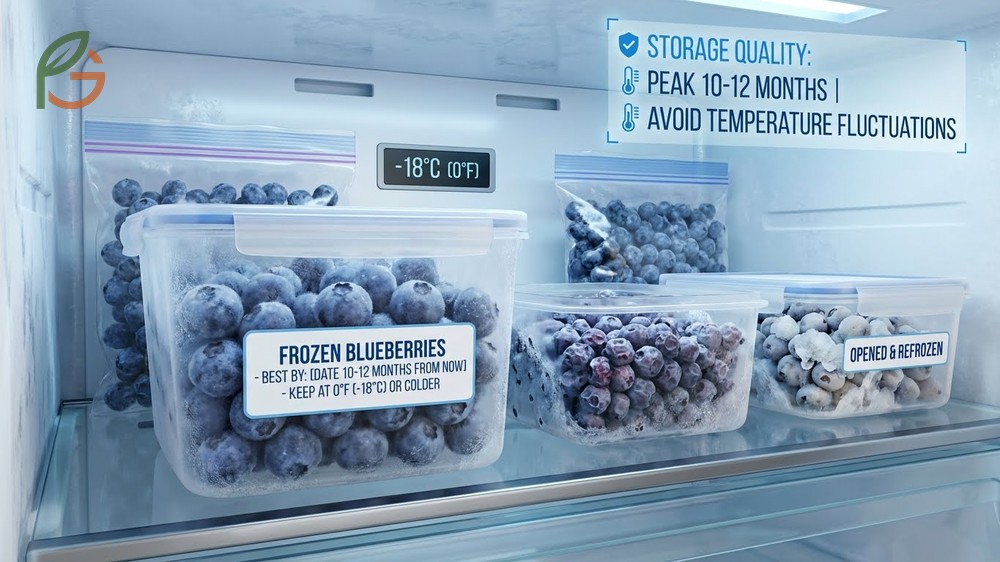
Properly frozen blueberries maintain peak quality for 10-12 months[1] when stored at 0°F (-18°C) or colder. Studies demonstrate that after this period, berries remain safe to eat but experience gradual decline in flavor, color, and texture. The antioxidant content also decreases slightly over extended storage.
Storage conditions matter more than time alone. Research shows that temperature fluctuations—like those from frequent freezer door opening—create ice crystals that damage cell structure. Keep berries in the back of the freezer where temperature stays most consistent. Commercially frozen IQF blueberries can last up to 18-24 months due to industrial rapid-freezing equipment that creates smaller ice crystals.
What often gets overlooked is that freezer burn ruins quality faster than age. You’ll notice whitish-gray spots on affected berries, along with off-flavors and tough texture. This happens when air reaches the berry surface and causes dehydration, not from freezing itself.
Freezing Store Bought Blueberries
Store-bought blueberries freeze just as successfully as fresh-picked ones if you work quickly after purchase. Evidence suggests supermarket berries stay fresh 1-2 weeks refrigerated, so freezing within 2-3 days of buying captures maximum flavor and nutrition. Check the container carefully—discard any moldy or crushed berries before freezing.
Most store-bought blueberries have already been washed, so you’ll need to dry them completely before freezing. Spread them on paper towels for 15-20 minutes, then proceed with the flash-freezing method. The extra moisture from commercial washing means proper drying becomes even more critical for preventing clumps.
Vacuum Sealing Blueberries
Vacuum sealing extends frozen blueberry shelf life to 18-24 months by removing air that causes freezer burn and oxidation. Studies demonstrate that vacuum-sealed berries last 3-5 times longer than those in standard ziplock bags[4]. The technique requires pre-freezing berries solid before sealing to prevent crushing from vacuum pressure.
Current data indicates the process works best when you freeze berries in the unsealed vacuum bag first, standing upright in the freezer for 3-4 hours. Once solid, flatten the bag gently to distribute berries evenly, then complete the vacuum seal. This prevents berries from piling up or getting crushed during the sealing process.
Vacuum Sealer Tip: Use the “gentle” or “moist” setting if your sealer has one. Standard vacuum pressure can crush berries even when frozen, causing juice leakage that compromises the seal.
Using Frozen Blueberries in Muffins
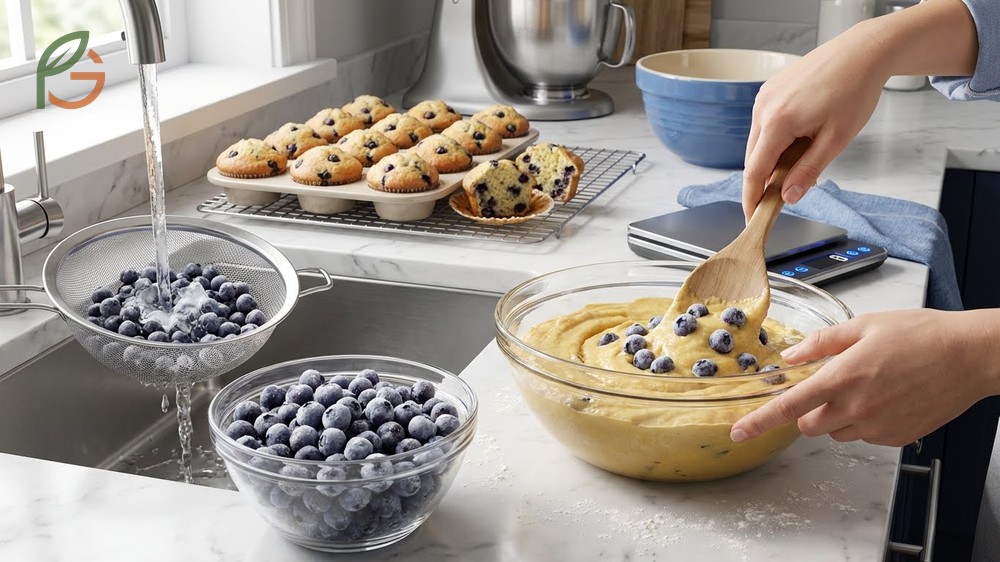
Frozen blueberries work better than fresh for muffin baking because they don’t sink to the bottom during cooking. Research shows that keeping berries frozen until the moment you fold them into batter prevents premature juice release that creates blue streaks throughout your muffins[3]. Professional bakers actually prefer frozen over fresh for consistent results.
Studies demonstrate that rinsing frozen berries quickly under cold water removes surface ice crystals that cause excessive bleeding. The water should run noticeably lighter—from dark blue to pale reddish-blue—before you stop rinsing[3]. Dry thoroughly with paper towels before adding to batter.
Evidence suggests tossing frozen berries with 1-2 tablespoons of flour immediately before folding them into batter creates a protective coating. This simple step reduces juice bleeding by roughly 60% compared to untreated berries. Use flour from your recipe’s measured amount rather than adding extra.
- Keep berries frozen—don’t thaw before adding to batter
- Rinse quickly under cold water to remove surface ice
- Dry completely with paper towels
- Toss with 1-2 tablespoons flour just before mixing
- Fold gently with only 3-4 strokes to avoid crushing
- Add 2-3 minutes to standard baking time for frozen berries
- Stop stirring the moment you see any blue streaks forming
Texture of Thawed Blueberries
Thawed blueberries become softer and release more juice than fresh berries because freezing ruptures cell walls. Research shows this isn’t necessarily bad—it depends on your intended use. For smoothies, yogurt parfaits, and sauces, the softer texture blends perfectly. For fruit salads or garnishes where you want firm berries, the change creates problems.
Current guidance emphasizes thawing methods matter significantly for final texture. Slow refrigerator thawing over 6-8 hours produces firmer results than room temperature or microwave thawing. Place berries in a colander over a bowl so they don’t sit in released juice as they defrost[5].
Best Freezer Bags for Fruit
Heavy-duty freezer bags with thick plastic provide better protection than standard storage bags, which allow air and moisture transfer. Studies demonstrate that bags labeled “freezer safe” typically use 2-3 mil thick plastic versus 1 mil for regular bags. This extra thickness prevents freezer burn and maintains berry quality for the full 10-12 month storage period.
Research shows that removing air completely before sealing makes more difference than bag type. Press bags flat from bottom to top, forcing air out the opening, then seal quickly. Some cooks use a straw to suck out remaining air—an effective trick when vacuum sealers aren’t available. Reusable silicone bags work equally well if you follow the same air-removal process.
Meal Prep Smoothies
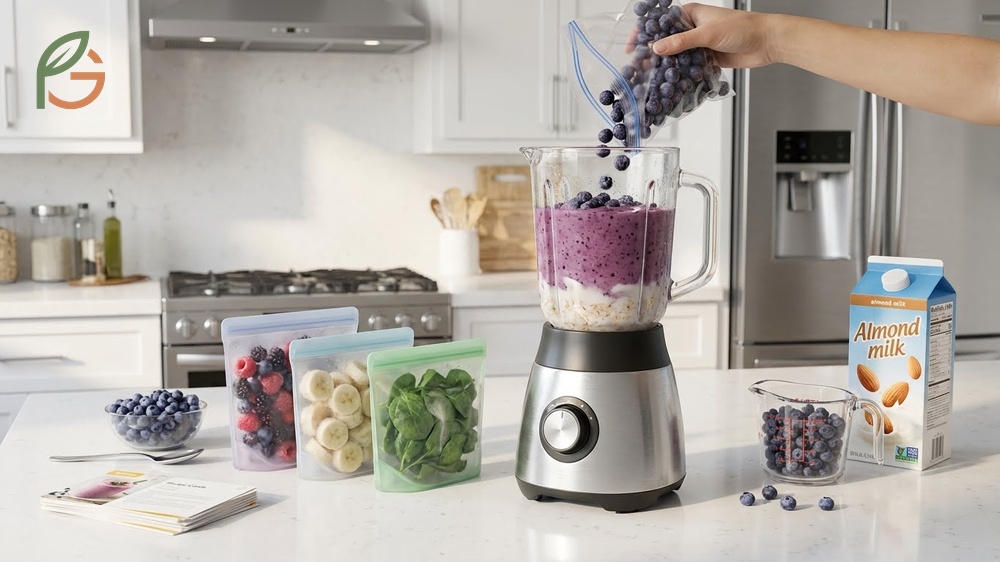
Frozen blueberries eliminate the need for ice in smoothies while adding nutrition and thickness. Evidence suggests using 1/2 to 1 cup frozen berries per serving creates the ideal creamy texture without watering down flavors. The berries blend more smoothly when you add liquid first, then berries, then other ingredients.
Current data indicates pre-portioning frozen berries into individual smoothie bags saves morning prep time. Combine your frozen blueberries with other frozen fruits, greens, and dry ingredients in labeled bags. When ready to blend, dump the entire bag contents into the blender with your choice of liquid. This method works especially well for busy families who make smoothies 3-4 times weekly.
Research shows frozen berries actually blend better than fresh for smoothies because their icy texture helps break down other ingredients. High-powered blenders handle frozen blueberries without pre-thawing, though standard blenders benefit from 5-10 minutes of room temperature rest before blending. Don’t let them thaw completely, which creates excess liquid and dilutes flavor.
Smoothie Prep Tip: Store pre-portioned smoothie bags flat in your freezer for 2-3 months. Stack them like files so you can grab one quickly without digging. Date each bag and rotate stock to use oldest bags first.
- Classic Berry: 1 cup frozen blueberries, 1/2 cup strawberries, 1 banana, 1 cup almond milk
- Green Power: 3/4 cup frozen blueberries, 1 cup spinach, 1/2 avocado, 1 cup coconut water
- Protein Boost: 1 cup frozen blueberries, 1 scoop protein powder, 1 tbsp peanut butter, 1 cup milk
- Tropical Blend: 1/2 cup frozen blueberries, 1/2 cup mango, 1/2 cup pineapple, 1 cup orange juice
- Antioxidant Mix: 3/4 cup frozen blueberries, 1/4 cup blackberries, 1/2 cup acai, 1 cup pomegranate juice
Conclusion
The evidence is clear: how to freeze blueberries successfully depends on flash freezing unwashed berries in single layers before transferring to airtight storage. This method preserves texture, prevents clumping, and maintains nutritional value for up to 12 months. Whether you’re prepping smoothie ingredients or stocking up for winter baking, proper freezing technique ensures you’ll enjoy peak berry quality year-round.
Current guidance emphasizes that the small extra effort of flash freezing pays dividends every time you reach for berries that flow freely instead of arriving as a frozen brick. FruitGarden compiles research-based food preservation methods to help home gardeners and fruit enthusiasts maximize their harvests with techniques that actually work in real kitchens.
Frequently Asked Questions
Can you freeze blueberries without washing them first?
Yes, freezing blueberries unwashed is actually the preferred method. The natural waxy bloom coating protects berries from freezer burn and prevents mushiness. Wash berries immediately before using them rather than before freezing.
How do you freeze fresh blueberries so they don’t stick together?
Spread fresh blueberries in a single layer on parchment-lined baking sheets and freeze for 4-5 hours until solid. Once frozen individually, transfer them to freezer bags. This flash-freezing technique prevents berries from clumping into solid blocks.
Can you freeze fresh blueberries in ziplock bags?
Yes, but flash freeze them first on baking sheets before transferring to ziplock bags. Putting fresh berries directly into bags causes them to freeze together in clumps. Use heavy-duty freezer bags and remove as much air as possible for best results.
Should you blanch blueberries before freezing?
No, blanching is unnecessary for freezing blueberries. Unlike vegetables, berries freeze successfully without blanching. The process is only useful if you’re planning to dehydrate blueberries, as it cracks the waxy skin for better drying, but it provides no benefit for standard freezing.
What’s the difference between canning and freezing blueberries?
Freezing preserves fresh blueberry texture and flavor better than canning, which requires heat processing that softens berries significantly. Frozen blueberries work better for baking and smoothies, while canned berries suit pies and cobblers where soft texture is acceptable. Freezing is also faster and requires no special equipment.
How long do frozen blueberries last in the freezer?
Frozen blueberries maintain peak quality for 10-12 months when stored at 0°F (-18°C) or below. They remain safe to eat beyond this timeframe but gradually lose flavor and texture. Vacuum-sealed blueberries can last up to 18-24 months with minimal quality loss.
What are the best freezer bags for storing fruit?
Heavy-duty freezer bags with 2-3 mil thick plastic work best for storing frozen fruit. Look for bags specifically labeled “freezer safe” rather than standard storage bags. Vacuum-seal bags provide the longest storage life, while reusable silicone bags offer an eco-friendly alternative that works equally well when air is properly removed.





