
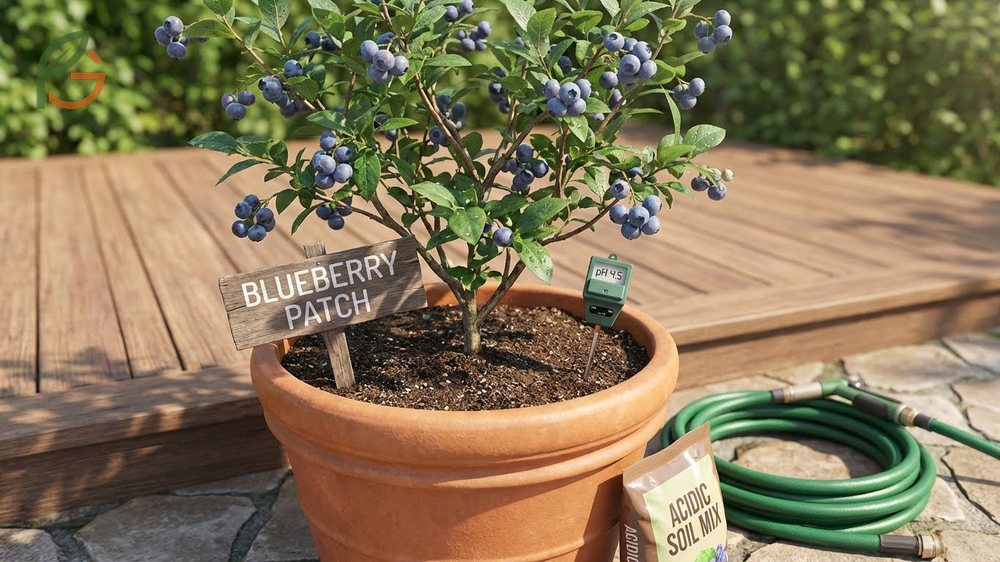
Blueberry plants in pots produce abundant harvests when you provide containers at least 24 inches deep, maintain acidic soil between pH 4.0-5.5, and water consistently throughout the growing season.[1] Research shows container-grown blueberries thrive just as well as in-ground plants when you match the right variety to your space and commit to proper care. FruitGarden synthesizes current horticultural research to help you successfully grow berries in any outdoor space, from balconies to patios.
Quick Answer
- Container size: 24 inches deep and 24-30 inches wide for mature plants; start smaller shrubs in 12-16 inch pots[1]
- Soil pH: 4.0-5.5 is critical—blueberries won’t thrive above 5.5[2]
- Watering: Daily in hot weather, check top inch of soil; never let it dry out completely[3]
- Best varieties: Top Hat, Sunshine Blue, and Duke adapt perfectly to container life
Blueberry Plants in Pots
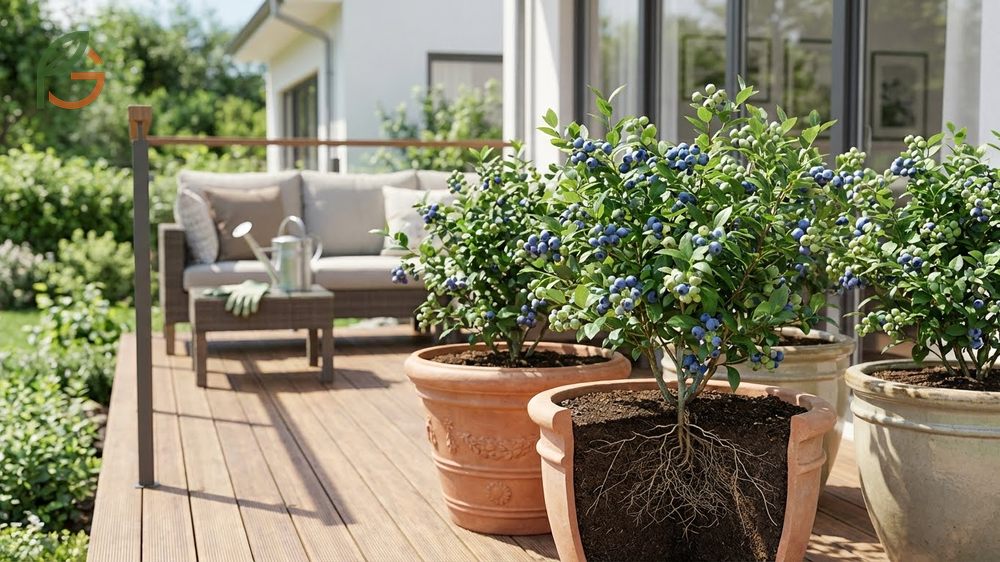
Container gardening transforms how you can grow blueberries, especially when your yard lacks acidic soil or space. You’re not limited to traditional in-ground planting anymore. With the right setup, potted blueberries deliver fresh berries from your patio, deck, or balcony.
The shallow root system of blueberries actually makes them ideal container candidates—unlike deep-rooted fruit trees. Their roots typically spread horizontally rather than vertically. This means you don’t need massive depth, just adequate width for root expansion.
Why Container Growing Works
Containers give you complete control over soil pH, which is blueberries’ most critical requirement. If you’ve got alkaline soil in your yard, fighting chemistry becomes exhausting. Pots let you create the perfect acidic environment from day one.
You can also move containers to capture optimal sunlight throughout the seasons. Most people don’t realize blueberries need 6-8 hours of direct sun for maximum fruit production. Portability becomes a huge advantage when trees cast shade or buildings block light at different times of year.
From My Experience: My cousin in Guadalajara, Mexico grew Sunshine Blue blueberries in large ceramic pots on her rooftop in 2023. She moved them twice during summer to follow the sun, and her plants produced berries within 18 months—matching the typical 1.5-2 year timeline from research.
Dwarf Varieties for Pots
Not all blueberry cultivars adapt well to container life. You’ll want compact or dwarf varieties that won’t outgrow their space. These cultivars were specifically bred for smaller gardens and pots.
Top Hat reaches only 2 feet tall and self-pollinates, making it perfect for windowsills or small balconies. Sunshine Blue tolerates warmer climates and stays semi-dwarf while producing large, sweet berries. Duke offers exceptional flavor and larger fruits but grows taller, so you’ll need more room.
- Top Hat: Compact at 2 feet, self-pollinating, medium-sized berries with sweet-tangy flavor
- Sunshine Blue: Semi-dwarf, heat-tolerant, large berries, excellent disease resistance
- Duke: Larger plant but container-adaptable, exceptional flavor, extended harvest season
- Northland: Half-high variety, cold-hardy to Zone 3, heavy producer
- Peach Sorbet: Ornamental foliage, compact growth, dual-purpose plant
Best Container Size for Blueberries
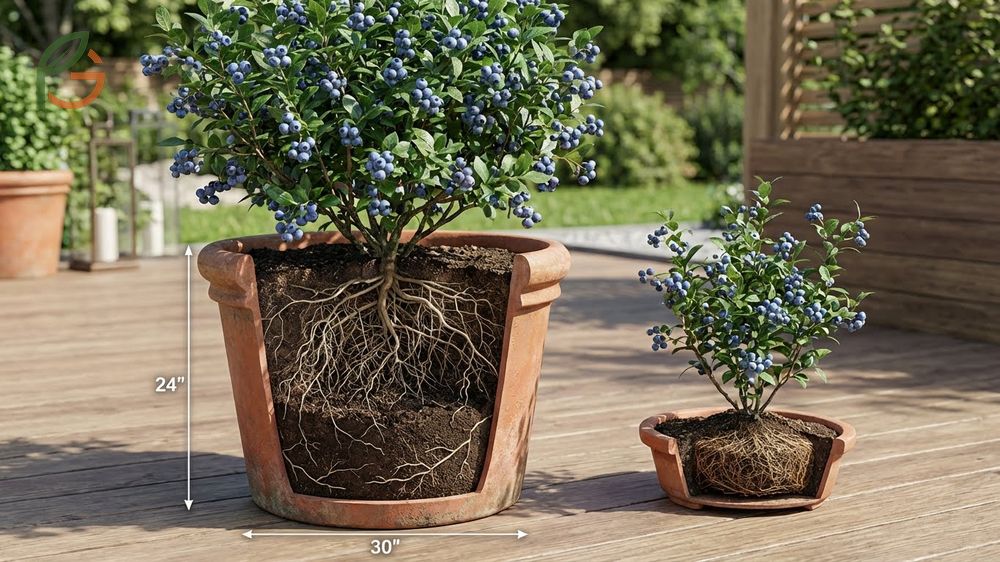
Mature blueberry bushes demand containers at least 24 inches deep and 24-30 inches wide to support their root systems.[1] This translates to roughly 20-30 gallon capacity. Smaller containers restrict root growth and dry out too quickly in summer heat.
The depth matters more than you’d think, even though blueberry roots stay relatively shallow. Research from Oregon State University shows roots will grow to the bottom of well-draining containers up to 24 inches deep. Sandy soil or pine bark media encourages this vertical root development.
Starting Small vs Large
Young plants don’t need massive containers immediately—you can start with 12-16 inch pots for the first year or two.[4] This approach costs less upfront and prevents waterlogging in oversized pots. Repot in late summer or early fall so roots establish before winter dormancy.
However, frequent repotting stresses plants and delays fruiting. If you’re planting a 2-3 year old shrub, go straight to the 24-inch container. The extra investment pays off with faster fruit production and less transplant shock.
Important Note: When moving up pot sizes, increase diameter by no more than 4-6 inches at a time. Jumping from a 10-inch to a 30-inch pot creates too much unused soil that stays soggy and invites root rot.
Drainage Requirements
Drainage holes aren’t optional—they’re essential for preventing waterlogged roots that kill blueberries faster than drought. Your container needs at least 4-6 drainage holes, each about 0.5 inches in diameter. If you’re repurposing containers, drill additional holes yourself.
Elevate pots on feet or bricks to ensure water actually exits rather than pooling underneath. This airflow also prevents algae and mosquito breeding. Never place saucers under blueberry containers unless you empty them immediately after watering.
Soil pH for Potted Blueberries
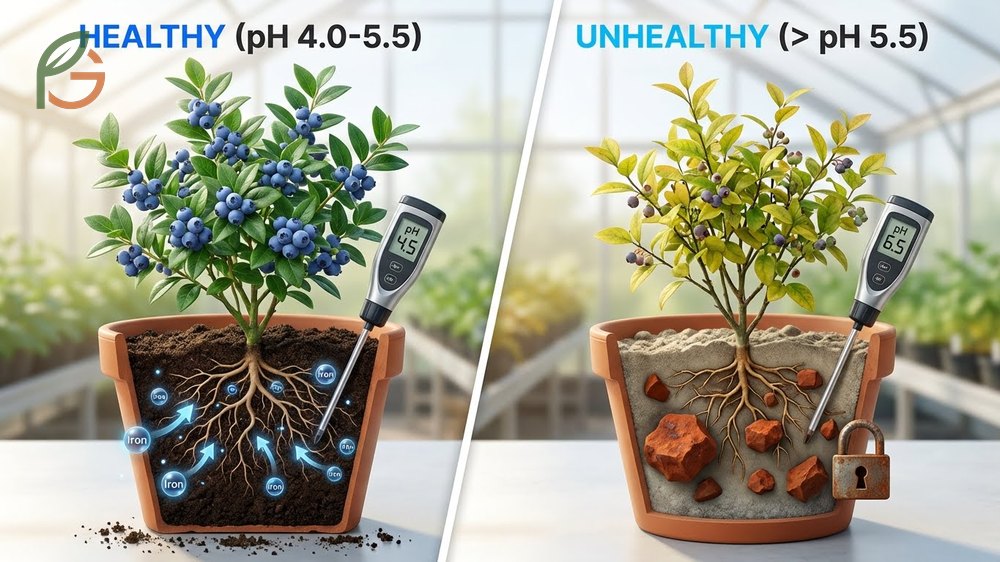
Acidic soil between pH 4.0-5.5 is non-negotiable for blueberries—they simply won’t survive above 5.5.[2] This extreme acidity requirement separates blueberries from nearly every other fruit you can grow. Without proper pH, leaves turn yellow, growth stalls, and fruit production drops to nothing.
The chemistry explanation is straightforward: blueberries need iron, but they can only absorb it in highly acidic conditions. When pH rises above 5.5, iron becomes chemically “locked” in the soil even if it’s present. Plants develop iron chlorosis—yellowing leaves with green veins—and slowly starve.
Start with commercial acidic potting mixes designed for azaleas, rhododendrons, or blueberries specifically. These pre-mixed soils contain peat moss, sulfur, and other acidifying ingredients. You can also create your own blend using 2/3 peat moss and 1/3 pine bark nuggets.
Test your soil pH twice yearly using an inexpensive home kit or digital meter. Spring and fall checks ensure you catch any pH drift before it damages plants. If pH creeps above 5.0, apply pelletized sulfur according to package directions—typically 1-2 tablespoons per gallon of soil.
- Purchase acidic potting mix or make your own with peat moss and pine bark
- Test pH in spring and fall using digital meter or test strips
- Add pelletized sulfur if pH rises above 5.0
- Mulch with pine needles or pine bark to slowly acidify over time
- Use only acidic fertilizers—never lime or alkaline amendments
pH Tip: Coffee grounds don’t acidify soil as much as people think. Fresh grounds are nearly neutral (pH 6.5), and used grounds only slightly acidic. Don’t rely on them as your primary acidification method.
Watering Potted Blueberries
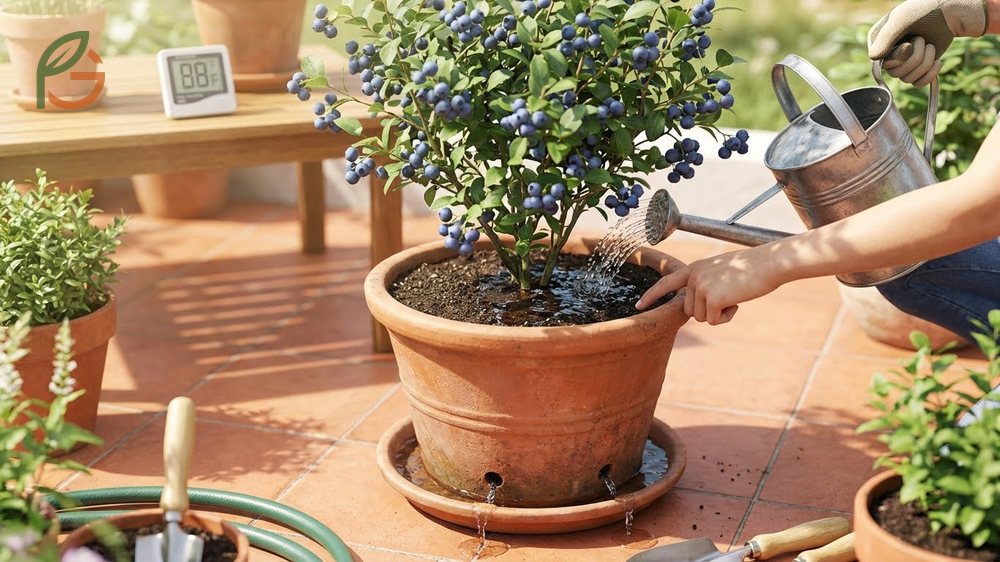
Container blueberries need daily watering during hot summer months, especially once temperatures exceed 85°F (29°C).[3] This frequency surprises most new growers who’re used to weekly watering schedules. Pots dry out far faster than ground soil because they’re exposed on all sides.
Check soil moisture by sticking your finger 1-2 inches deep into the potting mix. If it feels dry at that depth, water thoroughly until you see drainage from the bottom holes. During cooler spring and fall periods, you can reduce to every 2-3 days depending on rainfall.
Established blueberries need 1-2 inches of water per week, which equals about 5.5-11 gallons for a mature 3×3 foot root zone.[3] For containers, this translates to deep watering rather than light sprinkling. Shallow watering creates shallow roots that dry out even faster.
Newly planted blueberries demand more attention—check them twice daily for the first month. Their root systems haven’t expanded enough to access moisture throughout the pot. You’ll notice leaves drooping quickly if water stress occurs during establishment.
- Water daily when temperatures exceed 85°F (29°C) or during drought
- Check top 1-2 inches of soil—water when it feels dry to touch
- Soak thoroughly until water drains from bottom holes
- Reduce frequency to 2-3 times weekly in cooler weather
- Add 2-3 inches of pine bark mulch to retain moisture
- Install drip irrigation or soaker hoses for consistent moisture during vacations
Fertilizing Blueberries in Containers
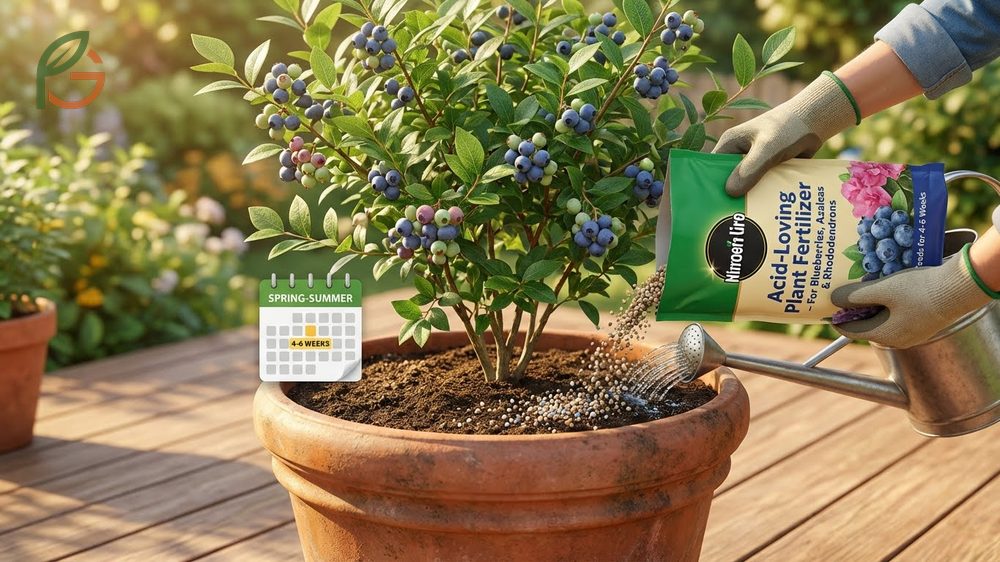
Potted blueberries need fertilizer every 4-6 weeks during the active growing season from early spring through late summer.[5] Containers leach nutrients faster than garden beds because frequent watering flushes them through drainage holes. This makes regular feeding essential, not optional.
Choose fertilizers specifically formulated for acid-loving plants like azaleas, rhododendrons, or blueberries. These products contain ammonium sulfate or urea as nitrogen sources, which maintain or even lower soil pH. Standard fertilizers often raise pH and lock out iron, causing the same yellow-leaf problems as alkaline soil.
Apply fertilizer in early spring as new growth emerges, then again after fruit set in late spring. Stop fertilizing by late August so plants can harden off before winter. Late-season feeding stimulates tender new growth that won’t survive the first frost.
| Timing | Type | Purpose |
|---|---|---|
| Early Spring | Acid-loving plant fertilizer (organic preferred) | Kickstart leaf and shoot growth |
| Late Spring | Same fertilizer, half dose | Support fruit development |
| Mid-Summer | Light application if growth slows | Maintain vigor during heat |
| Late Summer | STOP feeding after August | Allow plants to harden off for winter |
Organic options like fish meal, blood meal, or cottonseed meal work excellently and feed soil microbes too. If you see rapid yellowing despite proper pH, apply chelated iron as a foliar spray for quick correction. This symptom usually means pH has drifted upward or you’ve used non-acidic fertilizer.
Winterizing Blueberry Pots
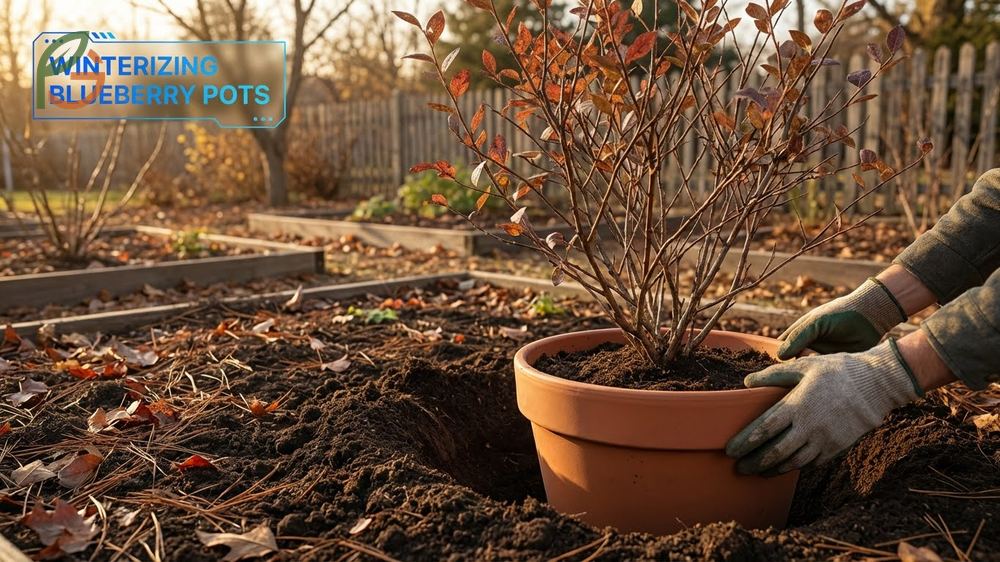
Blueberries in pots aren’t as cold-hardy as ground-planted shrubs because their roots lack insulation from surrounding soil. You need to add 1-2 hardiness zones to your plant’s rating for container survival.[6] For example, a Zone 4 variety needs Zone 6 conditions when grown in a pot outdoors.
The best protection method is burying the entire container in garden soil once plants go dormant in late fall. Dig a hole matching your pot size, drop it in at the same soil level, and backfill around it. This technique insulates roots just like in-ground planting without permanent commitment.
If you can’t bury containers, wrap them with insulating materials like burlap, bubble wrap, or foam sheets. Place wrapped pots against your house’s south-facing wall where reflected heat provides extra protection. Add 6-8 inches of straw or leaf mulch around and over the container for additional insulation.
Small pots under 15 inches diameter can move into unheated garages or sheds where temperatures stay between 30-45°F (-1 to 7°C). Don’t bring them into heated homes—blueberries require winter chill hours (500-800 hours below 45°F) to set fruit the following year. Skipping dormancy means no berries next season.
- Bury containers in garden soil after plants go dormant
- Wrap pots with burlap, bubble wrap, or foam insulation
- Mulch heavily with 6-8 inches of straw or pine needles
- Move small containers to unheated garage (30-45°F)
- Group multiple pots together for shared insulation
- Water once thoroughly before freezing—never let roots freeze dry
Cold Damage Warning: Terra cotta and thin plastic pots crack easily when wet soil freezes and expands. Use thick resin, fiberglass, or wood containers if you’re overwintering outdoors in cold climates.
Conclusion
The evidence is clear: blueberry plants in pots produce just as successfully as in-ground plantings when you provide adequate container size, maintain acidic soil pH, and commit to consistent watering. Current horticultural guidance emphasizes that soil acidity matters more than any other factor—get the pH right between 4.0-5.5, and most other challenges become manageable.
Start with a 24-inch container, choose dwarf varieties suited to your climate, and test your soil pH twice yearly. FruitGarden compiles research from university extensions and agricultural data to help you grow fresh berries regardless of your yard’s soil conditions.
Frequently Asked Questions
Can You Grow Blueberries Indoors?
Blueberries struggle indoors because they need 500-800 winter chill hours below 45°F (7°C) to produce fruit. You can keep them inside during extreme weather, but they must spend winter in cold conditions outdoors or in unheated spaces. Without proper dormancy, plants won’t set flower buds for next year’s berries.
How Long Do Blueberries in Pots Live?
Container blueberries can live 20-30 years with proper care and periodic repotting every 3-4 years. They’ll need fresh acidic soil and larger containers as they mature. Plants typically start producing fruit in their second or third year and reach peak production around year 6-8.
Do I Need Two Blueberry Plants for Pollination?
While blueberries are self-fertile, planting two different varieties significantly increases berry size and yield through cross-pollination. If you’ve only got space for one pot, choose self-pollinating varieties like Top Hat or Sunshine Blue. They’ll produce fruit alone, just not as abundantly as paired plants.
What’s the Best Potting Soil for Blueberries?
Use commercial mixes labeled for azaleas, camellias, or rhododendrons—these maintain pH 4.5-5.5 naturally. You can also mix your own using 2/3 peat moss and 1/3 pine bark. Avoid regular potting soil or garden soil, which are too alkaline and lack the drainage blueberries need.
When Should I Repot My Blueberry Bush?
Repot in late summer or early fall (August-September) so roots establish before winter dormancy. You’ll know it’s time when roots circle the pot’s bottom or growth slows despite good care. Move up just one pot size (4-6 inches larger in diameter) to avoid waterlogging issues.
Why Are My Blueberry Leaves Turning Yellow?
Yellow leaves with green veins indicate iron chlorosis, caused by soil pH above 5.5. Test your pH immediately and apply pelletized sulfur if needed. You can also spray chelated iron on leaves for quick greening while you adjust soil chemistry.
How Much Sun Do Potted Blueberries Need?
Blueberries need 6-8 hours of direct sunlight daily for maximum fruit production. They’ll survive in partial shade but produce fewer and smaller berries. The portability of containers lets you chase sunlight by moving pots throughout the day or season.





