
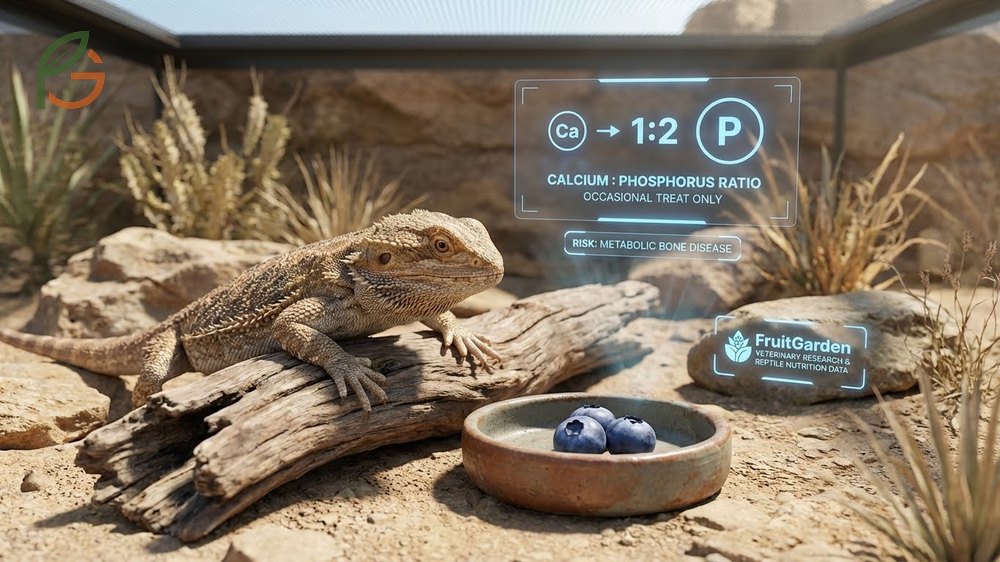
Can bearded dragons eat blueberries? Yes, but only as an occasional treat, not a daily staple. Research shows that blueberries have an inverted calcium to phosphorus ratio of 1:2[1], which can block calcium absorption and lead to metabolic bone disease if fed too frequently. FruitGarden synthesizes current veterinary research and reptile nutrition data to help pet owners make informed feeding decisions. Most reptile owners don’t realize that timing and portion size matter more than which fruits you offer.
Quick Answer
- Bearded dragons can safely eat 2-3 blueberries once per week as a treat[2]
- Blueberries contain 6 mg calcium and 12 mg phosphorus per 100g[3]
- The inverted 1:2 calcium to phosphorus ratio blocks calcium absorption, risking MBD[1]
- Blueberries contain 3-5 mg oxalates per 100g, which further reduces calcium availability[4]
Can Bearded Dragons Eat Blueberries
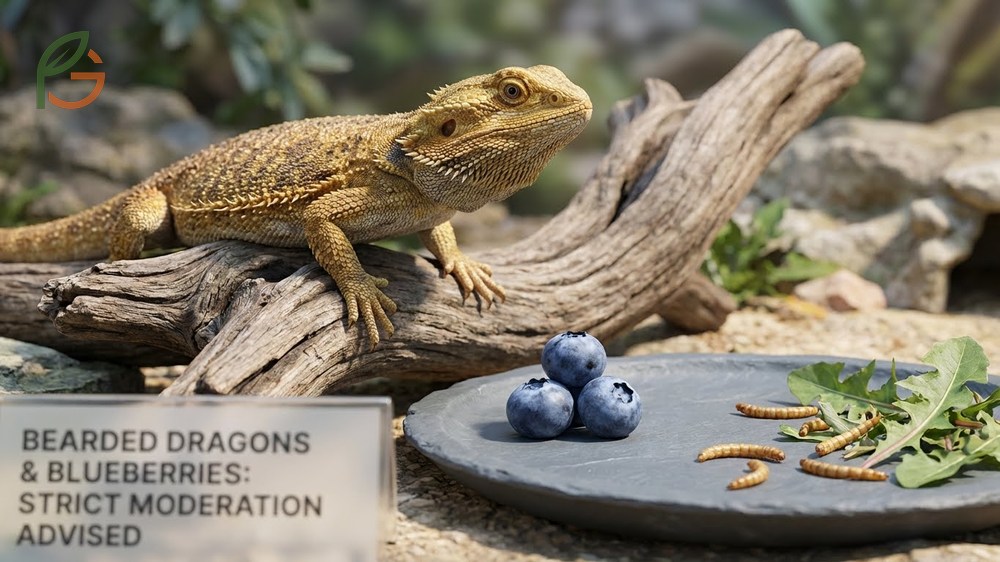
Research shows that blueberries are safe for bearded dragons when offered in strict moderation. The primary concern isn’t toxicity but nutritional imbalance.
Blueberries contain beneficial antioxidants and vitamins, but they also have characteristics that make them unsuitable as a dietary staple. Studies demonstrate that the sugar content reaches nearly 10g per 100g serving[3], which can disrupt digestion in reptiles not adapted to high-sugar diets.
The acidity level poses another challenge. Blueberries have a pH value of approximately 3.2[3], which is far too acidic for bearded dragon digestive systems and can cause discomfort.
Nutritional Profile of Blueberries
Current nutritional data reveals specific mineral content that affects reptile health. Each 100g of blueberries provides 6 mg calcium, 12 mg phosphorus, and 77 mg potassium[3].
The vitamin profile includes beneficial compounds like vitamin C at 9.7 mg per 100g[3]. These antioxidants support immune function, but they don’t outweigh the calcium absorption issues.
Health Concerns for Bearded Dragons
Evidence suggests three primary health risks when blueberries are overfed. The inverted mineral ratio creates immediate calcium binding, while high sugar content affects long-term metabolic health.
Veterinary observations show that bearded dragons fed excessive fruit develop digestive issues faster than those on insect-and-vegetable diets. The small size of blueberries makes portion control easier compared to larger fruits like mango or banana.
Important Note: Never feed blueberries to juvenile bearded dragons under 6 months old. Their rapid bone growth requires maximum calcium absorption, and any phosphorus-rich food can cause developmental problems.
Bearded Dragon Calcium to Phosphorus Ratio
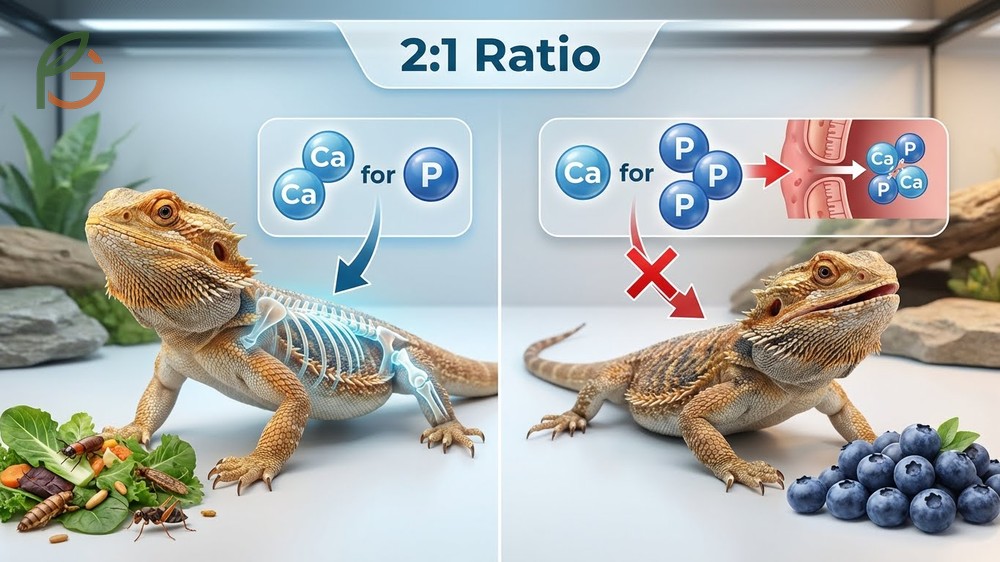
Bearded dragons require a dietary calcium to phosphorus ratio of 2:1[1] to maintain skeletal health. This means every meal should contain twice as much calcium as phosphorus.
Blueberries provide the opposite ratio at 1:2[1], meaning they contain double the phosphorus compared to calcium. When phosphorus exceeds calcium in the bloodstream, it binds with calcium molecules before they can be absorbed through the intestinal wall.
This biochemical interaction explains why frequent blueberry consumption leads to calcium deficiency despite supplementation. The phosphorus in one meal affects calcium absorption from that entire feeding session.
Why Calcium Matters
Calcium serves multiple critical functions in reptile physiology. Research demonstrates it’s essential for bone formation, muscle contraction, nerve signaling, and blood clotting.
Adult bearded dragons need consistent calcium intake because they don’t store excess calcium as efficiently as mammals. Each day without adequate calcium creates a cumulative deficit that manifests in skeletal weakness over weeks or months.
Metabolic Bone Disease Risk
Metabolic bone disease (MBD) develops when calcium deficiency becomes chronic. Current veterinary data shows MBD causes bone deformities, paralysis, and shortened lifespan in captive bearded dragons.
Early symptoms include lethargy, tremors, and difficulty walking. Advanced cases show visible bone deformities in the jaw, spine, and limbs that can’t be reversed even with treatment.
This table compares calcium and phosphorus content across common fruits offered to bearded dragons, showing which fruits have balanced or inverted mineral ratios
| Fruit | Calcium (mg/100g) | Phosphorus (mg/100g) | Ratio |
|---|---|---|---|
| Blueberries | 6[3] | 12[3] | 1:2 (Poor) |
| Strawberries | 68[5] | 56[5] | 1:1 (Better) |
| Papaya | 20 | 10 | 2:1 (Ideal) |
| Mango | 11 | 14 | 1:1.3 (Acceptable) |
| Banana | 5 | 22 | 1:4.4 (Very Poor) |
Oxalates in Blueberries

Oxalates are naturally occurring compounds found in many plant foods. Blueberries contain 3-5 mg oxalates per 100g[4], which represents a moderate amount compared to other vegetables and fruits.
These compounds bind with calcium in the digestive tract, forming calcium oxalate crystals that can’t be absorbed. This creates a double problem for bearded dragons eating blueberries: low calcium content plus oxalate binding equals minimal calcium absorption.
Veterinary research indicates that moderate oxalate levels aren’t dangerous in occasional treats. The issue arises when multiple high-oxalate foods are fed together or when oxalate-rich fruits become dietary staples.
Other high-oxalate vegetables that require similar caution include kale, spinach, and Swiss chard[6]. These should be rotated rather than fed daily to minimize cumulative oxalate exposure.
Feeding Tip: If you offer blueberries, pair them with calcium-rich greens like collard greens or mustard greens in the same meal. This helps balance the overall mineral ratio and reduces phosphorus dominance.
How Often to Feed Bearded Dragons Fruit
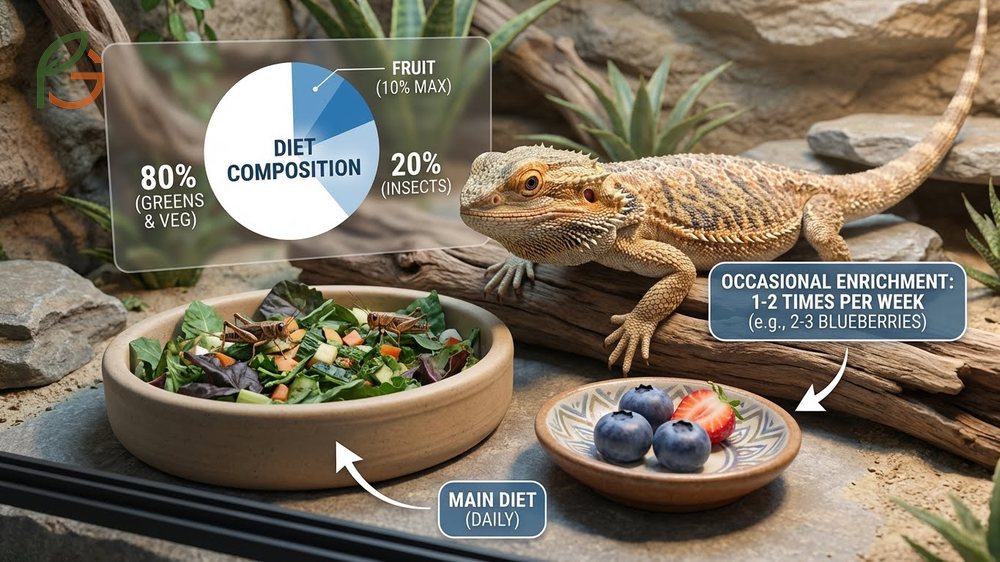
Current veterinary guidelines recommend limiting fruit to no more than 10% of a bearded dragon’s total diet[7]. For adult bearded dragons, this translates to fruit offerings once or twice per week at most.
Adult bearded dragons thrive on diets composed of 80% vegetables and greens, 20% insects[8]. Fruit should be viewed as an occasional enrichment rather than a nutritional necessity.
For blueberries specifically, offer 2-3 berries once per week[2]. This frequency provides antioxidant benefits without risking calcium imbalance.
Juvenile bearded dragons under 12 months require different ratios. Their diets should consist of 50-80% insects and 20-50% plants[8], with minimal fruit until they reach adult size and skeletal maturity.
- Loose or watery stools that persist for more than two days
- Decreased interest in vegetables and greens after fruit consumption
- Weight gain without corresponding growth in length
- Sticky residue around the mouth from sugar buildup
- Reduced activity levels or lethargy following fruit meals
Fruits for Bearded Dragons List
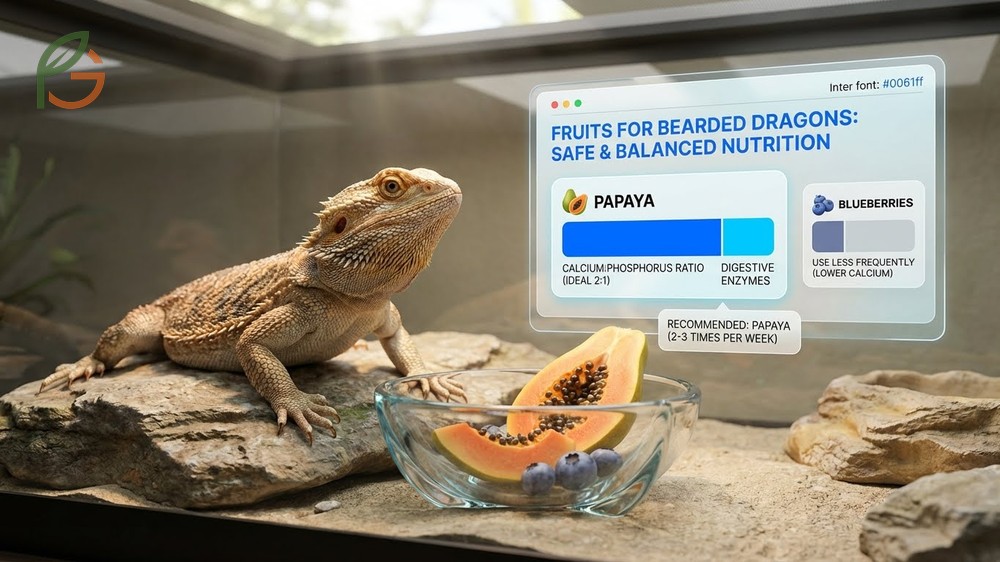
Evidence-based reptile nutrition identifies several fruits as safer alternatives to blueberries. These options provide better mineral ratios or lower sugar content while still offering variety.
The safest fruits maintain calcium to phosphorus ratios closer to the ideal 2:1 target. Papaya stands out as an excellent choice with its balanced mineral profile and digestive enzymes.
- Papaya (2-3 times per week) – Contains digestive enzymes and maintains good calcium balance
- Figs (once per week) – Higher calcium content than most fruits, but also high in sugar
- Strawberries (once per week) – Better 1:1 calcium to phosphorus ratio than blueberries[5]
- Mango (1-2 times per week) – Rich in vitamin A, acceptable mineral ratio when ripe
- Watermelon (once per week) – High water content aids hydration, low in oxalates
- Cantaloupe (every other week) – Provides beta-carotene, moderate sugar levels
- Apples (once per week) – Remove seeds and core, as these contain trace cyanide compounds
Avoid citrus fruits like oranges, lemons, and grapefruits entirely. The high acidity disrupts digestive pH and can cause gastrointestinal distress even in small amounts.
Never feed avocado to bearded dragons. It contains persin, a fungicidal toxin that causes respiratory distress and can be fatal to reptiles.
Can Bearded Dragons Eat Strawberries
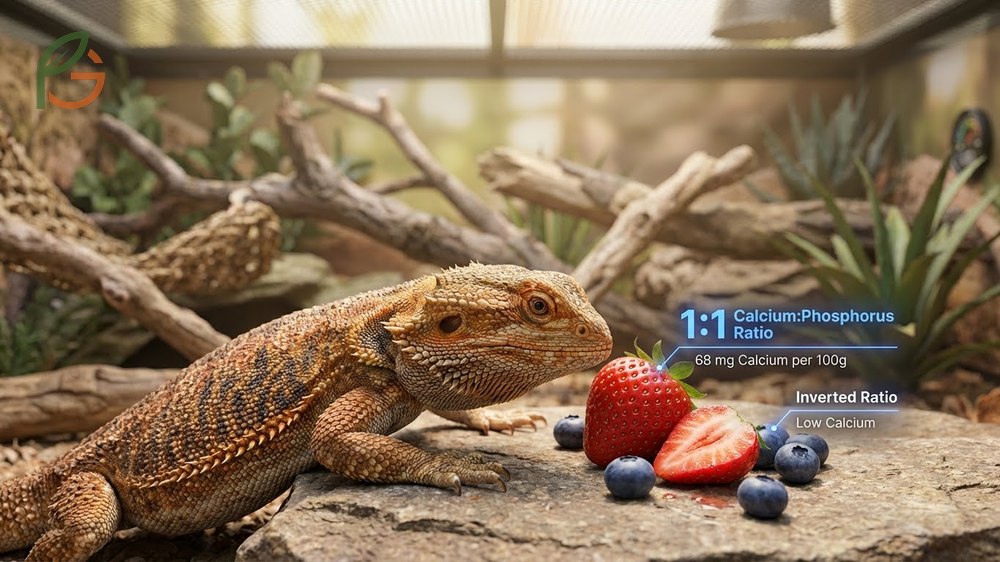
Strawberries offer a nutritionally superior alternative to blueberries for bearded dragons. Research shows strawberries maintain a 1:1 calcium to phosphorus ratio[5], which is significantly better than the inverted ratio found in blueberries.
The calcium content in strawberries reaches 68 mg per 100g[5], more than 11 times higher than blueberries. This makes strawberries a more calcium-friendly treat option.
Veterinary guidelines suggest offering one small strawberry, chopped, once per week[9]. Remove the green leafy top before feeding, as it can be difficult to digest.
The soft texture of strawberries makes them easy for bearded dragons to chew and swallow. The small seeds pose no choking hazard, unlike larger fruits with pits.
Gut Loading Insects for Bearded Dragons
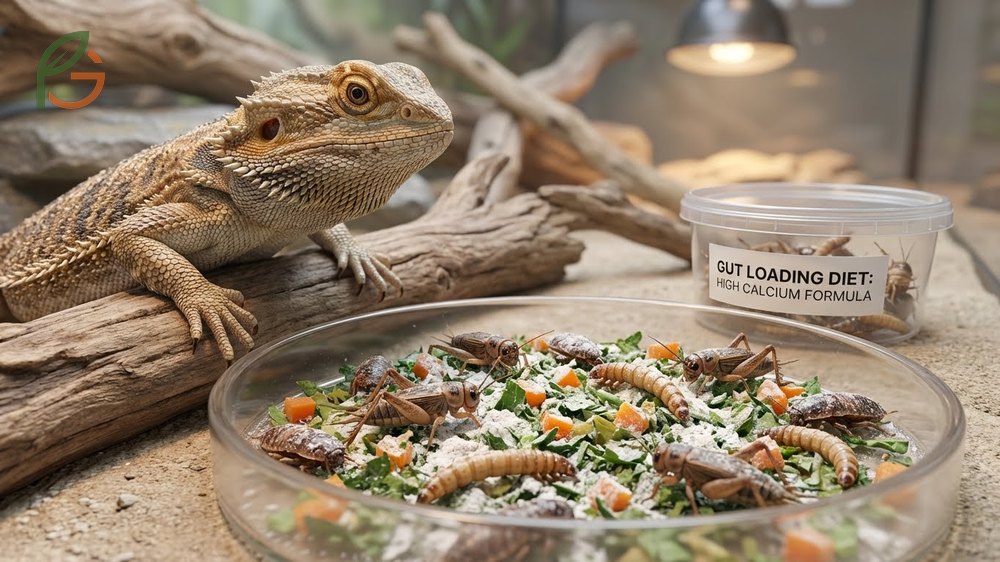
Gut loading addresses the calcium deficiency inherent in feeder insects. Studies demonstrate that feeding diets containing 4-9% calcium[10] to crickets, mealworms, and roaches for 24-48 hours before feeding significantly increases their calcium content.
Most feeder insects naturally contain more phosphorus than calcium, creating the same mineral imbalance as blueberries. Gut loading reverses this ratio by saturating the insect’s digestive tract with calcium-rich food.
Veterinary research confirms that gut-loaded insects prevent MBD more effectively than calcium dusting alone. The calcium inside the insect’s gut is already partially digested, making it more bioavailable to the bearded dragon.
- Collard greens and mustard greens (high calcium, low oxalates)
- Squash and sweet potato (vitamin A, moderate calcium)
- Commercial gut loading formulas with 8% calcium content
- Dried alfalfa powder mixed with vegetables (concentrated calcium)
- Calcium-fortified cricket food available at reptile supply stores
Feed your crickets or roaches these calcium-rich foods for at least 24 hours before offering them to your bearded dragon. The insects should have visible food in their digestive tracts when fed.
Conclusion
The evidence is clear: bearded dragons can eat blueberries safely when offered as an occasional treat rather than a dietary staple. The inverted calcium to phosphorus ratio and moderate oxalate content make frequent feeding risky, but 2-3 berries once weekly provides antioxidant benefits without compromising bone health.
Current veterinary guidance emphasizes balanced mineral ratios and varied diets for optimal reptile health. By prioritizing calcium-rich vegetables, gut-loaded insects, and carefully selected fruits, FruitGarden readers can support their bearded dragons’ nutritional needs while still offering occasional treats.
Medical Disclaimer
Important Medical Disclaimer: This content is for informational and educational purposes only. It is not intended as a substitute for professional veterinary advice, diagnosis, or treatment. Always consult a qualified reptile veterinarian before making any changes to your bearded dragon’s diet, supplementation, or health routine, especially if your pet shows signs of illness or metabolic bone disease.
Frequently Asked Questions
Can Baby Bearded Dragons Eat Blueberries?
No, baby bearded dragons under 6 months old shouldn’t eat blueberries. Juveniles need maximum calcium absorption for rapid bone growth, and the inverted mineral ratio in blueberries can cause developmental problems. Focus on gut-loaded insects and calcium-rich greens until they reach 12 months old.
How Many Blueberries Can a Bearded Dragon Eat at Once?
Adult bearded dragons can safely eat 2-3 blueberries per feeding session, offered once per week. This portion size provides antioxidant benefits without overwhelming their calcium balance. Never feed more than 5 berries in a single week, even split across multiple days.
Do I Need to Cut Blueberries for Bearded Dragons?
Adult bearded dragons can eat whole blueberries without choking risk due to the berry’s small size and soft texture. However, cutting them in half makes eating easier and allows you to mix them with other foods. Always wash blueberries thoroughly to remove pesticides before feeding.
Can Bearded Dragons Eat Frozen Blueberries?
Yes, but thaw frozen blueberries to room temperature before feeding. Cold food can cause digestive stress and reduce appetite in reptiles. Frozen blueberries retain similar nutritional value to fresh ones, making them a convenient option when fresh berries aren’t available.
What Fruits Have Better Calcium Than Blueberries?
Papaya, figs, and strawberries all provide superior calcium to phosphorus ratios compared to blueberries. Strawberries offer 68 mg calcium per 100g with a balanced 1:1 ratio, making them the best berry option. Papaya maintains the ideal 2:1 ratio that matches bearded dragon requirements.
Can Blueberries Cause Diarrhea in Bearded Dragons?
Yes, excessive blueberries can cause loose stools due to high sugar content and acidity. If diarrhea occurs after feeding blueberries, discontinue fruit for one week and focus on fiber-rich vegetables like squash. Persistent diarrhea lasting more than 48 hours requires veterinary attention.
Should I Dust Blueberries With Calcium Powder?
Calcium powder won’t stick effectively to the smooth, wet surface of blueberries. Instead, offer calcium-dusted insects or calcium-rich greens in the same meal to balance the mineral ratio. This approach ensures your bearded dragon actually consumes the supplemental calcium.





