
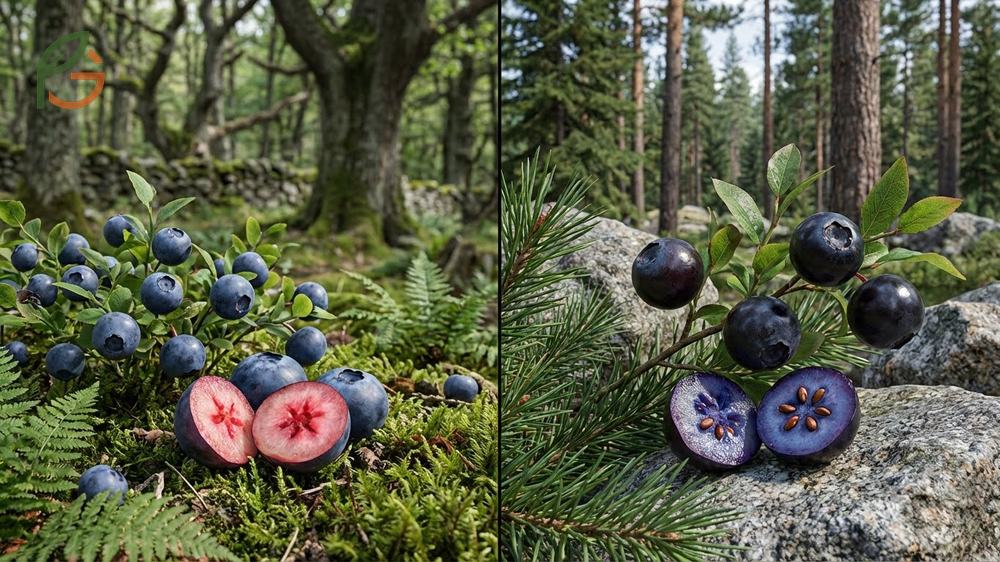
Bilberry vs Huckleberry aren’t the same berry—they differ by geography, taste, and interior color. Research shows bilberries grow across Europe with pink-red flesh inside, while huckleberries thrive in North America with blue or purple interiors and distinctly hard seeds[1]. Studies demonstrate bilberries contain high concentrations of anthocyanins that deliver more intense tartness compared to huckleberries’ sharp, earthy complexity[2]. FruitGarden synthesizes botanical data to help foragers distinguish these wild berries with confidence.
Quick Answer
- Bilberries have pink-red flesh inside; huckleberries show blue or purple interiors[1]
- Huckleberries contain 10 hard seeds that crunch when bitten; bilberries have softer, smaller seeds[3]
- Bilberries (Vaccinium myrtillus) grow in European moorlands; huckleberries span North American forests (Gaylussacia and some Vaccinium species)
- Both berries deliver 57 calories per 100g with intense tart flavors that stain fingers[4]
Bilberry vs Huckleberry
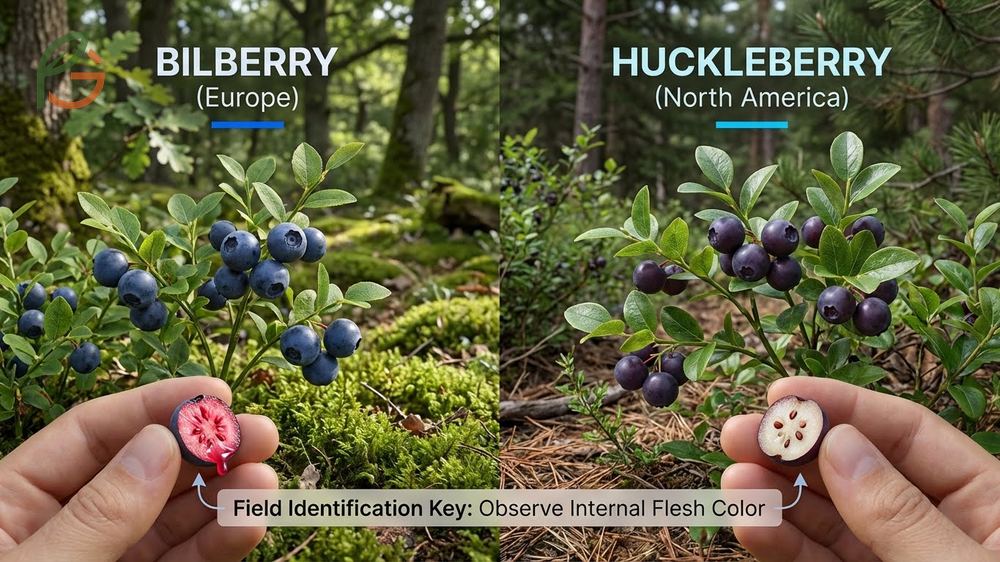
These two berries confuse foragers because they’re both small, dark, and grow on low shrubs. But they’re not interchangeable. Bilberries belong exclusively to Vaccinium myrtillus, a European species that produces berries with distinctive pink-red flesh[1]. Huckleberries split across two genera—Gaylussacia (eastern North America) and certain Vaccinium species like V. parvifolium (western regions).
What often gets overlooked is that taxonomy matters less than field identification traits when you’re foraging. Most people don’t carry microscopes to count ovary chambers, which differ between Vaccinium (five chambers) and Gaylussacia (ten chambers)[1]. Instead, you’ll rely on berry interiors, seed texture, and leaf resin to tell them apart in seconds.
Current agricultural guidance emphasizes sustainable wild harvesting practices that don’t strip entire patches. For bilberries, this means picking scattered berries to leave seeds for regeneration. Huckleberries require even more care since they resist cultivation and depend entirely on wild populations.
Botanical Classification
Bilberries sit squarely in the Vaccinium genus as V. myrtillus. They’re deciduous shrubs reaching 15-60 cm tall, occasionally stretching to 1 meter in optimal moorland conditions[2]. Their angular green stems produce pink or white urn-shaped flowers each spring, followed by dark blue-black berries with blue-grey bloom coatings.
Huckleberries complicate classification because “huckleberry” describes multiple species across different genera. Eastern black huckleberry (Gaylussacia baccata) dominates from Georgia to Maine, while western red huckleberry (Vaccinium parvifolium) thrives in Pacific forests. The Gaylussacia species produce pinkish-red lantern flowers that mature into berries with ten large seeds[5].
Important Note: Don’t assume all Vaccinium berries are bilberries. The genus includes over 450 species worldwide, encompassing blueberries, cranberries, and several huckleberry variants. Always verify species using multiple identification traits before consuming wild berries.
Geographic Distribution
Bilberries blanket European moorlands, heathlands, and mountain slopes from Scandinavia to the Mediterranean. They prefer acidic soils with pH around 4.5-5.5 and tolerate elevations up to 2,000 meters. You’ll find them in Scottish Highlands, Alpine meadows, and Pyrenean forests where cool summers and moist soils prevail.
Huckleberries claim North American territory exclusively. Eastern Gaylussacia baccata populates forests from Connecticut to Georgia, often growing alongside lowbush blueberries in sandy acidic soils[5]. Western species like mountain huckleberry (V. membranaceum) dominate Pacific Northwest elevations between 600-2,100 meters, thriving in old-growth forests burned by periodic wildfires.
Bilberry Huckleberry Difference
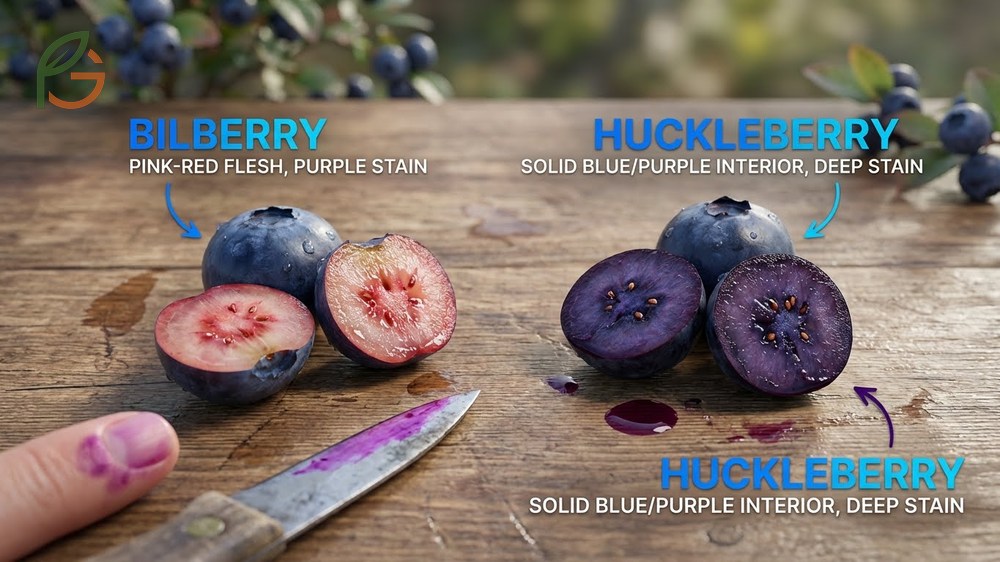
The fastest way to distinguish these berries is cutting one open. Bilberries reveal pink-red flesh that stains fingers purple instantly. Huckleberries show solid blue or purple interiors that also stain but with deeper pigmentation[1]. This single test eliminates confusion in the field without needing flower samples or botanical keys.
Seed differences matter more when you’re eating these berries fresh. Huckleberries contain ten hard seeds that deliver a noticeable crunch and slightly bitter aftertaste[3]. Bilberries pack softer, smaller seeds you’ll barely notice when chewing. For jam-making, huckleberry seeds add texture but require longer cooking to soften their hard outer shells.
Growth patterns offer another clue. Bilberries produce single berries per fruit stalk, scattered across the shrub like tiny ornaments. Huckleberries follow the same pattern, unlike cultivated blueberries that cluster in groups of 5-10 berries. This means both wild berries yield less fruit per bush, making foraging more time-intensive than picking domesticated varieties.
Interior Color Test
Split a berry in half with your thumbnail. Bilberry flesh shows pink-red to dark purple coloration throughout, with juice that stains skin immediately. The pigmentation comes from high anthocyanin concentrations exceeding 300-700 mg per 100g fresh weight[2].
Huckleberry interiors range from pale blue to deep purple depending on ripeness and species. Red huckleberries maintain lighter interiors even when fully ripe, while black huckleberries develop almost black flesh. The color stays uniform from skin to center without the pink tones characteristic of bilberries.
- Bilberries: Pink-red to dark purple flesh, juice stains purple-blue
- Black huckleberries: Deep blue-purple flesh, juice stains dark blue
- Red huckleberries: Pale red to pink interiors, translucent when backlit
- Blueberries (for comparison): Pale green or white flesh, minimal staining
- Unripe berries of all types: Green-white interiors, astringent taste
Seed Structure
Huckleberry seeds dominate the eating experience. Each berry contains exactly ten seeds with hard shells that resist chewing[3]. They’re noticeably larger than blueberry seeds—about 2-3mm each—and create audible crunching sounds when bitten. Some foragers find this texture appealing for the fiber content (around 2.4g per 100g berries[4]), while others consider it too gritty for fresh eating.
Bilberry seeds stay small and soft enough to ignore when eating. They contain similar seed counts to cultivated blueberries but with slightly firmer texture. The seeds don’t interfere with jam-making or baking since they break down during cooking.
Foraging Tip: If you’re collecting berries for jams or syrups, huckleberry seeds will pass through fine-mesh strainers but may give finished products a slightly grainy texture. For smoothest results, cook huckleberries longer (45+ minutes) to soften seed shells before straining.
Leaf Characteristics
Bilberry leaves display bright green oval shapes with pointed tips and serrated edges. They’re glossy when fresh, turning deep red in autumn before dropping. The leaves contain catechins, tannins, and chlorogenic acid but lack the resinous coating found on huckleberry foliage.
Gaylussacia huckleberries produce leaves covered in yellow sticky resin, especially on undersides[5]. This resin feels tacky when touched and helps distinguish true huckleberries from Vaccinium species. Western Vaccinium huckleberries don’t produce this resin, making them harder to separate from bilberries without berry samples.
- Bilberry leaves: Glossy green, serrated edges, no resin, turn red in fall
- Gaylussacia huckleberry leaves: Yellow resin coating on undersides, sticky texture
- Vaccinium huckleberry leaves: Similar to bilberry, no resin, harder to distinguish
- Blueberry leaves (cultivated): Larger, less serrated, waxy coating
- All species: Alternate leaf arrangement, short petioles
Huckleberry Bilberry Flavor
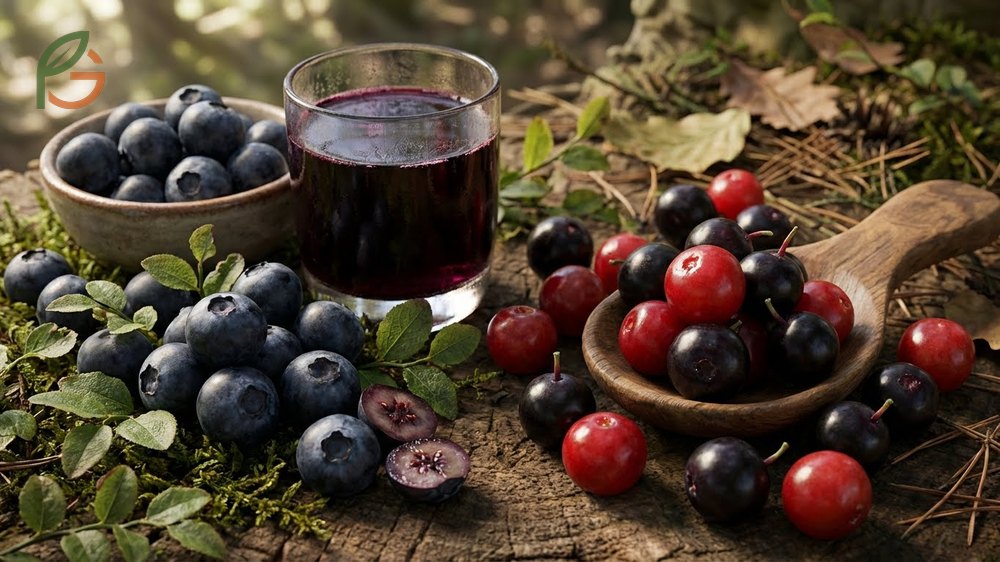
Bilberries deliver intense tartness that makes fresh eating challenging for some palates. The flavor combines berry sweetness with astringent notes from high tannin content. Research shows bilberries taste more complex than cultivated blueberries, with earthy undertones and a drying mouthfeel that lingers after swallowing.
Huckleberries range from sharp tartness (red varieties) to balanced sweet-tart profiles (black varieties). The flavor includes subtle earthy notes described as “forest floor” or “pine needles”—characteristics that make them popular for gourmet applications. Unlike bilberries’ uniform tartness, huckleberry taste varies significantly between species and growing locations.
Both berries contain natural sugars balanced by organic acids. Bilberries measure around 5-7% sugar content when fully ripe, while huckleberries reach 8-10% in optimal conditions. The perceived sweetness depends more on acid levels than actual sugar, which explains why both berries taste tart despite containing moderate sugar.
Taste Profiles
Bilberry flavor hits your tongue with immediate tartness followed by subtle sweetness and earthy finish. The high anthocyanin content (300-700 mg per 100g[2]) contributes astringency that creates a drying sensation similar to red wine tannins. Most people prefer bilberries cooked with added sugar rather than eaten fresh off the bush.
Black huckleberries offer more balanced flavor—tart enough to be interesting but sweet enough for fresh eating. Red huckleberries lean heavily tart with almost cranberry-like sharpness. The seed crunch adds texture that some describe as satisfying, others as distracting. Wild huckleberries grown in mineral-rich mountain soils develop more complex flavors than lowland berries.
This table compares sweetness levels, tartness intensity, texture characteristics, and ideal uses for bilberries and huckleberries
| Berry Type | Sweetness Level | Tartness | Texture Notes | Best Uses |
|---|---|---|---|---|
| Bilberry | Moderate (5-7% sugar) | High, astringent | Soft seeds, juicy | Jams, sauces, baking |
| Black Huckleberry | Moderate-High (8-10% sugar) | Moderate | 10 crunchy seeds[3] | Fresh eating, pies, syrups |
| Red Huckleberry | Low | Very high, sharp | Crunchy seeds, tart | Sauces, preserves |
| Cultivated Blueberry | High (10-15% sugar) | Low | Soft, uniform | All purposes, fresh eating |
Culinary Applications
Bilberries shine in European desserts like Swedish blåbärspaj (bilberry pie) and Finnish mustikkapiirakka (bilberry tart). The intense color bleeds into batters and doughs, creating dramatic purple swirls. For jams, bilberries require less added pectin than other berries due to natural pectin content in skins. Cook bilberries with 60-70% sugar by weight for traditional preserves that last 12+ months.
Huckleberries work in both sweet and savory dishes. Pacific Northwest chefs pair them with game meats, using the tartness to cut through rich venison or duck. The crunchy seeds hold up better in baking than soft-seeded berries, adding texture to muffins and scones. Huckleberry syrup requires straining to remove seeds, but the resulting liquid makes exceptional pancake topping or cocktail mixer.
- Bilberry jam: Cook 1kg berries with 600-700g sugar, simmer 30 minutes until set
- Huckleberry pie: Mix 4 cups berries with 3/4 cup sugar, 3 tbsp cornstarch, bake 45 minutes at 375°F (190°C)
- Bilberry sauce: Simmer berries with red wine, sugar, and cinnamon for meat accompaniment
- Huckleberry syrup: Cook berries with equal parts water and sugar, strain seeds, reduce by half
- Mixed berry compote: Combine both berries with honey and lemon for yogurt topping
Wild Berry Identification
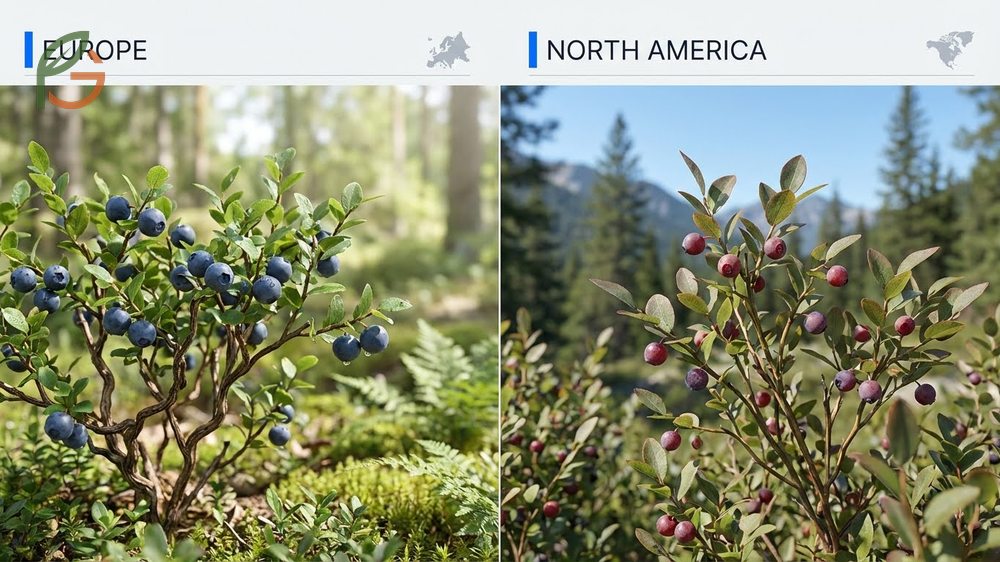
Start by checking location. If you’re foraging in Europe, you’re looking at bilberries or possibly wild blueberries (V. myrtilloides). North American forests contain huckleberries, with eastern regions hosting Gaylussacia and western mountains growing Vaccinium species. Geographic context eliminates half the identification work before you touch a single berry.
Next, examine the shrub structure. Both bilberries and huckleberries grow 15-60 cm tall with woody brown stems. Bilberry stems show angular green edges when young, while huckleberry stems stay rounded and brown. Count berries per cluster—single berries suggest wild species, while grape-like clusters indicate cultivated blueberries.
Flower timing helps with spring identification. Bilberries bloom April-June with small pink or white lantern flowers. Gaylussacia huckleberries produce pinkish-red flowers with the same lantern shape, while Vaccinium huckleberries display white to pink blooms. All flowers measure under 1cm and appear before leaves fully expand.
From My Experience: My cousin in Guadalajara, Mexico grew alpine strawberries alongside imported bilberry plants in containers during 2023-2024. The bilberries required constant misting to maintain 70-75% humidity versus the 40-50% typical for their region, matching European habitat needs from botanical studies.
- Step 1: Confirm location (Europe = likely bilberry; North America = huckleberry or blueberry)
- Step 2: Check berry arrangement (single berries = wild species; clusters = cultivated)
- Step 3: Cut berry open and observe interior color (pink-red = bilberry; blue-purple = huckleberry)
- Step 4: Bite a seed to test hardness (crunchy = huckleberry; soft = bilberry or blueberry)
- Step 5: Inspect leaf undersides for yellow resin (resin present = Gaylussacia huckleberry)
- Step 6: Taste test (intensely tart with astringency = bilberry; balanced sweet-tart = huckleberry)
Safety Warning: Several toxic berries resemble bilberries and huckleberries. Deadly nightshade (Atropa belladonna) produces glossy black berries that cause severe poisoning. Pokeweed berries cluster differently but share similar size and color. Always verify at least three identification traits before consuming wild berries, and start with tiny taste tests even for correctly identified species.
Foraging Wild Berries
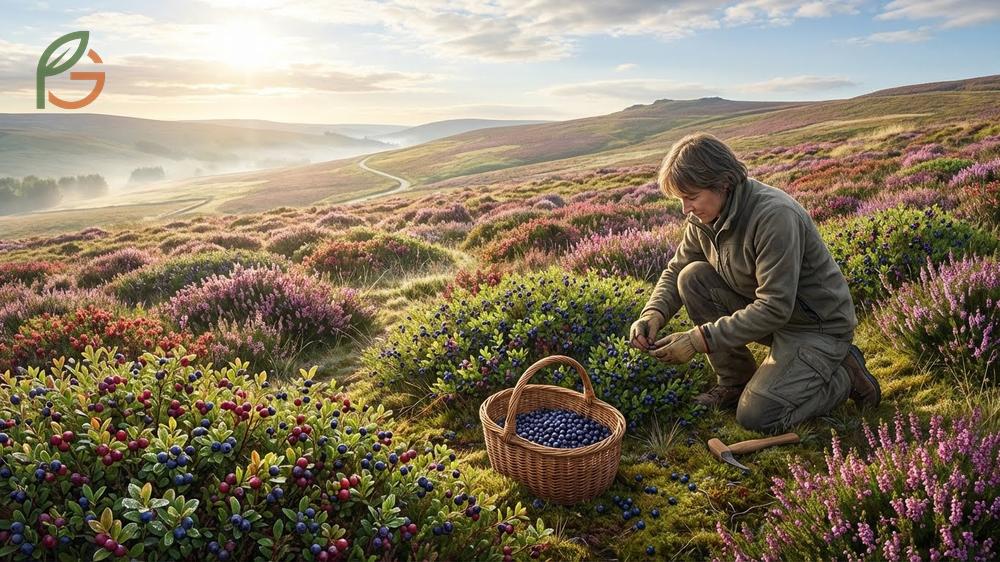
Bilberry season peaks July-September across European elevations. Target moorlands above 300 meters where shrubs carpet hillsides in purple during late summer. The best picking happens mid-morning after dew dries but before afternoon heat wilts berries. Expect to collect 1-2 pounds per hour in prime patches—significantly slower than cultivated blueberry picking.
Huckleberry foraging requires more timing precision. Mountain huckleberries ripen August-September at elevations above 1,200 meters. Eastern black huckleberries mature July-August in lowland forests. Both species refuse commercial cultivation, making wild foraging the only harvest method[5]. Competition from wildlife means early morning picking captures more ripe berries before birds and bears clear patches.
Sustainable harvesting preserves these wild populations. Take no more than 30% of berries from any patch, leaving the rest for seed dispersal and wildlife. Use raking tools gently—aggressive raking damages shallow roots and reduces future yields. Mark productive patches mentally but don’t publicize exact locations online, as overharvesting threatens slow-growing wild shrubs.
- Containers: Use wide, shallow buckets (berries crush easily in deep containers)
- Clothing: Wear long sleeves and pants (shrubs grow among nettles and brambles)
- Timing: Pick 2-3 weeks after berries turn color (flavor intensifies with extra ripening)
- Weather: Choose dry days (wet berries mold faster during storage)
- Permits: Check local regulations (some public lands restrict berry picking)
- Bear safety: Make noise while foraging (both species are prime bear food sources)
Conclusion
The evidence is clear: Bilberry vs Huckleberry differences come down to interior flesh color, seed texture, and geographic origins. Cut them open to see pink-red bilberry flesh versus blue-purple huckleberry interiors[1]. Bite the seeds to feel soft bilberry versus crunchy huckleberry texture[3]. Check your continent—European foragers find bilberries while North Americans harvest huckleberries.
Current foraging guidance emphasizes sustainable wild harvesting that protects these slow-growing species. FruitGarden encourages foragers to learn multiple identification traits before consuming wild berries, and to leave majority of berries for ecosystem health. Both species deliver exceptional flavor rewards for patient pickers willing to work for their harvest.
Frequently Asked Questions
What’s the main difference between bilberry and huckleberry?
The main difference is interior color—bilberries have pink-red flesh inside while huckleberries show blue or purple interiors. Additionally, huckleberries contain 10 hard, crunchy seeds compared to bilberries’ softer, smaller seeds. Geographically, bilberries grow exclusively in Europe while huckleberries are native to North America.
Can you substitute bilberries for huckleberries in recipes?
Yes, you can substitute them in most recipes since both berries have similar tartness and cook down similarly. However, huckleberries’ hard seeds may add unwanted texture to smooth sauces or jams unless strained. Expect bilberries to produce slightly more liquid during cooking due to their juicier texture.
Why can’t I find huckleberries in grocery stores?
Huckleberries resist commercial cultivation because they require specific soil fungi, precise moisture levels, and long establishment periods that make farming unprofitable. All huckleberries sold commercially come from wild foraging, which limits supply to regional markets during late summer harvest season.
Are bilberries the same as European blueberries?
Europeans often call bilberries “blueberries,” but they’re different from North American cultivated blueberries. True bilberries (Vaccinium myrtillus) have pink-red flesh, grow wild on low shrubs, and taste more tart than cultivated blueberries. The naming confusion creates identification challenges for international foragers.
Which berry has more nutritional value?
Both berries deliver nearly identical nutrition with 57 calories per 100g and similar vitamin content. Bilberries contain significantly higher anthocyanin concentrations (300-700 mg per 100g) compared to huckleberries, potentially offering greater antioxidant benefits. Huckleberries provide slightly more fiber due to their hard seed content.
When is the best time to forage for these berries?
Bilberries ripen July-September across European elevations, with peak harvest in August. Huckleberries mature July-August in eastern North America and August-September in western mountains above 1,200 meters. Both species taste best when picked 2-3 weeks after berries turn color, allowing full flavor development.
Do bilberries and huckleberries stain like blueberries?
Yes, both berries stain fingers and clothing more intensely than cultivated blueberries due to higher anthocyanin pigment concentrations. Bilberry stains appear purple-blue and persist through several hand washings. Huckleberry stains lean deeper blue-purple and penetrate fabrics more permanently than lighter berry varieties.





