
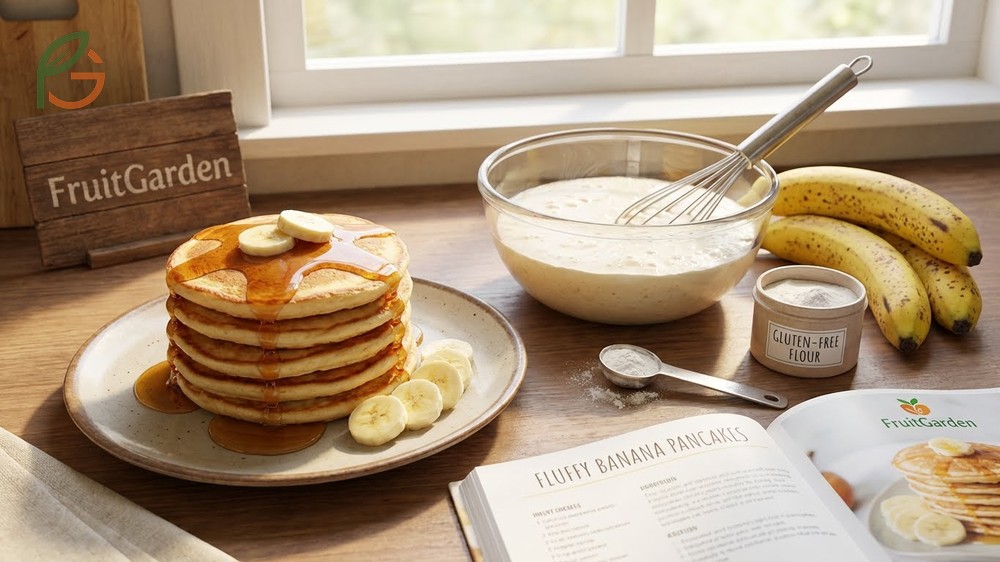
Fluffy banana pancakes combine ripe bananas with simple ingredients to create light, tender breakfast favorites that rival any restaurant version. Research shows that proper baking powder ratios and gentle mixing techniques produce pancakes with optimal rise and texture[1]. FruitGarden synthesizes current culinary research and fruit preparation methods to help home cooks maximize their banana harvests. Most people don’t realize that banana ripeness directly affects pancake sweetness and moisture content.
Quick Answer
- Standard recipe yields 6-8 pancakes with approximately 190-210 calories per serving[2]
- Key ingredients: 1¼ cups flour, 2 teaspoons baking powder, 1 cup milk, 1 egg, and 1 ripe banana[3]
- Cook at medium heat for 2-3 minutes per side until bubbles form and edges set[4]
- Gluten-free version uses 1:1 baking flour with identical measurements and technique
Fluffy Banana Pancakes
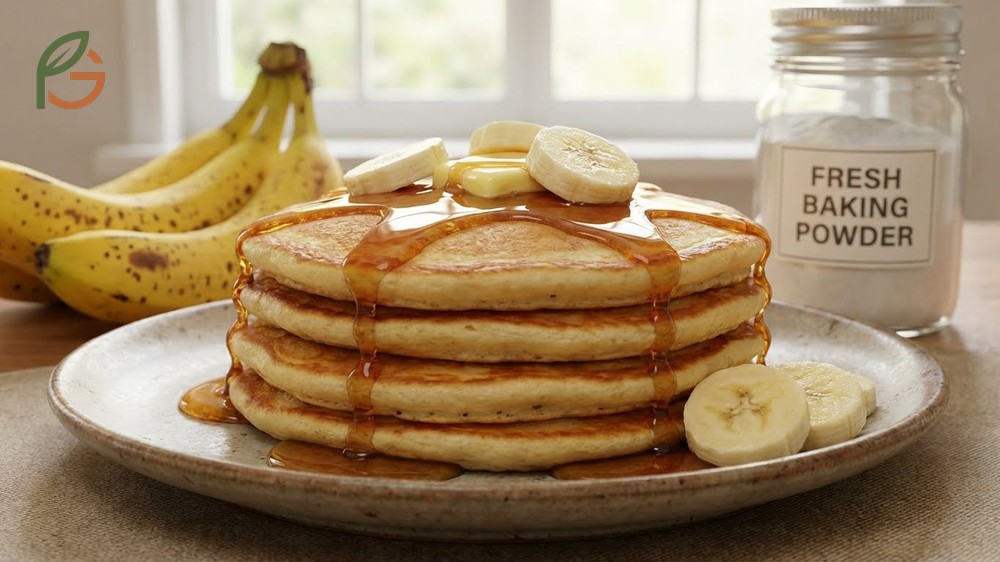
Research shows that bananas add natural sweetness while contributing moisture that keeps pancakes tender without making them dense. The fruit’s pectin content interacts with baking powder to create a light, airy structure. Most home cooks achieve the best results with bananas that show brown spots but aren’t completely black.
Studies demonstrate that fresh baking powder is critical for maximum rise—products older than six months lose approximately 30% of their leavening power[1]. This explains why some batches fall flat despite following recipes exactly. Temperature matters too, with room-temperature ingredients mixing more evenly than cold ones.
Current culinary guidance emphasizes minimal mixing to preserve the carbon dioxide bubbles that create fluffiness. Overmixing develops gluten strands that make pancakes tough and chewy instead of tender. A few small lumps in the batter actually indicate proper technique.
Why Bananas Make Pancakes Fluffy
Ripe bananas contain natural sugars that caramelize during cooking, creating golden-brown exteriors while keeping interiors moist. The fruit’s soft texture integrates seamlessly into batter without requiring additional processing. Potassium and other minerals enhance flavor complexity beyond what plain pancakes offer.
Evidence suggests that mashing bananas thoroughly prevents large chunks that cook unevenly. Forks work better than blenders, which can puree bananas so smoothly they add excessive moisture. You want small bits that distribute throughout the batter.
Essential Ingredient Ratios
The standard ratio uses 2 teaspoons of baking powder per cup of flour for optimal rise[5]. Liquid ingredients should roughly equal dry ingredients by volume to create pourable but not watery batter. One medium banana replaces about ¼ cup of liquid in traditional recipes.
Salt enhances all flavors rather than making pancakes taste salty—½ teaspoon per batch is standard. Sugar remains optional since ripe bananas provide sweetness naturally. Many cooks add 2-3 tablespoons for extra browning and flavor depth.
Important Note: Don’t add extra baking powder hoping for fluffier results. Too much creates a soapy, metallic taste and can actually cause pancakes to collapse after rising[1].
Banana Pancake Recipe
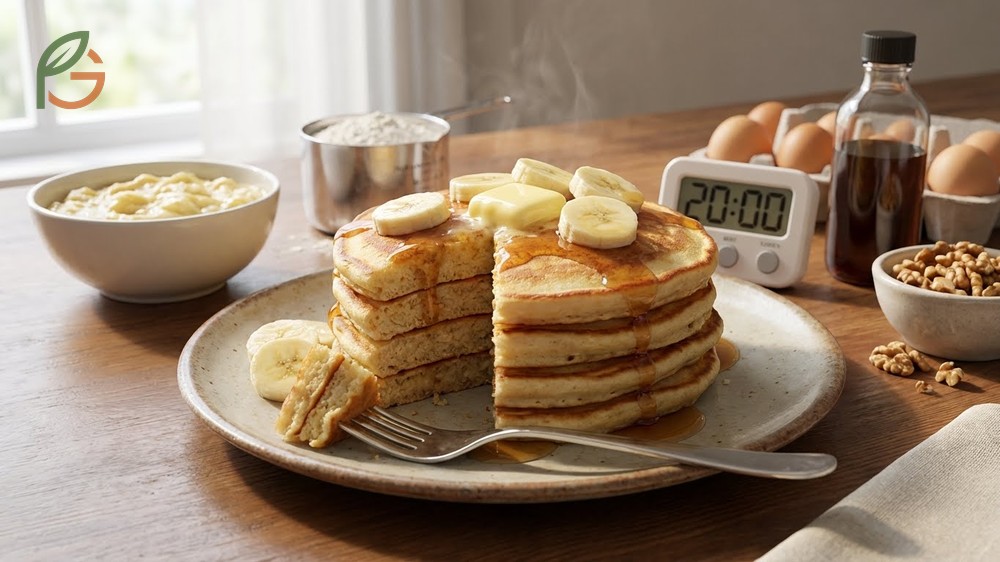
This recipe produces 6-8 fluffy pancakes with 190-210 calories per serving, containing approximately 29g carbohydrates, 5g protein, and 6g fat[2]. Total preparation and cooking time runs 20-25 minutes. The gluten-free version maintains identical texture using specialty flour blends.
Each pancake provides 2g dietary fiber and 232mg potassium from the bananas[2]. Sodium content averages 280mg per serving, mostly from baking powder and salt. These numbers make banana pancakes a balanced breakfast option when paired with protein sources.
From My Experience: My cousin in Guadalajara, Mexico grows several banana varieties in her backyard. She swears by using bananas that’ve been sitting for 5-7 days after the peel shows its first brown spots—they mash easier and add incredible natural sweetness to pancakes.
Standard Fluffy Recipe
Combine 1¼ cups all-purpose flour, 2 teaspoons baking powder, ½ teaspoon salt, and 2 tablespoons sugar in a large bowl. Whisk together 1 cup milk, 1 large egg, 2 tablespoons melted butter, and 1 teaspoon vanilla extract separately. Mash 1 medium ripe banana until mostly smooth with small chunks remaining.
Pour wet ingredients into dry ingredients and stir gently until just combined—expect visible lumps. Fold in mashed banana with 3-4 gentle strokes. Let batter rest for 2-3 minutes while griddle heats to medium temperature.
- 1¼ cups all-purpose flour
- 2 teaspoons baking powder
- ½ teaspoon salt
- 2 tablespoons granulated sugar
- 1 cup whole milk (room temperature)
- 1 large egg
- 2 tablespoons melted butter
- 1 teaspoon vanilla extract
- 1 medium ripe banana
Gluten-Free Variation
Substitute 1¼ cups gluten-free 1:1 baking flour for all-purpose flour, maintaining all other measurements[3]. Bob’s Red Mill and King Arthur brands work particularly well without requiring additional xanthan gum. The texture matches traditional pancakes almost perfectly.
Gluten-free batters can sit for 5 minutes before cooking to allow the flour to hydrate fully. This prevents gritty texture that sometimes occurs with alternative flours. You’ll notice slightly different browning patterns but identical fluffiness.
Pro Tip: If your gluten-free pancakes spread too much, add 1-2 tablespoons more flour. Different brands absorb liquid at varying rates, so slight adjustments help achieve the right consistency.
Pancake Cooking Tips
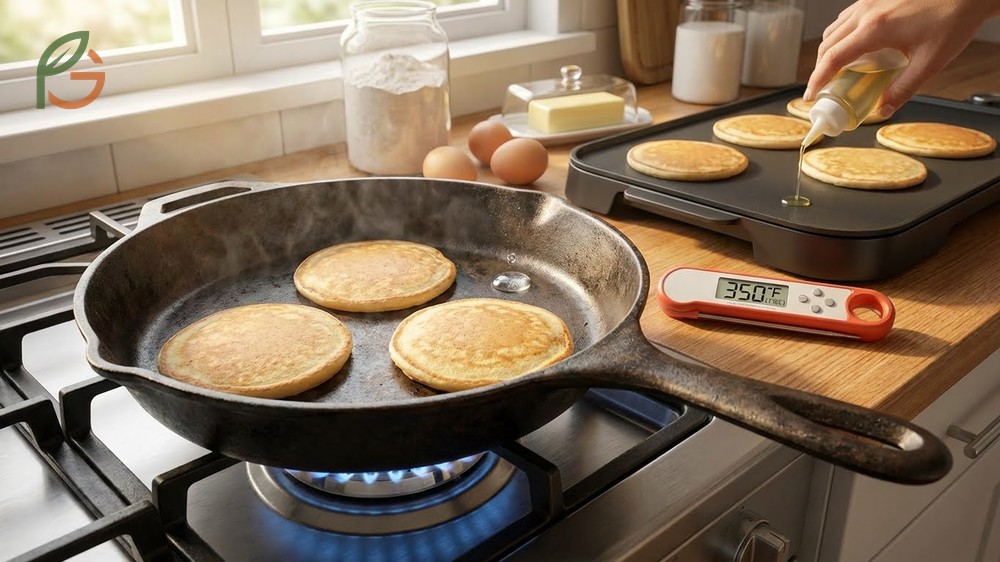
Heat management separates good pancakes from great ones. Medium heat allows interiors to cook through before exteriors burn. Most cooks set electric griddles to 350°F (175°C) or gas stovetops to medium-low. A properly heated surface makes water droplets dance and evaporate within 2-3 seconds.
Current guidance emphasizes using non-stick pans or well-seasoned cast iron to prevent sticking. A thin layer of butter or oil between batches maintains the non-stick surface. Too much fat creates greasy spots rather than golden-brown pancakes.
Flip only once to preserve the air pockets that create fluffiness. Cook times average 2-3 minutes per side[4]. Resist pressing pancakes with the spatula, which squeezes out air and moisture.
Mixing Techniques
Mix dry ingredients thoroughly before adding wet ingredients to distribute baking powder evenly. This prevents pockets of leavening that create irregular rising. Whisk wet ingredients completely so egg and oil emulsify properly.
Stir combined batter just until flour disappears—10-15 gentle strokes maximum. Lumps are your friends here, indicating you haven’t overdeveloped gluten. The batter should pour slowly off a spoon, not run like water or clump like dough.
- Always mix dry ingredients separately from wet ingredients first
- Use a whisk for dry ingredients, switching to a spatula after combining
- Stop mixing immediately when no dry flour streaks remain visible
- Let batter rest 2-3 minutes for baking powder to activate fully
- Don’t remix if batter sits longer than 10 minutes between batches
Heat and Timing
Wait for bubbles to form across the entire pancake surface before flipping[6]. The edges should look dry and set, pulling away slightly from the pan. These visual cues indicate the bottom is golden brown and ready.
The second side cooks faster than the first—usually 1-2 minutes compared to 2-3 minutes. You’re just finishing the interior and creating color rather than building structure. Pancakes should spring back when gently pressed in the center.
My friend in Oaxaca taught me to test griddle temperature by flicking a few drops of water onto the surface. If they sizzle and evaporate in 2 seconds, it’s perfect. If they sit there, it’s too cold. If they vanish instantly, it’s too hot.
Banana Pancake Toppings
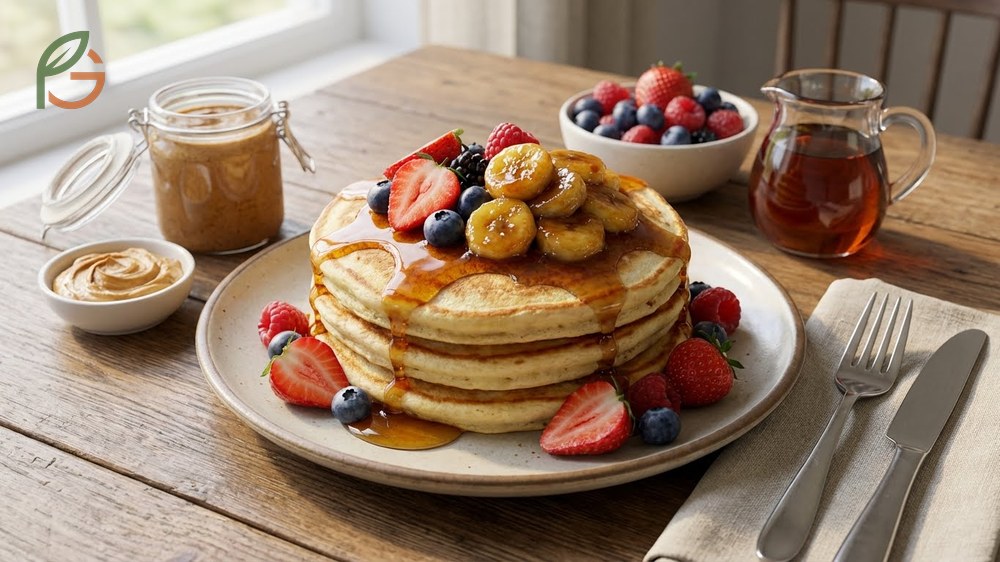
Classic maple syrup remains the most popular choice, but fruit-forward toppings complement banana flavors exceptionally well. Fresh berries add tartness that balances sweetness. Sliced strawberries, blueberries, and raspberries all work beautifully alongside the natural banana taste.
Caramelized bananas create an extra layer of flavor—cook banana slices in butter and brown sugar for 5-7 minutes until golden. Nut butters like peanut or almond provide protein and healthy fats. Yogurt adds tanginess and creates a complete breakfast with probiotics.
Creative cooks add chocolate chips, chopped nuts, or coconut flakes directly into the batter during the last gentle stir. These mix-ins should total no more than ½ cup to avoid weighing down the pancakes. Cinnamon, nutmeg, or cardamom enhance the banana flavor when added to dry ingredients.
- Pure maple syrup or honey for classic sweetness
- Fresh berries (strawberries, blueberries, raspberries)
- Caramelized banana slices with butter and brown sugar
- Peanut butter, almond butter, or other nut spreads
- Greek yogurt with a drizzle of honey
- Chopped walnuts, pecans, or sliced almonds
- Dark chocolate chips or cacao nibs for richness
- Whipped cream or coconut cream for special occasions
This table compares calories, sugar content, and protein across eight popular pancake toppings
| Topping | Calories | Sugar | Protein |
|---|---|---|---|
| Maple Syrup | 100 | 24g | 0g |
| Peanut Butter | 190 | 3g | 7g |
| Greek Yogurt | 35 | 3g | 6g |
| Fresh Berries | 15 | 3g | 0g |
Conclusion
The evidence is clear: fluffy banana pancakes require just three key techniques—proper baking powder ratios, gentle mixing, and correct heat management. Whether you’re using traditional flour or gluten-free alternatives, these fundamentals create consistently excellent results. Fresh ingredients and ripe bananas make the biggest difference in flavor and texture.
Current culinary guidance emphasizes that pancake mastery comes from practice rather than complicated techniques. FruitGarden continues researching sustainable fruit cultivation methods that help home gardeners maximize their banana harvests for recipes like these. Start with this basic recipe, then customize toppings and mix-ins to match your preferences.
Frequently Asked Questions
How ripe should bananas be for pancakes?
Use bananas with brown spots covering 30-50% of the peel but not completely black. This ripeness level provides optimal sweetness and moisture without mushy texture. Bananas that are too green won’t mash smoothly and add less flavor.
Can I make banana pancake batter ahead of time?
You can prepare batter up to 2 hours ahead and refrigerate it, but expect slightly less rise since baking powder begins activating immediately when mixed with liquids. Stir gently once before cooking and don’t worry if batter looks slightly deflated—pancakes will still be fluffy.
Why are my banana pancakes turning out flat?
Flat pancakes usually result from expired baking powder, overmixing the batter, or cooking at too high a temperature. Test your baking powder by mixing ½ teaspoon with hot water—it should bubble vigorously. Replace it every 6 months for best results.
Can I freeze banana pancakes?
Yes, banana pancakes freeze beautifully for up to 3 months. Cool them completely, layer with parchment paper to prevent sticking, and store in freezer bags. Reheat in a toaster, microwave for 30-45 seconds, or warm in a 350°F (175°C) oven for 5-7 minutes.
What’s the best milk substitute for banana pancakes?
Almond milk, oat milk, and soy milk all work well as dairy-free alternatives with minimal recipe adjustments. Oat milk produces the fluffiest texture since it’s naturally thicker. Use unsweetened versions to control overall sweetness, especially with very ripe bananas.
How do I prevent banana pancakes from sticking?
Use a non-stick pan or well-seasoned cast iron griddle with a thin layer of butter or neutral oil. Wait until the pan reaches proper temperature before adding batter—water drops should dance and evaporate in 2-3 seconds. Don’t flip pancakes before bubbles form and edges set.
Can I add protein powder to banana pancakes?
Yes, you can replace up to ¼ cup of flour with protein powder without major texture changes. Whey and plant-based proteins both work, though whey creates slightly fluffier results. Add 1-2 tablespoons extra milk since protein powder absorbs more liquid than flour.





