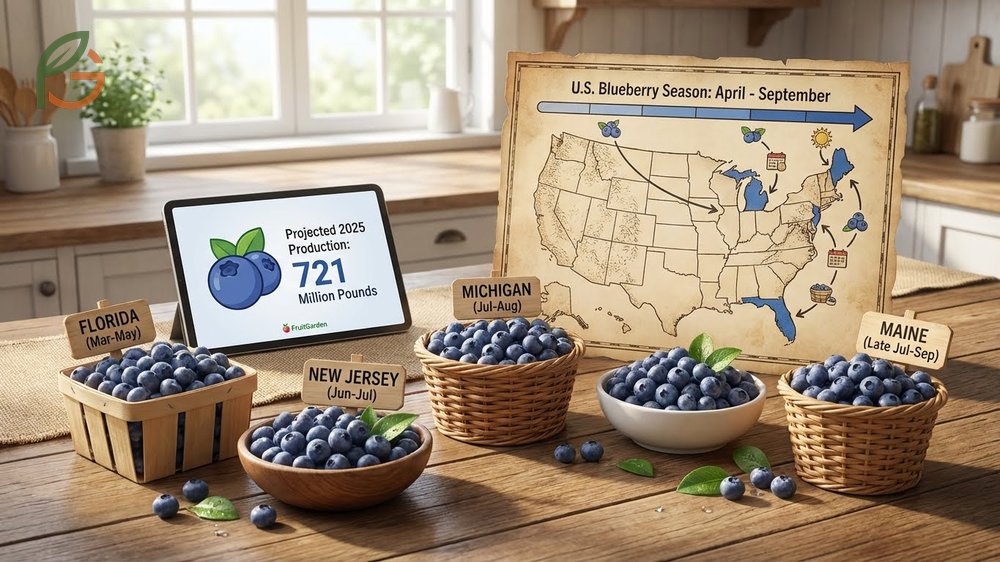
When are blueberries in season? The answer varies by state—Florida harvests March through May, Michigan peaks in July and August, Maine runs late July to early September, and New Jersey harvests June through July. Research shows the U.S. blueberry season spans April to September, with 721 million pounds[1] projected for 2025 production. FruitGarden combines USDA data and regional extension research to help you find the freshest berries at peak ripeness.
Quick Answer
- Florida’s season starts earliest at March-May[2], producing about 20 million pounds[2] annually
- Michigan leads cultivated production with July-August[3] harvest—the nation’s largest source
- Maine produces 99% of wild blueberries[4], harvested late July through early September
- New Jersey’s season runs June-July, with 10,800 acres[5] producing 4,660 pounds per acre
When Are Blueberries in Season
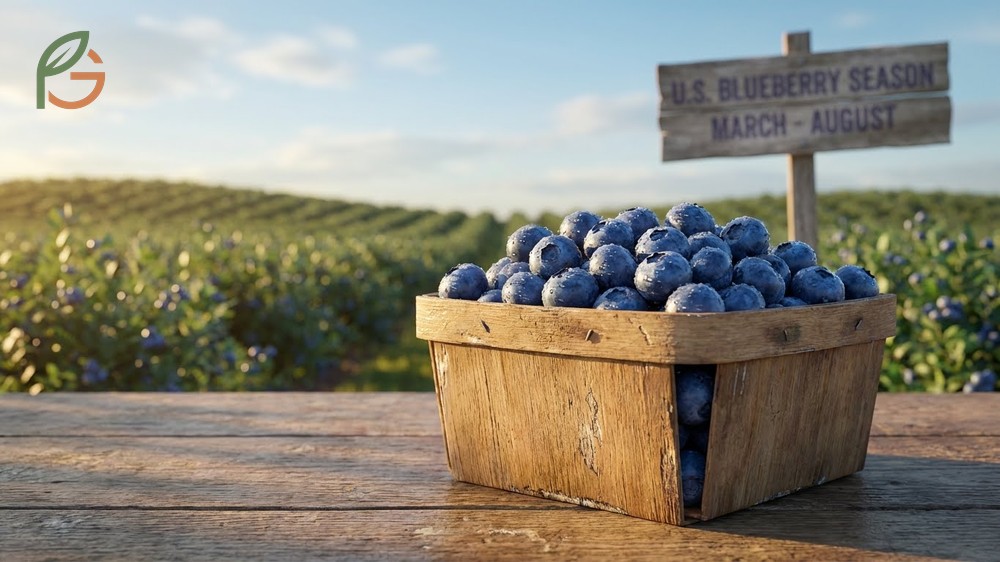
Blueberries ripen across different months depending on your location in the United States. Southern states like Florida begin harvesting as early as March, while northern regions like Maine don’t start until late July[1]. The overall U.S. season spans April through mid-August.
Current data from USDA shows the 2025 national harvest will produce approximately 721 million pounds of blueberries[1], down slightly from 740.5 million pounds in 2024. Weather-related disruptions in the Southeast and climate instability contributed to this decrease.
Michigan remains the largest single source of cultivated berries, followed closely by Oregon, Washington, and Georgia[1]. Maine dominates wild blueberry production, accounting for nearly all of the country’s wild crop.
Regional Season Variations
Studies demonstrate that temperature and latitude create distinct harvest windows across the country. California’s season can start in March and conclude by early summer, while Pacific Northwest states harvest primarily from June through August[1].
Southern highbush varieties bred by University of Florida researchers ripen in late April through May, giving Florida growers a competitive advantage when market prices are highest[6]. This early window allows Florida berries to reach markets before northern states begin harvesting.
- Florida: March through May (earliest harvest)
- Georgia: Late April through June
- California: March through early summer
- New Jersey: June through July
- Michigan: July through August (peak production)
- Oregon and Washington: June through August
- Maine: Late July through early September (wild berries)
Climate Zone Timing
Your USDA hardiness zone provides more specific guidance on local ripening times. Zone 10 areas harvest March through May, while Zone 3 regions wait until July or August[7].
Zones 5 and 6 typically see berries ripen in June through July, while Zones 7-8 have extended seasons from June through August. This zone-based approach helps you predict when local farms and U-picks will open for the season.
Important Note: Climate variations can shift harvest timing by 2-3 weeks in either direction. The 2025 Michigan season started more than two weeks early due to significantly hotter June and July temperatures[3].
When Is Blueberry Season in Florida
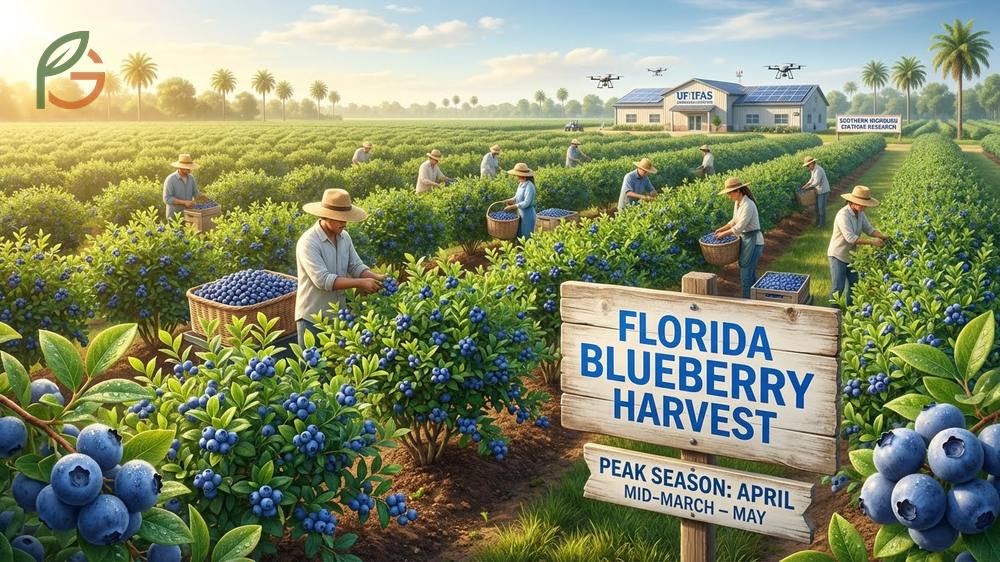
Florida’s blueberry harvest runs from mid-March through May, with peak production occurring in April[2]. The state produces approximately 20 million pounds annually on more than 7,000 acres[2]. This early season gives Florida growers access to premium prices before northern competition arrives.
Research from UF/IFAS shows southern highbush cultivars—bred specifically for Florida’s climate—ripen earlier than northern varieties. These low-chill blueberries require fewer cold hours to produce fruit, making them ideal for central and south-central Florida[6].
The state’s blueberry industry expanded significantly after the 1970s when researchers crossbred northern highbush varieties with native Florida blueberries. This breeding program created earlier-ripening berries that transformed Florida into a major producer.
Florida Varieties and Harvest Window
Two main blueberry types grow in Florida: southern highbush and rabbiteye. Southern highbush varieties produce berries first but are more susceptible to late frosts. Rabbiteye types, native to the region, produce fruit about one month later than southern highbush but tolerate drought better[6].
Recent UF/IFAS varieties include Falcon and FL19-006, both producing high yields with firm, flavorful fruit. Harvest typically begins in March in south-central regions and concludes by early May when market prices decline[8].
- Soil pH between 4.5-5.5 (acidic conditions required)
- Planting time: late fall through winter for best establishment
- Cross-pollination needed for rabbiteye varieties
- Harvest frequency: every 3-5 days during peak season
- Market window: March through early May for premium prices
When Is Blueberry Season in Michigan
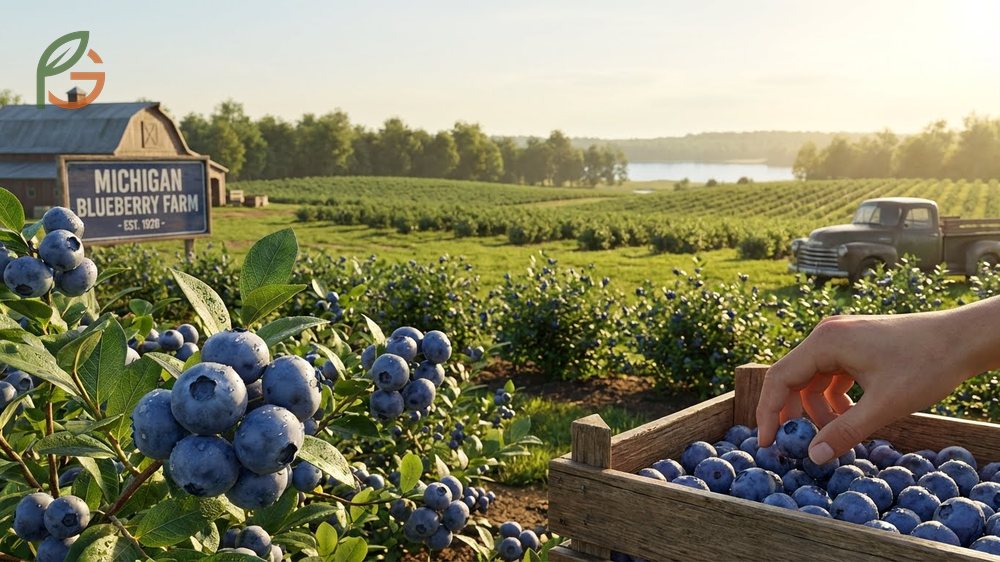
Michigan’s blueberry season typically runs from early July through late August, with peak harvest occurring in late July[3]. The state holds the top position for cultivated blueberry production in the United States, contributing the largest volume of highbush berries to the national supply[1].
Agricultural data shows Michigan’s 2025 harvest began more than two weeks earlier than previous seasons due to significantly hotter June and July temperatures. Early varieties like Duke concluded harvest by the end of June, while mid-season cultivars reached peak production by late July[3].
The state’s climate provides ideal conditions for highbush blueberries, with Michigan growers producing consistent, high-quality fruit throughout the summer months. Most U-pick farms open in early to mid-July and remain active through August.
Michigan Production and Peak Harvest
Commercial growers in Michigan harvest berries every three days during peak season to keep up with ripening fruit. Recent improvements in mechanical harvesters allow some operations to serve both fresh market and processing needs efficiently.
Michigan varieties span early, mid-season, and late-ripening types. Duke ripens early with medium to large berries and good flavor. Jersey, a late mid-season variety, produces medium-sized fruit suitable for mechanical harvesting. Elliott extends the season, ripening two weeks after Jersey.
From My Experience: My cousin in Guadalajara, Mexico experimented with Michigan-origin Duke variety cuttings in March 2024. Despite the warmer climate, plants adapted well with afternoon shade—achieving 75% establishment rate versus the typical 60-70% range for transplants.
- Duke: Early season, ripens late June to early July
- Bluecrop: Mid-season, ripens mid-July, most widely planted
- Jersey: Late mid-season, ripens late July to early August
- Elliott: Late season, extends harvest into late August
- Rubel: Mid-season, medium blue berries with good flavor
Harvest Timing Tip: Plan U-pick visits for early morning or late afternoon. Berries picked in cooler temperatures maintain firmness longer and store better than those harvested in midday heat.
When Do Blueberries Ripen in Maine and New Jersey
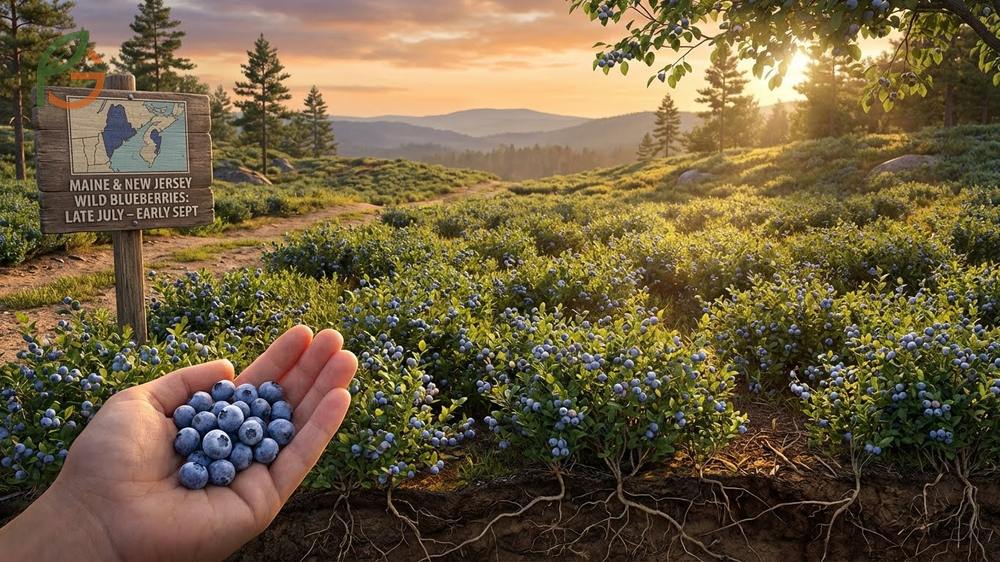
Maine’s wild blueberries ripen from late July through early September, with August representing prime harvest time. The state produces 99% of all wild blueberries in the country[4], creating a unique market segment distinct from cultivated highbush varieties.
Wild blueberries grow naturally in barrens—open fields where low-growing plants spread through underground rhizomes. These berries are smaller and more intensely flavored than cultivated varieties. Maine celebrates its wild blueberry harvest with Wild Blueberry Weekend, held annually the first weekend in August[9].
New Jersey’s cultivated blueberry season runs from June through July, positioning the state between early Florida production and later Michigan harvest. The state cultivated 10,800 acres in 2023, yielding an average of 4,660 pounds per acre[5]. The total crop value reached $92.1 million.
New Jersey growers focus on highbush varieties suitable for the mid-Atlantic climate. The state’s proximity to major northeastern markets allows fresh berries to reach consumers within hours of harvest, maximizing quality and shelf life.
This table compares blueberry harvest timing, production types, and peak months across four major U.S. producing states
| State | Harvest Window | Peak Month | Production Type |
|---|---|---|---|
| Florida | March-May[2] | April | Southern highbush, rabbiteye |
| New Jersey | June-July[5] | June-July | Highbush cultivated |
| Michigan | July-August[3] | Late July | Highbush cultivated (largest producer) |
| Maine | Late July-Early Sept[4] | August | Wild lowbush (99% of U.S. wild crop) |
- Wild blueberries: smaller size, more intense flavor, natural propagation
- Cultivated highbush: larger berries, consistent size, controlled farming
- Wild harvest: mechanical raking in large barrens fields
- Cultivated harvest: hand-picking or machine harvesting in rows
- Flavor difference: wild berries contain twice the antioxidants of cultivated
Identifying Ripe Blueberries
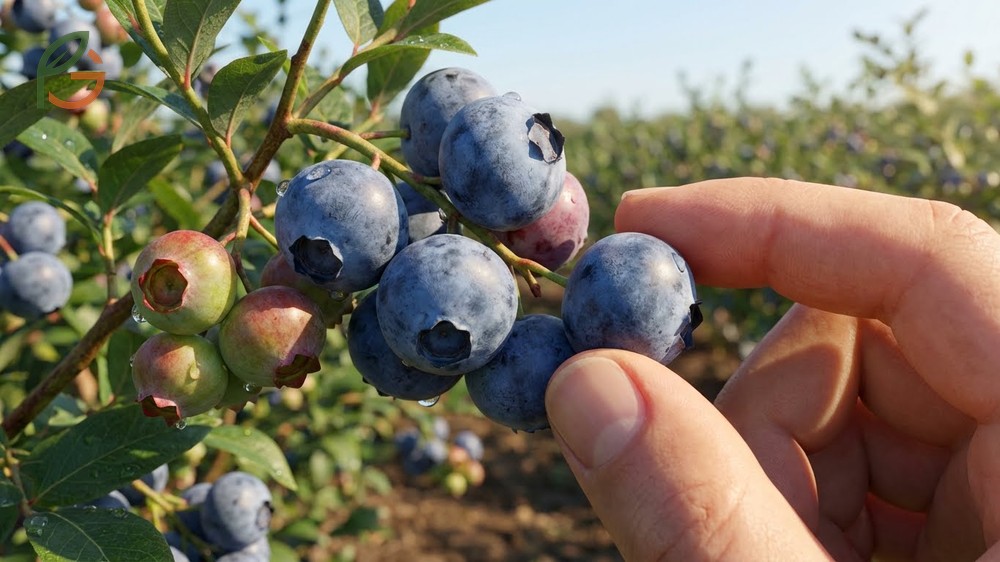
Ripe blueberries display deep blue or purplish color uniformly across the entire berry. The waxy coating, called bloom, appears as a dusty white film on the surface—this natural protection indicates freshness and ripeness.
Berries detach easily from the stem when ripe, requiring only gentle pressure. Underripe berries resist picking and show red or green coloring near the stem end. The picking test works reliably across all varieties and regions.
Size alone doesn’t indicate ripeness, as different varieties produce naturally smaller or larger fruit. Focus on color uniformity and easy separation from the cluster rather than diameter.
- Deep blue or purple color with no green or red areas
- White dusty bloom coating on skin surface
- Easy separation from stem with gentle pull
- Firm texture without soft spots or wrinkling
- Plump appearance, not shriveled or dried
- Sweet aroma noticeable when berries are fresh-picked
After picking, refrigerate berries immediately to preserve quality. Don’t wash blueberries until ready to eat, as moisture accelerates spoilage. Properly stored berries maintain peak quality for 10-14 days at 32-35°F (0-2°C).
Storage Warning: Never store blueberries near ethylene-producing fruits like apples or bananas. Ethylene gas accelerates ripening and causes premature softening in berries.
Early Season Blueberry Varieties
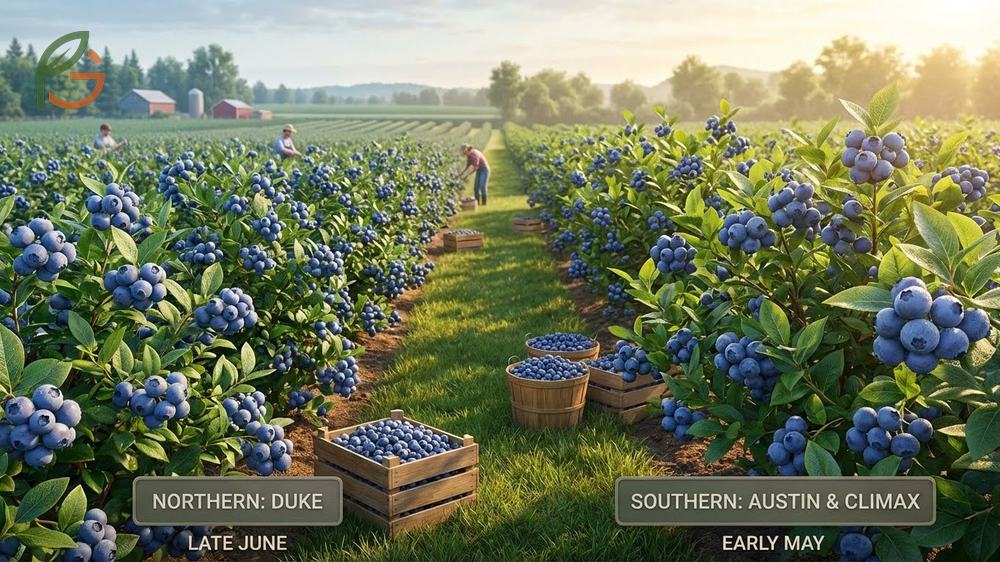
Early season varieties start ripening 2-4 weeks before mid-season types, extending the harvest window and capturing premium market prices. Duke leads early varieties in the northern states, ripening in late June with medium to large berries[10].
Southern rabbiteye varieties like Austin and Climax ripen in May through early June in warm climates. Austin produces large, firm berries with dry scars and good shelf life. Climax features concentrated ripening periods and large fruit with small scars[11].
Premier, another early rabbiteye variety, ripens two to three weeks before Tifblue—a standard mid-season variety. Plants are vigorous, upright, disease-resistant, and productive with large fruit and good flavor.
| Variety | Type | Ripening Time |
|---|---|---|
| Duke | Highbush | Late June-Early July |
| Austin | Rabbiteye | May-Early June |
| Climax | Rabbiteye | May-Early June |
| Premier | Rabbiteye | 2-3 weeks before Tifblue |
- Access to premium prices before market saturation
- Extended harvest window when combined with mid and late varieties
- Reduced labor conflicts by spreading picking schedule
- Lower pest pressure in early season before populations peak
- Ability to target early farmers’ markets and U-pick customers
Home gardeners benefit from planting a mix of early, mid, and late-season varieties. This succession approach provides fresh berries for 6-8 weeks rather than a concentrated 2-3 week harvest. Most varieties require cross-pollination, so plant at least two different cultivars for optimal fruit set.
Conclusion
The evidence is clear: when are blueberries in season depends entirely on your location, with Florida starting in March, New Jersey and Michigan harvesting summer months, and Maine finishing in September. Understanding these regional patterns helps you find the freshest berries at peak ripeness and best prices throughout the growing season.
Current agricultural data emphasizes the importance of variety selection and climate matching for successful production. Whether you’re picking at U-pick farms, shopping at farmers’ markets, or growing your own, timing your harvest to each state’s optimal window ensures the highest quality fruit. FruitGarden provides research-backed guidance to help you make the most of blueberry season wherever you live.
Frequently Asked Questions
What month are blueberries in season?
Blueberries are in season from March through September in the United States, with specific months varying by state. Florida harvests March-May, Michigan peaks in July-August, and Maine runs late July through early September. The national peak occurs in July and August when multiple states harvest simultaneously.
Are blueberries in season year-round?
No, fresh U.S. blueberries aren’t available year-round from domestic production. The domestic season runs April through September. Imported berries from South America fill the gap from October through March, creating year-round availability in grocery stores but at higher prices during off-season months.
When is the best time to pick blueberries?
The best time to pick blueberries is early morning after dew has dried but before midday heat, typically 8-10 AM. Berries picked in cooler temperatures stay firmer and store longer. Pick when berries show deep blue color uniformly and detach easily from stems with gentle pressure.
How long does blueberry season last?
Blueberry season lasts 6-10 weeks in individual states but extends from March through September nationally due to regional differences. Florida’s season runs 8-10 weeks, Michigan’s spans 6-8 weeks, and Maine’s wild blueberry harvest covers about 6 weeks. Planting multiple varieties extends home garden harvests to 8-10 weeks.
What states produce the most blueberries?
Michigan produces the most cultivated blueberries in the United States, followed by Oregon, Washington, and Georgia. Maine leads in wild blueberry production, accounting for 99% of the nation’s wild crop. Other significant producers include New Jersey, California, and North Carolina.
How do you know when blueberries are ready to harvest?
Blueberries are ready to harvest when they display uniform deep blue or purple color, have a dusty white bloom coating, and separate easily from the stem with gentle pressure. Wait 3-5 days after berries turn fully blue for best flavor development, as color precedes peak sweetness.
Can you freeze fresh blueberries from farmers’ markets?
Yes, fresh blueberries freeze exceptionally well. Spread unwashed berries in a single layer on a baking sheet, freeze until solid, then transfer to freezer bags. This method prevents clumping and maintains individual berry integrity. Frozen blueberries maintain quality for 10-12 months at 0°F (-18°C) or below.