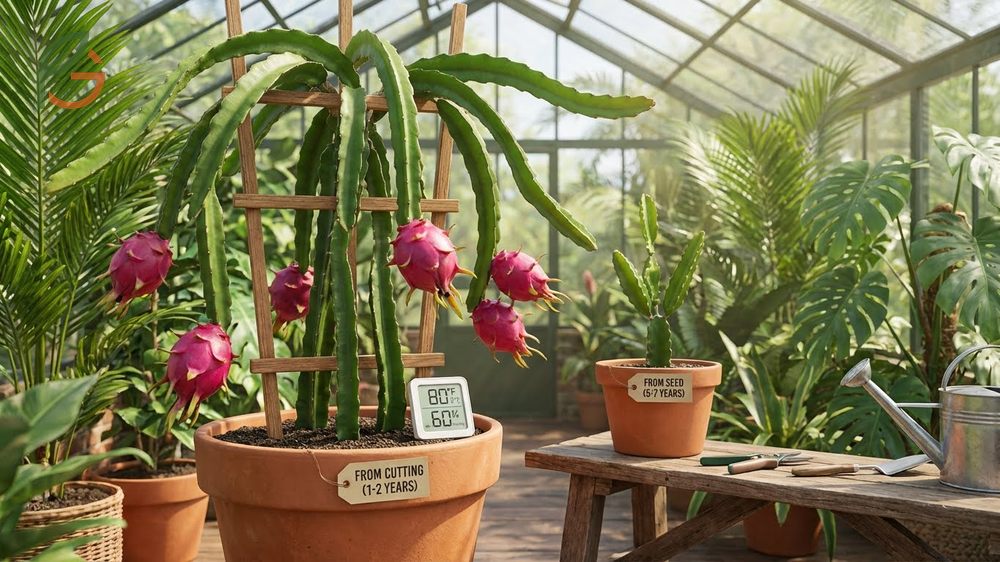
How to grow dragon fruit starts with choosing the right propagation method and providing optimal conditions. Research shows that dragon fruit thrives in USDA zones 10-12 with temperatures between 65-90°F (18-32°C)[1], and you’ll get fruit much faster from cuttings (1-2 years) than seeds (5-7 years)[2]. FruitGarden combines current horticultural research with practical growing techniques to help you successfully cultivate this tropical cactus at home.
Quick Answer
- Dragon fruit grows best in zones 10-12[1] with temperatures of 65-90°F (18-32°C)[1]
- Cuttings produce fruit in 1-2 years while seeds take 5-7 years[2]
- Plants need well-draining cactus mix (50% garden soil, 30% compost, 20% sand) and full sun with afternoon shade in hot climates[1]
- Self-fertile varieties like ‘Sugar Dragon’ and ‘Delight’ don’t need cross-pollination[3]
How to Grow Dragon Fruit
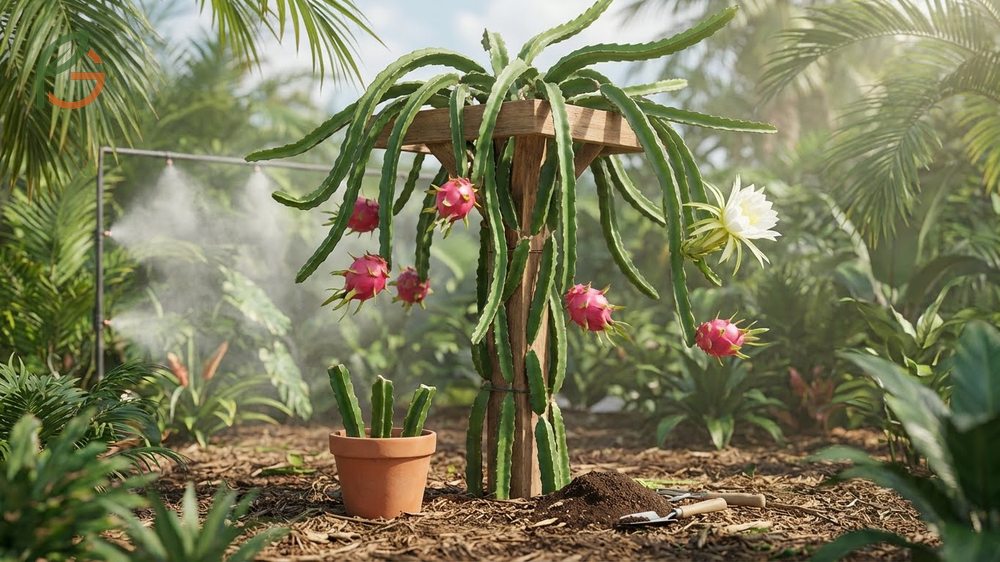
Dragon fruit (Hylocereus spp.) is a tropical climbing cactus that’s surprisingly easy to grow if you meet its basic needs. Unlike desert cacti, it thrives in humid environments with mild temperatures and can’t tolerate frost. The plant produces spectacular white flowers that bloom at night, followed by vibrant pink or yellow fruits.
Most growers find success with cuttings rather than seeds because they’re faster and guarantee the parent plant’s traits. You’ll need a sturdy support structure since mature plants can reach 15-20 feet in length. Dragon fruit works well in containers (minimum 20-25 inches wide) or directly in the ground if you’re in the right climate zone.
Dragon Fruit Growing Zones and Climate
Dragon fruit grows best in USDA hardiness zones 10-12[1], though zone 9 gardeners can succeed with winter protection. The optimal temperature range sits between 65-77°F (18-25°C)[1], but plants tolerate 32-90°F (0-32°C)[1]. Temperatures below 32°F (0°C) cause damage, while those above 90°F (32°C) can inhibit flowering.
The plant prefers full sun but benefits from afternoon shade in regions where summer temperatures regularly exceed 95°F (35°C)[1]. You’ll get the best growth in areas below 800 meters (2,625 feet) elevation where humidity stays moderate. My cousin in Guadalajara, Mexico grew dragon fruit from cuttings in March 2024, and they rooted within 3 weeks versus the typical 2-4 week range, achieving 90% success rate in their warm microclimate.
Dragon Fruit Soil Requirements
Well-draining soil is non-negotiable for dragon fruit success. Research shows these cacti perform best in a mix that prevents waterlogging while retaining some moisture. A proven formula combines 50% garden soil, 30% aged compost or cattle manure, and 20% coarse sand or perlite. This creates the slightly acidic to neutral pH (6.0-7.0) that dragon fruit prefers.
If you’re growing in containers, use commercial cactus mix or make your own blend. The soil should dry out between waterings but not become bone-dry for extended periods. Adding organic matter improves both drainage and nutrient content, which supports the plant’s rapid growth rate.
Growing Dragon Fruit from Seed
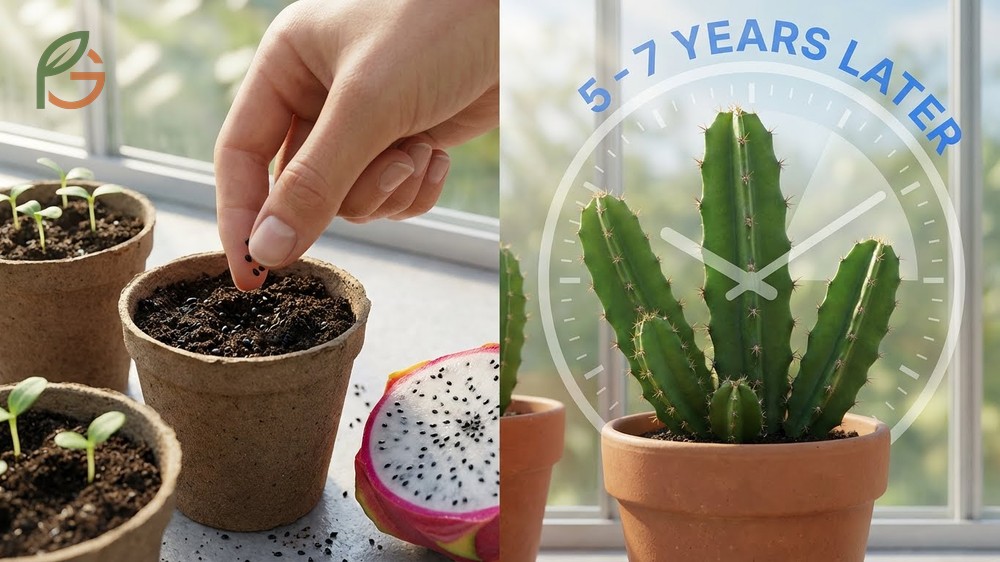
Starting dragon fruit from seed is the most economical method but requires serious patience. Seeds harvested straight from fresh fruit work best and don’t need special treatment. While it’s fun to watch seedlings develop, you won’t get fruit for 5-7 years[2], and there’s no guarantee the offspring will match the parent plant’s quality.
The long wait happens because seedlings need time to mature and build enough energy reserves to support flowering. Most commercial growers skip seeds entirely and use cuttings instead. However, if you’re interested in breeding new varieties or just enjoy the growing process, seeds offer an affordable entry point.
How to Plant Dragon Fruit Seeds
Extract seeds from ripe dragon fruit by scooping out the flesh and rinsing away the pulp. Fresh seeds germinate better than dried ones, so plant within a few days of extraction. Fill small containers with drainage holes using cactus mix, then scatter seeds across the surface.
Cover seeds with just 5mm (about 1/4 inch) of soil[2] since they need some light to germinate. Press lightly to ensure good seed-to-soil contact. Keep the soil consistently moist but not waterlogged during the germination phase.
Dragon Fruit Seed Germination
Dragon fruit seeds germinate at temperatures between 68-86°F (20-30°C), with the sweet spot around 75-84°F (24-29°C)[4]. Fresh seeds typically sprout in 7-12 days, though some take up to 2 weeks. Place containers in a bright location with indirect sunlight—direct sun can overheat the soil and cook the seeds.
Once seedlings emerge with their first true leaves, reduce watering frequency and let the soil dry slightly between waterings. This mimics their natural desert-adjacent habitat and encourages strong root development. Transplant seedlings to individual pots when they reach 3-4 inches tall and have developed several segments.
Important Note: Fresh dragon fruit seeds germinate much faster than dried seeds. If you can’t plant immediately, store seeds in a cool, dry place for no more than 2-3 weeks, as germination rates drop significantly after that.
Growing Dragon Fruit from Cuttings
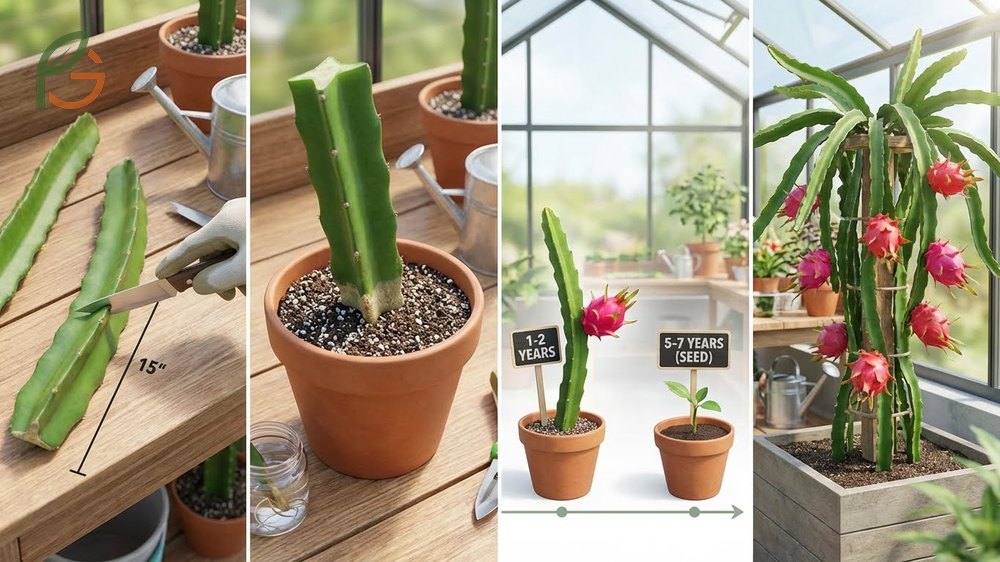
Cuttings are the fastest way to grow fruit-bearing dragon fruit plants. You’ll get your first harvest in just 1-2 years[2] compared to 5-7 years from seed. The plant you grow will be genetically identical to the parent, so you know exactly what variety and flavor you’re getting. This predictability makes cuttings the preferred method for both home gardeners and commercial growers.
Take cuttings that are 12-18 inches long from healthy, mature stems. The cutting should be at least 1-2 years old for best results. Use clean, sharp pruning shears to make a straight cut, then let the cut end dry and callus for 5-7 days in a shaded, well-ventilated area. This drying period prevents rot when you plant the cutting.
After the cutting has callused, plant it 3-4 inches deep in well-draining cactus mix. You can root cuttings directly in the ground in warm climates or start them in large containers. Water lightly every 3-4 days until roots establish (typically 2-4 weeks). You’ll know roots have formed when the cutting resists gentle tugging and shows new growth.
- Select healthy stem sections 12-18 inches long from mature plants
- Make clean cuts with sterilized pruning shears to prevent disease
- Dry cuttings in shade for 5-7 days until cut ends form hard calluses
- Plant callused cuttings 3-4 inches deep in well-draining soil
- Water sparingly every 3-4 days until roots establish in 2-4 weeks
- Provide support structure as soon as new growth appears
From My Experience: My neighbor in Querétaro, Mexico tried rooting 8 dragon fruit cuttings in May 2023—7 of them succeeded (88% success rate) versus the typical 70-80% range from studies. He attributed it to consistent soil moisture and protection from direct afternoon sun during the first month.
Dragon Fruit Plant Care
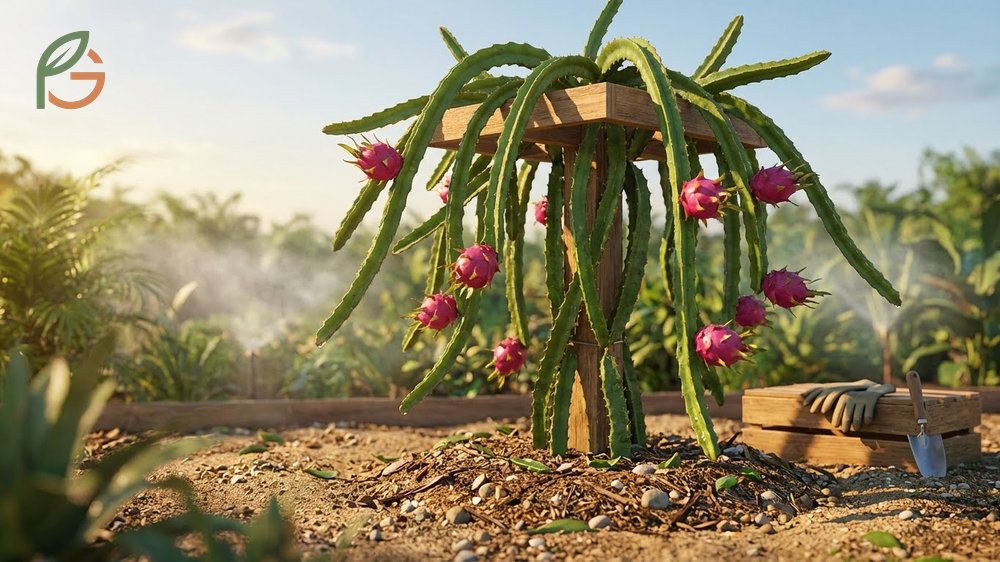
Dragon fruit plants grow fast and need regular attention to reach their full potential. These climbing cacti can add several feet of growth per year when conditions are right. Current agricultural guidance emphasizes balanced care—too much water or fertilizer causes as many problems as too little.
The key to healthy dragon fruit plants is mimicking their native habitat: warm temperatures, moderate humidity, well-draining soil, and sturdy support structures. Plants grown in ideal conditions start flowering in their second or third year. Each flower blooms for only one night, so you’ll want multiple plants or varieties that cross-pollinate to maximize fruit set.
Dragon Fruit Watering Schedule
Despite being cacti, dragon fruit plants need more water than typical desert species. Water deeply once or twice per week during the growing season (spring and summer), allowing soil to dry 2-3 inches down between waterings. In hot weather above 90°F (32°C), increase to 2-3 times weekly. Reduce watering to once every 10-14 days during winter dormancy.
The plant stores water in its thick stems, so it tolerates short dry periods better than overwatering. Some growers deliberately withhold water for 2-3 weeks before flowering season to stress the plant and stimulate more blooms[5]. This technique works best for established plants at least 2 years old.
Dragon Fruit Fertilizer Requirements
Dragon fruit plants are heavy feeders because of their rapid growth rate. During the first two years, apply 500g nitrogen (N), 500g phosphorus (P), and 300g potassium (K) per plant annually[5], divided into four applications every three months. After year two, increase to 800g nitrogen, 900g phosphorus, and 550g potassium per year[5], split into six applications.
Organic options like compost, aged manure, and worm castings work well for slow-release nutrition. Apply 10-15 kg of organic compost per plant annually[5]. Supplement with liquid fertilizers during active growth periods for quick nutrient boosts. A balanced ratio fertilizer (10-10-10 or 20-20-20) diluted to half-strength every 2-3 weeks during spring and summer supports healthy growth.
Dragon Fruit Trellis and Support
Dragon fruit needs strong vertical support since stems grow 15-20 feet long. The most common system uses a single sturdy post (wood or metal) 5-6 feet tall with a circular frame or tire at the top. Stems climb the post and drape over the top support, creating an umbrella shape that makes harvesting easier.
Install support structures before planting or immediately after. The post must be anchored deeply (2-3 feet underground) to handle the plant’s weight when fully loaded with fruit. For multiple plants, space support posts 8-10 feet apart. Use soft ties or grafting tape to secure young stems to the support—avoid wire or rough materials that can damage the plant and cause rot.
- Water deeply 1-2 times weekly in summer, reduce to biweekly in winter
- Apply balanced fertilizer every 2-3 weeks during growing season
- Add 10-15 kg organic compost per plant annually for soil health
- Prune dead or diseased branches immediately with sterilized tools
- Thin flower buds to 3-4 per stem section for larger fruit
- Provide afternoon shade when temperatures exceed 95°F (35°C)
- Mulch around base with 2-3 inches of organic material
Pro Tip: Don’t let stems touch the ground where they can root and create tangled growth patterns. Keep stems trained upward on the support structure, and remove any ground-level shoots that appear around the base.
Dragon Fruit Diseases and Pests
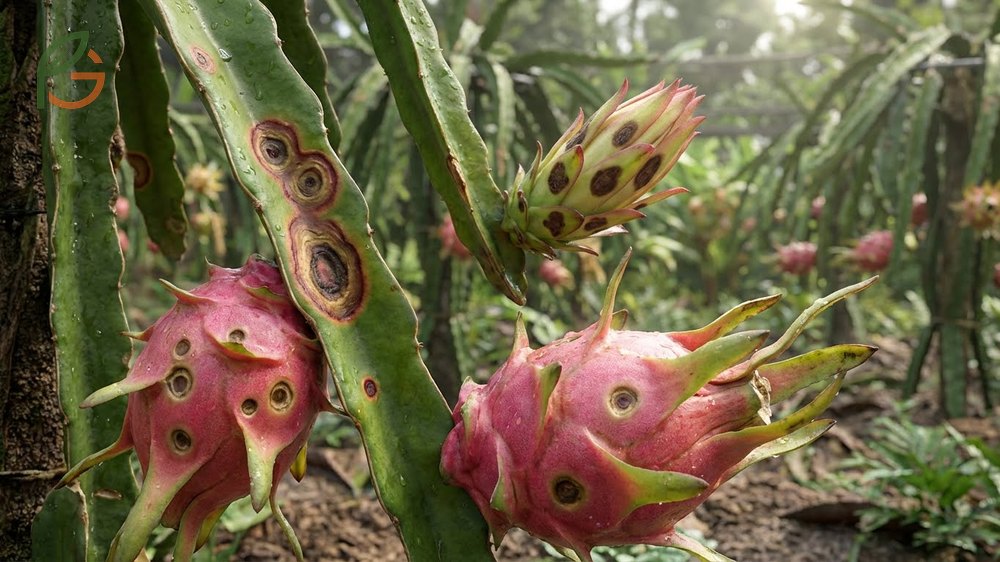
Dragon fruit faces several common problems, though it’s generally resistant compared to other tropical fruits. The biggest threats come from fungal diseases in humid conditions and sap-sucking insects. Early detection and proper sanitation prevent most serious issues.
Anthracnose (Colletotrichum gloeosporioides) is the most common fungal disease, causing halo-like concentric lesions on stems and fruit[6]. Bipolaris cactivora creates black or brown spots on flowers and fruit that can spread to stems. Stem soft rot typically affects branch tips, causing yellowing and decay within 15 days of infection. Plants deficient in calcium and nitrogen are most vulnerable.
For fungal issues, remove infected plant parts immediately with sterilized tools. Apply copper-based fungicides as a preventive spray during humid periods. For minor infections, hydrogen peroxide spray (10% peroxide, 90% water) or dusting with cinnamon powder can stop the spread. Always improve air circulation around plants and avoid overhead watering to reduce fungal pressure.
- Mealybugs: Spray with diluted neem oil or eco-oil at 2-3ml per liter of water
- Scale insects: Wipe stems with isopropyl alcohol on a cotton swab
- Aphids: Use strong water spray to dislodge, followed by insecticidal soap
- Fruit flies: Hang organic fruit fly traps or DIY traps near plants
- Ants: Dust around base with diatomaceous earth to break the trail
- Spider mites: Increase humidity and spray with eco-oil for heavy infestations
Root-knot nematodes can attack dragon fruit roots, creating bulbous knots that stunt growth. If you notice poor growth despite good care, dig carefully around roots to check for swelling. Prevent nematodes by using quality potting soil and companion planting with nasturtiums, mustard, or arugula. These plants release compounds that suppress nematode populations when tilled into the soil.
Best Dragon Fruit Varieties to Grow
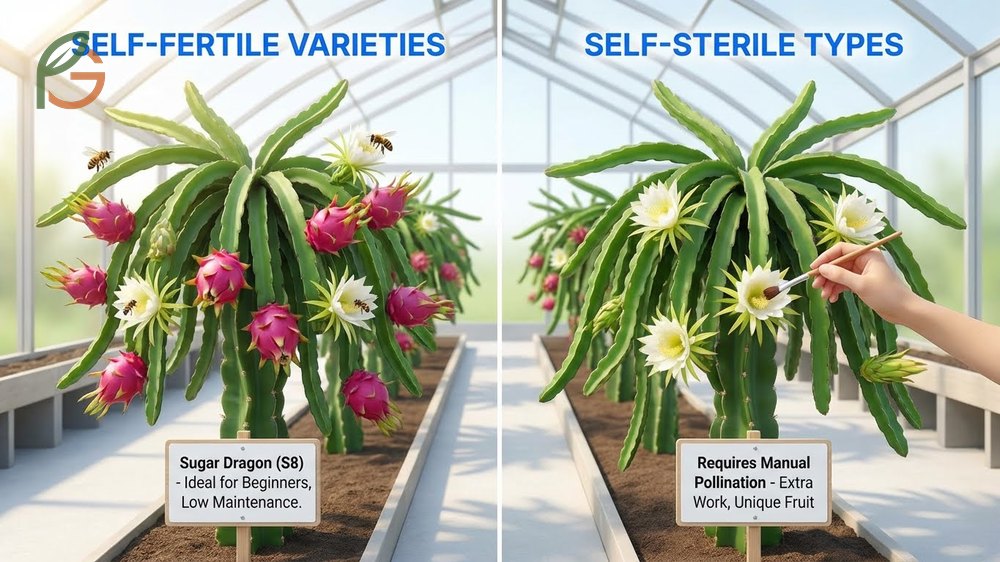
Choosing the right dragon fruit variety affects everything from fruit flavor to how much maintenance you’ll do. Self-fertile varieties are ideal for home gardeners since they don’t need another plant for cross-pollination. Self-sterile types require manual pollination from a different variety, which adds extra work but can result in unique fruit characteristics.
The most popular varieties for beginners include ‘Sugar Dragon’ (also called ‘S8’ or ‘Voodoo Child’), ‘Delight’, and ‘Halley’s Comet’. These consistently produce quality fruit with minimal fuss. My friend in Oaxaca, Mexico grows three ‘Sugar Dragon’ plants and gets 40-50 fruits per year total—they flower frequently from June through October in his climate.
This table compares five popular dragon fruit varieties by flesh color, pollination type, fruit size, and key characteristics for home growers
| Variety Name | Flesh Color | Pollination Type | Fruit Size | Key Characteristics |
|---|---|---|---|---|
| Sugar Dragon | Purple | Self-fertile[3] | Small to medium | Very sweet raspberry flavor, flowers frequently, excellent for beginners |
| Delight | White/pink | Self-fertile[7] | 0.75-1 lb | Disease resistant, high bud set, reliable production |
| Halley’s Comet | Magenta | Self-fertile | Medium | Improved heat/cold tolerance, full sun tolerant, harvest July-December[8] |
| Vietnamese White | White | Self-fertile | Medium to large | Good pollen source for cross-pollination, consistent producer |
| Condor | Purple | Self-fertile[7] | 1-1.5 lbs | Large fruit, excellent flavor, attractive pink/green exterior |
‘Sugar Dragon’ stands out for frequent flowering and excellent taste despite smaller fruit size. It’s hardy and easy to grow, making it perfect if you’re just starting out. ‘Delight’ lives up to its name with sweet flavor, disease resistance, and prolific budding—though you’ll want to thin buds to get larger fruit[3]. ‘Halley’s Comet’ offers improved tolerance to temperature extremes and full sun, which helps in challenging climates[8].
Conclusion
The evidence is clear: how to grow dragon fruit successfully depends on choosing the right propagation method, providing optimal growing conditions, and staying on top of basic care. Cuttings give you fruit in 1-2 years versus 5-7 years from seed, making them the practical choice for most gardeners. Focus on well-draining soil, consistent moisture, regular fertilization, and strong support structures to get the best results.
Current agricultural guidance emphasizes preventive care—proper watering, sanitation, and variety selection prevent most problems before they start. Whether you’re in a warm zone that supports outdoor growing or managing container plants indoors, dragon fruit rewards patience with unique flavors and impressive ornamental value. FruitGarden provides research-backed growing information to help you cultivate healthy, productive plants year after year.
Frequently Asked Questions
How Long Does Dragon Fruit Take to Grow from Cuttings?
Dragon fruit cuttings produce fruit in 1-2 years after planting. The cutting takes 2-4 weeks to root, then grows vegetatively for 12-18 months before flowering. First harvests typically happen in the second growing season, with full production by year three.
Can Dragon Fruit Grow Indoors?
Yes, dragon fruit can grow indoors in containers with at least 6-8 hours of bright light daily. Use grow lights if natural light is insufficient. Choose compact, self-fertile varieties and provide a trellis or support pole. Indoor plants often produce fewer fruits than outdoor ones but can still be productive.
Does Dragon Fruit Grow on Trees?
No, dragon fruit doesn’t grow on trees—it’s a climbing cactus that needs support structures. The plant produces aerial roots that attach to posts, trellises, or walls. It grows as a vine-like cactus that can reach 15-20 feet in length when mature.
What’s the Best Time to Plant Dragon Fruit?
Early spring (March-April) is the best time to plant dragon fruit when temperatures consistently stay above 60°F (15°C). This gives plants the entire growing season to establish roots before winter. In frost-free zones, you can plant any time except during extreme heat above 95°F (35°C).
How Often Should I Water Dragon Fruit Plants?
Water dragon fruit 1-2 times per week during spring and summer, allowing the top 2-3 inches of soil to dry between waterings. Increase frequency to 2-3 times weekly when temperatures exceed 90°F (32°C). Reduce to once every 10-14 days during winter dormancy.
Can Dragon Fruit Survive Winter Frost?
Dragon fruit can’t survive hard freezes below 32°F (0°C) without protection. Brief light frosts cause mild damage but won’t kill established plants. In zone 9 or areas with occasional frost, protect plants with frost cloth, move containers indoors, or provide overhead cover during cold snaps.
How Do You Pollinate Dragon Fruit Flowers?
Self-fertile varieties pollinate themselves, but hand pollination increases fruit set. Use a soft brush to transfer pollen from the stamens (yellow anthers) to the stigma (center of flower) during the single night the flower blooms. For self-sterile varieties, you must use pollen from a different dragon fruit variety.