
Dragon fruit calories are remarkably low at just 60 calories per 100 grams[1], making it one of the most diet-friendly tropical fruits you’ll find. Research shows this exotic superfood combines low calorie density with high fiber content and essential nutrients, perfect for weight management without sacrificing taste or nutrition. FruitGarden provides gardeners and fruit enthusiasts with science-backed insights into growing and enjoying nutrient-rich fruits like dragon fruit.
Quick Answer
Dragon Fruit Calories

Research shows dragon fruit ranks among the lowest-calorie tropical fruits available, with just 60 calories per 100 grams[1] according to USDA Composition Databases. This makes it significantly lower than bananas at 89 calories or mangos at 60 calories for the same serving size. The low calorie density comes from its impressive 88% water content[3], which fills you up without adding excess energy.
Most people don’t realize that dragon fruit’s calorie advantage extends beyond just numbers. When you compare volume to calories, you can eat a full cup of dragon fruit cubes for only 102 calories[2], while a cup of grapes delivers 104 calories but with less fiber and fewer nutrients. This volume-to-calorie ratio matters for satiety and long-term weight management success.
Current nutritional data indicates both red-fleshed and white-fleshed varieties share nearly identical calorie counts at 60 per 100g. The slight variation you’ll find between sources reflects natural differences in ripeness, growing conditions, and measurement methods rather than significant nutritional distinctions.
Calorie Content Breakdown
Studies demonstrate that dragon fruit’s 13 grams of carbohydrates per 100g contribute most of its calories, with protein and fat accounting for minimal energy. The fruit contains only 1.2 grams of protein[1] and nearly zero fat per 100g serving. This macronutrient distribution creates a light, refreshing fruit that won’t weigh you down.
The 3 grams of fiber[1] per 100g serving doesn’t add calories but dramatically impacts how your body processes the fruit’s natural sugars. This high fiber content slows glucose absorption and promotes digestive health through prebiotic effects.
Why Dragon Fruit Is Low Calorie
Evidence suggests dragon fruit’s molecular composition explains its low calorie density. The fruit’s cellular structure holds massive amounts of water within its flesh, similar to cucumbers and watermelons. When you bite into dragon fruit, you’re consuming mostly water with nutrients suspended throughout.
The natural sugar content remains moderate at approximately 8 grams per 100g, which is lower than many popular fruits like apples or pears. Combined with the fiber content, this creates a low glycemic index between 48-52[4], meaning dragon fruit won’t spike your blood sugar levels rapidly.
Important Note: While dragon fruit’s low calorie count supports weight management, portion control still matters. Eating three whole fruits in one sitting will deliver around 400 calories, which can fit your daily intake goals but shouldn’t be considered “free” food.
Dragon Fruit Nutrition Facts
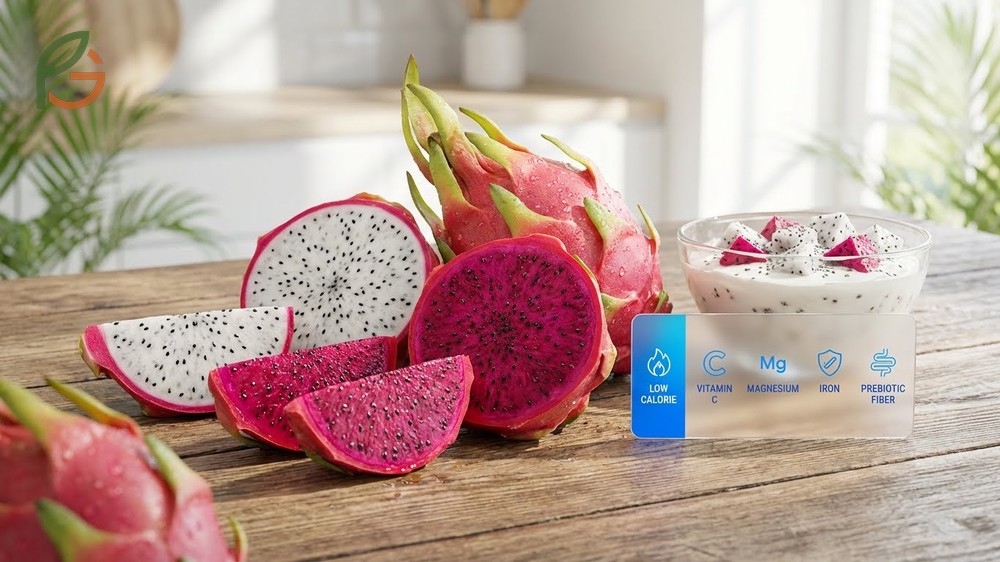
Current data indicates dragon fruit delivers exceptional nutritional value relative to its minimal calorie load. Beyond basic macronutrients, this tropical superfood provides vitamin C, magnesium, iron, and powerful antioxidants called betalains that give red varieties their vibrant color. The fruit’s prebiotic fiber feeds beneficial gut bacteria, supporting digestive health and immune function.
Agricultural research shows dragon fruit contains 10% of the daily value for magnesium[1] per 100g serving, which supports muscle function and energy metabolism. This mineral content surpasses most common fruits like apples or oranges, making dragon fruit a strategic choice for active individuals.
What often gets overlooked is that dragon fruit provides these nutrients without any cholesterol or saturated fat. The fruit naturally fits into heart-healthy eating patterns like Mediterranean or DASH diets without requiring modifications.
Complete Nutritional Profile
This table compares nutritional values for dragon fruit across three common serving sizes showing calories, macronutrients, fiber, and key vitamins
| Nutrient | Per 100g | Per Cup (170g) | Whole Fruit (227g) |
|---|---|---|---|
| Calories | 60 kcal[1] | 102 kcal[2] | 136 kcal[2] |
| Protein | 1.2g[1] | 2.0g | 2.7g |
| Carbohydrates | 13g[1] | 22g | 29.4g |
| Fiber | 3g[1] | 4.9g | 6.8g |
| Fat | 0.4g | 0.7g | 0.9g |
| Vitamin C | 5% DV | 8.5% DV | 11.4% DV |
| Magnesium | 10% DV[1] | 17% DV | 22.7% DV |
Vitamins and Minerals
Research shows dragon fruit provides meaningful amounts of vitamin C, which supports immune function and collagen production for healthy skin. While not as vitamin C-rich as oranges, dragon fruit contributes to your daily needs without excessive sugar or calories.
The iron content, though modest at 1% of daily value, becomes more significant when you consider the fruit’s low calorie cost. You’re getting trace minerals without the caloric burden of nuts or seeds, making dragon fruit a smart addition to plant-based diets.
- Betalains – Powerful antioxidants that give red dragon fruit its distinctive color and combat oxidative stress
- Oligosaccharides – Prebiotic compounds that feed beneficial gut bacteria and support digestive health
- Vitamin C – Supports immune function, collagen synthesis, and acts as an antioxidant throughout the body
- Magnesium – Essential for muscle function, energy metabolism, and over 300 enzymatic reactions
- Iron – Supports oxygen transport in blood and prevents anemia, particularly valuable in plant-based diets
- Calcium – Contributes to bone health and cellular signaling functions
Calories Per Serving Dragon Fruit

Studies demonstrate that serving size dramatically impacts your total calorie intake from dragon fruit. A typical serving ranges from half a fruit (113g) at 68 calories to a full cup of cubed fruit (170g) at 102 calories[2]. Most nutritionists recommend the cup measurement as a standard serving, which provides substantial volume and nutrients while keeping calories below 110.
When you slice a dragon fruit for a breakfast bowl or smoothie, you’re likely using half to three-quarters of a medium fruit. This translates to approximately 75-100 calories, which fits easily into most meal plans without requiring careful calculation or portion anxiety.
Current guidance emphasizes that dragon fruit’s serving size can be larger than other fruits precisely because of its low calorie density. You can enjoy a generous 200g serving for only 120 calories, providing more satisfaction than a small banana or a handful of grapes.
Standard Serving Sizes
Agricultural data shows commercial dragon fruits typically weigh between 200-600 grams whole, with the edible portion averaging 150-450 grams after removing the skin. A medium fruit (300g whole) yields approximately 227g of edible flesh, delivering 136 calories[2] total.
For meal planning purposes, think of dragon fruit portions this way: half a medium fruit works for snacks (68 calories), a full medium fruit serves as a light meal component (136 calories), or one cup cubed fits perfectly into smoothies or breakfast bowls (102 calories).
- 1/4 medium fruit (57g edible) – 34 calories, perfect for fruit salads or garnishes
- 1/2 medium fruit (113g edible) – 68 calories, ideal for afternoon snacks
- 1 cup cubed (170g) – 102 calories, standard serving for smoothies and bowls
- 1 whole medium fruit (227g edible) – 136 calories, satisfying as a standalone snack
- 1 large fruit (300g edible) – 180 calories, can be shared or eaten throughout the day
Red vs White Dragon Fruit
Evidence indicates minimal calorie differences between red and white dragon fruit varieties, with both averaging 60 calories per 100g. The primary distinction lies in antioxidant content rather than energy value – red varieties contain more betalains, giving them superior antioxidant capacity, while white varieties typically have slightly lower sugar content.
For weight management purposes, white dragon fruit offers a marginal advantage due to its reduced sugar content, though the difference won’t significantly impact your diet. Choose based on taste preference and availability rather than calorie concerns, since both varieties remain extremely low-calorie options.
Shopping Tip: Dragon fruits with vibrant, evenly colored skin and slight give when pressed indicate optimal ripeness. Avoid fruits with brown spots or extremely soft areas, as overripe dragon fruit loses nutritional value and develops mushy texture.
Macronutrients Dragon Fruit

Research shows dragon fruit’s macronutrient profile skews heavily toward carbohydrates, with minimal protein and virtually no fat. This composition makes it an excellent quick energy source that won’t leave you feeling sluggish or weighed down after consumption.
The 13 grams of carbohydrates per 100g[1] break down into approximately 8g natural sugars and 3g fiber. This ratio creates a favorable glycemic response, with the fiber content moderating how quickly your body absorbs the fruit’s natural sugars. Unlike processed sweets or sugary snacks, dragon fruit provides sustained energy without dramatic blood sugar spikes.
Current nutritional data indicates the 1.2g protein[1] per 100g won’t contribute significantly to your daily protein needs, which typically range from 50-100g depending on body weight and activity level. You’ll want to pair dragon fruit with protein sources like Greek yogurt, nuts, or protein powder in smoothies for balanced nutrition.
The near-zero fat content (0.4g per 100g) means dragon fruit won’t help with fat-soluble vitamin absorption on its own. If you’re eating dragon fruit for breakfast, consider adding a handful of almonds or a drizzle of chia seeds to improve nutrient uptake and create a more satisfying meal that keeps hunger at bay for hours.
This table compares macronutrient percentages and calorie contributions from protein, carbohydrates, and fat in dragon fruit
| Macronutrient | Amount per 100g | Calories from Macro | % of Total Calories |
|---|---|---|---|
| Carbohydrates | 13g[1] | 52 kcal | 87% |
| Protein | 1.2g[1] | 4.8 kcal | 8% |
| Fat | 0.4g | 3.6 kcal | 6% |
| Fiber (non-caloric) | 3g[1] | 0 kcal | 0% |
- Weight Loss – High fiber and water content create fullness with minimal calories, supporting calorie deficits without hunger
- Diabetes Management – Low glycemic index (48-52) and high fiber slow glucose absorption, helping stabilize blood sugar levels
- Athletic Performance – Quick-digesting carbohydrates provide pre-workout energy without gastrointestinal distress
- Heart Health – Zero cholesterol and saturated fat make dragon fruit ideal for cardiovascular-friendly eating patterns
- Digestive Health – Prebiotic fiber feeds beneficial gut bacteria and promotes regular bowel movements
Dragon Fruit Calorie Content for Weight Loss
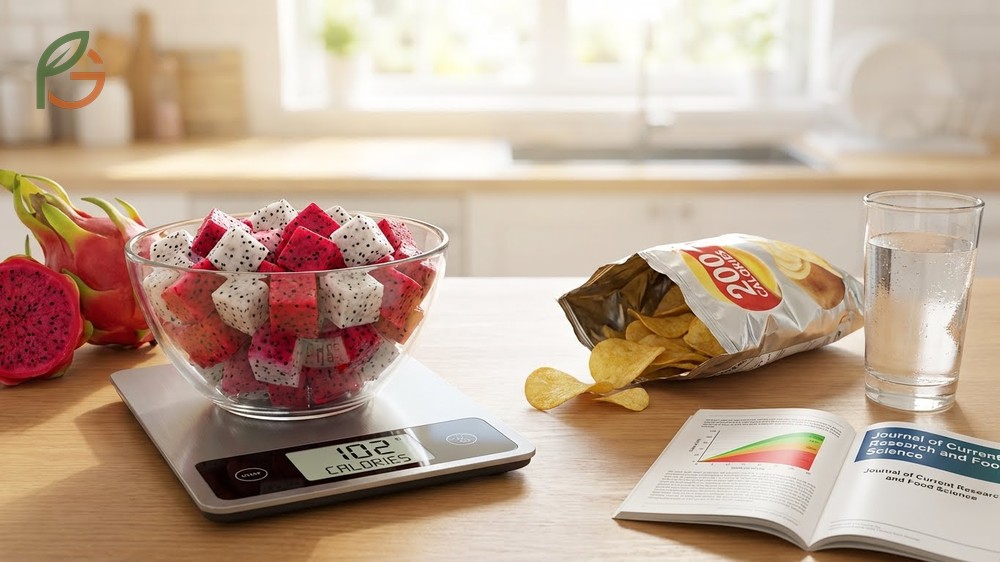
Studies demonstrate that dragon fruit’s unique combination of low calories, high water content, and substantial fiber makes it exceptionally effective for weight management strategies. When you swap a 200-calorie bag of chips for one cup of dragon fruit at 102 calories[2], you’re cutting calorie intake by nearly 50% while increasing nutrient density and satisfaction.
Research published in the Journal of Current Research and Food Science shows that dragon fruit’s high fiber content acts as a prebiotic, supporting gut bacteria that influence metabolism and fat storage[5]. The 3g fiber per 100g[1] creates feelings of fullness that last 3-4 hours, reducing between-meal snacking and overall calorie consumption throughout the day.
Current data indicates dragon fruit contains betacyanin compounds that help maintain healthy lipid profiles during weight loss. According to the Indian Council of Agricultural Research, this substance binds to dietary fat in the digestive system, potentially reducing fat absorption and supporting healthier body composition as you lose weight.
What makes dragon fruit particularly valuable for weight loss isn’t just the calorie count – it’s the volume you can eat. A whole medium fruit at 136 calories provides significant physical volume and eating satisfaction, which psychology research shows reduces the likelihood of feeling deprived or seeking additional snacks.
- Breakfast Bowl Base – Use one cup cubed dragon fruit (102 cal) with Greek yogurt and granola for a filling 300-calorie breakfast
- Pre-Meal Appetizer – Eat half a dragon fruit (68 cal) 15 minutes before lunch to reduce main meal portion sizes naturally
- Evening Dessert Swap – Replace ice cream (300+ cal) with chilled dragon fruit cubes (102 cal per cup) for sweet satisfaction
- Smoothie Foundation – Blend one cup dragon fruit with spinach and protein powder for a 250-calorie meal replacement
- Afternoon Snack – Pair half a dragon fruit with 10 almonds for balanced nutrition under 150 calories
Weight Loss Reality Check: While dragon fruit supports weight loss through its low calorie density, it won’t trigger fat loss on its own. You’ll still need to maintain a calorie deficit through balanced eating and physical activity. Dragon fruit simply makes that deficit easier to achieve and sustain.
Conclusion
The evidence is clear: dragon fruit calories deliver exceptional nutritional value at minimal energetic cost, making this tropical superfood an intelligent choice for health-conscious eaters and gardeners alike. With just 60 calories per 100 grams but loaded with fiber, antioxidants, and essential minerals, dragon fruit proves you don’t need calorie-dense foods to feel satisfied or nourished. Whether you’re managing weight, supporting athletic performance, or simply enjoying nutritious produce from your garden, dragon fruit’s low-calorie profile fits seamlessly into diverse dietary patterns without sacrifice.
Current guidance emphasizes whole fruit consumption over juices or processed forms to maximize fiber benefits and satiety. FruitGarden encourages home gardeners to explore growing dragon fruit in suitable climates, bringing this nutrient-dense, low-calorie superfood straight from garden to table.
Frequently Asked Questions
How many calories are in a whole dragon fruit?
A whole medium dragon fruit with 227g of edible flesh contains approximately 136 calories. Larger fruits (300g edible portion) provide around 180 calories, while smaller fruits may contain 90-110 calories depending on size. The calorie content scales proportionally with the fruit’s weight since dragon fruit maintains a consistent 60 calories per 100g regardless of size.
Is dragon fruit good for weight loss?
Yes, dragon fruit supports weight loss through its exceptionally low calorie density (60 cal/100g), high fiber content (3g/100g), and 88% water composition. Research shows the fruit’s prebiotic fiber promotes satiety and feeds beneficial gut bacteria linked to healthy metabolism. However, dragon fruit works best as part of a balanced, calorie-controlled diet rather than as a standalone weight loss solution.
How many calories are in one cup of dragon fruit?
One cup of cubed dragon fruit (170g) contains 102 calories. This serving size also provides approximately 22g carbohydrates, 4.9g fiber, 2g protein, and less than 1g fat. The cup measurement represents a standard serving size recommended by nutritionists, offering substantial volume and nutrients while keeping calories under 110.
Does red or white dragon fruit have fewer calories?
Both red and white dragon fruit varieties contain nearly identical calorie counts at 60 per 100g. The primary difference lies in antioxidant content rather than calories – red varieties have more betalains while white varieties contain slightly less sugar. For weight management purposes, the calorie difference is negligible, so choose based on taste preference and availability.
Can I eat dragon fruit every day without gaining weight?
You can eat dragon fruit daily without weight gain as long as it fits within your total calorie needs. One medium fruit (136 calories) or even two cups cubed (204 calories) won’t cause weight gain if you account for these calories in your daily intake. The fruit’s high fiber and water content actually support weight maintenance by promoting satiety and reducing cravings for higher-calorie foods.
How does dragon fruit compare to other low-calorie fruits?
Dragon fruit ranks among the lowest-calorie fruits available. At 60 calories per 100g, it’s comparable to watermelon (30 cal), strawberries (32 cal), and significantly lower than bananas (89 cal), grapes (69 cal), or mangoes (60 cal). Dragon fruit offers more fiber than watermelon and more volume than grapes for similar or fewer calories, making it an excellent choice for calorie-conscious diets.
Is dragon fruit keto-friendly given its carbohydrate content?
Dragon fruit isn’t ideal for strict ketogenic diets due to its 13g carbohydrates per 100g serving. However, small portions (50g at 6.5g carbs) can fit into flexible low-carb approaches if carefully measured and accounted for within daily carb limits of 20-50g. The fruit’s 3g fiber per 100g reduces net carbs to approximately 10g, making moderate consumption possible for less restrictive low-carb diets.