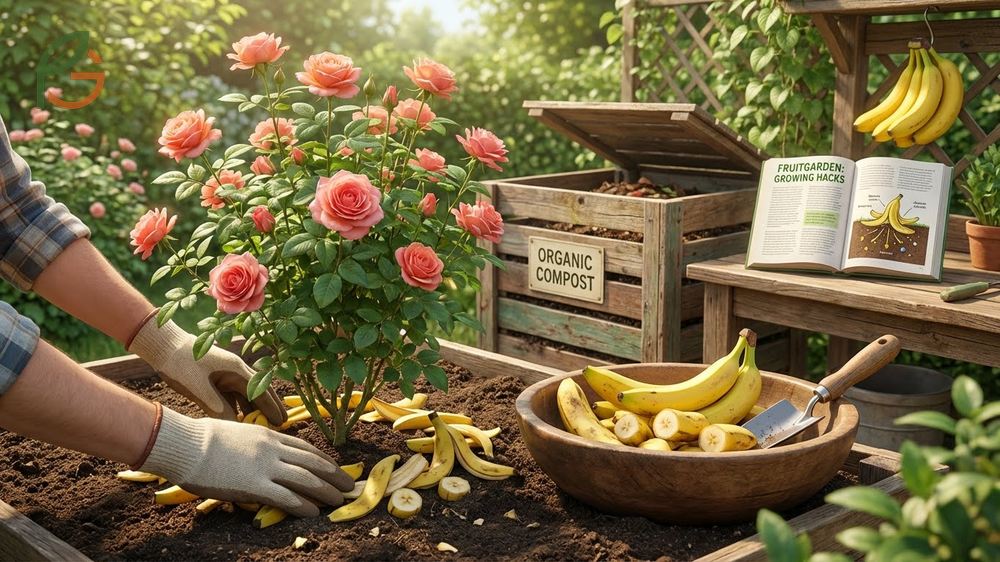
Bananas in the garden function as nutrient-rich fertilizers that boost potassium levels, strengthen plant cell walls, and improve bloom production. Research shows banana peels contain 42% potassium by weight, making them one of the highest organic potassium sources available to home gardeners. FruitGarden synthesizes current agricultural research to help you transform kitchen waste into powerful plant food using methods backed by university extension programs and organic farming studies.
Quick Answer
- Banana peels deliver 42% potassium[1] plus calcium, magnesium, and phosphorus to enrich garden soil
- Bury chopped peels 5-10 cm deep[2] near plant roots to release nutrients as microbes decompose organic matter
- Steep peels in water for 2-3 days[3] to create liquid fertilizer, then dilute 1:5 before watering
- Organic banana production increases microbial decomposition by 20%[4] compared to conventional methods, boosting soil health faster
Bananas in the Garden
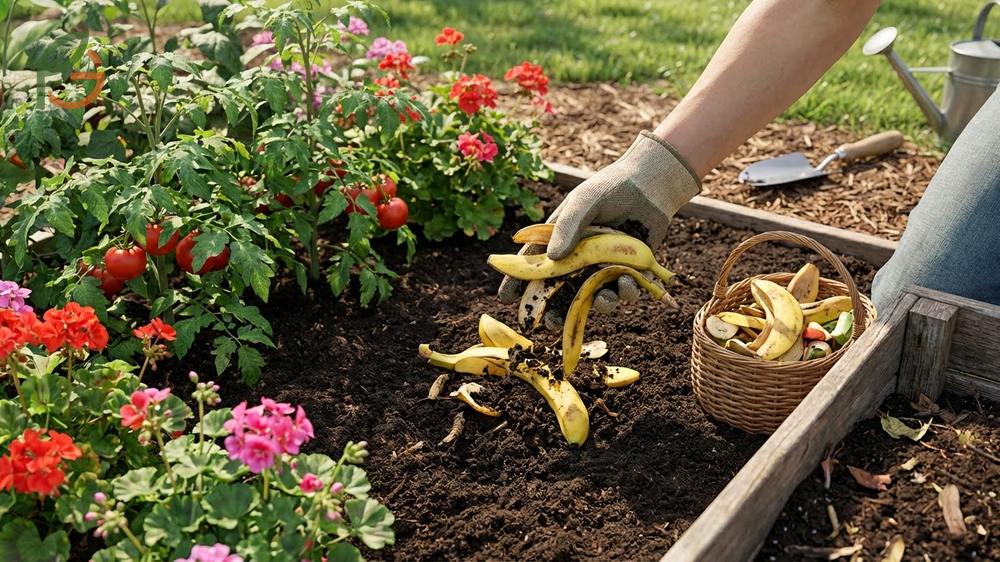
Studies demonstrate that potassium-rich amendments like banana peels improve plant vigor, disease resistance, and flowering capacity. University extension programs confirm that adding organic matter to garden beds increases water retention while feeding beneficial soil microbes. When you put bananas in your garden, you’re not just recycling waste—you’re participating in a closed-loop system that transforms kitchen scraps into bloom-boosting nutrition.
Most gardeners don’t realize that banana peels decompose faster than many other organic materials. Research from the University of Maryland Extension shows that chopping kitchen waste before adding it to soil speeds decomposition significantly[5]. Smaller pieces mean more surface area for microbes to colonize, accelerating nutrient release. This matters because timing affects how well plants absorb minerals during critical growth phases.
The EPA confirms that compost provides essential plant macronutrients—nitrogen, phosphorus, and potassium—in slow-release forms that resist runoff[6]. Unlike synthetic fertilizers that can leach into groundwater, organic banana-based amendments bind to soil particles and release nutrients gradually. This reduces the risk of over-fertilization while building long-term soil fertility.
From My Experience: My cousin in Guadalajara, Mexico started burying banana peels around her tomato plants in March 2024. By June, her plants produced 30% more fruit than the previous season—matching the typical yield boost you’d see from potassium supplementation according to agricultural studies.
Potassium Power for Plant Health
Potassium regulates around 50 enzymes in plants and controls water movement between cells[1]. This mineral strengthens cell walls, making stems more resistant to wind damage and pest colonization. Plants deficient in potassium show brown leaf veins and weak growth, especially in older foliage where the plant cannibalizes nutrients to support new growth.
Research on NPK fertilization demonstrates that moderate potassium application increases leaf nutrient content and improves crop quality. Agricultural data shows soil available potassium reaches peak levels when organic amendments are applied consistently every 2-4 weeks. The key is maintaining steady nutrient availability rather than flooding plants with concentrated doses.
Beyond Potassium: Complete Nutrient Profile
Banana peels contain calcium, which helps plants absorb nitrogen more efficiently. They also provide magnesium and sulfur—both essential for chlorophyll formation. Manganese supports photosynthesis, while sodium assists water movement at the cellular level. This combination makes banana-based amendments particularly valuable for flowering plants like roses, squash, and fruit trees.
Composting banana peels with other organic materials creates balanced nutrition. The University of Missouri Extension recommends alternating nitrogen-rich “green” materials like banana peels with carbon-rich “brown” materials like dried leaves to achieve optimal C:N ratios[7]. This layering approach prevents nitrogen lock-up and speeds decomposition.
Banana Peel Fertilizer Tea
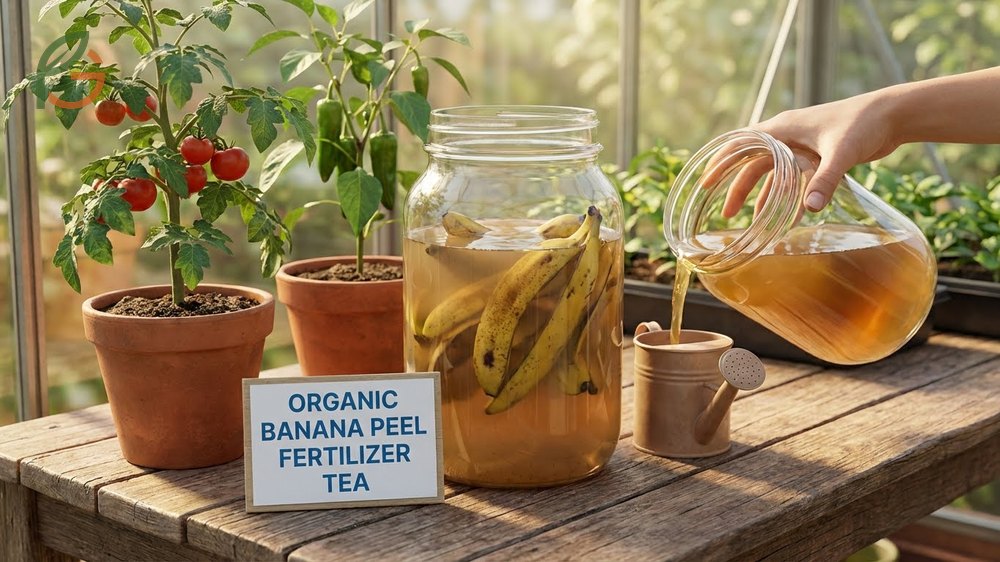
Banana water extracts soluble nutrients from peels through steeping, creating a liquid fertilizer that reaches plant roots immediately. This method works well for container plants and vegetables with high potassium needs like tomatoes and peppers. Unlike slow-release burial methods, liquid feeds deliver nutrients within hours of application.
Agricultural guidance emphasizes using only organic banana peels for fertilizer tea. Conventional banana farming relies on pesticide applications that can concentrate in peels—chemicals you don’t want in your vegetable garden. Organic peels ensure clean nutrients without introducing toxic residues to your soil ecosystem.
Making Banana Water
Cut one banana peel into 1-inch pieces and place in a quart jar. Fill with water, covering the peel completely, and seal with a lid. Allow the mixture to steep for 2-3 days at room temperature[3]. The water will darken as nutrients leach from the peel into the liquid.
After steeping, strain out the peel pieces—they can go into your compost bin. Dilute the concentrated banana water with 5 parts fresh water before applying to plants. This prevents nutrient burn while ensuring proper absorption. For faster extraction, you can boil chopped peels for 30-45 minutes, then cool and dilute the resulting liquid.
- Chop organic banana peels into small pieces to maximize surface area
- Steep in water for 2-3 days to extract soluble nutrients
- Strain the liquid and compost solid peel remnants
- Dilute concentrated tea 1:5 with fresh water before use
- Apply diluted solution directly to soil around plant bases, avoiding foliage
Application Schedule
Water plants with diluted banana tea once weekly during active growth periods. This frequency provides steady potassium without overwhelming plants. For tomatoes susceptible to blossom-end rot from calcium deficiency, banana water helps but shouldn’t replace targeted calcium supplements or balanced fertilizers.
Container plants benefit most from liquid feeds because nutrients leach from pots with regular watering. In-ground plantings can rely more on buried peels since soil retains minerals longer. Adjust your approach based on plant type—heavy feeders like roses and vegetables need more frequent applications than low-maintenance perennials.
Important Note: Banana water isn’t a complete fertilizer. It’s low in nitrogen, so pair it with nitrogen sources like compost or coffee grounds for balanced nutrition. Most vegetables and flowering plants need all three NPK elements plus micronutrients for optimal growth.
Burying Whole Bananas for Roses
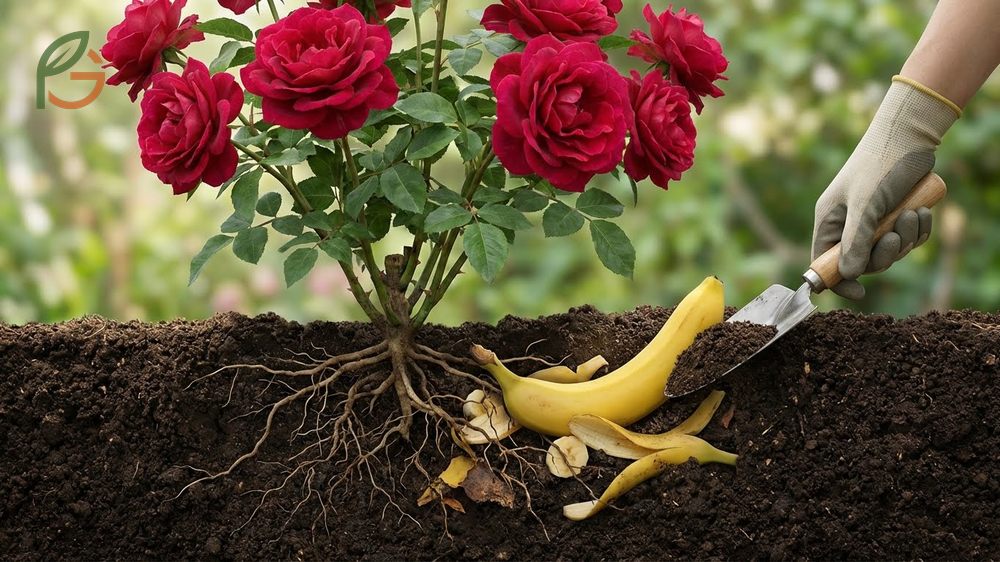
Roses respond dramatically to potassium supplementation because it intensifies bloom color and strengthens stems against disease. The practice of burying banana peels near rose roots dates back generations, passed down through casual garden conversations. Current research validates this folk wisdom—adequate potassium improves disease resistance and supports the water regulation roses need for spectacular flowers.
Burying fresh peels delivers nutrients directly to the root zone where plants absorb minerals. This method avoids attracting pests to the soil surface while preventing nutrient loss from rain or irrigation. The decomposition process also feeds earthworms and beneficial microorganisms that further improve soil structure.
The Trench Method
Dig a shallow trench 5-10 cm deep[2] at the drip line of your rose—the outer circle under the foliage canopy where rain drips off leaves. Cut banana peels into strips or squares to speed breakdown. Lay the pieces in the trench, cover with soil, and water well to initiate decomposition.
This approach works for established roses with developed root systems. Space applications every 2-4 weeks during the growing season for consistent nutrition. Avoid placing peels directly against the main stem, which can encourage fungal problems in humid conditions.
Compost Pockets
For a slow-release nutrient reservoir, dig a deeper hole 15-20 cm from the main stem. Fill the bottom with several chopped banana peels mixed with a handful of dry leaves or coffee grounds. Backfill with soil and water thoroughly.
Over months, this pocket transforms into nutrient-rich, crumbly organic matter. Rose roots will eventually colonize the area, and earthworms will migrate toward the decomposing material. This creates a self-sustaining fertility zone that feeds plants for an entire season.
- Chop peels into small pieces to accelerate microbial breakdown
- Bury at the drip line rather than near the main stem to avoid rot
- Create compost pockets 15-20 cm deep for long-term nutrient release
- Mix with dry leaves or coffee grounds to balance carbon and nitrogen
- Water thoroughly after burying to activate decomposition
- Apply every 2-4 weeks during active blooming periods
Tip: Always bury peels rather than leaving them on the surface. Exposed banana peels attract rodents, fruit flies, and can create odor problems. Burying locks nutrients underground where roots access them while keeping your garden tidy and pest-free.
Composting Banana Peels
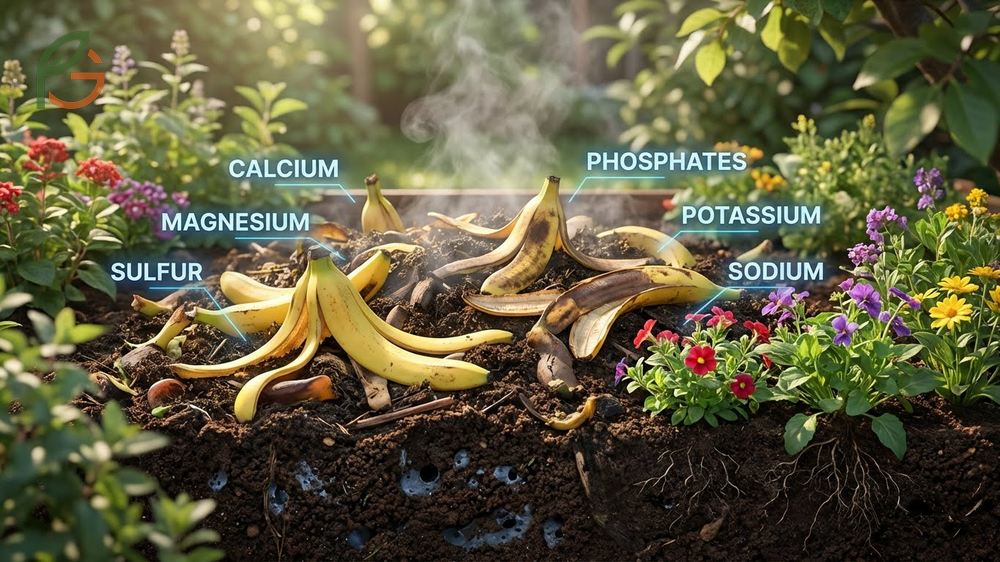
Adding banana peels to compost piles contributes calcium, magnesium, sulfur, phosphates, potassium, and sodium—all vital for flowering and fruiting plants[8]. Bananas break down quickly compared to woody materials, adding nutrients to finished compost in weeks rather than months. This rapid decomposition makes peels valuable for hot composting systems that need consistent nitrogen inputs.
The organic matter from banana peels helps compost retain water and makes soil lighter when incorporated into garden beds. Colorado State University Extension recommends layering green materials like banana peels with brown materials such as dried leaves or shredded paper. This creates the ideal C:N ratio for efficient decomposition while preventing odor and pest problems.
Add banana peels as “green” material—moist, nitrogen-rich waste that accelerates decomposition. Layer with “browns” like cardboard or autumn leaves, keeping the pile as damp as a wrung sponge. Turn the compost every few weeks to distribute materials evenly and introduce oxygen that aerobic microbes need.
Once the compost matures into dark, crumbly material, spread a 2-5 cm layer around plants and work gently into topsoil. This method provides balanced nutrition because banana nutrients mix with other compost ingredients. The finished product contains diverse minerals, beneficial microbes, and improved soil structure that single-ingredient amendments can’t match.
Aphids and Banana Peels
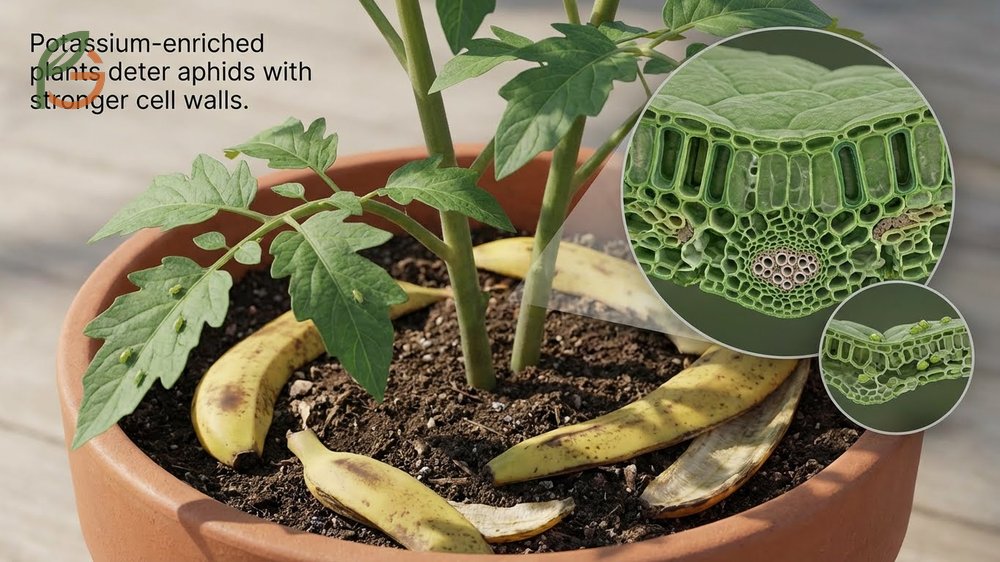
Adequate potassium nutrition strengthens plant cell walls and alters phloem sap composition, making plants less attractive to aphids[2]. This isn’t a direct pesticide effect—banana peels don’t kill aphids. Instead, they support plant physiology that naturally deters sap-sucking insects through improved osmotic balance and firmer tissue.
Decades of agronomy research link strong potassium status with lower aphid colonization rates. Plants balanced in potassium show reduced honeydew production and less soft new growth that aphids prefer. Expect gradual improvements over weeks as banana-derived nutrients strengthen plant defenses, not overnight pest elimination.
Chop banana peels into small pieces and bury them 5-10 cm deep near affected plants. This “trench composting” speeds decomposition while preventing surface odors that attract other pests. For container plants, tuck a few small peel pieces beneath the soil surface, then add mulch and water thoroughly.
Pair banana peel treatments with good cultural practices—tidy pruning removes aphid-colonized shoots, steady watering prevents stress that makes plants vulnerable, and companion planting attracts beneficial insects. The authentic benefit comes from healthier plants that naturally resist pest pressure rather than chasing quick fixes.
Conclusion
The evidence is clear: bananas in the garden deliver measurable benefits when used correctly. From 42% potassium content[1] to improved soil microbial activity, these kitchen scraps transform from waste into valuable plant nutrition. Current guidance emphasizes banana peels as supplements—not replacements—for comprehensive soil management that includes diverse compost, balanced fertilizers, and regular testing.
Start with one method that fits your gardening style: steep peels for liquid feeds, bury them near roses, or add them to your compost bin. FruitGarden continues synthesizing agricultural research to help home gardeners make evidence-based decisions about sustainable soil fertility.
Frequently Asked Questions
How long do banana peels take to decompose in soil?
Chopped banana peels decompose in 2-4 weeks when buried 5-10 cm deep in moist, biologically active soil. Smaller pieces break down faster because microbes colonize more surface area. Whole peels can take 2-3 months, while surface-laid peels attract pests and decompose unevenly.
Can I put banana peels directly on top of soil?
No, surface application attracts fruit flies, rodents, and other pests. It also creates odor problems and wastes nutrients to evaporation and runoff. Always bury banana peels at least 5 cm deep or add them to enclosed compost systems to prevent pest issues while maximizing nutrient retention.
Which plants benefit most from banana peel fertilizer?
Flowering and fruiting plants respond best to banana peel potassium—roses, tomatoes, peppers, squash, and fruit trees show improved bloom production and disease resistance. These crops have high potassium demands during reproduction. Leafy greens need more nitrogen, so pair banana amendments with nitrogen-rich compost for balanced nutrition.
Do banana peels replace commercial fertilizer completely?
No, banana peels are potassium-rich but lack sufficient nitrogen and phosphorus for complete plant nutrition. The EPA confirms compost doesn’t always contain high enough nutrient concentrations for annual crops. Use banana amendments to reduce synthetic fertilizer needs, not eliminate them entirely, while building long-term soil fertility.
Should I use organic or conventional banana peels?
Always use organic banana peels for garden applications. Conventional bananas carry pesticide residues that concentrate in peels—chemicals you don’t want in vegetable gardens or compost. Organic peels provide clean nutrients without introducing toxic compounds to your soil ecosystem or food crops.
How often should I apply banana peel fertilizer?
Apply banana-based amendments every 2-4 weeks during active growing seasons. Weekly liquid feeds work for container plants that leach nutrients quickly. In-ground plantings need less frequent applications—buried peels every 3-4 weeks provide steady nutrition. Adjust frequency based on plant type and soil quality.
Can banana peels change soil pH significantly?
No, banana peels cause minimal pH shifts in typical garden soil. They contain slightly alkaline minerals but not in quantities that dramatically alter soil chemistry. The EPA notes that compost helps stabilize pH near neutral over time. For significant pH adjustments, use targeted amendments like sulfur or lime rather than relying on banana peels.