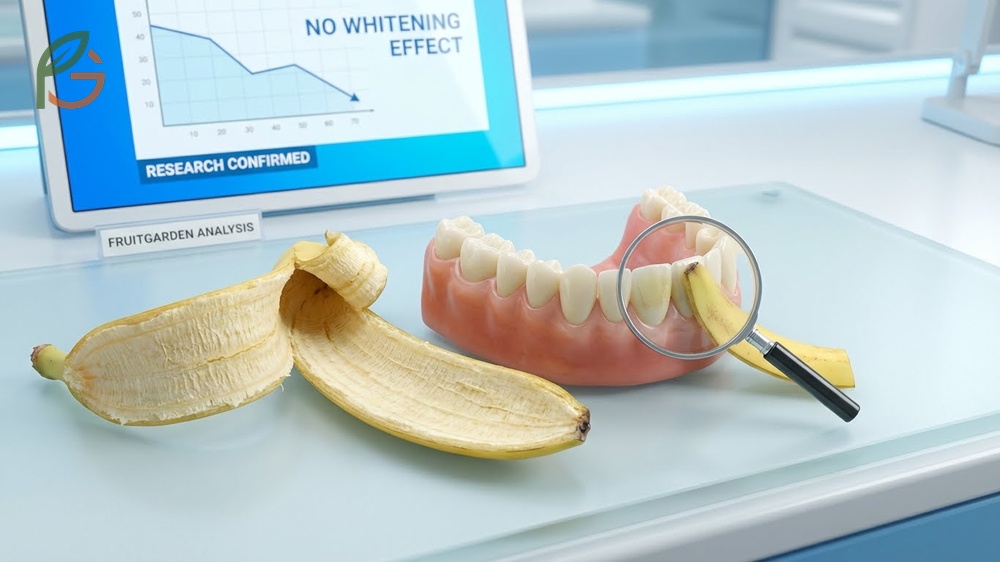
Banana peel for teeth whitening is a popular home remedy, but research shows it doesn’t work. Studies demonstrate that rubbing banana peels on teeth produces no whitening effect and may actually cause slight yellowing.[1] Despite claims about minerals like potassium and magnesium whitening teeth, there’s no scientific evidence supporting this method. FruitGarden examines current dental research to help you understand what really works for a brighter smile.
Quick Answer
- Banana peels don’t whiten teeth—a 2025 study found no significant color change after 10 days of treatment[1]
- Research shows banana peels can make teeth slightly more yellow rather than whiter[2]
- Professional at-home whitening with 10% carbamide peroxide is proven effective and safe[3]
- Look for the ADA Seal of Acceptance when choosing whitening products[4]
Banana Peel for Teeth Whitening
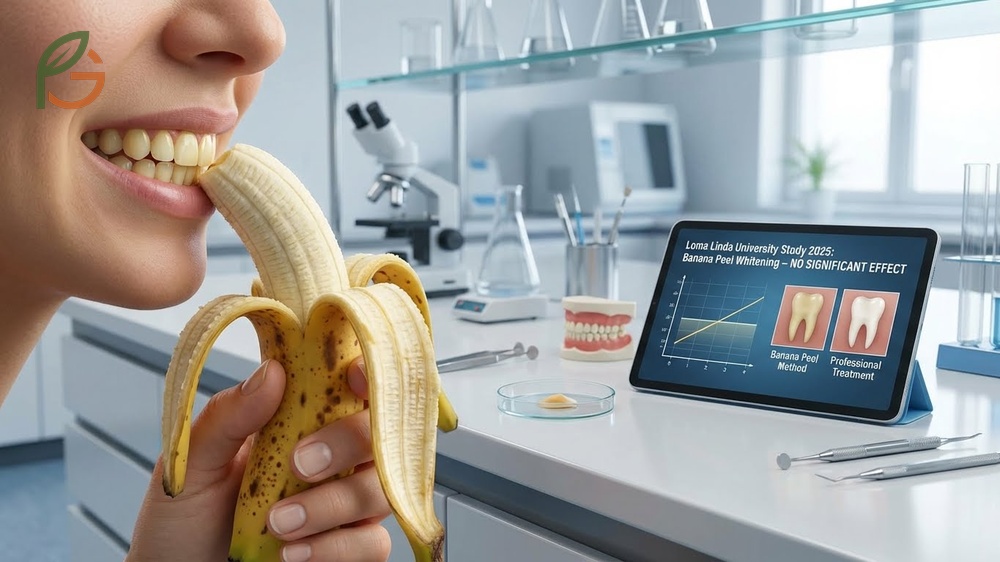
The idea that banana peels can whiten teeth has circulated online for years, but dental research tells a different story. Studies from major universities have tested this claim directly and found it doesn’t hold up to scientific scrutiny.
A 2025 study from Loma Linda University’s School of Dentistry compared banana peels to professional whitening treatments. Researchers had participants rub banana peels on their teeth for 5 minutes daily over 10 days.[1] The banana peel group showed no significant whitening effect.
What’s more concerning is that banana peels may actually harm your whitening goals. Research published in the Brazilian Dental Journal found that teeth treated with banana peels took on a slightly yellow tinge by the end of the study period.[2] The natural sugars in bananas can also contribute to tooth decay if they sit on teeth too long.
The Claim Behind Banana Peel Whitening
Proponents of banana peel whitening point to the fruit’s mineral content as the active ingredient. A typical banana contains 422 mg of potassium, 32 mg of magnesium, and small amounts of manganese. The theory suggests these minerals absorb into tooth enamel when you rub the peel’s inner surface against your teeth.
The recommended method usually involves rubbing a ripe banana peel on your teeth for 2-3 minutes, then leaving the residue for 30 minutes before rinsing. Some versions suggest doing this before or after brushing. Advocates claim you’ll see results within a few weeks.
Important Note: Minerals like potassium and magnesium can support overall oral health, but there’s no mechanism by which they can penetrate tooth enamel to change its color. Tooth structure doesn’t work that way.
What Research Actually Shows
Multiple scientific studies have now tested banana peels against established whitening methods. The results consistently show no whitening benefit. A 2023 comparative study in PMC evaluated various natural remedies including banana peels, strawberries, and activated charcoal.[5]
The researchers measured color changes using spectrophotometry—the gold standard for detecting tooth shade differences. While activated charcoal and baking soda showed some whitening effects, banana peels produced minimal to no measurable change. In some cases, teeth became less shiny and slightly more discolored.
It’s true that rubbing banana peels might remove some surface plaque through mechanical action. However, a regular toothbrush with quality toothpaste does this job far more effectively and without the risk of sugar exposure.
Natural Teeth Whitening
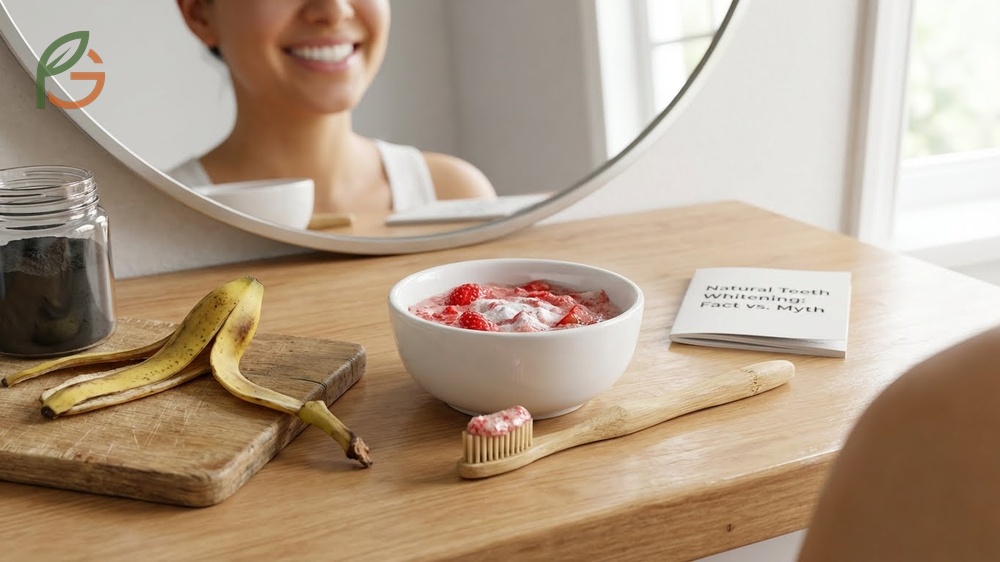
If you’re interested in natural approaches to teeth whitening, some methods have better scientific backing than banana peels. Research shows that certain natural ingredients can remove surface stains when used correctly, though they won’t match professional treatments in effectiveness.
The key is understanding the difference between stain removal and actual whitening. Stain removal works on the tooth surface, while true whitening changes the tooth’s intrinsic color. Natural methods primarily remove surface stains from coffee, tea, and food.
- Baking soda: Acts as a mild abrasive that can remove surface stains through gentle scrubbing action
- Hydrogen peroxide: When diluted properly (1.5-3%), can help lighten stains through oxidation
- Oil pulling with coconut oil: May reduce bacteria and plaque, though whitening effects are minimal
- Strawberries: Contain malic acid that may help with surface stains, but evidence is limited
- Apple cider vinegar: Has bleaching properties but is highly acidic and can damage enamel if used frequently
Baking Soda and Hydrogen Peroxide
Baking soda stands out as one of the few natural whitening agents with solid research support. Studies show it can effectively remove surface stains without damaging enamel when used properly.[5] Many ADA-approved whitening toothpastes include baking soda as an active ingredient.
You can mix a small amount of baking soda with water to form a paste and brush gently for 2 minutes. Don’t do this more than 2-3 times per week, as overuse can wear down enamel. Combining baking soda with a small amount of hydrogen peroxide creates a more effective whitening paste.
Safety Tip: Only use 1.5-3% hydrogen peroxide concentration for oral use. Higher concentrations can burn gum tissue and damage teeth. Never swallow hydrogen peroxide.
Activated Charcoal
Activated charcoal has become trendy for teeth whitening, with mixed results in research. Some studies show it can remove surface stains through adsorption—the process where substances stick to the charcoal’s porous surface. However, it’s highly abrasive and can wear down enamel over time.
If you choose to try activated charcoal, use it sparingly—no more than once every 2-3 weeks. Apply it gently without aggressive brushing, and rinse thoroughly. The American Dental Association hasn’t given activated charcoal its seal of approval due to concerns about enamel erosion.
DIY Whitening Method
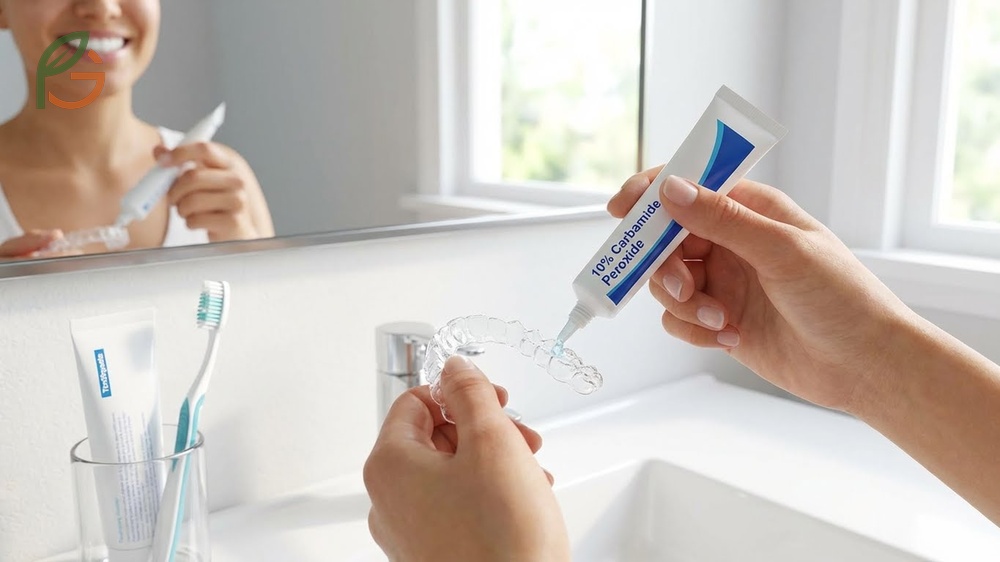
The most effective DIY whitening approach combines proper oral hygiene with evidence-based products. Professional at-home whitening kits using 10% carbamide peroxide have been proven safe and effective in multiple clinical trials.[3] These treatments achieve significant whitening with minimal side effects.
A three-week study involving 92 volunteers found that 10% carbamide peroxide used in custom trays for two hours daily produced significantly lighter teeth. Both participants and evaluators noted visible whitening that moved teeth 2-4 shades lighter on standard shade guides. Tooth sensitivity was mostly mild and temporary.
For DIY whitening at home, follow this evidence-based approach. Start with a professional dental cleaning to remove surface stains and tartar. This gives whitening products a clean surface to work on. Next, choose whitening products with the ADA Seal of Acceptance—this ensures they’ve met safety and effectiveness standards.
Use whitening toothpaste daily that contains gentle abrasives and low concentrations of hydrogen peroxide. These won’t dramatically change tooth color but can remove and prevent surface stains. For deeper whitening, consider custom-fitted trays from your dentist with 10% carbamide peroxide gel.
- Get a professional dental cleaning to start with a clean slate
- Choose products with the ADA Seal of Acceptance for safety
- Use whitening toothpaste twice daily as part of your regular routine
- Apply whitening strips or trays according to product instructions—don’t exceed recommended time
- Avoid staining foods and drinks (coffee, red wine, berries) during treatment
- Maintain results with touch-up treatments every 4-6 months
- Schedule regular dental check-ups to monitor enamel health
Timing Matters: Apply whitening products at night before bed when you won’t eat or drink for several hours. This extends contact time and improves effectiveness. Brush and floss first to remove any food particles.
Home Whitening Remedy
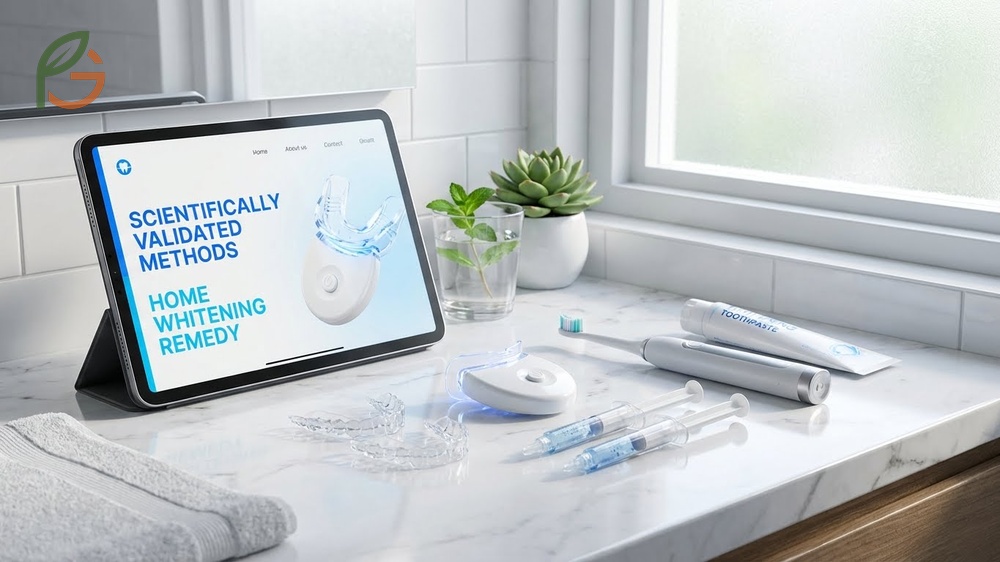
When evaluating home whitening remedies, it’s crucial to separate internet myths from scientifically validated methods. Current dental research provides clear guidance on what works and what doesn’t. The best home remedies are those that either remove surface stains through gentle mechanical action or use proven chemical bleaching at safe concentrations.
Professional-grade at-home whitening systems remain the gold standard for DIY approaches. Clinical studies show that 10-16% carbamide peroxide in custom trays delivers consistent results.[6] Lower concentrations (10%) produce less sensitivity while achieving comparable whitening to higher concentrations over a slightly longer treatment period.
This table compares the effectiveness, safety profile, treatment duration, and cost for five different teeth whitening methods based on clinical research
| Method | Effectiveness | Safety | Time to Results |
|---|---|---|---|
| Banana Peel | None[1] | Low risk but ineffective | No visible change |
| 10% Carbamide Peroxide | 2-4 shades lighter[3] | ADA-approved, minimal sensitivity | 3 weeks |
| Baking Soda | Moderate surface stain removal[5] | Safe with proper use | 2-4 weeks |
| Activated Charcoal | Minimal surface stain removal | Risk of enamel wear | Variable |
| Whitening Toothpaste | 1 shade lighter for surface stains | ADA-approved options available | 4-6 weeks |
The most important factor in any home whitening remedy is consistency combined with realistic expectations. Surface stain removers work gradually and require daily use. Bleaching agents produce faster results but need careful application. Always follow product instructions precisely to avoid gum irritation or enamel damage.
For optimal results, combine whitening treatments with preventive care. Brush twice daily for two minutes, floss once daily, and use an antibacterial mouthwash. Limit consumption of staining beverages like coffee, tea, and red wine. When you do consume them, use a straw and rinse your mouth afterward.
- Start with professional assessment to identify the type of discoloration you have
- Choose methods appropriate for your stain type—surface stains vs. intrinsic discoloration
- Never exceed recommended application times for chemical whiteners
- Stop treatment immediately if you experience severe sensitivity or gum irritation
- Combine whitening with excellent oral hygiene for longer-lasting results
- Understand that results vary based on natural tooth color and stain type
Conclusion
The evidence is clear: banana peel for teeth whitening doesn’t work despite its popularity on social media. Multiple scientific studies confirm that rubbing banana peels on teeth produces no whitening effect and may actually cause slight yellowing. Current dental guidance emphasizes proven methods like 10% carbamide peroxide treatments, which safely whiten teeth by 2-4 shades in three weeks.
If you’re looking for effective home whitening, choose products with the ADA Seal of Acceptance and follow evidence-based practices. FruitGarden recommends consulting with a dental professional before starting any whitening regimen to ensure you choose the safest, most effective approach for your specific needs.
Medical Disclaimer
Important Medical Disclaimer: This content is for informational and educational purposes only. It is not intended as a substitute for professional dental advice, diagnosis, or treatment. Always consult a qualified dentist or dental hygienist before starting any teeth whitening regimen, especially if you have sensitive teeth, gum disease, dental restorations, or other oral health conditions. Some whitening methods may not be appropriate for everyone.
Frequently Asked Questions
How long does it take to see results from banana peel teeth whitening?
You won’t see whitening results from banana peels because research shows they don’t whiten teeth. Studies that tested banana peels for 10-14 days found no color improvement and in some cases observed slight yellowing. For actual whitening results, professional treatments with 10% carbamide peroxide show visible changes in 2-3 weeks.
What’s the best natural alternative to banana peels for teeth whitening?
Baking soda is the most effective natural whitening option with scientific support. It removes surface stains through gentle abrasive action without damaging enamel when used 2-3 times weekly. Mix it with water to form a paste and brush gently for 2 minutes. However, it won’t match the effectiveness of professional whitening treatments.
Can banana peels damage your teeth?
Banana peels themselves won’t directly damage tooth enamel, but the natural sugars they contain can contribute to tooth decay if left on teeth too long. Research also shows banana peels can make teeth slightly more yellow rather than whiter. There’s no benefit to using them for whitening, and better alternatives exist.
Why do people think banana peels whiten teeth?
The claim stems from bananas’ mineral content—potassium, magnesium, and manganese. Proponents theorize these minerals absorb into tooth enamel to create whitening. However, there’s no biological mechanism for this to occur. Tooth enamel is highly mineralized and doesn’t absorb minerals from external sources in a way that changes color.
What teeth whitening method works fastest?
Professional in-office whitening delivers the fastest results, often lightening teeth several shades in a single 60-90 minute session. For at-home options, custom-fitted trays with 10-16% carbamide peroxide show visible results in 1-3 weeks. Over-the-counter whitening strips typically require 2-4 weeks of daily use for noticeable changes.
Is professional teeth whitening worth the cost compared to DIY methods?
Professional whitening delivers more dramatic and longer-lasting results than most DIY methods. Dentist-supervised treatments use higher concentrations of bleaching agents in controlled conditions, achieving 4-8 shades of whitening. Custom trays ensure even coverage and protect gums. While more expensive upfront, professional whitening often proves more cost-effective than repeatedly buying ineffective home remedies.
How can I maintain white teeth after whitening treatment?
Maintain whitening results by brushing twice daily with whitening toothpaste, flossing daily, and limiting staining foods and beverages. When drinking coffee, tea, or red wine, use a straw and rinse your mouth afterward. Schedule touch-up treatments every 4-6 months and professional cleanings twice yearly. Avoid tobacco products, which cause significant staining.