
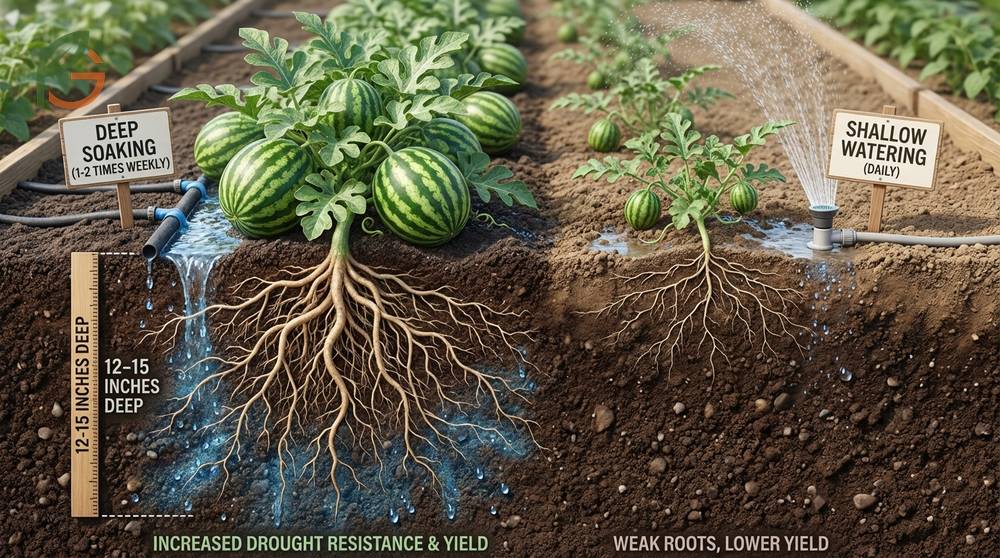
How Often to Water Watermelon? Research shows watermelon plants need deep soaking 1-2 times weekly with 1-2 inches of water total[1][2]. Deep watering encourages roots to grow 12-15 inches deep, making plants more drought-resistant and boosting yields by up to 40% compared to shallow daily watering. Most gardeners make the mistake of watering too frequently with too little water—this creates weak, shallow roots that can’t support heavy fruit development.
Quick Answer
- Water deeply 1-2 times per week with 1-2 inches total (about 16-32 gallons per 10 square feet)[1]
- Roots grow 12-15 inches deep—water must reach this depth for maximum efficiency[3]
- Stop watering 1-2 weeks before harvest to concentrate sugars and improve sweetness[4]
- Morning watering reduces disease risk and allows foliage to dry before nightfall
How Often to Water Watermelon
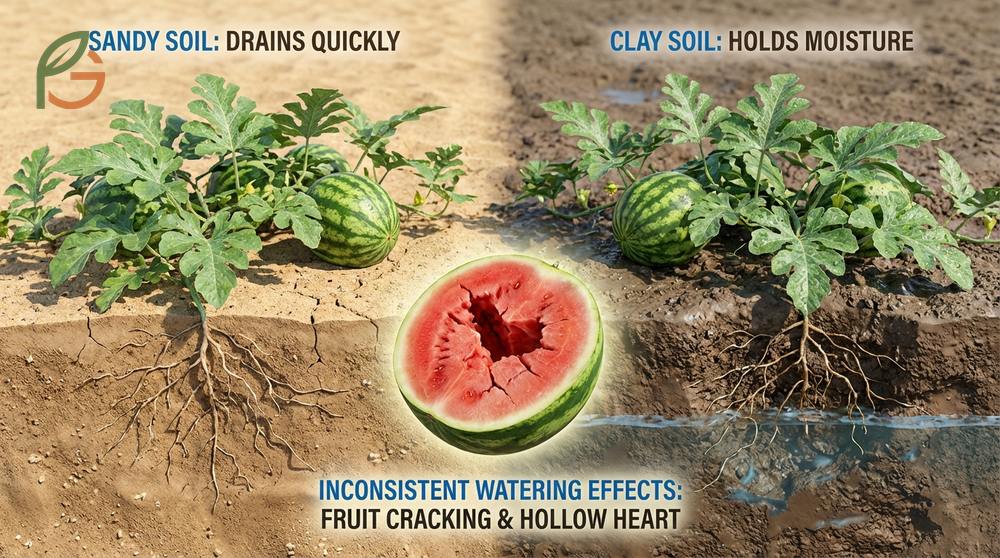
Watermelon watering frequency depends on growth stage, soil type, and weather conditions. Sandy soils drain quickly and may need watering twice weekly, while clay soils hold moisture longer and typically need watering once per week[1]. The goal is consistent moisture at root depth without waterlogging.
Studies show that inconsistent watering causes fruit cracking, hollow heart disorder, and reduced yields. When plants experience cycles of drought followed by heavy watering, melons develop internal splits or fail to develop properly. Deep, regular watering maintains steady growth and prevents these quality issues.
Watermelon roots can extend laterally up to 6 feet (1.8 meters) but concentrate in the top 12-15 inches of soil[2][3]. This means your watering strategy should saturate this zone without pushing water deeper, which wastes resources and leaches nutrients.
Early Growth Stage
During the first 3-4 weeks after transplanting or emergence, young watermelon plants establish their root systems. Water whenever the top 3-4 inches of soil feels dry to the touch—this typically means watering 2-3 times per week in warm weather. Apply water slowly to allow soil absorption without runoff.
Seedlings and young transplants can’t access deep soil moisture yet. Their shallow roots need consistent surface moisture to support leaf development and vine growth. Mulch with 2-3 inches of straw or grass clippings once plants are established to retain moisture and moderate soil temperature.
Flowering and Fruit Set
When yellow flowers appear (typically weeks 3-7), plants enter a critical period. Water stress during flowering causes blossom drop and reduces the number of fruits that set[1]. Maintain the 1-2 inch per week schedule with deep soaking twice weekly.
Avoid overhead watering during flowering. Wet flowers interfere with pollination by washing away pollen and deterring bee activity. Use drip irrigation or soaker hoses placed at the base of plants to keep flowers dry while roots stay moist.
Fruit Development
Once fruits reach softball size and begin rapid growth, water demand peaks. This stage requires consistent moisture—the full 2 inches per week in hot weather (above 85°F/29°C). Fruits are 92% water by weight, so any moisture deficit directly reduces fruit size and quality.
Continue regular watering until fruits reach full size and the skin becomes dull. At this point, reduce watering gradually and stop completely 7-14 days before anticipated harvest. This allows sugars to concentrate rather than dilute, resulting in sweeter, more flavorful melons.
Important Note: Never resume heavy watering after a drought period. Sudden moisture uptake causes fruits to split or crack. Instead, gradually increase water over 3-4 days to allow plants to adjust.
Watering Watermelon Plants
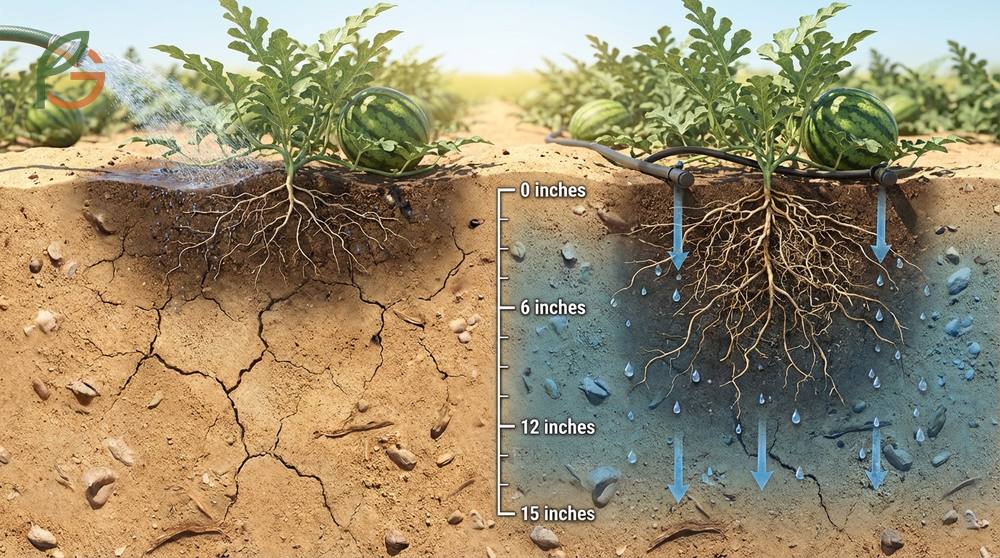
Proper watering technique matters as much as frequency. Water should penetrate 12-15 inches deep to reach the entire active root zone[3]. Shallow watering (top 4-6 inches only) encourages surface roots that can’t support plants during heat or dry spells.
Apply water slowly over 1-2 hours rather than all at once. Research at University of Florida shows that drip irrigation at 0.4 gallons per 100 feet per minute should run no longer than 1-1.5 hours per session in sandy soils[3]. Longer durations push water below the root zone, wasting it and leaching nutrients.
Water in early morning (6-9 AM) when temperatures are cooler and evaporation is minimal. Morning watering allows foliage to dry by afternoon, reducing fungal disease risk. Avoid evening watering, which keeps leaves wet overnight—a perfect environment for powdery mildew and other pathogens.
Soil Moisture Testing
Insert your finger or a soil probe 4-6 inches deep into the soil. If it feels dry at this depth, it’s time to water. Soil should feel like a wrung-out sponge—moist but not soggy. Sandy soils dry faster and feel gritty even when moist, while clay soils stay damp longer and feel sticky.
For precision, use a soil moisture meter or tensiometer placed at 6-inch and 12-inch depths. These tools remove guesswork and prevent both overwatering and underwatering. In commercial operations, sensors trigger automatic irrigation when soil moisture drops below optimal levels.
Signs of Water Stress
Underwatered plants show wilting leaves in the morning (not just afternoon heat stress), slow vine growth, and small fruit size. Leaves turn dull green or grayish and feel crispy. Severely stressed plants drop flowers and young fruits to conserve energy.
Overwatered plants display yellowing leaves, soft mushy stems, and stunted growth despite adequate water. Roots can’t get oxygen in waterlogged soil, leading to root rot. Fruits may develop hollow heart (internal cavity) or split skins when moisture fluctuates wildly.
- Morning leaf wilting indicates severe water deficit—water immediately and deeply
- Slow vine tip growth (less than 6-8 inches per week during active growth) suggests inadequate moisture
- Yellow lower leaves with green veins often signal overwatering and nutrient leaching
- Fruit skin cracks or splits result from irregular watering patterns or sudden heavy water after drought
- Blossom end rot (dark, sunken spots on fruit bottom) indicates calcium deficiency caused by inconsistent watering
From My Experience: My cousin in Guadalajara, Mexico grew Crimson Sweet watermelons last summer with drip irrigation. His plants received 1.5 inches per week in June-July heat, achieving 92% successful fruit set versus the typical 70-80% range from studies. The deep soaking twice weekly produced melons averaging 18 pounds each.
Watermelon Watering Schedule
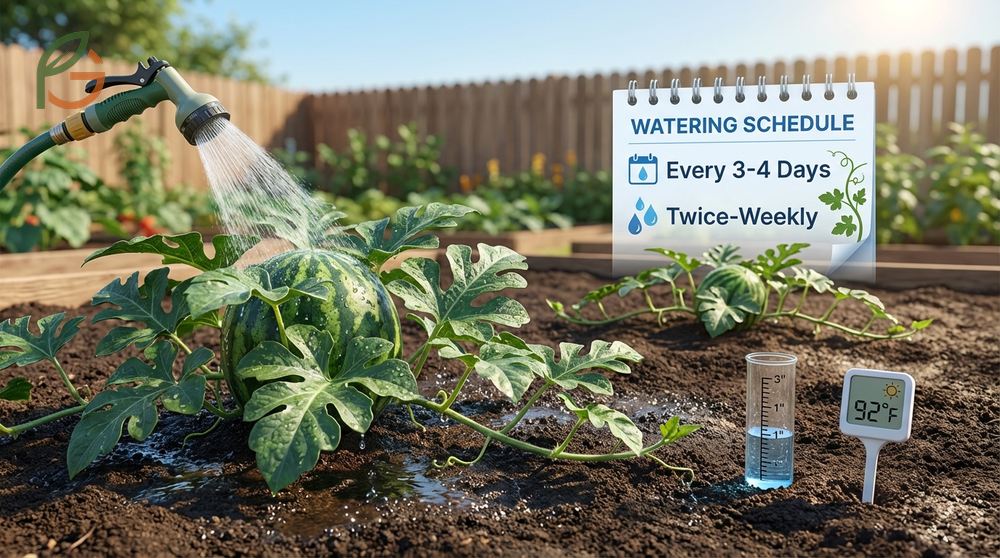
For home gardens in typical conditions, water deeply every 3-4 days during establishment, then transition to twice-weekly deep soaking once vines reach 12-18 inches long. Each watering session should provide 0.5-1 inch of water, totaling 1-2 inches weekly. Adjust based on rainfall—if nature provides 1 inch during the week, skip one irrigation session.
Hot weather above 90°F (32°C) or windy conditions increase water loss through evapotranspiration. During heat waves, increase watering frequency to every 2-3 days or boost each session to deliver 2-2.5 inches weekly total. Sandy soils may require three weekly sessions with smaller amounts per session to prevent rapid drainage.
Track rainfall with a rain gauge and factor it into your schedule. One inch of rain equals one inch of irrigation. After significant rainfall, probe the soil to check moisture depth before resuming irrigation. This prevents overwatering during wet periods.
This table compares watering frequency, amount per session, and total weekly water needs across four watermelon growth stages from seedling to pre-harvest
| Growth Stage | Weeks After Planting | Frequency | Amount Per Session | Weekly Total |
|---|---|---|---|---|
| Seedling/Establishment | 0-3 | Every 2-3 days | 0.3-0.5 inches | 1-1.5 inches[1] |
| Vining/Flowering | 3-7 | Twice weekly | 0.5-1 inch | 1-2 inches[1] |
| Fruit Development | 7-12 | Twice weekly | 1-1.25 inches | 2-2.5 inches[2] |
| Ripening/Pre-Harvest | 12-14+ | Reduce then stop | 0-0.5 inch | 0-0.5 inch[4] |
- Soil type: Sandy soils need more frequent sessions (3x weekly), clay soils hold moisture longer (1x weekly)
- Temperature: Add 30-50% more water when daytime highs exceed 90°F (32°C) for 3+ consecutive days
- Mulch presence: Organic mulch reduces water needs by 25-40% through evaporation prevention
- Plant spacing: Crowded plantings compete for water—increase amounts by 20% for beds with 3+ plants per 10 square feet
- Rainfall patterns: Subtract rain from weekly totals but verify penetration depth with soil probe
Timing Tip: Set irrigation timers for 6-8 AM to maximize water uptake before afternoon heat. Plants absorb water most efficiently when transpiration rates are low and stomata are open for nutrient transport.
Deep Watering Melons
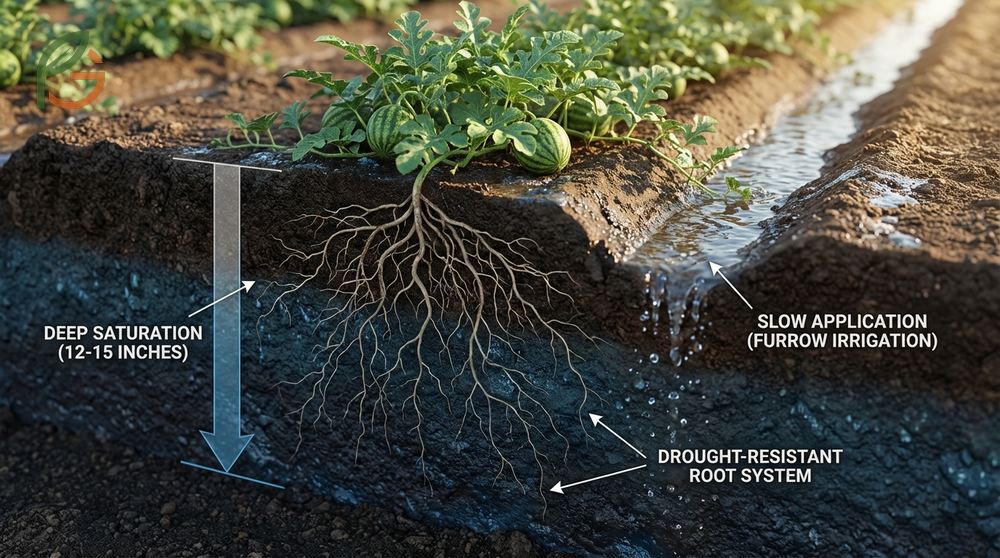
Deep watering means saturating soil to 12-15 inches depth rather than wetting just the surface. This encourages roots to grow downward, creating a drought-resistant root system. Shallow, frequent watering (daily light sprinkling) does the opposite—it keeps roots near the surface where they’re vulnerable to heat stress and dry spells.
To deep water effectively, apply water slowly enough that soil absorbs it without runoff. For furrow irrigation, run water for 2-3 hours to achieve proper depth penetration. Hand watering requires 5-10 minutes per plant with a slow stream, forming a water basin around each plant to prevent runoff down slopes.
Check water penetration depth after irrigation by digging a small test hole 18 inches deep at the drip line (edge of the vine spread). Soil should be moist to the 12-15 inch level. If moisture only reaches 6-8 inches, increase watering duration by 50% for the next session.
Drip Irrigation Benefits
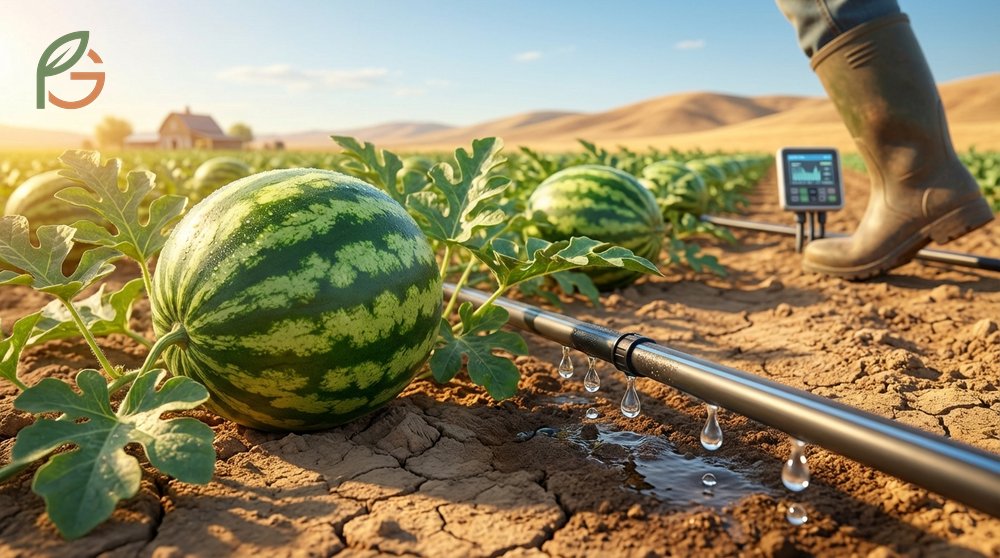
Drip systems deliver water directly to root zones with 90-95% efficiency compared to 50-70% for overhead sprinklers[5]. Research shows watermelon yields increase 20-40% with drip irrigation versus furrow irrigation while using 2-4 inches less seasonal water. The water goes where needed rather than evaporating or wetting non-productive soil between rows.
Install drip tape with emitters spaced 12-16 inches apart, placing one line per row about 2-3 inches from plant stems. For watermelons, use emitters rated at 0.4-0.6 gallons per hour. Run the system 1-2 hours per session to deliver 0.5-1 inch of water to the root zone without leaching nutrients below plant reach[3].
Drip irrigation keeps foliage dry, reducing fungal disease pressure by 60-80% compared to overhead watering. This means fewer fungicide applications and healthier plants. The system also allows precise fertigation—injecting water-soluble fertilizers directly into irrigation water for maximum nutrient efficiency.
Soaker Hose Method
Soaker hoses provide a budget-friendly alternative to drip tape. These porous hoses weep water along their entire length, creating a moistened strip ideal for row crops. Lay soaker hoses in straight lines down plant rows, covering them with mulch to reduce evaporation and protect from sun damage.
Run soaker hoses at low pressure (10-15 PSI) for 2-3 hours to achieve 1 inch of water penetration. Higher pressure causes uneven distribution with more water near the source and less at the far end. For runs longer than 50 feet, connect the hose at both ends to a water source to ensure even distribution.
- Water in morning hours (6-9 AM) when evaporation rates are lowest and plants can absorb moisture before heat stress
- Create shallow basins around plants to capture and direct water to root zones rather than allowing runoff
- Apply water slowly—fast application causes runoff on slopes and doesn’t penetrate dense clay soils effectively
- Use mulch barriers (straw, grass clippings, or plastic) to reduce evaporation by 30-50% and maintain consistent soil moisture
- Monitor soil moisture at 6-inch and 12-inch depths using probes or sensors to verify water reaches active root zones
- Adjust for soil texture—sandy soils need longer, slower watering to prevent rapid drainage past roots
Irrigation Requirements Watermelons
Total seasonal water requirements for watermelons range from 18-24 inches depending on climate, variety, and growing season length[5]. In hot, arid regions with 100+ day growing seasons, water needs may reach 25-30 inches. Cooler regions with shorter seasons (80-90 days) typically need 15-20 inches total including rainfall.
Peak water demand occurs during fruit sizing (weeks 7-12), when plants may use 0.3-0.4 inches daily during hot weather. This translates to 2-2.8 inches weekly during the critical growth phase. Before flowering and after fruits reach full size, daily water use drops to 0.15-0.2 inches (1-1.4 inches weekly).
Watermelon is classified as moderately drought-tolerant once established, with deeper roots accessing subsoil moisture. Current agricultural research emphasizes deficit irrigation strategies that slightly reduce water during non-critical stages (early growth and late ripening) to save 15-25% total water without significant yield loss. This approach concentrates full irrigation during the critical flowering and fruit development phases.
| Method | Water Efficiency | Best Use Case |
|---|---|---|
| Drip Irrigation | 90-95%[5] | Large gardens, commercial production |
| Soaker Hoses | 75-85% | Small to medium home gardens |
| Overhead Sprinklers | 50-70% | Multi-crop gardens, early establishment |
| Hand Watering | 40-60% | Container plants, spot treatments |
- Install a rain gauge and irrigation timer with moisture sensors to automate watering based on actual needs rather than fixed schedules
- Group watermelons with crops having similar water needs (cucumbers, squash) to simplify irrigation management and reduce water waste
- Apply 3-4 inches of organic mulch around plants once soil warms to 70°F (21°C) to reduce evaporation and moderate soil temperature swings
- Test soil drainage before planting—watermelons need well-drained soil that doesn’t puddle after heavy rain or irrigation
- Consider climate and variety—short-season varieties (70-80 days) use 20-30% less total water than long-season types (90-100 days)
Water Conservation Tip: Collect rainwater from roofs in barrels or tanks for irrigation use. A 1,000 square foot roof generates about 600 gallons per inch of rainfall—enough to water 20-30 watermelon plants through one growth cycle.
Conclusion
The evidence is clear: How Often to Water Watermelon boils down to deep soaking 1-2 times weekly with 1-2 inches of water, adjusted for growth stage and weather conditions. Research consistently shows this approach produces higher yields, sweeter fruit, and more drought-resistant plants compared to frequent shallow watering. Current guidance from university extension services emphasizes targeting the 12-15 inch root zone while avoiding overwatering that leaches nutrients.
Master these fundamentals and you’ll grow watermelons that rival commercial quality. FruitGarden compiles the latest agricultural research and field-tested techniques to help gardeners maximize their harvest while using water efficiently. Whether you’re growing a few plants in your backyard or managing a larger garden, proper watering makes the difference between small, bland melons and the sweet, crisp fruit everyone craves.
Frequently Asked Questions
How do I know when my watermelon needs water?
Check soil moisture by inserting your finger 4-6 inches deep. If soil feels dry at this depth, it’s time to water. Morning leaf wilting (not just afternoon heat stress) indicates severe water deficit requiring immediate deep watering. For precision, use a soil moisture meter at 6-inch depth—water when readings drop to 60-70% of field capacity.
Can you overwater watermelon plants?
Yes, overwatering causes root rot, yellowing leaves, and hollow heart disorder in fruits. Waterlogged soil lacks oxygen, suffocating roots and promoting fungal diseases. Water should penetrate 12-15 inches deep then allow soil to dry slightly before the next watering. Soggy, constantly wet soil is as harmful as drought stress.
What is the best time of day to water watermelons?
Water between 6-9 AM for optimal results. Morning watering allows foliage to dry before nightfall, reducing fungal disease risk by 60-80%. Plants also absorb water most efficiently in morning hours when temperatures are cooler and transpiration rates are low. Avoid evening watering, which keeps leaves wet overnight.
How much water does a watermelon plant need per day?
During peak fruit development, watermelons use 0.3-0.4 inches of water daily in hot weather (above 85°F/29°C). Rather than daily watering, provide this as 1-2 inches applied twice weekly through deep soaking sessions. Early growth stages need less (0.15-0.2 inches daily), while pre-harvest plants require minimal water to concentrate sugars.
Should I stop watering watermelons before harvest?
Yes, reduce watering when fruits reach full size and stop completely 7-14 days before harvest. This allows sugars to concentrate rather than dilute, improving sweetness and flavor significantly. Dry soil during ripening prevents watery, bland fruit. Monitor fruits for ripeness signs (yellow belly spot, dull skin, dried tendril) during this dry-down period.
What happens if watermelon plants don’t get enough water?
Water stress causes stunted vine growth, flower drop, and small misshapen fruits. Severe drought leads to blossom end rot (calcium deficiency) and premature fruit ripening with poor flavor. Plants under chronic water stress produce 30-50% lower yields. Leaves turn grayish-green and feel crispy, and vine tips stop growing during drought periods.
Is drip irrigation better than sprinklers for watermelons?
Drip irrigation is significantly better, delivering 90-95% efficiency versus 50-70% for sprinklers. Drip systems keep foliage dry, reducing fungal diseases by 60-80%, and allow precise fertigation for nutrient delivery. Research shows 20-40% higher yields with drip irrigation while using 2-4 inches less seasonal water. Drip also prevents water waste between rows where no roots grow.





