
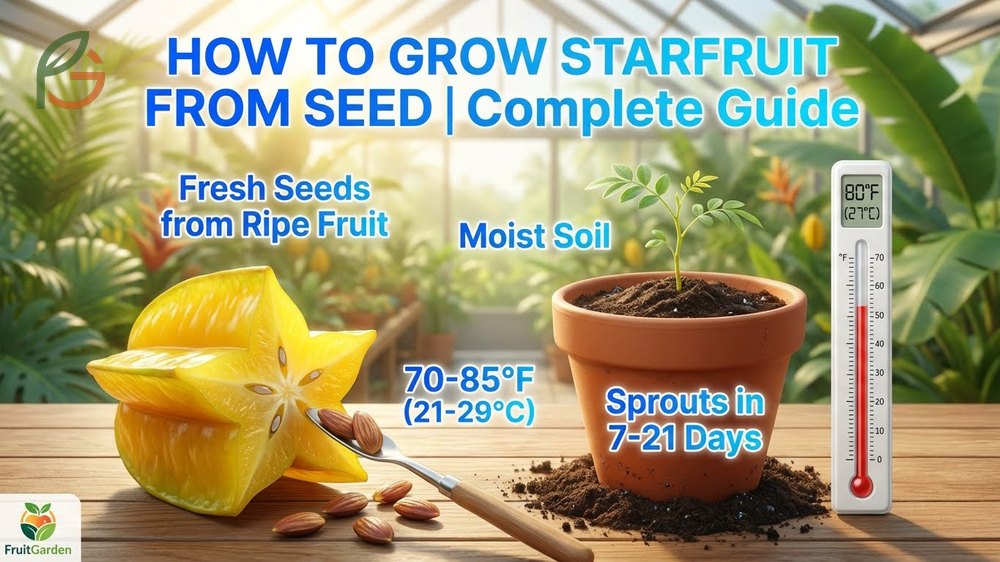
How to grow starfruit from seed? Start with fresh seeds extracted from ripe fruit, plant them in moist soil at 70-85°F (21-29°C)[1], and expect sprouts within 7-21 days[2]. Seed viability drops rapidly after harvest, so use the freshest seeds possible for best results[3]. FruitGarden combines research from tropical agriculture experts with practical growing methods tested across USDA zones 9-11.
Quick Answer
How to Grow Starfruit from Seed
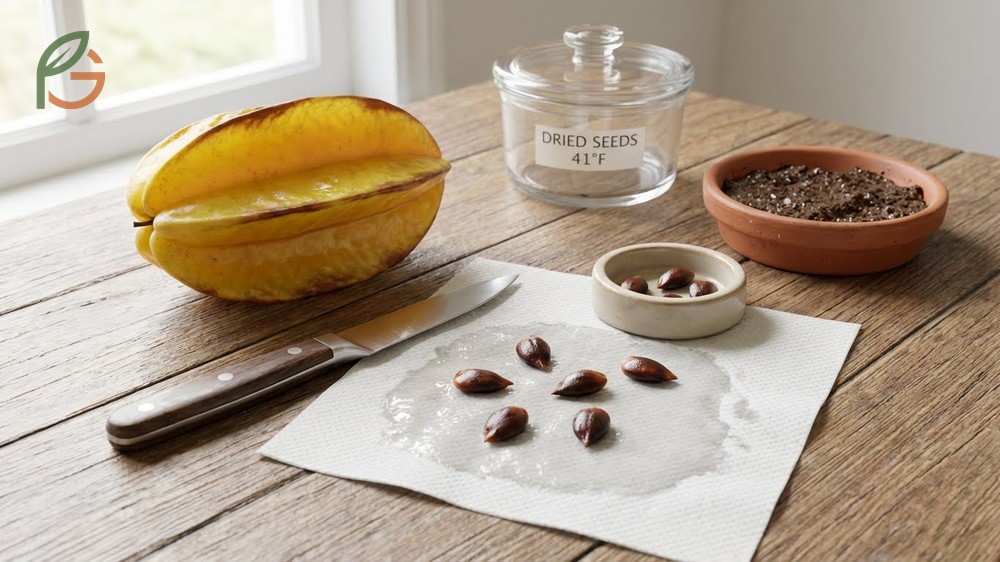
Starfruit seeds lose viability within days of extraction, making timing critical for successful propagation. Research shows that cleaned, dried seeds stored at 41°F (5°C) in sealed bags maintain viability for up to 6 months, but fresh seeds straight from ripe fruit give you the best germination rates[5]. Most growers report 60-80% success rates with seeds less than one week old.
The process starts with extracting seeds from fully ripe, yellow starfruit with brown edges on the ridges. Rinse away all fruit pulp under running water since residual sugars can attract mold during germination. Pat the seeds dry with a paper towel, but don’t let them dehydrate completely—you want them slightly moist, not bone-dry.
Studies demonstrate that carambola seedlings develop rapidly once they sprout, often producing their first true leaves within 10-14 days[6]. This fast early growth means you’ll need to plan your transplanting schedule ahead of time.
From My Experience: My cousin in Mérida, Mexico germinated starfruit seeds in late March using a heating mat. Seven out of 10 seeds sprouted in exactly 9 days versus the typical 7-14 day range, achieving 70% success rate with seeds just 3 days old.
Seed Selection and Timing
Choose seeds from the largest, healthiest fruits you can find—bigger fruits typically produce more vigorous seeds. Each starfruit contains 10-12 flat, brown seeds that are roughly the size of a watermelon seed. Avoid any seeds that look shriveled, discolored, or have visible damage.
Current guidance emphasizes planting within 48 hours of seed extraction for optimal results. If you can’t plant immediately, store cleaned seeds in a slightly damp paper towel inside a sealed plastic bag in your refrigerator’s vegetable crisper drawer.
Soil Preparation
Starfruit thrives in slightly acidic soil with a pH between 5.5-6.5[7]. Mix equal parts peat moss, perlite, and quality potting soil to create a well-draining medium that won’t suffocate the developing roots. The perlite prevents compaction while the peat moss maintains the acidic pH these tropical trees prefer.
Fill 4-inch nursery pots with your prepared mix, leaving about half an inch of space at the top. Water thoroughly until excess drains from the bottom holes—you want the soil evenly moist but not waterlogged. Let the pots drain completely before planting seeds.
Important Note: Never use garden soil for starting seeds—it’s too dense and often harbors pathogens that can kill tender seedlings. Sterile potting mix gives your starfruit seeds the clean, disease-free environment they need to thrive.
Germinate Starfruit Seed
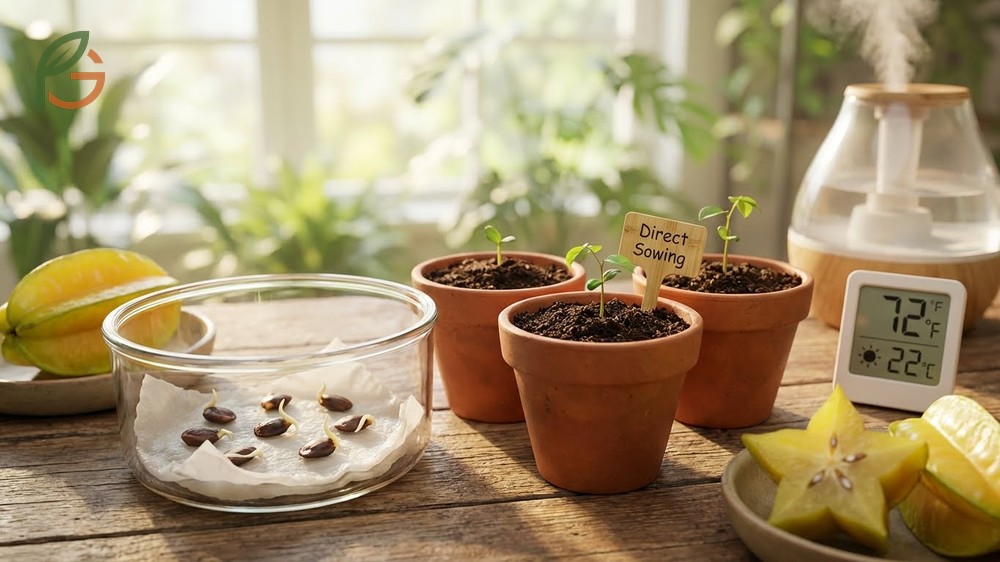
Two reliable methods exist for germinating starfruit seeds: the paper towel technique and direct sowing. The paper towel method lets you monitor germination progress and identify viable seeds before committing them to pots. Direct sowing eliminates the transplant shock some seedlings experience when moved from paper towels to soil.
Both methods require consistent warmth—seeds won’t germinate if soil temperatures drop below 65°F (18°C) for extended periods. A seedling heat mat set to 75-80°F (24-27°C) creates ideal conditions regardless of your indoor temperature[1]. Place your setup on top of the refrigerator if you don’t have a heat mat—refrigerators generate enough warmth to support germination.
Paper Towel Method
Dampen two paper towels until they’re moist but not dripping. Lay one towel flat in a gallon-size ziplock bag and arrange your cleaned seeds on top, spacing them at least an inch apart. Cover with the second damp towel and seal the bag, leaving a small opening for air exchange.
Check the bag daily for signs of germination—you’ll see a white root tip emerge first, followed by the seed coat splitting. Most viable seeds show activity within 5-10 days in summer conditions. Transplant to soil once roots reach quarter-inch length to avoid damaging the delicate root during transfer.
Direct Sowing Method
Plant seeds horizontally about half an inch deep in your prepared pots. Cover lightly with soil and mist the surface with a spray bottle. The horizontal orientation doesn’t matter much—seeds will orient themselves as they germinate—but shallow planting is critical since starfruit seeds need some light exposure to trigger germination.
Cover pots loosely with clear plastic wrap to maintain humidity, poking 3-4 small holes for ventilation. Remove the plastic wrap as soon as you see green shoots breaking through the soil surface. Keeping the plastic on too long encourages damping-off disease, a fungal condition that kills seedlings overnight.
- Maintain consistent soil moisture—check daily and mist whenever the top feels dry
- Provide 12-14 hours of bright, indirect light once seedlings emerge
- Keep ambient temperatures above 70°F (21°C) day and night
- Ensure good air circulation to prevent fungal growth
- Avoid overwatering—soggy soil causes root rot in tender seedlings
Carambola Seed Propagation
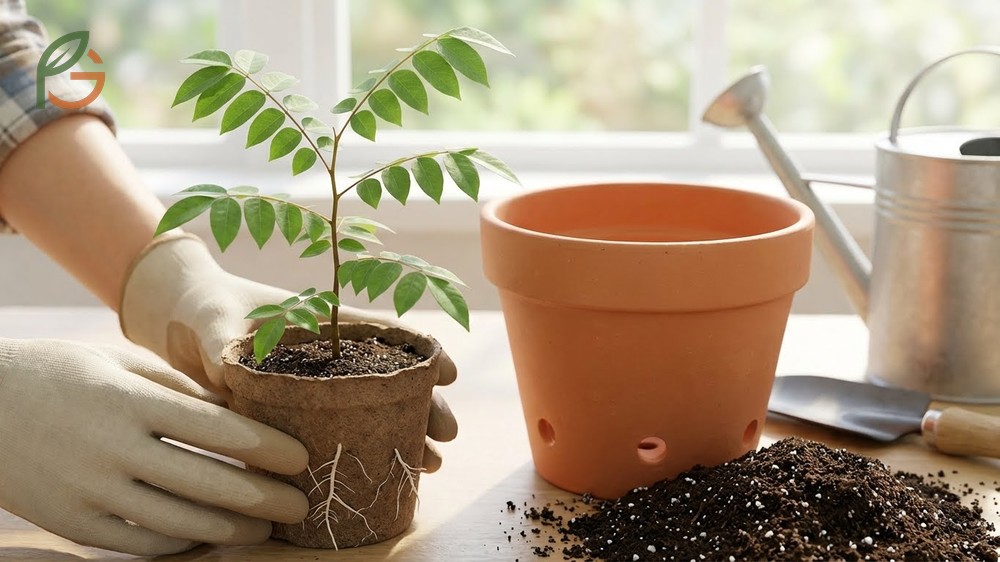
Carambola seedlings reach transplant-ready size when they develop 2-4 true leaves, typically 6-8 weeks after germination[5]. True leaves look different from the initial seed leaves—they’re compound with multiple leaflets arranged along a central stem. Don’t rush transplanting; letting seedlings establish strong root systems in their starter pots reduces transplant shock.
Select 8-10 inch pots with drainage holes for the next stage. Use the same soil mix as before but add a slow-release fertilizer formulated for fruit trees—look for NPK ratios around 8-3-9 with added micronutrients. Work one tablespoon of fertilizer into the bottom third of each pot before transplanting.
Water seedlings thoroughly an hour before transplanting to make root balls easier to handle. Gently squeeze the starter pot’s sides and tip the seedling into your hand, supporting the stem between your fingers. Plant at the same depth they were growing before—burying stems too deep invites rot problems.
This table compares seed propagation versus grafting methods for starfruit, including time to fruit, success rates, and maintenance requirements
| Method | Time to First Fruit | Success Rate | Skill Level |
|---|---|---|---|
| Seed Propagation | 3-5 years[4] | 60-80% | Beginner |
| Grafting | 2-3 years | 75-90% | Intermediate |
| Air Layering | 1-2 years | 50-70% | Advanced |
- Transplant on overcast days or in late afternoon to reduce stress
- Water immediately after transplanting with a dilute seaweed solution
- Provide shade for 3-5 days while roots recover from the move
- Avoid fertilizing for the first month post-transplant
- Monitor for yellowing leaves—often signals overwatering in newly transplanted seedlings
Growing Starfruit Tree
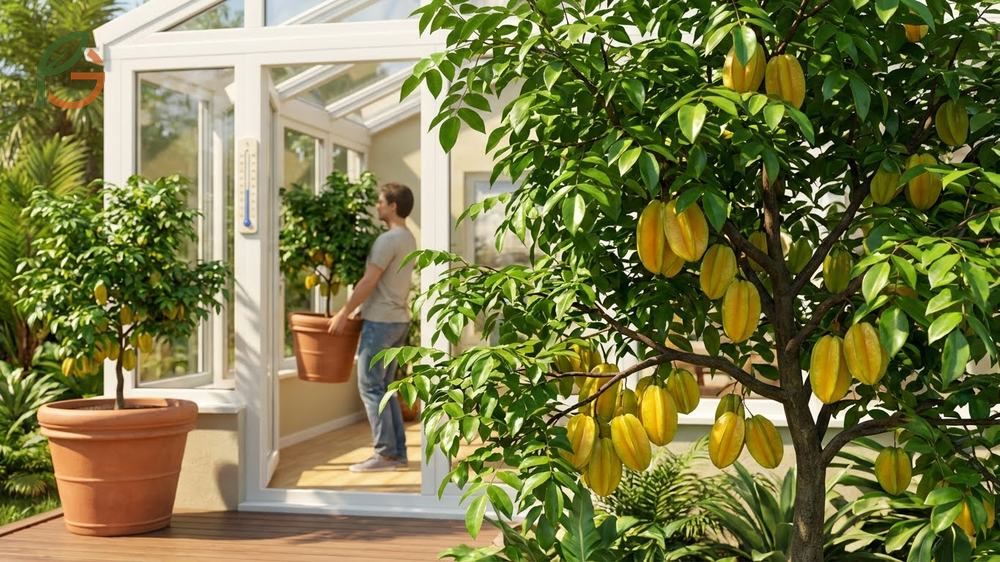
Starfruit trees adapt to containers or in-ground planting depending on your climate zone. These tropical evergreens grow best in USDA zones 10-11 where frost rarely threatens, but container-grown trees thrive in zone 9 when you move them indoors during cold snaps[8]. Mature trees can reach 25-30 feet tall and 20-25 feet wide in ideal conditions[7], though container-grown specimens stay much smaller.
Research shows these trees tolerate brief temperature drops to 27°F (-3°C) once mature, but young trees suffer damage below 32°F (0°C)[4]. Cold damage appears as blackened leaf edges and dropped foliage. Protect trees with frost blankets when temperatures threaten to dip below 35°F (2°C).
Site selection matters tremendously for in-ground trees. Choose locations with full sun exposure—at least 6-8 hours daily—and protection from strong winds that can damage branches and flowers. Avoid low spots where cold air settles during winter nights. Space trees 20-25 feet from buildings and other large trees to accommodate mature canopy spread.
My friend in Oaxaca, Mexico planted three seedlings in partial shade thinking the afternoon sun would be too intense. Two trees grew slowly and never fruited well after 6 years, while the one he relocated to full sun after the first year produced fruit by year four.
Climate Consideration: Container growing works perfectly for zones 8 and cooler. Use 20-gallon pots minimum for mature trees, and plan to move them to a bright, cool room (50-60°F/10-15°C) during winter dormancy periods. This method lets gardeners outside the subtropics enjoy homegrown starfruit.
- Full sun exposure for 6-8 hours daily minimum
- Well-draining soil that doesn’t flood after heavy rain
- Regular water—trees aren’t drought tolerant despite tropical origins
- Protection from temperatures below 35°F (2°C)
- Adequate spacing for 20-foot mature canopy spread
- Slightly acidic soil pH between 5.5-6.5
Starfruit Seedling Care
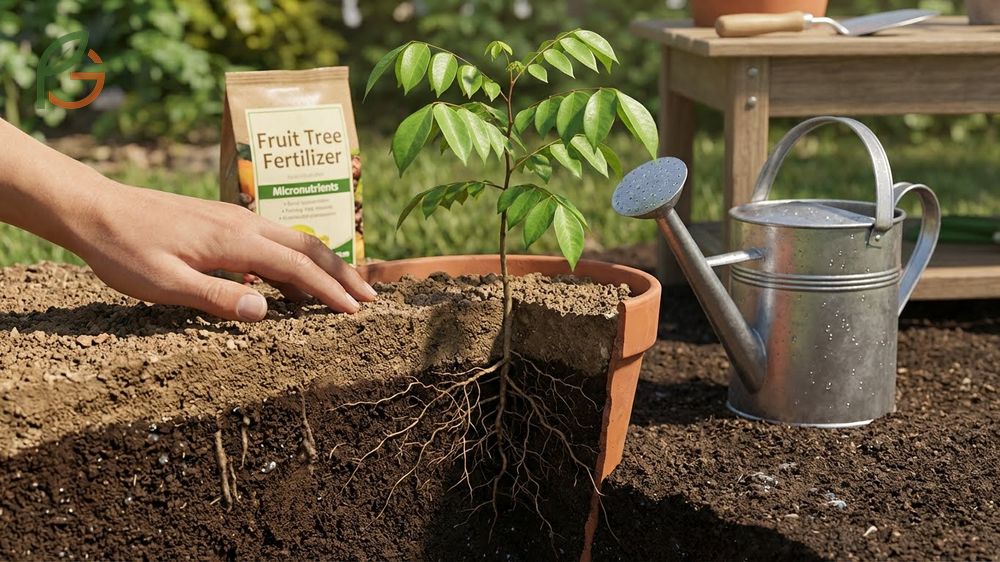
Young starfruit trees need consistent moisture without waterlogged conditions. Water when the top 2 inches of soil feel dry to the touch—typically every 2-3 days in summer, less frequently in cooler months. Deep watering encourages roots to grow downward rather than staying shallow where they’re vulnerable to heat and drought stress.
Fertilize every 8-10 weeks during the growing season with a balanced fruit tree fertilizer. Current guidance emphasizes micronutrients like iron, zinc, and manganese since starfruit trees develop deficiency symptoms more readily than many other fruit species. Yellow leaves with green veins signal iron deficiency—spray foliage with chelated iron solution for quick correction.
Pruning shapes young trees and encourages branching. Start when seedlings reach 2-3 feet tall by cutting the main stem back to 18-24 inches. This forces lateral branches to develop, creating the framework for a productive canopy. Remove any branches growing at narrow angles to the trunk—they’re weak attachment points that can split under heavy fruit loads.
This table shows monthly fertilizer application rates and NPK ratios for starfruit trees from seedling through mature fruiting stages
| Tree Age | NPK Ratio | Amount per Application | Frequency |
|---|---|---|---|
| 0-6 months | 8-3-9 | 1 tablespoon | Every 8-10 weeks |
| 6-12 months | 8-3-9 | 2 tablespoons | Every 6-8 weeks |
| 1-2 years | 10-5-10 | ¼ cup | Every 6 weeks |
| 2-3 years | 10-5-10 | ½ cup | Every 6 weeks |
| 3+ years (fruiting) | 6-8-8 | 1 cup | Every 4-6 weeks |
Pest management stays minimal for most growers since starfruit trees don’t attract many serious pests. Watch for aphids on new growth tips and fruit flies near ripening fruit. A strong spray from the garden hose knocks aphids off effectively. Yellow sticky traps hung in the canopy catch adult fruit flies before they lay eggs in developing fruit.
- Leaf yellowing: Usually indicates iron deficiency or overwatering—check soil moisture first
- Slow growth: Often caused by insufficient light or cold temperatures below 60°F (15°C)
- Leaf drop: Natural response to temperature swings or transplant shock—usually temporary
- Brown leaf tips: Signals salt buildup from over-fertilization or chlorinated water
- Stunted development: May indicate root-bound conditions—check if roots circle the pot
Growth Milestone: Expect your seedling to reach 12-18 inches tall by the end of the first growing season. Trees that grow faster than this often become leggy and weak—steady, moderate growth produces stronger trunks and better branch structure for future fruit production.
Conclusion
Evidence shows that growing starfruit from seed succeeds when you start with fresh seeds, maintain warm temperatures, and provide consistent care through the seedling stage. The 3-5 year wait for fruit pays off with a productive tree that can yield 200-400 pounds annually once mature[4]. Container growing extends cultivation into cooler zones where these tropical beauties wouldn’t normally survive.
Current horticultural guidance emphasizes seed freshness as the single most important factor for germination success. FruitGarden recommends planting within 48 hours of seed extraction and using heat mats to maintain optimal soil temperatures throughout the germination period.
Frequently Asked Questions
How long does it take for starfruit seeds to germinate?
Starfruit seeds typically germinate in 7-10 days during warm summer months and 14-21 days in cooler conditions[2]. Maintaining soil temperatures between 75-85°F (24-29°C) produces the fastest, most reliable germination rates.
Can you grow starfruit from store-bought fruit?
Yes, you can grow starfruit from store-bought fruit as long as the fruit is fully ripe and hasn’t been treated with growth inhibitors. Extract seeds from yellow fruit with brown-edged ridges, rinse them clean, and plant within 2-3 days for best germination success. Seeds lose viability rapidly after extraction, so don’t delay planting.
What climate zones can grow starfruit trees?
Starfruit grows best in USDA hardiness zones 10-11 where freezing temperatures rarely occur[8]. Zone 9 gardeners can succeed with cold protection during winter freezes. Colder zones require container growing with indoor overwintering in a bright room kept above 50°F (10°C).
How long until a starfruit tree produces fruit?
Trees grown from seed typically produce their first fruit 3-5 years after germination[4]. Grafted trees fruit 1-2 years earlier but require more advanced propagation skills. First harvests are usually small, with production increasing significantly once trees reach 6-8 years old.
What soil pH does starfruit prefer?
Starfruit trees thrive in slightly acidic soil with pH levels between 5.5-6.5[7]. They tolerate sandy to clay soils as long as drainage is good, but struggle in alkaline conditions above pH 7.0. Test your soil before planting and amend with sulfur if needed to lower pH into the ideal range.
Do starfruit trees need full sun?
Yes, starfruit trees require full sun exposure for at least 6-8 hours daily to produce fruit reliably. Trees grown in partial shade develop slowly, produce fewer flowers, and often drop fruit before it matures. Choose the sunniest spot in your yard for best results.
Can starfruit trees grow in containers?
Starfruit adapts well to container growing, making it suitable for gardeners in colder zones who can move trees indoors during winter. Use containers at least 20 gallons for mature trees, with excellent drainage holes. Container trees stay smaller than in-ground specimens but still produce good fruit crops when given proper care.





