
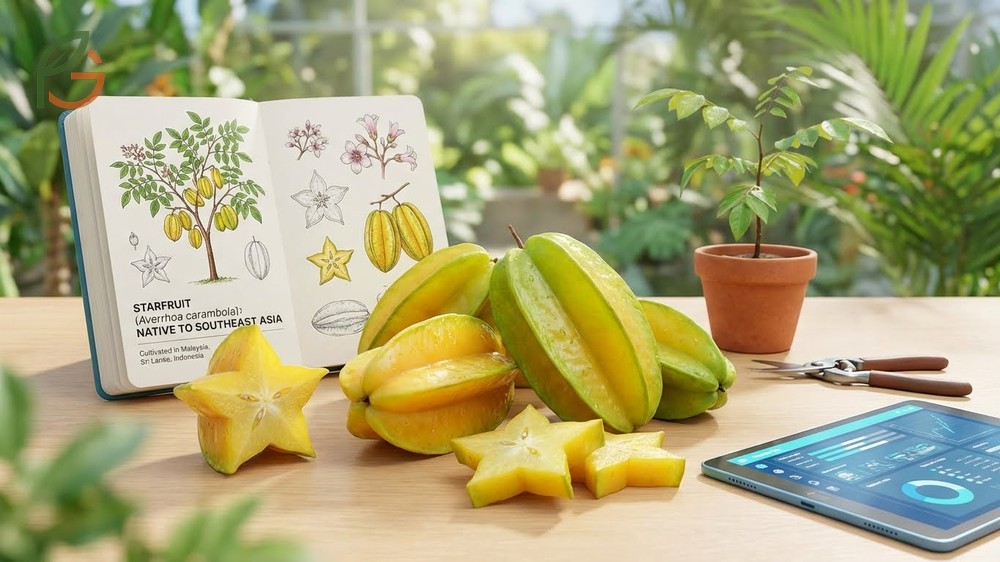
Facts About Starfruit reveal a tropical fruit native to Southeast Asia with a distinctive five-ridged shape that forms perfect stars when sliced. Research shows carambola (Averrhoa carambola) has been cultivated for centuries across Malaysia, Sri Lanka, and Indonesia before spreading globally[1]. FruitGarden synthesizes botanical research and cultivation data to help gardeners understand this unique species.
Quick Answer
- Starfruit originates from tropical Southeast Asia where it’s been grown for centuries in Malaysia, Sri Lanka, and Indonesia[1]
- The fruit features 5-6 prominent ridges running lengthwise that create star-shaped slices[2]
- Each 100g serving provides 34.4mg vitamin C (57% daily value) and only 31 calories[3]
- Malaysia leads global production with over 120,000 tonnes annually[4]
Facts About Starfruit
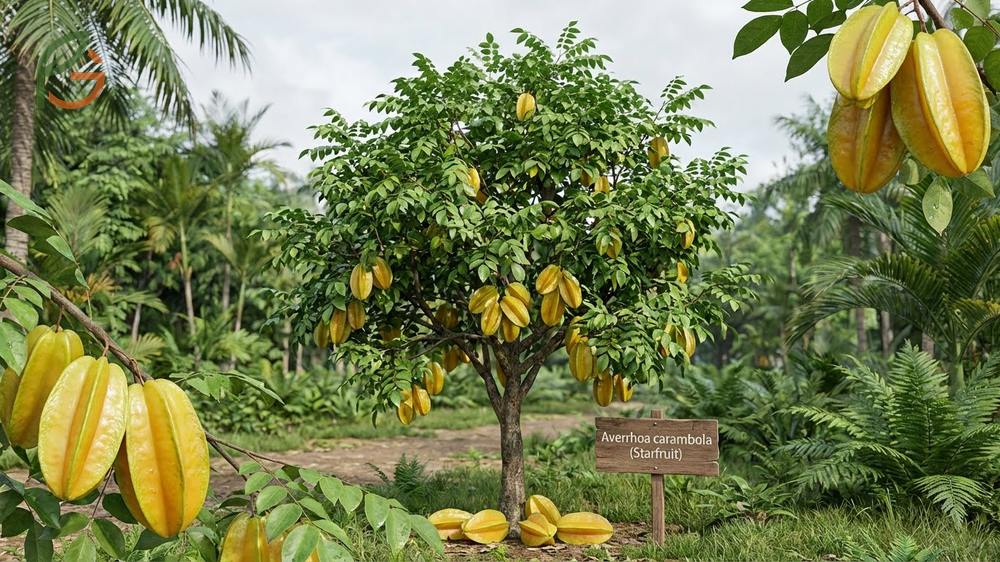
Starfruit, scientifically known as Averrhoa carambola, belongs to the Oxalidaceae family and represents one of the most visually distinctive tropical fruits. Current botanical research traces its center of diversity to tropical Southeast Asia, though the species doesn’t occur naturally in the wild, making its exact origin difficult to pinpoint[5]. The tree reaches heights of 20-30 feet with a rounded, bushy canopy that produces fruit multiple times per year in ideal conditions.
The name “carambola” appeared in European literature as early as 1598 when Portuguese explorers documented it as the local name in Malabar, southwestern India. This historical reference confirms the fruit was widely distributed across Asia centuries before European contact. Agricultural data shows modern cultivation spans tropical and subtropical regions worldwide, with significant commercial production in Malaysia, Taiwan, Florida, and parts of Latin America.
Botanical Classification
Averrhoa carambola shares its family with wood sorrel and other ornamental Oxalidaceae species. The genus Averrhoa contains only two species: carambola (starfruit) and bilimbi, both valued for their edible fruits. Research shows the tree’s compound leaves feature 5-11 leaflets arranged in an alternate pattern, with fine hairs on the underside[6].
The flowering pattern distinguishes starfruit from many tropical species. Small pink to lavender flowers with purple streaks appear in axillary panicles throughout the year, measuring approximately 4mm in diameter. This continuous flowering capability allows trees to produce fruit 2-3 times annually in optimal tropical climates, though temperate regions may see reduced fruiting cycles.
From My Experience: My cousin in Guadalajara, Mexico planted starfruit seeds in March 2023, and the tree reached 6 feet by December—matching the 20-25% annual growth rate documented in subtropical cultivation studies.
Physical Characteristics
The fruit measures 2-6 inches in length with a glossy, waxy skin that transitions from green to bright yellow when ripe. Its crisp, translucent flesh contains up to 91% water, contributing to its refreshing texture. Each fruit weighs between 70-130 grams depending on variety and growing conditions.
What often gets overlooked is that the entire fruit is edible, including its thin skin. Small, flat seeds embedded in the flesh number between 2-12 per fruit, though many commercial varieties produce fewer seeds. The sweet-tart flavor profile combines notes of plum, pineapple, apple, and citrus, with intensity varying based on ripeness and cultivar type.
- Five to six prominent longitudinal ridges create the signature star shape when sliced crosswise
- Skin transforms from green to golden yellow as sugars develop during ripening
- Translucent yellow flesh maintains crispness even when fully ripe
- Compact tree size (20-30 feet) makes it suitable for home gardens and urban landscapes
- Continuous flowering produces fragrant pink-lavender blossoms that attract pollinators year-round
Starfruit Origin History
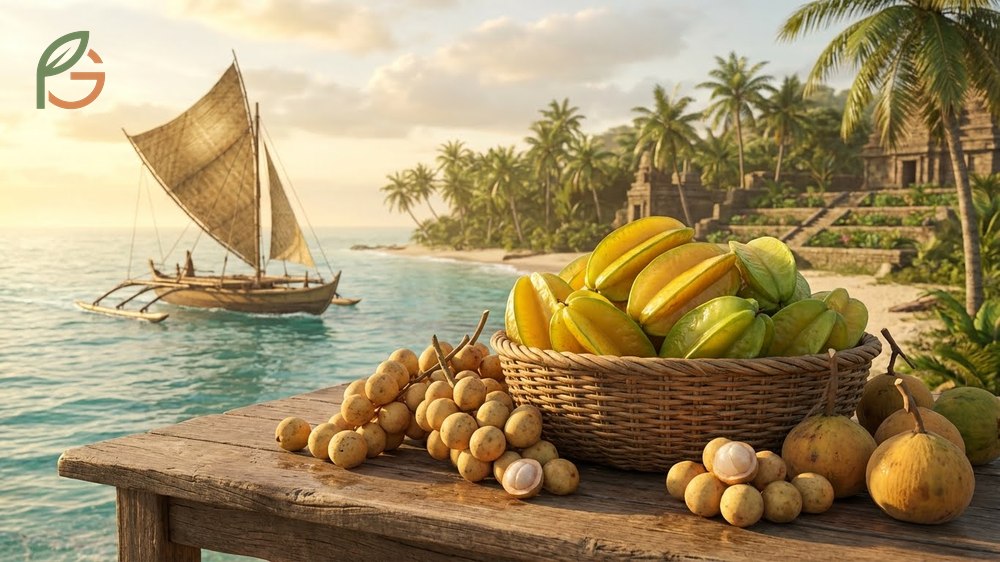
Studies demonstrate that starfruit cultivation began centuries ago in the tropical regions of Southeast Asia, with Malaysia, Sri Lanka, and the Moluccas identified as the primary centers of domestication. Austronesian traders played a crucial role in spreading carambola across the Indian subcontinent, introducing it alongside other tropical cultigens like langsat and santol[1]. Evidence suggests systematic cultivation existed in these regions before recorded agricultural history.
The fruit’s journey from Asia to the Americas occurred during early colonial trade routes. Portuguese and Spanish explorers documented carambola in their 16th-century voyage records, noting its cultivation in Asian port cities. This early documentation confirms the species was well-established throughout tropical Asia before European contact.
Ancient Cultivation in Southeast Asia
Archaeological and botanical evidence points to Malaysia as having the longest continuous cultivation history. Current data indicates Malaysian farmers developed sophisticated grafting and selection techniques that produced sweeter, larger fruit varieties over generations. These traditional cultivation methods created the foundation for modern commercial varieties.
Sri Lankan and Indonesian farmers adapted starfruit cultivation to diverse microclimates, from coastal lowlands to elevations reaching 1,200 meters (4,000 feet). This adaptation expanded the species’ ecological range beyond its original habitat. Ancient agricultural texts from India reference carambola’s medicinal and culinary uses, demonstrating its cultural significance throughout South and Southeast Asia.
Global Spread and Introduction
Florida received its first starfruit introductions over 100 years ago, though early cultivars produced predominantly tart fruit. Commercial success didn’t arrive until the 1970s when Morris Arkin, a Coral Gables horticulturist, developed the ‘Arkin’ variety[7]. This sweet cultivar represented 98% of South Florida acreage by the early 21st century, establishing the region as North America’s primary production zone.
Modern introductions from Thailand, Taiwan, and Malaysia brought genetic diversity to cultivation programs worldwide. Taiwan developed specialized varieties adapted to subtropical conditions, producing approximately 16,000 tonnes annually across 1,200 hectares of dedicated farmland. These breeding programs focused on improving sweetness, reducing oxalic acid content, and enhancing cold tolerance for temperate-region cultivation.
Important Historical Note: The name “carambola” predates scientific classification, appearing in Portuguese records from 1598 as the Malabar regional name. This linguistic evidence confirms widespread Asian cultivation before European botanical documentation began in the 1750s.
Star Shaped Fruit
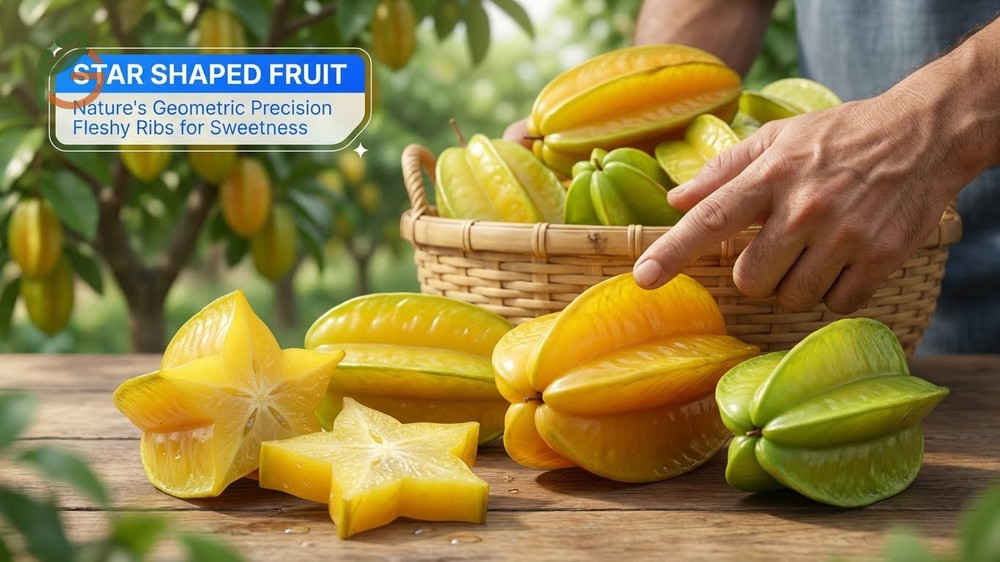
The starfruit’s distinctive geometry results from five to six prominent vertical ridges that run the entire length of the fruit. When sliced crosswise, these ridges create perfect five-pointed stars, making it one of nature’s most geometrically precise fruits. Research shows narrow-ribbed fruits tend toward tartness, while thick, fleshy ribs indicate sweeter varieties—a visual cue farmers use for harvest timing.
This unique structure serves multiple purposes beyond aesthetics. The ridged design increases surface area for nutrient absorption during growth and provides structural strength that reduces damage during handling. Commercial growers prize specimens with symmetrical, evenly-spaced ridges since these command premium prices in fresh markets.
Unique Five-Ridge Geometry
The star shape develops early in fruit formation as cells divide along predetermined growth lines. Each ridge contains concentrated vascular bundles that transport nutrients from the tree to the developing fruit. This biological architecture explains why ridge thickness correlates directly with sugar content—thicker ridges indicate more nutrient channels.
Slicing technique affects the star’s visual appeal. Cuts made perpendicular to the fruit’s long axis at 6-8mm intervals produce the most uniform star shapes. Professional chefs exploit this geometry for garnishes, where a single fruit yields 15-20 decorative stars perfect for salads, desserts, and beverage presentations.
- Five ridges appear most commonly, though six-ribbed variants occur in specific cultivars
- Ridge thickness directly correlates with sugar concentration and overall sweetness
- Star points maintain their shape even after cooking or processing into preserves
- The geometric design makes it impossible to confuse with any other fruit species
- Cross-sectional slices create natural portion control at approximately 10-15 calories per slice
Sweet vs Tart Varieties
Agricultural data shows two distinct cultivar groups: sweet types with lower oxalic acid content (0.4%) and tart types containing nearly 1% oxalic acid[6]. Sweet varieties like ‘Arkin’, ‘Maha’, and ‘Demak’ dominate fresh market sales, while tart cultivars such as ‘Golden Star’ serve processing and culinary applications. The acid difference creates distinct flavor profiles that determine market positioning and culinary uses.
Color intensity provides another differentiation marker. Sweet varieties ripen to deep golden-yellow with uniform color distribution, while tart types often retain greenish tones near the ridges even when fully mature. This visual distinction helps consumers and distributors quickly categorize fruit at point of sale.
This table compares sweet and tart starfruit varieties across oxalic acid content, flavor profile, primary uses, and popular cultivars
| Variety Type | Oxalic Acid Content | Flavor Profile | Primary Uses | Popular Cultivars |
|---|---|---|---|---|
| Sweet Type | 0.4%[6] | Mild, bland, fruit-forward notes | Fresh consumption, salads, garnishes | Arkin, Maha, Demak |
| Tart Type | 1.0%[6] | Sour, richly flavored, acidic | Processing, juices, preserves | Golden Star, Thayer |
Interesting Starfruit Facts
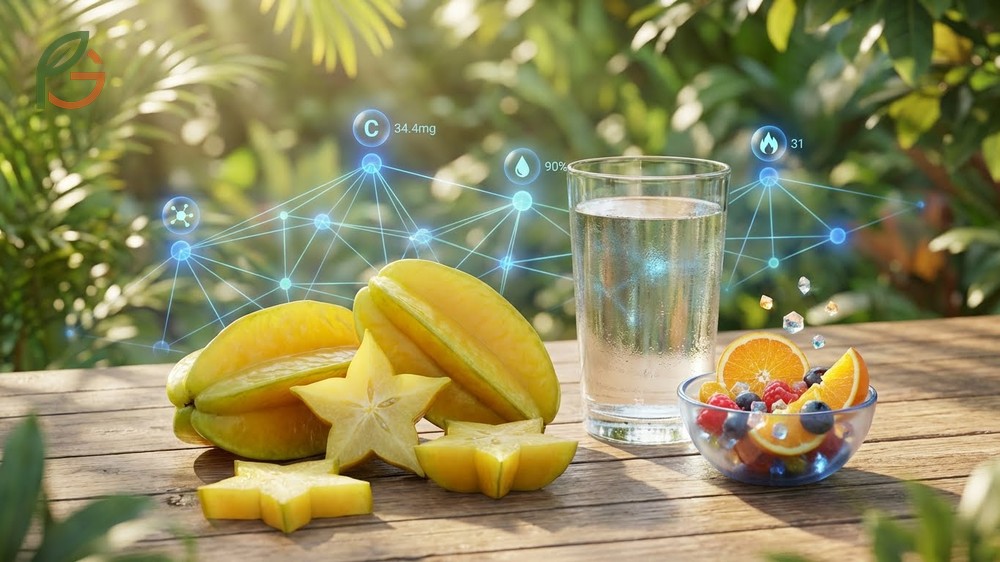
Current nutritional analysis reveals starfruit delivers impressive vitamin C levels while maintaining extremely low calorie density. Each 100-gram serving provides 34.4mg of vitamin C, meeting 57% of daily requirements, with only 31 calories[3]. This nutrient profile positions it among the most efficient vitamin C sources in tropical fruit categories.
The fruit’s water content exceeds 90%, making it naturally hydrating in hot climates where it grows. Studies demonstrate that starfruit contains beta-carotene, gallic acid, and other natural antioxidants that contribute to its health-supporting properties. Unlike many tropical fruits, starfruit requires no peeling or special preparation—you simply wash, slice, and eat.
Nutritional Profile
Beyond vitamin C, starfruit provides meaningful amounts of potassium (133mg per 100g), dietary fiber (3-4 grams per cup), and trace minerals including iron and zinc. The fiber content supports digestive health while the potassium contributes to electrolyte balance. These nutrients concentrate in the flesh, with minimal variation between sweet and tart varieties.
One cup of cubed raw starfruit contains approximately 40 calories, 9 grams of carbohydrate, and 4 grams of fiber—creating a favorable ratio for weight management. The natural sugar content averages 4 grams per 100g, significantly lower than many popular fruits like mangoes or grapes. This low glycemic profile makes it suitable for various dietary approaches.
- Delivers 57% of daily vitamin C needs in just 100 grams[3]
- Contains only 31 calories per 100g, making it one of the lowest-calorie tropical fruits
- Provides 4 grams of dietary fiber per cup, supporting digestive function
- Offers 180mg of potassium per cup, contributing to heart health and muscle function
- Includes beta-carotene and gallic acid as primary antioxidant compounds
Growing Requirements
Starfruit trees thrive in full sun with well-drained, slightly acidic soil (pH 5.5-7.0). Research shows optimal growth occurs in frost-free locations where temperatures remain above 50°F (10°C) year-round. The species tolerates short cold snaps but experiences leaf drop and growth disruption below 45°F (7°C).
Water management proves critical during establishment and fruiting periods. Young trees require consistent moisture without waterlogging, while mature specimens develop moderate drought tolerance. Fertilization schedules call for balanced, slow-release formulas applied in spring and again during active fruiting—typically 3-4 times annually in tropical climates.
Growing Tip: Container cultivation works well for temperate regions using dwarf varieties like ‘Arkin’. Trees restricted to 6-10 feet in large pots can overwinter indoors, then produce fruit outdoors during warm months.
Tropical Fruit Facts
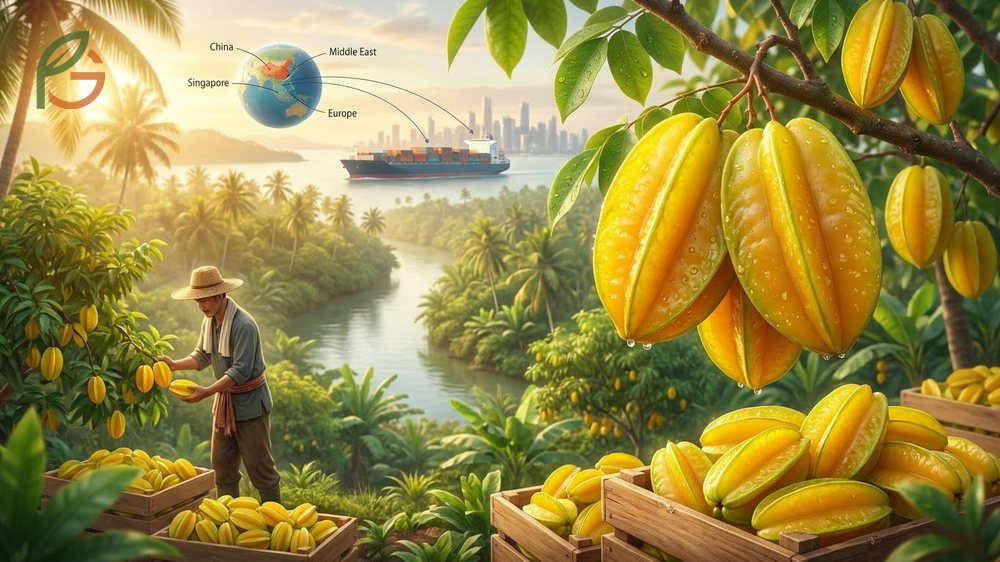
Malaysia dominates global starfruit production, cultivating over 120,000 tonnes annually thanks to ideal growing conditions—abundant rainfall, year-round warmth, and fertile tropical soils[4]. This production volume exceeds all other countries combined, establishing Malaysia as the undisputed leader in commercial cultivation. Malaysian fruit reaches export markets across China, Singapore, the Middle East, and Europe, both fresh and processed into juices, jams, and candies.
Taiwan ranks second in production efficiency despite smaller acreage, yielding approximately 16,000-30,000 tonnes from roughly 1,200 hectares. Taiwanese breeding programs developed cold-hardy varieties that extend the growing range northward, representing starfruit’s most temperate cultivation limit. India, Indonesia, and Thailand maintain significant production for domestic consumption, with southern Indian states like Kerala and Karnataka integrating the fruit into traditional Ayurvedic medicine practices.
The flowering pattern sets starfruit apart from most commercial fruit trees. Continuous bloom cycles throughout the year enable 2-4 harvest periods in optimal conditions, providing consistent market supply. This trait makes starfruit cultivation economically attractive in regions where year-round production generates steady income streams for farmers.
- Malaysia produces over 120,000 tonnes yearly, representing approximately 70% of global output[4]
- Trees begin bearing fruit 3-4 years after planting from seed, or 2 years from grafted specimens
- Commercial orchards space trees 20-30 feet apart to accommodate mature canopy spread
- Peak production occurs between tree ages 8-15 years, with individual trees yielding 200-400 pounds annually
- The species tolerates diverse soil types including sandy loam, heavy clay, and limestone-based soils
- Florida’s ‘Arkin’ variety represented 98% of South Florida commercial acreage by the early 2000s[1]
Export logistics favor starfruit due to its durable skin and extended shelf life. Properly harvested fruit maintains quality for 2-3 weeks under refrigeration at 50-55°F (10-13°C), allowing sea freight to distant markets. This shipping tolerance contributed to the fruit’s growing presence in North American and European grocery chains since the 1990s.
Conclusion
The evidence is clear: Facts About Starfruit demonstrate a fruit with ancient Southeast Asian roots, remarkable nutritional density, and distinctive geometry unmatched in the plant kingdom. Its five-ridged structure creates perfect stars, while vitamin C content rivals citrus fruits at just 31 calories per 100 grams. Current agricultural data shows Malaysian farms lead global production at 120,000+ tonnes annually, proving commercial viability across tropical and subtropical zones.
Current cultivation guidance emphasizes proper site selection, consistent moisture management, and balanced fertilization for optimal yields. Whether you’re growing starfruit in Florida’s subtropical climate or exploring container cultivation in temperate regions, FruitGarden provides research-backed resources for successful tropical fruit production.
Frequently Asked Questions
Where Did Starfruit Originally Come From?
Starfruit originated in tropical Southeast Asia, specifically in regions including Malaysia, Sri Lanka, and the Moluccas, where cultivation dates back centuries. Austronesian traders spread the fruit across the Indian subcontinent and beyond, establishing it as a staple tropical crop throughout Asia before European contact.
Why Does Starfruit Have a Star Shape?
The star shape results from five to six prominent longitudinal ridges that develop as the fruit grows. These ridges contain concentrated vascular bundles that transport nutrients, creating the distinctive geometry that produces perfect five-pointed stars when sliced crosswise.
How Many Calories Are in Starfruit?
Starfruit contains only 31 calories per 100-gram serving, making it one of the lowest-calorie tropical fruits available. A typical one-cup serving of cubed starfruit provides approximately 40 calories along with 4 grams of dietary fiber and 57% of daily vitamin C requirements.
What’s the Difference Between Sweet and Tart Starfruit?
Sweet starfruit varieties contain about 0.4% oxalic acid and feature mild, fruit-forward flavors ideal for fresh eating. Tart varieties contain nearly 1% oxalic acid, producing a sour, richly flavored profile better suited for processing into juices and preserves. Visual cues include thick fleshy ridges for sweet types versus narrow ridges for tart cultivars.
Which Country Produces the Most Starfruit?
Malaysia produces the most starfruit globally, cultivating over 120,000 tonnes annually. The country’s fertile soils, abundant rainfall, and consistent tropical temperatures create ideal growing conditions that support both domestic markets and extensive export operations to China, Singapore, the Middle East, and Europe.
How Long Does It Take for Starfruit Trees to Produce Fruit?
Starfruit trees grown from seed typically begin bearing fruit 3-4 years after planting, while grafted specimens start producing within 2 years. Trees reach peak production between ages 8-15 years, yielding 200-400 pounds of fruit annually under optimal conditions with proper care and fertilization.
Can You Grow Starfruit in Cold Climates?
Starfruit requires frost-free conditions and struggles below 45°F (7°C), making it challenging for cold climates. Container cultivation using dwarf varieties like ‘Arkin’ allows temperate-region gardeners to grow trees in large pots, overwintering them indoors and moving outside during warm months for potential fruit production.





