
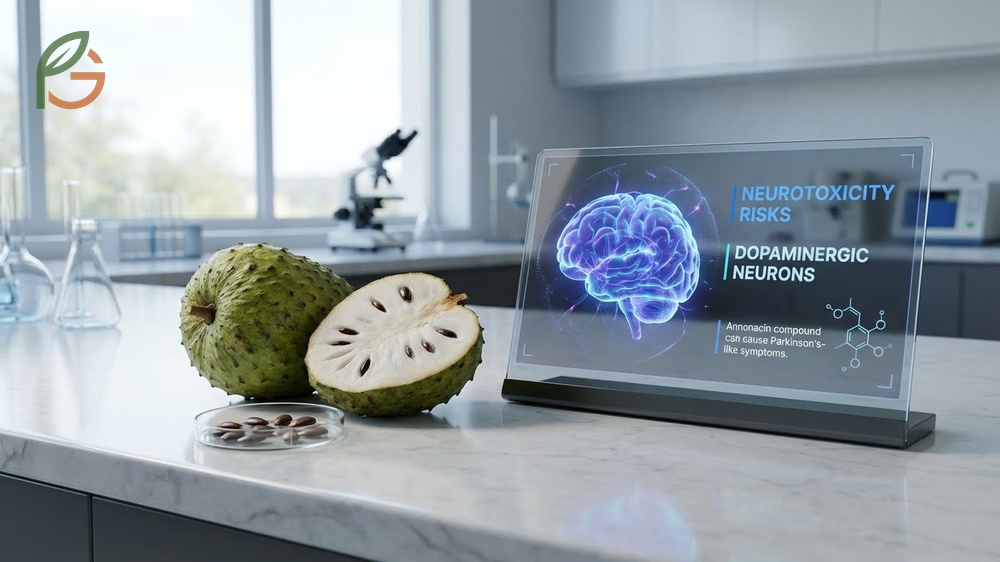
Soursop side effects include serious neurotoxicity risks that can cause Parkinson’s-like symptoms when consumed excessively. Research shows that annonacin, the main compound in soursop, is 100 times more toxic than known neurotoxins and damages dopaminergic neurons at concentrations as low as 0.018 μM[1]. Studies demonstrate that consuming just one soursop fruit daily for a year equals the dose that produced nerve damage in laboratory models[2]. FruitGarden synthesizes current medical research and FDA safety data to help you understand the real risks behind this tropical fruit’s health warnings.
Quick Answer
- Annonacin in soursop is 100x more neurotoxic than standard toxins, targeting dopaminergic neurons[1]
- Daily consumption for 1 year can cause permanent nerve damage similar to Parkinson’s disease[2]
- Soursop seeds contain toxic compounds—the FDA found seed cells in 67% of commercial juices tested[3]
- Don’t take soursop if you’re on blood pressure or diabetes medications—it can cause dangerous drops in blood sugar and BP levels[4]
Soursop Side Effects
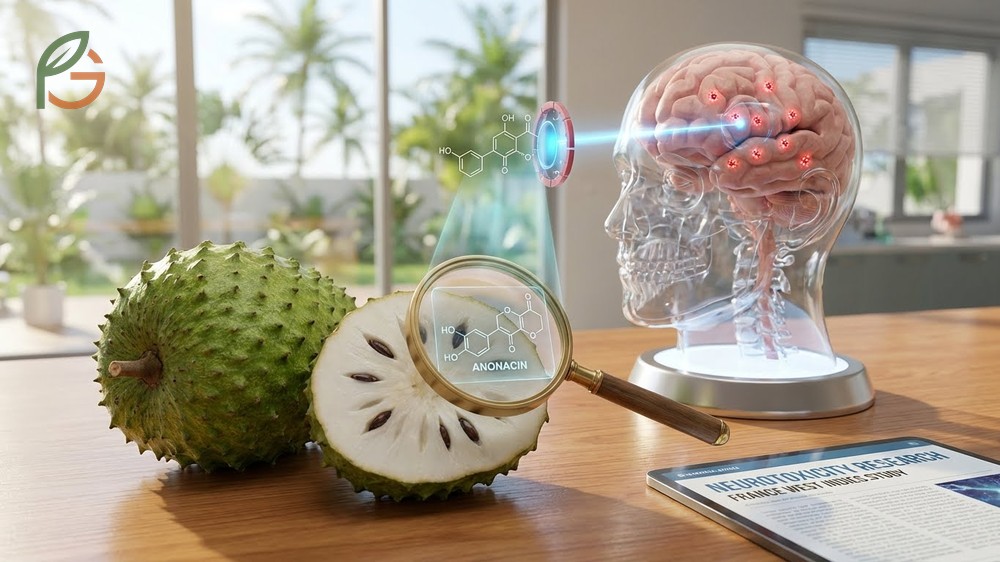
Research shows that soursop’s most serious side effect is neurotoxicity, which damages nerve cells in your brain’s motor control centers. The fruit contains acetogenins—particularly annonacin—that disrupt how your neurons produce energy[5]. Studies demonstrate that these compounds cross the blood-brain barrier and accumulate in your basal ganglia, causing permanent damage.
Evidence from case-control studies in the French West Indies reveals an abnormally high rate of atypical Parkinson’s disease among populations that regularly consume soursop. Current data indicates that movement disorders, muscle rigidity, and balance problems develop after continuous exposure[6].
What often gets overlooked is that soursop doesn’t just affect your brain. The fruit also interferes with medications, causes liver and kidney stress, and lowers platelet counts in some users[4].
What Makes Annonacin a Dangerous Neurotoxin
Annonacin works by blocking mitochondrial complex I, which your cells need to convert nutrients into usable energy (ATP). When this process stops, your neurons can’t function and eventually die through apoptosis or necrosis[1].
Laboratory tests reveal that annonacin’s toxicity level (LC₅₀) is just 0.018 μM for dopaminergic neurons—that’s significantly lower than rotenone, another powerful mitochondrial toxin. It produces wider neuron loss across your basal ganglia and brainstem nuclei compared to similar compounds[5].
Important Warning: Unlike acute toxins that cause immediate symptoms, annonacin accumulates slowly. You won’t notice problems until significant nerve damage has already occurred—and it’s often irreversible.
How Soursop Causes Parkinson’s-Like Symptoms
Annonacin specifically targets the same brain regions affected in Parkinson’s disease. It increases tau phosphorylation in neurons, a process linked to neurodegenerative tauopathy[2]. This leads to the death of dopamine-producing cells in your substantia nigra.
Clinical observations document movement disorders that mirror Parkinson’s but don’t respond to levodopa treatment. Patients experience tremors, balance difficulties, and problems with eye movements—collectively called myeloneuropathy[7].
- Muscle rigidity and stiffness in arms and legs
- Balance problems and coordination difficulties
- Tremors at rest, similar to classic Parkinson’s
- Bradykinesia (slowness of movement)
- Eye movement abnormalities and vision problems
- Cognitive impairment in severe cases
Soursop Health Risks
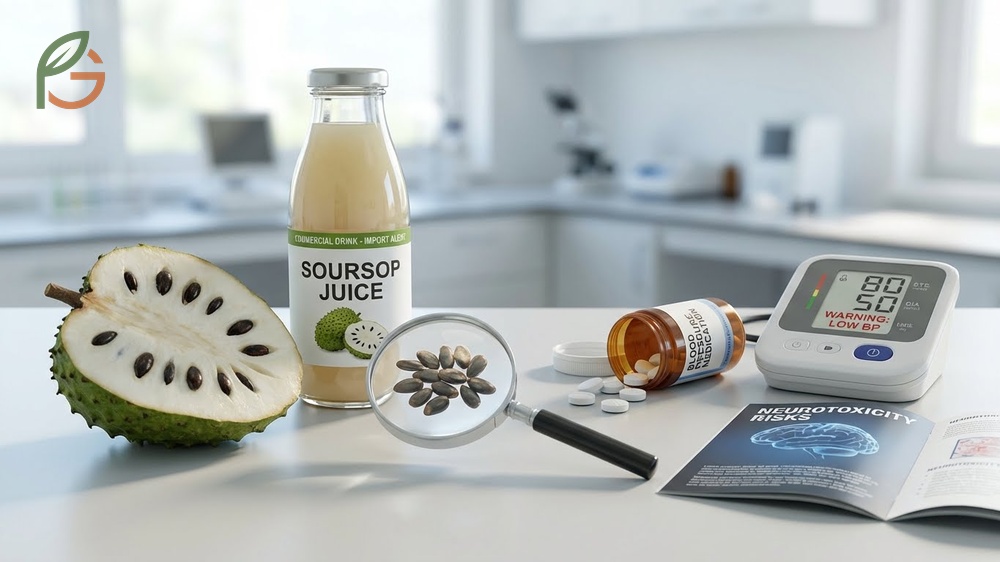
Studies demonstrate that soursop health risks extend beyond neurotoxicity. The FDA issued import alerts after finding toxic seed material in commercial soursop drinks from Mexico and the Philippines[3]. These products represent a public health concern because seed epidermal cells contain concentrated toxins.
Research shows soursop can cause dangerous drug interactions. If you’re taking blood pressure medication, soursop’s hypotensive effects can drop your BP to critically low levels. For diabetics, it amplifies insulin and oral medication effects, leading to severe hypoglycemia[4].
Current medical guidance warns against soursop supplements for pregnant women. There’s insufficient safety data, and the neurotoxic compounds could potentially harm fetal brain development.
Seed Toxicity in Commercial Products
Soursop seeds are never safe to eat. They contain concentrated acetogenins and alkaloids that cause acute toxicity[4]. The FDA’s 2017 testing found that processing errors allow toxic seed material to contaminate juices and pulp products.
Commercial supplement manufacturers often use whole fruit extracts without proper seed removal. Laboratory analysis revealed that fruit pulp extracts caused 67% cell death at just 1 μg/mL concentration—the strongest neurotoxic effect among all Annonaceae species tested[8].
Liver and Kidney Damage Potential
Evidence suggests that soursop’s high acetogenin content stresses your liver and kidneys. These organs work overtime to filter and eliminate the compounds, potentially causing cellular damage with repeated exposure[7].
People with pre-existing liver or kidney disease face higher risks. Medical professionals recommend avoiding soursop entirely if you have compromised organ function or low platelet counts.
Medical Alert: Soursop interferes with certain imaging tests and diagnostic procedures. Always tell your healthcare provider at least 2 weeks before any medical imaging or surgery.
Graviola Side Effects
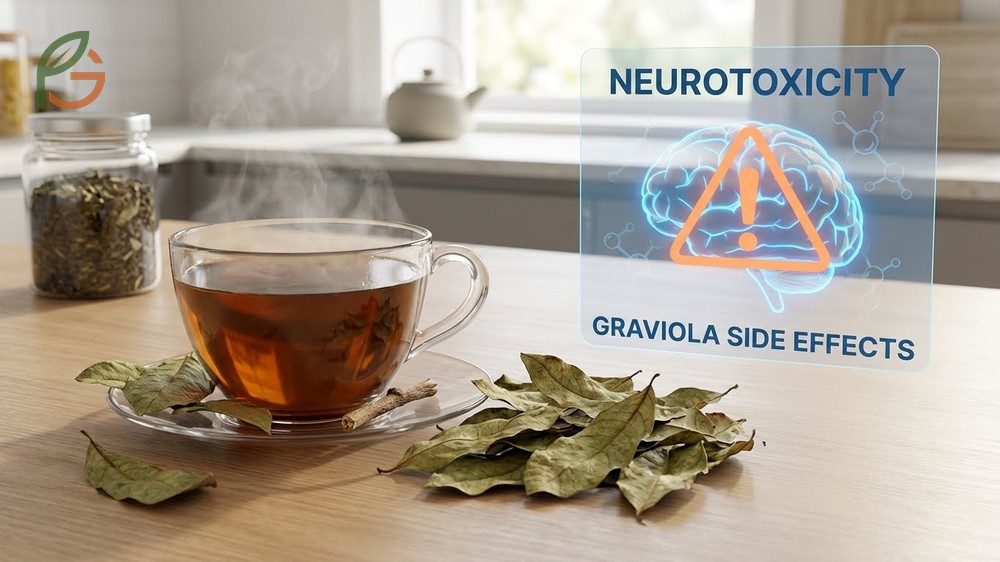
Graviola (soursop’s alternate name) supplements are classified as “likely unsafe” by health authorities when used orally. Tea made from graviola leaves and stems shows particularly high neurotoxicity because these plant parts concentrate more acetogenins than the fruit pulp[9].
Studies document that graviola leaf tea contains approximately 56 mg of annonacin per kg of dried leaves. When you brew 2.5 g of leaves for 10 minutes, you’re consuming a significant neurotoxic dose with each cup[10].
What makes graviola particularly risky is how it’s marketed. Companies illegally advertise it as a cancer cure despite zero human clinical trials proving effectiveness. The FDA has taken legal action against multiple supplement manufacturers for false health claims.
- Severe nausea and gastrointestinal distress
- Chronic fatigue from mitochondrial dysfunction
- Nerve pain and peripheral neuropathy
- Depression and mood changes
- Hallucinations in high-dose cases
Soursop Safety Concerns
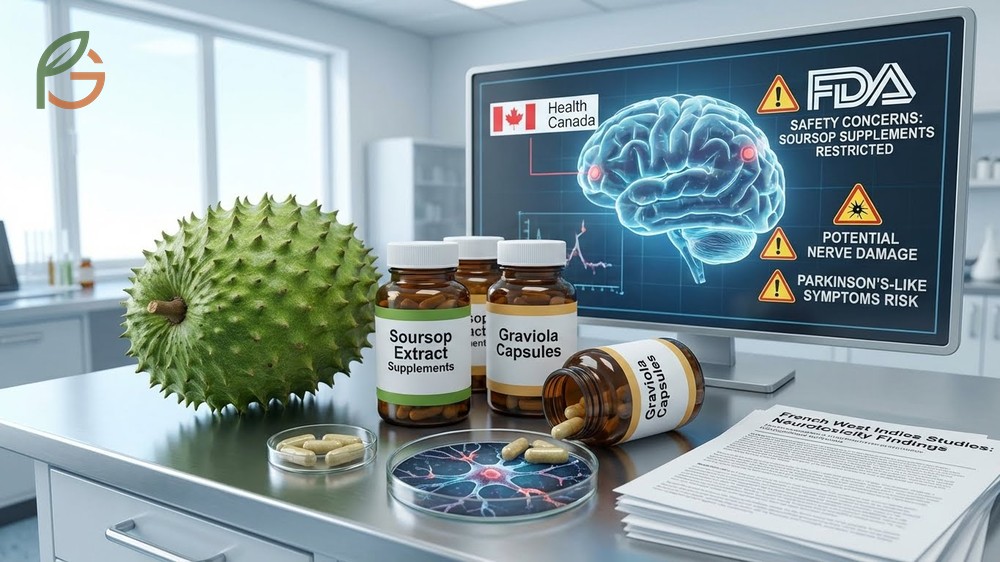
Health Canada and the FDA share similar safety concerns about soursop products. Current regulations restrict soursop-based supplements because they fail to meet natural health product standards[11]. Fresh soursop fruit remains legal, but processed supplements face scrutiny.
Research across multiple countries shows consistent patterns of nerve damage in populations consuming soursop regularly. The French West Indies studies remain the most comprehensive, documenting Parkinson’s-like disease at rates significantly higher than global averages[6].
Agricultural data shows soursop trees grown in different regions produce varying acetogenin concentrations. Fruit from tropical lowlands typically contains higher annonacin levels than highland-grown varieties, making it impossible to guarantee safe dosing.
This table compares soursop risk levels across five population groups, showing why certain people should completely avoid this fruit and others need strict moderation
| Population Group | Risk Level | Primary Concerns | Recommendation |
|---|---|---|---|
| Pregnant Women | Very High | Fetal neurotoxicity, insufficient safety data | Complete avoidance[4] |
| Diabetes Patients | High | Severe hypoglycemia risk with medications | Avoid or consult endocrinologist[4] |
| Hypertension Patients | High | Dangerous BP drops with medications | Medical supervision required[7] |
| Liver/Kidney Disease | High | Reduced toxin clearance, organ stress | Complete avoidance[7] |
| Healthy Adults | Moderate | Cumulative neurotoxicity with regular use | Occasional use only, maximum 2-3x monthly[2] |
- Never consume soursop seeds—they’re toxic even in small amounts
- Don’t drink soursop tea daily; the leaf concentration is dangerous
- Avoid all soursop products 2+ weeks before medical imaging or surgery
- Check supplement labels for seed contamination warnings
- Don’t combine soursop with blood pressure or diabetes medications
Soursop Consumption Limits
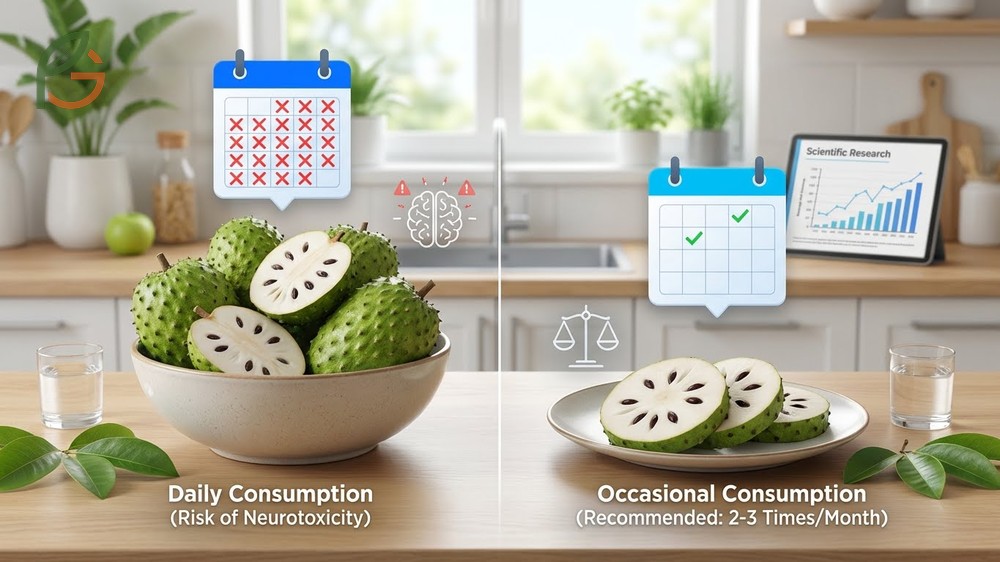
Research shows that consuming one soursop fruit daily for one year delivers the equivalent dose that caused neurological damage in animal models[2]. This translates to roughly 365 g of fruit pulp annually as an upper threshold—but individual tolerance varies widely.
Current guidance from toxicology experts suggests limiting soursop to occasional consumption. For healthy adults without contraindications, eating the fruit 2-3 times per month appears safer than weekly or daily intake. This spacing allows your body to clear acetogenins between exposures.
Agricultural reports indicate a medium soursop fruit (approximately 1-2 kg) contains 15-30 mg of annonacin. Since the neurotoxic threshold isn’t precisely defined for humans, conservative limits make sense.
Most people don’t realize that juice concentrate contains higher acetogenin levels than fresh fruit. Commercial processing removes fiber but concentrates bioactive compounds, making juices riskier than eating whole fruit pulp.
For soursop tea, experts recommend drinking no more than one cup weekly—and only if you’re not in a high-risk group. Daily tea consumption accumulates dangerous annonacin levels within weeks.
Practical Limit: If you enjoy soursop, treat it like an occasional dessert rather than a daily health food. Think birthday cake frequency, not breakfast routine.
- Fresh fruit: Maximum 2-3 servings per month (approximately 100-150 g pulp per serving)
- Juice: Limit to 4-6 oz monthly; check for seed contamination certification
- Tea: No more than 1 cup weekly; avoid leaf teas entirely if high-risk
- Supplements: Not recommended—insufficient quality control and dosing standards
- Ice cream/smoothies: Only use fruit pulp; confirm seeds removed completely
Conclusion
The evidence is clear: soursop side effects pose serious neurotoxicity risks that outweigh potential benefits for most people. Annonacin’s ability to cross the blood-brain barrier and damage dopaminergic neurons at concentrations 100 times lower than comparable toxins makes this fruit uniquely dangerous with regular consumption. Research demonstrates that what might seem like a healthy tropical treat can cause irreversible Parkinson’s-like symptoms when consumed beyond strict limits.
Current medical guidance emphasizes occasional consumption only—no more than 2-3 times monthly for healthy adults, and complete avoidance for pregnant women, medication users, and those with liver or kidney disease. FruitGarden recommends treating soursop as an infrequent indulgence rather than a dietary staple, always ensuring seeds are completely removed and never relying on unregulated supplements that may contain dangerous concentrations of acetogenins.
Medical Disclaimer
Important Medical Disclaimer: This content is for informational and educational purposes only. It’s not intended as a substitute for professional medical advice, diagnosis, or treatment. Always consult a qualified healthcare professional before consuming soursop or making any changes to your diet, medication, or health routine, especially if you have diabetes, hypertension, liver or kidney disease, neurological conditions, or if you’re pregnant or breastfeeding. The neurotoxicity information presented reflects current research but individual responses vary. Never discontinue prescribed medications or medical treatments based on information about soursop without first consulting your physician.
Frequently Asked Questions
How much soursop is safe to eat?
Research suggests limiting soursop to 2-3 servings per month (100-150 g pulp per serving) for healthy adults. Studies show that consuming one fruit daily for a year equals the dose that caused nerve damage in laboratory models, so occasional consumption appears safer than regular intake.
Can soursop cause Parkinson’s disease?
Yes, soursop can cause Parkinson’s-like symptoms through neurotoxicity. Annonacin damages dopaminergic neurons in the same brain regions affected by Parkinson’s disease, causing movement disorders, muscle rigidity, and balance problems that don’t respond to standard levodopa treatment.
What medications interact with soursop?
Soursop dangerously interacts with blood pressure medications (causing severe hypotension) and diabetes drugs (causing severe hypoglycemia). It can also interfere with blood thinners and medications for liver or kidney disease. Always consult your doctor before consuming soursop if you take any medications.
Are soursop seeds poisonous?
Yes, soursop seeds are toxic and should never be consumed. They contain concentrated acetogenins and alkaloids that cause acute toxicity. The FDA found toxic seed material in commercial soursop products from Mexico and the Philippines, raising public health concerns about contamination.
Can pregnant women eat soursop?
No, pregnant women should completely avoid soursop. There’s insufficient safety data, and the neurotoxic compounds could potentially harm fetal brain development. Medical professionals classify soursop supplements as “likely unsafe” during pregnancy and breastfeeding.
Is soursop tea safe to drink daily?
No, daily soursop tea consumption is not recommended. Tea made from leaves and stems contains approximately 56 mg of annonacin per kg of dried leaves—significantly higher than fruit pulp. Experts suggest limiting intake to one cup weekly maximum, and avoiding it entirely if you’re in a high-risk group.
Why did the FDA issue warnings about soursop products?
The FDA issued Import Alert 31-03 after finding toxic epidermal cells from soursop seeds in commercial drinks from Mexico and the Philippines. The agency determined these contaminated products pose public health concerns due to concentrated toxins in seed material that wasn’t properly removed during processing.





