
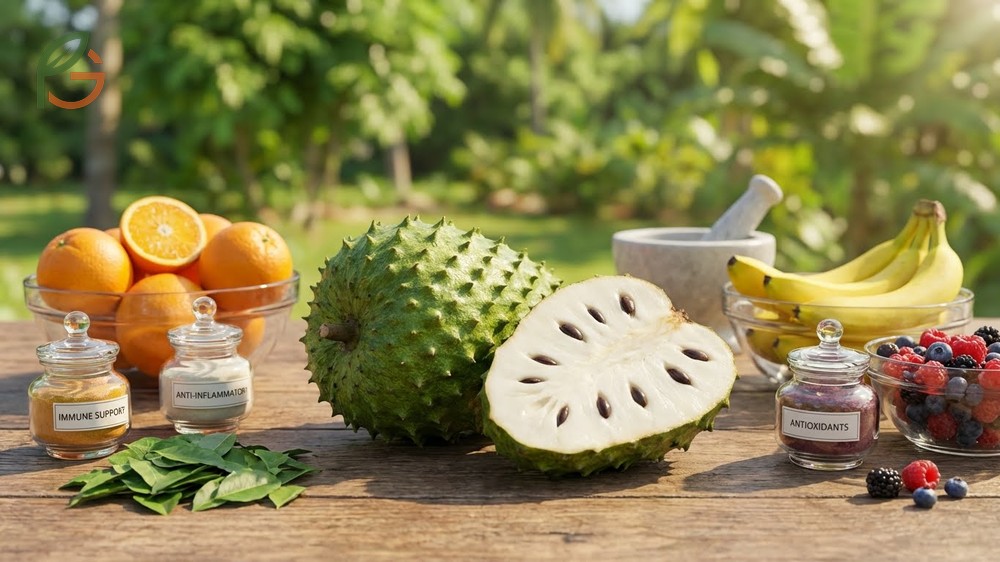
Benefits of graviola soursop include powerful immune system support, anti-inflammatory effects, and rich antioxidant content that protects cells from damage. Research shows this tropical fruit delivers 215% of your daily vitamin C in one serving[1], along with potassium, fiber, and B vitamins that work together for optimal health. FruitGarden synthesizes current research to help you understand how this remarkable fruit can enhance your wellness routine.
Quick Answer
Benefits of Graviola Soursop
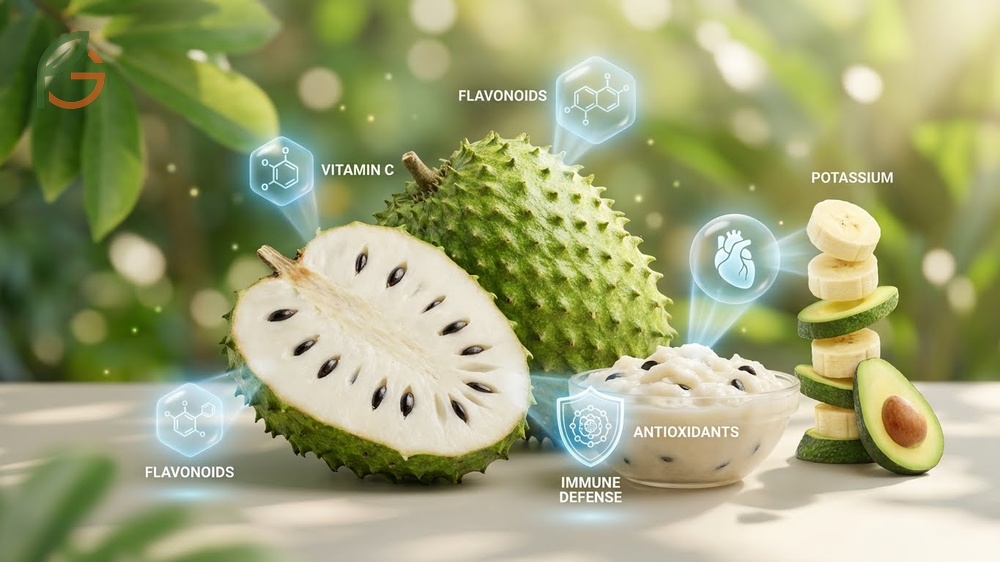
Studies demonstrate that graviola soursop offers multiple health advantages through its dense nutrient profile. The fruit’s high vitamin C content strengthens immune defenses while flavonoids combat cellular damage[6]. Research shows one cup of soursop pulp provides 626mg potassium[2], supporting healthy blood pressure and heart function.
Current data indicates graviola’s bioactive compounds work synergistically to protect against oxidative stress. For instance, the combination of vitamin C, phytosterols, and tannins creates a powerful antioxidant effect[3]. What often gets overlooked is that soursop’s low calorie density makes it ideal for weight management while still delivering essential nutrients.
Evidence suggests regular consumption may support cardiovascular health and metabolic function. Clinical trials with 143 participants showed soursop supplementation affected blood pressure and serum uric acid levels over a 3-month period[7]. The treatment group received 200g soursop juice daily, demonstrating practical application for health-conscious individuals.
Soursop Immune System Booster
Research shows vitamin C acts as the primary immune-enhancing component in graviola soursop. The vitamin strengthens your immune system’s ability to defend against pathogens and promotes destruction of free radicals[1]. This matters because consistent vitamin C intake supports both innate and adaptive immune responses.
The fruit also contains luteolin, quercetin, and tangeretin antioxidants that protect cells from oxidative stress[8]. These compounds reduce the risk of chronic diseases caused by free radical damage. Unlike synthetic supplements, soursop provides these nutrients in their natural form with complementary cofactors.
- Vitamin C at 215% daily value per whole fruit enhances white blood cell function
- Flavonoids including quercetin and luteolin reduce inflammatory markers
- B vitamins (B1, B2, B6) support cellular energy production for immune cells
- Potassium maintains electrolyte balance crucial for immune signaling
- Fiber promotes gut health where 70% of immune function originates
Important Note: While soursop supports immune health, it shouldn’t replace medical treatment for immune disorders. Consult your healthcare provider before using soursop supplements if you’re immunocompromised or taking immune-modulating medications.
Soursop Anti-Inflammatory Properties
Current research demonstrates soursop contains compounds that prevent overproduction of cytokines responsible for inflammation. The fruit’s anti-inflammatory properties may relieve symptoms in conditions like arthritis, osteoarthritis, and rheumatoid arthritis[9]. This works because antioxidants fight free radicals and reduce oxidative stress-induced inflammation.
Laboratory studies show soursop leaf extract significantly reduced COX-2 and TNFα expression compared with control groups[10]. Animal models demonstrated different levels of inflammation reduction at various doses. Most people don’t realize that chronic inflammation contributes to serious health conditions, making anti-inflammatory foods valuable preventive tools.
- Inhibits cyclooxygenase (COX) enzymes that produce inflammatory prostaglandins
- Reduces lipoxygenase (LOX) activity linked to chronic inflammation
- Decreases pro-inflammatory cytokine production in tissue samples
- Provides polyphenols that modulate inflammatory signaling pathways
- Contains acetogenins with unique anti-inflammatory molecular structures
Graviola Soursop Health Benefits

Evidence indicates graviola offers medicinal benefits beyond basic nutrition due to its phytochemical content. Agricultural data shows the fruit can be used to address conditions including diabetes, oxidative stress, high blood pressure, and cholesterol management[11]. The reason is simple: soursop’s bioactive compounds interact with multiple physiological systems simultaneously.
Studies demonstrate graviola inhibits enzymes α-glucosidase and α-amylase involved in carbohydrate metabolism[11]. This matters for blood sugar regulation and metabolic health. Research with diabetic rats showed blood sugar reductions up to 75% after soursop extract administration[3], though human studies use more moderate concentrations.
The fruit’s versatility extends to both pulp and leaf extracts as functional ingredients. Unlike many tropical fruits that lose nutrients during processing, soursop maintains its therapeutic compounds when properly handled. Current guidance emphasizes whole food sources over isolated supplements for maximum benefit.
Graviola Cancer Research Status
Research across multiple laboratories has investigated graviola’s potential anticancer properties. Studies using breast cancer cell lines and xenograft mouse models revealed graviola inhibited MCF-7 breast cancer cell growth by decreasing estrogen receptor, cyclin D1, and Bcl-2 gene expression[12]. These findings suggest possible mechanisms for tumor suppression.
A controlled trial with Ehrlich solid tumor mice showed significant tumor size decrease in graviola-treated groups versus controls[5]. The large number of cells in sub-G0/G1 population indicated tumor cell apoptosis and division inhibition. Combined treatment with low-dose radiation augmented the anticancer effect.
Critical Disclaimer: All graviola cancer research remains in laboratory and animal study phases. No clinical trials have confirmed these effects in humans. Never use soursop as a substitute for proven cancer treatments. Always consult your oncologist before trying any complementary therapies.
- Test-tube studies show graviola extract reduced tumor size and killed cancer cells
- Leukemia cell research found suppression of cancer cell growth and formation
- Breast cancer studies demonstrated enhanced immune system activity against tumors
- Animal models showed regulation of tumor cell cycle and apoptotic signaling
- No human clinical trials have validated safety or efficacy for cancer treatment
- Traditional cancer therapies remain the only proven treatment options
Soursop Benefits for Skin
Vitamin C and ascorbic acid content make soursop beneficial for skin health and radiance. Research shows these nutrients treat hyperpigmented skin and promote healthy, glowing complexion[13]. The antioxidants destroy free radicals that cause wrinkles, fine lines, and aging signs.
Soursop’s moisturizing properties make it effective for dry skin treatment. The fruit contains saponins and antioxidants that help skin glow naturally and healthily[13]. Its antiviral and anti-inflammatory qualities also prevent skin infections and treat conditions like eczema.
- Vitamin C promotes collagen synthesis for firm, elastic skin structure
- Antioxidants protect against UV damage and environmental pollutants
- Antibacterial properties help heal acne and prevent bacterial infections
- Moisturizing compounds hydrate dry skin when applied topically
- Anti-inflammatory effects soothe irritated skin and reduce redness
Soursop Nutrition Facts
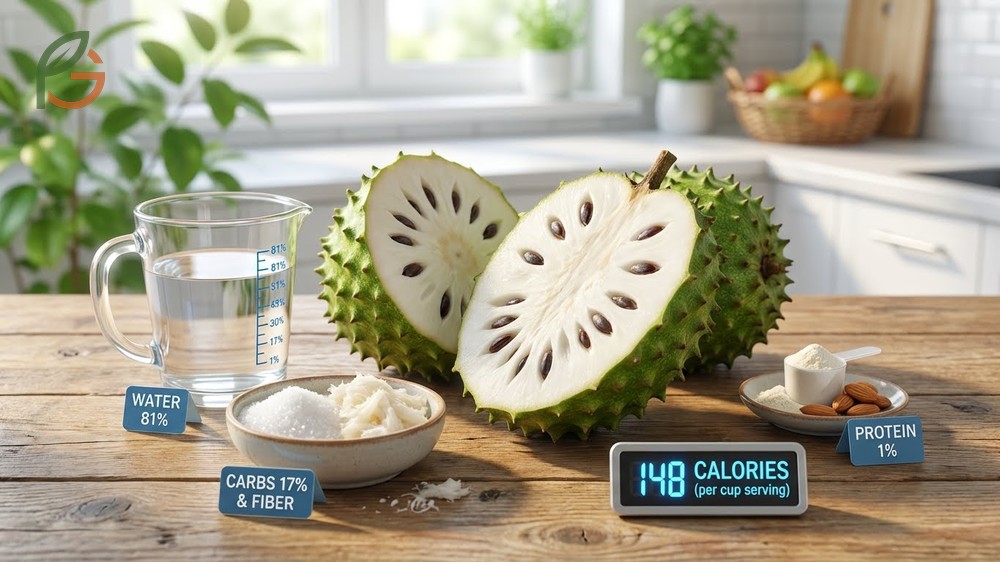
Nutritional analysis reveals soursop provides exceptional value with minimal caloric cost. Raw soursop contains 81% water, 17% carbohydrates, 1% protein, and negligible fat[14]. This composition makes it ideal for hydration and energy without excessive calories.
Agricultural data shows one cup serving delivers 148 calories, 37.9g carbohydrates, and 2.25g protein[2]. The natural sugar content provides quick energy while fiber slows absorption for sustained fuel. What makes soursop unique is its combination of macronutrients with dense micronutrient content.
This table compares nutritional values per 100 grams and per one cup serving of fresh soursop, showing calories, macronutrients, and key vitamins and minerals
| Nutrient | Per 100g[4] | Per Cup (225g)[2] | % Daily Value |
|---|---|---|---|
| Calories | 66 kcal | 148 kcal | 7% |
| Carbohydrates | 16.84g | 37.9g | 13% |
| Protein | 1g | 2.25g | 5% |
| Fat | 0.3g | 0.7g | 1% |
| Vitamin C | 20.6mg | 46.4mg | 52% |
| Potassium | 278mg | 626mg | 18% |
Soursop Vitamins and Minerals
Micronutrient analysis shows soursop delivers significant quantities of essential vitamins and minerals. One serving provides 31.5mg calcium, 626mg potassium, and 46.4mg vitamin C[2]. These nutrients support bone health, cardiovascular function, and immune defense.
The fruit also contains B vitamins including folate at 14mcg per 100g serving[6]. Folate supports DNA synthesis and red blood cell formation. Additional minerals like magnesium at 23mg and phosphorus at 19mg contribute to energy metabolism and cellular function[6].
- Vitamin C (52% DV): Powerful antioxidant supporting immune function and collagen production
- Potassium (18% DV): Regulates blood pressure and supports heart rhythm
- Folate (4% DV): Essential for DNA synthesis and cell division
- Magnesium: Supports 300+ enzymatic reactions including energy production
- Vitamin B6: Aids neurotransmitter synthesis and protein metabolism
- Calcium: Contributes to bone density and muscle contraction
Serving Tip: You’ll get maximum vitamin C benefits by consuming fresh soursop rather than processed products. Heat and prolonged storage degrade vitamin C content by 30-50%, so eat the fruit within 2-3 days of ripening for optimal nutrition.
Conclusion
The evidence is clear: benefits of graviola soursop extend from immune support and anti-inflammatory effects to antioxidant protection and essential nutrition. Research demonstrates this tropical fruit provides over 200% daily vitamin C, powerful flavonoids, and bioactive compounds that support multiple body systems. Current guidance emphasizes incorporating diverse nutrient-dense fruits like soursop into balanced diets for optimal health outcomes.
FruitGarden provides reliable, research-backed information to help you make informed decisions about growing and consuming tropical fruits. While soursop shows promising health benefits, remember it works best as part of a varied diet combined with other healthy lifestyle practices.
Medical Disclaimer
Important Medical Disclaimer: This content is for informational and educational purposes only. It’s not intended as a substitute for professional medical advice, diagnosis, or treatment. Always consult a qualified healthcare professional before making any changes to your diet, medication, or health routine, especially if you have diabetes, cancer, or other medical conditions. Never delay or disregard professional medical advice based on information from this article. The cancer research discussed involves only laboratory and animal studies—no human clinical trials have confirmed these effects.
Frequently Asked Questions
What Are the Main Health Benefits of Soursop Fruit?
The main health benefits include immune system support from high vitamin C content (215% daily value per fruit), anti-inflammatory properties from flavonoids, antioxidant protection against cellular damage, and potential blood pressure regulation. Research shows soursop provides 626mg potassium per cup, supporting cardiovascular health and electrolyte balance.
Is Soursop Good for Weight Loss?
Yes, soursop can support weight loss due to its low calorie density—only 66 calories per 100g with 81% water content. The natural fiber helps you feel full longer while providing steady energy from complex carbohydrates. However, weight loss requires overall calorie control and shouldn’t rely on any single food.
Can Soursop Really Fight Cancer?
Laboratory studies show promising anticancer properties in test tubes and animal models, with research demonstrating tumor size reduction and cancer cell death. However, no human clinical trials have confirmed these effects. You shouldn’t use soursop as a cancer treatment or substitute for proven medical therapies. Always consult your oncologist about any complementary approaches.
How Much Soursop Should I Eat Daily?
Most studies suggesting health benefits used 200-300g fresh fruit or juice daily. One cup serving (225g) provides excellent nutrition without excessive calories. Start with smaller portions if you’re new to soursop, and monitor how your body responds. Consult your healthcare provider before consuming large amounts, especially if you’re taking medications.
What’s the Best Way to Consume Soursop?
Fresh soursop eaten raw preserves maximum vitamin C and antioxidants. You can blend the pulp into smoothies, juice it, or add to fruit salads. Some people drink soursop leaf tea, though fruit provides better nutrition. Avoid products with added sugars, and consume within 2-3 days of ripening for optimal nutrient content.
Does Soursop Have Any Side Effects?
Excessive consumption may cause digestive upset due to fiber content. Some research suggests compounds in soursop seeds and stems could affect neurological function when consumed in very high doses over long periods. Stick to moderate fruit consumption (1 cup daily), avoid seeds, and consult your doctor if you’re pregnant, nursing, or taking medications.
Can Diabetics Eat Soursop Safely?
Yes, but with portion control. Soursop contains natural sugars (30.5g per cup) that affect blood glucose. Research shows graviola may help regulate blood sugar through enzyme inhibition, but diabetics should monitor glucose levels carefully and count the carbohydrates. Pair soursop with protein or healthy fats to minimize blood sugar spikes, and consult your healthcare provider.





