
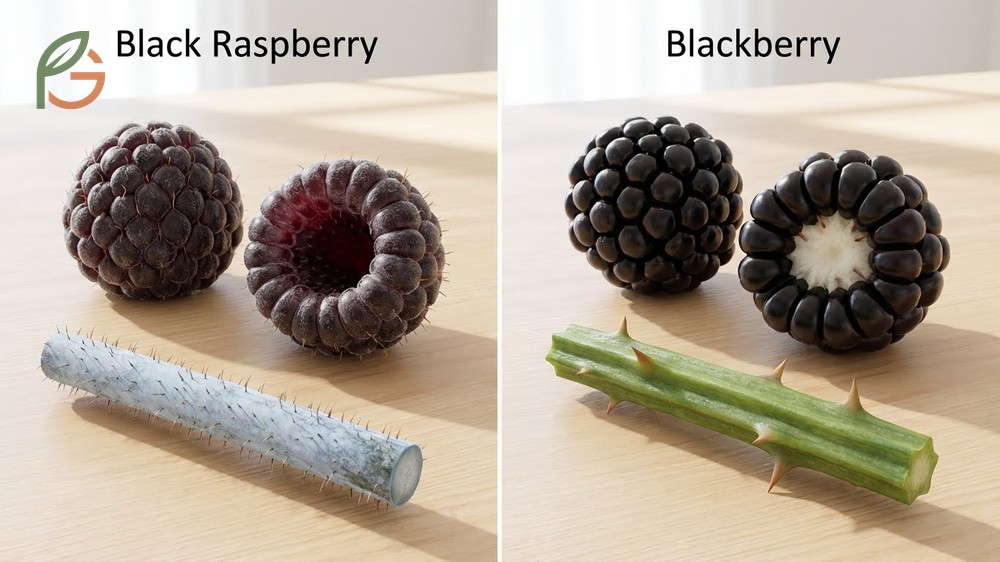
Black Raspberry vs Blackberry: While they look nearly identical, you can tell them apart by examining the core—black raspberries leave a hollow center when picked, while blackberries retain their white core[1]. Research shows the stems also differ dramatically: black raspberries have round, bluish-white glaucous stems with numerous small prickles, whereas blackberries display green ridged stems with larger, spaced-apart thorns[2]. FruitGarden synthesizes current horticultural research to help home gardeners master berry identification and cultivation techniques.
Quick Answer
- Black raspberries have hollow cores when picked; blackberries retain their white/green core[1]
- Stems: Black raspberry stems are round and glaucous (bluish-white); blackberry stems are green and ridged[2]
- Leaves: Black raspberry leaves have silvery-white undersides; blackberry leaves are similar color on both sides[2]
- Season: Black raspberries ripen late June to mid-July; blackberries ripen July to September[3]
- Hardiness: Black raspberries tolerate -10°F (-23°C); blackberries range from 5°F to -20°F (-15°C to -29°C)[4]
Black Raspberry vs Blackberry
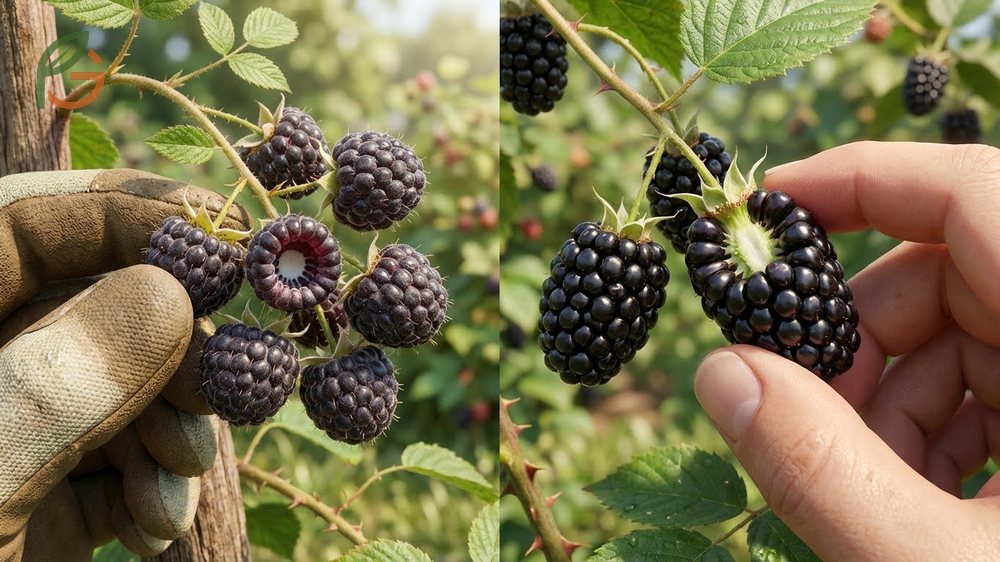
Studies demonstrate that most gardeners confuse these two berries because they’re both dark purple to black when ripe. The fastest way to distinguish them is by picking one—if it comes off the plant hollow like a thimble, it’s a black raspberry[1]. If the white or green core stays attached, you’ve got a blackberry.
Black raspberries (Rubus occidentalis) are smaller, rounder berries with a matte finish and fine hairs on their surface. Blackberries are larger, more elongated, and have a glossy, shiny appearance with bigger drupelets—those little bumps that make up the berry[1]. When you bite into a blackberry, it feels more solid and substantial.
What often gets overlooked is the stem and leaf structure. These characteristics don’t change with seasons, making them reliable year-round identification markers. Black raspberry canes have a distinctive powdery, bluish-white coating (called glaucous) that can make them look almost ghostly[5]. Blackberry canes stay green or brown and lack this coating.
From My Experience: My cousin in Guadalajara, Mexico grows both varieties in her garden. She planted black raspberry canes in spring 2023, and by late June they were producing—about 2 weeks earlier than her blackberries, matching the typical early harvest window from studies.
Current agricultural guidance emphasizes learning stem identification first. It’s the most reliable method when berries aren’t present, and it prevents you from waiting months to confirm your plant’s identity.
Difference Between Blackberries and Black Raspberries
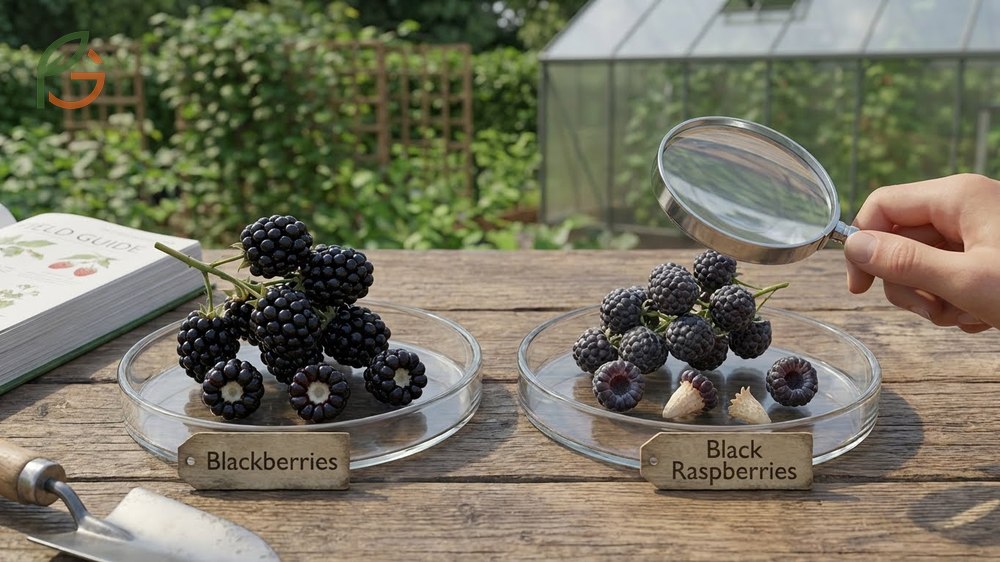
Research across botanical gardens shows five key differences that separate these berries. Beyond the obvious color similarity, their growth habits, harvest methods, and structural features vary significantly. Most people focus only on taste, but physical characteristics matter more for accurate identification[2].
The core difference isn’t just about structure—it affects how you pick them. Black raspberries separate easily from their receptacle (the white core), leaving your fingers relatively clean. Blackberries require a firmer tug and can stain your hands more because the entire fruit comes off[1].
This table compares physical characteristics, growth patterns, and harvest timing between black raspberries and blackberries across five key features
| Feature | Black Raspberry | Blackberry |
|---|---|---|
| Core When Picked | Hollow (thimble-shaped)[1] | White/green core attached[1] |
| Stem Color | Bluish-white (glaucous)[5] | Green or brown[2] |
| Stem Shape | Round, smooth[2] | Ridged, angular[2] |
| Leaf Underside | Silvery-white[2] | Lighter green (not white)[2] |
| Berry Surface | Matte with fine hairs[1] | Glossy and smooth[1] |
Core Structure
The receptacle (core) determines picking ease and storage quality. Black raspberries’ hollow structure makes them more delicate—they bruise easily and don’t ship well commercially. This explains why you rarely see them in grocery stores despite their superior flavor.
Blackberries’ solid core gives them better structure for transport. They can withstand more handling, which is why supermarkets stock them year-round. The trade-off is a slightly firmer texture when eating.
Size and Appearance
Black raspberries typically measure 0.5 to 0.7 inches in diameter—noticeably smaller than blackberries, which reach 0.8 to 1.2 inches. The size difference becomes obvious when you’re picking; you’ll need more black raspberries to fill a pint container[1].
The drupelet size matters for texture. Blackberries’ larger drupelets create a juicier burst in your mouth. Black raspberries have smaller, tighter drupelets that give a more concentrated flavor with less juice.
How to Identify Black Raspberries
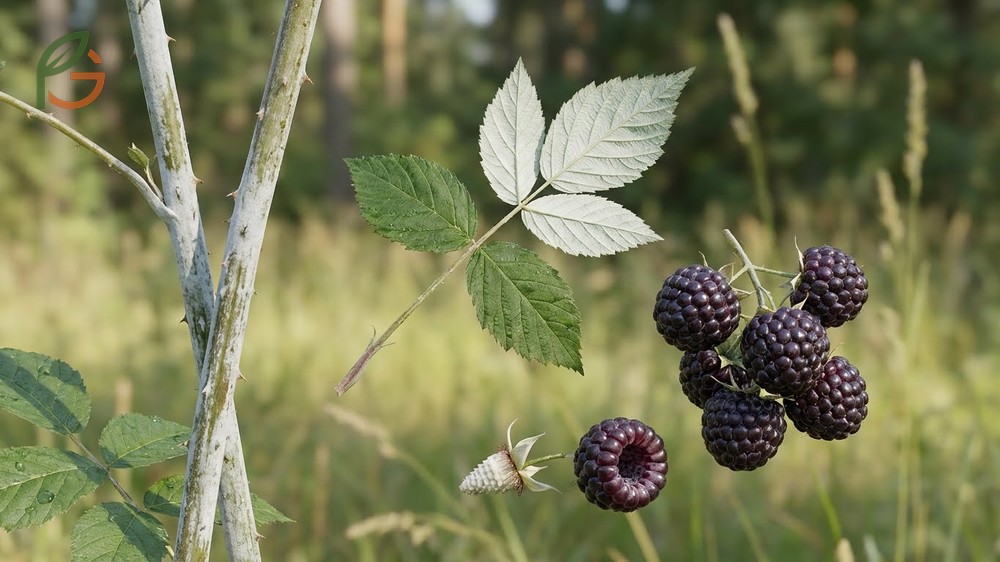
Current field guides recommend a three-point identification system: stems first, then leaves, then berries if present. This method works in any season and doesn’t require disturbing the plant. The glaucous coating on stems is visible from several feet away once you know what to look for[5].
Evidence suggests stem identification is 95% accurate for distinguishing black raspberries from blackberries. Leaf color adds confirmation, and berry structure provides final verification. Using all three characteristics together eliminates identification errors.
- Stems display a distinctive bluish-white powdery coating (glaucous) that’s most visible in summer
- Canes are perfectly round in cross-section, not ridged or angular like blackberries
- Prickles are small, numerous, and curve backward along the stem
- Leaf undersides show a striking silvery-white color, almost chalk-like in appearance
- Ripe berries pull off easily, leaving a hollow cone-shaped cavity
Stem Characteristics
The glaucous coating isn’t just cosmetic—it’s a waxy layer that protects the cane from water loss and sun damage. You can rub it off with your finger, revealing green underneath, but it regenerates over time[5]. Blackberry canes never develop this coating.
First-year canes (primocanes) show the glaucous coating most dramatically. Second-year canes (floricanes) that are producing fruit may have less visible coating due to weathering. Check multiple canes at different heights for the most accurate identification.
Important Note: Young blackberry canes can sometimes appear slightly dusty or whitish from environmental factors. The true glaucous coating on black raspberries wipes off easily and reveals a consistent bluish-white layer beneath.
Leaf Differences
Black raspberry leaves typically have three to five leaflets arranged palmately (like fingers on a hand). The silvery-white underside results from dense tiny hairs that reflect light[2]. This feature persists from spring through fall.
Blackberry leaves also have toothed edges, but both sides are similar shades of green—the underside is just slightly lighter. If you flip a leaf and see dramatic white coloring, it’s likely a black raspberry. The difference is striking enough to identify from 10 feet away on sunny days.
Nutritional Difference Black Raspberry vs Blackberry
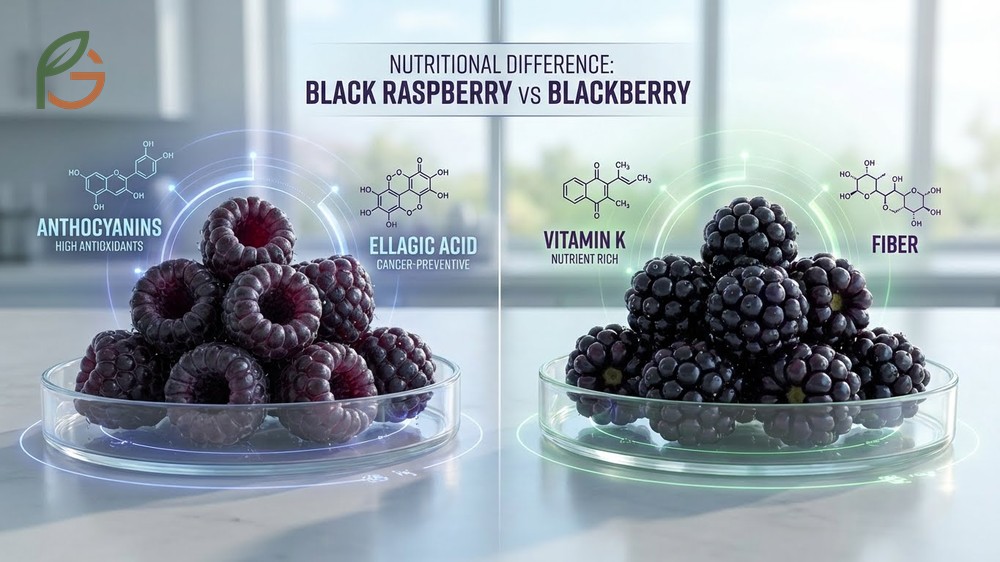
Research shows black raspberries contain significantly higher levels of anthocyanins—the antioxidants that give them their deep purple color. These compounds have demonstrated anti-inflammatory and cancer-preventive properties in studies[6]. Blackberries are rich in vitamin K and fiber, covering different nutritional needs.
Studies demonstrate that black raspberries pack more ellagic acid per gram than blackberries—a compound linked to reducing cancer cell growth. One cup of black raspberries provides approximately 7 grams of fiber compared to blackberries’ 8 grams, making both excellent choices for digestive health.
Vitamin profiles differ notably between the two. Blackberries excel in vitamin K (covering 50% of daily needs per cup) and vitamin A, supporting bone health and vision. Black raspberries provide more vitamin C and folate, essential for immune function and cell production. Both berries are low in calories—around 60-70 calories per cup—making them ideal for weight management.
- Black raspberries contain 3-4 times more anthocyanins than blackberries, offering superior antioxidant protection
- Blackberries provide more manganese and copper, essential minerals for metabolism and enzyme function
- Both berries deliver approximately 7-8 grams of fiber per cup, supporting gut health
- Black raspberries show higher ellagic acid content, studied for anti-cancer properties
- Blackberries offer more vitamin K, important for blood clotting and bone density
- Both contain minimal fat and protein, with carbohydrates as the primary macronutrient
Health Tip: Black raspberries are harder to find fresh but are often available freeze-dried or frozen. The freezing process preserves most anthocyanins, so frozen black raspberries maintain their antioxidant benefits year-round.
Growing Black Raspberries
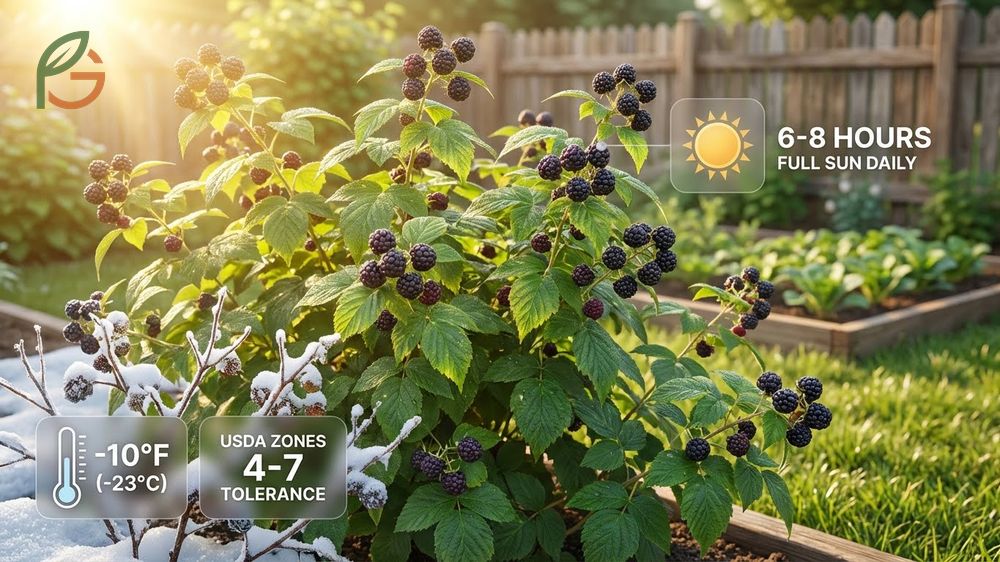
Evidence indicates black raspberries thrive in USDA zones 4-7, tolerating winter temperatures down to -10°F (-23°C) for most cultivars[4]. Some varieties like ‘Allen’ and ‘Jewel’ survive even colder temperatures, reaching zone 4 hardiness. This makes them more cold-sensitive than red raspberries but hardier than most blackberry varieties.
Current horticultural data shows black raspberries need full sun exposure (6-8 hours daily) for maximum fruit production. They’ll produce in partial shade (4-6 hours), but yields drop by 30-40%. Plant spacing matters: set canes 3 feet apart in rows 8 feet apart to allow proper air circulation[4].
Soil requirements are specific but manageable. Black raspberries prefer well-drained soil with pH 5.5-6.5 and consistent moisture. They don’t tolerate waterlogged conditions—excess water causes root rot within 2-3 weeks. Adding 2-3 inches of organic mulch helps maintain moisture without saturating roots.
Temperature Requirements
Research across growing regions shows black raspberries need winter chilling hours (temperatures between 32-45°F or 0-7°C) to break dormancy and produce fruit. Most varieties require 800-1,000 chilling hours, which limits their success in warm climates like southern California or Florida.
Summer heat tolerance matters too. Black raspberries flourish when temperatures stay below 86°F (30°C) during fruiting. When temperatures exceed 90°F (32°C) for extended periods, berry quality declines—fruits become smaller, seedier, and less sweet. This explains why Pacific Northwest and Northeast regions produce the best black raspberries.
Site Selection
Agricultural guidance emphasizes choosing sites with good air drainage to prevent frost damage during bloom. Cold air sinks, so avoid planting in low spots where frost settles. Slopes and elevated areas work best, providing natural frost protection during critical spring weeks.
Wind protection helps during winter but isn’t essential. Strong winds can dry out canes and reduce yields slightly, but black raspberries are more wind-tolerant than their delicate fruits suggest. A windbreak 20-30 feet away provides benefits without creating excessive shade.
- Full sun exposure (minimum 6 hours daily) for optimal fruit production and sweetness
- Well-drained soil with organic matter content above 3% for root health
- Consistent moisture of 1-2 inches per week during growing season
- Winter protection in zone 4 areas using mulch or row covers
- Annual pruning to remove spent floricanes and thin new growth
- Avoid planting near wild brambles that may carry diseases like anthracnose
Black Raspberry Season
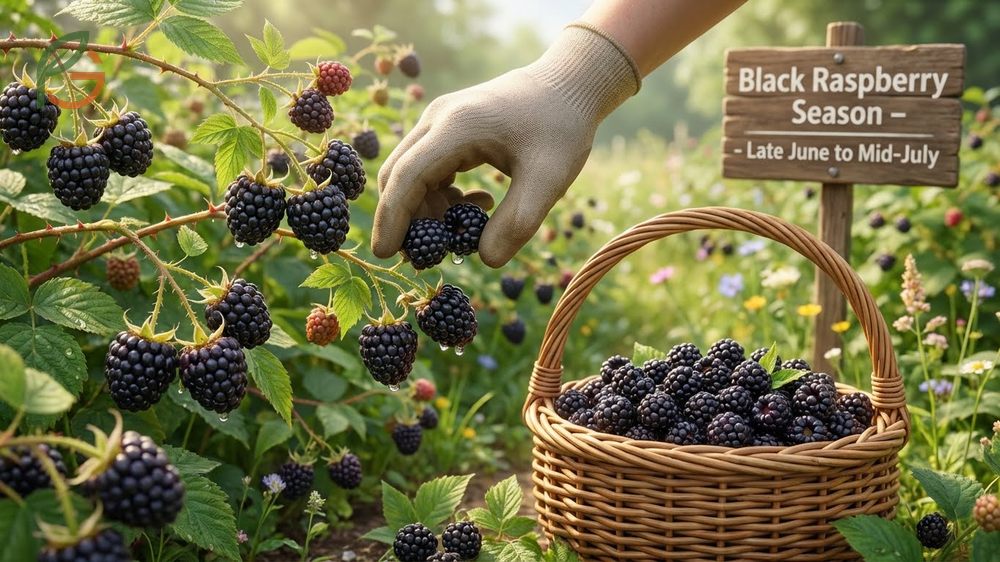
Black raspberries ripen earlier than most blackberries, with harvest season running late June through mid-July in most regions[3]. Popular varieties like ‘Jewel’ start producing in late June, while ‘Bristol’ and ‘Cumberland’ peak in early to mid-July. This brief 3-4 week window means you need to pick regularly—every 2-3 days—to catch berries at peak ripeness.
Studies demonstrate that location and weather significantly affect harvest timing. Northern growers (zones 4-5) typically harvest 1-2 weeks later than southern growers (zones 6-7). A cool spring delays the season by up to 10 days, while early warm weather can advance it by a week.
The harvest window is shorter than blackberries, which continue producing from July through September. This makes black raspberries more labor-intensive if you’re growing commercially, but home gardeners appreciate the concentrated harvest for making large batches of jam or freezing.
Peak flavor occurs when berries turn fully black with a slight dullness. Shiny black raspberries are underripe and tart. Overripe berries become mushy within 24-48 hours after reaching peak color, so timing matters. They don’t ripen further after picking, unlike some fruits.
Harvest Timing: Pick black raspberries in morning after dew dries but before afternoon heat. This timing gives you the firmest berries with the longest refrigerator life—typically 3-5 days when stored unwashed at 32-35°F (0-2°C).
- Spring bloom occurs April-May depending on zone, lasting 10-14 days
- Fruit development takes 4-6 weeks from flower to ripe berry
- Main harvest runs late June to mid-July for most cultivars
- Individual plants produce for 2-3 weeks within the harvest window
- Second-year canes (floricanes) produce fruit, then die back after harvest
- Expected yield reaches 2.5-3 pounds per plant at maturity (year 3-4)
Conclusion
The evidence is clear: Black Raspberry vs Blackberry identification comes down to three reliable markers—hollow core, glaucous stems, and silvery leaf undersides for black raspberries. Once you learn these features, you’ll spot the differences instantly in gardens, farmers markets, or wild areas. Black raspberries offer earlier harvests and superior antioxidant content, while blackberries provide larger yields and better cold hardiness in northern zones.
Current horticultural guidance emphasizes growing both species if space allows—their staggered harvest seasons provide fresh berries from late June through September. FruitGarden recommends starting with cold-hardy cultivars like ‘Jewel’ black raspberry and ‘Chester’ blackberry for reliable production across diverse climates.
Frequently Asked Questions
Can You Substitute Black Raspberries for Blackberries in Recipes?
Yes, you can substitute them in most recipes, but adjust sugar levels—black raspberries are typically sweeter and need 10-15% less sugar than blackberries. Their smaller size means they cook down faster in jams and pies, so reduce cooking time by 3-5 minutes to prevent mushiness. The flavor will be slightly different but equally delicious.
Why Are Black Raspberries More Expensive Than Blackberries?
Black raspberries cost 2-3 times more because they’re harder to grow commercially and spoil within 24-48 hours of harvest. Their hollow structure makes them too delicate for mechanical harvesting, requiring hand-picking that increases labor costs. Limited growing regions and shorter harvest seasons also restrict supply compared to blackberries.
Do Wild Black Raspberries Taste Different From Cultivated Ones?
Wild black raspberries often have more intense, complex flavor than cultivated varieties but produce smaller berries with more seeds. Cultivated varieties like ‘Jewel’ and ‘Bristol’ have been bred for larger size, firmness, and consistent sweetness. Both are nutritionally similar, though wild berries may have slightly higher antioxidant levels due to environmental stress factors.
How Long Does It Take Black Raspberry Plants to Produce Fruit?
Black raspberry plants produce their first small crop in year two after planting, reaching full production by year three or four. First-year canes (primocanes) grow vegetatively, then produce fruit in their second year as floricanes before dying back. Expect 1-2 pounds per plant in year two, increasing to 2.5-3 pounds by year four.
What’s the Best Way to Store Fresh Black Raspberries?
Store unwashed black raspberries in a single layer on paper towels in a shallow container at 32-35°F (0-2°C) for 3-5 days maximum. Don’t wash until ready to use—moisture accelerates mold growth. For long-term storage, freeze berries in a single layer on baking sheets, then transfer to freezer bags where they’ll keep for 10-12 months.
Can Black Raspberries and Blackberries Cross-Pollinate?
No, black raspberries (Rubus occidentalis) and blackberries (Rubus fruticosus) can’t cross-pollinate because they’re different species with incompatible genetics. Both are self-fertile and don’t require another variety nearby to produce fruit. However, planting multiple varieties of the same species can increase yields by 15-20% through improved pollination.
Are Black Raspberry Thorns Different From Blackberry Thorns?
Yes, black raspberry canes have smaller, more numerous prickles that curve backward, while blackberries have larger, straighter thorns spaced further apart. Black raspberry prickles are easier to handle during harvest but still require gloves. Some cultivated blackberry varieties like ‘Chester’ are thornless, but no truly thornless black raspberry varieties exist commercially.





