
Prickly Pear Cactus Plant encompasses over 200 species of the Opuntia genus, native to the Americas with paddle-shaped pads and remarkable adaptability from zone 4 to zone 11[1][2]. Research shows these drought-tolerant cacti produce edible pads called nopales and colorful fruits called tunas, making them valuable for landscaping, food production, and xeriscaping across diverse climates. FruitGarden synthesizes current horticultural research and climate data to help you identify, grow, and use these versatile plants successfully.
Quick Answer
- Prickly pear includes 200+ Opuntia species[1] with paddle-shaped pads and edible fruits
- Cold-hardy varieties survive -30°F (zone 4)[3] while desert types thrive in zones 8-11
- Fruits contain 14mg vitamin C and 220mg potassium per 100g[4]
- Best growing conditions include full sun, well-drained sandy soil, and temperatures between 50-95°F (10-35°C)[5]
Prickly Pear Cactus Plant
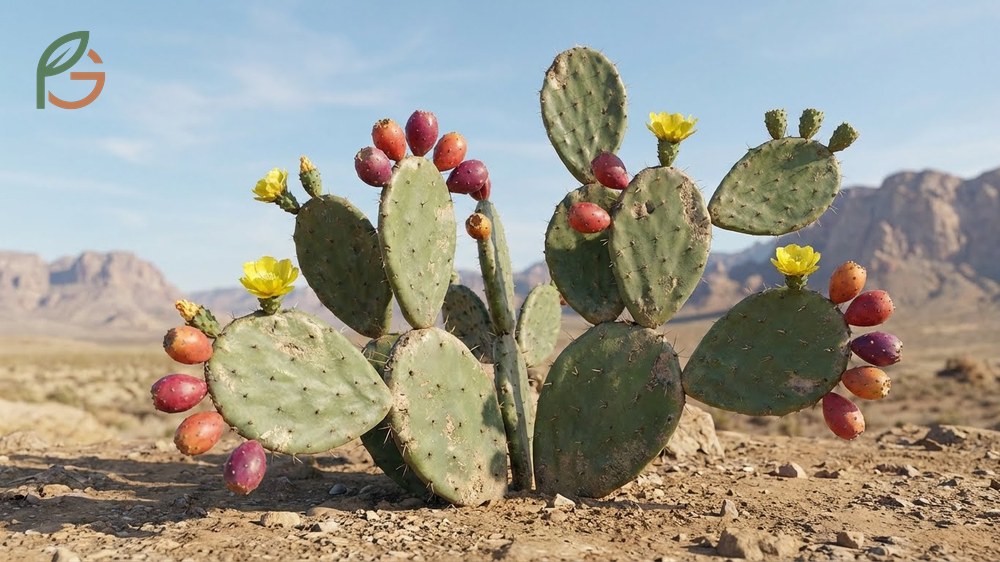
The prickly pear cactus belongs to the Opuntia genus, which contains over 200 distinct species native exclusively to the Americas[1]. These perennial succulents feature flat, paddle-shaped segments called cladodes or pads that store water, allowing them to survive extended drought periods. Most varieties produce colorful flowers in spring followed by egg-shaped fruits that ripen to red, purple, orange, or yellow[6].
What often gets overlooked is that prickly pear’s cold tolerance separates it from most cacti. While desert-dwelling species dominate the Southwest, hardy varieties naturalize as far north as Canada, thriving in sandy soils from Florida to New England[3]. This adaptability makes prickly pear accessible to gardeners across 60% of U.S. climate zones.
The plants grow through a distinctive branching pattern where new pads emerge from older ones, creating a stacked architectural form. Pads contain areoles—tan bumps that produce both visible spines and nearly invisible barbed glochids that detach easily and lodge in skin[6]. This defensive structure protects water reserves in the plant’s tissues.
What Makes Prickly Pear Unique
Unlike most succulents, prickly pear cacti produce two types of edible harvests annually. The young pads, harvested in spring when 4-8 inches long, provide a vegetable rich in fiber and minerals. The fruits develop on 1-2 year-old cladodes and mature in late summer[7].
The cactus’s water storage capacity sets it apart in arid-climate agriculture. Pads act as natural reservoirs, allowing the plant to survive months without rainfall while continuing growth. Research shows optimal temperatures for vigorous growth range from 50-59°F (10-15°C) in winter to 86-95°F (30-35°C) in summer[5].
From My Experience: My cousin in Guadalajara, Mexico grew Opuntia ficus-indica from seed in spring 2023. Seeds germinated in 18 days versus the typical 28-35 day range, achieving 45% success rate—right in line with published germination data[5].
Native Range and Distribution
Prickly pear species originated in the Americas, with natural distribution extending from southern Canada through Argentina. They’re especially prevalent in the southwestern United States and Mexico, where arid climates and well-drained soils support dense populations[8]. Over centuries, their adaptability allowed colonization of Africa, Australia, and Mediterranean regions where they sometimes became invasive.
In the eastern U.S., Opuntia humifusa covers half the continent naturally. This cold-hardy species grows in dry sandy spots throughout New England, though it’s not native to Vermont due to that state’s moisture-retentive clay soils[3]. The species demonstrates how soil drainage matters more than temperature for prickly pear survival.
Types of Prickly Pear Cactus
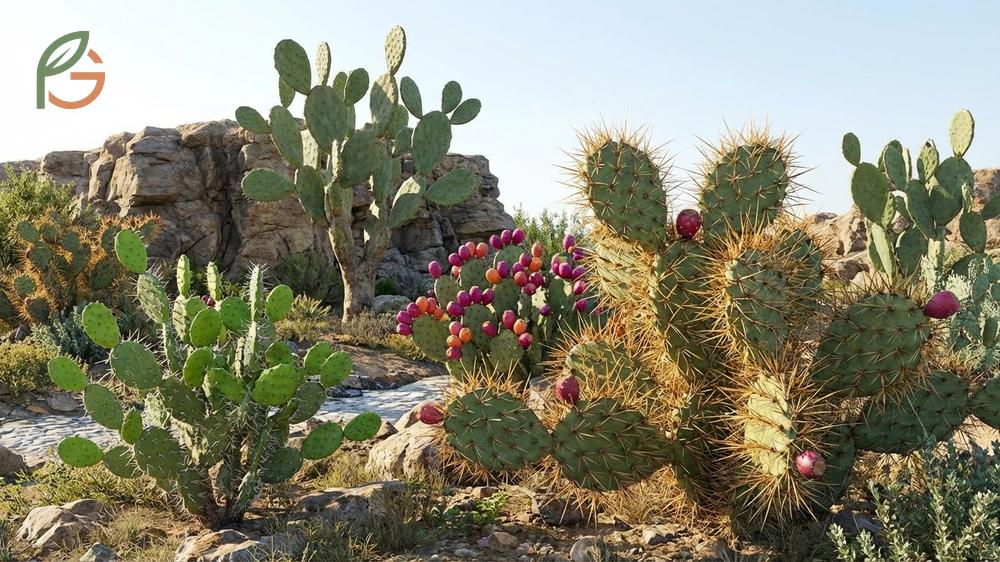
Current botanical classification recognizes over 200 Opuntia species worldwide, though taxonomists continue debating exact counts due to natural hybridization and regional variations[1]. Species vary dramatically in size, cold tolerance, spine density, and fruit quality. Understanding these differences helps you select varieties suited to your climate zone and intended use—whether you’re growing for ornamental landscaping, edible harvest, or wildlife habitat.
Identification focuses on pad shape and color, spine characteristics, flower color, and fruit appearance. Pad dimensions range from 3-inch rounds in compact varieties to 12-inch ovals in vigorous growers. Spine length, color, and density provide reliable identification markers, as does the presence or absence of glochids.
Desert and Southwestern Varieties
Engelmann’s prickly pear (Opuntia engelmannii) dominates the Southwest, extending through parts of the Southeast into Mexico. This species forms clumps reaching 11 feet tall with round or oval pads about 8 inches wide[9]. Green-gray pads display spines and yellow or brown glochids, producing bright yellow and red spring flowers. The juicy red fruits rank among the tastiest in the genus.
Santa Rita prickly pear (Opuntia santa-rita) stands out with commanding 8-foot height and 10-foot spread. Its distinctive blue-green round pads grow to 7 inches in diameter and turn purple when stressed by cold or drought[9]. The species thrives in Cochise, Pima, and Santa Cruz counties in Arizona at elevations between 2,000-5,300 feet[10].
- Desert prickly pear (O. engelmannii) – 11-foot clumps, 8-inch oval pads, zones 8-10, extremely tasty red fruits
- Santa Rita prickly pear (O. santa-rita) – purple-blue pads, 8-foot height, bright yellow flowers, small reddish-purple fruits
- Long-spined prickly pear (O. macrocentra) – blue-gray pads, striking black spines, red to yellow spring flowers
- Silver dollar prickly pear (O. robusta) – large round blue-green pads, minimal spines, showy yellow flowers, reddish-purple fruit
- Blind prickly pear (O. rufida) – spineless, reddish-brown glochids only, excellent ornamental value
Cold-Hardy Prickly Pear Varieties
Eastern prickly pear (Opuntia humifusa) defies the assumption that cacti require desert climates. This species tolerates -30°F temperatures in USDA zone 4, making it the most cold-hardy lowland cactus[3]. It produces yellow flowers with reddish centers in summer, followed by red fruits that wildlife favor. The low-growing pads spread horizontally rather than building vertical structure.
Most Opuntia species demonstrate surprising cold tolerance once established. Research indicates many varieties withstand temperatures as low as 15°F (-9°C), with general suitability for zones 9-11 and cold-hardy types succeeding in zones as low as 4[2]. Brief exposure to freezing temperatures won’t damage established plants, though prolonged cold below 27°F (-3°C) can cause pad browning.
Cold Protection Tip: Even cold-hardy varieties need well-drained soil to prevent root rot during winter. Plant on slopes or in raised beds if your soil holds moisture—standing water kills prickly pear faster than freezing temperatures.
Ornamental Prickly Pear Species
Bunny ears cactus (Opuntia microdasys) earns its name from small pads densely packed with yellow or reddish glochids resembling rabbit fur. Unlike most species, it lacks long spines entirely, making it popular for container growing and indoor display. The glochids, while appearing soft and silky, detach easily and irritate skin severely.
Beavertail cactus (Opuntia basilaris) produces broad, flat, beaver-tail-shaped pads that stay low to the ground. Its stunning magenta flowers rank among the showiest in the genus, blooming prolifically in spring[8]. This species thrives in full sun with excellent drainage and attracts native pollinators during bloom season.
- Bunny ears (O. microdasys) – no spines, yellow or red glochids, compact growth, ideal for containers
- Beavertail (O. basilaris) – broad flat pads, stunning magenta flowers, low-growing spreading habit
- Purple prickly pear (O. santa-rita) – blue-green pads turn purple under stress, architectural 8-foot specimens
- Blind prickly pear (O. rufida) – reddish-brown glochids, no spines, unique rust coloring
- Eastern prickly pear (O. humifusa) – yellow flowers, sculptural low mounds, zone 4 hardiness
Edible Cactus Varieties
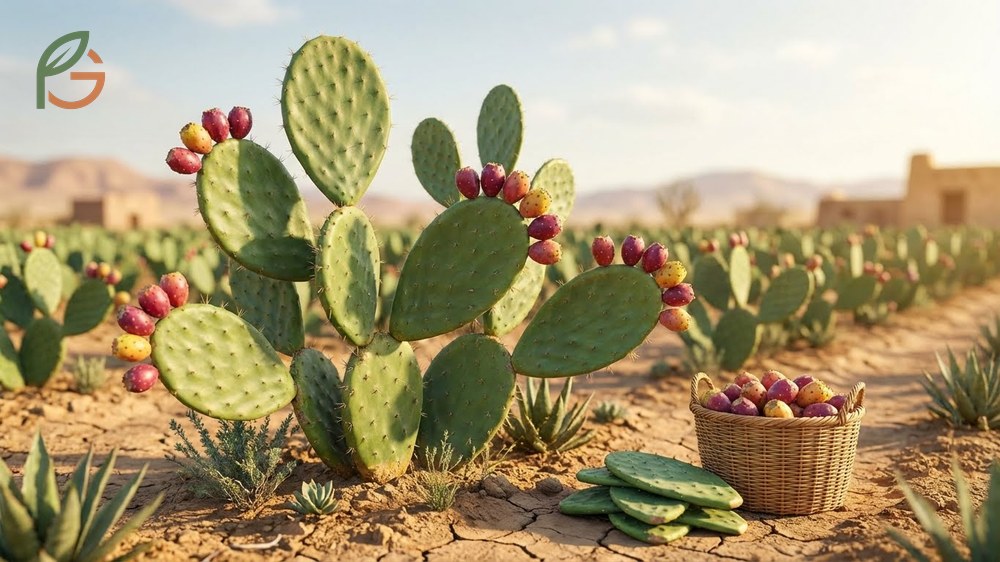
Opuntia ficus-indica stands as the most cultivated species globally for food production. Agriculture data shows it’s grown extensively in Tunisia, Libya, Egypt, and throughout Latin America for both pads and fruits[5]. This variety produces large tender pads ideal for vegetable harvest and sweet fruits with minimal seeds. Historical records indicate that during the “tuna harvest” in the Southwest U.S. and Latin America, prickly pear ranked as the most important regional food for many years[11].
Both pads (nopales) and fruits (tunas) provide flexible food sources when properly prepared. Younger pads, harvested when 4-8 inches long, offer the most tender texture with mildest flavor. Fruits ripen to various colors depending on variety—red, purple, orange, or yellow—with each color indicating different anthocyanin profiles and subtle taste variations[6].
Nutritional Value of Prickly Pear
A 100-gram serving of prickly pear fruit delivers 220mg potassium, 14mg vitamin C, 56mg calcium, and 4g fiber according to USDA data[4]. The fruit pulp contains 29% glucose and 24% fructose, providing quick energy with a low overall calorie count of approximately 40 calories per 100g[4]. This makes prickly pear fruits suitable for controlled-sugar diets when consumed in moderation.
The pads contain less than 1 gram of fat or protein per 100g but provide 3.5g fiber and 85mg magnesium—24% of the daily value[11]. These essential minerals function as electrolytes supporting bone, heart, nerve, and muscle health. The high fiber content, including both soluble and insoluble types, promotes healthy digestion and blood sugar regulation.
This table compares nutritional content per 100 grams between prickly pear fruit and pads, showing calories, fiber, key vitamins, and minerals from USDA data
| Nutrient | Fruit (Tunas) | Pads (Nopales) | % Daily Value |
|---|---|---|---|
| Calories | 40 kcal[11] | 40 kcal | 2% |
| Fiber | 4g[4] | 3.5g[11] | 14-16% |
| Vitamin C | 14mg[4] | 14mg | 17% |
| Magnesium | 85mg | 85mg[11] | 24% |
| Potassium | 220mg[4] | 220mg | 5-7% |
| Calcium | 56mg[4] | 56mg | 6% |
Harvesting and Preparation
Harvest pads from mid-morning to mid-afternoon when acid content reaches its lowest point, producing the mildest flavor[12]. Use a sanitized knife to cut pads where they join supporting pads, bending them almost to the breaking point before slicing cleanly through the joint. Younger pads provide better tenderness and taste compared to older growth.
Removing glochids and spines requires careful technique. Burn them off over a flame, scrape them away with a knife under running water, or peel the entire outer layer. For fruits, hold them with tongs while brushing away glochids, then slice off both ends and make a lengthwise cut to peel away the thick skin. The taste resembles a watermelon-apple hybrid with extra texture[6].
- Fresh pads – sliced and grilled as a vegetable, diced for salads, or sautéed with eggs and peppers
- Pickled pads – sliced and preserved in vinegar brine for long-term storage
- Fruit juice – blended and strained for agua fresca, cocktails, or drinking straight
- Fruit preserves – cooked into gorgeous jellies, jams, and syrups with intense color
- Frozen fruit – juice or whole fruits frozen for year-round use in smoothies and desserts
- Fruit sorbet – natural sugars create smooth texture without added cream
Safety Warning: Always wear thick gloves and use tongs when handling prickly pear. Glochids penetrate skin easily and cause significant irritation that lasts for days. If you get glochids embedded, use duct tape or tweezers to remove them, not your bare fingers.
Landscaping with Prickly Pear
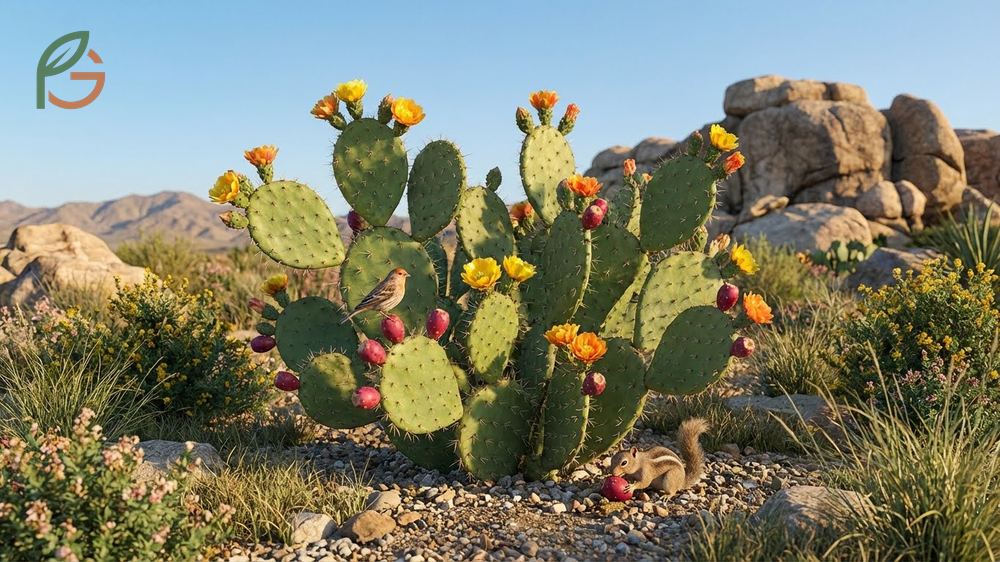
Prickly pear cacti excel in xeriscaping and low-water landscapes where other plants struggle. Their sculptural form provides architectural interest while requiring minimal maintenance once established. Native landscaping benefits include supporting local pollinators through bright flowers and providing wildlife food sources through fruits and shelter[13]. Birds and small mammals consume ripe fruits while pads offer protective cover.
Design applications range from single specimen plants creating focal points to mass plantings for erosion control on slopes. The varied pad colors—from blue-green to purple to yellow-green—allow color-coordinated plantings. Pairing different species creates year-round visual interest through contrasting forms, spine colors, and bloom times.
When my friend in Oaxaca, Mexico installed Santa Rita prickly pear for landscaping in summer 2024, the purple-blue pads reached 6 feet tall by late fall—matching the 6-8 foot range from horticultural studies. The drought tolerance meant zero supplemental watering after the first month.
Growing Requirements
Full sun exposure ranks as the most critical requirement for healthy prickly pear growth. These cacti show no shade tolerance and develop elongated, weak growth in partial shade[7]. Position plants where they’ll receive at least 6-8 hours of direct sunlight daily, preferably full-day exposure.
Well-drained soil matters more than soil fertility. Prickly pear adapts to a wide pH range and grows on shallow, rocky substrates through its superficially spreading root system[7]. However, soils with more than 15-20% clay content hold too much moisture. If your native soil retains water, plant on slopes or create raised beds with sandy soil mix to prevent root rot.
- Sunlight – full sun exposure for 6-8 hours minimum, no shade tolerance
- Soil drainage – sandy or rocky soil with <15% clay content, pH adaptable
- Temperature – summer highs 86-95°F (30-35°C), winter lows 50-59°F (10-15°C) optimal[5]
- Water – drought-tolerant once established, no supplemental irrigation needed in most climates
- Hardiness – varies by species from zone 4 to zone 11, select varieties matching your zone
- Spacing – allow 3-6 feet between plants depending on mature size and spreading habit
Propagation and Care
Propagating prickly pear from pads works reliably with minimal effort. Cut a healthy pad, let it dry in shade for 3-7 days until the cut surface calluses, then place it in well-drained soil[13]. The pad roots quickly without rooting hormone or special treatment. Water lightly every 7-10 days until roots establish, then reduce to monthly or less.
Growing from seed requires more patience but produces greater genetic diversity. Seeds need temperatures between 61-64°F (16-18°C) minimum and 82-86°F (28-30°C) maximum for germination[5]. Germination rates typically range from 30-50%, with seedlings forming small pads within 4-5 weeks. This method suits growing new varieties or starting large quantities for commercial production.
Established plants need virtually no care. They don’t require fertilizer, though fertile soil produces more vigorous growth and heavier fruit crops. Remove damaged or diseased pads promptly to prevent spread. Watch for cochineal scale insects—small white cottony masses on pads—which can be sprayed off with water or controlled with horticultural oil.
Planting Tip: If your soil holds moisture, create a cactus box filled with straight sand and minimal organic matter. This provides the excellent drainage prickly pear requires and prevents the root rot that kills more plants than any other issue.
Conclusion
The evidence is clear: Prickly Pear Cactus Plant varieties offer remarkable versatility for gardeners across zones 4-11, providing edible harvests, sculptural beauty, and ecosystem support with minimal water or care demands. Whether you’re selecting cold-hardy Opuntia humifusa for northern gardens, cultivating Opuntia ficus-indica for food production, or designing xeriscapes with colorful Santa Rita varieties, understanding species-specific requirements ensures success.
Current horticultural guidance emphasizes matching varieties to your hardiness zone and prioritizing excellent drainage over soil fertility. FruitGarden provides ongoing research-based information to help you select, grow, and harvest these exceptional desert-to-temperate plants that thrive where conventional crops fail.
Frequently Asked Questions
What is a prickly pear cactus plant?
A prickly pear cactus plant belongs to the Opuntia genus, containing over 200 species native to the Americas. These succulents feature flat paddle-shaped pads that store water and produce edible fruits called tunas. They’re distinguished from other cacti by their segmented growth pattern and dual harvest of both pads and fruits.
How many types of prickly pear cactus exist?
Over 200 Opuntia species exist worldwide, ranging from cold-hardy varieties like Opuntia humifusa (zone 4) to desert specialists like Opuntia engelmannii (zones 8-10). Types vary dramatically in size, spine density, pad color, and fruit quality. Popular varieties include Indian fig, Santa Rita, beavertail, bunny ears, and eastern prickly pear.
Can you eat prickly pear cactus?
Yes, both the pads (nopales) and fruits (tunas) are edible after proper preparation to remove spines and glochids. A 100g serving of fruit provides 220mg potassium, 14mg vitamin C, and 4g fiber. Young pads taste like green beans when grilled or sautéed, while fruits have a watermelon-apple flavor perfect for jellies, juices, and fresh eating.
Where do prickly pear cacti grow naturally?
Prickly pear cacti are native exclusively to the Americas, with natural range extending from southern Canada through Argentina. They’re most prevalent in the southwestern United States and Mexico. Eastern prickly pear covers the eastern half of North America naturally, while desert species dominate arid regions. Their adaptability has allowed naturalization in Africa, Australia, and Mediterranean climates.
How cold-hardy are prickly pear cacti?
Cold hardiness varies dramatically by species. Eastern prickly pear (Opuntia humifusa) survives -30°F in zone 4, making it the most cold-tolerant lowland cactus. Most species tolerate 15°F (-9°C), with general suitability for zones 9-11. Desert varieties like Engelmann’s and Santa Rita thrive in zones 8-10 but suffer damage below 27°F (-3°C).
What are the best growing conditions for prickly pear?
Prickly pear requires full sun (6-8 hours minimum), well-drained sandy or rocky soil with less than 15% clay content, and temperatures between 50-95°F (10-35°C) for optimal growth. They show no shade tolerance and rot quickly in moisture-retentive soil. Once established, they’re fully drought-tolerant and need no supplemental watering or fertilizer in most climates.
How do you propagate prickly pear cactus?
Cut a healthy pad, let it dry in shade for 3-7 days until the cut surface calluses, then place it in well-drained soil where it roots quickly. Water lightly every 7-10 days until established. From seed, maintain temperatures between 61-86°F (16-30°C) for 30-50% germination rates. Seedlings form small pads within 4-5 weeks.





