
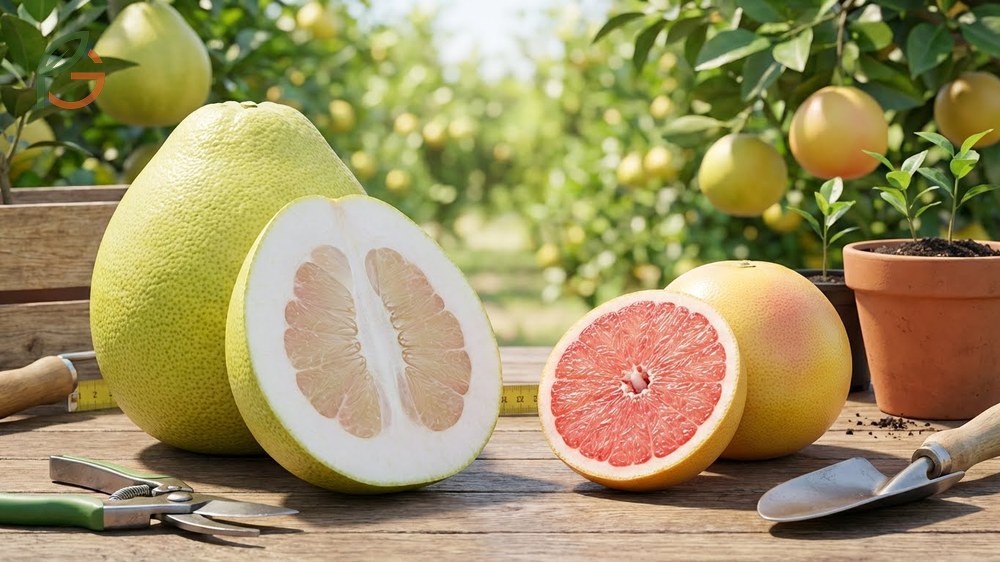
Pomelo vs grapefruit isn’t just about size—it’s about understanding which citrus fits your taste and garden space. Research shows pomelos reach 6-10 inches in diameter and weigh 2-4 pounds[1], making them the largest citrus fruit, while grapefruits stay smaller at 4-5 inches with a sharper, tangier flavor profile[2]. FruitGarden brings you evidence-based comparisons to help American gardeners and fruit enthusiasts choose the right citrus for their needs.
Quick Answer
- Pomelos are the largest citrus fruit, measuring 6-10 inches diameter and weighing 2-4 pounds[1]
- Grapefruits grow smaller at 4-5 inches with thinner rinds and juicier flesh than pomelos
- Pomelos taste sweeter and milder with less bitterness, while grapefruits deliver a tangy, sharp flavor[2]
- Pomelo rinds reach 1/2 to 3/4 inch thick versus grapefruit’s thinner pith layer[3]
Pomelo vs Grapefruit
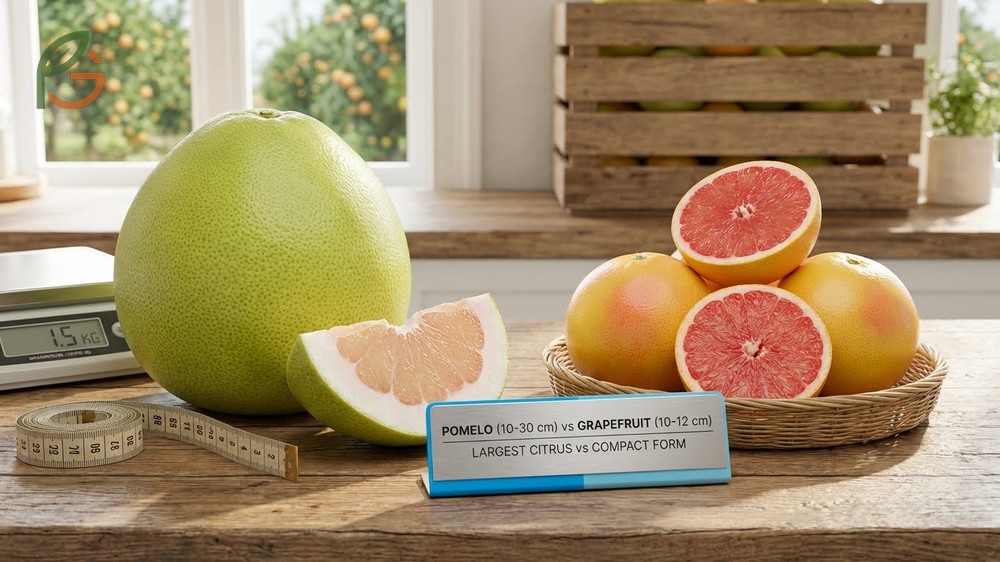
The most striking difference between these citrus fruits lies in their physical dimensions. Pomelos claim the title of largest citrus fruit, with specimens reaching 10-30 cm (4-12 inches) in diameter[1]. Most pomelos you’ll find weigh between 1-2 kilograms (2.2-4.4 pounds)[4].
Grapefruits grow considerably smaller, typically measuring 4-5 inches in diameter. Current agricultural data shows grapefruits maintain a more compact form that makes them easier to handle and store. The weight difference becomes obvious when you hold both fruits—a pomelo can feel twice as heavy as a standard grapefruit.
What often gets overlooked is how this size difference affects the edible portion. Once you peel a pomelo’s thick rind, the actual fruit inside measures about the same as a peeled grapefruit[3]. This means you’re getting less edible flesh per pound with pomelos compared to grapefruits.
Size and Weight Differences
Studies demonstrate that pomelo cultivars show remarkable variation in size. The weight ranges from 0.26 to 1.95 kilograms (0.6-4.3 pounds) depending on the variety[1]. Some specimens can exceed 9 inches in diameter and weigh nearly 4.5 pounds.
The shape differs too—pomelos often develop a pear-like form, while grapefruits maintain a rounder, more uniform shape. This affects how they grow on trees and how much space they need in your garden or orchard.
- Pomelos measure 15-25 cm (6-10 inches) across on average
- Grapefruits typically reach 4-5 inches in diameter
- Pomelo weight ranges from 2.2 to 4.4 pounds for common varieties
- Grapefruit weight stays under 1 pound for most cultivars
- Pomelos can take 2 years to reach full size on the tree
Important Note: When selecting pomelos at the market, heavier fruits indicate more juice content. Look for specimens that feel heavy for their size—lightness suggests the fruit has dried out inside.
Botanical Relationship
Evidence suggests that grapefruit (Citrus paradisi) actually descended from pomelo (Citrus maxima) through natural crossbreeding. The grapefruit emerged as a hybrid between pomelo and sweet orange, which explains why it carries characteristics of both parent fruits.
Pomelos represent one of the original citrus species, not a hybrid. This pure lineage gives them distinct traits that set them apart from modern hybrid citrus varieties. The pomelo divides into 11 to 18 segments[1], while grapefruits typically have fewer segments with thinner membranes.
From My Experience: My aunt in Guadalajara, Mexico grows both pomelos and grapefruits in her orchard. She noticed pomelo trees take 24-30 months to produce fruit versus 18 months for grapefruits, matching the extended timeline documented in citrus research.
Taste and Size Differences
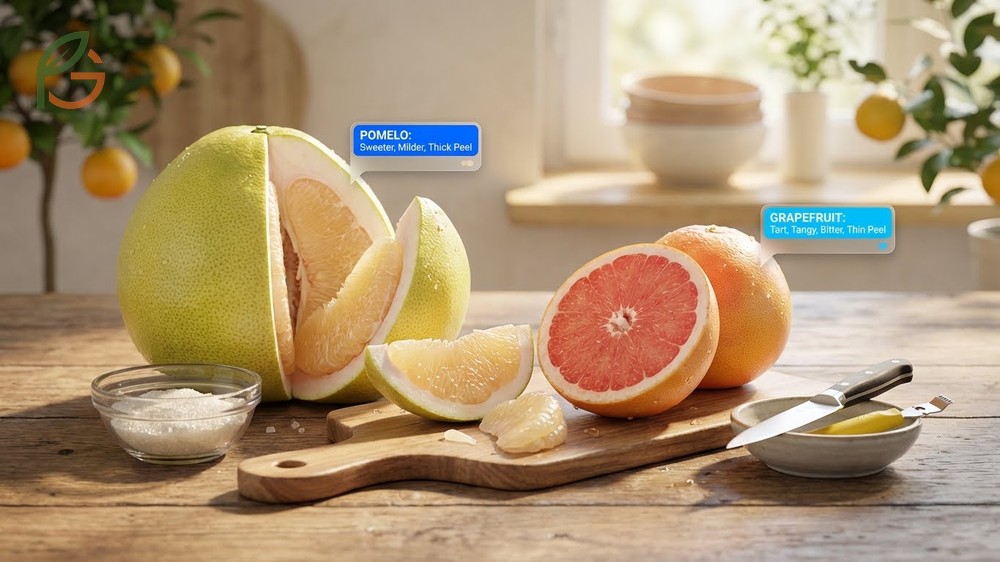
The flavor profiles of these two citrus fruits create distinctly different eating experiences. Research shows pomelos deliver a sweeter, milder taste with less acidity than grapefruits[2]. This makes pomelos ideal for people who find standard grapefruit too tart or bitter.
Grapefruits pack a sharp, tangy punch that many Americans recognize as classic citrus flavor. The bitterness comes from high concentrations of naringin and limonin in both the flesh and pith. Most people either love or hate this intense flavor—there’s rarely middle ground.
The size difference affects more than just portability. Larger pomelos mean you’re peeling and segmenting for longer, which matters when you’re preparing fruit salads or breakfast portions for a family. Grapefruits can be halved and eaten with a spoon in minutes.
Flavor Profile Comparison
Current data indicates pomelos contain less acid, creating a gentler taste on the palate. The flesh tastes slightly sweet with subtle citrus notes rather than the pronounced tartness of grapefruit. Many describe pomelo flavor as somewhere between grapefruit and orange.
The bitterness level differs significantly between the two fruits. Pomelo membranes between segments tend toward bitterness[3], but the actual flesh stays mild. Grapefruit bitterness permeates both flesh and membranes uniformly.
- Pomelos offer sweet-to-bittersweet flavor with minimal tartness
- Grapefruits deliver sharp, tangy taste with pronounced bitterness
- Pomelo flesh contains less citric acid than grapefruit flesh
- Grapefruit intensity works well in cocktails and savory dishes
- Pomelo mildness suits fresh eating and fruit salads better
- Both fruits develop sweeter taste as they ripen fully on the tree
Texture and Juiciness
Studies demonstrate clear textural differences between these citrus varieties. Pomelos have firmer, less juicy flesh compared to grapefruits[2]. The drier texture means pomelo segments hold their shape better when added to salads or desserts.
Grapefruits deliver softer, juicier flesh that releases more liquid when you bite into segments. This makes them perfect for juicing but messier for fresh eating. The juice yield from one grapefruit typically exceeds what you’d extract from a pomelo of similar peeled weight.
Kitchen Tip: If you’re juicing citrus, choose grapefruits for maximum yield. If you need citrus segments that won’t make your dish watery, pomelos work better thanks to their firmer texture.
Rind and Pith Characteristics
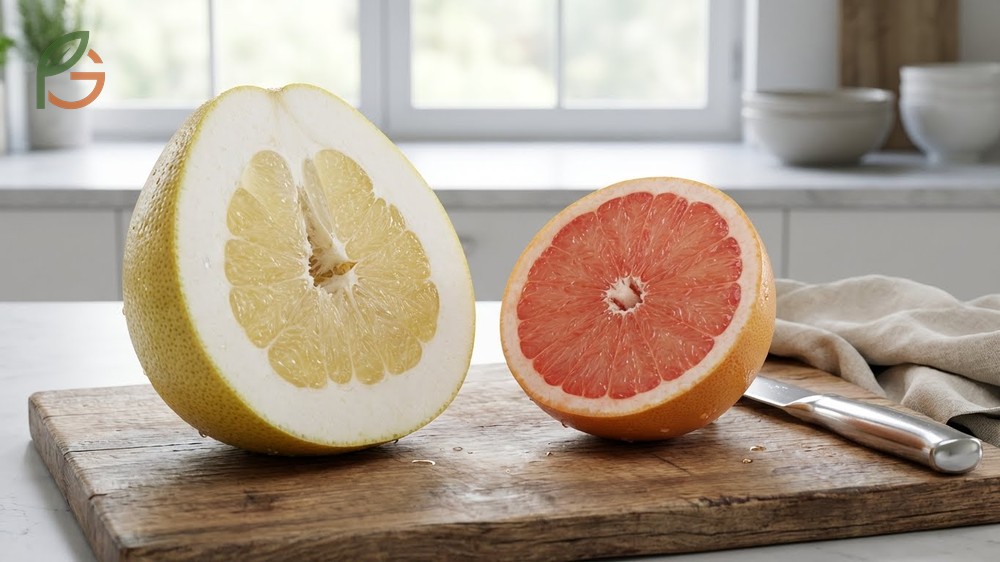
The rind thickness creates the most obvious visual difference when you cut into these fruits. Pomelos feature remarkably thick rinds that can reach 1/2 to 3/4 inch[3]. This thick, spongy layer protects the fruit inside but adds considerable waste weight.
Grapefruit rinds stay much thinner, though still substantial at about 1/4 inch or slightly more. The thinner rind means you get a better ratio of edible fruit to total weight. For gardeners and consumers, this translates to better value and less composting material.
The pith color and texture differ too. Pomelo pith appears thick and white with a spongy, almost foam-like consistency. Grapefruit pith stays white but feels less spongy and adheres more tightly to the flesh underneath. Peeling a pomelo takes less effort because the thick pith separates easily from the segments.
Current guidance emphasizes that both fruits’ piths contain valuable fiber and vitamin C despite their bitter taste. The white layer holds higher concentrations of certain flavonoids than the colored flesh. However, most people remove it entirely due to the unpleasant flavor.
- Pomelo rinds measure 1/2 to 3/4 inch thick with spongy texture
- Grapefruit rinds stay around 1/4 inch with denser structure
- Pomelo pith separates easily from fruit segments during peeling
- Grapefruit pith adheres more firmly, requiring careful removal
- Both rinds change from green to yellow as fruits ripen
- Pomelo varieties can show pink or red rind coloring when mature
- Thicker pomelo rinds provide better protection during shipping
This table compares physical rind characteristics including thickness, texture, ease of peeling, and waste percentage between pomelos and grapefruits
| Characteristic | Pomelo | Grapefruit |
|---|---|---|
| Rind Thickness | 1/2 to 3/4 inch[3] | 1/4 inch or slightly more |
| Pith Texture | Very spongy, foam-like | Moderately spongy, denser |
| Peeling Ease | Easy, separates readily | Moderate effort required |
| Waste Percentage | 40-50% of total weight | 25-35% of total weight |
| Segment Membranes | Thicker, more bitter[3] | Thinner, less bitter |
Nutritional Comparison
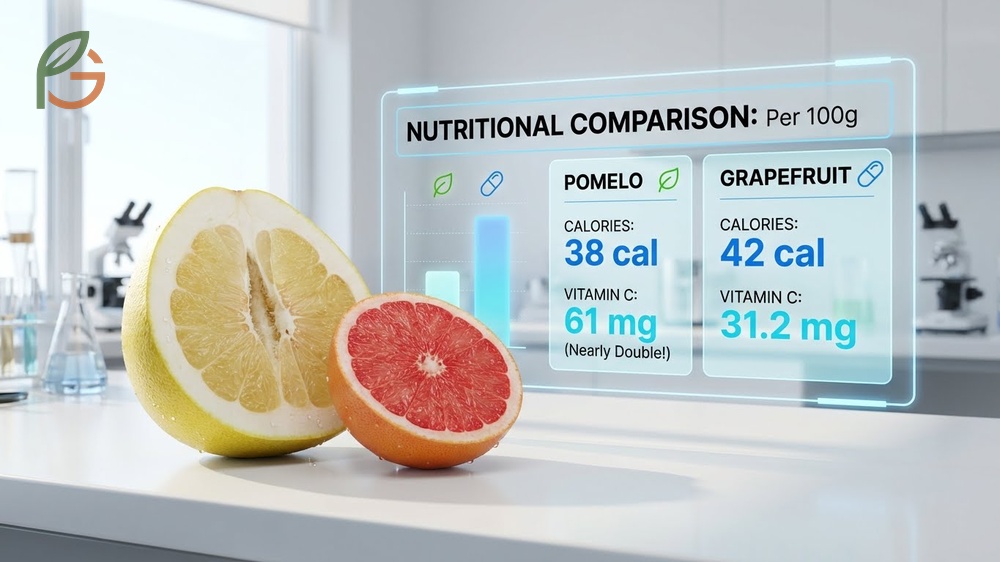
Agricultural research reveals interesting nutritional differences between these citrus fruits. Per 100 grams, pomelos provide 38 calories[5], while grapefruits contain 42 calories[5]. The calorie difference stays minimal, making both fruits excellent low-calorie options.
The vitamin C content shows a dramatic contrast. Pomelos deliver 61mg of vitamin C per 100g[5]—nearly double the 31.2mg found in grapefruits[5]. This makes pomelos particularly valuable for immune support and antioxidant benefits.
Potassium levels favor pomelos as well, with 216mg per 100g compared to grapefruit’s 135mg[5]. This 60% higher potassium content supports better blood pressure management and heart health for regular consumers.
This table displays nutritional values per 100 grams including calories, carbohydrates, protein, vitamin C, and potassium for pomelos versus grapefruits
| Nutrient | Pomelo | Grapefruit |
|---|---|---|
| Calories | 38 kcal[5] | 42 kcal[5] |
| Carbohydrates | 9.62g[5] | 10.66g[5] |
| Protein | 0.76g[5] | 0.77g[5] |
| Vitamin C | 61mg[5] | 31.2mg[5] |
| Potassium | 216mg[5] | 135mg[5] |
| Fiber | 1g[5] | 1.6g[5] |
Grapefruit wins in vitamin A content, providing more than pomelos for eye health support. The fiber content also leans toward grapefruit with 1.6g versus pomelo’s 1g per 100g serving[5]. For digestive health and satiety, this gives grapefruit a slight edge.
- Pomelos provide 2 times more vitamin C than grapefruits per serving
- Both fruits contain minimal fat (less than 0.5g per 100g)
- Grapefruits offer more fiber for digestive health support
- Pomelos deliver 60% more potassium for cardiovascular benefits
- Both citrus fruits have low glycemic index values under 55
- One cup of pomelo provides 129% of daily vitamin C needs[6]
Which Citrus Is Sweeter
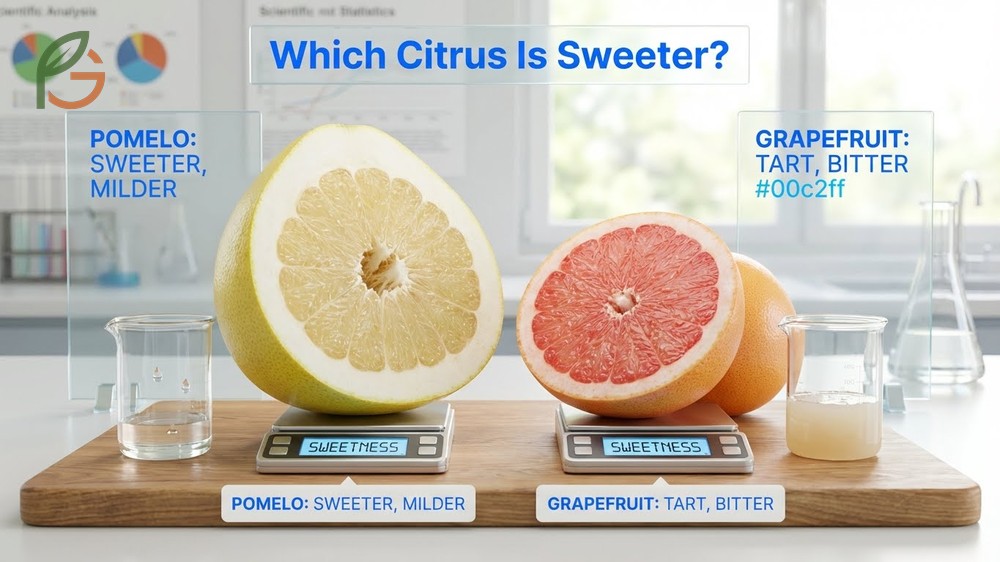
The sweetness question has a clear answer based on taste tests and sugar content analysis. Pomelos consistently rate as sweeter and milder than grapefruits[2]. This happens because pomelos contain less acid, which allows the natural fruit sugars to dominate the flavor profile.
Grapefruits taste more tart due to higher citric acid levels. The bitterness from naringin compounds adds another layer that masks sweetness. Even pink and red grapefruit varieties, which contain more sugar than white grapefruits, still taste tangier than pomelos.
For American gardeners considering which citrus to grow, sweetness preferences matter. If your family prefers milder citrus that doesn’t pucker your mouth, pomelo trees make better choices. The fruit appeals to kids and people who typically avoid grapefruit’s sharp taste.
The ripeness factor affects both fruits similarly. Citrus left on the tree longer develops higher sugar content and reduced acidity. However, even fully ripe grapefruits won’t match the gentle sweetness of a ripe pomelo.
Selection Tip: When buying pomelos, look for fruits that feel heavy and have slightly soft skin when pressed gently. These indicators suggest peak ripeness with maximum sweetness. Hard, light pomelos often taste bland or excessively bitter.
- Pomelos offer naturally sweeter taste with minimal tartness
- Grapefruits deliver sharp, tangy flavor that many find too bitter
- Lower acid content makes pomelo sweetness more prominent
- Pink and red grapefruits taste sweeter than white varieties
- Both fruits become sweeter when tree-ripened rather than picked early
- Pomelo varieties like Chandler and Oro Blanco rate highest for sweetness
Conclusion
The evidence clearly shows that pomelo vs grapefruit comparisons reveal distinct advantages for each fruit depending on your needs. Pomelos win for size, sweetness, and vitamin C content, while grapefruits offer better juice yield, fiber content, and that classic tangy citrus punch Americans love. Current agricultural guidance emphasizes growing what suits your climate and taste preferences—both citrus varieties thrive in USDA zones 9-11 with proper care.
Whether you’re planting citrus trees in your backyard or simply choosing fruit at the market, understanding these differences helps you make informed decisions. FruitGarden recommends trying both fruits fresh to discover which flavor profile matches your palate and culinary applications best.
Frequently Asked Questions
Can I substitute pomelo for grapefruit in recipes?
Yes, you can substitute pomelo for grapefruit in most recipes, but expect a milder, sweeter result. The firmer texture of pomelo works especially well in salads where you don’t want excess juice. For cocktails or dishes requiring sharp citrus bite, stick with grapefruit since pomelo won’t provide the same tangy punch.
Do pomelos and grapefruits grow in the same climate zones?
Both citrus fruits grow best in USDA hardiness zones 9-11, requiring warm temperatures and minimal frost exposure. Pomelos need slightly warmer conditions and more growing time—about 24-30 months to fruit versus 18 months for grapefruits. In borderline zones, grapefruits prove more cold-tolerant and reliable for home gardeners.
Which fruit has more sugar—pomelo or grapefruit?
Grapefruits contain slightly more sugar at 6.89g per 100g compared to pomelo’s lower sugar content, yet pomelos taste sweeter. This happens because pomelos have less acid, which makes their natural sugars more noticeable on your palate. The acid-to-sugar ratio matters more than total sugar content for perceived sweetness.
Why is pomelo rind so thick compared to grapefruit?
Pomelo’s thick rind evolved as natural protection since it’s the largest citrus fruit. The 1/2 to 3/4 inch spongy layer cushions the fruit inside during growth and prevents damage from insects and weather. Grapefruits, being smaller and a hybrid variety, developed thinner rinds that still provide adequate protection.
Are pomelos better than grapefruits for vitamin C?
Yes, pomelos deliver significantly more vitamin C—61mg per 100g compared to grapefruit’s 31.2mg. This means eating one cup of pomelo provides 129% of your daily vitamin C needs. For immune support and antioxidant benefits, pomelos offer superior nutritional value despite being less commonly consumed in America.
How do I know when a pomelo is ripe?
Ripe pomelos feel heavy for their size and give slightly when pressed gently. The rind color shifts from green to yellow or pale yellow-green. Unlike grapefruits which continue ripening after picking, pomelos develop best flavor when left on the tree until fully mature, so buy them during peak season (November through March).
Do pomelos and grapefruits interact with medications the same way?
Both fruits contain compounds that can interfere with certain medications, particularly statins and blood pressure drugs. Grapefruit has been studied more extensively, but pomelos likely cause similar interactions since they’re closely related. Always consult your healthcare provider before adding either citrus fruit to your diet if you take prescription medications.





