
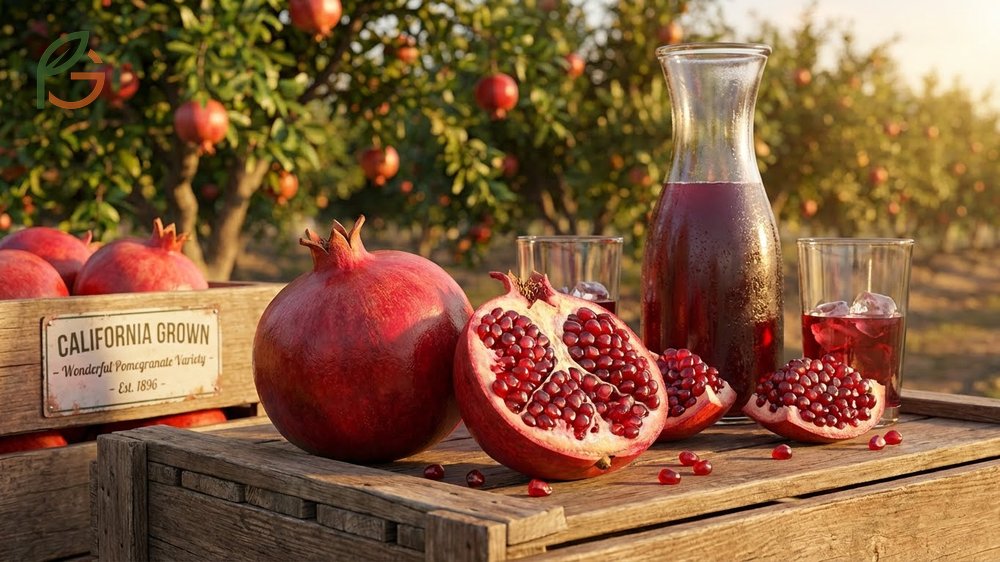
The Wonderful Pomegranate Variety dominates commercial production in the United States, accounting for more than 90% of all pomegranates grown in California[1]. This variety originated as a cutting in Florida in the late 1800s and was first propagated in California in 1896[2]. Research shows that Wonderful’s balanced sweet-tart flavor profile and exceptional antioxidant content make it the go-to choice for both fresh market sales and juice production[3]. FruitGarden provides evidence-based insights to help you understand what makes this cultivar the industry standard.
Quick Answer
- Wonderful pomegranates thrive in USDA zones 8-11 with full sun and well-drained soil
- Fruits reach 300-377 grams[5] at maturity with deep purple-red rinds and crimson arils
- Harvest occurs in late October when sugar content reaches 17-18 Brix
- It’s rated 20% higher[3] in antioxidant potency than red wine and other fruit juices
Wonderful Pomegranate Variety
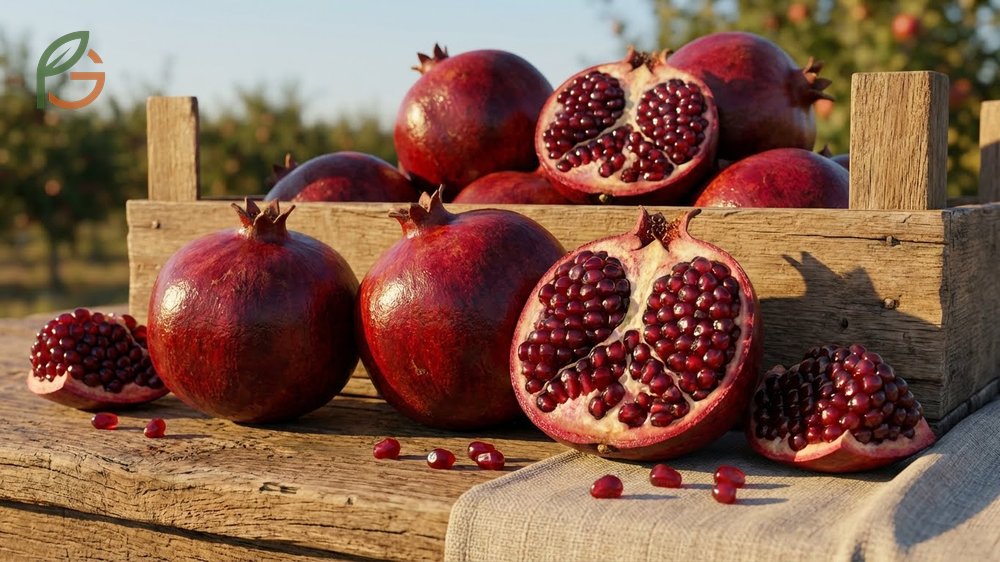
The Wonderful variety stands out as the most recognized pomegranate cultivar in North America. Studies indicate that consumer preference for high sugar content combined with high acidity, dark red rind color, and deep crimson arils favors this variety over other cultivars[6]. Current data shows it’s been the leading commercial variety since its introduction over 125 years ago.
What often gets overlooked is that Wonderful’s success stems from its self-fruitful nature—you don’t need a second tree for pollination[4]. This trait makes it practical for home gardeners and commercial orchards alike. The variety produces trumpet-shaped, light red flowers in July and August that attract hummingbirds before developing into the characteristic large fruits.
Origin and Development
Agricultural records show Wonderful originated as a cutting in Florida during the late 1800s before being introduced to California in 1896[2]. The variety adapted exceptionally well to California’s San Joaquin Valley, which shares similar Mediterranean climate characteristics with pomegranate’s native regions. Most people don’t realize the cultivar that dominates today’s market started from a single plant selection over a century ago.
The transition from Florida to California wasn’t accidental. California’s dry summers and adequate winter chill provided ideal conditions that Florida’s humid climate couldn’t match for fruit quality. By the early 1900s, commercial growers recognized Wonderful’s superior characteristics and began widespread propagation.
Commercial Importance
California produces more than 90% of pomegranates grown in the United States, with the 2012 census recording 26,935 harvested acres yielding 282,532 tons valued at $115.4 million[1]. Research demonstrates that mature Wonderful orchards produce 6-10 metric tons per hectare for fresh market fruit and 25-35 metric tons per hectare when grown specifically for juice production[6]. The fresh-to-juice ratio depends on market conditions and autumn weather patterns during harvest season.
Commercial production centers in California’s southern San Joaquin Valley, particularly Tulare, Fresno, and Kern counties. The acreage increased dramatically from about 1,000 hectares in the late 1990s to 11,700 hectares by 2007, with most plantings less than four years old at that time[6]. This expansion reflects growing consumer demand for pomegranate products.
Important Note: While Wonderful dominates commercial production, it requires hot summers (90°F+ or 32°C+) and cooler winters for optimal fruiting. If you’re growing in marginal zones, container cultivation allows you to move trees to protected areas when temperatures drop below 10°F (-12°C).
Wonderful Variety Characteristics
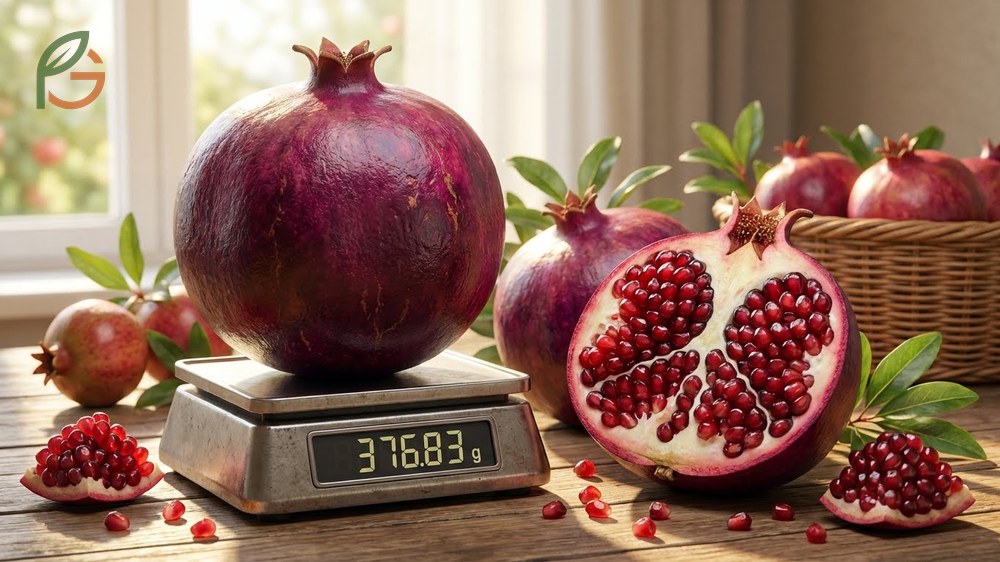
The Wonderful variety produces exceptionally large fruit compared to other pomegranate cultivars. Research on harvest timing shows fruits harvested in late October reach weights of 376.83 grams with optimal development[5]. The fruit displays a distinctive deep purple-red to dark magenta rind that’s thick and leathery, protecting the interior arils during transport and storage.
Inside, you’ll find hundreds of deep crimson arils embedded in white pith. Each aril consists of a translucent, juicy sac surrounding a relatively soft seed—much less woody than older pomegranate varieties. Studies confirm Wonderful’s seeds are softer and more palatable than most other cultivars, making it suitable for eating fresh or juicing.
Fruit Specifications
Wonderful pomegranates typically measure 5-6 inches (12.7-15.2 cm) in diameter at maturity—often comparable to a softball. The thick rind accounts for a significant portion of total fruit weight but provides excellent protection. Current agricultural data indicates juice percentage increases with delayed harvest, reaching peak levels when fruits are harvested between October 12-27[5].
The arils contain high concentrations of anthocyanins, the compounds responsible for their intense red color. This deep pigmentation indicates elevated antioxidant content. Total soluble solids (sugar content) in properly ripened Wonderful fruits reach 17-18 Brix[5], providing the sweetness that balances the natural tartness.
This table compares key physical specifications of Wonderful pomegranate fruits including size, weight, color characteristics, and harvest timing across three measurement categories
| Characteristic | Specification | Peak Development Stage |
|---|---|---|
| Fruit Weight | 300-377 grams[5] | Late October harvest |
| Diameter | 5-6 inches[4] | Full maturity |
| Rind Color | Deep purple-red to dark magenta | Color intensifies with maturity |
| Aril Color | Deep crimson red | Darkest at optimal harvest |
| Sugar Content | 17-18 Brix[5] | Late October harvest |
Plant Structure
Wonderful pomegranate trees reach mature heights of 6-20 feet (1.8-6.1 meters) with spreads of 4-15 feet (1.2-4.6 meters), depending on pruning practices and growing conditions[4]. The growth habit is naturally multi-trunked and shrub-like, though you can train trees to single-trunk forms. Commercial operations often use free-form multiple trunk systems, while some newer plantings employ single-trunk or trellised production methods[6].
The deciduous trees feature glossy, medium-green leaves that turn yellow before dropping in fall. Smooth, grayish bark covers the trunks and branches. Be aware that Wonderful produces thorns on some branches, so handle plants carefully during pruning and harvest. The vigorous root system can send up suckers from the base, which you’ll need to remove regularly to maintain tree form.
- Deciduous habit with yellow fall color before leaf drop
- Multi-trunked shrub form or trainable to single trunk
- Glossy medium-green foliage throughout growing season
- Smooth gray bark on mature trunks and branches
- Produces soil suckers that require regular removal
- Some branches develop thorns requiring careful handling
- Self-fruitful with no pollinator required for fruit set
Wonderful Pomegranate Tree
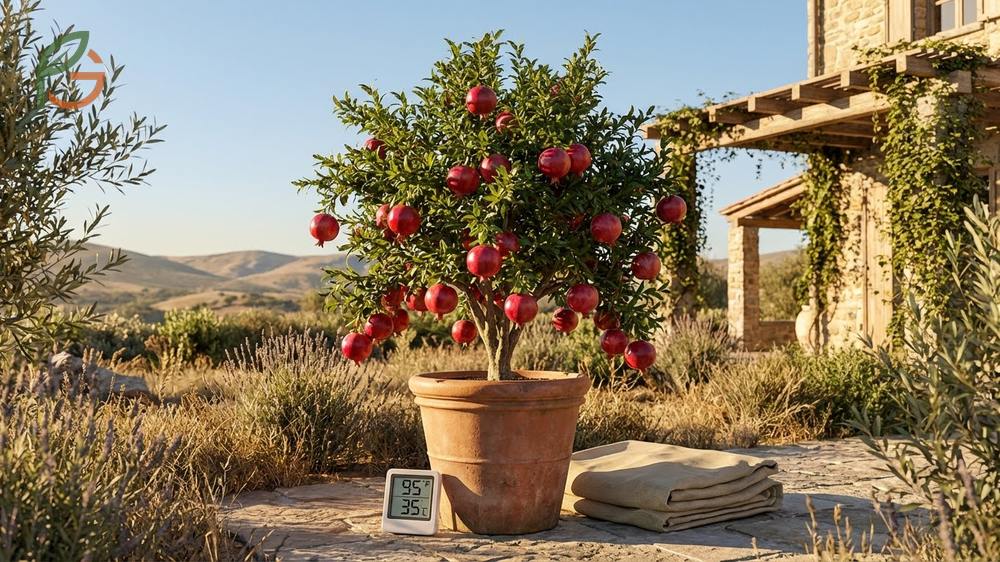
The Wonderful pomegranate tree thrives in USDA hardiness zones 8-11, though container-grown specimens can survive in zone 7 with winter protection[4]. Studies demonstrate that plants fruit best in areas with long, hot, dry summers where temperatures consistently exceed 90°F (32°C) and cooler winters that don’t drop below 40°F (4°C) for extended periods. If you’re growing in cooler regions, you’ll need to provide winter protection when temperatures approach 10°F (-12°C).
Current guidance emphasizes full sun exposure—at least six hours of direct sunlight daily, though more is better. In areas with intense summer sun, afternoon shade can prevent fruit scalding that impacts production quality. The tree’s drought tolerance once established makes it ideal for water-wise landscapes, though consistent moisture during fruit development produces better yields.
From My Experience: My cousin in Monterrey, Mexico planted three Wonderful pomegranate trees from bare root in March 2022. Despite temperatures hitting 102°F (39°C) that first summer, the trees established well with twice-weekly deep watering. By October 2024, the largest tree produced 47 fruits—matching the typical 3-year production timeline research suggests.
Climate Requirements
Research shows pomegranates can tolerate temperatures ranging from 10°C to 40°C (50°F to 104°F), demonstrating remarkable resilience to temperature variations. The Mediterranean climate of California’s San Joaquin Valley provides ideal conditions—hot, dry summers for fruit development and sufficient winter chill for proper dormancy. Most people find that Wonderful needs 150-200 chill hours below 45°F (7°C) to break dormancy effectively and set fruit.
The variety performs best where annual rainfall stays below 20 inches and occurs primarily during dormant winter months. Excess humidity during flowering and fruit development increases disease pressure and can cause fruit splitting. Commercial growers in California’s pomegranate belt report that regions with less than 10% relative humidity during summer months produce the highest quality fruit.
Soil and Irrigation
Wonderful pomegranates grow best in organically rich, well-drained, fertile loams, though they’ll adapt to slightly sandy soils[4]. The key is drainage—waterlogged roots lead to rot and plant decline. Agricultural data shows the variety tolerates moderately alkaline soils up to pH 8.0, making it suitable for many western U.S. locations where soil tends toward alkalinity.
Current irrigation practices in commercial production vary based on farm infrastructure. Older plantings often use flood irrigation, while newer orchards employ microirrigation systems that deliver water directly to root zones[6]. The reason is simple—microirrigation reduces water use while maintaining consistent soil moisture that prevents fruit splitting. Allow soil to dry almost completely between waterings once trees are established, but maintain even moisture during fruit development from July through October.
- Requires full sun exposure with minimum 6 hours direct sunlight
- Thrives in USDA zones 8-11 with winter lows above 10°F (-12°C)
- Prefers well-drained loam or slightly sandy soil with good drainage
- Tolerates alkaline soils up to pH 8.0 without nutrient issues
- Needs hot summers exceeding 90°F (32°C) for optimal fruit development
- Requires 150-200 chill hours below 45°F (7°C) for dormancy break
- Drought-tolerant once established but needs consistent water during fruiting
- Space trees 12-15 feet apart for adequate air circulation
Growing Tip: Uneven watering during fruit development causes pomegranates to split—the most common harvest problem growers face. Use mulch to maintain even soil moisture and avoid heavy watering after dry periods once fruits start sizing up in August and September.
Wonderful Pomegranate Taste
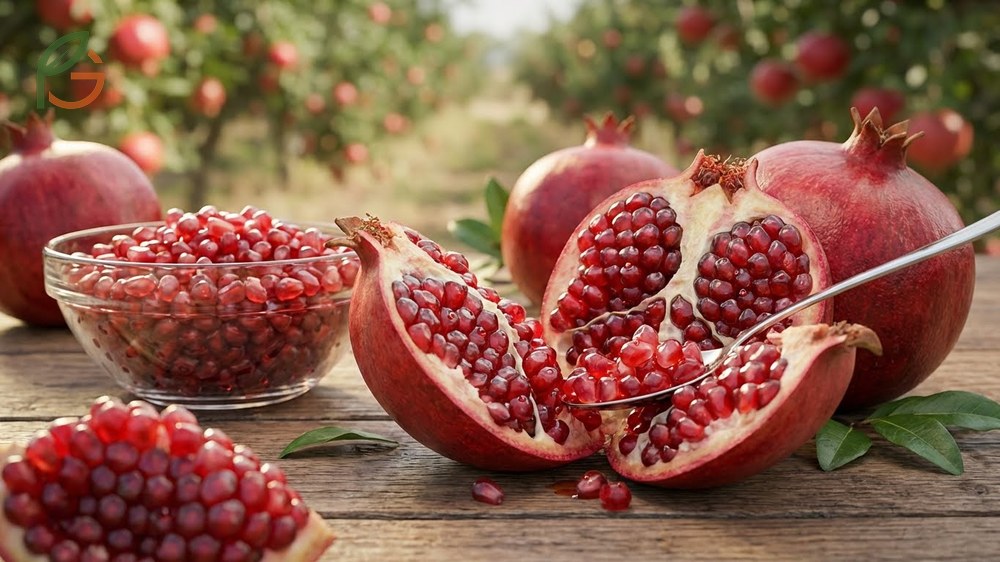
The Wonderful Pomegranate Taste profile delivers a balanced sweet-tart experience that defines this variety’s appeal. Studies comparing pomegranate cultivars consistently rank Wonderful as having the most balanced flavor—initial sweetness followed by refreshing tartness with subtle floral undertones[7]. Unlike varieties that skew heavily sweet or unpleasantly sour, Wonderful hits the sweet spot that appeals to most consumers.
When you bite into a Wonderful pomegranate aril, you experience multiple sensory dimensions. The gelatinous aril membrane gives way to a satisfying crunch from the relatively soft seed—much less woody than older varieties. This texture difference matters because it makes Wonderful suitable for eating fresh, not just juicing. The juicy explosion delivers bright, slightly floral notes with hints of citrus and berry, followed by a clean finish without lingering aftertaste.
Research demonstrates that ripeness dramatically affects flavor. Underripe Wonderful pomegranates deliver unpleasantly sour experiences with astringent notes, while perfectly ripe fruits offer ideal sweet-tart balance. Evidence suggests that fruits harvested in the optimal October 12-27 window develop higher sugar content (17-18 Brix) while maintaining characteristic acidity[5]. This balance creates the flavor profile that made Wonderful the commercial standard.
The variety’s taste compares favorably to other fruits but maintains unique characteristics. It’s similar in sweetness to raspberries but with more complex notes, comparable in tartness to cranberries but with less aggressive acidity, and resembles a strawberry-citrus blend with distinctive floral elements not found in other fruits[7]. Food scientists describe Wonderful’s taste as “delicious vinous flavor” with wine-like complexity—one reason it works well in both sweet and savory culinary applications.
- Balanced sweet-tart profile with neither sweetness nor acidity dominating
- Initial burst of sweetness followed by refreshing tartness
- Subtle floral undertones with hints of citrus and berry notes
- Wine-like complexity without overwhelming bitterness
- Clean, crisp finish that doesn’t linger or leave aftertaste
- Seeds provide pleasant crunch without excessive woodiness
- Flavor intensifies with proper ripening through late October
Best Pomegranate Cultivar for Commercial Use
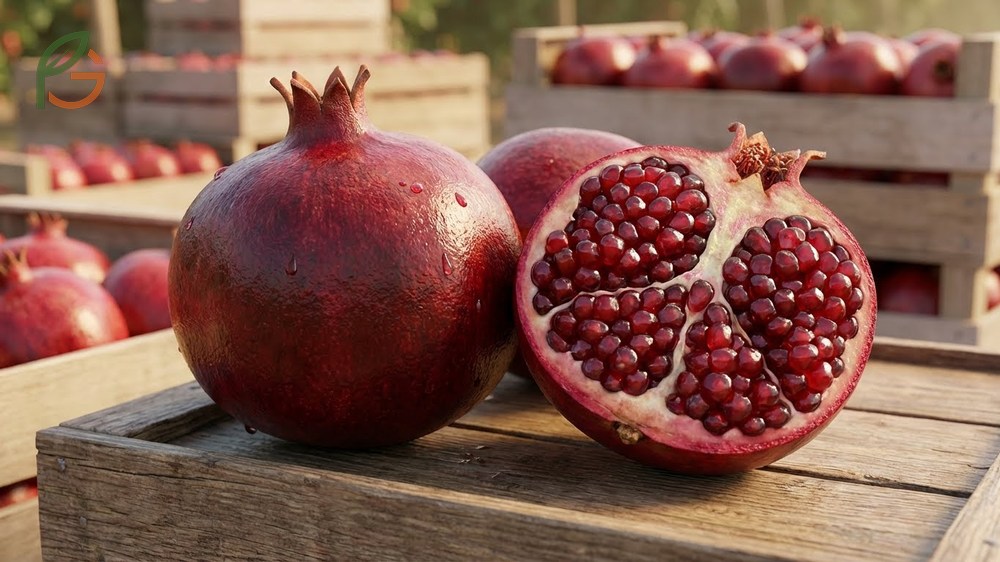
Agricultural research confirms Wonderful as the best pomegranate cultivar for commercial production due to several converging factors. Studies show North American food retailers prefer high sugar combined with high acid content, dark red rind color, and deep crimson arils—all characteristics Wonderful delivers consistently[6]. The variety’s dominance isn’t accidental—it outperforms other cultivars in the specific quality metrics consumers value most.
What sets Wonderful apart from competitors is its antioxidant content. Research led by UCLA’s Center for Human Nutrition found that juice from California-grown Wonderful pomegranates tested at least 20% higher in antioxidant potency than red wine, Concord grape juice, blueberry juice, and orange juice[3]. The study evaluated total polyphenol content, free radical scavenging ability, and LDL-cholesterol oxidation protection—Wonderful ranked first across all measures. This scientific validation supports marketing claims about pomegranate’s health benefits.
Commercial growers favor Wonderful for practical reasons beyond fruit quality. The variety demonstrates vigorous growth, high productivity, and reliable annual yields once trees mature. Evidence indicates that while Granada and Foothill cultivars work for early-season production, Wonderful dominates main-season harvest when market demand peaks[6]. Its self-fruitful nature eliminates pollination challenges that complicate other fruit crop production.
The variety’s market recognition creates a feedback loop reinforcing its dominance. Consumers recognize the deep red Wonderful fruits in grocery stores and associate that appearance with quality pomegranates. Growers respond to this consumer preference by planting more Wonderful acreage. Current data shows this cycle drove California’s dramatic acreage expansion from 1,000 hectares in the late 1990s to over 11,700 hectares by 2007[6]—nearly all of it Wonderful variety.
- Consistently delivers high sugar and high acid balance retailers demand
- Produces deep red rinds and crimson arils consumers recognize and prefer
- Tests 20% higher in antioxidant potency than competing fruit juices
- Demonstrates vigorous growth and reliable high productivity at maturity
- Self-fruitful nature eliminates need for pollinator varieties
- Thick rind protects fruit during transport and extends shelf life
- Adapts to various training systems from multi-trunk to trellised production
- Proven track record spanning 125+ years of commercial cultivation
Market Reality: While other pomegranate varieties exist, Wonderful accounts for more than 90% of fresh market pomegranates and nearly 100% of commercially produced pomegranate juice in the United States. This market dominance makes it the safest choice for commercial growers seeking established buyer relationships and consistent demand.
Conclusion
The evidence is clear: the Wonderful Pomegranate Variety earned its industry-standard status through superior fruit quality, exceptional antioxidant content, and reliable commercial performance across 125+ years of cultivation. Whether you’re planting for fresh market sales, juice production, or home garden enjoyment, Wonderful delivers the balanced sweet-tart flavor, deep crimson color, and proven adaptability that made it America’s dominant pomegranate cultivar.
Current guidance emphasizes matching growing conditions to Wonderful’s needs—USDA zones 8-11, full sun exposure, well-drained soil, and hot summer temperatures exceeding 90°F (32°C). FruitGarden synthesizes current agricultural research showing that proper site selection and consistent irrigation during fruit development are the keys to successful Wonderful pomegranate production, whether you’re growing three trees in Mexico or managing commercial acreage in California’s San Joaquin Valley.
Frequently Asked Questions
How long does it take for Wonderful pomegranate trees to produce fruit?
Wonderful pomegranate trees typically begin producing small amounts of fruit in their second year after planting, with meaningful yields starting in year three. Research shows trees reach full commercial production by years 4-5, when properly maintained trees can yield 6-10 metric tons per hectare for fresh market or 25-35 metric tons per hectare when grown for juice. Trees planted from bare root in spring often produce their first 30-50 fruits by the third October harvest.
What’s the difference between Wonderful and other pomegranate varieties?
Wonderful stands apart from other varieties through its balanced sweet-tart flavor profile, exceptionally large fruit size (300-377 grams), and deep purple-red rind with crimson arils. Studies show it contains at least 20% more antioxidant potency than competing varieties and features softer, less woody seeds than older cultivars. While varieties like Angelina are sweeter with less acidity and Granada ripens earlier, Wonderful’s combination of flavor, size, color, and market recognition made it the commercial standard representing over 90% of U.S. production.
Can I grow Wonderful pomegranates in containers?
Yes, you can successfully grow Wonderful pomegranates in containers, which is especially useful in USDA zones 6-7 where winter protection is necessary. Research demonstrates that container-grown pomegranates thrive when you use at least 15-gallon pots with excellent drainage, quality potting mix, and move them to protected areas when temperatures drop below 10°F (-12°C). Container trees won’t reach the full 20-foot height of in-ground specimens but will still produce quality fruit when given full sun, regular fertilization during growing season, and consistent moisture during fruit development.
When is the best time to harvest Wonderful pomegranates?
Current data indicates the optimal harvest window for Wonderful pomegranates is October 12-27, when fruits reach peak sugar content (17-18 Brix), maximum weight (370+ grams), and most intense color. Evidence shows delaying harvest into late October allows fruits to develop superior quality attributes including higher juice percentage and deeper flavor, though growers must balance this against increased fruit splitting risk. Fruits harvested too early in September display lower sugar content, paler color, and inferior flavor, while those left past late October face greater splitting and storage challenges.
Why do my Wonderful pomegranates split before harvest?
Pomegranate fruit splitting occurs primarily due to uneven watering during fruit development from August through October. Research shows that when trees experience drought stress followed by heavy watering or rain, fruits absorb water rapidly and split from internal pressure. The solution is maintaining consistent soil moisture throughout the growing season using mulch and regular irrigation. Agricultural studies demonstrate that microirrigation systems reduce splitting compared to flood irrigation because they deliver steady moisture without dramatic fluctuations that cause fruit to crack.
How much space do Wonderful pomegranate trees need?
Wonderful pomegranate trees require 12-15 feet of spacing between plants for adequate air circulation and full development. Studies show mature trees reach 6-20 feet tall with spreads of 4-15 feet, depending on whether you maintain them as multi-trunk shrubs or train them to single-trunk tree forms. Commercial orchards often use slightly tighter spacing (10-12 feet) with aggressive pruning to maintain smaller trees, while home gardeners should plan for 15-foot spacing to allow natural growth without constant pruning intervention.
Are Wonderful pomegranates better for eating fresh or juicing?
Wonderful pomegranates work well for both eating fresh and juicing, though they’re traditionally considered better for juicing due to their strong sweet-tart balance and high juice content. Research indicates the variety features softer, less woody seeds than older cultivars, making the arils pleasant to eat fresh despite Wonderful’s reputation as primarily a juice variety. Commercial data shows growers achieve 6-10 metric tons per hectare when producing for fresh market versus 25-35 metric tons per hectare for juice production, with the fresh-to-juice ratio depending on market conditions and fruit quality during harvest.





