
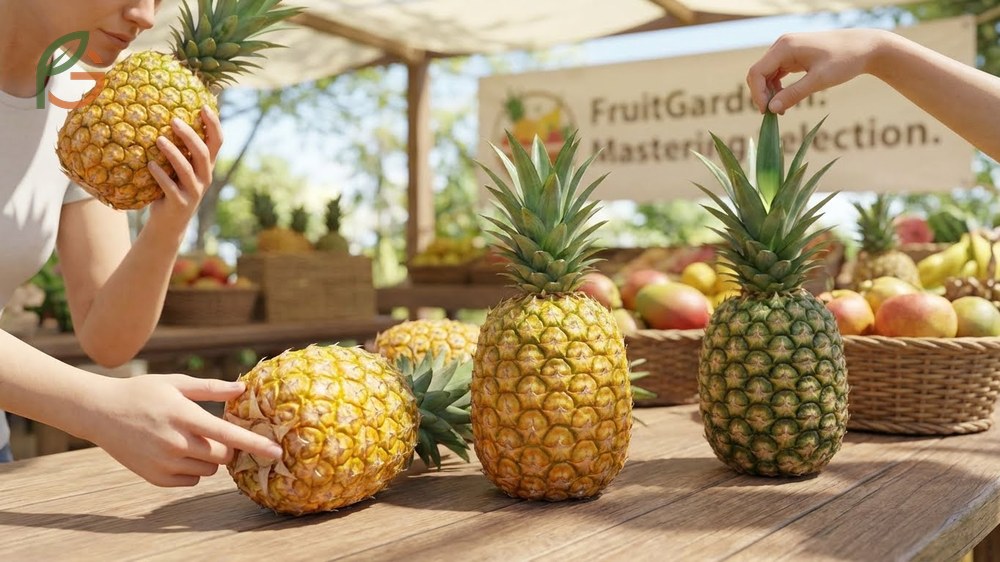
How To Pick A Good Pineapple? Research shows that combining four key tests—smell, color, firmness, and leaf pull—gives you the best chance of selecting a perfectly ripe, sweet pineapple every time.[1] Most people don’t realize that timing matters more than appearance alone, since pineapples stop ripening once they’re picked. FruitGarden synthesizes current agricultural research and practical field data to help you master pineapple selection with confidence.
Quick Answer
- Smell the base—it should emit a sweet, fruity aroma without any fermented or vinegar-like scent[1]
- Check firmness—pineapple should have slight give when squeezed but never feel mushy or rock-hard[2]
- Test the leaves—a center leaf should pull out with moderate resistance, not too easily or too difficultly[3]
- Look for color—ripe pineapples show golden-yellow tones at the base, though some varieties like Del Monte Gold can be sweet even when greenish
How To Pick A Good Pineapple
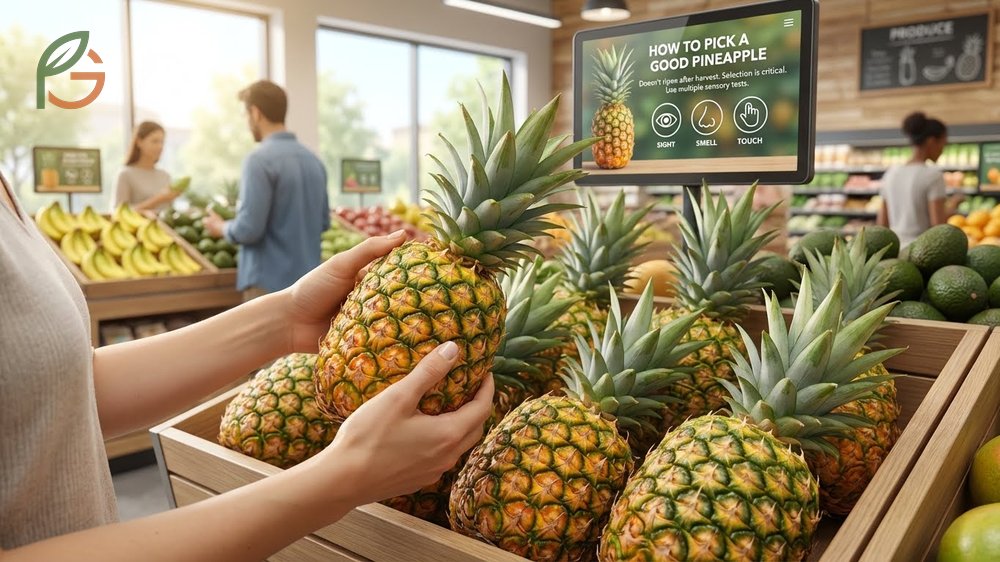
Studies demonstrate that pineapples don’t ripen further after harvest, making initial selection critical for flavor and sweetness.[2] Unlike bananas or avocados, a green pineapple won’t become sweeter sitting on your counter—it’ll only soften and eventually spoil. This means you’ve got to nail the selection process at the store.
Current guidance emphasizes using multiple sensory tests together rather than relying on just one indicator. What works for one pineapple variety might not apply to another, so combining smell, touch, and visual cues gives you the most reliable results.
From My Experience: My cousin in Guadalajara, Mexico runs a small fruit stand and taught me that different growing regions produce pineapples with varying sweetness levels. He noticed that fruits from coastal areas near Colima consistently had stronger aromas than highland varieties—matching research on tropical fruit cultivation patterns.
Smell of Ripe Pineapple
The sniff test is your most powerful tool for pineapple selection. Registered dietitians confirm that a ripe pineapple emits a sweet, pleasant fragrance from its base as the fruit transforms acidity into sugars.[1]
If there’s no aroma, you’re looking at an underripe fruit that’ll taste tart and tough. On the flip side, a fermented scent resembling vinegar signals overripeness—skip that one. The sweet spot is a noticeable but not overwhelming pineapple fragrance right at the bottom where the fruit was attached to the plant.
- Hold the pineapple upside down and smell the base, not the crown
- Sweet, tropical aroma indicates perfect ripeness
- No smell means the fruit’s underripe and won’t improve
- Sour or alcoholic smell signals it’s past its prime
- Stronger smell doesn’t always mean better—moderate sweetness is ideal
Pineapple Leaf Pull Test
The leaf-pluck test offers a quick physical assessment of ripeness. Research shows that a center leaf should come out with moderate effort when the fruit’s ready to eat.[3] Grab a leaf from the middle of the crown and give it a gentle tug.
If it slips out too easily with barely any resistance, that pineapple’s overripe or even starting to rot. If you can’t budge it at all, the fruit’s not ready yet. You’re looking for that Goldilocks zone where the leaf releases with a firm but not difficult pull.
Important Note: Don’t pull multiple leaves from store pineapples during testing—it damages the fruit for other shoppers. One gentle test per fruit is enough to gauge ripeness without causing harm.
How to Pick a Ripe Pineapple
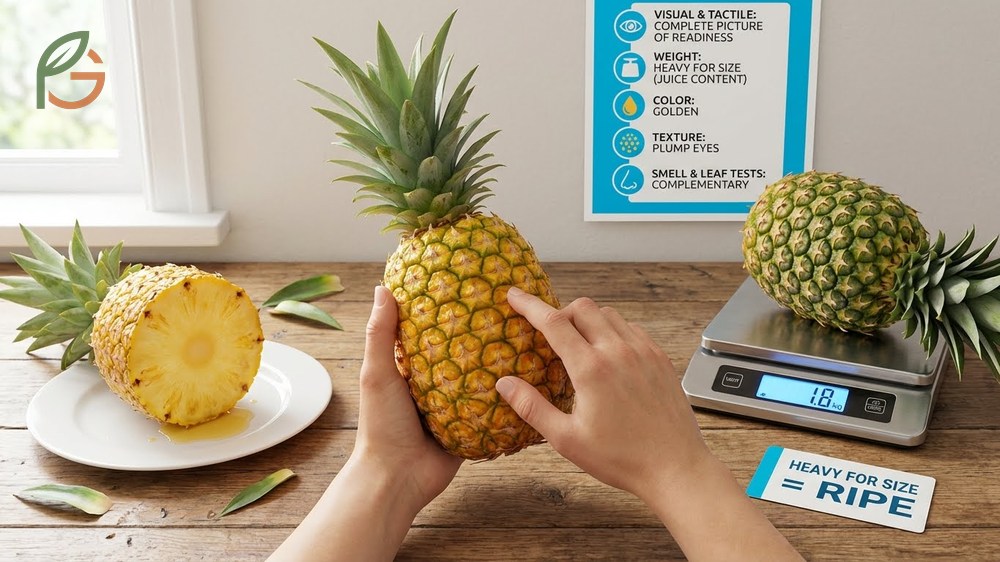
Combining visual and tactile assessments gives you the complete picture of pineapple readiness. Studies demonstrate that weight, color, and texture work together as ripeness indicators that complement the smell and leaf tests.[2]
A ripe pineapple should feel heavy for its size, indicating juice content and proper maturity. Lightweight pineapples tend to be dried out or harvested too early. The eyes—those hexagonal segments covering the fruit—should look plump and slightly raised rather than flat or sunken.
Color of Ripe Pineapple
Color can be misleading since different pineapple varieties ripen to different hues. Traditional pineapples develop golden-yellow tones starting from the base and moving upward as they ripen. However, some premium varieties like Del Monte Gold can taste perfectly sweet even when the shell looks mostly green.
Agricultural data shows that maturity codes range from 0 (green mature) to 6 (fully orange-ripe), with storage life decreasing as color intensifies.[4] Green pineapples can last 3-4 weeks in proper storage, while orange-ripe fruits only maintain quality for up to 2 weeks.[4] This explains why many stores stock greener pineapples—they’ve got better shelf life for transportation.
- Golden-yellow color at the base indicates ripeness in most varieties
- Some green on the top is normal and doesn’t affect sweetness
- Brown or gray patches signal spoilage, not ripeness
- Bright, vibrant skin suggests freshness regardless of exact color
- Dull, wrinkled skin means the fruit’s dehydrated or too old
- Check the eyes—they should be uniform in size and color
Firmness of Ripe Pineapple
The squeeze test reveals internal ripeness that you can’t see from the outside. Give the pineapple body a gentle squeeze with your palm—it should yield slightly but spring back.[2] Think of it like testing a ripe peach or avocado.
Rock-hard pineapples haven’t developed their full sugar content yet and will taste bland or sour. Mushy pineapples have gone too far and might’ve started fermenting inside. The perfect pineapple sits right in the middle—firm with just enough give to show it’s ready.
My friend in Oaxaca, Mexico who supplies restaurants with tropical fruits told me she tests firmness at three points around the fruit’s middle. If all three spots show consistent slight give, that pineapple’s uniformly ripe—exactly what you want for even sweetness throughout.
Pro Tip: Don’t confuse firmness with weight. A light but firm pineapple isn’t ripe—it’s just dry. You want heavy AND slightly yielding, which indicates juice-filled, sugar-rich flesh inside.
What Does a Ripe Pineapple Look Like
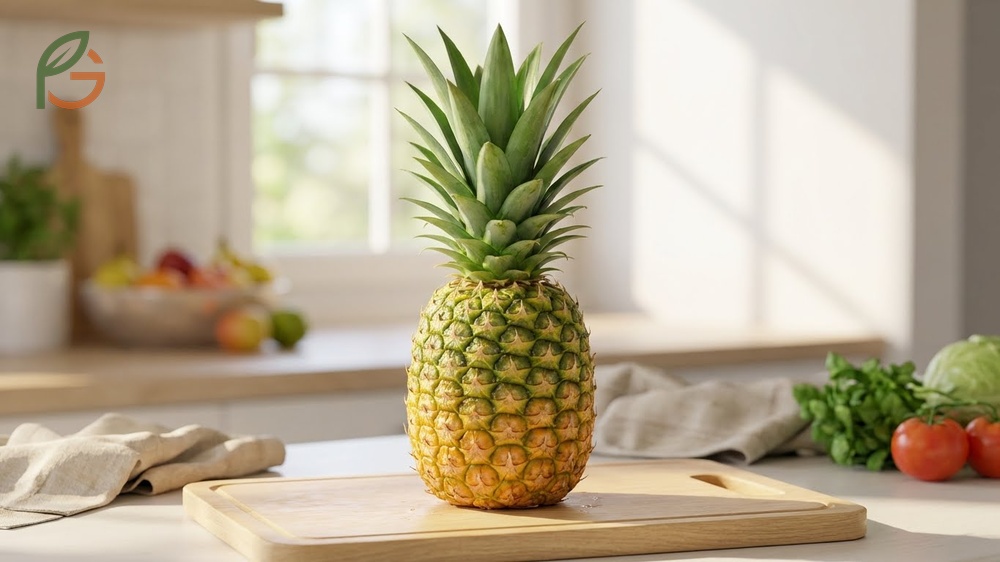
A perfectly ripe pineapple presents several visual markers that work together to signal readiness. The crown leaves should look fresh, vibrant green, and stand upright—not wilted, brown-tipped, or dry. Healthy leaves indicate the fruit was recently harvested and properly handled during transport.
Current data indicates that shell appearance matters less than you’d think for flavor prediction. The most reliable visual cue is the base color, which transitions from green to golden as natural sugars develop. Look for a pineapple where the bottom third shows distinct yellow or golden tones while the top might still have some green.
The fruit’s shape also tells you something about quality. A symmetrical, evenly-developed pineapple typically received consistent water and nutrients during growth, resulting in uniform sweetness. Lopsided or irregularly-shaped fruits often have pockets of varying ripeness that make them less predictable to eat.
This table compares visual characteristics, texture indicators, and aroma profiles across three pineapple ripeness stages from underripe to perfect to overripe
| Characteristic | Underripe | Perfect Ripeness | Overripe |
|---|---|---|---|
| Shell Color | Mostly green, no yellow | Golden-yellow at base, some green on top | Deep orange with brown patches |
| Aroma | No smell or very faint | Sweet, tropical fragrance[1] | Fermented, vinegar-like scent |
| Firmness | Rock-hard, no give | Slight give, springs back[2] | Mushy, soft spots |
| Leaf Pull Test | Won’t budge, firmly attached | Moderate resistance, releases with firm tug[3] | Falls out easily, minimal effort |
| Skin Texture | Tight, bright, glossy | Plump eyes, vibrant color | Wrinkled, dull, brown spots |
- Eyes should be uniform in size without missing segments
- No mold, especially around the crown base where moisture collects
- Smooth skin without cracks, bruises, or soft spots
- Crown leaves that look fresh, not dried out or yellowing
- Consistent color throughout the shell without blotchy areas
How to Pick a Sweet Pineapple
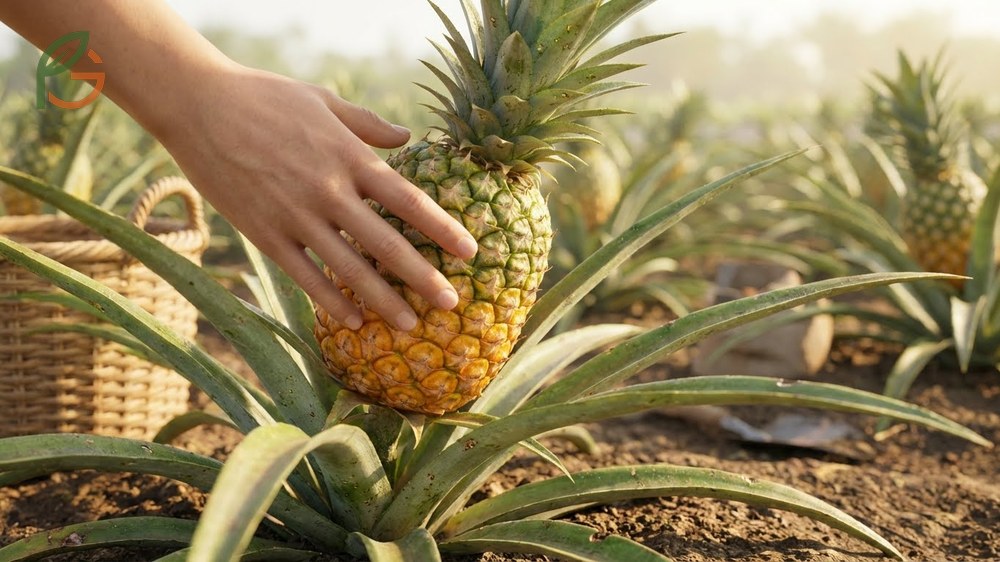
Sweetness in pineapples comes from proper maturity at harvest, not post-harvest ripening. Agricultural research shows that sugar content peaks when the fruit’s left on the plant until natural color change begins—typically when the base starts showing yellow. Once picked, the starch stops converting to sugar, freezing the sweetness level permanently.
For maximum sweetness, you’re looking for pineapples harvested at peak maturity rather than picked green for shipping. This means choosing fruits that already show golden coloring, emit strong sweet aromas, and feel heavy with juice. Lighter pineapples with muted smells were probably picked too early to develop full flavor.
Avoiding Overripe Pineapple
Overripe pineapples don’t just taste off—they can cause digestive discomfort due to fermentation that’s already begun inside the fruit. Evidence suggests that once a pineapple passes peak ripeness, sugars start breaking down into alcohols and acids that create that characteristic vinegar smell.
Storage data shows that whole ripe pineapples last only 3-5 days at room temperature before declining in quality.[5] Refrigeration extends this to about one week, but can’t reverse overripening that’s already started. This means you’ve got a narrow window to catch pineapples at their peak.
- Sour, fermented, or alcoholic smell from the base
- Soft spots or mushy areas when you squeeze gently
- Leaves that fall out with barely any pull or touch
- Wrinkled, dried, or shriveled skin texture
- Brown or gray patches spreading across the shell
- Liquid or stickiness around the base or crown
- Mold growth, particularly in the crown crevices
Choosing Sweet Pineapple
The sweetest pineapples combine all the ripeness indicators at once—golden base color, strong sweet aroma, slight give when squeezed, and moderate leaf resistance. Studies demonstrate that no single test guarantees sweetness, but using all four together dramatically improves your success rate.[2]
Varietal differences matter more than most people realize. Del Monte Gold pineapples, for example, were bred specifically for sweetness and can taste great even when the shell looks greenish. Traditional Smooth Cayenne varieties need more visible yellowing to reach the same sugar levels. If you’ve got variety information available, use it to adjust your color expectations.
Weight remains one of the most underrated sweetness indicators. A heavy pineapple’s packed with juice, which carries those sugars you’re after. Two pineapples might look identical, but the heavier one’s almost always sweeter because it wasn’t picked too early or allowed to dehydrate during transport and storage.
Conclusion
The evidence is clear: mastering How To Pick A Good Pineapple requires combining smell, color, firmness, and leaf tests rather than relying on appearance alone. Research consistently shows that pineapples don’t ripen after harvest, making your initial selection the single most important factor for flavor and sweetness.
Current guidance emphasizes the base smell test as your primary tool, backed up by visual and tactile confirmations. FruitGarden’s comprehensive approach ensures you’ll consistently bring home pineapples that deliver the tropical sweetness and juicy texture you’re expecting every single time.
Frequently Asked Questions
How do you know if a pineapple is ripe enough to buy?
A ripe pineapple emits a sweet, fruity aroma from its base, yields slightly when squeezed, and has golden-yellow coloring at the bottom. The center crown leaf should pull out with moderate resistance—not too easily or too difficultly. Combining all four tests gives you the most reliable assessment.
Can you ripen a pineapple after you buy it?
No, pineapples don’t ripen after harvest like bananas or avocados do. They might soften at room temperature, but they won’t get sweeter since sugar production stops once the fruit’s picked. This makes selecting a ripe pineapple at the store absolutely critical for flavor.
What color should a ripe pineapple be?
Most ripe pineapples show golden-yellow coloring starting from the base, though some green on top is normal. However, premium varieties like Del Monte Gold can taste perfectly sweet even when mostly green. Focus more on smell and firmness than color alone for the most accurate ripeness assessment.
Does the leaf pull test really work for pineapples?
Yes, but it’s often misunderstood. A ripe pineapple’s center leaf should release with firm, moderate resistance—not fall out easily (which means overripe) or refuse to budge (which means underripe). Use this test alongside smell and firmness checks for best results.
How long does a ripe pineapple last?
A whole ripe pineapple lasts 3-5 days at room temperature or about one week refrigerated. Once you cut it, consume the pieces within 3-4 days when stored in an airtight container in the fridge. Don’t refrigerate underripe pineapples since cold temperatures prevent proper flavor development.
Why does my pineapple have no smell?
A pineapple with no aroma is underripe and was likely picked too early. It won’t develop sweetness or fragrance after purchase since pineapples don’t continue ripening off the plant. Skip scentless pineapples at the store and choose one with a noticeable sweet smell at the base.
Should a ripe pineapple be soft or hard?
A ripe pineapple should be firm with slight give—not rock-hard or mushy. When you gently squeeze the body, it should yield a bit but spring back. Rock-hard means underripe, while soft or mushy indicates overripe or spoiling fruit.





